
Ski Goggles · FAQ
Questions about Low-Light / Storm Ski Goggles
Straight answers on fit, specs, and when this type makes sense — each topic has its own page with links back to the buying guide.
Open Low-Light / Storm Ski Goggles guide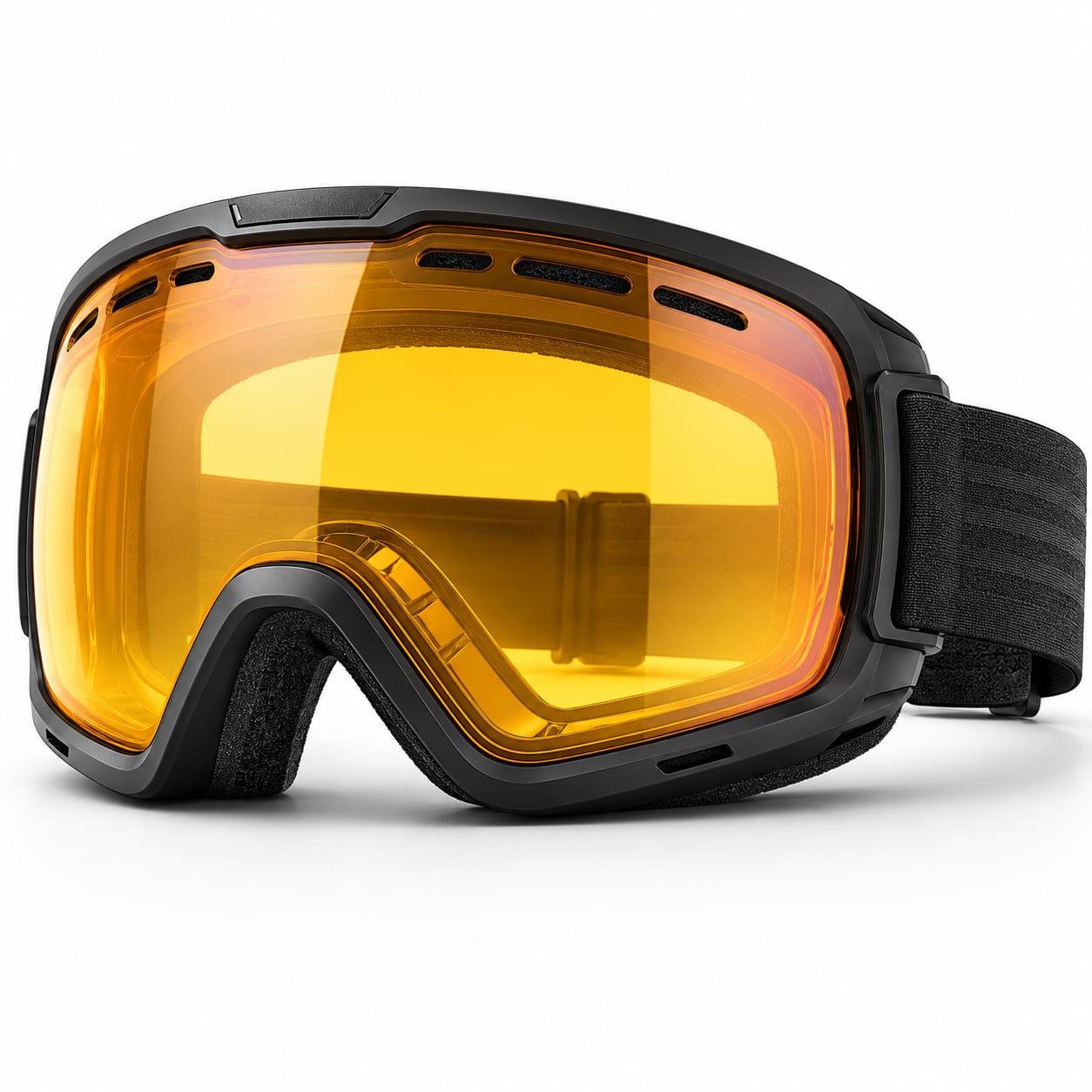
6 topics
Pick a question
Every answer links to the full subcategory guide and related gear types when it helps you decide.
What VLT percentage should I look for in a low-light ski goggle?
For dedicated storm and flat-light skiing, look for a VLT of 60–80%. Lenses in the 60–70% range work well for overcast days and moderate flat light, while 70–80%+ VLT is ideal for heavy storms, fog, and deep whiteouts. If you also night ski, consider a clear lens (90%+ VLT) as a second option. Avoid anything below 55% VLT for true low-light performance—it won't provide enough light transmission for the darkest conditions.
Read answer →02Is yellow or rose tint better for low-light skiing?
Yellow and gold tints provide the maximum brightness and sharpest definition in the darkest conditions—heavy overcast, fog, and blizzards. They're the best choice when light is extremely limited. Rose and amber tints provide slightly less brightness but superior depth perception and work better across a range of low-to-medium light conditions. If you frequently ski in severe whiteouts, go yellow. If you want one lens that handles overcast to partly cloudy transitions, go rose or amber.
Read answer →03Can I use a low-light goggle as my everyday goggle?
Not recommended. A low-light lens with 70%+ VLT will be painfully bright on sunny days and offers no glare protection. However, a rose or amber lens with 60–65% VLT can work acceptably on overcast to partly cloudy days, making it the most versatile single low-light option. For a true one-goggle solution, consider a photochromic lens that adapts to conditions, or a quick-swap goggle with both a low-light and a mid-VLT lens.
Read answer →04Why should low-light goggles not be polarized?
Polarization eliminates glare by filtering reflected light, but in flat light conditions, those subtle reflections and glare differences between snow surfaces are actually helpful visual cues. They help you distinguish between soft snow, ice, crust, and hardpack. Removing those cues with polarization can make flat light even flatter and harder to read. Additionally, polarization can make it harder to see icy patches—which is exactly what you want to avoid in storm skiing.
Read answer →05How do I keep my goggles from fogging in storm conditions?
Start with premium dual-lens construction with high-quality anti-fog coating—this is non-negotiable for storm skiing. Never wipe the inner lens, as this destroys the coating. Keep goggles on your face (not your forehead) to maintain temperature equilibrium. Ensure your helmet doesn't block the goggle's ventilation channels. Consider goggles with enhanced or active ventilation for chronic fog issues. After skiing, remove the lens and let everything dry completely before storage. For glasses wearers, Rx inserts eliminate the double-fog problem of glasses under goggles.
Read answer →06Do I need a separate low-light goggle or just a spare lens?
If your current goggle has a quick-swap lens system (especially magnetic), buying a spare low-light lens is the most cost-effective approach—you get the performance without buying a complete second goggle. If your goggle has a traditional frame-swap system, changing lenses on the mountain is impractical, and a dedicated second goggle with the low-light lens pre-installed is more convenient. Consider how often you encounter storm conditions and how quickly you need to adapt when making this decision.
Read answer →