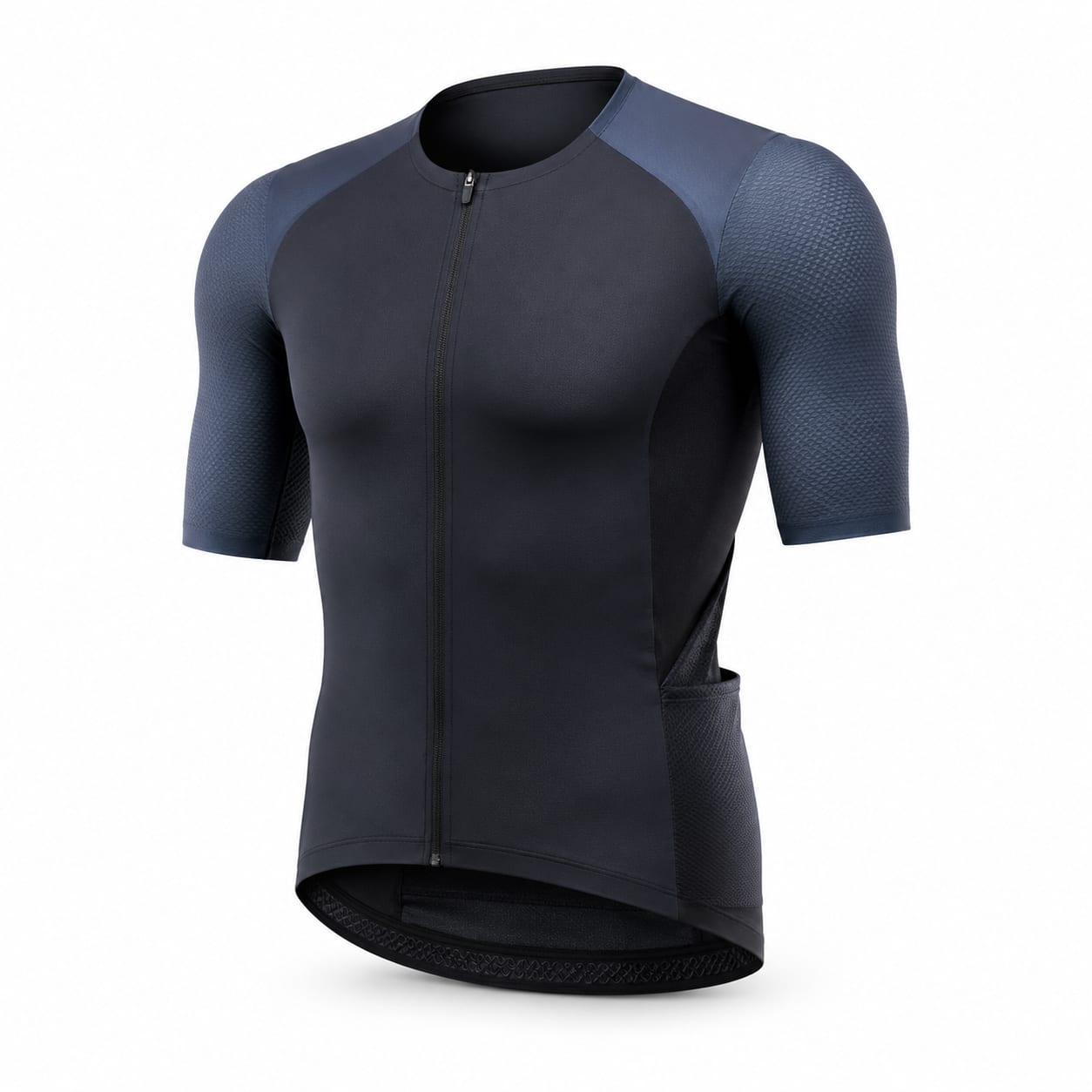
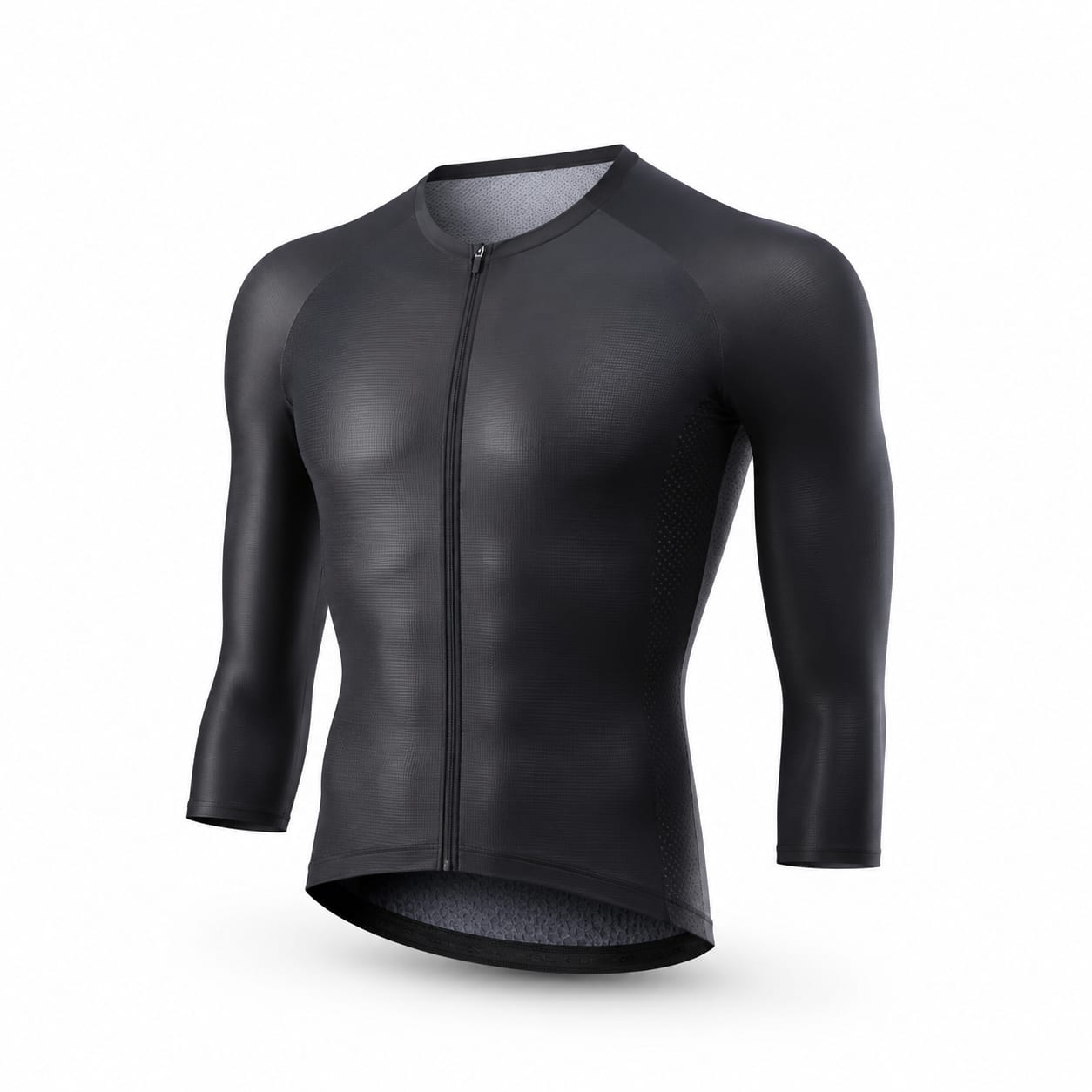
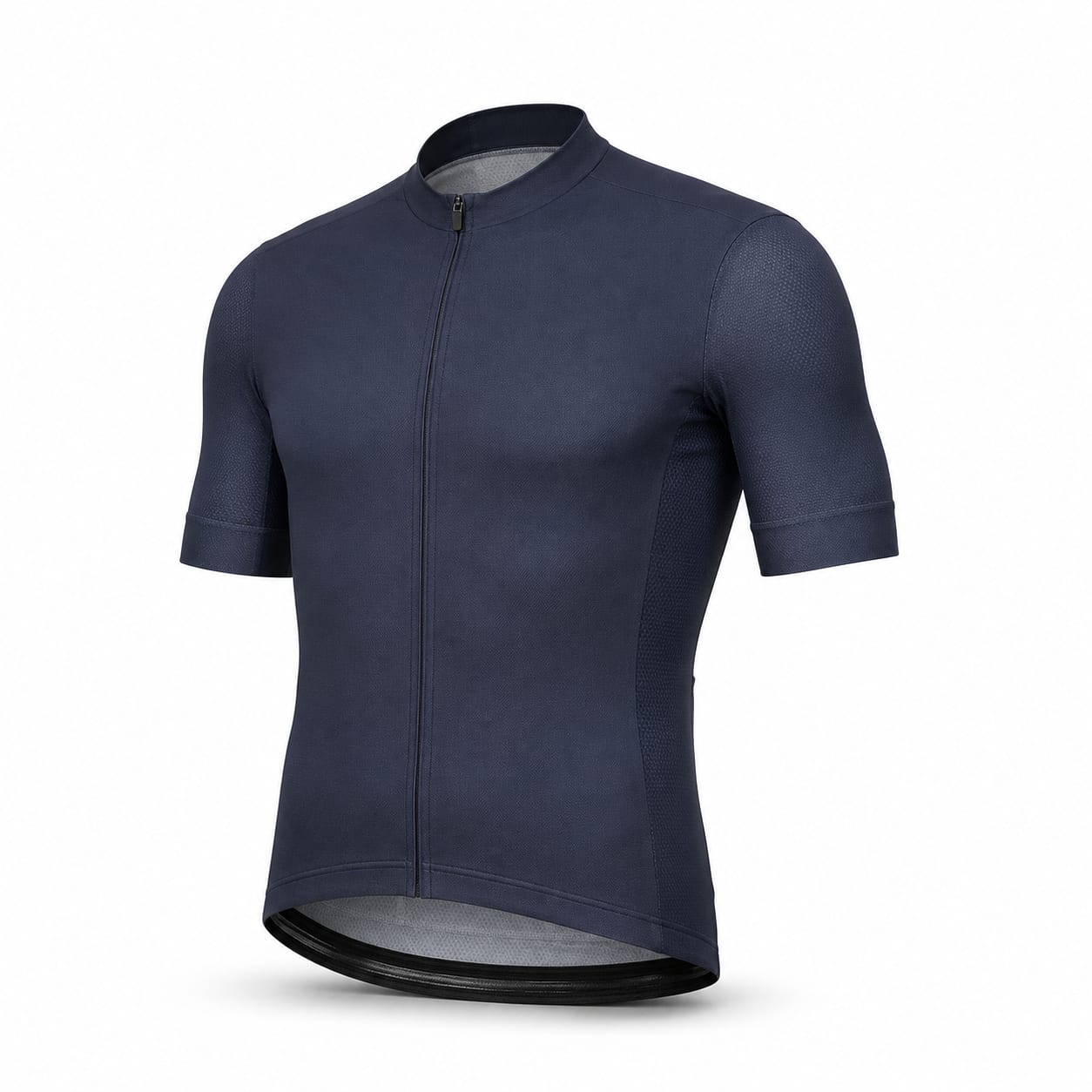
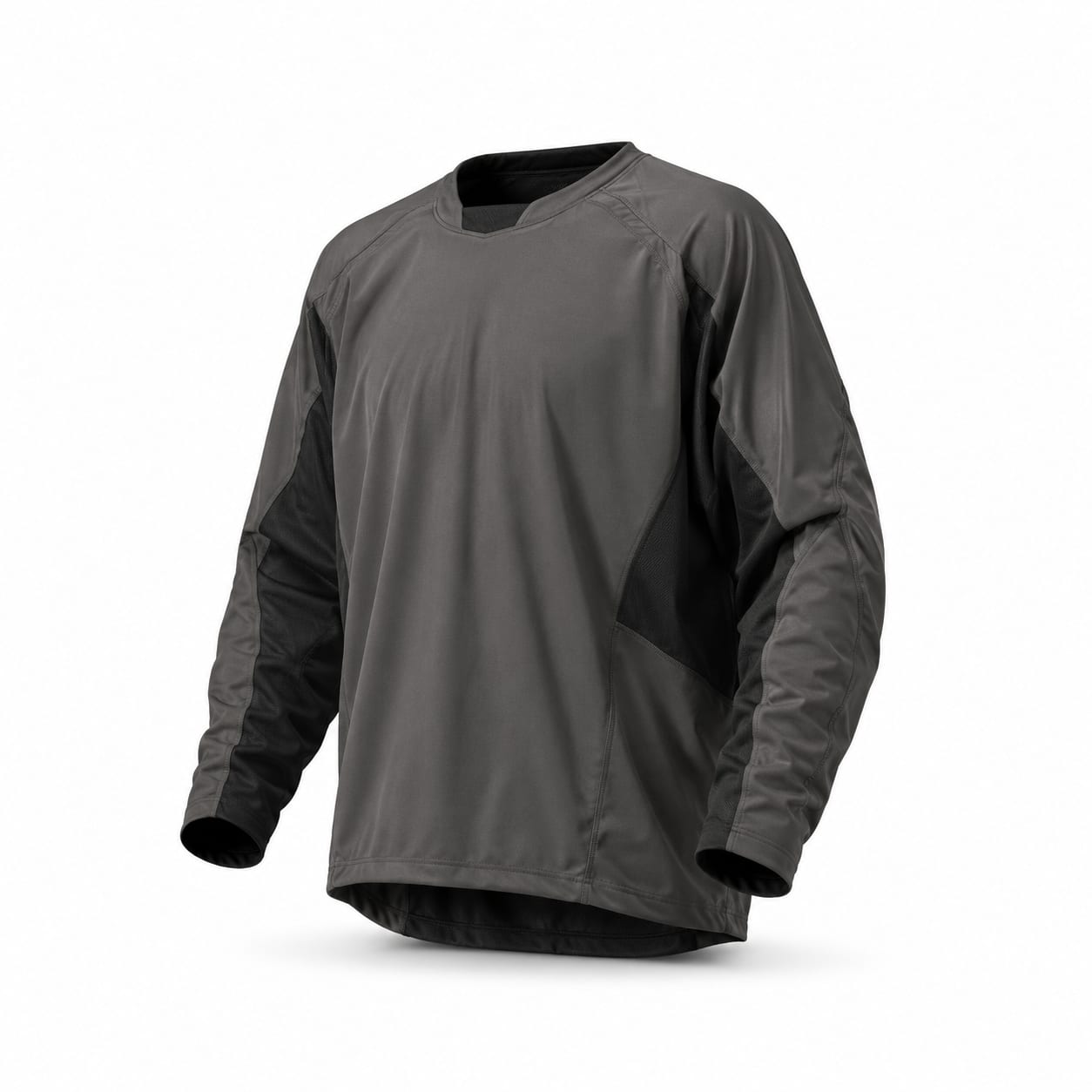
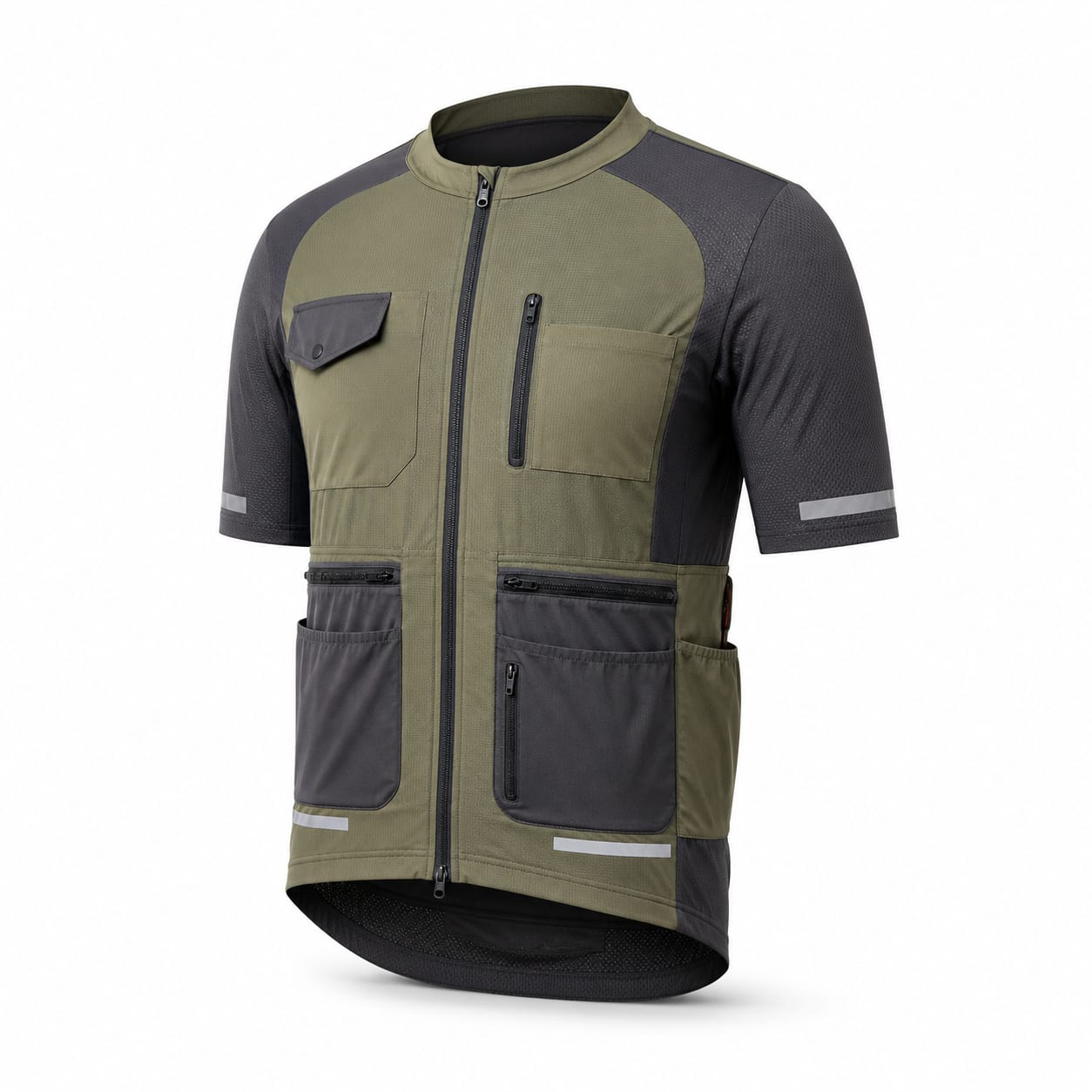
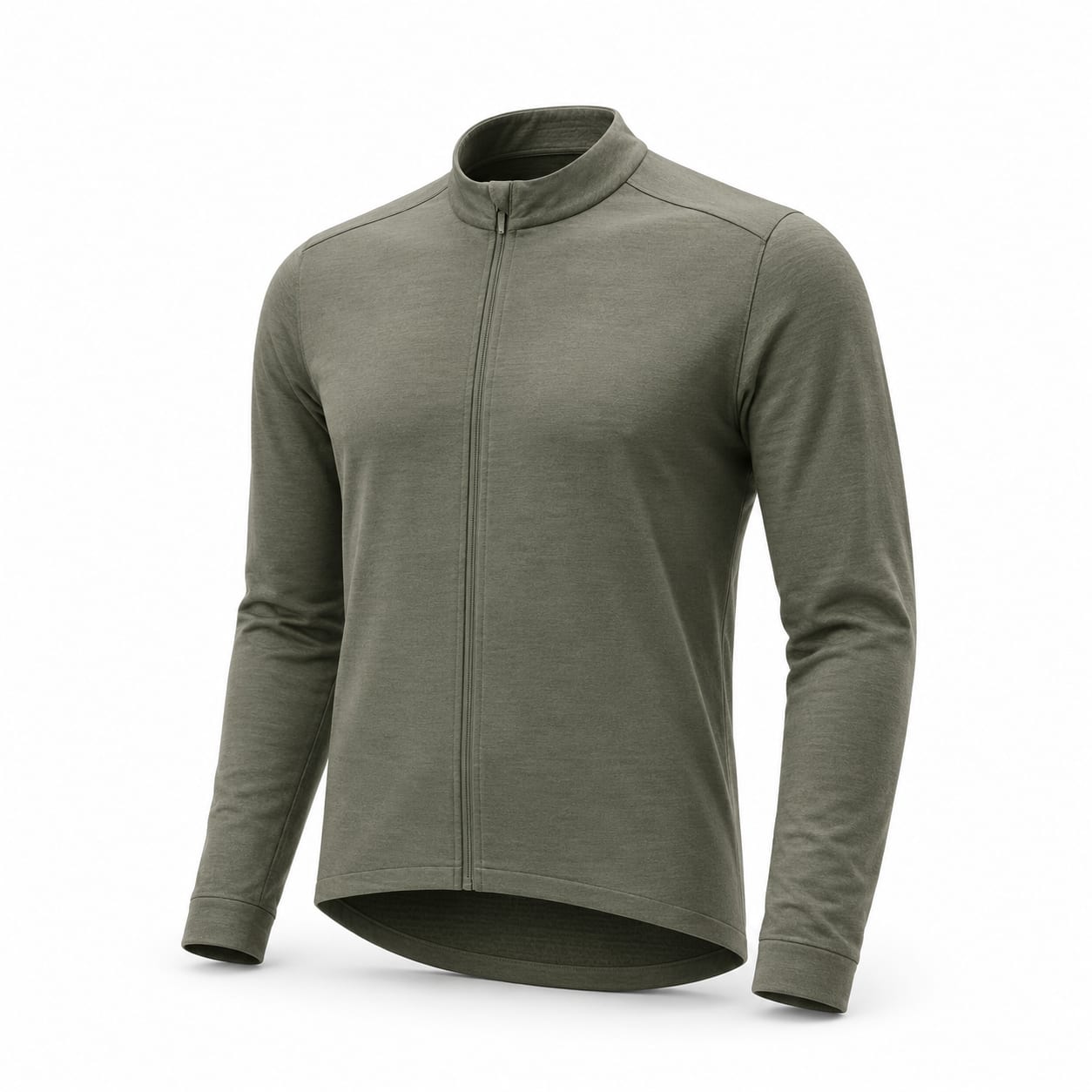
Triathlon and time trial jerseys represent the pinnacle of cycling jersey engineering, where every gram and every seam is scrutinized for performance impact. These jerseys are designed for athletes who race against the clock, whether in a 40K time trial or a full-distance Ironman triathlon. The construction philosophy is fundamentally different from standard road jerseys: pockets are minimized or eliminated to reduce aerodynamic drag, fabrics are selected for their ability to shed water and dry in seconds rather than minutes, and the fit is so close that the jersey effectively becomes a second skin. The front zipper—almost always full-length—serves dual purposes: maximum ventilation control during the bike leg and rapid removal in transition if desired. Sleeve construction often features extended, aerodynamically-optimized panels with silicone grippers to maintain position in the aggressive TT position. The result is a jersey that sacrifices the versatility and comfort features of standard jerseys in pursuit of pure speed.
Triathlon and TT jerseys occupy a unique niche in cycling apparel, sitting at the intersection of swimwear technology, aerodynamic engineering, and endurance comfort. Unlike road jerseys that balance performance with all-day wearability, triathlon/TT jerseys make no compromises toward casual use—they are racing tools, pure and simple. The fabrics used in these jerseys often incorporate hydrophobic treatments or inherently water-repellent fibers, allowing them to transition from a wetsuit swim to the bike leg without the heavy, waterlogged feeling that would plague a standard jersey. This quick-drying capability can save precious seconds in transition and prevent the chilling effect of evaporative cooling on early-season race days.
Aerodynamically, triathlon/TT jerseys are among the most refined garments in cycling. The fit is intentionally skin-tight, with pre-shaped sleeves designed for the extended, low position of aerobars rather than the more upright road riding posture. Many models feature textured fabrics on the sleeves—similar to those found on speed suits—that trip boundary layer air to reduce drag at racing speeds above 35 km/h. Seams are minimized, relocated, or bonded rather than stitched to eliminate raised surfaces that create parasitic drag. The rear of the jersey is often completely smooth, with pockets either eliminated entirely or reduced to a single small pocket for a gel or two.
The practical implications of these design choices are significant. Triathlon/TT jerseys are less comfortable off the bike, less versatile for training rides, and considerably more expensive than standard jerseys. They offer minimal storage, which means you will need a different solution for training rides that require carrying tools, spares, and nutrition. The ultralight fabrics, while fast-drying and aerodynamic, are also less durable and more prone to damage from crashes or abrasion. However, for race day, these trade-offs are intentional and worthwhile—a triathlon/TT jersey can save 10-30 watts of aerodynamic drag compared to a standard club-fit jersey, which translates to meaningful time savings over the course of a 40K time trial or 180K Ironman bike leg.
For triathletes specifically, the jersey must perform across all three disciplines. It needs to be comfortable under a wetsuit during the swim, aerodynamic and breathable on the bike, and non-chafing during the run. This multi-sport requirement drives unique design features like flatlock or bonded seams throughout, collars that do not irritate when wet, and fabrics that do not become heavy or abrasive when soaked with sweat. The best triathlon jerseys feel almost like wearing nothing at all—light, cool, and unrestrictive—while still providing the modesty coverage and sun protection essential for races lasting several hours under full sun.