Kitvore.com

Kitvore.com

Specs that matter. Gear that fits.

Mountain Bike · Subcategory

Electric Mountain Bike (eMTB)

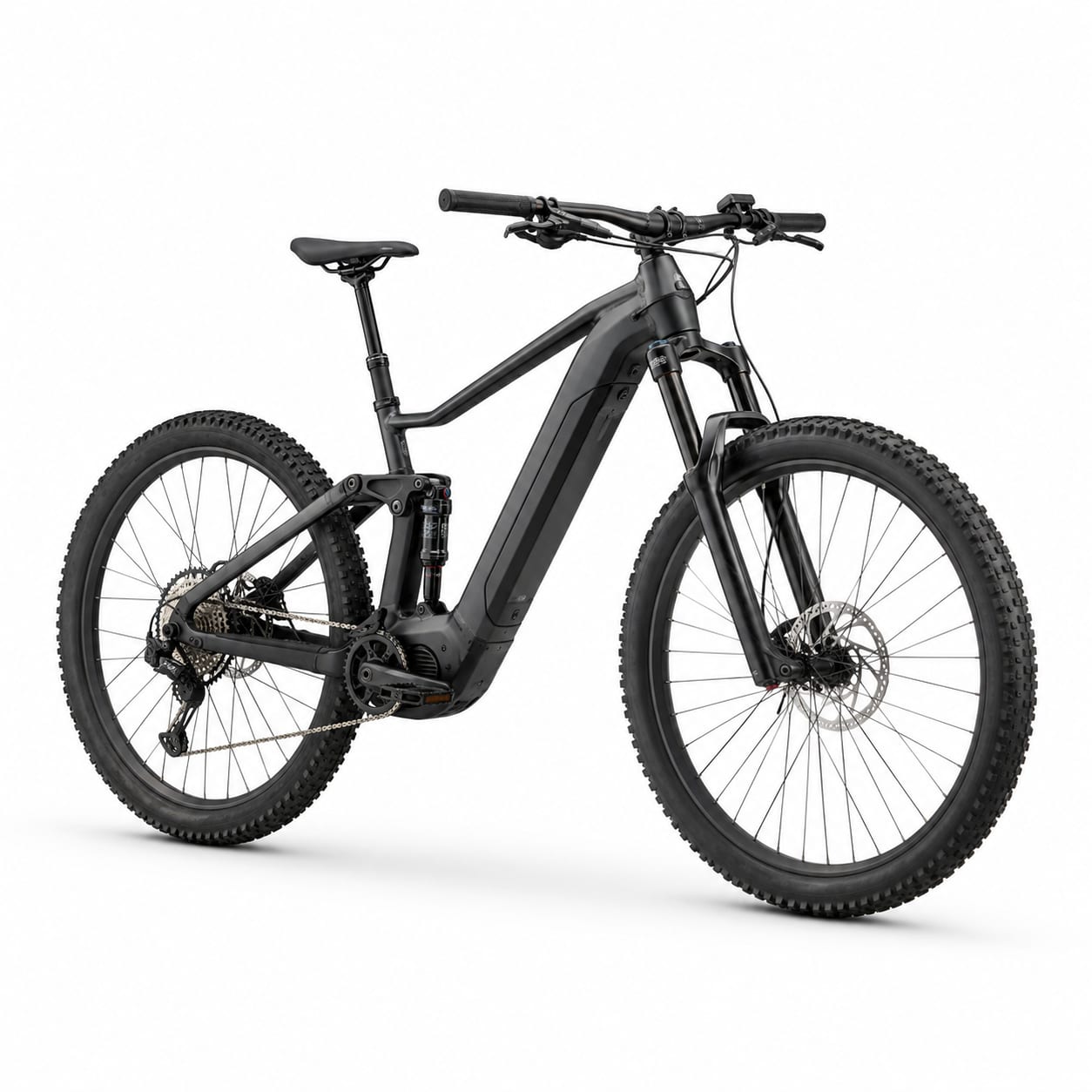
A mountain bike with an integrated electric motor that provides pedal-assist power to amplify your riding capability on climbs and technical terrain.

Electric mountain bikes (eMTBs) combine full-suspension mountain bike geometry and components with a mid-drive motor and removable battery system. The motor only activates when you pedal, providing assist up to 25 km/h (15.5 mph) in Europe and 32 km/h (20 mph) in the US. eMTBs open up longer rides, steeper climbs, and more descents per session, making them ideal for riders who want to ride more terrain with less fatigue, those recovering from injury, or riders wanting to keep pace with fitter companions.

$2500 – $15000premium tierbeginnerintermediateadvanced

Best known for

Conquering steep climbs with minimal effortEnabling more descents per ride sessionLeveling the playing field between riders of different fitness levelsMaking long backcountry rides accessible to more peopleCarrying speed through technical terrain with extra mass and momentum
Electric Mountain Bike (eMTB)

Guide

Detailed overview

Electric mountain bikes represent the convergence of modern mountain bike geometry, suspension technology, and pedal-assist motor systems. Unlike throttle-operated e-bikes, eMTBs require the rider to pedal — the motor amplifies your input, typically offering assist modes from Eco (50% boost) to Turbo (300% boost). The motor cuts off at the legal speed limit (25 km/h EU / 32 km/h US). Most eMTBs use mid-drive motors positioned at the bottom bracket for optimal weight distribution and natural ride feel, paired with integrated downtube batteries ranging from 500Wh to 750Wh. The added 6–9 kg of motor and battery mass fundamentally changes how the bike rides: it carries more momentum through rough terrain, requires stronger brakes, and demands adjusted technique for jumps and cornering due to the extra weight. Modern eMTBs feature specifically tuned suspension kinematics to account for the additional mass and the torque output of the motor.

Electric mountain bikes have rapidly evolved from niche curiosities to mainstream trail companions. The current generation of eMTBs features refined integration where the motor and battery are designed into the frame from the ground up, rather than bolted on as afterthoughts. Leading motor systems from Bosch, Shimano (STEPS), Brose, and Fazua deliver smooth, quiet power delivery that feels increasingly natural. Battery technology has also advanced significantly — 625Wh to 750Wh capacities are now common, providing realistic trail ranges of 40–80 km depending on terrain, assist mode, and rider weight.

The riding experience on an eMTB differs meaningfully from a traditional mountain bike. On climbs, the motor transforms grueling fireroad grinds and technical ascents into manageable, even enjoyable experiences. Riders report being able to attempt climbs they would never consider on an analog bike. On descents, the additional mass provides a planted, stable feel through rough terrain — the bike carries momentum through rock gardens and root sections with authority. However, this same mass requires adjusted technique: braking earlier, weighting the front wheel more deliberately in corners, and being mindful of the bike's inertia on jumps and drops.

Frame geometry for eMTBs has matured into its own distinct category. While early eMTBs borrowed geometry from analog bikes, modern designs feature steeper seat tube angles (76–78°) to maintain efficient climbing position with the motor assist, slightly slacker head tube angles for stability with the extra mass, and longer chainstays to accommodate the motor and provide balanced weight distribution. Chainstay lengths typically run 445–465mm, noticeably longer than analog trail bikes, which contributes to the stable, planted feel but reduces playfulness.

Component selection on eMTBs reflects the demands of motor-assisted riding. Brakes are almost universally 4-piston hydraulic calipers with 200mm rotors front and rear — the extra mass and higher average speeds require serious stopping power. Drivetrains are exclusively 1x configurations, with some eMTB-specific derailleurs featuring clutches and cages designed to handle the torque of motor-assisted shifting. Tires tend to be wider (2.4–2.6") with tougher casings to handle the additional weight and higher speeds. Suspension forks and shocks are often eMTB-specific with stiffer damper tunes to handle the additional mass.

The decision to purchase an eMTB involves considerations beyond those of a traditional mountain bike. Trail access regulations vary significantly by region — some trail systems welcome eMTBs, others restrict them to certain trails, and some ban them entirely. Maintenance costs are higher due to the motor system, battery degradation over time, and increased wear on drivetrain components and brakes. However, for riders who want to maximize their descending time, extend their riding career, or simply enjoy the sensation of effortless climbing, an eMTB offers an experience that no analog bike can replicate.

Quick facts

Primary purpose
Extending riding range, enabling more climbing, and making mountain biking accessible to wider fitness levels
Popular brands
SpecializedTrekGiantOrbeaCannondaleBosch-powered brands
Typical terrain
all mountain bike terrainespecially valuable for long climbsvaried by sub-type (trail/enduro/XC eMTB)

What makes it different

Motor assistance for climbing and endurance; heaviest MTB subcategory; regulated by class system (Class 1/2/3); rapidly growing market segment; trail access restrictions in some areas

Recommended ranges

How this type usually specs out

Each spec is explained in plain language, then we show what buyers usually look for on this type.

Bike Category / Discipline

Mountain Bike Category

What it means

The primary riding discipline the mountain bike is designed for, which dictates frame geometry, suspension travel, and component selection.

Typical for this type

Trail, Enduro

In practice

The vast majority of eMTBs fall into the trail or enduro categories. The motor assist makes the climbing penalty of heavier, longer-travel enduro bikes negligible, so many riders opt for enduro-class eMTBs that descend with authority. XC eMTBs exist but are less common since the motor already addresses climbing efficiency. Downhill eMTBs are extremely rare as lift-access riding negates the motor's primary benefit.

Compared to other types

eMTBs skew heavier toward trail and enduro categories compared to analog bikes, where XC has a larger share. The motor equalizes the climbing disadvantage of heavier categories.

Why it matters: Category determines suspension travel, geometry, and component spec. On an eMTB, the climbing penalty of enduro-class bikes is largely offset by motor assist, making aggressive categories more appealing than on analog bikes.

Suspension Type

Suspension Type

What it means

Whether the bike has front suspension only (hardtail) or both front and rear suspension (full suspension), fundamentally affecting comfort, traction, and efficiency.

Typical for this type

Full Suspension

In practice

Nearly all eMTBs are full suspension. The added weight of the motor and battery makes rear suspension essential for maintaining traction and control on rough terrain. Hardtail eMTBs exist but are far less common and typically budget-oriented. The motor's torque can cause rear wheel spin on climbs without rear suspension to maintain traction.

Compared to other types

eMTBs have a much higher proportion of full-suspension models than analog mountain bikes, where hardtails remain popular for XC and budget segments.

Why it matters: Full suspension is strongly recommended for eMTBs because the extra mass amplifies the benefits of rear suspension — traction, control, and comfort are all significantly improved over a hardtail eMTB.

Front Travel

Front Suspension Travel

What it means

The maximum distance the front suspension fork can compress, measured in millimeters. Determines the size of obstacles the bike can absorb and influences frame geometry.

Typical for this type

140–170mm

Most common pick: 150mm

In practice

eMTB front travel typically ranges from 140mm on trail-oriented models to 170mm on enduro eMTBs. 150–160mm is the most common, reflecting the trail-to-light-enduro orientation of most eMTBs. Forks are often eMTB-specific with stiffer chassis and damper tunes calibrated for the additional bike mass.

Compared to other types

eMTBs tend to have slightly more front travel than their analog counterparts at the same category level, as the extra mass benefits from additional bump absorption capacity.

Why it matters: The extra weight of an eMTB (typically 20–25 kg) demands suspension that can handle higher forces. Standard forks may feel underdamped and flex more under the additional load. eMTB-specific forks address this with stiffer chassis and revised damping.

Rear Travel

Rear Suspension Travel

What it means

The maximum distance the rear wheel can move vertically on full suspension bikes, measured in millimeters. Works in conjunction with front travel to absorb impacts.

Typical for this type

130–160mm

Most common pick: 140mm

In practice

Rear travel on eMTBs typically ranges from 130mm on trail models to 160mm on enduro models. 140–150mm is the sweet spot for most riders. Suspension kinematics are often specifically tuned for the additional mass and motor torque, with progressive leverage ratios that resist bottom-out under the heavier load.

Compared to other types

Rear travel on eMTBs is comparable to analog bikes in the same category, but the suspension kinematics are specifically calibrated for the additional mass and motor torque characteristics.

Why it matters: Rear suspension on an eMTB must handle significantly more mass than on an analog bike. The suspension design must account for motor torque affecting anti-squat characteristics and the additional unsprung weight from the motor's proximity to the rear axle.

Wheel Size

Wheel Size

What it means

The nominal diameter of the wheel/rim, which affects rollover ability, acceleration, handling precision, and tire volume availability.

Typical for this type

29, Mullet

In practice

29" wheels dominate the eMTB market for their rollover capability and momentum retention, which pairs well with the motor-assisted riding style. Mullet setups (29" front / 27.5" rear) are increasingly popular on enduro eMTBs, offering front rollover stability with rear agility. Full 27.5" eMTBs are becoming rare except on smaller frame sizes.

Compared to other types

eMTBs follow similar wheel size trends as analog mountain bikes, but the mullet configuration is slightly more popular on eMTBs because the extra mass makes the agility benefit of a 27.5" rear wheel more noticeable.

Why it matters: The larger contact patch and rollover ability of 29" wheels complement the momentum-carrying nature of an eMTB. Mullet setups offer a good compromise for riders who want playful rear-end handling with front-end stability.

Frame Material

Frame Material

What it means

The primary material used in the main triangle and frame construction, affecting weight, ride quality, durability, and cost.

Typical for this type

Aluminum, Carbon Fiber

In practice

Aluminum dominates the eMTB market due to its strength, ease of manufacturing complex motor-integration shapes, and cost-effectiveness. Carbon fiber is available on high-end models and can save 1–2 kg, which is noticeable but represents a smaller percentage of total bike weight compared to analog bikes. Steel and titanium eMTBs are extremely rare due to manufacturing complexity with motor integration.

Compared to other types

Aluminum has a larger market share in eMTBs than in analog mountain bikes, partly because the cost of the motor system already pushes the total price up, and partly because aluminum's strength and formability suit motor-integration requirements.

Why it matters: On an eMTB, the weight savings from carbon fiber are proportionally less significant than on an analog bike because the motor and battery already add 6–9 kg. However, carbon's vibration-damping properties can improve ride quality on the heavier platform.

Head Tube Angle

Head Tube Angle

What it means

The angle of the head tube relative to the ground, measured in degrees. A primary determinant of steering speed and high-speed stability. Slacker angles (lower numbers) provide more stability at speed.

Typical for this type

64.0°–66.5°

Most common pick: 65.0°

In practice

eMTB head tube angles typically range from 64.0° on aggressive enduro models to 66.5° on trail-oriented eMTBs. The extra mass of an eMTB benefits from slightly slacker angles for high-speed stability. Most trail eMTBs sit around 64.5°–65.5°, which is slacker than equivalent analog trail bikes.

Compared to other types

eMTBs tend to run 0.5–1.5° slacker head angles than their analog counterparts in the same category, compensating for the additional mass and higher average speeds.

Why it matters: The additional mass of an eMTB increases forces on steep descents, making stability more critical. A slacker head angle provides the confidence-inspiring stability that eMTB riders need, especially at the higher average speeds that motor assist enables.

Reach

Reach

What it means

The horizontal distance from the center of the bottom bracket to the top of the head tube, measured in millimeters. The most important sizing metric for modern mountain bikes as it determines the rider's fore-aft position while standing.

Typical for this type

445mm–490mm

Most common pick: 460mm

In practice

eMTB reach values follow similar sizing conventions to analog mountain bikes, with medium frames typically around 455–470mm and large frames 470–490mm. Some eMTBs run slightly shorter reach than analog equivalents because the longer chainstays already extend the wheelbase, and riders may prefer a more upright position for comfort on longer motor-assisted rides.

Compared to other types

eMTB reach values are similar to or slightly shorter than analog bikes in the same size category, as the longer chainstays and slacker head angles already contribute to a longer wheelbase.

Why it matters: Reach determines your standing position on the bike. On an eMTB, the longer wheelbase from extended chainstays means you may not need as much reach for the same stability. Personal preference plays a large role.

Stack

Stack Height

What it means

The vertical distance from the center of the bottom bracket to the top of the head tube, measured in millimeters. Determines how tall the front end feels and affects rider position between seated and standing.

Typical for this type

610mm–650mm

Most common pick: 625mm

In practice

eMTB stack heights tend to be slightly taller than analog bikes, reflecting a more comfort-oriented riding position and the fact that many eMTB riders prefer a less aggressive stance for long days in the saddle. The taller front end also helps manage the extra weight on steep climbs by keeping the front wheel planted.

Compared to other types

eMTBs typically have 5–15mm more stack than equivalent analog bikes, reflecting the comfort and climbing stability priorities of eMTB riders.

Why it matters: A higher stack on an eMTB provides a more comfortable position for long rides and helps keep weight on the front wheel during steep climbs where the motor's torque can otherwise lift the front end.

Chainstay Length

Chainstay Length

What it means

The distance from the center of the bottom bracket to the center of the rear axle, measured in millimeters. Affects how easily the bike manuals, wheelies, and navigates tight turns.

Typical for this type

440mm–465mm

Most common pick: 450mm

In practice

eMTB chainstays are significantly longer than analog bikes, typically 445–465mm. The motor housing at the bottom bracket necessitates longer chainstays, and the additional length provides the stability and balanced weight distribution needed for the heavier platform. Some modern eMTBs feature size-specific chainstays that grow with frame size.

Compared to other types

eMTB chainstays are typically 15–30mm longer than analog mountain bikes in the same category. This is the most significant geometric difference between eMTBs and analog bikes and has the largest impact on handling character.

Why it matters: Longer chainstays on eMTBs are a practical necessity for motor integration and provide stability that complements the heavier, momentum-carrying nature of the bike. They reduce the playfulness compared to analog bikes but improve high-speed composure.

Drivetrain Speed

Drivetrain Speed

What it means

The number of rear sprockets in the cassette, which determines the number of gear ratios available and the size range of the cassette.

Typical for this type

12_speed

In practice

All modern eMTBs use 12-speed drivetrains with wide-range cassettes (typically 10-51T or 10-52T). The motor assist reduces the need for extremely low climbing gears, but the wide range is still valuable for technical climbing and for riding without assist in Eco mode or when the battery is depleted.

Compared to other types

eMTBs universally use 12-speed drivetrains, same as modern analog mountain bikes. However, eMTB-specific drivetrain components (derailleurs, chains) are increasingly common, designed to handle the higher torque loads of motor-assisted shifting.

Why it matters: 12-speed drivetrains provide the widest gear range with 1x simplicity. On eMTBs, the drivetrain must handle higher torque loads from motor-assisted pedaling, so eMTB-specific derailleurs with stronger clutches and reinforced cages are often specified.

Brake Type

Brake Type

What it means

The type of braking system, specifically the actuation method and rotor standard, which determines stopping power, modulation, and maintenance requirements.

Typical for this type

Hydraulic Disc 4p

In practice

4-piston hydraulic disc brakes are strongly recommended and standard on nearly all eMTBs. The additional 6–9 kg of motor and battery mass, combined with higher average speeds from motor assist, demands maximum stopping power and heat dissipation. 2-piston brakes are inadequate for most eMTB riding scenarios.

Compared to other types

eMTBs almost universally specify 4-piston brakes, whereas analog trail bikes sometimes use 2-piston calipers. The extra mass and speed of eMTBs make 4-piston brakes a safety requirement rather than a luxury.

Why it matters: Braking performance is critical on eMTBs due to the significantly higher mass and momentum. 4-piston calipers provide the necessary power and heat management for safe descending. Many eMTBs also feature larger brake rotors (200mm+) for additional stopping power.

Brake Rotor Size

Brake Rotor Size

What it means

The diameter of the brake rotors in millimeters. Larger rotors provide more stopping power and better heat dissipation, critical for sustained descents.

Typical for this type

200mm front / 180mm rear minimum; 200mm/200mm preferred

In practice

eMTBs typically run 200mm rotors front and 180mm rear as a minimum, with many riders and OEMs specifying 200mm front and rear. Some aggressive enduro eMTBs use 220mm front rotors. The extra mass and higher speeds of eMTBs demand maximum heat dissipation and braking leverage.

Compared to other types

eMTBs typically run one rotor size larger than equivalent analog bikes at both front and rear. A trail eMTB that would have 180/160mm on an analog bike typically specs 200/180mm rotors.

Why it matters: Larger rotors provide more stopping power and better heat management, both critical for the heavier eMTB platform. Undersized rotors lead to brake fade on sustained descents, which is dangerous given the higher mass and speeds of eMTBs.

Tire Width

Tire Width

What it means

The nominal width of the tires mounted on the bike, measured in inches. Affects traction, rolling resistance, bump absorption, and frame clearance requirements.

Typical for this type

2.4"–2.6"

Most common pick: 2.5"

In practice

eMTBs typically run wider tires than analog bikes, with 2.4–2.6" being the standard range. The extra width provides additional traction and bump absorption to handle the increased mass and higher speeds. Tougher tire casings (EXO+, DoubleDown, or DH casing) are recommended to resist pinch flats and sidewall damage from the additional weight.

Compared to other types

eMTBs typically run 0.1–0.3" wider tires than analog bikes in the same category, with tougher casings. The extra width and casing strength are necessary to handle the additional mass and forces.

Why it matters: Wider, tougher tires are essential on eMTBs to handle the additional mass and provide the traction needed for motor-assisted climbing and higher-speed descending. Standard XC casings are prone to flats and squirm under the extra load.

Dropper Post Travel

Dropper Post Travel

What it means

The maximum distance the dropper seatpost can drop the saddle, measured in millimeters. More travel allows the saddle to get further out of the way for descending.

Typical for this type

125mm–210mm

Most common pick: 150mm

In practice

Dropper post travel on eMTBs follows similar sizing to analog bikes: 100–125mm for S/M frames, 150–170mm for M/L frames, and 175–210mm for L/XL frames. Maximum travel that fits the frame is recommended. Some eMTBs use externally routed droppers due to the internal space occupied by motor wiring, though internal routing is increasingly common on newer models.

Compared to other types

Dropper post travel on eMTBs is comparable to analog bikes. However, eMTB riders should verify cable routing compatibility, as some eMTB frames require specific dropper post models due to internal motor wiring routing.

Why it matters: A dropper post is essential on an eMTB for the same reasons as on an analog bike — getting the saddle out of the way for descending. The heavier eMTB platform benefits even more from being able to move freely on the bike to manage the additional mass.

Weight

Complete Bike Weight

What it means

The total weight of the complete bicycle without pedals, measured in kilograms or pounds. Affects acceleration, climbing speed, and maneuverability.

Typical for this type

20–25 kg

Most common pick: 22.5 kg

In practice

eMTBs typically weigh 20–25 kg, with lighter carbon models around 19–21 kg and heavier aluminum enduro models reaching 24–26 kg. This is 6–9 kg heavier than equivalent analog bikes due to the motor (2.5–3.5 kg), battery (3–4 kg), and reinforced components. Note: this range exceeds the 9–18 kg range defined for analog mountain bikes.

Compared to other types

eMTBs are 6–9 kg heavier than equivalent analog mountain bikes. This is the most significant difference and affects nearly every aspect of the riding experience, from component requirements to riding technique.

Why it matters: The additional weight affects handling, braking requirements, and transport (car racks, lifting over gates). However, the motor assist largely negates the climbing penalty. The extra mass provides momentum and stability on descents but requires adjusted technique for jumps and tight corners.

Effective Seat Tube Angle

Effective Seat Tube Angle

What it means

The angle of the seat tube relative to the ground, measured in degrees at saddle height. Affects climbing position and pedaling efficiency. Steeper angles position the rider more directly over the bottom bracket.

Typical for this type

76.0°–78.5°

Most common pick: 77.0°

In practice

eMTBs feature steeper seat tube angles than analog bikes, typically 76–78.5°. The steep angle positions the rider directly over the bottom bracket for efficient power delivery to the motor and prevents the front wheel from lifting on steep climbs under motor assist. This is one of the defining geometric characteristics of eMTBs.

Compared to other types

eMTBs typically run 1–2° steeper seat tube angles than analog mountain bikes. This is a deliberate design choice to manage the front-wheel-lifting tendency of motor-assisted climbing and to optimize power delivery to the motor.

Why it matters: A steep seat tube angle is critical on eMTBs because the motor's torque can easily lift the front wheel on steep climbs. Positioning the rider further forward keeps weight on the front wheel and maximizes pedaling efficiency when using motor assist.

Evaluation

Strengths and trade-offs

Pros

What this type does best

Transforms climbing from suffering to enjoyment

Critical

Steep, technical climbs that would be grueling or impossible on an analog bike become manageable and even fun. The motor assist lets you focus on line choice and technique rather than raw fitness.

More descents per ride session

Critical

With climbs taking a fraction of the time, you can fit 2–3x more descending into the same ride window. This is the primary appeal for riders who live for the downhill.

Extends riding career and accessibility

High

eMTBs enable riders with declining fitness, injuries, or physical limitations to continue riding challenging terrain. They also allow partners of different fitness levels to ride together comfortably.

Momentum and stability on descents

High

The additional mass provides a planted, confident feel through rough terrain. The bike carries speed through rock gardens and root sections with authority, and the extra weight can feel stabilizing at higher speeds.

Explores more terrain per ride

High

Longer range and faster climbing mean you can reach distant trailheads and explore more backcountry terrain in a single ride. eMTBs open up possibilities for big adventure rides that would be impractical on analog bikes.

Consistent pace regardless of terrain

Medium

The motor smooths out the effort variance between climbs and flats, allowing you to maintain a more consistent heart rate and effort level throughout the ride. This reduces fatigue and makes long rides more enjoyable.

Useful for shuttle-free bike park access

Medium

eMTBs can climb back to the top of downhill tracks under motor power, eliminating the need for a shuttle vehicle or lift pass. This makes bike park-style riding accessible from home.

Cons

Trade-offs to be aware of

Significant weight penalty

Significant

At 20–25 kg, eMTBs are 6–9 kg heavier than analog bikes. This affects handling agility, makes lifting over obstacles or gates difficult, requires stronger brakes, and complicates transport on car racks and elevators.

Trail access restrictions

Significant

Many trail systems and land managers restrict or ban eMTBs on non-motorized trails. Regulations vary by country, region, and individual trail system. Always check local rules before riding. This can significantly limit where you can ride.

Higher purchase and maintenance costs

Moderate

eMTBs cost $3,000–$15,000+, significantly more than equivalent analog bikes. Motor systems require specialized servicing, batteries degrade over time (2–5 year lifespan), and drivetrain components wear faster due to motor torque. Annual maintenance costs are typically 30–50% higher.

Battery range anxiety and charging logistics

Moderate

Realistic trail range is 40–80 km depending on terrain, assist mode, and rider weight. Long rides require planning around battery capacity. Charging takes 3–5 hours, and carrying a spare battery adds cost and weight. Cold weather significantly reduces range.

Reduced playfulness and agility

Moderate

The longer chainstays and additional mass make eMTBs less playful than analog bikes. Manuals, wheelies, and tight directional changes require more effort. The bike feels more like a guided missile than a playful trail companion.

Motor noise and riding etiquette concerns

Minor

While modern mid-drive motors are relatively quiet, they still produce audible noise that can disturb other trail users. Some riders report negative interactions with analog mountain bikers on shared trails. Social acceptance remains an ongoing conversation in the mountain bike community.

Best for

Surfaces & terrain

Steep technical climbsLong alpine descentsFireroad access climbs to singletrack descentsRough, rocky terrain where momentum helpsBike park climbing access roads

Riding conditions

Long ride daysSteep climbing-intensive terrainHot weather where climbing effort is punishingRiders returning from injury

Skill level

IntermediateAdvancedExpert

Riding discipline

All-mountain / enduroTrail ridingBig mountain adventure ridingShuttle-free downhill laps

Rider profile

Riders who prioritize descending over climbingTime-crunched riders maximizing limited ride timeRiders with fitness limitations or injuriesCouples with different fitness levels wanting to ride togetherOlder riders wanting to extend their mountain biking careerRiders who want to explore more remote terrain

Not ideal for

Reasons

The extra mass reduces agility and playfulness that define certain riding stylesBeginners may find the combination of motor-assisted speed and heavy bike challenging to control safelyRacing regulations prohibit eMTBs in most competitive mountain bike eventsThe weight makes carrying or portaging the bike significantly more difficult

Surfaces & terrain

Flat, flowy trails where the motor provides minimal benefitExtremely tight, technical terrain requiring agility over momentumTrails with frequent mandatory carrying sections (the weight is a major liability)

Skill level

Beginner (the extra speed and mass can be dangerous without foundational bike handling skills)

Riding discipline

XC racing (not allowed in most sanctioned XC events)Dirt jumping and slopestylePlayful jibbing and trick-oriented ridingBikepacking (weight and range limitations)

Compare

How it stacks up

This page

Electric Mountain Bike (eMTB)

Conquers climbs with minimal effort, enables 2–3x more descending per ride, extends riding range and career, provides momentum-based stability on rough descents.

Alternative

Trail Mountain Bike

Significantly lighter and more agile, no battery range limitations, lower purchase and maintenance costs, universally accepted on all trails, more playful handling character, no motor noise.

Bottom line

Choose an eMTB if you prioritize descending over climbing, have limited ride time, or have fitness limitations. Choose an analog trail bike if you value agility, simplicity, lower cost, and unrestricted trail access.

This page

Electric Mountain Bike (eMTB)

Eliminates the climbing penalty of heavy enduro bikes, allowing you to enjoy full enduro descending capability without suffering on climbs. More laps per session.

Alternative

Enduro Mountain Bike

Lighter, more agile on descents, no battery concerns on long backcountry rides, lower cost, accepted on all trails. The fitness challenge of climbing is part of the experience.

Bottom line

Choose an enduro eMTB if you want enduro-level descending without the climbing suffering. Choose an analog enduro bike if you value the fitness aspect, lighter weight, and the satisfaction of earning your descents.

This page

Electric Mountain Bike (eMTB)

Full suspension and aggressive geometry provide far superior capability on technical singletrack, steep descents, and rough terrain. Much more capable on true mountain bike trails.

Alternative

Electric Gravel Bike

Lighter weight, faster on smooth surfaces and gravel roads, longer range due to lower rolling resistance, more versatile for mixed-surface riding, more comfortable for long days on smoother terrain.

Bottom line

Choose an eMTB if your riding includes technical singletrack, steep descents, and rough terrain. Choose an electric gravel bike if your riding is primarily on gravel roads and smooth trails with occasional light singletrack.

This page

Electric Mountain Bike (eMTB)

Full suspension provides dramatically better traction, control, and comfort on rough terrain. Rear suspension maintains traction on technical climbs where a hardtail eMTB's rear wheel can spin under motor torque.

Alternative

Hardtail Mountain Bike

Lower cost, lighter weight, simpler maintenance, and more responsive power transfer on smooth terrain. A good option for riders primarily on smoother trails or with budget constraints.

Bottom line

Choose a full-suspension eMTB for technical terrain where traction and control matter. Consider an e-hardtail only if your trails are relatively smooth and your budget is limited.

Shopping

Buying tips

  • 1

    Test ride before buying — the handling characteristics of an eMTB (weight, momentum, longer chainstays) are distinctly different from analog bikes and require personal evaluation.

  • 2

    Prioritize battery capacity — 625Wh minimum for trail riding, 750Wh preferred for long days. Range claims are optimistic; real-world range is typically 60–70% of manufacturer estimates in mixed terrain with moderate assist.

  • 3

    Choose a motor system with widespread dealer support — Bosch and Shimano STEPS have the largest service networks. Obscure motor brands may have limited repair options and spare parts availability.

  • 4

    Budget for stronger brakes than you think you need — 200mm rotors front and rear with 4-piston calipers should be considered the minimum. Upsizing rotors is a cheap and effective upgrade if the OEM spec is undersized.

  • 5

    Verify trail access in your area before purchasing — check with local land managers and trail associations. Some popular trail systems restrict eMTBs to specific trails or ban them entirely.

  • 6

    Consider the total cost of ownership — factor in battery replacement ($500–$900 every 3–5 years), increased drivetrain wear (chains and cassettes wear 30–50% faster due to motor torque), and specialized motor servicing.

  • 7

    Check the warranty on the motor and battery separately from the frame — motor warranties typically range from 2 years (Bosch, Shimano) to lifetime on some brands. Battery warranties are usually 2 years or 500 charge cycles.

  • 8

    Invest in an eMTB-specific car rack — standard trunk racks and some hitch racks are not rated for the weight of an eMTB (20–25 kg). Look for racks with 25+ kg per-bike capacity and ramp loading features.

  • 9

    Consider a removable battery system — bikes with easily removable batteries allow indoor charging and make it possible to carry a spare battery for extended range, though this adds cost and weight.

Care

Maintenance notes

  • Drivetrain components wear significantly faster on eMTBs due to motor torque — expect chains to last 1,000–1,500 km (vs. 2,000–3,000 km on analog bikes) and cassettes to last 2–3 chain replacements.
  • Check motor mounting bolts and battery connections every 500 km — vibration can loosen hardware and affect electrical connections. Apply thread locker as specified by the manufacturer.
  • Keep the battery between 20–80% charge for daily use to maximize lifespan. Only charge to 100% before long rides. Store the battery at 40–60% charge if the bike will be unused for extended periods.
  • Brake pads wear faster due to the additional mass and higher speeds — inspect pads every 200–300 km and replace before they reach the wear indicators. Sintered pads last longer than resin on eMTBs.
  • Update motor firmware when available — manufacturers release updates that improve power delivery, range, and reliability. Most updates require a visit to an authorized dealer.
  • Avoid pressure-washing the motor area and battery connections — use low-pressure water and avoid directing spray at seals, connectors, and the motor housing. Water ingress is a common cause of motor system failures.
  • Tire pressure matters more on eMTBs — the additional weight means you need slightly higher pressures to avoid pinch flats, but not so high that traction suffers. Start 2–3 PSI higher than you would run on an analog bike.
  • Schedule annual motor system diagnostics at an authorized dealer — this typically includes firmware updates, torque sensor calibration, and system health checks that are not possible at home.

Progression

Skill development path

Riders transitioning from analog mountain bikes to eMTBs should expect a 5–10 ride adaptation period. The additional mass and momentum require earlier braking initiation, more deliberate cornering technique (weight the front wheel), and adjusted timing for jumps and drops. Climbing technique changes significantly — the motor allows seated climbing on steep gradients where you would stand on an analog bike, and you must manage front wheel lift by maintaining forward weight distribution. Start in lower assist modes (Eco/Trail) to learn the bike's handling characteristics before using Turbo mode. Practice emergency braking at low speed to understand the longer stopping distances. For riders new to mountain biking entirely, an eMTB is not recommended as a first bike — the combination of motor-assisted speed and heavy mass can overwhelm beginners who lack foundational bike handling skills.

FAQ

Common questions

Each question has a dedicated page with a full answer and links to the buying guide.

How far can an eMTB go on a single charge?

Realistic trail range is 40–80 km depending on battery capacity (500–750Wh), terrain, assist mode, rider weight, and conditions. In Eco mode on rolling terrain, 80+ km is achievable. In Turbo mode on steep, technical terrain, range can drop to 25–40 km. Cold weather reduces range by 15–25%. Always plan conservatively and consider carrying a spare battery for long rides.

Are eMTBs allowed on all mountain bike trails?

No. Trail access varies significantly by region and land manager. In the US, federal lands generally allow Class 1 eMTBs (pedal-assist only, 20 mph limit) on trails where motorized vehicles are permitted, but many non-motorized trails restrict them. In Europe, regulations vary by country — some allow eMTBs on all trails, others restrict them. Always check with local land managers and trail associations before riding.

Does the motor work without pedaling?

No. eMTBs use pedal-assist systems that only provide power when you are pedaling. The motor amplifies your pedaling effort by a factor determined by the assist mode (typically 50–300% boost). There is no throttle. Some eMTBs offer a walk-assist mode (up to 6 km/h) for pushing the bike on steep hikes, but this is not for riding.

How long does the battery last and what does replacement cost?

Battery lifespan is typically 500–1,000 full charge cycles before capacity drops to 70–80% of original. For most riders, this translates to 3–5 years of regular use. Replacement batteries cost $500–$900 depending on capacity and brand. To maximize lifespan, avoid storing at full charge, keep the battery between 20–80% for daily use, and store at moderate temperatures.