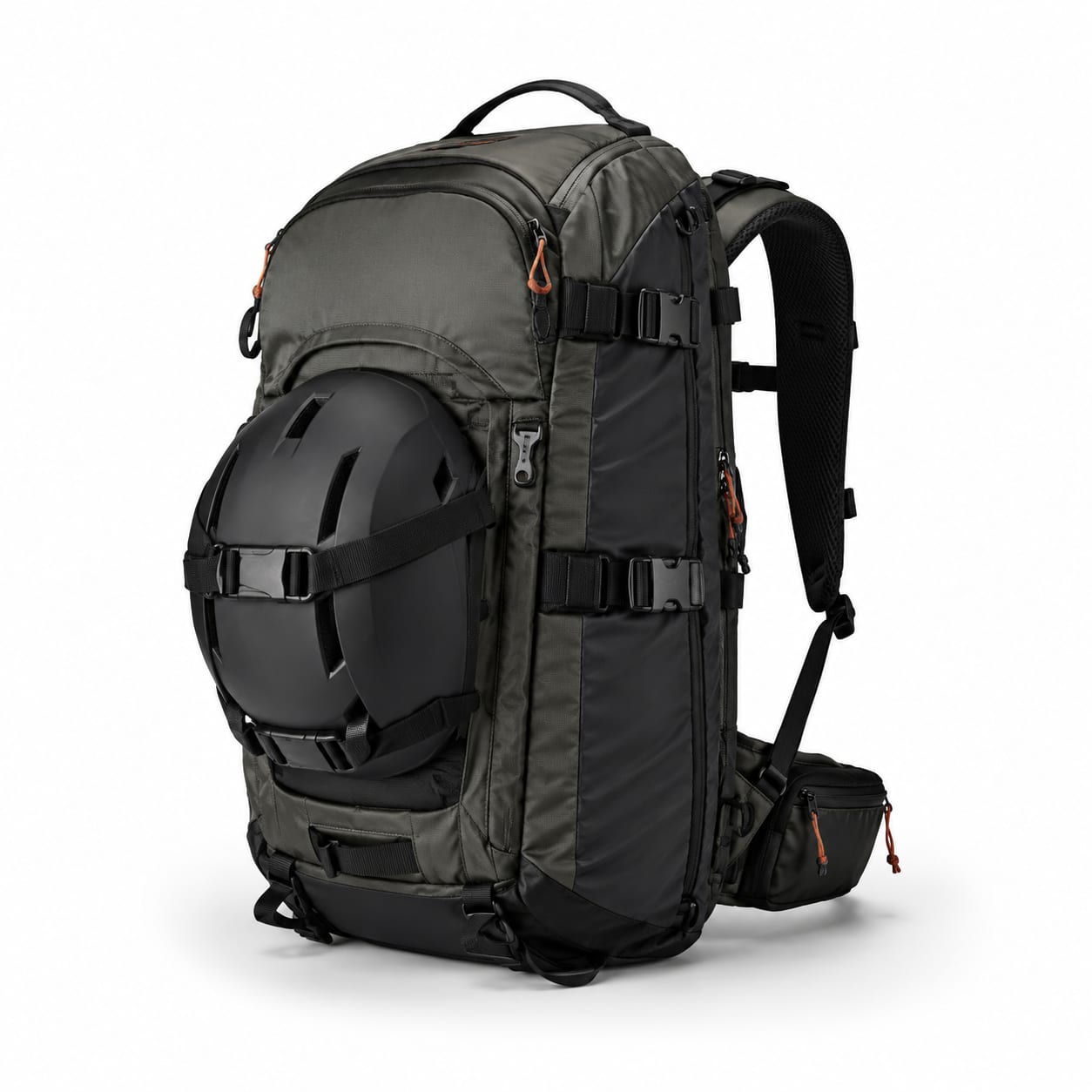
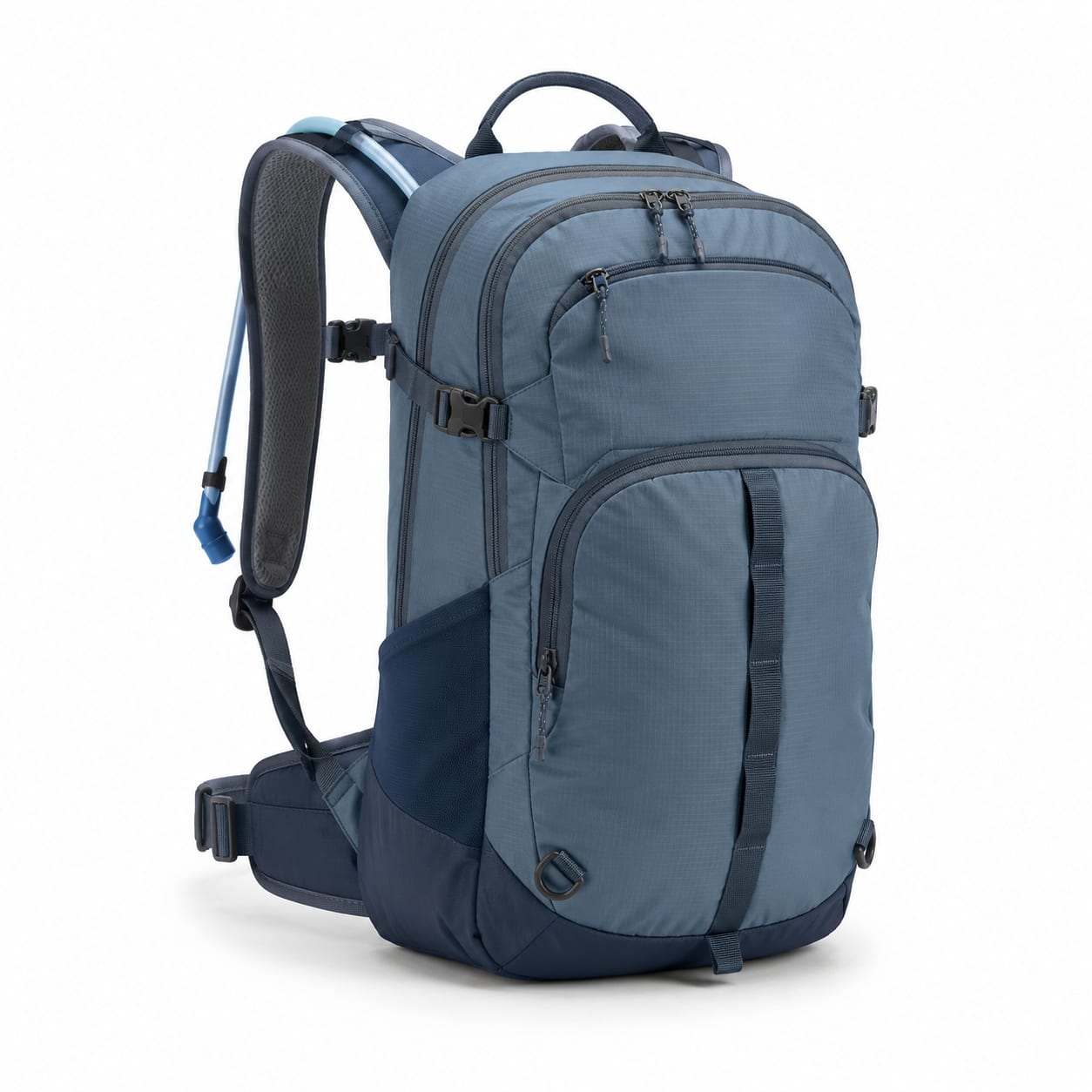
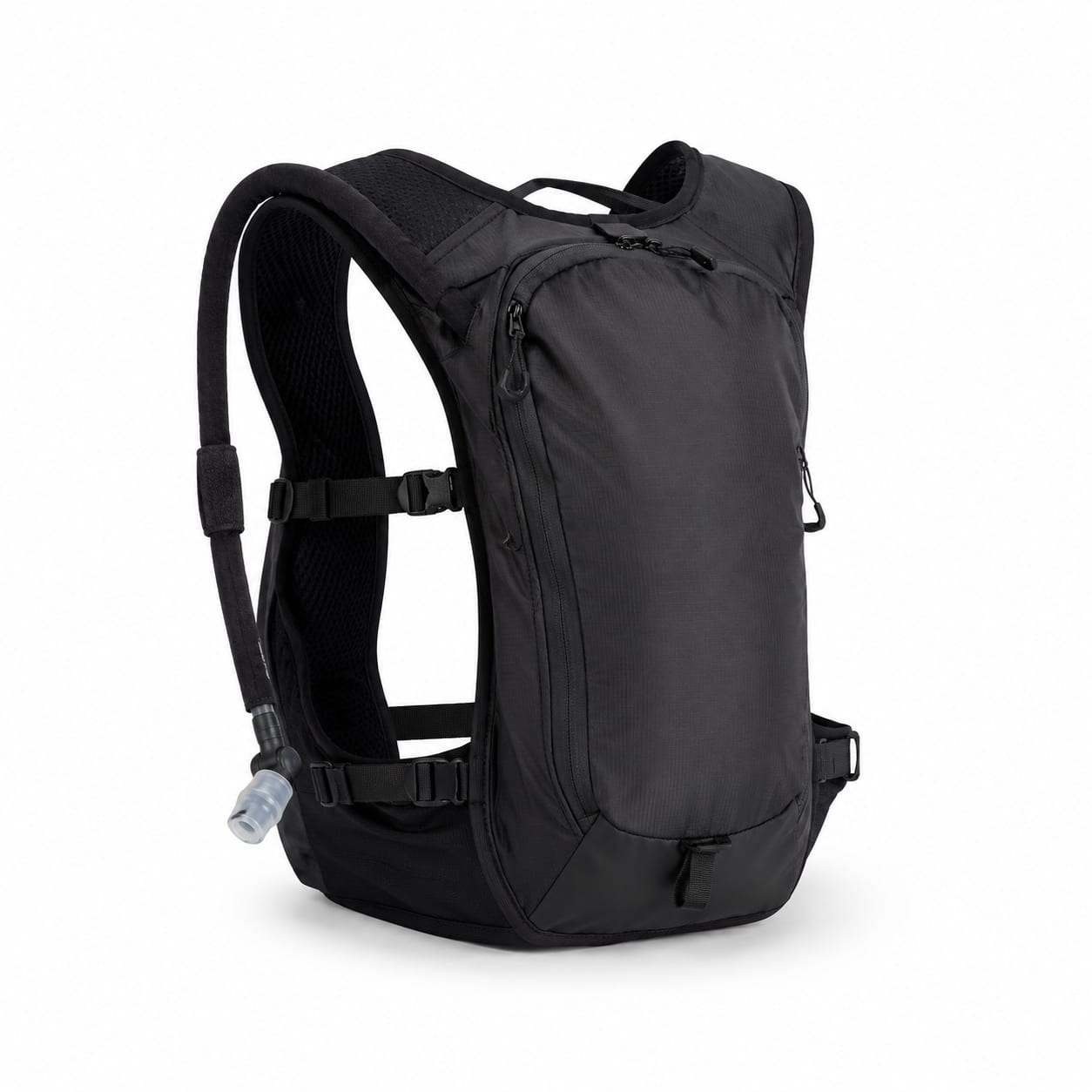
Volume / Capacity
capacity
What it means
The total storage volume of the backpack measured in liters, determining how much gear can be carried.
Typical for this type
35–50L
Most common pick: 40L
In practice
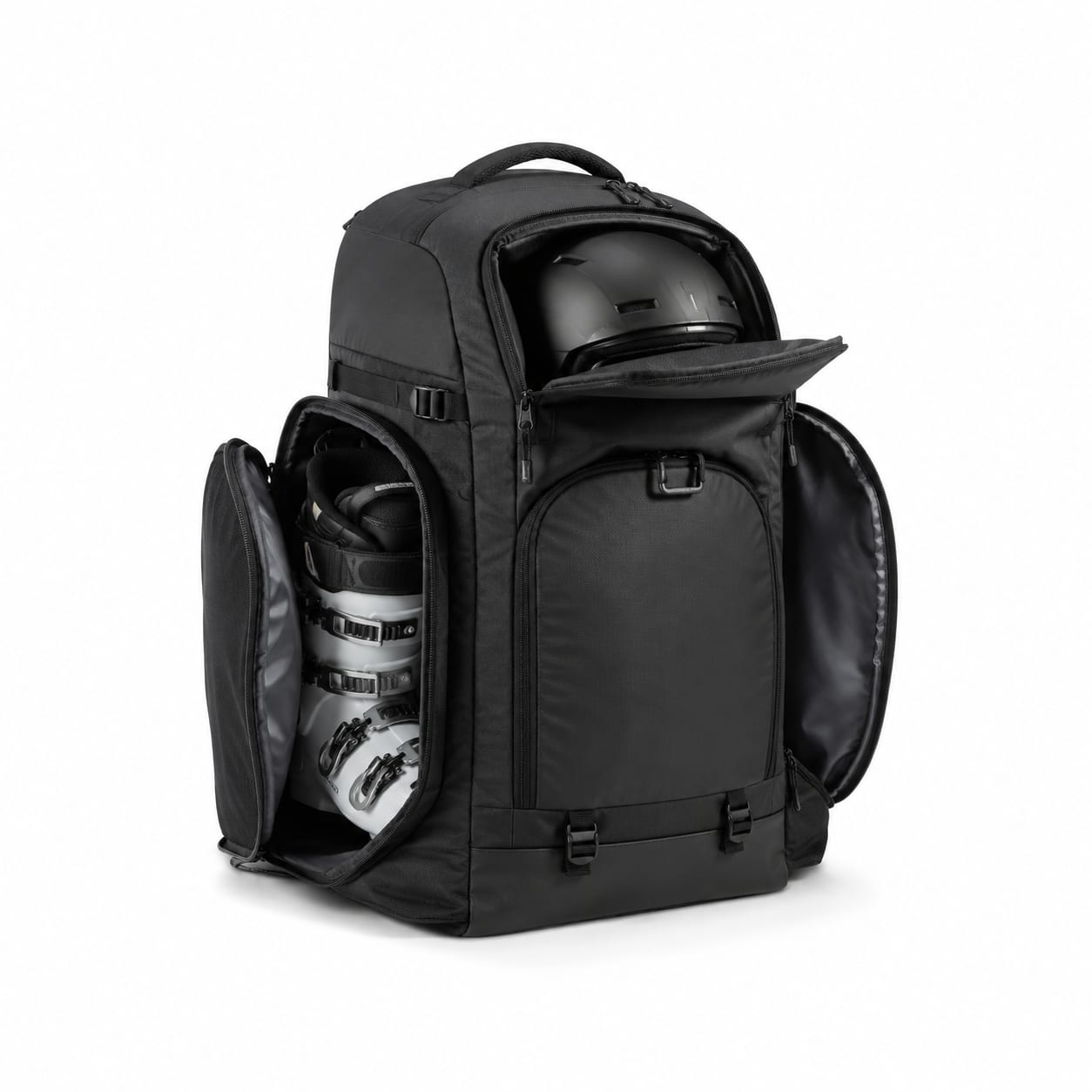
Ski boots consume 15–20L alone, so even minimal boot packs start around 35L. Most users need 40–45L to comfortably fit boots, helmet, goggles, and a change of clothes or extra layers.
Compared to other types
Larger than typical ski touring packs (25–35L) because boot transport requires dedicated compartment space that touring packs don't need.
Why it matters: Too small and you'll be strapping gear to the outside or leaving essentials behind. Too large and the pack becomes unwieldy when loaded with heavy boots at the bottom.
Ski Carry System
ski_carry_system
What it means
The method and configuration used to attach skis to the backpack for uphill travel or transport.
Typical for this type
Diagonal If You Need to Carry Skis Short Distances; None If You Only Transport Boots
Most common pick: Diagonal Or None
In practice
Most boot backpacks are not designed for ski carry—they're for getting boots to the lodge. Some models include a basic diagonal carry system for the walk from parking lot to base area, but this is a convenience feature, not a primary design focus.
Compared to other types
Touring packs prioritize A-frame carry for uphill balance. Boot packs rarely offer A-frame, and when they do include ski carry, it's usually a simpler diagonal system for short distances only.
Why it matters: If you need to carry skis from a distant parking lot to the lift, a diagonal system helps. But if you always carry skis by hand or on your shoulder, this feature adds unnecessary straps and weight.
Snowboard Carry
snowboard_carry
What it means
Whether and how the backpack can carry a snowboard.
Typical for this type
Vertical If You Snowboard; None For Ski-Only Users
Most common pick: None
In practice
The vast majority of ski boot backpacks do not include snowboard carry systems. A few hybrid models may offer vertical carry, but this is uncommon. Snowboarders typically need to look for dedicated snowboard boot bags or more versatile transport packs.
Compared to other types
Touring packs and resort packs more commonly include snowboard carry options. Boot backpacks are the least likely subcategory to offer this feature.
Why it matters: Snowboarders should not assume a ski boot backpack will carry their board. Check specifications carefully or consider a more general-purpose snow sports transport pack.
Avalanche Safety Gear Compartment
avalanche_gear_compartment
What it means
Dedicated, quick-access compartment for avalanche shovel, probe, and sometimes a first aid kit.
Typical for this type
None Is Standard; This Is Not A Backcountry Pack
In practice
Ski boot backpacks are designed for in-bounds resort use and transport, not backcountry touring. They do not include dedicated avalanche gear compartments. If you need to carry avalanche safety equipment, you need a touring pack.
Compared to other types
Touring packs always feature dedicated front-access avalanche compartments. Boot backpacks are the only ski backpack subcategory where the absence of this feature is expected and appropriate.
Why it matters: Never use a boot backpack for backcountry skiing. The lack of quick-access avalanche gear storage makes it inappropriate and potentially dangerous for out-of-bounds use.
Avalanche Airbag Compatibility
airbag_compatible
What it means
Whether the pack has an integrated avalanche airbag system or is compatible with removable airbag modules.
Typical for this type
None—This Is A Transport Pack, Not A Safety Device
In practice
No ski boot backpacks include or are compatible with avalanche airbag systems. These packs are for transport, not backcountry use. Airbag systems add weight and complexity that would be wasted on a lodge-to-lot pack.
Compared to other types
Touring packs frequently offer airbag compatibility or integrated systems. Boot backpacks never include this feature.
Why it matters: If you're shopping for a boot backpack, you don't need airbag compatibility. If you think you might, you're looking for the wrong type of pack.
Back Protection
back_protection
What it means
Integrated or compatible spine/back protector for impact protection during falls.
Typical for this type
None Is Standard; Not Needed For Transport Use
In practice
Ski boot backpacks do not include integrated or compatible back protectors. They are transport packs, not designed for on-mountain impact protection. The foam back panels in some models provide comfort, not certified impact protection.
Compared to other types
Resort and sidecountry packs sometimes include back protection. Boot backpacks never do—it would add unnecessary weight and cost for a pack that spends most of its time in the lodge or parking lot.
Why it matters: Don't confuse a padded back panel with a CE-certified back protector. If you need impact protection while skiing, wear a separate back protector vest under your jacket.
What it means
The weight of the empty backpack without any gear, airbag cartridge, or back protector insert.
Typical for this type
1000–1800g
Most common pick: 1200g
In practice
Boot backpacks tend to be heavier than similarly sized touring packs due to waterproof boot compartments, heavier-duty materials, and more organizational features. Typical weights range from 1000g for minimalist designs to 1800g for fully featured models with tarpaulin lining throughout.
Compared to other types
Heavier than touring packs of similar volume due to waterproof boot compartments and heavier materials. Touring packs prioritize weight savings; boot packs prioritize durability and wet-gear isolation.
Why it matters: Remember that you'll be adding 5–7 kg of wet boots on top of the pack weight. A lighter pack means less total load on your shoulders during that long walk from the far parking lot.
Torso Length / Back Length
torso_length
What it means
The length of the backpack's back panel and suspension system, determining fit for different torso sizes. Often available in multiple sizes (S/M, M/L, L/XL) or with adjustable back length.
Typical for this type
M/L Or Adjustable For Most Adults; Check Sizing If You'Re Under 5'6" Or Over 6'2"
Most common pick: M/L (43–50 cm torso)
In practice
Most boot backpacks come in one or two sizes, typically M/L to fit the majority of adults. Some models offer adjustable back length. Because these packs carry heavy, dense loads (wet boots), proper torso fit is more important than many buyers realize.
Compared to other types
Touring packs more commonly offer multiple size options and women-specific fits. Boot backpacks tend to have fewer size options, so adjustable back length is a valuable feature if available.
Why it matters: A poorly fitting pack loaded with heavy boots will ride low and pull on your shoulders. Proper torso length ensures the hip belt can transfer load effectively, which matters when you're carrying 10+ kg of gear.
Hydration System Compatibility
hydration_compatible
What it means
Whether the pack supports a hydration reservoir/bladder and/or has insulated hose routing to prevent freezing.
Typical for this type
Bottle Pockets Are Standard; Reservoir Sleeve Is A Bonus For Long Travel Days
Most common pick: Water Bottle Pockets Only
In practice
Most ski boot backpacks include side water bottle pockets rather than internal reservoir systems. Since these packs are primarily for transport rather than active skiing, the convenience of a bottle pocket outweighs the need for hands-free hydration. A few models include a reservoir sleeve for all-day resort use.
Compared to other types
Touring packs almost always feature insulated hose routing for on-the-go hydration. Boot backpacks prioritize simple bottle storage since they're not designed for continuous active use.
Why it matters: For the walk to and from the lodge, a water bottle pocket is sufficient. If you plan to use the pack as your primary on-mountain pack at the resort, a reservoir sleeve with insulated routing is worth having.
Hip Belt Type
hip_belt_type
What it means
The style and padding level of the hip belt, which transfers load from shoulders to hips.
Typical for this type
Padded Removable For Packs 40L+; Webbing Acceptable For Smaller Or Lighter Loads
Most common pick: Padded, Removable Or Webbing
In practice
Hip belt type varies significantly among boot backpacks. Smaller models may use simple webbing straps, while larger packs often include padded removable belts. Given the heavy loads (boots plus gear), a padded hip belt significantly improves comfort for longer walks.
Compared to other types
Touring packs almost always feature padded hip belts, often with pockets. Boot backpacks are more variable, with some models surprisingly lacking adequate hip support for the loads they're designed to carry.
Why it matters: Wet ski boots are heavy. A padded hip belt transfers load to your hips instead of your shoulders, making the difference between a comfortable walk and a painful one—especially from distant parking lots.
Helmet Carry System
helmet_carry
What it means
External attachment point or net to carry a ski helmet when not wearing it.
Typical for this type
External Net/Clip For Convenience; Internal If You Prefer Protected Storage
Most common pick: External Net/Clip Or Internal Storage
In practice
Most ski boot backpacks include some form of helmet carry since transporting a helmet is a primary use case. External net systems are common and convenient, allowing quick access. Some models have enough internal volume to store the helmet inside the main compartment, which protects it but consumes significant space.
Compared to other types
Helmet carry is more important and more commonly featured in boot backpacks than in touring packs, where riders typically wear their helmets all day. Boot backpacks are specifically designed for the transport scenario where the helmet comes off.
Why it matters: Since you're already carrying boots, adding a helmet to the load makes sense. A dedicated helmet carry system prevents the helmet from bouncing around or getting damaged during transport.
Goggle Pocket
goggle_pocket
What it means
A soft-lined internal or external pocket designed to protect goggles from scratches when stored.
Typical for this type
Fleece-Lined Internal Is Ideal; External Is Acceptable For Quick Access
Most common pick: Fleece-Lined Internal Pocket
In practice
Most quality ski boot backpacks include a fleece-lined pocket for goggle protection. This is a key feature since goggles are expensive and easily scratched when tossed in with boots and other gear. Internal pockets offer better protection; external pockets offer quicker access.
Compared to other types
Goggle pockets are more consistently included in boot backpacks than in touring packs, since the transport use case involves removing and storing goggles more frequently.
Why it matters: Replacing a scratched goggle lens costs $50–120. A fleece-lined pocket protects this investment and keeps your goggles fog-free and ready to wear.
Material / Durability
material_durability
What it means
The primary fabric type and denier rating indicating abrasion resistance and durability of the pack construction.
Typical for this type
Midweight Nylon Body With Tarpaulin Or Heavy-Duty Nylon Boot Compartments
Most common pick: Midweight nylon (200D–400D) with tarpaulin boot compartments
In practice
The body of most boot backpacks uses midweight nylon (200–400D) for a balance of weight and durability. Boot compartments typically use heavier tarpaulin or coated nylon to handle wet boots, sharp buckles, and abrasion. The bottom of the pack often has reinforced material since it contacts wet ground frequently.
Compared to other types
Boot backpacks use heavier, more water-resistant materials in boot compartments compared to touring packs. Touring packs prioritize overall weight savings; boot packs prioritize wet-gear containment and durability against sharp buckles.
Why it matters: Ski boot buckles are sharp and will abrade lightweight fabrics. The boot compartments need to withstand this abuse while also containing meltwater. Reinforced bottom panels prevent wear from setting the pack on wet pavement.
Water Resistance
water_resistance
What it means
The level of water and snow protection the pack provides for contents.
Typical for this type
DWR-Coated Body With Waterproof/Tarpaulin Boot Compartments Is Standard
Most common pick: DWR Coated With Waterproof Boot Compartments
In practice
Ski boot backpacks face a unique water resistance challenge: they must contain melting snow from boots while keeping dry gear dry. The main body typically has DWR coating for snow resistance, while boot compartments use fully waterproof tarpaulin or sealed seams to contain meltwater. Some models include drainage holes in boot compartments.
Compared to other types
Boot backpacks have more aggressive water resistance in specific compartments compared to touring packs. Touring packs need overall water resistance; boot packs need targeted waterproofing where wet boots live.
Why it matters: Without waterproof boot compartments, meltwater will soak through to your dry clothes, electronics, and car interior. This is the primary functional requirement that distinguishes a boot backpack from a regular backpack.
What it means
How the main compartment of the backpack is accessed—determines ease of gear retrieval and organization.
Typical for this type
Top-Loading Main Compartment With Side Or Bottom Boot Access Is Most Common
Most common pick: Top-Loading With Side Boot Pockets
In practice
The most common access configuration is a top-loading main compartment for dry gear, combined with side or bottom zippered pockets for boots. Some models use front panel (clamshell) access for the main compartment, which makes organization easier. Back panel access is rare in boot backpacks.
Compared to other types
Touring packs often feature back panel access for use with skis attached. Boot backpacks prioritize side access for boots and top or front access for main gear—reflecting their transport-focused design.
Why it matters: Side boot pockets allow you to load and unload boots without opening the main compartment, keeping wet and dry gear separate. Front panel access to the main compartment helps you find layers and gear without unpacking everything.
Chest Strap Features
chest_strap_features
What it means
Features of the sternum/chest strap including adjustability, whistle, and height positioning.
Typical for this type
Height Adjustable Is Important For Comfort With Varying Layer Thickness
Most common pick: Height Adjustable With Integrated Whistle
In practice
Most boot backpacks include a height-adjustable chest strap, and many feature an integrated emergency whistle. Elastic sections are less common than in touring packs since these aren't designed for high-output aerobic use. The chest strap helps stabilize heavy loads during transport.
Compared to other types
Touring packs more commonly feature elastic chest strap sections for breathing comfort during uphill skinning. Boot backpacks focus on load stabilization for walking comfort.
Why it matters: When carrying heavy boots, a properly positioned chest strap prevents the shoulder straps from sliding off and helps distribute load. Height adjustability ensures correct positioning whether you're wearing a thin base layer or a thick jacket.
Compression System
compression_system
What it means
Side or vertical compression straps that tighten the pack load to prevent shifting and reduce volume when partially full.
Typical for this type
Side Compression Is Standard; Dual Compression For Larger Packs
Most common pick: Side Compression Straps
In practice
Side compression straps are the most common system on ski boot backpacks. They help stabilize the load and reduce pack volume when you're carrying less gear on the return trip. Since boot compartments are often rigid or semi-rigid, compression primarily affects the main compartment.
Compared to other types
Similar to touring packs, side compression is standard. However, boot backpacks may have less effective compression due to the rigid structure of waterproof boot compartments that don't compress.
Why it matters: On the return trip, your pack may be less full (consumed food, shed layers). Compression straps prevent gear from shifting and keep the pack compact and stable for comfortable walking.