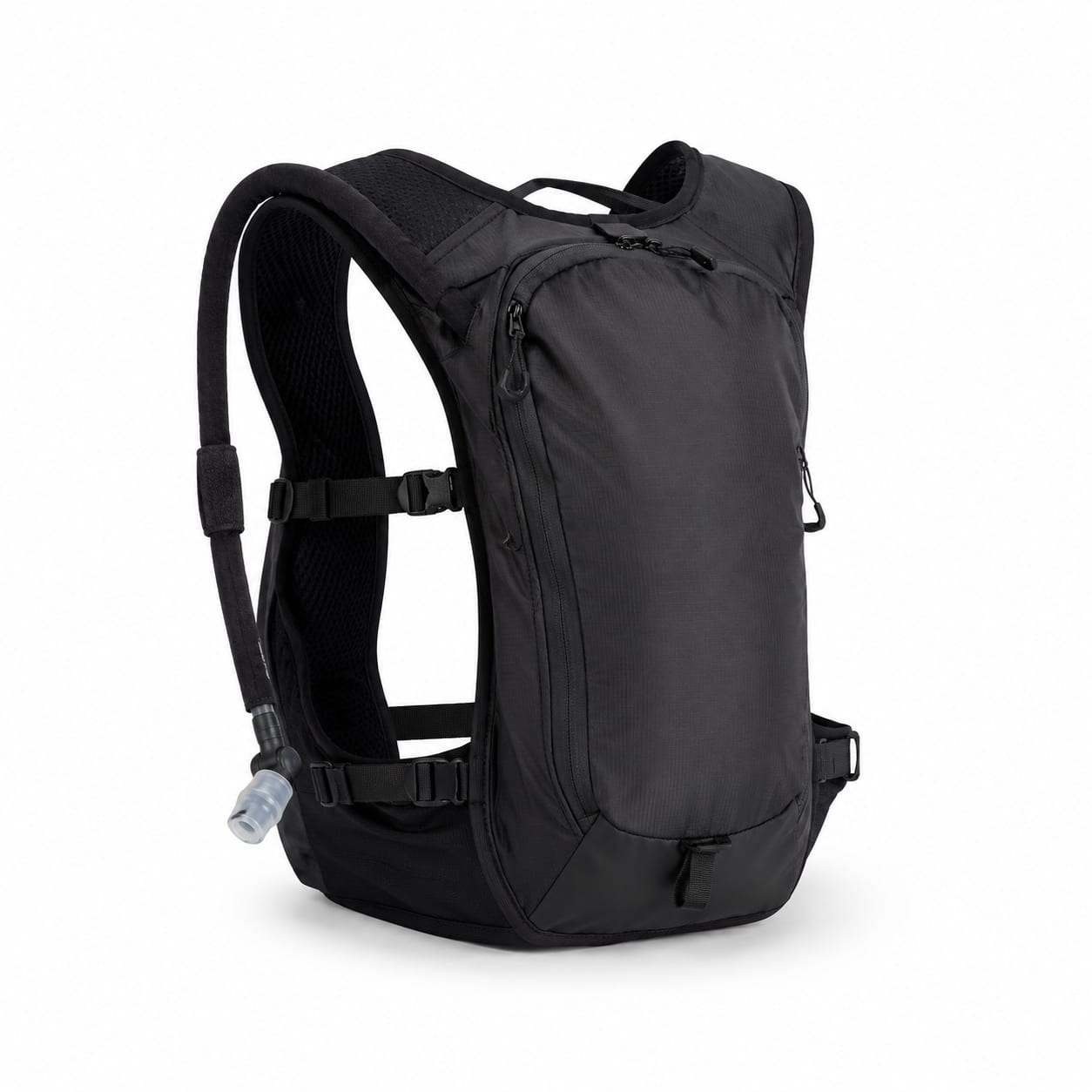
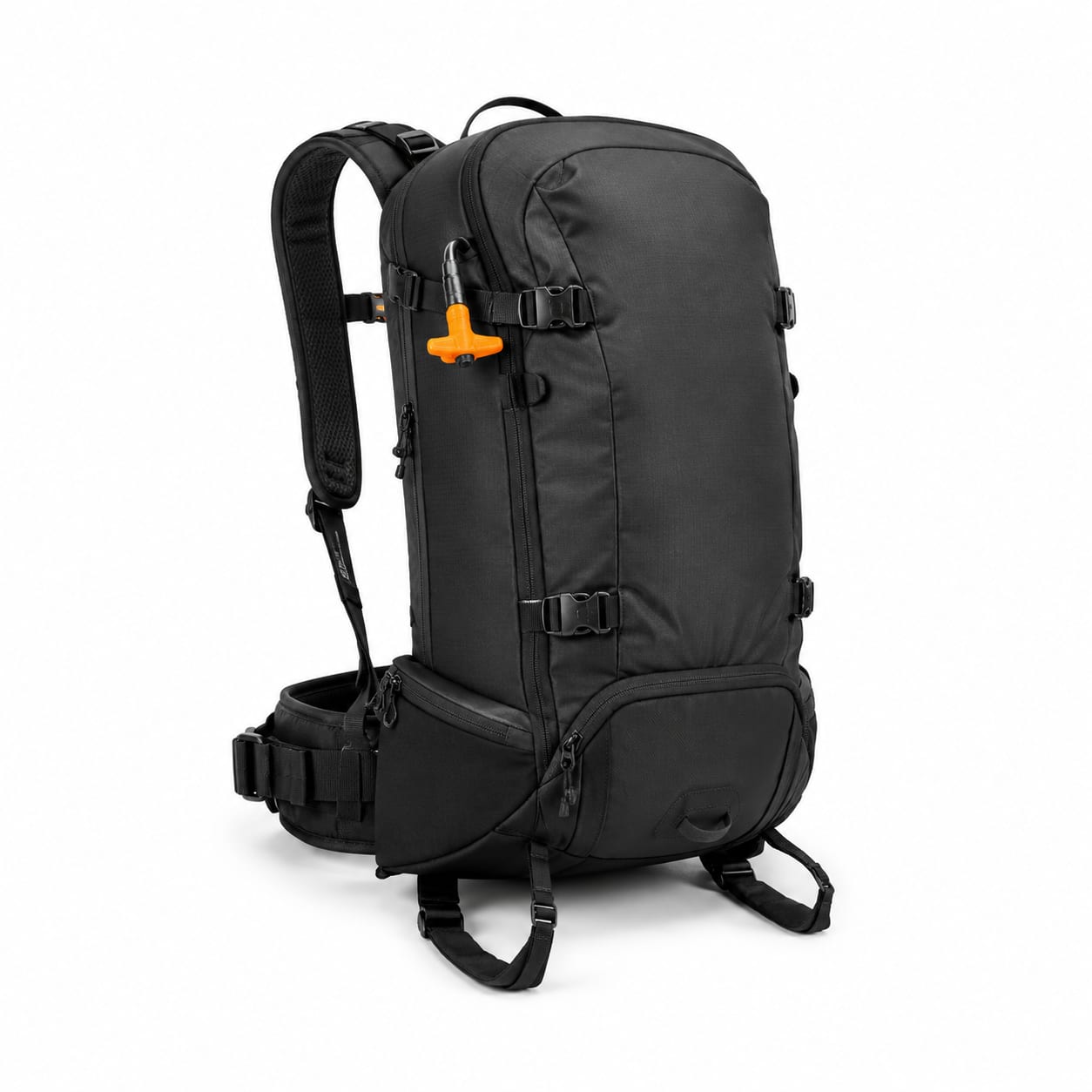
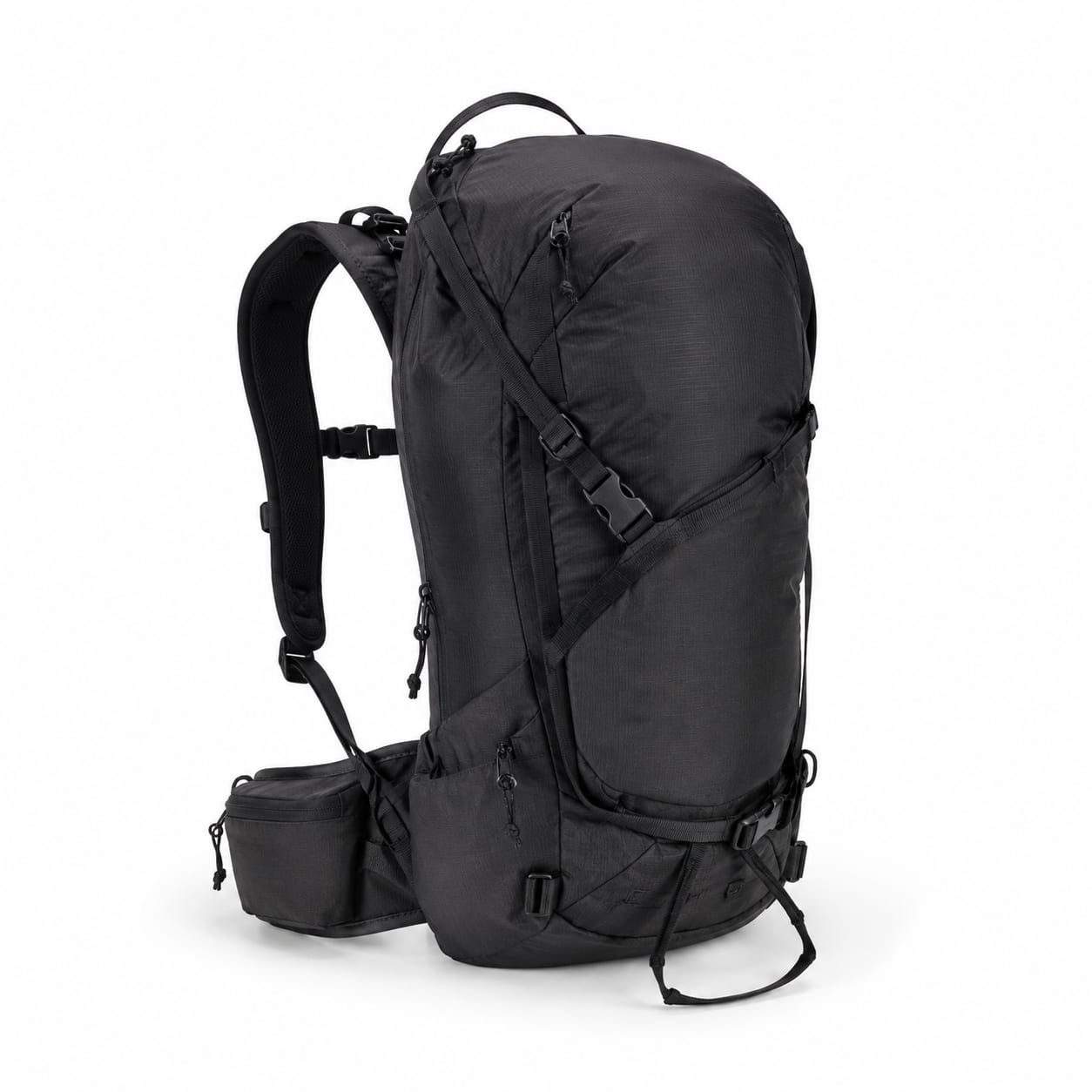
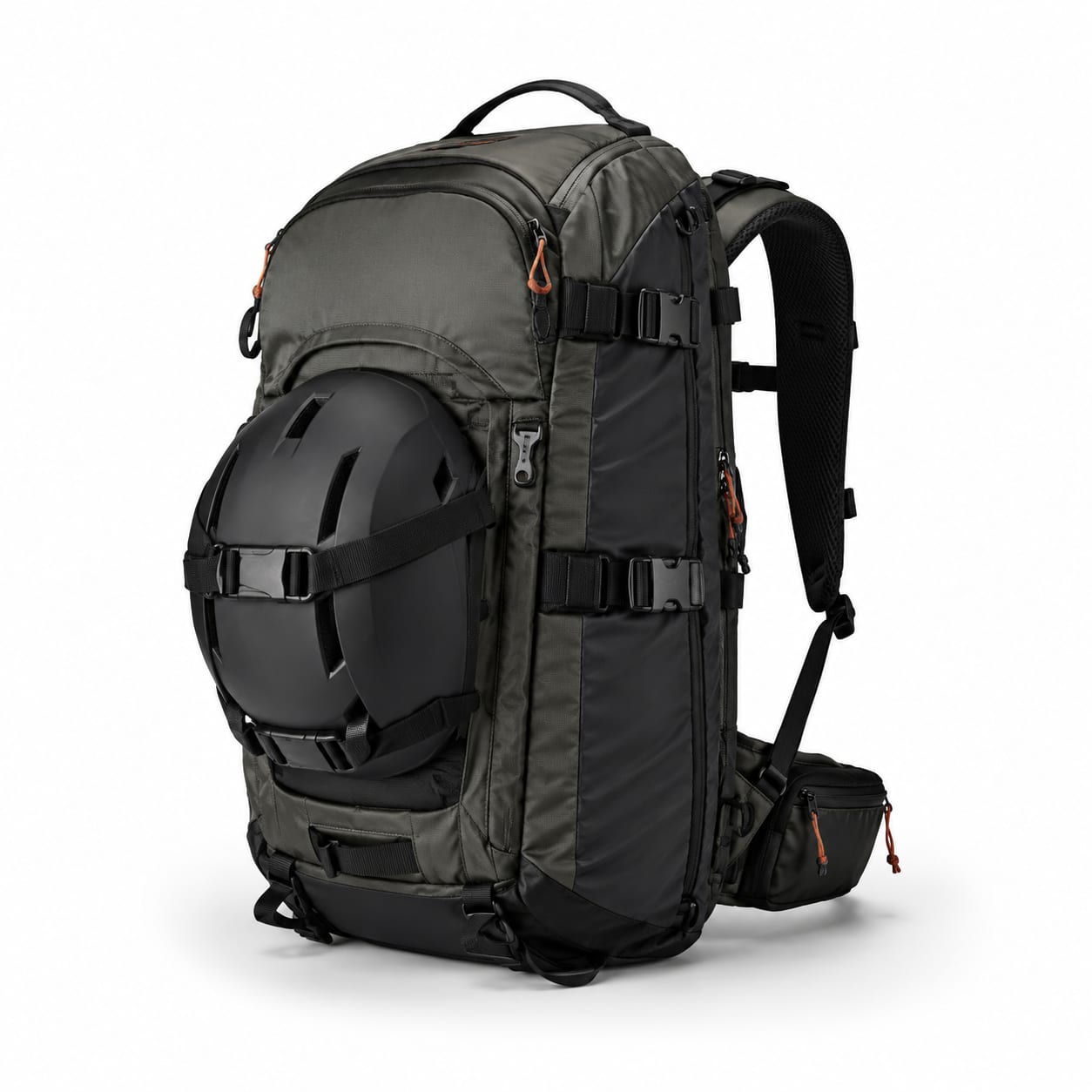
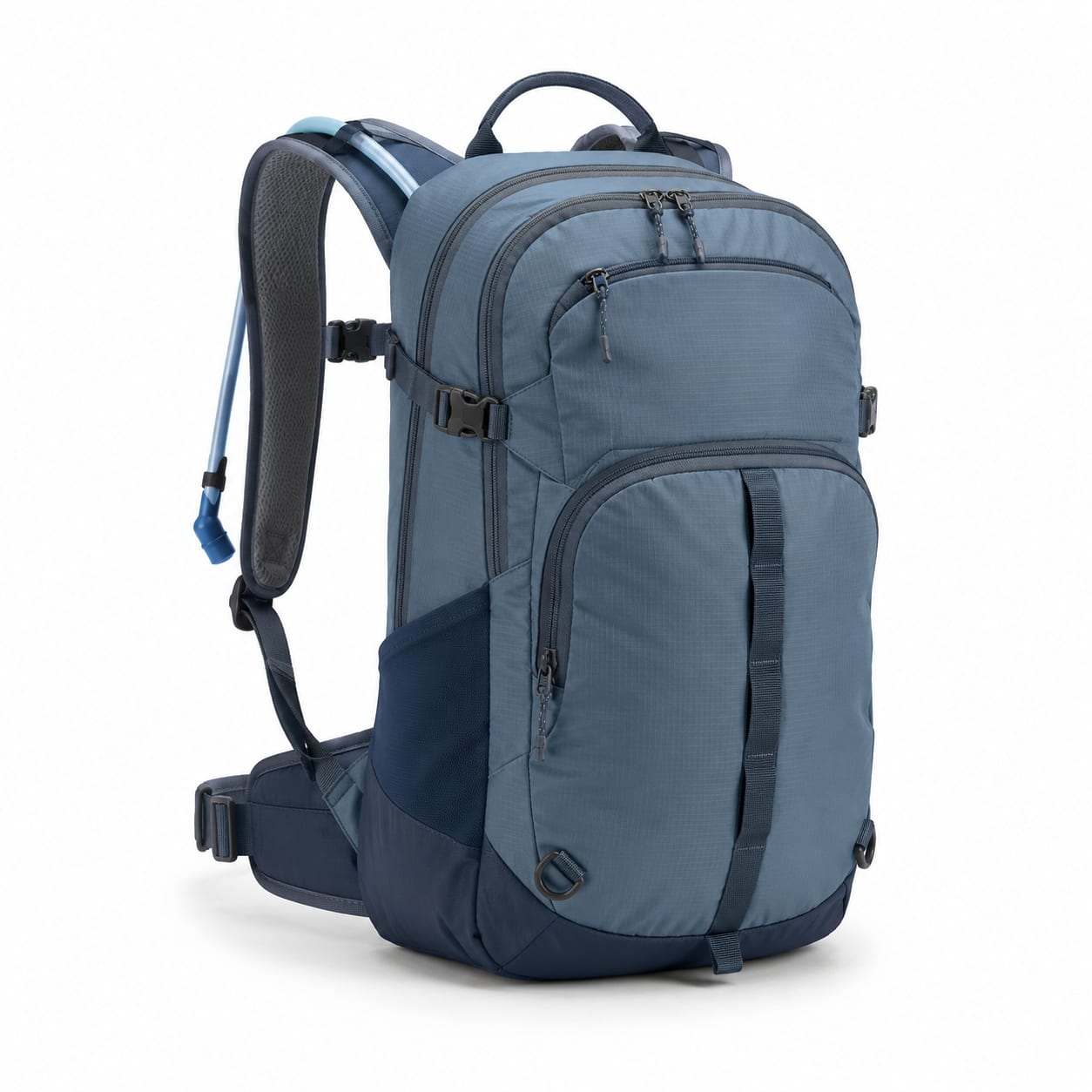
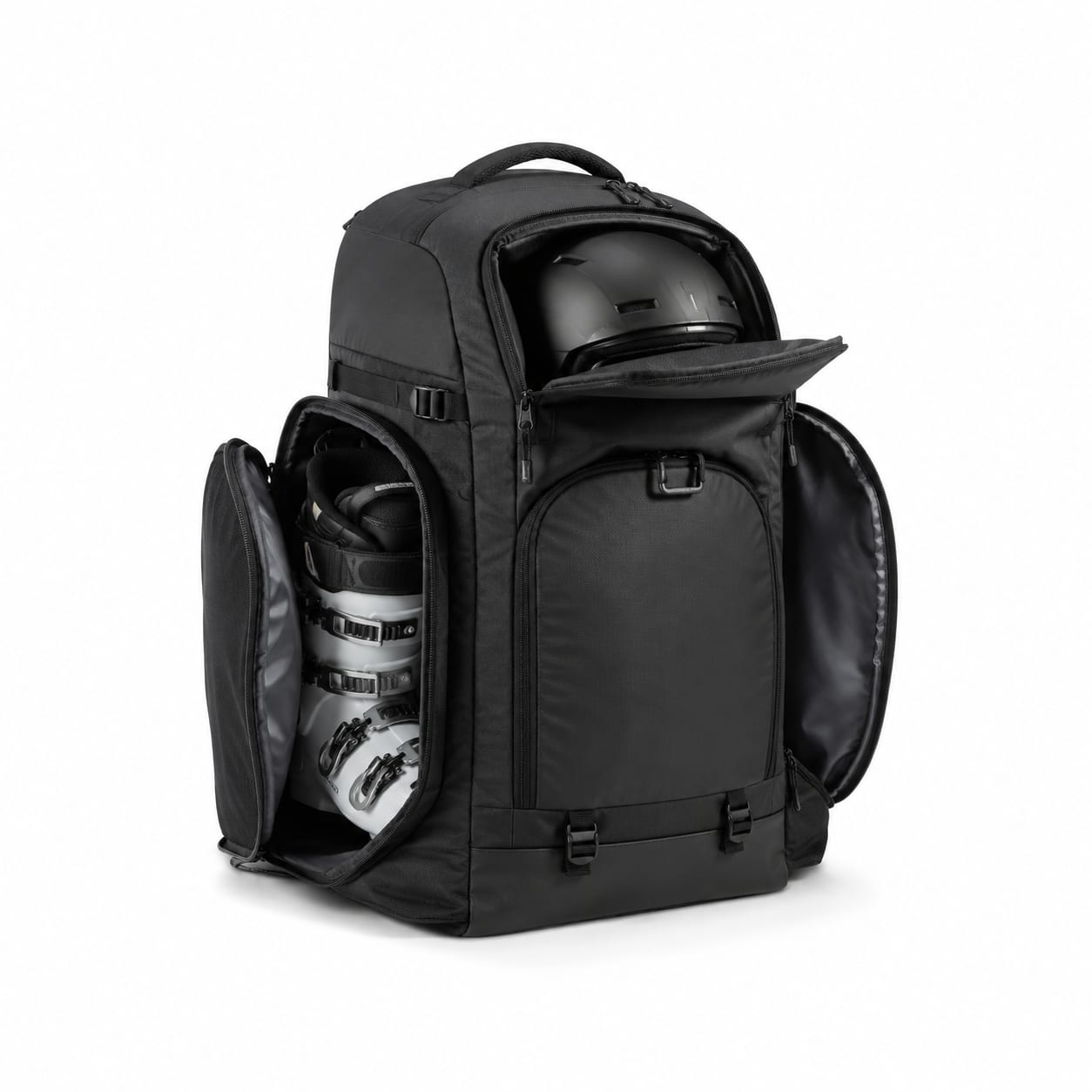
Hydration Ski Packs are a specialized subcategory of ski backpacks engineered around the principle that reliable, hands-free hydration in freezing conditions is not a luxury—it is a safety and performance necessity. These packs integrate a hydration reservoir bladder (typically 1.5–3L) into a dedicated internal sleeve, with an insulated hose that routes through the shoulder strap and terminates at a bite valve positioned near the collarbone or chest strap. The insulation and hose routing design are the defining differentiators: standard ski packs may offer a reservoir sleeve, but hydration ski packs go further with fully wrapped insulated hose covers, bite valve shelters, and sometimes heated hose systems to ensure water flows at -20°C and below. Most feature magnetic or snap-in bite valve retention on the shoulder strap so you can drink one-handed without taking your hands off your poles. Capacities typically range from 12–25L, reflecting their focus on fluid carry plus essentials (layers, snacks, safety gear) rather than full touring loads. Many include an avalanche safety gear compartment for backcountry use, though some resort-oriented models omit this to save weight and volume. The hip belt is often minimal (webbing or lightly padded) since loads are lighter, and the overall pack weight tends to be 600–1100g empty. Ski carry systems are usually diagonal or A-frame depending on the model, and snowboard carry is less common but available on select models. These packs excel for in-bounds resort skiing, sidecountry laps, fitness-oriented skinning, and spring touring where hydration demands are highest. They are less suited for full-day backcountry tours requiring 30L+ of gear capacity or multi-day hut trips where a larger touring pack is necessary.
Staying hydrated while skiing is significantly harder than most people realize. Cold air suppresses thirst sensation, heavy breathing at altitude accelerates fluid loss, and the logistics of drinking from a bottle while wearing gloves, a helmet, and a backpack make it easy to skip water entirely until dehydration symptoms appear—fatigue, cramping, poor decision-making, and increased injury risk. Hydration ski packs solve this problem by integrating a drinking system directly into the pack architecture so that water access requires only reaching for the bite valve near your chin, not stopping, removing gloves, and unscrewing a bottle.
The critical engineering challenge for hydration ski packs is freeze prevention. When temperatures drop below -5°C, water in an exposed hydration hose can freeze solid in minutes, rendering the system useless exactly when you need it most. Quality hydration ski packs address this with multi-layer insulation: the reservoir sits in an internal sleeve against your back (where body heat keeps it warm), the hose is wrapped in a closed-cell foam or reflective insulated sleeve, and the bite valve is housed in a small shelter or cover that protects it from wind and spray. Some premium models include neoprene-wrapped hoses with additional thermal layers, and a few high-end options offer battery-powered heated hose systems for extreme cold. A universal best practice—regardless of pack insulation quality—is to blow air back through the hose after each sip, clearing the tube of water that could freeze between drinks.
Capacity and organization in hydration ski packs reflect their focused mission. Most range from 12–25L, enough for a hydration bladder (which consumes 1.5–3L of internal volume when full), a spare layer, snacks, and basic safety gear. The reservoir sleeve is typically positioned against the back panel for stability and warmth, with a dedicated port for the hose to exit cleanly. Some packs use a quick-disconnect fitting at the reservoir so you can refill without threading the hose through the pack. The main compartment is often simpler than a full touring pack, with fewer internal dividers, since the hydration system is the organizational centerpiece. External features like helmet nets, goggle pockets, and hip belt pockets vary by model, but the hose routing and bite valve retention are always the stars of the show.
For backcountry users, it is essential to verify that a hydration ski pack includes a dedicated avalanche safety gear compartment. Some models prioritize hydration for resort use and lack a proper shovel/probe pocket, making them unsuitable for out-of-bounds travel. The best backcountry-compatible hydration packs combine insulated hose routing with a dedicated front avy gear pocket, giving you both reliable hydration and fast emergency access. Weight is another consideration: the hydration system itself (reservoir, hose, insulation) adds 200–400g to the pack, so these packs are slightly heavier than equivalent non-hydration models. However, the convenience and safety benefit of consistent hydration almost always outweighs the weight penalty, especially on high-output days when fluid loss can exceed 1L per hour.