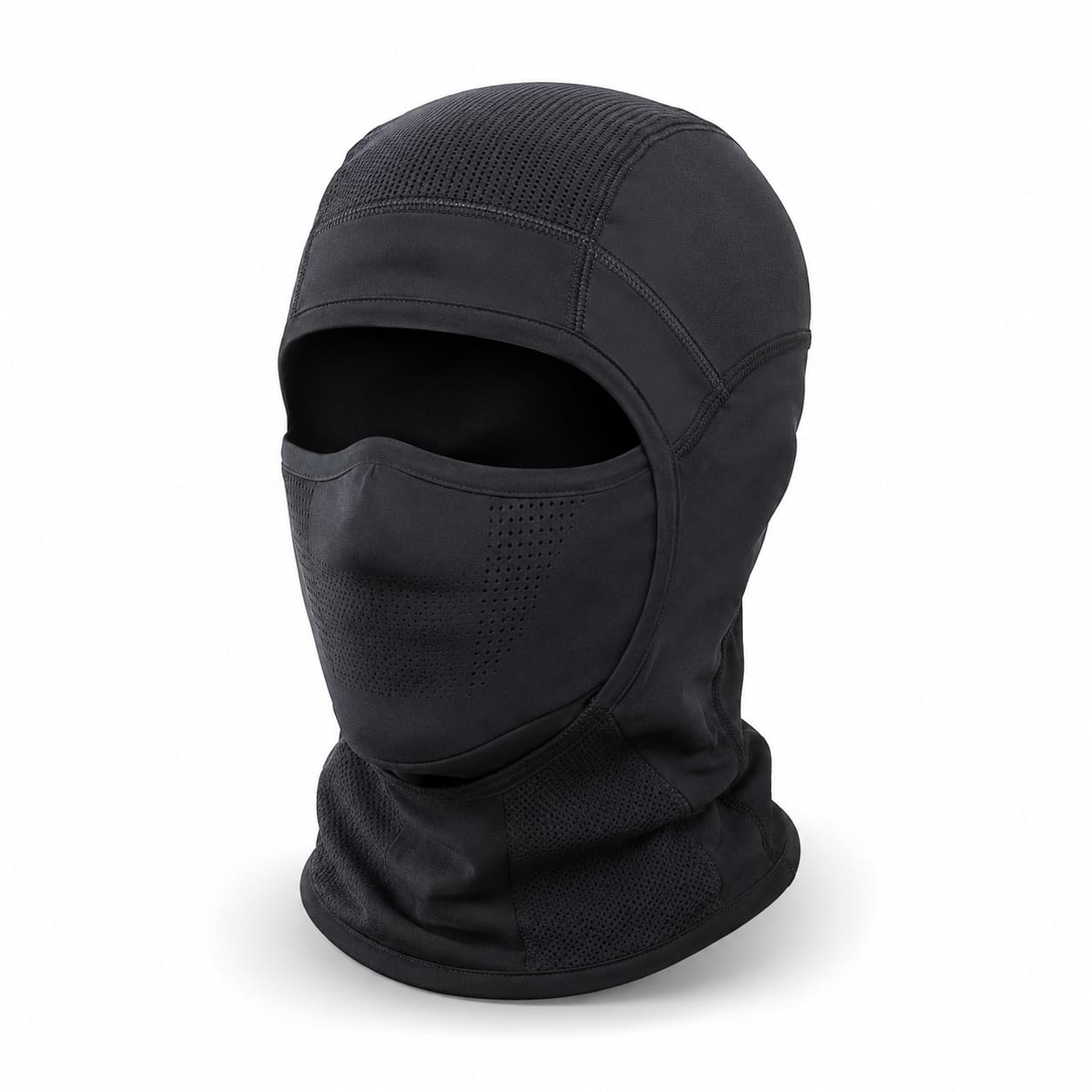
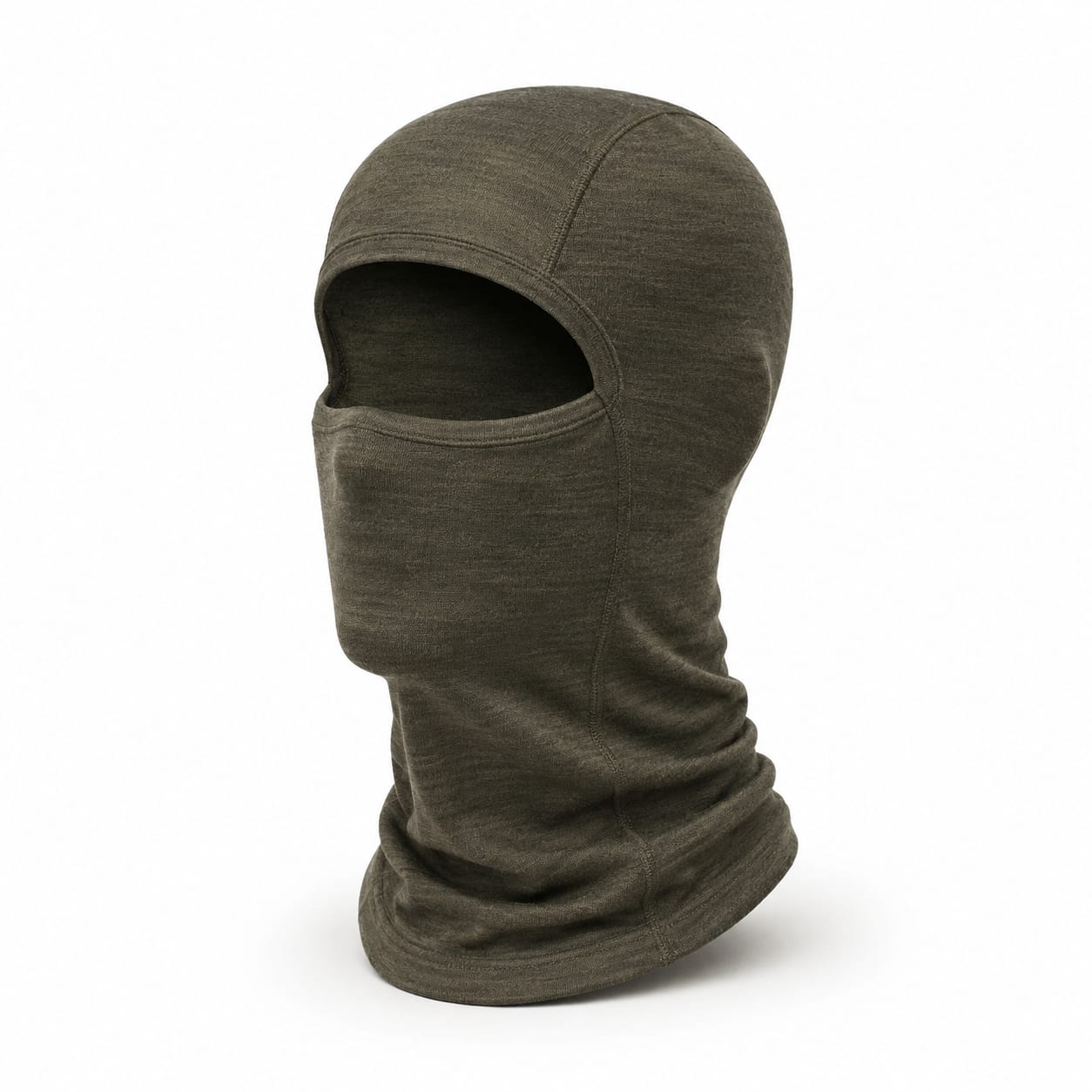
Kitvore.com

Kitvore.com

Specs that matter. Gear that fits.

Ski Balaclava · Subcategory

Convertible Balaclava

A versatile balaclava with a hinged or detachable lower face panel that adjusts from full coverage to open-face on the fly.

The convertible balaclava is the most adaptable face protection option for skiers and snowboarders who encounter changing conditions throughout the day. Featuring a hinged or removable lower face section, it transitions seamlessly between full-face storm protection and open-face ventilation—perfect for the temperature swing between freezing chairlift rides and high-exertion descents. If you want one piece of facewear that handles everything from blizzard mornings to sunny afternoon groomers, this is it.

$20 – $65mid tierintermediateadvancedexpert

Best known for

On-the-fly adjustability between full and open face coverageVersatility across variable weather conditions in a single dayEliminating the need to carry multiple balaclavasConvenient lift-ride ventilation without full removal
Convertible Balaclava

Guide

Detailed overview

The convertible balaclava distinguishes itself from fixed-coverage designs through a hinged, foldable, or detachable lower face panel that allows the wearer to switch between full-face protection and reduced coverage without removing the garment or their helmet. This adjustability makes it the preferred choice for skiers and snowboarders who experience wide temperature swings during a day on the mountain—from sub-zero wind chill on exposed chairlifts to mild conditions during aggressive spring skiing. The hinge mechanism typically sits below the nose or at the cheekbone line, allowing the lower panel to drop down around the neck or chin when not needed. Most convertible designs use a combination of stretch fabrics and strategic seam placement to maintain a seal when the panel is up while allowing easy one-handed operation with gloves. The trade-off for this versatility is slight additional bulk at the hinge point and a potential for small gaps when the face panel is configured down, though well-engineered models minimize both issues effectively.

Convertible balaclavas fill a critical niche for riders who refuse to compromise between protection and comfort. On a typical mountain day, conditions can shift dramatically—from biting wind on a summit lift ride to still, sun-warmed afternoons on lower mountain groomers. A fixed full-face balaclava that feels essential at 9 AM becomes a sweaty, fog-inducing liability by noon. The convertible design solves this by letting you drop the lower face panel during high-exertion runs or warm periods, then pull it back up for the next chairlift ride. This on-the-go adaptability means you actually keep the balaclava on rather than stowing it in a pocket, which translates to more consistent protection throughout the day.

The engineering behind a good convertible balaclava is more sophisticated than it appears. The hinge point must balance flexibility with structural integrity—too stiff and the panel won't stay down when you want it to, too loose and it won't seal properly when pulled up. Premium models use articulated seaming, internal wire edges, or magnetic closures to achieve reliable positioning in both configurations. The face panel should overlap the upper portion when raised, creating a shingled seal that blocks wind and prevents gaps. When lowered, the panel should tuck neatly against the neck or chest without bunching under your jacket collar. These details separate a well-designed convertible from a frustrating one that flops around or leaks cold air.

Fabric selection in convertible balaclavas often employs a hybrid approach, recognizing that different zones have different priorities. The lower face panel benefits from wind-resistant materials since it faces directly into oncoming air on descents, while the crown and neck areas prioritize stretch and moisture management under a helmet. Many of the best models use windproof or highly wind-resistant panels at the front with breathable, wicking fabrics elsewhere. This zoned construction is particularly valuable in convertible designs because the lower panel must provide genuine storm protection when raised but also breathe adequately when you're working hard with the panel down. Mesh breath zones over the mouth area are common and help manage condensation regardless of the panel position.

For riders who ski multiple days per season across varying conditions, the convertible balaclava is arguably the most practical single face protection investment. It eliminates the need to pack both a full-face and an open-face option, saving space and simplifying gear decisions. It's especially valuable for ski trips where you might encounter everything from powder storms to bluebird days. The key is selecting a model with a well-executed hinge mechanism and quality fabric—budget convertible balaclavas often cut corners on the hinge design, resulting in a garment that doesn't seal properly in either configuration. Spending a bit more on a thoughtfully engineered model pays dividends in comfort and reliability season after season.

Quick facts

Primary purpose
Adaptable face protection that adjusts to changing conditions and comfort needs
Popular brands
Outdoor ResearchSeirusBlackStrapThe North FacePatagonia
Typical terrain
All mountainBackcountryTouringVariable conditions

What makes it different

Transforms between full balaclava, neck gaiter, and beanie; most versatile design

Recommended ranges

How this type usually specs out

Each spec is explained in plain language, then we show what buyers usually look for on this type.

Coverage Style

Coverage Style

What it means

The extent and configuration of face and head coverage provided by the balaclava, determining how much skin is exposed and how the garment interfaces with goggles and helmets.

Typical for this type

Convertible (This Is The Defining Characteristic Of The Subcategory)

In practice

Convertible balaclavas feature a hinged or detachable lower face section that can be pulled down to the chin or neck, effectively converting from full-face to half-face or open-face coverage. The hinge typically sits below the nose or at the cheekbone line.

Compared to other types

Unlike fixed full-face balaclavas that trap heat and moisture during exertion, or open-face designs that offer no face protection when conditions deteriorate, the convertible provides both capabilities in a single piece. The trade-off is slight bulk at the hinge and potential for minor gaps.

Why it matters: This adjustability is the entire value proposition—it allows the rider to adapt to changing conditions, exertion levels, and personal comfort without removing the balaclava or helmet. One garment replaces two.

Primary Fabric Material

Primary Fabric Material

What it means

The main material used in construction, which determines warmth, breathability, moisture management, stretch, and feel against skin.

Typical for this type

Hybrid Multi Zone Or Polyester Fleece With Windproof Panels

In practice

Convertible balaclavas frequently use hybrid multi-zone construction because the lower face panel needs wind resistance while the crown and neck need breathability and stretch. Polyester fleece is the most common single-fabric option, often with a windproof front panel bonded to the lower section.

Compared to other types

Fixed full-face balaclavas can get away with a single fabric since the use case is more defined. Convertibles benefit more from hybrid construction than any other subcategory because they must perform well in multiple configurations.

Why it matters: The fabric choice directly impacts whether the convertible design works well in both configurations. A purely windproof fabric will be too clammy with the panel up; a purely breathable fabric won't protect adequately with the panel up in wind. Hybrid construction resolves this tension.

Weight

Weight

What it means

The total weight of the balaclava in grams, affecting packability, layering comfort, and perceived bulk under a helmet.

Typical for this type

60–110g

Most common pick: 75g

In practice

Convertible balaclavas typically fall in the midweight range due to the additional fabric and hinge mechanism. The overlapping panel construction and any windproof membranes add modest weight compared to simple pull-over designs.

Compared to other types

Lighter than extreme-cold fixed full-face models (which can reach 150–200g with thick fleece and membranes) but heavier than minimalist open-face designs (30–50g). The weight is well-justified by the dual functionality.

Why it matters: Weight affects comfort under a helmet and packability when stowed. Convertibles are slightly heavier than basic balaclavas but the versatility benefit far outweighs the modest weight penalty of 15–30 grams.

Wind Resistance

Wind Resistance

What it means

The degree to which the balaclava blocks wind penetration, critical for comfort on exposed chairlifts and high-speed descents.

Typical for this type

Highly Wind Resistant to Windproof For The Lower Face Panel

In practice

The lower face panel of a good convertible balaclava should be highly wind resistant or windproof since it faces directly into oncoming air during descents. The upper portion and neck can be moderately wind resistant to maintain breathability under the helmet.

Compared to other types

Comparable to fixed full-face models when the panel is raised, but with a slight vulnerability at the hinge seam. When the panel is down, wind resistance drops to the level of an open-face design, which is the intended behavior for ventilation.

Why it matters: Wind resistance in the face panel is critical because that's the surface taking the brunt of wind chill at speed. When the panel is up, it must provide genuine storm protection to justify its existence over a simpler design.

Breathability

Breathability

What it means

The ability of the fabric to allow moisture vapor (sweat) to escape, preventing clamminess and reducing goggle fogging.

Typical for this type

Good to Excellent

In practice

Convertible balaclavas generally offer good breathability, and crucially, they offer adjustable breathability. With the panel up, breathability is similar to a half-face design. With the panel down, breathability approaches open-face levels. Many include mesh breath zones over the mouth that function in both positions.

Compared to other types

More versatile breathability than any fixed-coverage design. Full-face balaclavas often rate moderate in breathability; the convertible matches that when up and exceeds it when down. This on-demand adjustment is a significant practical advantage.

Why it matters: The ability to increase breathability on demand is one of the primary advantages of the convertible design. Riders who fog their goggles in full-face mode can drop the panel for a run to clear lenses, then raise it again for the lift.

Helmet Compatibility

Helmet Compatibility

What it means

How well the balaclava fits and functions under a ski helmet, including bulk, seam placement, and integration with helmet straps and goggle straps.

Typical for this type

Compatible to Optimized Helmet Fit

In practice

Most convertible balaclavas are designed to work under helmets since that's the primary use case. The hinge mechanism adds slight bulk at the cheek or jaw area, but well-designed models keep this minimal with flat seams and low-profile construction at the crown.

Compared to other types

Slightly more bulk than streamlined fixed full-face designs due to the hinge mechanism, but comparable to or better than thick extreme-cold models. Premium convertibles with optimized helmet fit rival any subcategory for under-helmet comfort.

Why it matters: Since convertible balaclavas are often worn all day, any pressure points under the helmet become magnified. The hinge hardware or overlapping fabric at the transition point must not create discomfort during extended wear.

Goggle Integration

Goggle Integration

What it means

How well the balaclava interfaces with ski goggles, including gap elimination, fogging prevention, and strap compatibility.

Typical for this type

Good Integration to Seamless Integration

In practice

Convertible balaclavas generally provide good goggle integration, with the eye opening designed to sit under goggle frames. When the face panel is raised, it should overlap with the bottom of the goggle frame to eliminate gaps. The hinge position can sometimes create a slight irregularity in the seal compared to fixed designs.

Compared to other types

Fixed full-face designs can achieve more consistent seamless integration because the eye opening is a single continuous edge. Convertibles may have a slightly less perfect seal at the hinge point, though top models minimize this effectively.

Why it matters: Goggle gap is a common complaint with any balaclava. In convertible designs, the transition point where the panel folds can create a small gap or uneven surface that allows cold air in. Quality models address this with overlapping construction.

Moisture Wicking

Moisture Wicking

What it means

The ability of the fabric to actively pull moisture (sweat and breath condensation) away from the skin surface to the exterior where it can evaporate.

Typical for this type

Moderate Wicking to Active Wicking

In practice

Moisture wicking in convertible balaclavas varies by fabric choice. Hybrid models with windproof panels may have reduced wicking at the face but better wicking at the crown and neck. The ability to drop the face panel provides a manual moisture management option that fixed designs lack.

Compared to other types

While the raw fabric wicking may be comparable to fixed designs, the practical moisture management is superior because you can open the panel to vent. This makes convertible balaclavas functionally drier than their fabric specs alone would suggest.

Why it matters: Breath condensation is the primary moisture source in balaclavas, and the convertible design lets you vent this moisture quickly by dropping the panel. This makes even moderate-wicking fabrics more manageable than they would be in a fixed design.

UV Protection (UPF)

UV Protection (UPF)

What it means

The Ultraviolet Protection Factor rating indicating how effectively the fabric blocks UV radiation, important at high altitude where UV exposure is significantly stronger.

Typical for this type

Upf 30 To 49 to Upf 50 Plus

In practice

Most quality convertible balaclavas offer UPF 30–49 protection, with premium models reaching UPF 50+. The multiple fabric layers in the face panel often provide higher UV protection than the single-layer crown section.

Compared to other types

Comparable to other balaclava subcategories. The convertible design doesn't inherently improve or diminish UV protection, though the exposed skin when the panel is down means sunscreen may still be needed on the lower face.

Why it matters: UV protection matters at altitude, especially in spring conditions when riders are most likely to drop the face panel and expose more skin. A balaclava that provides UV protection even in the open configuration is valuable for full-day spring skiing.

Size / Fit

Size / Fit

What it means

The sizing system and general fit characteristics of the balaclava, affecting comfort, coverage, and compatibility with other gear.

Typical for this type

One Size With 4-Way Stretch, Or S/M And L/XL If Available

In practice

Most convertible balaclavas come in one-size-fits-most construction, relying on stretch to accommodate different head sizes. The hinge mechanism requires some stretch to function properly in both positions. Some premium models offer S/M and L/XL sizing for better fit.

Compared to other types

Fit sensitivity is higher than for fixed designs because the convertible mechanism must work with the wearer's specific facial proportions. One-size models with excellent stretch perform well, but sized options provide more precise hinge alignment.

Why it matters: Fit is particularly important for convertible balaclavas because the hinge must align properly with the wearer's facial structure to seal correctly when up and sit comfortably when down. A poor fit can result in the panel sitting too high or low relative to the nose and mouth.

Seam Construction

Seam Construction

What it means

The type and placement of seams in the balaclava, affecting comfort against skin, pressure points under helmets, and durability.

Typical for this type

Flatlock Seams to Seamless/Bonded At Key Contact Points

In practice

Flatlock seams are the most common construction in convertible balaclavas, providing a good balance of comfort and durability. The hinge area may use bonded or overlapped construction to maintain flexibility without bulky seams. Seamless crown construction is increasingly common in premium models.

Compared to other types

Convertible balaclavas have more complex seam requirements than fixed designs due to the hinge mechanism. This makes seam quality more important, not less. Poorly executed seams at the hinge are a common failure point in budget models.

Why it matters: Seam placement at the hinge point is critical—bulky seams here can create pressure points under the helmet and interfere with the folding action. Flatlock or bonded seams at the transition zone ensure smooth operation in both configurations.

Odor Resistance

Odor Resistance

What it means

The fabric's ability to resist developing unpleasant odors over multi-day use, important for ski trips where daily washing isn't possible.

Typical for this type

Antimicrobial Treated to Natural Odor Resistant (Merino)

In practice

Most convertible balaclavas use synthetic fabrics with antimicrobial treatments for odor resistance. Merino wool blend options exist but are less common due to the complexity of hybrid construction. Since convertibles are often worn all day across multiple conditions, odor resistance is practically important.

Compared to other types

Comparable to other subcategories. Merino-heavy fixed designs may have a slight edge in natural odor resistance, but the practical difference is minimal for most users.

Why it matters: Because convertible balaclavas are designed for all-day wear across varying conditions, they tend to be worn longer per session than fixed designs that riders take on and off. This makes odor resistance more relevant for multi-day trips.

Thermal Insulation Class

Thermal Insulation Class

What it means

The warmth category of the balaclava, indicating the temperature range and conditions it is designed to handle comfortably.

Typical for this type

Cold (Most Versatile For Typical Winter Conditions)

In practice

Most convertible balaclavas fall in the 'cold' insulation class, designed for temperatures from approximately -15°C to -5°C (5°F to 23°F). This is the sweet spot where full-face coverage is needed on lifts but can be dropped during runs. The adjustable coverage effectively extends the comfortable temperature range on both ends.

Compared to other types

Fixed full-face balaclavas in the 'cold' class can only function well in their rated range. The convertible's adjustability means the same 'cold'-rated garment comfortably handles a broader range—effectively replacing two fixed-coverage balaclavas.

Why it matters: The insulation class combined with the convertible design creates a wider effective temperature range than the fabric alone would suggest. A 'cold'-rated convertible effectively covers from 'cool' to 'extreme cold' conditions through panel adjustment, making it the most versatile single option.

Nose/Mouth Breath Feature

Nose/Mouth Breath Feature

What it means

Specific design features around the nose and mouth area that manage breath direction and moisture to reduce goggle fogging and improve comfort.

Typical for this type

Mesh Breath Zone to Directed Exhaust

In practice

Mesh breath zones are the most common nose/mouth feature in convertible balaclavas, providing fog reduction in both panel-up and panel-down positions. Some models use directed exhaust channels that work when the panel is raised. The convertible design itself acts as a breath management feature—dropping the panel provides maximum fog relief.

Compared to other types

The convertible design offers superior practical fog management compared to fixed designs because the panel can be dropped for immediate fog relief. Even without dedicated breath features, the convertible mechanism itself is the most effective fog solution available.

Why it matters: Goggle fogging is one of the primary reasons riders choose convertible balaclavas. The combination of a mesh breath zone and the ability to drop the panel provides a two-tier fog management system that fixed designs cannot match.

Neck Coverage Length

Neck Coverage Length

What it means

How far down the neck the balaclava extends, affecting how well it seals with your base layer or jacket collar and prevents cold air entry.

Typical for this type

Standard Neck to Extended Neck

In practice

Standard neck coverage is most common, extending to mid-neck or just below the collarbone for adequate tucking into jacket collars. Extended neck options exist and are valuable for cold conditions where any neck gap is problematic. When the face panel is lowered, it typically tucks into the neck area, so extra neck length helps contain the folded panel.

Compared to other types

Convertible balaclavas benefit more from extended neck coverage than fixed designs because the neck area must handle the additional fabric of the lowered panel. A too-short neck can cause the lowered panel to bunch uncomfortably.

Why it matters: The neck area must accommodate the folded-down face panel without bunching or creating a gap at the jacket collar. Extended neck coverage helps contain the panel when lowered and ensures continuous coverage when turning the head.

Stretch / Flexibility

Stretch / Flexibility

What it means

The degree of stretch in the fabric and construction, affecting how the balaclava conforms to different head shapes and moves with the wearer.

Typical for this type

4_way_stretch (strongly recommended for convertible designs)

In practice

Four-way stretch is strongly preferred for convertible balaclavas because the hinge mechanism requires the fabric to flex in multiple directions during the transition between configurations. The panel must stretch to pull up and seal, then flex to fold down comfortably. Two-way stretch can work but may feel restrictive during panel adjustments.

Compared to other types

Convertible balaclavas demand more from their stretch properties than any fixed design because the fabric must perform in multiple configurations. A stretch level that would be adequate for a fixed full-face design may be insufficient for a convertible that must seal when up and drape when down.

Why it matters: Stretch directly impacts how well the convertible mechanism functions. Insufficient stretch makes the panel difficult to reposition with gloves, prevents a proper seal when raised, and causes the lowered panel to bunch uncomfortably. This is the subcategory where stretch matters most.

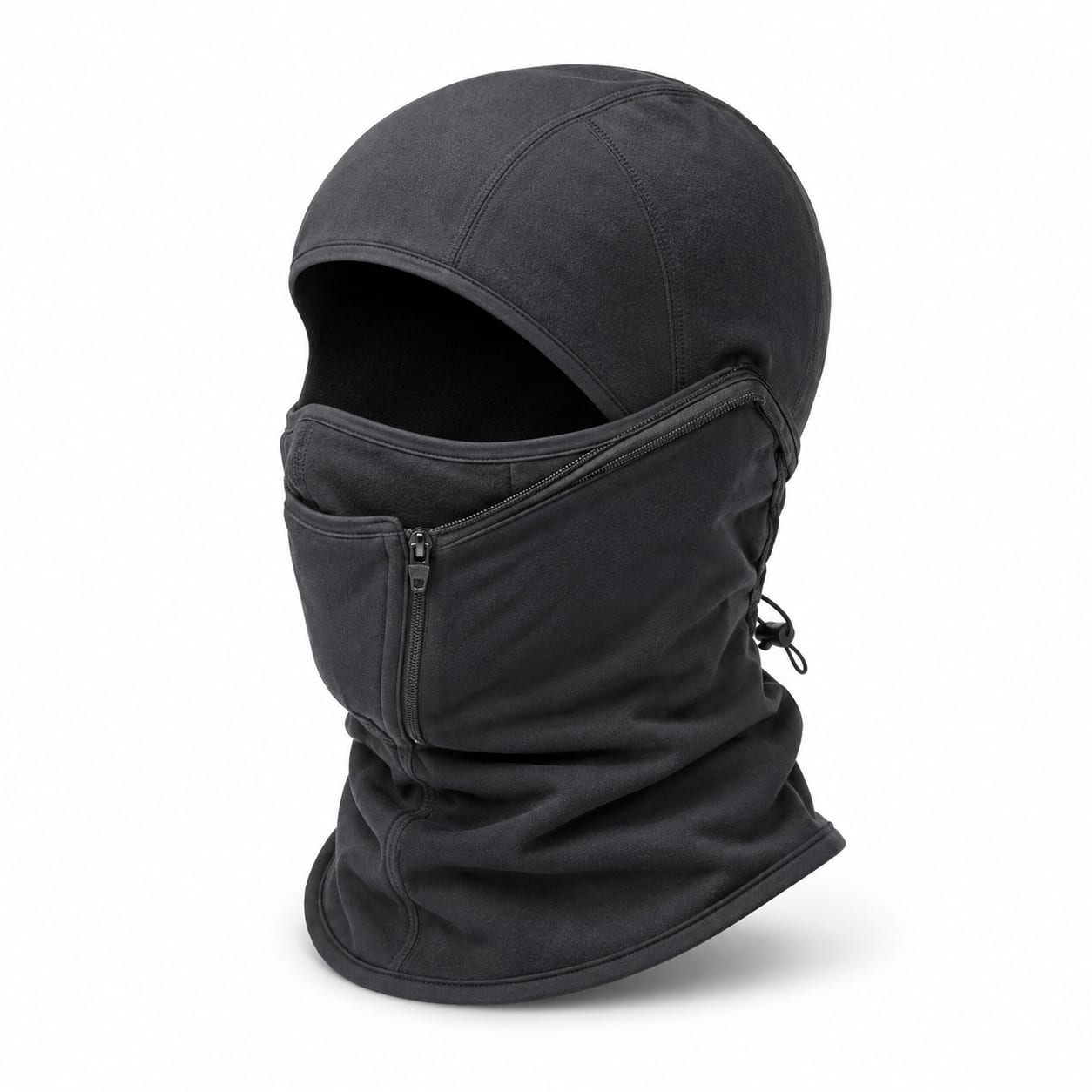
Evaluation

Strengths and trade-offs

Pros

What this type does best

On-the-fly adjustability

Critical

Switch between full-face protection and open-face ventilation without removing your helmet or balaclava. One-handed operation with gloves lets you adapt to changing conditions on the chairlift or between runs.

Eliminates the multiple-balaclava problem

High

One convertible balaclava covers the functional range of both a full-face and an open-face model, saving money and pack space. Ideal for travel and ski trips with variable weather.

Superior goggle fog management

High

Dropping the face panel provides instant fog relief that no breath feature or mesh zone can match. You can clear fogged goggles in seconds on the lift without removing any gear.

All-day wearability

High

Because you can adjust coverage to match conditions and exertion level, you're less likely to remove the balaclava entirely. This means more consistent protection throughout the day compared to fixed designs that get stuffy and get stowed in a pocket.

Convenient for lift rides

Medium

Raise the panel for wind protection on exposed chairlifts, then drop it for the descent. This rhythm matches the actual experience of skiing better than any fixed-coverage design.

Better communication

Medium

With the panel down, you can speak clearly, eat, drink, and interact naturally—important for group skiing, lessons, and lunch breaks without fully removing the balaclava.

Wide effective temperature range

Medium

A single convertible balaclava rated for 'cold' conditions can effectively handle temperatures from cool spring days to bitter cold snaps through panel adjustment, reducing the need to own multiple weights.

Cons

Trade-offs to be aware of

Slight bulk at the hinge point

Minor

The overlapping fabric and seams at the hinge create a small amount of additional bulk that can be felt under the helmet at the cheek or jaw area. Well-designed models minimize this, but it's inherent to the design.

Potential for gaps when panel is raised

Moderate

The hinge seam is a potential weak point for wind penetration. Even well-designed convertibles may have a slightly less perfect seal than a fixed full-face design at the transition point. Quality models overlap fabric to mitigate this.

Higher cost than basic fixed designs

Minor

The additional construction complexity of the hinge mechanism, overlapping panels, and often hybrid fabrics makes convertible balaclavas typically 20–40% more expensive than comparable fixed-coverage models from the same brand.

Panel can shift during active skiing

Moderate

In some designs, the face panel may gradually shift position during aggressive skiing or crashes, requiring readjustment. Magnetic closures and structured hinges help, but budget models with simple fold-over designs are more prone to unwanted movement.

Lowered panel can bunch at neck

Moderate

When the face panel is folded down, the extra fabric must go somewhere. In some designs, this creates bunching around the neck or under the chin that can be uncomfortable or interfere with jacket collar sealing.

Best for

Terrain

All-mountainVariable exposure resortsMixed open and treed terrainBackcountry with exposed approaches

Snow conditions

Variable temperaturesChanging weather throughout the dayCold mornings warming to mild afternoonsWindy exposed lifts with sheltered runs

Skill level

IntermediateAdvancedExpert

Riding style

All-mountain skiingResort skiingBackcountry skiingSki touring

Rider profile

Skiers who run hot during exertion but cold on liftsRiders who struggle with goggle foggingTravelers who want one balaclava for a whole tripAll-day skiers who don't want to remove face protectionSki instructors and guides who need to communicate clearly

Not ideal for

Reasons

Riders who always ski in consistently cold conditions and never need to adjust coverageThose who prefer the simplest possible gear with no moving partsBudget-conscious buyers who can only afford a basic fixed designSkiers who find any facial coverage uncomfortable and only need neck and ear protection

Terrain

Nordic skiing where minimal bulk is paramountRace courses where aerodynamic smoothness matters

Skill level

Beginners who may find the adjustment mechanism confusing

Riding style

Competitive racing where fixed streamlined coverage is preferredPark skiing where minimal face coverage is the norm

Compare

How it stacks up

This page

Convertible Balaclava

Adjustable ventilation prevents overheating and goggle fogging; can be opened for communication and eating; more versatile across temperature ranges.

Alternative

Full Face Balaclava

Simpler construction with no hinge to fail or gap; potentially better wind seal with continuous fabric; slightly lower cost; marginally lower bulk under helmet.

Bottom line

Choose convertible if you experience variable conditions or fogging issues during a typical ski day. Choose full face only if you consistently ski in extreme cold and never need to adjust coverage.

This page

Convertible Balaclava

Full face protection available when needed (lift rides, storms, cold snaps); no need to carry a separate full-face option for cold days; better overall versatility.

Alternative

Half Face Balaclava

Simpler construction; better breathability by default since nose and mouth are always exposed; no hinge bulk; slightly lower cost; no fogging risk from face coverage.

Bottom line

Choose convertible if you ever need full-face protection but don't want to own a separate full-face balaclava. Choose half face if you consistently ski in moderate conditions and never want full face coverage.

This page

Convertible Balaclava

Full face protection on demand for cold lifts and storms; dramatically more versatile for variable conditions; eliminates the need to carry a separate face covering for cold days.

Alternative

Open Face Balaclava

Minimal bulk; maximum breathability; no fogging risk; simplest construction; lowest cost; comfortable for high-intensity skiing without any facial restriction.

Bottom line

Choose convertible if you encounter cold or windy conditions that require face protection, even occasionally. Choose open face only if you ski exclusively in mild conditions or high-intensity disciplines where face coverage is never needed.

This page

Convertible Balaclava

More comprehensive fog management through panel adjustment rather than just mesh ventilation; full wind protection available when needed; better for extreme cold where mesh alone is insufficient.

Alternative

Mesh Breath Panel Balaclava

Consistent breathability without needing to adjust anything; simpler operation; no hinge mechanism; good middle ground for riders who want some fog reduction without the complexity of a convertible.

Bottom line

Choose convertible if you want the most aggressive fog management option and don't mind adjusting the panel. Choose mesh breath panel if you want set-and-forget fog reduction with simpler construction.

Shopping

Buying tips

  • 1

    Test the hinge mechanism with gloves on before buying—a good convertible should be operable with one hand while wearing ski gloves. If you can't easily raise and lower the panel with gloves, you won't use the feature in practice.

  • 2

    Look for overlapping construction at the hinge point where the face panel shingles over the upper portion when raised. This creates a wind-blocking seal that simple abutted edges cannot match.

  • 3

    Prioritize 4-way stretch fabrics, as the convertible mechanism demands more flexibility than fixed designs. Two-way stretch can work but may make panel adjustments feel stiff and prevent a proper seal.

  • 4

    Check that the lowered panel has a designated position—it should tuck neatly against the neck or chest, not flop loosely. Magnetic closures, snap tabs, or structured fold lines keep the panel controlled when down.

  • 5

    If you wear a specific goggle model, check the eye opening compatibility. The hinge point can interfere with the goggle-to-face seal on some goggle frame shapes, particularly oversized frames.

  • 6

    Consider hybrid/multi-zone fabric construction as the ideal choice for convertibles. Wind-resistant face panels paired with breathable crown and neck sections provide the best performance in both configurations.

  • 7

    Spend enough to get quality hinge construction—budget convertibles with simple fold-over designs and no structural support at the hinge are the most common source of disappointment in this subcategory.

Care

Maintenance notes

  • Wash after every 2–3 days of active use to prevent odor buildup, especially in the breath zone area where condensation accumulates. Synthetic models with antimicrobial treatment can go longer between washes.
  • Close any zippers or fasteners on the convertible panel before washing to prevent snagging. Use a garment bag if available to protect the hinge mechanism from getting tangled with other items.
  • Air dry rather than machine dry to preserve the hinge mechanism, elastic recovery, and any windproof membrane. High heat can delaminate bonded seams and reduce the effectiveness of the convertible panel seal.
  • Inspect the hinge area regularly for seam separation or fabric fatigue—this is the highest-stress point on a convertible balaclava and the most likely failure point. Early repair with fabric adhesive can extend the garment's life significantly.
  • Store with the face panel in the down position to avoid creating a permanent crease at the hinge point that could compromise the seal when raised.
  • Reapply DWR treatment to any water-resistant face panels after 10–15 washes to maintain beading performance in wet snow conditions.

Progression

Skill development path

Convertible balaclavas are most appreciated by intermediate-to-advanced riders who have enough experience to recognize how conditions and exertion levels change throughout a day. Beginners may not yet understand why adjustability matters and might find the mechanism distracting. As riders progress and start skiing longer days, in more varied conditions, and at higher intensity, the convertible design becomes increasingly valuable. Expert riders and professionals—especially guides, instructors, and patrollers—often consider the convertible their default choice because they need reliable protection that adapts to the wide range of conditions they encounter daily.

FAQ

Common questions

Each question has a dedicated page with a full answer and links to the buying guide.

How do I keep the face panel from shifting during aggressive skiing?

Look for models with magnetic closures, snap tabs, or structured wire edges at the hinge that hold the panel firmly in position. When the panel is up, it should overlap the upper portion by at least 1–2 cm to create a friction seal. If your current model shifts, check that you have the right size—a too-loose fit is the most common cause of panel migration.

Will the hinge area let cold air in when the panel is raised?

Well-designed convertible balaclavas use overlapping construction where the face panel shingles over the upper section, creating a wind-blocking seal similar to how roof shingles shed water. Budget models with simple abutted edges at the hinge are more prone to air leakage. If you feel air at the hinge, look for a model with a storm flap or overlapping design at the transition point.

Can I operate the convertible panel with ski gloves on?

Quality convertible balaclavas are designed for gloved operation, typically with a pull tab or extended edge that's easy to grip. Practice the motion a few times before heading out. Magnetic closure models are the easiest to operate with gloves since the panel snaps into position. If you're struggling, look for models with larger grab points or magnetic closures.

Is a convertible balaclava warm enough for extreme cold below -20°C?

It depends on the specific model's insulation class and wind resistance. A 'cold'-rated convertible with windproof face panels can handle temperatures down to about -15°C comfortably with the panel up. For sustained temperatures below -20°C, look for an 'extreme cold'-rated convertible with windproof membranes and extended neck coverage, or consider a dedicated extreme-cold full-face balaclava instead.