Coverage Style
Coverage Style
What it means
The extent and configuration of face and head coverage provided by the balaclava, determining how much skin is exposed and how the garment interfaces with goggles and helmets.
Typical for this type
Full Face (This Is The Defining Characteristic Of The Subcategory)
In practice
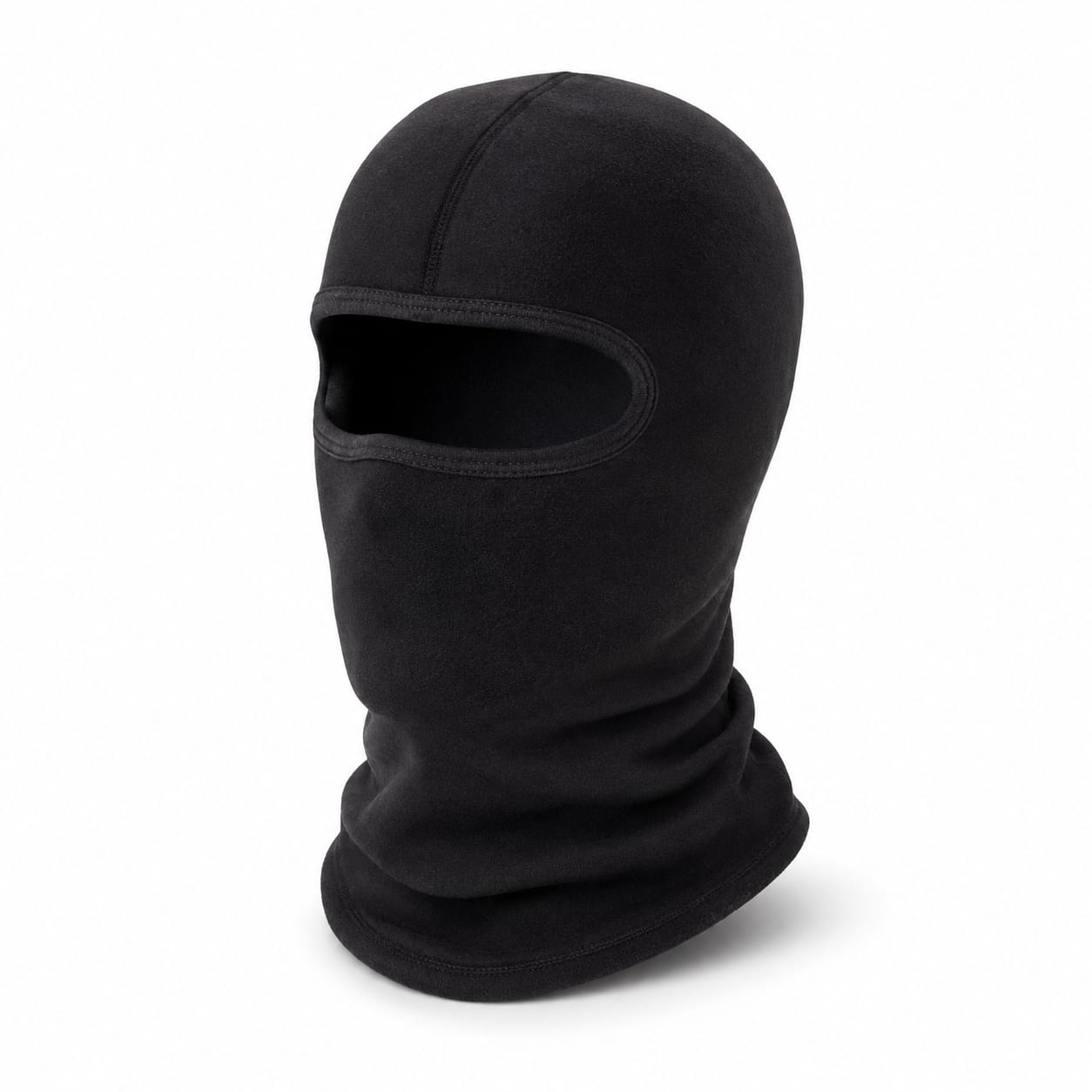
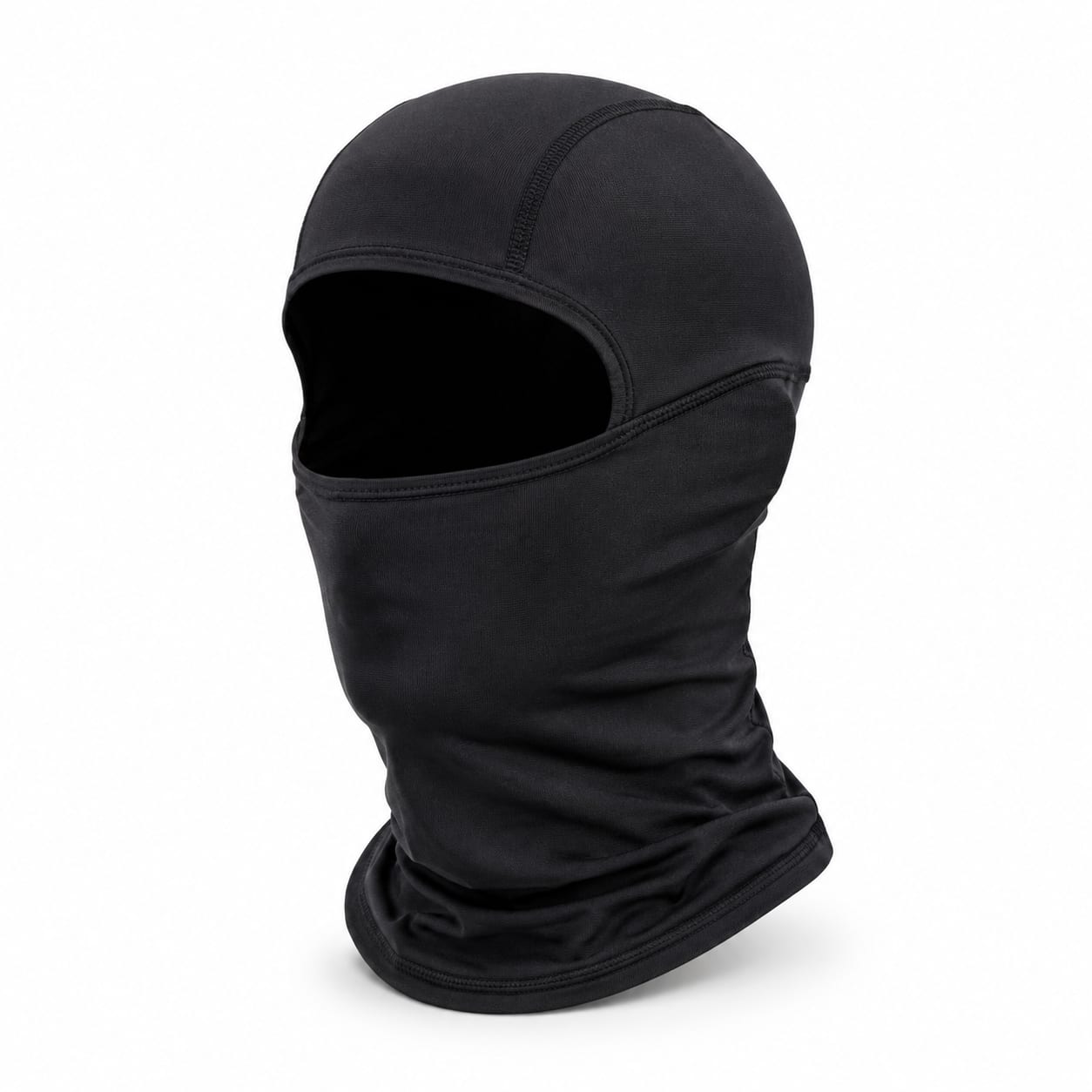
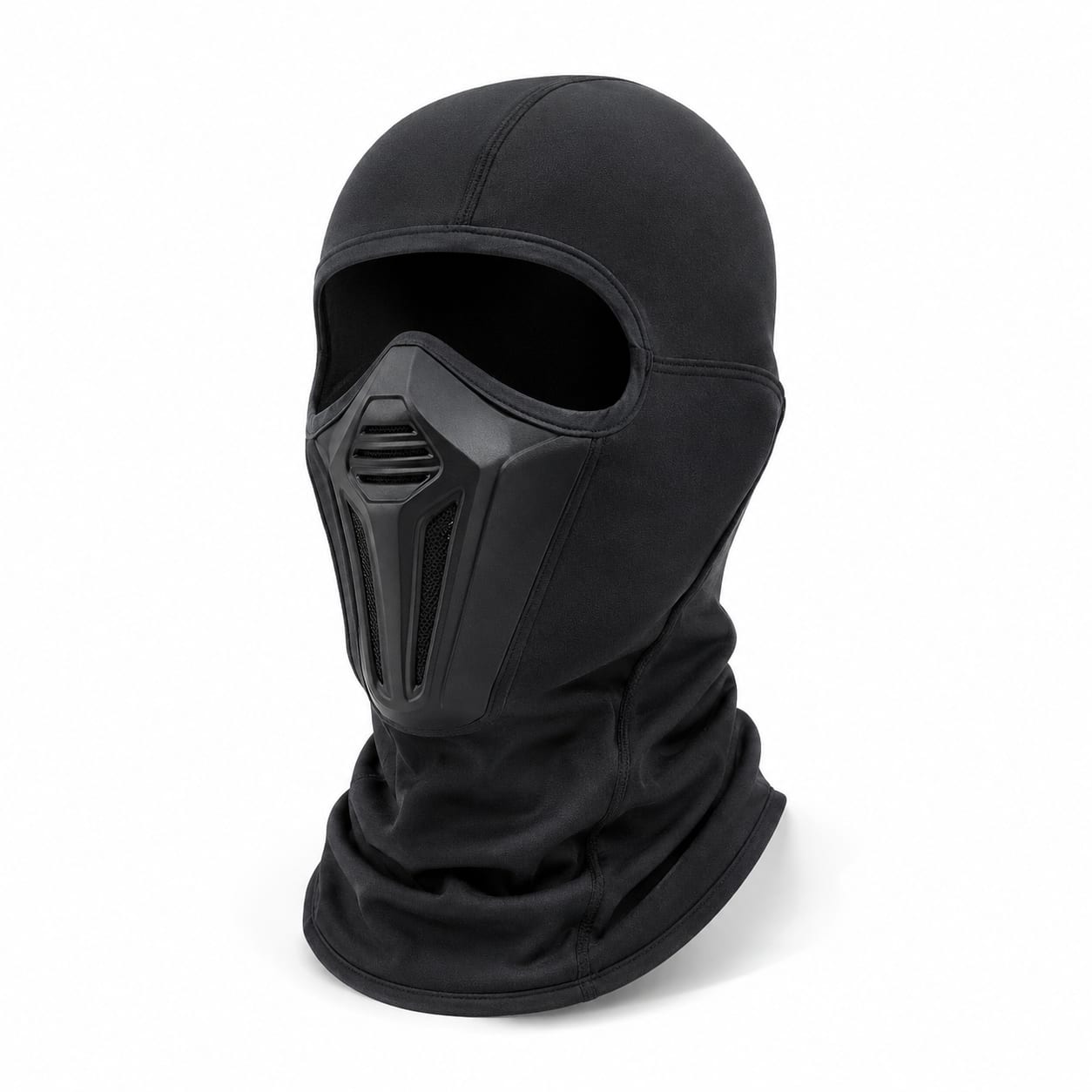
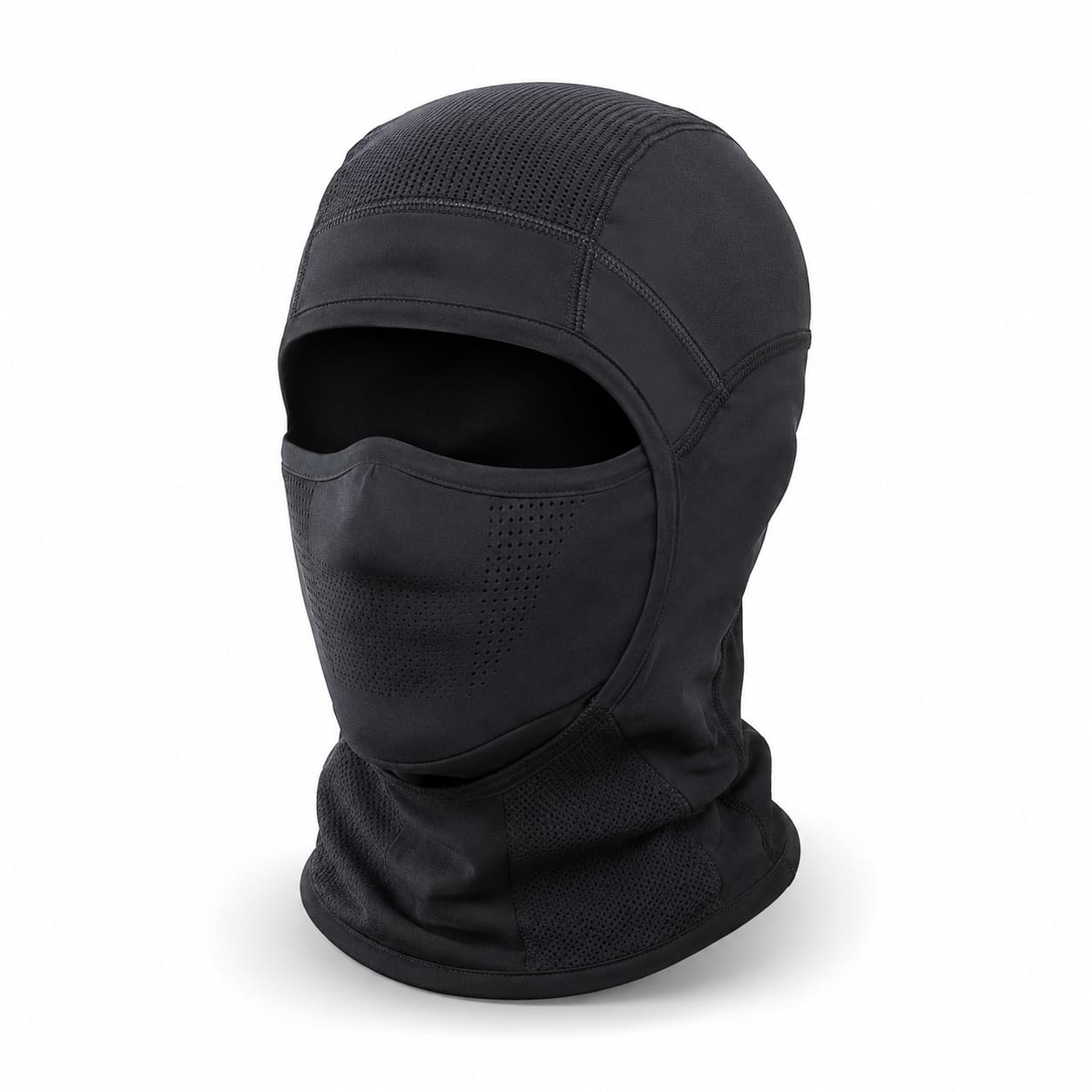
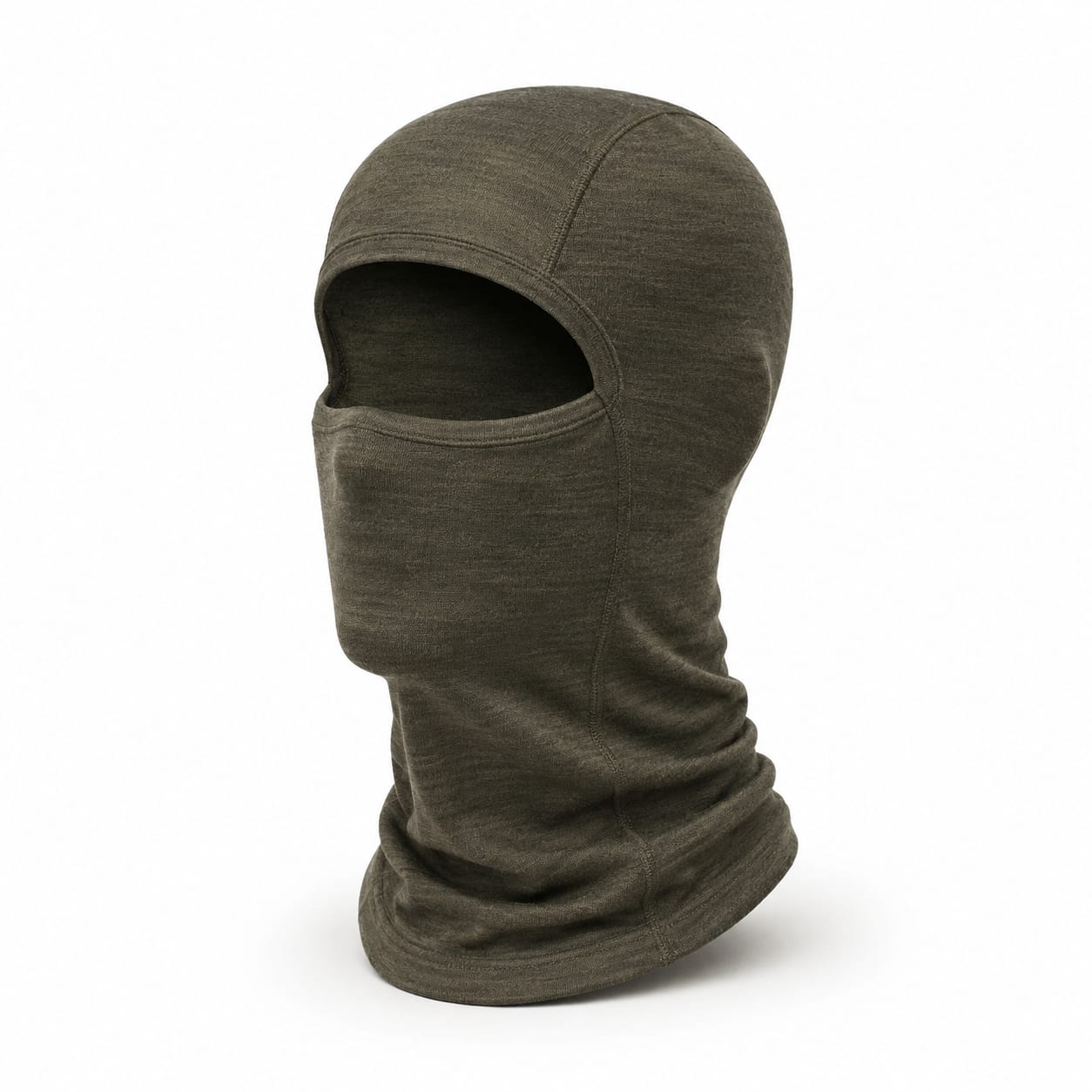
Full face balaclavas cover the entire head, neck, and face with only an opening for the eyes. Some models include a small nose opening, but the defining feature is complete coverage of the lower face including mouth and chin.
Compared to other types
Unlike half-face (exposes nose and mouth), convertible (can be pulled down), or open-face styles, the full face design never leaves the lower face exposed. This makes it significantly warmer but also less breathable and more prone to fogging without engineered ventilation features.
Why it matters: This is the core identity of the subcategory. Full face coverage eliminates all exposed skin, providing maximum protection against frostbite, windburn, and cold. It is the only style that guarantees no cold spots on the face regardless of wind direction or intensity.
Primary Fabric Material
Primary Fabric Material
What it means
The main material used in construction, which determines warmth, breathability, moisture management, stretch, and feel against skin.
Typical for this type
Hybrid Multi Zone Or Windstopper Softshell For Extreme Conditions; Polyester Fleece For General Cold; Merino Wool For Odor-Sensitive Multi-Day Use
In practice
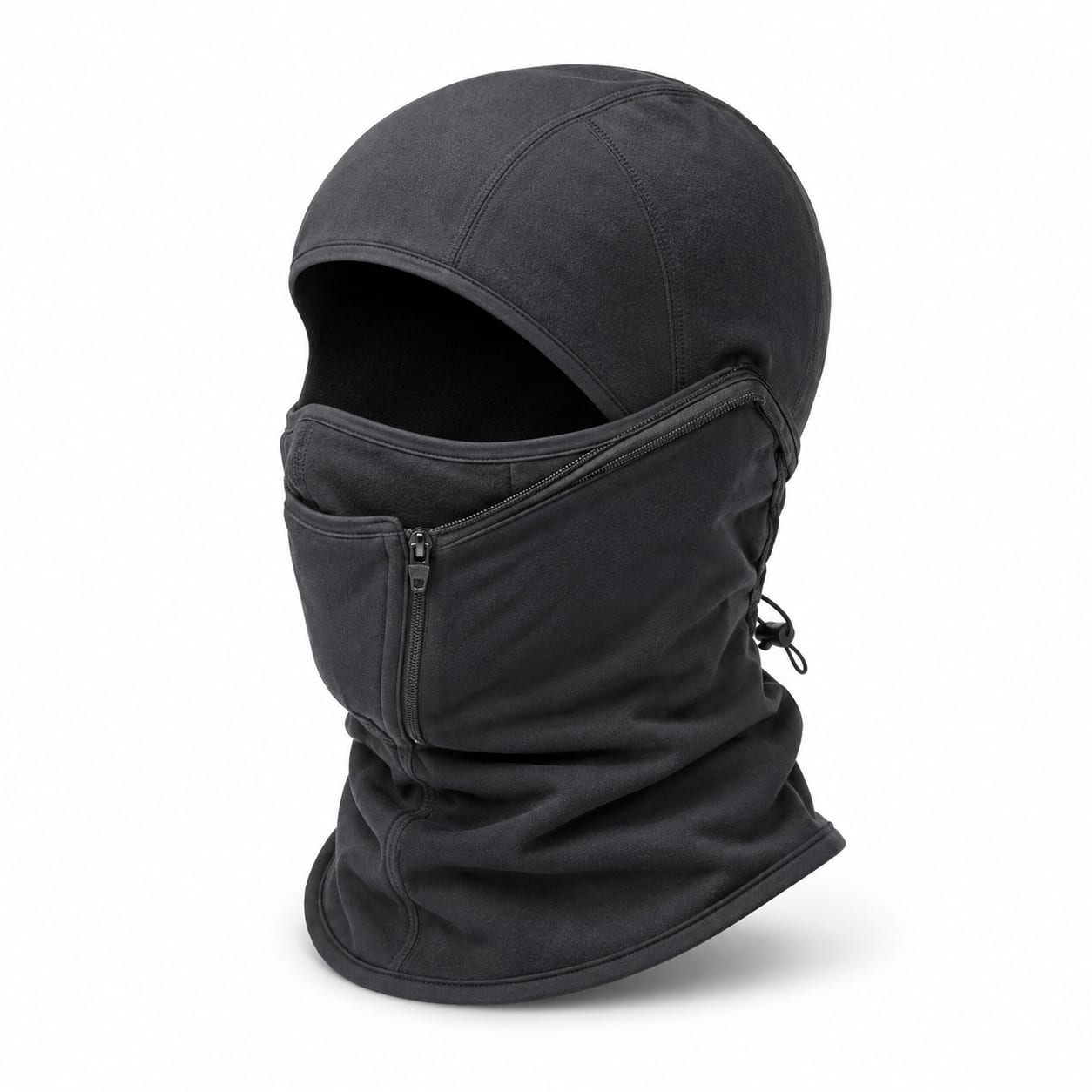
Full face balaclavas most commonly use hybrid multi-zone construction that places windproof panels at the front, breathable mesh at the mouth, and warm fleece at the neck and ears. Single-fabric models in polyester fleece are also common at lower price points.
Compared to other types
Full face balaclavas benefit more from hybrid construction than other styles because they must manage breath moisture over a larger covered area. Half-face and open-face styles can use single fabrics more effectively since the nose and mouth are partially or fully exposed.
Why it matters: Because the full face design covers the mouth and nose, fabric choice directly impacts breathability and fogging. A single windproof fabric over the mouth will trap moisture and cause severe fogging. Hybrid designs solve this by zoning fabrics appropriately. Merino wool offers natural odor resistance for multi-day trips but may not provide sufficient wind protection alone.
What it means
The total weight of the balaclava in grams, affecting packability, layering comfort, and perceived bulk under a helmet.
Typical for this type
60–150g depending on insulation class and fabric technology
Most common pick: 90g
In practice
Full face balaclavas typically weigh between 60g for lightweight windproof models and 150g for extreme-cold heavyweight fleece designs with windproof membranes. The average quality full face balaclava weighs around 80–100g.
Compared to other types
Full face balaclavas tend to be slightly heavier than half-face or open-face styles due to the additional fabric covering the lower face. However, the weight difference is typically only 10–30g and is rarely noticeable when wearing.
Why it matters: Weight correlates with bulk under the helmet and packability. Heavier models provide more warmth but may create pressure points or require a larger helmet size. Lightweight models with advanced fabrics can provide similar wind protection with less bulk.
Wind Resistance
Wind Resistance
What it means
The degree to which the balaclava blocks wind penetration, critical for comfort on exposed chairlifts and high-speed descents.
Typical for this type
Highly Wind Resistant to Windproof For Most Use Cases; Windproof Is Essential For Exposed Alpine Conditions
In practice
Most quality full face balaclavas are highly wind resistant or windproof, as wind protection is a primary reason riders choose this style. Windproof models use membranes like Windstopper or tight-weave softshell fabrics. Highly wind resistant models use dense fleece that blocks most wind while maintaining better breathability.
Compared to other types
Full face balaclavas typically offer higher wind resistance than other styles because their target use case is extreme conditions. Half-face and convertible models sometimes prioritize breathability over wind resistance since they are used in more moderate conditions.
Why it matters: Wind chill on exposed chairlifts and during high-speed descents can make moderate temperatures feel brutally cold. A full face balaclava that allows wind penetration through the fabric defeats its primary purpose. Windproof construction is one of the most important features for riders who regularly face high wind chill.
Breathability
Breathability
What it means
The ability of the fabric to allow moisture vapor (sweat) to escape, preventing clamminess and reducing goggle fogging.
Typical for this type
Good to Moderate For Most Users; Good Breathability Is Strongly Recommended If You Ski Aggressively Or Run Hot
In practice
Full face balaclavas inherently face a breathability challenge because they cover the mouth and nose, trapping exhaled moisture. Models without breath management features typically rate moderate or low. Models with mesh breath panels or hybrid construction can achieve good breathability. Excellent breathability is rare in full face designs due to the coverage requirements.
Compared to other types
Full face balaclavas have lower breathability than half-face, open-face, and convertible styles because they cover the mouth and nose. This is the primary trade-off for maximum protection. Riders who prioritize breathability above all else should consider half-face or mesh breath panel styles instead.
Why it matters: Breathability is the most common pain point with full face balaclavas. Poor breathability leads to moisture accumulation, goggle fogging, and a clammy feeling that can be worse than the cold you're trying to escape. This is the dimension where quality matters most — a well-engineered full face balaclava with proper breath management feels completely different from a cheap one without it.
Helmet Compatibility
Helmet Compatibility
What it means
How well the balaclava fits and functions under a ski helmet, including bulk, seam placement, and integration with helmet straps and goggle straps.
Typical for this type
Optimized Helmet Fit Is Ideal; Compatible Is Acceptable For Most Riders
In practice
Most modern full face balaclavas are at least compatible with helmets, using low-profile construction and flat seams. Premium models are specifically optimized for helmet fit with strategic seam placement, anatomical shaping, and thin but warm fabrics that don't affect helmet safety or comfort.
Compared to other types
Full face balaclavas can be slightly more challenging to integrate with helmets than open-face styles because the additional face fabric can create more potential for bunching near the temples and forehead. However, well-designed full face models with optimized helmet fit perform just as well as any other style.
Why it matters: The vast majority of skiers and snowboarders wear helmets. A balaclava that creates pressure points, affects helmet fit, or bunches uncomfortably will be taken off and left off — defeating its purpose. Helmet compatibility directly impacts whether you'll actually wear the balaclava when you need it.
Goggle Integration
Goggle Integration
What it means
How well the balaclava interfaces with ski goggles, including gap elimination, fogging prevention, and strap compatibility.
Typical for this type
Seamless Integration For Extreme Cold Or Fogging-Prone Riders; Good Integration Is Acceptable For Most Conditions
In practice
Full face balaclavas generally provide good to seamless goggle integration because the continuous fabric around the eye opening creates a natural seal with goggle frames. The primary challenge is ensuring the eye opening is sized and shaped correctly for your specific goggles — too large and you get gaps, too small and the fabric overlaps the goggle foam causing fogging.
Compared to other types
Full face balaclavas have a natural advantage in goggle integration because the continuous fabric edge creates a consistent seal. Half-face and convertible styles can leave gaps at the lower face transition point. Open-face styles have the poorest integration because the exposed face creates a large gap below the goggle line.
Why it matters: The gap between goggles and balaclava is where cold air enters and warm air escapes. In extreme cold, even a small gap at the cheekbones or bridge of the nose can cause painful cold spots. Seamless integration eliminates this vulnerability entirely and is one of the key advantages of the full face design over styles that leave gaps at the face.
Moisture Wicking
Moisture Wicking
What it means
The ability of the fabric to actively pull moisture (sweat and breath condensation) away from the skin surface to the exterior where it can evaporate.
Typical for this type
Active Wicking Is Strongly Recommended For High-Intensity Skiing; Moderate Wicking Is Acceptable For Casual Or Cold-Weather Use
In practice
Moisture management is critical in full face balaclavas because breath condensation adds significantly to the moisture load. Active wicking fabrics like polypropylene and merino wool pull this moisture away from the skin before it can accumulate and freeze. Moderate wicking is common in standard polyester fleece models.
Compared to other types
Moisture wicking is more important in full face balaclavas than in any other style because they trap more breath moisture. Half-face and open-face styles allow breath to escape naturally, reducing the moisture management burden on the fabric.
Why it matters: In a full face balaclava, you're dealing with both sweat and breath condensation. If the fabric can't move this moisture away from your skin, it accumulates, feels clammy, and can freeze into an icy layer against your face in extreme cold. Active wicking prevents this cycle and keeps you comfortable for hours.
UV Protection (UPF)
UV Protection (UPF)
What it means
The Ultraviolet Protection Factor rating indicating how effectively the fabric blocks UV radiation, important at high altitude where UV exposure is significantly stronger.
Typical for this type
Upf 50 Plus For High-Altitude Or Spring Skiing; Upf 30 To 49 Is Adequate For Most Winter Conditions
In practice
Most quality full face balaclavas provide UPF 30–49 protection through their dense fabric construction. The full face style inherently provides more UV protection than other styles because it covers more skin. UPF 50+ models are available and recommended for high-altitude or spring skiing where UV exposure is amplified by snow reflection.
Compared to other types
Full face balaclavas provide the most comprehensive UV protection of any balaclava style because they cover the most skin. Half-face and open-face styles leave the nose, cheeks, or entire face exposed to reflected UV, requiring sunscreen application even on overcast days.
Why it matters: At altitude, UV radiation is significantly stronger, and snow reflects up to 80% of UV back upward, hitting exposed skin from below. The full face balaclava's comprehensive coverage is a major advantage for sun protection — the only exposed area is around the eyes, which is covered by goggle lenses with UV protection.
What it means
The sizing system and general fit characteristics of the balaclava, affecting comfort, coverage, and compatibility with other gear.
Typical for this type
One Size With 4-Way Stretch For Most Adults; S/M Or L/XL For Particularly Small Or Large Heads
In practice
Most full face balaclavas are offered in one-size-fits-most construction, relying on stretch fabric to accommodate different head sizes. Some premium brands offer S/M and L/XL sizing for better fit. Youth-specific models are essential for children and are sized and proportioned appropriately.
Compared to other types
Full face balaclavas are more sensitive to fit issues than other styles because they cover the entire face. A poorly fitting half-face or open-face balaclava is merely uncomfortable; a poorly fitting full face balaclava can obstruct vision, cause severe fogging, or fail to protect the areas it's designed to cover.
Why it matters: Fit is especially critical for full face balaclavas because the fabric must seal against the face without gaps. A balaclava that's too loose will sag away from the nose and cheeks, creating cold spots and fogging issues. One that's too tight will be uncomfortable and may cause headaches during long wear. The face opening must align precisely with your goggles for proper integration.
Seam Construction
Seam Construction
What it means
The type and placement of seams in the balaclava, affecting comfort against skin, pressure points under helmets, and durability.
Typical for this type
Seamless Or Flatlock Seams For Helmeted Skiing; Seamless Is Ideal For Maximum Comfort
In practice
Flatlock seams are the most common construction in quality full face balaclavas, providing a low-profile seam that minimizes pressure points under helmets. Seamless or bonded construction is available in premium models and offers the highest comfort. Overlock seams are found in budget options and can cause significant discomfort under helmets.
Compared to other types
Seam construction matters equally across all balaclava styles that are worn under helmets. However, full face balaclavas have more seams due to the complex face opening construction, making seam quality particularly important. A poorly placed seam near the eye opening can also interfere with goggle fit.
Why it matters: Seams are the most common source of discomfort in balaclavas, particularly under helmets where seam bulk creates pressure points on the forehead and temples. After hours of wear, even small seams can become painful. Flatlock and seamless construction eliminate this issue entirely and are worth the premium for anyone who wears a helmet.
Odor Resistance
Odor Resistance
What it means
The fabric's ability to resist developing unpleasant odors over multi-day use, important for ski trips where daily washing isn't possible.
Typical for this type
Natural Odor Resistant (Merino Wool) For Multi-Day Trips; Antimicrobial Treated Is Adequate For Most Use
In practice
Most synthetic full face balaclavas use antimicrobial treatments to control odor. Merino wool models offer natural odor resistance that lasts the life of the garment and is more effective for extended multi-day use. Untreated synthetics develop noticeable odor after one active day of skiing.
Compared to other types
Full face balaclavas are more odor-prone than other styles because they cover the mouth and nose, trapping breath moisture and bacteria. Half-face and open-face styles allow more natural air circulation, reducing odor buildup. This makes odor resistance a higher priority for full face models.
Why it matters: Full face balaclavas are in direct contact with your mouth and nose, absorbing breath moisture and bacteria throughout the day. This makes them more prone to odor development than other styles. For multi-day ski trips where washing isn't possible, odor resistance is essential for comfort and hygiene.
Thermal Insulation Class
Thermal Insulation Class
What it means
The warmth category of the balaclava, indicating the temperature range and conditions it is designed to handle comfortably.
Typical for this type
Cold For General Winter Skiing; Extreme Cold For Regions With Sustained Sub -15°C Temperatures; Cool For High-Exertion Skiing In Moderate Cold
In practice
The most common insulation class for full face balaclavas is 'cold,' designed for temperatures from -15°C to -5°C. This covers typical January conditions at most ski areas. Extreme cold models with heavyweight fleece and windproof membranes are available for arctic conditions. Cool-weight full face models exist for riders who want maximum coverage without excessive warmth.
Compared to other types
Full face balaclavas are inherently warmer than other styles at the same insulation class because they cover more skin area and trap more body heat. A 'cold' rated full face balaclava will feel warmer than a 'cold' rated half-face model. This makes it especially important not to over-insulate — a full face balaclava that's too warm is worse than one that's slightly too cool.
Why it matters: Matching insulation to conditions is critical with full face balaclavas because you can't easily ventilate them by pulling down the face section (unlike convertible styles). An over-insulated full face balaclava will cause overheating, sweating, and fogging. An under-insulated one will leave you cold. Many experienced skiers own two full face balaclavas of different weights.
Nose/Mouth Breath Feature
Nose/Mouth Breath Feature
What it means
Specific design features around the nose and mouth area that manage breath direction and moisture to reduce goggle fogging and improve comfort.
Typical for this type
Directed Exhaust For Fogging-Prone Riders; Mesh Breath Zone For General Use; Open Nose Design For Mild Conditions With Coverage Needs
In practice
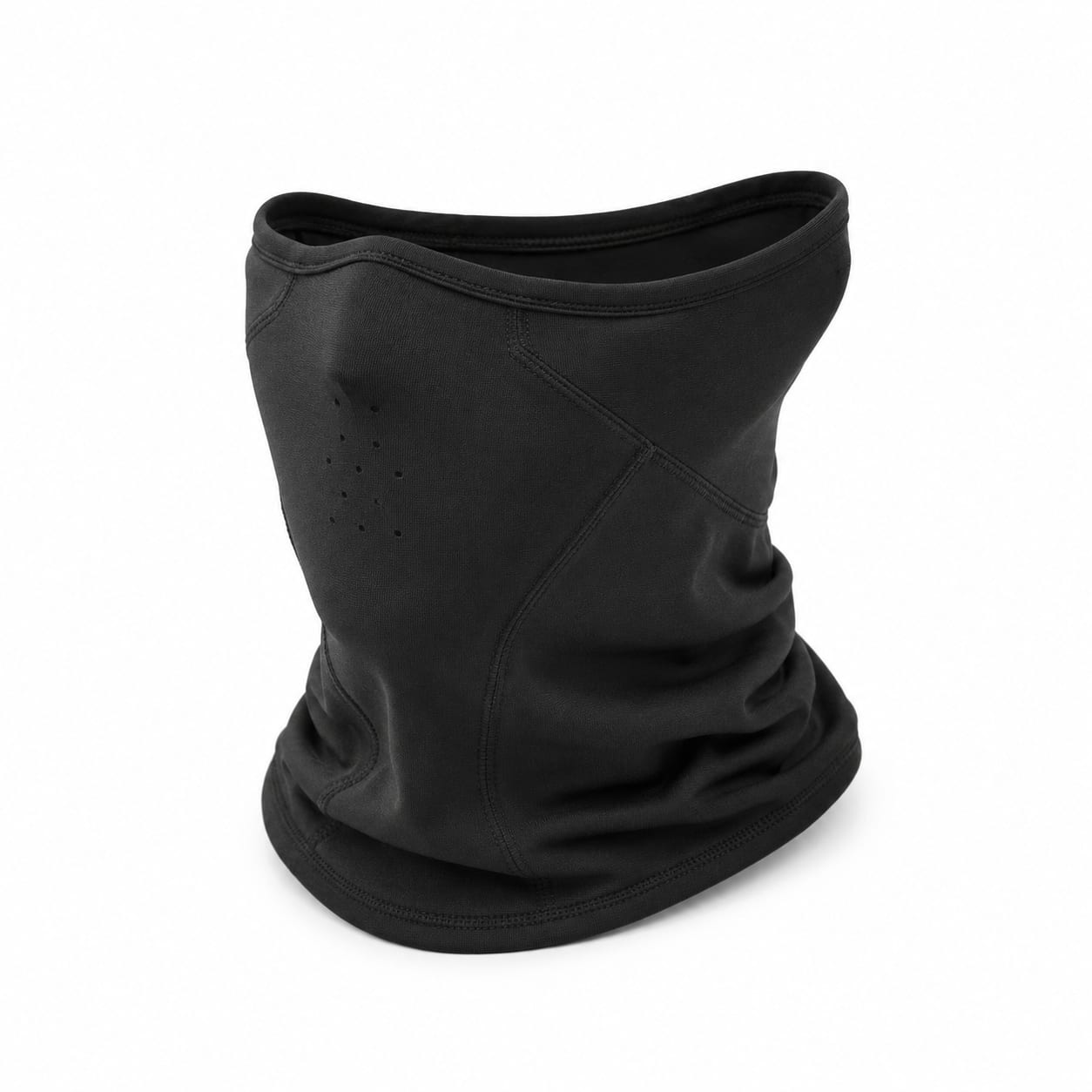
Mesh breath zones are the most common breath management feature in full face balaclavas, providing a perforated panel over the nose and mouth that disperses breath while maintaining coverage. Directed exhaust designs with structured channels are more effective at preventing fogging but are less common. Models without any breath feature are budget options that will cause significant fogging.
Compared to other types
Breath management features are unique to full face and some half-face balaclavas. Open-face and convertible styles don't need them because the mouth and nose are exposed or can be exposed. The quality of the breath feature is the single biggest factor in whether a full face balaclava is enjoyable to wear or a constant struggle with fogging.
Why it matters: This is arguably the most important feature differentiator within the full face balaclava subcategory. Without a breath management feature, exhaled warm moist air travels directly upward and fogs goggles. This is the number one complaint about full face balaclavas and the primary reason riders abandon them. A well-designed mesh breath zone or directed exhaust system can eliminate this problem entirely.
Neck Coverage Length
Neck Coverage Length
What it means
How far down the neck the balaclava extends, affecting how well it seals with your base layer or jacket collar and prevents cold air entry.
Typical for this type
Extended Neck For Extreme Cold And Backcountry; Standard Neck For General Resort Skiing
In practice
Full face balaclavas most commonly feature extended neck coverage that reaches well below the collarbone, allowing the balaclava to tuck deep into base layers or jacket collars. This ensures no skin is exposed when turning the head and creates a complete seal against cold air entry. Standard neck coverage is also common in lighter-weight models.
Compared to other types
Full face balaclavas tend to have longer neck coverage than other styles because their target users face the most extreme conditions. Half-face and convertible models sometimes have shorter necks since they're used in milder conditions. The extended neck is a significant advantage of the full face design for cold-weather performance.
Why it matters: The neck is a critical vulnerability in cold weather — it's where cold air enters and warm air escapes. Extended neck coverage ensures the balaclava stays tucked in during active movement and head turns. A balaclava that pulls out of your collar when you turn your head creates an instant cold draft down your back.
Stretch / Flexibility
Stretch / Flexibility
What it means
The degree of stretch in the fabric and construction, affecting how the balaclava conforms to different head shapes and moves with the wearer.
Typical for this type
4_way_stretch for maximum comfort and fit; 2_way_stretch is adequate for most needs
In practice
Most full face balaclavas use 2-way stretch fabrics (typically horizontal stretch) that provide good fit across a range of head sizes. 4-way stretch models offer superior conformability and move more naturally with facial expressions and head turns. Minimal stretch models are rare in full face designs because the complex shape requires some stretch for proper fit.
Compared to other types
Stretch is more important in full face balaclavas than in other styles because the fabric must conform to the complex contours of the face — nose, chin, jaw — while allowing for talking and eating. Half-face and open-face styles have simpler fit requirements and are more forgiving of limited stretch.
Why it matters: Stretch affects how well the balaclava conforms to your face, how it moves with you during activity, and whether it maintains its seal during head turns. Insufficient stretch leads to gapping, pulling, and discomfort. 4-way stretch provides the most natural feel and best seal, especially important for the face area where movement is constant.