Kitvore.com

Kitvore.com

Specs that matter. Gear that fits.

Ski Bindings · Subcategory

Hybrid AT Bindings

Pin-tech touring mode meets alpine downhill performance in one binding for 50/50 resort-and-backcountry skiers.

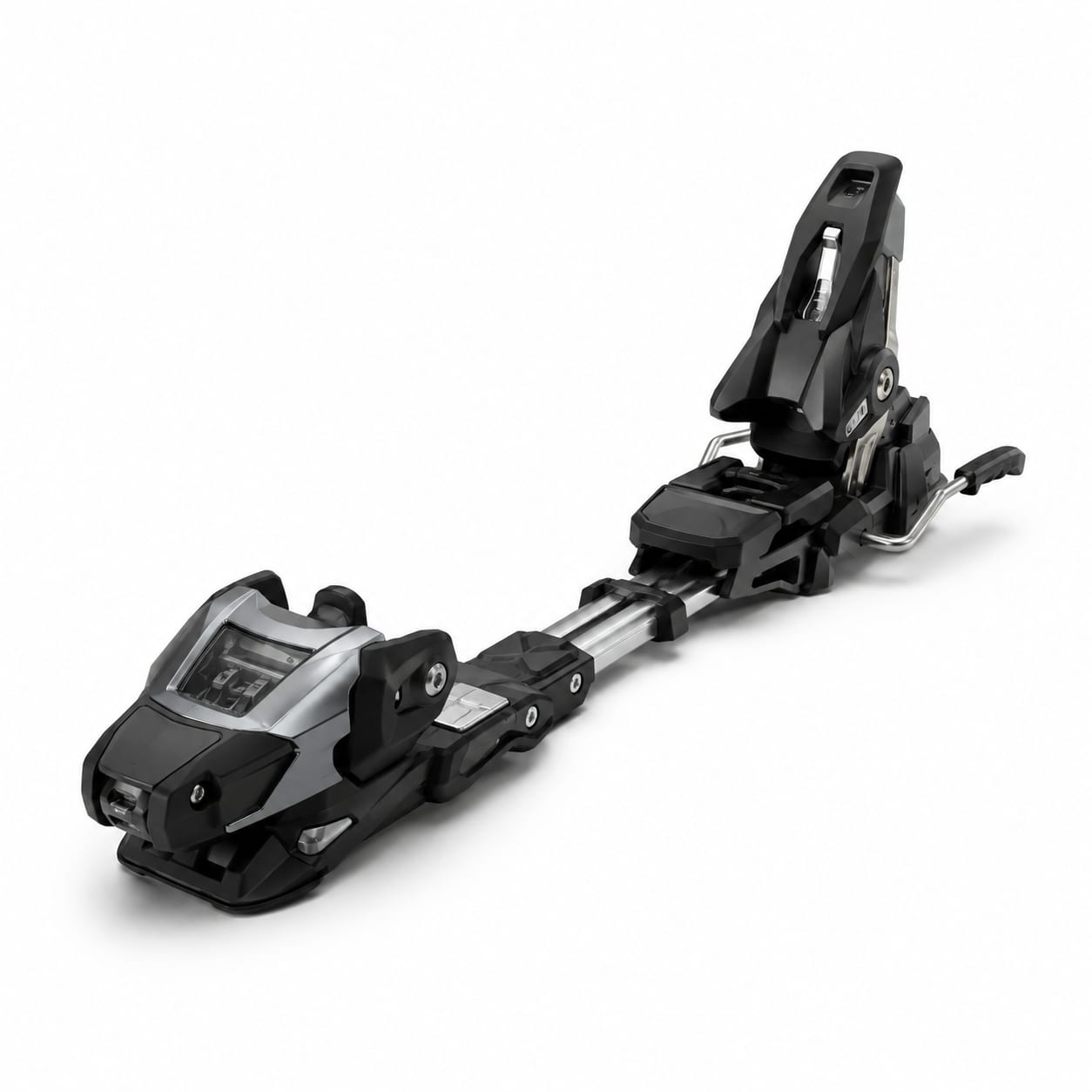
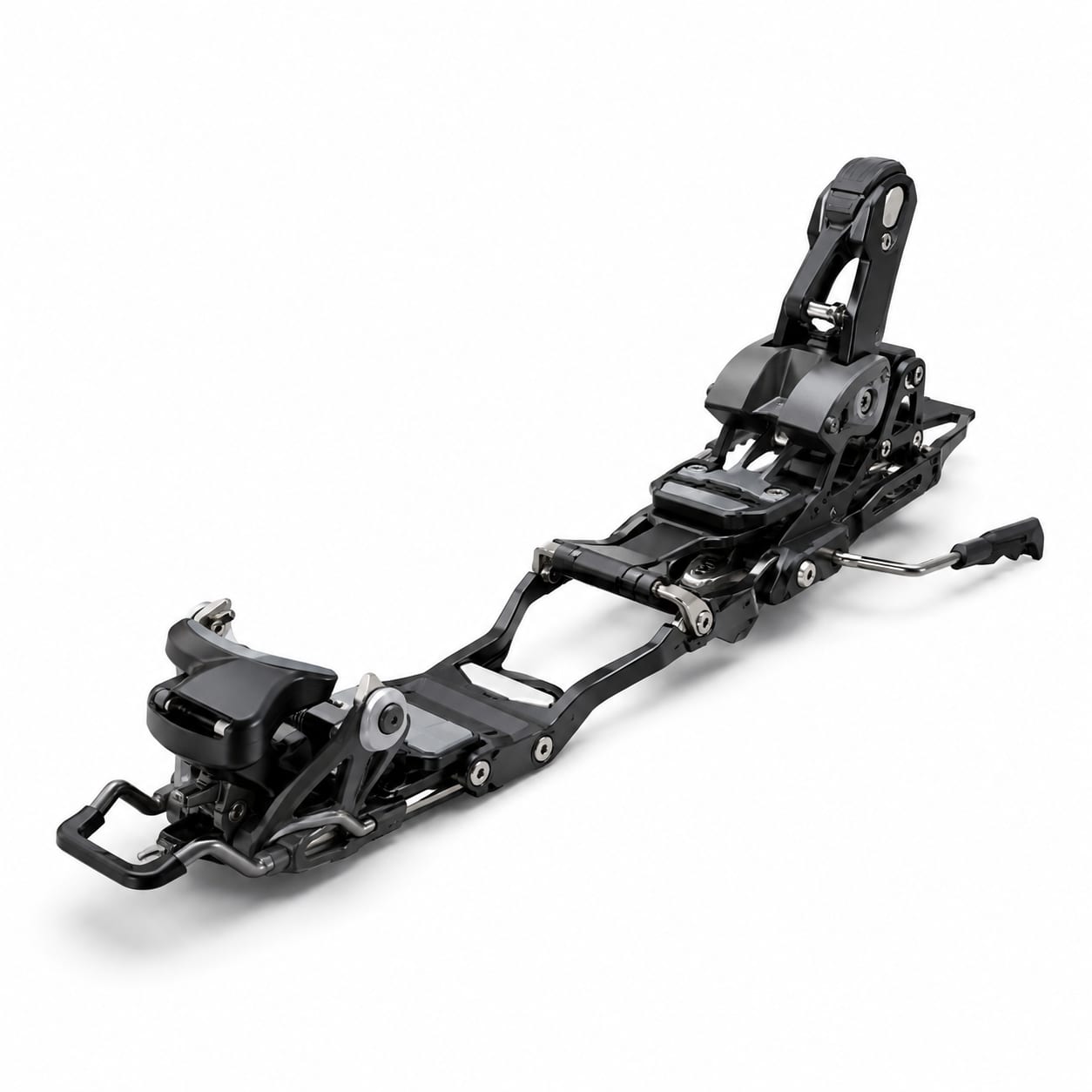
Hybrid AT bindings are the Swiss Army knife of ski bindings, combining a pin-tech toe for efficient uphill travel with an alpine-style toe jaw that closes over the boot for confident downhill performance. Designed for skiers who split their time between resort laps and backcountry tours, they eliminate the need for two dedicated setups while delivering a far better descent experience than pure pin bindings.

$400 – $750premium tierintermediateadvancedexpert

Best known for

Pin-tech walk mode for efficient skinningAlpine-style toe jaw engagement for downhill retentionCompatibility with both ISO 5355 alpine and ISO 9523 touring solesVersatile 50/50 resort-to-backcountry performance
Hybrid AT Bindings

Guide

Detailed overview

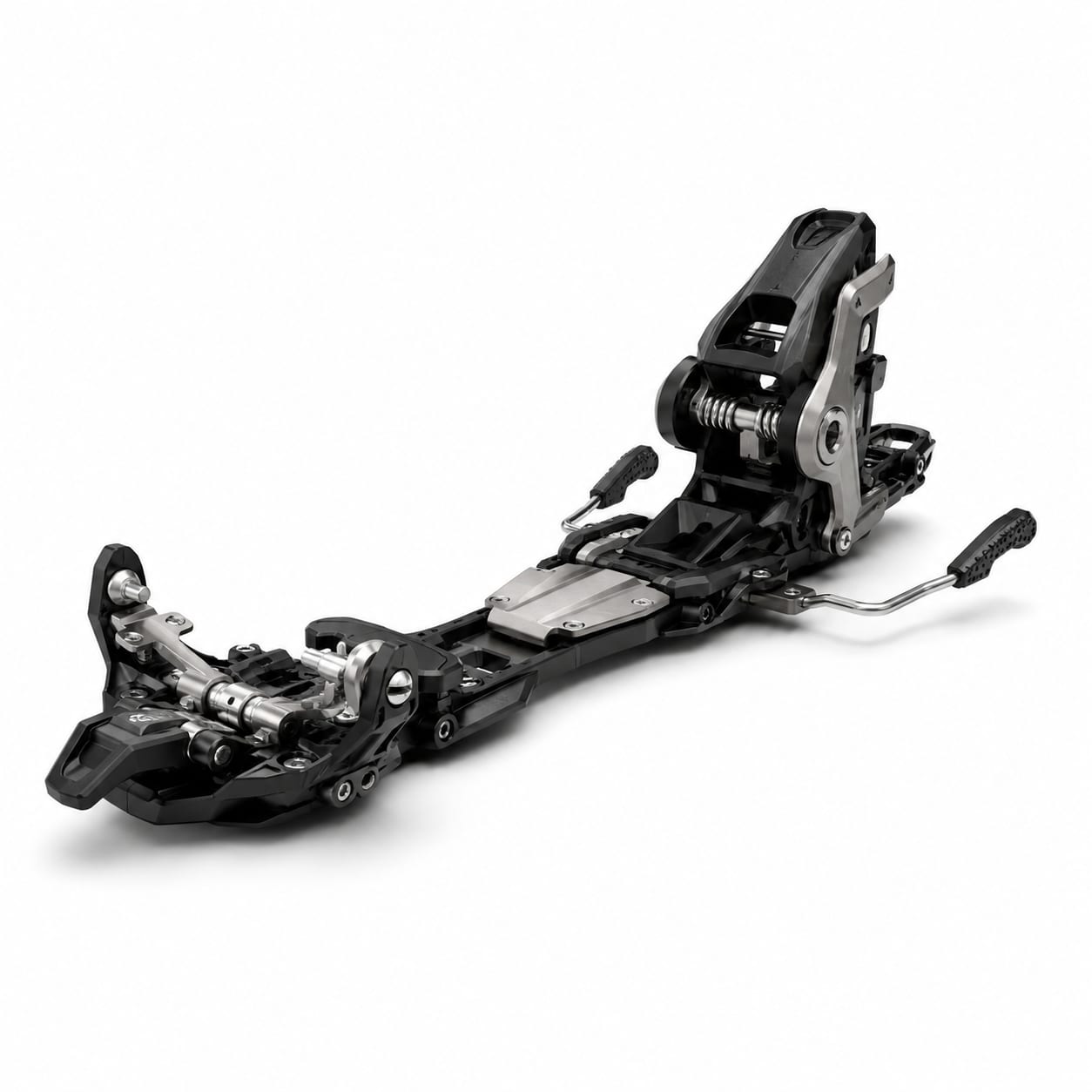
Hybrid AT bindings represent the most significant evolution in ski binding design in decades. Pioneered by the Salomon Shift in 2018, this subcategory solves the long-standing dilemma of choosing between uphill efficiency and downhill confidence. In walk mode, the toe piece functions as a pin-tech interface, accepting standard tech fittings on touring boots for low-resistance striding and kick turns. At the top of the tour, the skier flips a switch and the toe wings close over the boot toe like a traditional alpine binding, delivering lateral retention and elastic travel that pin bindings simply cannot match. The heel piece stays fixed to the ski in both modes, functioning as an alpine heel with brakes for the descent. This dual-mode design makes hybrid bindings the ideal choice for skiers who tour regularly but still want resort-level performance on the way down. The trade-off is weight: at 1400–1800 g per pair, they are significantly heavier than dedicated pin bindings (600–900 g) and somewhat heavier than many alpine bindings (1400–1800 g). However, for skiers who refuse to compromise on either the up or the down, hybrid AT bindings offer the best single-binding solution available.

The hybrid AT binding category was born from a real problem: backcountry skiers who also ski resorts had to choose between two compromised setups. Pure pin-tech bindings tour beautifully but suffer from limited elastic travel, higher propensity for inadvertent release, and reduced power transmission on the descent. Alpine bindings offer unmatched downhill performance but are useless for touring. Frame bindings attempted to bridge this gap but were heavy, clunky to transition, and offered a poor touring experience due to the entire heel assembly lifting with each step. Hybrid bindings reimagined the solution entirely.

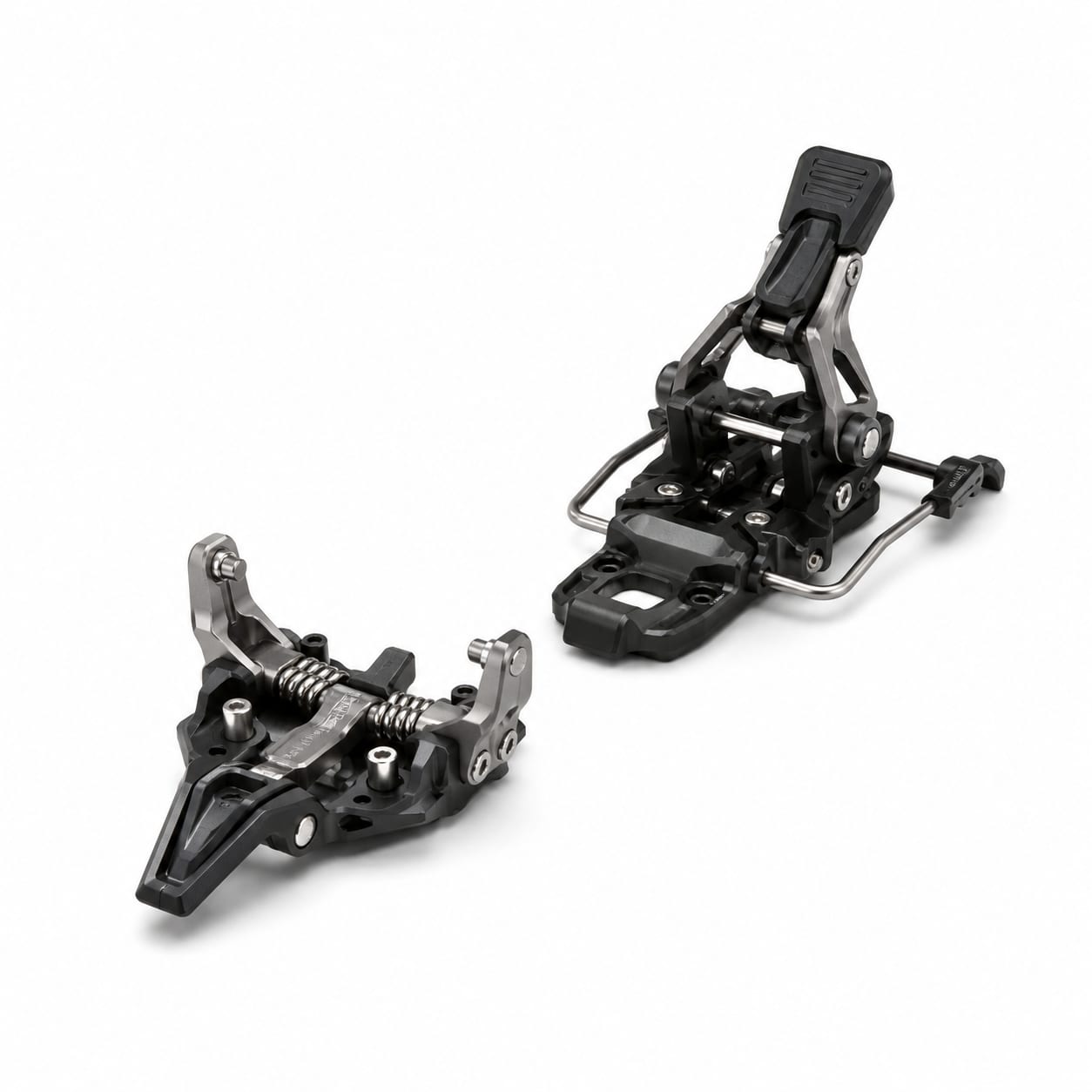
The key innovation is the convertible toe piece. In touring mode, two pins engage the tech fittings on a compatible touring boot, providing the same efficient stride as any pin-tech binding. The heel remains disengaged, and the brake locks up, allowing the heel to lift freely. When it is time to descend, the skier steps into the heel like a normal alpine binding, then flips a lever on the toe piece that closes rigid wings over the boot toe. These wings grip the boot much like an alpine toe jaw, providing lateral retention with meaningful elastic travel—something no pin binding can replicate. The result is a descent that feels remarkably close to a dedicated alpine binding.

Weight is the primary compromise. The dual-mode mechanism adds material and complexity, pushing most hybrid bindings into the 1400–1800 g per pair range. This is roughly double the weight of a lightweight pin binding and marginally heavier than many alpine bindings. For skiers doing long, multi-hour approaches or skimo racing, this weight penalty is significant. But for day tours, sidecountry laps, and skiers who ski 40–60% of their time inbounds, the versatility is worth every gram. The weight on your feet matters roughly three times as much as weight in your pack, so careful consideration is warranted for longer tours.

Compatibility is another important consideration. Hybrid bindings require boots with tech fittings for touring mode, but the alpine mode can accept either ISO 5355 alpine soles or ISO 9523 touring soles depending on the model. This means you can use a single boot for both resort and backcountry skiing, provided it has tech fittings and the appropriate sole type for the binding. Many modern touring boots with tech fittings and GripWalk soles work perfectly. Always verify specific boot-binding compatibility before purchasing, as the interface is more complex than with either pure alpine or pure pin bindings.

As the category matures, more brands are entering the space with their own designs. The Salomon Shift remains the benchmark, but options from Marker (Duke PT), Atomic, and others are expanding the choices. Each design handles the touring-to-downhill transition slightly differently, and small differences in toe piece geometry, heel engagement, and climbing aid design can affect the user experience. For skiers who have been frustrated by the limitations of pin bindings on the descent or the impossibility of touring with alpine bindings, hybrid AT bindings are a transformative piece of equipment that genuinely delivers on the promise of one binding for everything.

Quick facts

Primary purpose
Balanced uphill efficiency and downhill performance for versatile backcountry skiing
Popular brands
SalomonAtomicMarkerTyrolia
Typical terrain
backcountrysidecountryresort-accessed backcountry

What makes it different

Pin toe for efficient touring; alpine heel for reliable release and power; heavier than pure tech but lighter than frame; some models like Salomon Shift also accept alpine boots in downhill mode; best versatility of any AT binding type

Recommended ranges

How this type usually specs out

Each spec is explained in plain language, then we show what buyers usually look for on this type.

DIN / Release Value Range

DIN Range

What it means

The range of release force settings the binding supports. DIN (Deutsches Institut für Normung) values indicate the force required to release the boot. Must accommodate the skier's calculated release value based on weight, ability, and boot sole length.

Typical for this type

5–13

Most common pick: 6–12

In practice

Most hybrid AT bindings offer a DIN range of 5–13 or 6–12, targeting intermediate-to-expert skiers who generate enough force to need higher retention values.

Compared to other types

Narrower range than dedicated alpine bindings (which can go up to 16–18 for race models) but significantly higher minimum than touring pin bindings (which often start at 4–5). Frame touring bindings offer similar DIN ranges.

Why it matters: The DIN range must cover your calculated release value with room to spare. Since hybrid bindings are used for aggressive backcountry and resort skiing, the range needs to accommodate higher settings than entry-level alpine bindings.

Brake Pad Width

Brake Width

What it means

The width of the brake arms when deployed. Brakes must be wide enough to clear the ski waist but not so wide they drag or catch. The brake prevents runaway skis after release.

Typical for this type

90–130mm depending on ski waist

Most common pick: 95mm or 110mm

In practice

Hybrid AT bindings are typically mounted on all-mountain and freeride skis with waists from 90mm to 115mm, so the most common brake widths are 95mm and 110mm. Most models are available in multiple brake widths.

Compared to other types

Wider than typical alpine bindings (which often use 75–85mm brakes on frontside skis) and similar to freeride alpine and frame touring bindings. Pure pin-tech bindings also use similar widths for backcountry skis.

Why it matters: The brake must clear the ski waist plus 5–15mm. Since hybrid setups are often on wider skis designed for variable backcountry snow, getting the right brake width is essential for both safety (runaway ski prevention) and performance (avoiding drag).

Binding Type / Category

Binding Type

What it means

The fundamental design category of the binding, determining its intended use, mechanism, and compatibility with boot soles.

Typical for this type

N/A (This Is The Defining Category)

Most common pick: Hybrid / Shift-Style

In practice

Hybrid AT bindings use a convertible toe piece that functions as a pin-tech interface in walk mode and an alpine toe jaw in ski mode. The heel piece is a fixed alpine-style heel with brakes.

Compared to other types

Unique among binding types. Alpine bindings have no walk mode. Pin-tech bindings use pins for both uphill and downhill. Frame bindings pivot the entire heel assembly. Telemark bindings are a completely different system.

Why it matters: This is the defining characteristic of the subcategory. The dual-mode design is what enables both efficient touring and confident downhill skiing in a single binding.

Boot Sole Type Compatibility

Boot Sole Compatibility

What it means

The types of ski boot soles the binding is designed to work with. Mismatched boot-sole combinations compromise release safety and may not engage properly.

Typical for this type

Must Support ISO 9523 With Tech Fittings For Touring Mode; Alpine Mode Compatibility Varies By Model

Most common pick: ISO 9523 (Touring) + ISO 5355 (Alpine) + GripWalk

In practice

Hybrid bindings require boots with tech fittings for touring mode (pin engagement). In ski mode, most accept both ISO 5355 alpine soles and ISO 9523 touring soles. Many current models also support GripWalk soles.

Compared to other types

More versatile than pure alpine bindings (ISO 5355/GripWalk only) and more downhill-capable than pin bindings (ISO 9523 with tech fittings only). Frame bindings often accept ISO 5355 soles but lack tech fittings requirement.

Why it matters: This dual compatibility is a major advantage of hybrid bindings—you can use a single touring boot for both resort and backcountry skiing. However, the boot must have tech fittings, which standard alpine boots lack.

Stand Height / Stack Height

Stand Height

What it means

The distance from the ski surface to the bottom of the boot sole when mounted. Higher stand heights increase leverage and edge power but reduce snow feel and stability.

Typical for this type

22–30mm

Most common pick: 24–28mm

In practice

Hybrid bindings have higher stand heights than typical alpine bindings (17–22mm) due to the dual-mode mechanism in the toe piece. The convertible toe requires additional vertical space for both pin engagement and jaw closure.

Compared to other types

Higher than alpine bindings (17–22mm) and pin-tech bindings (15–20mm). Similar to frame touring bindings (22–30mm). The added height is the mechanical cost of the convertible toe design.

Why it matters: The higher stand height increases leverage for edge control but raises the center of gravity, which can affect stability in deep snow and at speed. Most skiers adapt quickly, but it is noticeable compared to low-profile alpine bindings.

Weight (Pair)

Weight Per Pair

What it means

Total weight of both bindings including brakes. Critical for touring setups where every gram matters on the ascent. Less important for resort skiing.

Typical for this type

1400–1800g

Most common pick: 1600g

In practice

Hybrid AT bindings typically weigh 1400–1800g per pair with brakes. The Salomon Shift MNC is approximately 1740g, the Marker Duke PT is about 1720g, and newer models are pushing toward the lower end of this range.

Compared to other types

Heavier than pin-tech touring bindings (600–900g) and comparable to or slightly heavier than alpine bindings (1400–2000g). Lighter than most frame touring bindings (1800–2400g). The weight penalty versus pin bindings is the primary trade-off for downhill performance.

Why it matters: Weight on your feet is roughly equivalent to 3x weight in your pack during touring. At 1600g, hybrid bindings are roughly double the weight of lightweight pin bindings (600–900g), which is noticeable on long approaches. For shorter tours and resort laps, the penalty is manageable.

Elastic Travel / Retention Travel

Elastic Travel

What it means

The distance the binding can flex elastically before releasing. Greater elastic travel allows the binding to absorb shocks and momentary forces without releasing, reducing inadvertent releases while maintaining safety.

Typical for this type

Standard to High

In practice

In ski mode with the toe jaws engaged, hybrid bindings offer standard elastic travel comparable to mid-range alpine bindings (approximately 15–25mm lateral, 10–15mm vertical). In touring/pin mode, elastic travel is low, similar to pure pin bindings.

Compared to other types

Far superior to pin-tech bindings (low elastic travel) in ski mode. Comparable to standard alpine bindings but less than race bindings (high elastic travel). Frame bindings offer similar elastic travel in ski mode.

Why it matters: Elastic travel in ski mode is a key advantage over pin bindings, allowing the binding to absorb shocks and momentary forces without releasing. This is what makes hybrid bindings feel confident and secure on the descent compared to pin-tech bindings.

AFD (Anti-Friction Device) Type

AFD Type

What it means

The mechanism under the toe of the binding that reduces friction during lateral release. AFD design affects release consistency across different boot sole types and snow conditions.

Typical for this type

N/A (Determined By Binding Design)

Most common pick: Sliding AFD (Ski Mode) / Pin Interface (Tour Mode)

In practice

In ski mode, hybrid bindings use a sliding AFD that adjusts for different boot sole types, providing consistent lateral release. In tour mode, the pin interface replaces the AFD function entirely, with lateral release governed by pin geometry and springs.

Compared to other types

More versatile than fixed AFD alpine bindings and safer than pin bindings (which have no AFD). The dual-mode AFD system is unique to hybrid bindings and a key part of their safety profile.

Why it matters: The sliding AFD in ski mode ensures consistent, safe release across different sole types (alpine, touring, GripWalk). This is a significant safety advantage over pin bindings, which lack a traditional AFD and have less predictable release characteristics.

Mounting System / Interface

Mounting System

What it means

How the binding attaches to the ski. Affects adjustability, remount options, and whether the binding can be moved without drilling new holes.

Typical for this type

Flat Mount Recommended; Quiver Killer Inserts For Multi-Ski Setups

Most common pick: Flat Mount (Drilled)

In practice

Hybrid AT bindings are mounted using traditional flat mount drilling. The mounting pattern is typically wider than alpine bindings due to the larger toe piece, requiring careful drill placement. Some skiers use quiver killer inserts for swapability.

Compared to other types

Same flat mount system as most alpine and pin bindings. Frame bindings also use flat mount. The wider drill pattern is unique to hybrids and reduces remount flexibility compared to standard alpine bindings.

Why it matters: The wider mounting pattern and additional screws (some models use 5 screws in the toe) mean remounting options are more limited. Proper installation by a certified technician is essential, as the dual-mode mechanism requires precise alignment.

Ramp Angle / Delta Angle

Ramp Angle

What it means

The angle created by the height difference between the toe piece and heel piece. Affects stance, forward lean, and how the skier is positioned over the ski.

Typical for this type

3–5 degrees

Most common pick: 3.5–5 degrees

In practice

Hybrid bindings typically have a moderate ramp angle similar to alpine bindings. The heel piece height and toe piece geometry create a slight forward lean that aids carving and keeps the skier positioned over the ski.

Compared to other types

Similar to alpine bindings (3–5 degrees) and frame touring bindings. Pin-tech bindings often have lower ramp angles (1–3 degrees) for a more neutral touring stance.

Why it matters: Ramp angle affects stance and balance. Combined with boot forward lean, it determines your overall position on the ski. The moderate ramp angle of hybrid bindings works well for the varied terrain they are designed for.

Recommended Ability Level

Recommended Ability Level

What it means

The skier ability level the binding is designed and DIN-ranged for. Helps match binding performance and safety characteristics to skier needs.

Typical for this type

Intermediate to Expert

Most common pick: Intermediate, Advanced, Expert

In practice

Hybrid AT bindings are designed for skiers who are comfortable in both resort and backcountry environments. The DIN ranges (typically 5–13) and performance characteristics target intermediate-to-expert skiers. Beginners are better served by simpler, lighter alpine bindings.

Compared to other types

Higher ability requirement than entry-level alpine bindings (beginner–intermediate). Similar to freeride alpine and pin-tech touring bindings (intermediate–expert). Frame touring bindings also target intermediate–expert skiers.

Why it matters: The complexity of transitioning between modes, the higher DIN range, and the intended use in variable backcountry terrain make these bindings inappropriate for beginners. Skiers need solid fundamentals before adding touring to the mix.

Recommended Ski Type

Ski Type Compatibility

What it means

The type of skiing and ski the binding is optimized for. Ensures the binding's performance characteristics match the intended use.

Typical for this type

All-mountain and freeride skis with 90–115mm waist

Most common pick: All-Mountain, Freeride, Touring

In practice

Hybrid bindings are optimized for all-mountain and freeride skis that perform well in both resort and backcountry conditions. They pair best with skis in the 90–115mm waist range that can handle variable snow while still carving on groomers.

Compared to other types

More versatile than alpine bindings (frontside, all-mountain, freestyle) or pure touring bindings (touring only). Similar to frame touring bindings in ski compatibility but with better downhill performance on wider skis.

Why it matters: Matching the binding to the ski type ensures a coherent setup. A hybrid binding on a narrow frontside carver wastes its touring capability, while mounting one on a super-fat powder ski undermines its resort performance.

Climbing Aid / Heel Riser

Climbing Aid / Riser

What it means

Adjustable heel lifters on touring bindings that reduce calf strain during steep ascents. Not present on pure alpine bindings.

Typical for this type

Dual Or Triple Position

Most common pick: Dual Position

In practice

Most hybrid bindings feature dual-position climbing aids with two riser heights (typically around 30mm and 55mm) that flip up from the heel piece. These provide calf relief on moderate to steep skin tracks.

Compared to other types

Same as pin-tech touring bindings (dual or triple position). Alpine bindings have no climbing aids. Frame touring bindings also offer dual-position risers. The mechanism differs by brand but the function is similar.

Why it matters: Climbing aids are essential for any sustained uphill travel. Dual-position risers handle most backcountry terrain, from mellow approaches to steep skin tracks. The risers must be flipped down before descending—forgetting is a common mistake.

Toe Release Direction

Toe Piece Release Direction

What it means

The directions in which the toe piece allows the boot to release. Affects the types of falls the binding protects against.

Typical for this type

N/A (Determined By Binding Design)

Most common pick: Lateral + Upward (Ski Mode) / Pin Lateral (Tour Mode)

In practice

In ski mode with the toe jaws closed, hybrid bindings offer lateral and upward toe release, similar to modern alpine bindings. In tour mode with pins engaged, release is lateral only via pin disengagement, similar to pin-tech bindings.

Compared to other types

Superior to pin-tech bindings (pin lateral only) in ski mode. Comparable to modern alpine bindings (lateral + upward). Frame bindings also offer lateral + upward release. The dual release behavior is unique to hybrids.

Why it matters: The multi-directional release in ski mode is a significant safety advantage over pin bindings, which primarily offer lateral release. This means better protection in complex fall scenarios when skiing downhill.

Primary Construction Material

Construction Material

What it means

The main material used in the binding body and key structural components. Affects weight, durability, and vibration damping.

Typical for this type

Mixed (Aluminum + Composite) For Best Weight-Durability Balance

Most common pick: Mixed / Hybrid

In practice

Hybrid bindings use a mix of aluminum for structural components (toe wings, heel housing) and composite polymers for non-critical parts (climbing aids, covers, levers). Steel is used in high-stress areas like springs and pins.

Compared to other types

Similar to mid-to-high-end alpine bindings (mixed construction). Heavier-duty than ultralight pin bindings (composite/polymer dominant). Lighter than race bindings (steel dominant). Frame bindings also use mixed construction.

Why it matters: The mixed construction optimizes the weight-to-durability ratio. Aluminum provides strength where needed, while composites reduce weight in less-stressed areas. This is important given the binding's already heavier weight compared to pin bindings.

ISO Safety Certification

ISO Certification

What it means

The international safety standards the binding meets or exceeds. Certified bindings have been tested for consistent release values and durability.

Typical for this type

Both ISO 9462 And ISO 13992 Required

Most common pick: ISO 9462 + ISO 13992

In practice

Hybrid AT bindings should carry both ISO 9462 (alpine binding standard) and ISO 13992 (alpine touring binding standard) certification, as they function as both binding types. Reputable models from major brands meet both standards.

Compared to other types

Alpine bindings carry ISO 9462 only. Pin-tech touring bindings carry ISO 13992. Frame touring bindings typically carry both. Hybrid bindings should meet both standards given their dual-mode design.

Why it matters: Dual certification ensures the binding has been tested for safety in both alpine (downhill) and touring (uphill + downhill) modes. This is critical for a binding that serves double duty—any compromise in either mode could have serious safety consequences.

Evaluation

Strengths and trade-offs

Pros

What this type does best

Alpine-level downhill performance

Critical

The closed toe jaws in ski mode deliver lateral retention and elastic travel comparable to alpine bindings, providing confident, secure performance on the descent that pin bindings cannot match.

Efficient pin-tech touring

Critical

In walk mode, the pin interface offers the same low-resistance stride as dedicated pin-tech bindings, making skinning and kick turns far easier than frame bindings where the entire heel lifts.

Single binding for resort and backcountry

High

Eliminates the need for separate resort and touring setups. One ski, one binding, one boot does it all, saving significant cost and simplifying gear decisions.

Multi-sole boot compatibility

High

Most hybrid bindings accept ISO 5355 alpine, ISO 9523 touring, and GripWalk soles, giving you flexibility in boot choice. You can use a single touring boot for everything.

Brakes included and functional

High

Unlike many pin-tech bindings where brakes are an aftermarket add-on with questionable reliability, hybrid bindings have integrated brakes that work like alpine brakes—deploying reliably upon release.

Better release safety than pin bindings

Medium

The sliding AFD and multi-directional toe release in ski mode provide more consistent and predictable release characteristics than pin-tech bindings, which have limited elastic travel and no AFD.

Easy step-in for downhill mode

Medium

Stepping into the heel and closing the toe jaws feels familiar to alpine skiers—no need to align pins precisely in the heel like with many pin-tech bindings.

Cons

Trade-offs to be aware of

Heavy for dedicated touring

Significant

At 1400–1800g per pair, hybrid bindings are roughly double the weight of lightweight pin bindings. This is noticeable on long approaches and multi-day tours where every gram on your feet counts triple.

Complex transition mechanism

Moderate

Switching between tour and ski mode requires flipping the toe piece lever, which can be finicky with cold hands or iced up. More steps than a pure alpine or pin binding transition.

Higher stand height reduces snow feel

Moderate

The 24–28mm stand height is noticeably taller than alpine or pin bindings, reducing snow feel and raising your center of gravity. Noticeable in deep snow and at high speeds.

Expensive compared to dedicated bindings

Moderate

Hybrid bindings typically cost $500–700, which is more than most alpine bindings and comparable to or more than many pin bindings. The complex mechanism drives up manufacturing costs.

Potential for icing in toe mechanism

Minor

The convertible toe piece has more moving parts and gaps than either alpine or pin bindings, creating more places for ice and snow to accumulate and interfere with the transition mechanism.

Limited remount options due to wide drill pattern

Minor

The toe piece mounting pattern is wider than standard alpine bindings, with some models using 5 screws. This reduces flexibility for remounting on the same ski if you want to change bindings later.

Best for

Terrain

Sidecountry gatesBackcountry day toursIn-bounds off-pisteGroomed runs (resort days)Mixed resort-and-backcountry sessions

Snow conditions

Variable backcountry snowSoft snow and powderMixed firm and softSpring corn and crud

Skill level

IntermediateAdvancedExpert

Riding style

All-mountain freerideBackcountry touringSidecountry lapsResort skiing with touring access

Rider profile

50/50 resort-backcountry skiersSkiers transitioning from resort to backcountryOne-ski-quiver riders who tour occasionallySkiers frustrated with pin binding downhill performanceSidecountry enthusiasts who want walk mode without sacrificing descent

Not ideal for

Reasons

Too heavy for long approaches where weight savings are criticalToo complex and expensive for beginners who do not tourHigher stand height is a disadvantage for race and park applicationsIf you never tour, an alpine binding is simpler, lighter, and cheaperIf you only tour, a pin binding saves significant weight on the ascent

Terrain

Dedicated ski mountaineering routesLong multi-day hut tripsSkimo racing courses

Skill level

Beginner

Riding style

Dedicated resort racingPark and pipeUltralight fast-and-light touringFrontside carving only

Compare

How it stacks up

This page

Hybrid AT Bindings

Far superior downhill performance with alpine-style toe jaws, elastic travel, and AFD. Better retention, fewer inadvertent releases, and more consistent safety release. Integrated brakes that work reliably.

Alternative

Alpine Touring (Pin/Tech) Bindings

Dramatically lighter (600–900g vs. 1400–1800g), simpler mechanism with fewer moving parts, lower stand height for better snow feel, and faster transitions between walk and ski mode.

Bottom line

Choose hybrid bindings if you ski resort 30%+ of the time or are frustrated by pin binding downhill performance. Choose pin bindings if you tour primarily, do long approaches, or prioritize uphill efficiency above all else.

This page

Hybrid AT Bindings

Walk mode with pin-tech touring capability, climbing aids for ascents, and the ability to access backcountry terrain. No need for a separate touring setup.

Alternative

Alpine Bindings

Lighter for equivalent DIN range, lower stand height, simpler and more durable mechanism, wider model selection, lower cost, and no transition complexity. Pure alpine bindings offer the most refined downhill experience.

Bottom line

Choose hybrid bindings if you tour regularly, even occasionally. Choose alpine bindings if you never leave the resort and want the simplest, most cost-effective, and best-performing binding for inbounds skiing.

This page

Hybrid AT Bindings

Much better touring experience—the pin-tech toe allows the heel to lift freely instead of raising the entire frame with each step. Lighter, more efficient skinning, and easier kick turns. Better downhill performance with modern toe jaw design.

Alternative

Frame Touring Bindings

Frame bindings work with standard alpine boots (no tech fittings required), which can be an advantage for skiers who already own alpine boots and do not want to purchase touring boots. Some frame bindings are less expensive.

Bottom line

Choose hybrid bindings in almost all cases—they are superior to frame bindings for both touring and downhill performance. Frame bindings are only worth considering if you absolutely cannot or will not buy boots with tech fittings.

Shopping

Buying tips

  • 1

    Verify boot compatibility before purchasing—your boots must have tech fittings for touring mode and the correct sole type (ISO 5355, ISO 9523, or GripWalk) for the specific hybrid binding model.

  • 2

    Choose brake width based on your ski waist plus 10–15mm of clearance. If you ski multiple skis, buy brakes for the widest ski or consider quiver killer inserts for binding swaps.

  • 3

    Practice the tour-to-ski transition at home before heading into the backcountry. The toe piece lever can be stiff when new and requires a specific motion. Cold, gloved hands make it harder.

  • 4

    Factor in the total system weight—binding plus touring boot—when comparing to a pin binding setup. A lighter binding with a heavier boot may not save much overall.

  • 5

    Consider your actual touring-to-resort ratio honestly. If you tour less than 20% of the time, a dedicated alpine binding plus a separate touring setup may perform better in both modes.

  • 6

    Check for ice buildup in the toe mechanism before each transition in the backcountry. Carry a small tool or use a ski pole tip to clear ice from the pin channels and toe jaw area.

  • 7

    Buy from a reputable shop that can properly mount the binding. The wider drill pattern and additional screws require precise installation—this is not a DIY mounting job for most skiers.

  • 8

    If you already own a pin binding setup and are considering switching, demo hybrid bindings first. The downhill improvement is significant but the weight increase on tours is real.

Care

Maintenance notes

  • Lubricate the toe piece pivot points and transition mechanism annually with a dry lubricant or silicone spray. Avoid WD-40 or oil-based lubricants that attract dirt and freeze in cold temperatures.
  • Inspect the pin channels in the toe piece for wear or burrs before each season. Worn pins can affect both touring engagement and release characteristics.
  • Check that the toe jaw closing mechanism operates smoothly. If the lever is stiff or the jaws do not close fully, clean the mechanism and check for debris or ice damage.
  • Verify DIN settings at the start of each season using a calibrated testing machine at a ski shop. Do not rely on the visual indicator alone—have the actual release values tested.
  • Inspect brake functionality regularly. Brakes should deploy smoothly when the heel is released and lock up properly when the heel is engaged for touring mode.
  • After backcountry use in wet or icy conditions, dry the binding thoroughly before storage to prevent corrosion in the toe mechanism and heel track.
  • Replace any binding that has been involved in a significant crash or shows visible damage to the toe jaws, heel housing, or mounting screws. The complex mechanism in hybrid bindings means damage can affect both modes.

Progression

Skill development path

Hybrid AT bindings are best suited for skiers who have already developed solid alpine skiing skills (comfortable on black runs, competent in variable snow) and are adding backcountry touring to their repertoire. The progression typically goes: learn to ski confidently inbounds with alpine bindings → take an avalanche safety course → begin touring with hybrid bindings on familiar sidecountry terrain → expand to full backcountry day tours. The hybrid binding supports this progression by providing familiar alpine-like performance on the descent while enabling touring capability. Skiers who start touring on pin bindings and find the downhill performance lacking often switch to hybrid bindings as their touring skills improve and they want to ski more aggressively in the backcountry. Advanced and expert skiers who charge hard both inbounds and out-of-bounds appreciate that hybrid bindings let them ski at their ability level in both environments without compromise on the descent.

FAQ

Common questions

Each question has a dedicated page with a full answer and links to the buying guide.

Can I use my regular alpine boots with hybrid AT bindings?

Only for the downhill/ski mode—and only if the binding accepts ISO 5355 soles. For touring mode, you need boots with tech fittings (the metal sockets on the toe that accept the binding's pins). Standard alpine boots lack these fittings, so you cannot tour with them. Most hybrid binding users wear touring boots with tech fittings and GripWalk or ISO 9523 soles, which work in both modes.

How do I transition from tour mode to ski mode?

First, clear any snow or ice from the toe piece and boot toe. Step into the heel piece as you would with an alpine binding—the brake will deploy. Then flip the lever on the toe piece to close the toe jaws over the boot toe. You should hear and feel a positive click. Make sure the jaws are fully closed before skiing. Practice this at home before heading into the backcountry.

Are hybrid AT bindings safe for resort skiing?

Yes. In ski mode with the toe jaws closed, hybrid bindings function similarly to alpine bindings with a sliding AFD, lateral and upward toe release, and standard elastic travel. They carry ISO 9462 (alpine) certification in addition to ISO 13992 (touring) certification. For most skiers, the downhill safety performance is comparable to a mid-range alpine binding. The higher stand height is the main difference you may notice.

Will I notice the extra weight compared to pin bindings on tours?

Yes, especially on longer tours. At 1400–1800g per pair versus 600–900g for lightweight pin bindings, the difference of 500–1000g per pair is significant. Weight on your feet is felt roughly 3x more than weight in your pack. For day tours of 2–4 hours, most skiers find the weight acceptable. For longer approaches or multi-day tours, the weight penalty becomes more noticeable and may influence your decision.