DIN / Release Value Range
DIN Range
What it means
The range of release force settings the binding supports. DIN (Deutsches Institut für Normung) values indicate the force required to release the boot. Must accommodate the skier's calculated release value based on weight, ability, and boot sole length.
Typical for this type
8–18 (some models 12–18 for speed events)
In practice
Racing bindings feature the highest DIN ranges available, typically starting at 8 and reaching 18 at the top end. Speed event bindings may start at 12. These ranges accommodate the high release values that competitive racers require based on their weight, ability, and the extreme forces generated in racing.
Compared to other types
Racing bindings have significantly higher DIN ranges than all-mountain (typically 4–12), freestyle (3–12), or freeride (6–16) bindings. Their minimum DIN often exceeds the maximum of beginner bindings.
Why it matters: A DIN range that is too low for a racer will result in dangerous pre-releases at speed. The high minimum DIN ensures the binding can be set to the values racers actually need, while the high maximum provides headroom for the heaviest and most aggressive competitors.
Brake Pad Width
Brake Width
What it means
The width of the brake arms when deployed. Brakes must be wide enough to clear the ski waist but not so wide they drag or catch. The brake prevents runaway skis after release.
Typical for this type
75mm (slalom/GS skis), Occasionally 85mm For Wider Race Skis
In practice
Race skis have the narrowest waists in skiing—slalom skis typically measure 63–67mm at the waist and GS skis 65–70mm. A 75mm brake provides adequate clearance without excess drag. Some wider GS or speed event skis may require 85mm brakes.
Compared to other types
Racing bindings almost exclusively use 75mm brakes, the narrowest commonly available. All-mountain bindings typically use 85–95mm, freeride 110–130mm, matching their progressively wider ski platforms.
Why it matters: On icy race courses, even minimal brake drag can affect edge hold and speed. Narrow brakes match the narrow skis used in racing and reduce the chance of the brake arm catching during deep carves where the ski is highly angled.
Binding Type / Category
Binding Type
What it means
The fundamental design category of the binding, determining its intended use, mechanism, and compatibility with boot soles.
Typical for this type
Alpine (Exclusively)
In practice
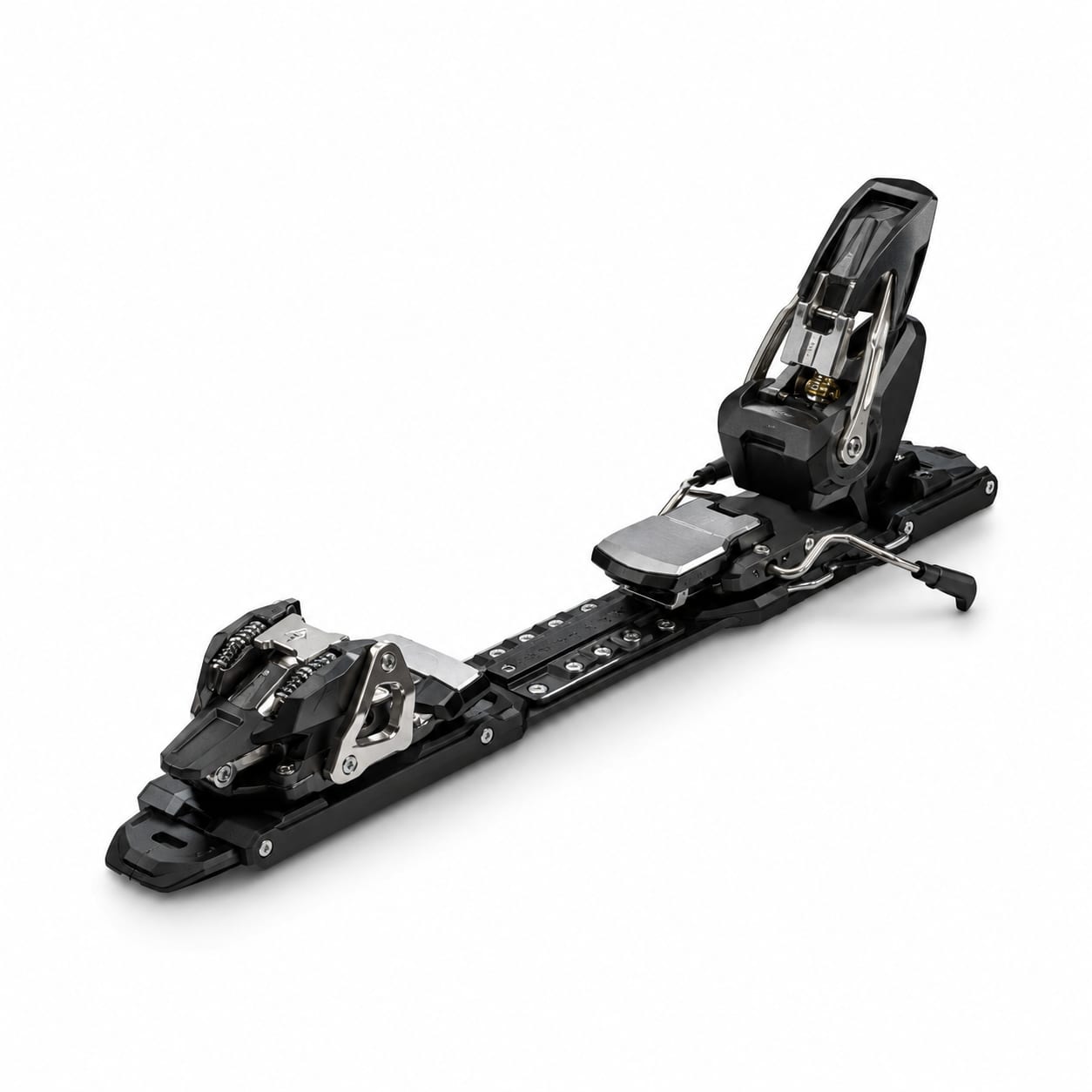
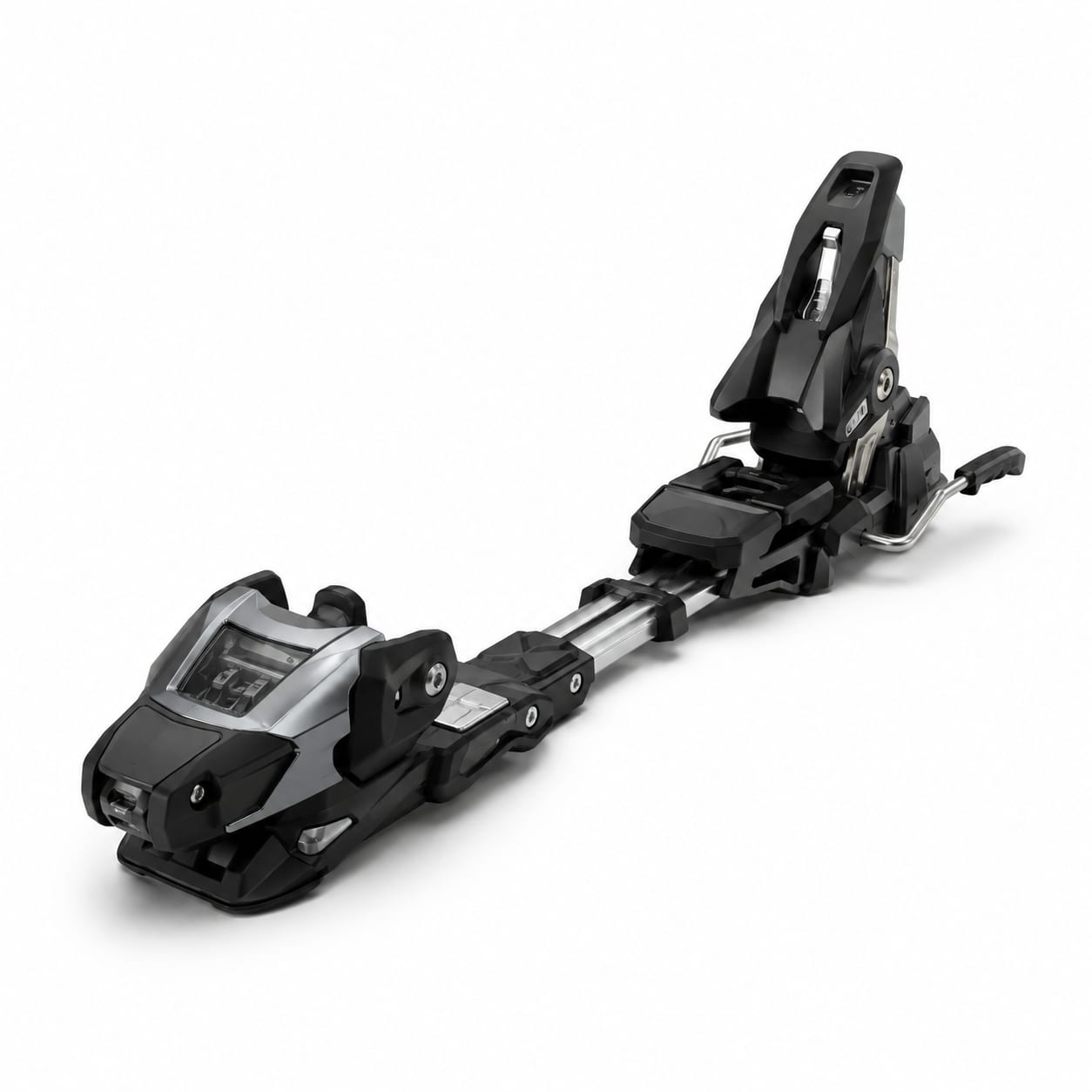
Racing bindings are purely alpine type with spring-loaded toe jaws and heel retention. They are ISO 5355 boot sole compatible and designed exclusively for in-bounds, lift-served skiing on prepared surfaces.
Compared to other types
Unlike touring, frame, or hybrid bindings that compromise downhill performance for uphill capability, racing bindings are single-purpose alpine designs with no walk mode or touring features.
Why it matters: Alpine binding type provides the most direct power transmission and the most consistent, tested release characteristics—both essential for racing. No other binding type offers the combination of retention, elastic travel, and release reliability that racing demands.
Boot Sole Type Compatibility
Boot Sole Compatibility
What it means
The types of ski boot soles the binding is designed to work with. Mismatched boot-sole combinations compromise release safety and may not engage properly.
Typical for this type
ISO 5355 (Alpine) Exclusively
In practice
Racing bindings are designed solely for ISO 5355 alpine boot soles—the flat, rigid platform found on all race boots. Touring soles, GripWalk, and WTR soles are not compatible and should never be used in racing bindings.
Compared to other types
Unlike modern all-mountain bindings that often accept both ISO 5355 and GripWalk, racing bindings are strictly ISO 5355. This is a narrower compatibility than most other subcategories.
Why it matters: Race boots feature the stiffest, flattest soles for maximum power transfer. Using any other sole type in a racing binding would compromise both performance and safety, as the release characteristics are calibrated specifically for ISO 5355 soles.
Stand Height / Stack Height
Stand Height
What it means
The distance from the ski surface to the bottom of the boot sole when mounted. Higher stand heights increase leverage and edge power but reduce snow feel and stability.
Typical for this type
25–35mm with integrated lifter; up to 40mm for speed events
Most common pick: 28–35mm (with riser plate)
In practice
Racing bindings are typically mounted on riser plates or integrated lifters that elevate the boot significantly above the ski surface. Stand heights of 28–35mm are common for slalom and GS, while speed event setups may reach 40mm. The lifter is often part of the binding system or a separate plate.
Compared to other types
Racing bindings have the highest stand heights of any subcategory—often 10–20mm taller than all-mountain bindings (17–22mm) and dramatically taller than freestyle bindings (15–18mm), which prioritize a low center of gravity.
Why it matters: Higher stand height increases leverage for tipping the ski onto higher edge angles, which is the primary mechanism for generating grip on firm snow. For racers, the ability to achieve extreme edge angles directly translates to speed and control.
Weight (Pair)
Weight Per Pair
What it means
Total weight of both bindings including brakes. Critical for touring setups where every gram matters on the ascent. Less important for resort skiing.
Typical for this type
2000–2800g (including brakes and riser plates)
Most common pick: 2200–2800g
In practice
Racing bindings are among the heaviest ski bindings due to their robust metal construction, high-DIN spring mechanisms, and integrated riser plates. A typical pair with plates weighs 2200–2800g. The weight is a consequence of the durability and retention requirements of racing.
Compared to other types
Racing bindings are significantly heavier than all-mountain bindings (1400–2000g), and dramatically heavier than touring bindings (240–1400g). Only some heavy-duty freeride bindings approach similar weights.
Why it matters: Weight is a secondary concern in racing—retention, power transmission, and durability take priority. The heavy construction ensures the binding can withstand the extreme and repeated forces of training and competition without failure.
Elastic Travel / Retention Travel
Elastic Travel
What it means
The distance the binding can flex elastically before releasing. Greater elastic travel allows the binding to absorb shocks and momentary forces without releasing, reducing inadvertent releases while maintaining safety.
Typical for this type
High (25–45mm lateral, 15–25mm vertical)
In practice
Racing bindings feature the highest elastic travel of any binding category. This extended travel allows the binding to absorb shocks, vibrations, and momentary high forces—such as hitting a rut at speed—without releasing. The binding returns the boot to center after absorbing the force.
Compared to other types
Racing bindings offer significantly more elastic travel than standard all-mountain bindings (15–25mm lateral) and dramatically more than touring/pin bindings, which have minimal elastic travel and are prone to pre-release at speed.
Why it matters: At racing speeds, skis encounter violent forces that would cause standard bindings to release. High elastic travel prevents these inadvertent releases while still allowing the binding to release when forces exceed safe thresholds. This is perhaps the single most important characteristic that distinguishes racing bindings from other types.
AFD (Anti-Friction Device) Type
AFD Type
What it means
The mechanism under the toe of the binding that reduces friction during lateral release. AFD design affects release consistency across different boot sole types and snow conditions.
Typical for this type
Rotating AFD (Look/Rossignol) Or Adjustable Sliding AFD (Marker)
Most common pick: Rotating AFD Or Sliding AFD
In practice
Racing bindings use premium AFD systems—either rotating disc designs (as found in Look and Rossignol race bindings) or adjustable sliding AFDs (as in Marker's Xcell series). These provide the most consistent lateral release possible, even when the AFD surface is contaminated with ice, snow, or debris common on race courses.
Compared to other types
Racing bindings use the most sophisticated AFD designs, surpassing the fixed or basic sliding AFDs found in all-mountain and freestyle bindings. Touring bindings use pin interfaces rather than traditional AFDs.
Why it matters: Consistent release is a safety imperative in racing. When a racer does need the binding to release, it must release cleanly and at the calibrated force. Premium AFDs ensure that friction variability does not cause the binding to release too early or too late.
Mounting System / Interface
Mounting System
What it means
How the binding attaches to the ski. Affects adjustability, remount options, and whether the binding can be moved without drilling new holes.
Typical for this type
Flat Mount (Drilled) — Typically With Manufacturer Riser Plate Or Integrated Lifter System
Most common pick: Flat Mount (Drilled) With Riser Plate
In practice
Racing bindings are almost always flat-mounted via screws into the ski, usually in conjunction with a riser plate or lifter that is either integrated into the binding design or mounted separately. The plate is screwed to the ski, and the binding is screwed to the plate. This provides the most rigid, direct connection possible.
Compared to other types
Unlike demo/rental bindings that use track systems, or system skis with proprietary interfaces, racing bindings use the most direct mounting method. This is the same approach as most high-performance alpine bindings but with the addition of riser plates.
Why it matters: Any flex or play in the mounting interface would compromise power transmission and edge control. The rigid drilled connection ensures that every input from the racer is transferred directly to the ski. Track or demo systems introduce unwanted flex.
Ramp Angle / Delta Angle
Ramp Angle
What it means
The angle created by the height difference between the toe piece and heel piece. Affects stance, forward lean, and how the skier is positioned over the ski.
Typical for this type
4–7 degrees (varies by discipline and riser plate design)
Most common pick: 5–7 degrees
In practice
Racing bindings tend to have higher ramp angles than other binding types, often in the 5–7 degree range. This is partly inherent to the binding design and partly a result of the riser plate geometry. The increased ramp angle pushes the skier forward into an aggressive stance optimized for carving.
Compared to other types
Racing bindings have higher ramp angles than all-mountain bindings (3–5 degrees) and significantly more than freestyle bindings (2–4 degrees), which prefer a more neutral stance.
Why it matters: A higher ramp angle helps racers maintain a forward, driving stance over the ski, which is essential for initiating and maintaining carved turns at high speed. Combined with the forward lean of race boots, the total ramp effect creates a very aggressive stance.
Recommended Ability Level
Recommended Ability Level
What it means
The skier ability level the binding is designed and DIN-ranged for. Helps match binding performance and safety characteristics to skier needs.
Typical for this type
Expert Only (Competitive Racers And High-Level Race Training Participants)
In practice
Racing bindings are designed exclusively for expert-level skiers—specifically those competing in or training for sanctioned ski races. The high minimum DIN settings, aggressive retention, and tall stand heights make them inappropriate and potentially dangerous for any other ability level.
Compared to other types
Racing bindings are the only subcategory that is genuinely expert-only. Even freeride bindings, which also have high DIN ranges, typically start at lower minimum settings and are more accessible to advanced skiers.
Why it matters: Using racing bindings without the weight, technique, and strength to generate the forces they're designed for creates a serious safety hazard. A lighter or less skilled skier may not be able to generate enough force to trigger a release in a fall, leading to severe injuries.
Recommended Ski Type
Ski Type Compatibility
What it means
The type of skiing and ski the binding is optimized for. Ensures the binding's performance characteristics match the intended use.
Typical for this type
Race (Slalom, GS, Super-G, Downhill Skis)
In practice
Racing bindings are designed specifically for race skis—FIS-compliant slalom, giant slalom, super-G, and downhill skis. These are the narrowest, stiffest skis made, with waist widths typically under 70mm and construction optimized for firm-snow grip at speed.
Compared to other types
Racing bindings are the least versatile subcategory, optimized exclusively for race skis. All-mountain bindings work on the widest range of skis, freeride bindings on wide powder skis, and freestyle bindings on park skis.
Why it matters: The binding's performance characteristics—high DIN, tall stand height, narrow brake, rigid mounting—are all optimized for race skis. Mounting racing bindings on wider, softer, or more forgiving skis creates a mismatch that negates the binding's advantages and amplifies its disadvantages.
Climbing Aid / Heel Riser
Climbing Aid / Riser
What it means
Adjustable heel lifters on touring bindings that reduce calf strain during steep ascents. Not present on pure alpine bindings.
Typical for this type
None — Not Applicable to Racing Bindings
In practice
Racing bindings have no climbing aid functionality. They are designed exclusively for downhill skiing on lift-served terrain. The riser plates found on some racing bindings are for stand height and edge angle, not for uphill travel.
Compared to other types
Unlike touring, frame, and hybrid bindings that feature climbing aids, racing bindings share the 'none' category with standard alpine and freestyle bindings.
Why it matters: Climbing aids are irrelevant for racing, which takes place entirely on groomed, lift-accessed slopes. Any racing binding that claims climbing aid functionality would be a hybrid or touring product, not a true race binding.
Toe Release Direction
Toe Piece Release Direction
What it means
The directions in which the toe piece allows the boot to release. Affects the types of falls the binding protects against.
Typical for this type
Multi-Directional Or Lateral + Upward
In practice
Premium racing bindings typically feature multi-directional toe release, allowing the boot to release in lateral, upward, and diagonal directions. This provides the most comprehensive protection in the complex, high-energy fall scenarios that occur in racing. Some models offer lateral + upward release.
Compared to other types
Racing bindings typically have the most sophisticated release systems, surpassing the lateral + upward release common in all-mountain bindings and far exceeding the lateral-only release of basic or older designs.
Why it matters: Racing falls often involve complex, multi-directional forces as skiers crash at high speed. Multi-directional release ensures the binding can protect the skier regardless of the fall direction, which is critical when forces are extreme.
Primary Construction Material
Construction Material
What it means
The main material used in the binding body and key structural components. Affects weight, durability, and vibration damping.
Typical for this type
Steel Or Mixed (Steel High-Stress Components With Aluminum Structural Elements)
Most common pick: Steel / Mixed
In practice
Racing bindings use steel in high-stress components (toe jaws, heel housing, springs) and aluminum in structural elements (heel track, base). This combination provides maximum durability and minimal flex under the extreme loads of racing. Full composite construction is never used in race bindings.
Compared to other types
Racing bindings use more steel than any other subcategory. All-mountain and freeride bindings typically use mixed or aluminum construction, while touring bindings often use composite polymers to save weight.
Why it matters: The extreme and repeated forces of racing require materials that will not deform, fatigue, or fail. Steel provides the durability and rigidity needed in the most stressed components, while aluminum keeps overall weight manageable.
ISO Safety Certification
ISO Certification
What it means
The international safety standards the binding meets or exceeds. Certified bindings have been tested for consistent release values and durability.
Typical for this type
ISO 9462 (Required), TÜV/TIS Certification (Common And Preferred)
Most common pick: ISO 9462, TÜV/TIS
In practice
Racing bindings meet ISO 9462 for alpine ski bindings and often carry additional TÜV or TIS certification, which involves more rigorous third-party testing beyond ISO minimums. FIS-sanctioned racing may require bindings that meet specific certification standards.
Compared to other types
Racing bindings are more likely to carry TÜV/TIS certification beyond ISO minimums compared to recreational bindings. Touring bindings are certified to a different standard (ISO 13992).
Why it matters: Certification ensures that the binding releases consistently at its calibrated DIN values, which is a safety imperative in racing where forces are extreme and falls can be severe. Additional certifications provide extra assurance of quality and consistency.