Kitvore.com

Kitvore.com

Specs that matter. Gear that fits.

Ski Boots · Subcategory

All-Mountain Ski Boots

The versatile workhorse of ski boots, designed to handle the entire mountain from groomed runs to light off-piste.

All-Mountain Ski Boots strike the ideal balance between on-piste performance and off-piste adaptability. With a medium flex, comfortable yet responsive fit, and increasingly common features like walk mode and GripWalk soles, they are the go-to choice for the majority of resort skiers who want one boot to do it all.

$300 – $850mid tierbeginnerintermediateadvanced

Best known for

Versatility across terrain and conditionsBalance of comfort and performanceWide availability of fits and sizesAll-day wearability
All-Mountain Ski Boots

Guide

Detailed overview

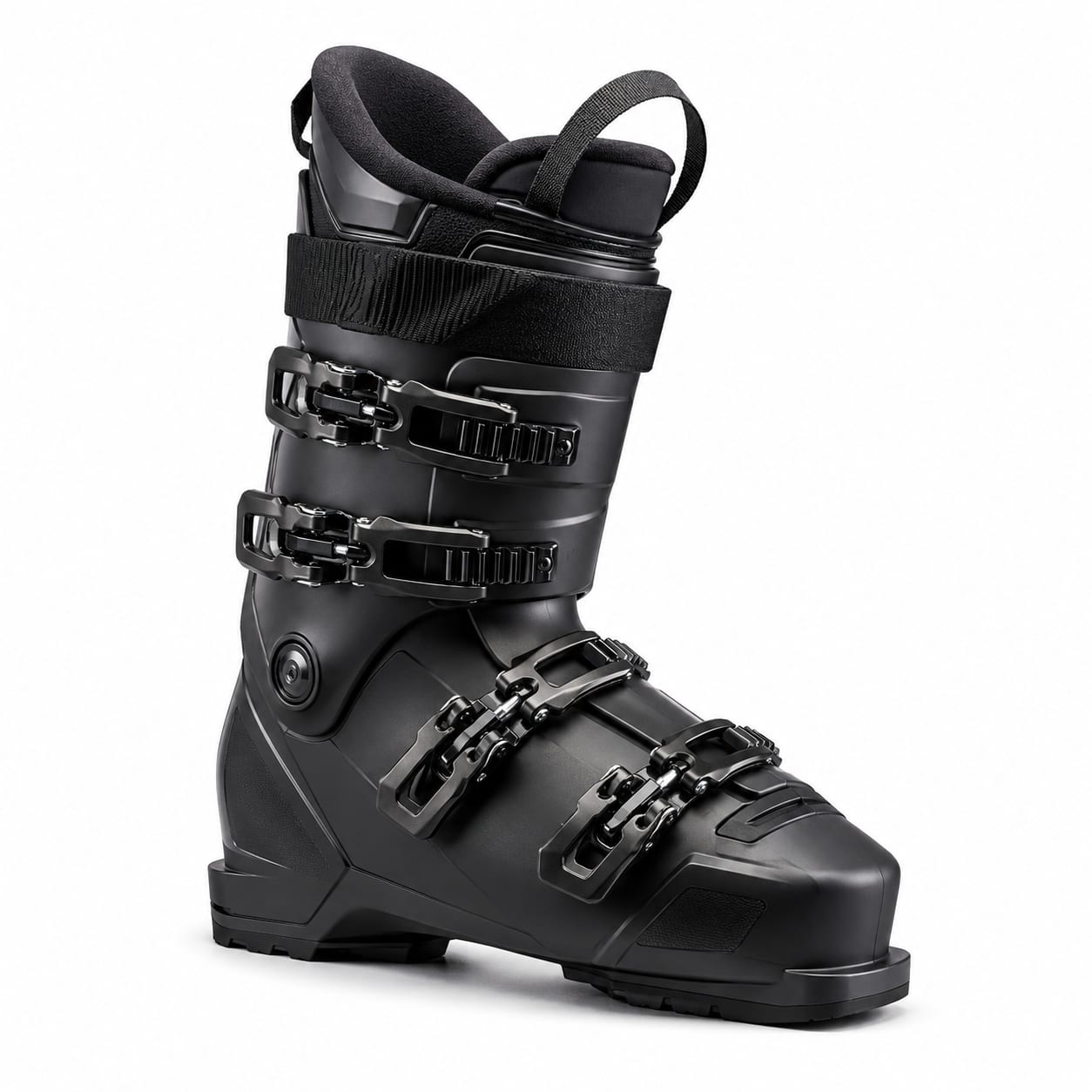
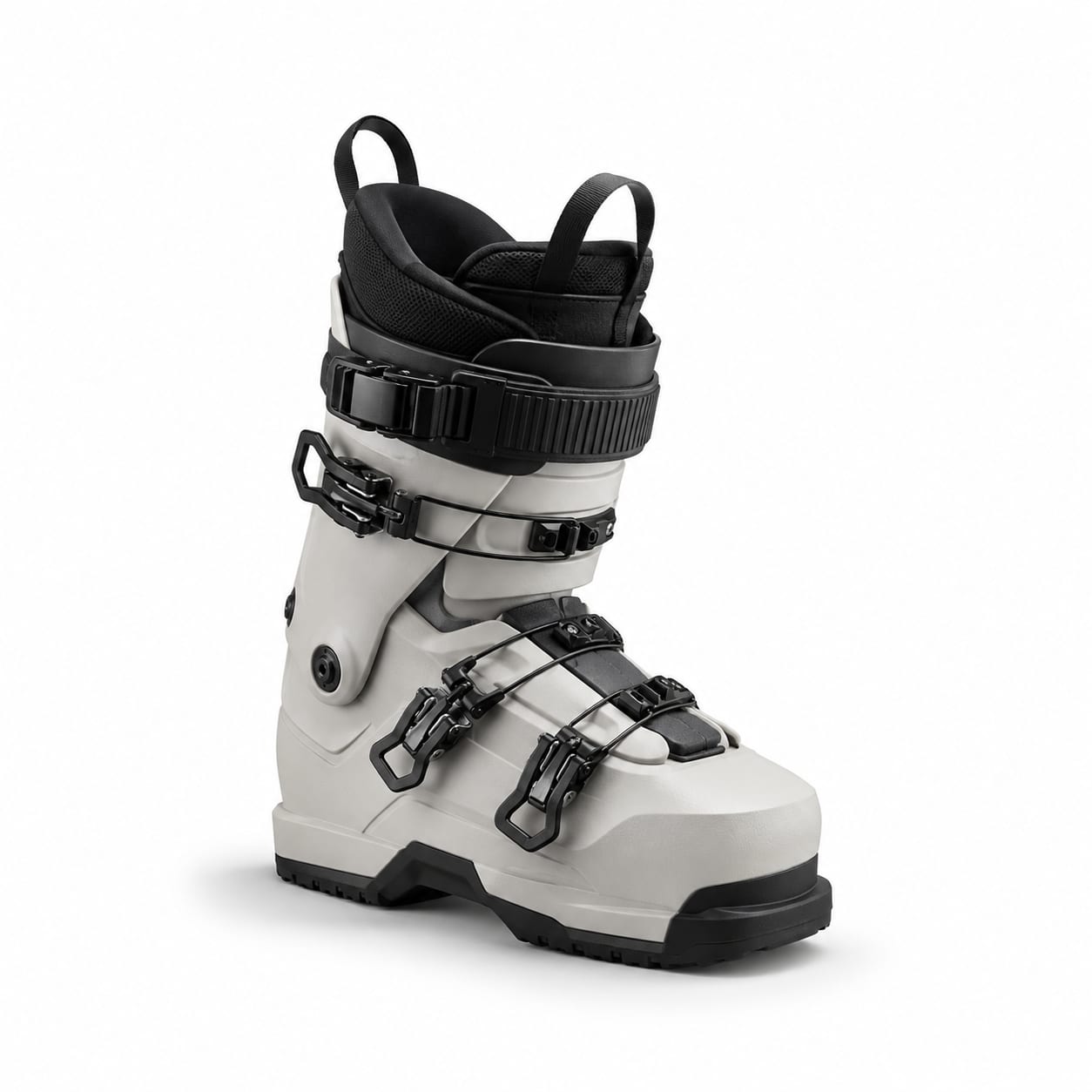
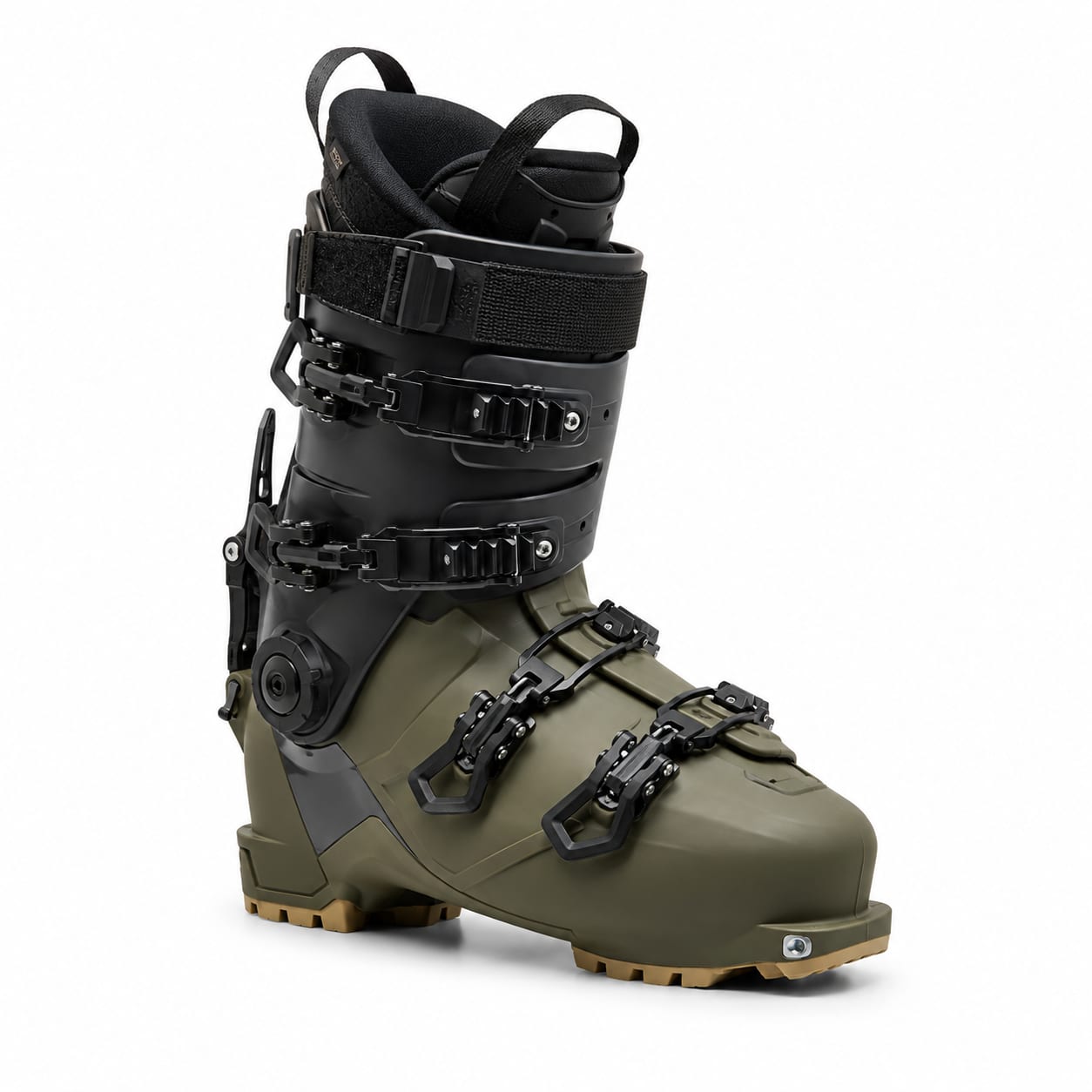
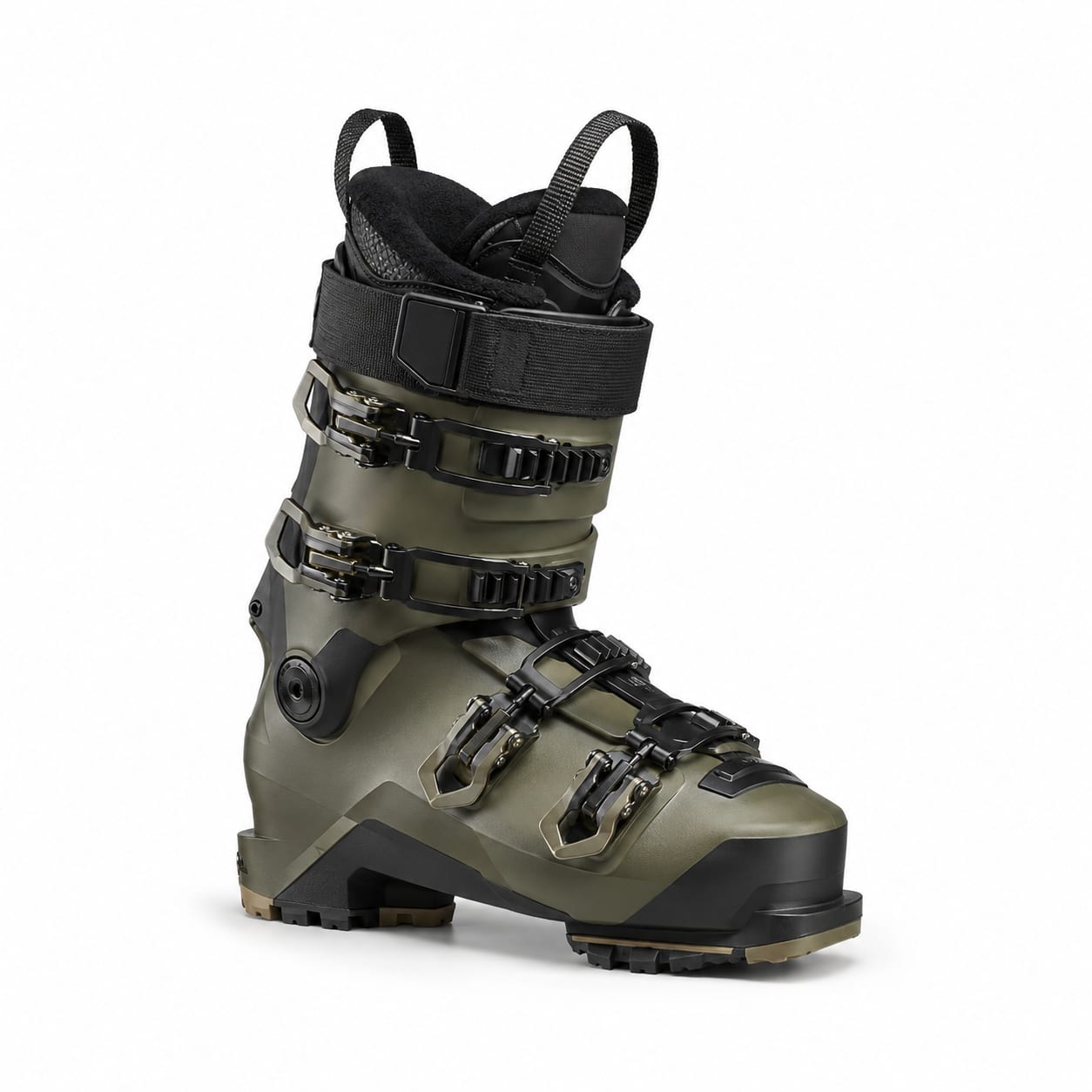
All-Mountain ski boots are engineered for skiers who refuse to be limited to a single terrain type. Whether carving morning groomers, navigating afternoon bumps, or dipping into the trees for fresh snow, these boots provide the adaptability needed for a full resort experience. They typically feature a 4-buckle design with a flex rating ranging from 90 to 110 for men and 80 to 100 for women, offering a sweet spot of responsiveness without being overly demanding. Modern all-mountain boots frequently include walk mode mechanisms and GripWalk soles, bridging the gap between pure frontside performance and freeride versatility.

All-Mountain ski boots are the jack-of-all-trades in the ski boot world, designed to deliver reliable performance whether you're laying down edge-to-edge carves on groomed runs or seeking out soft snow in the trees. Unlike specialized boots that excel in narrow disciplines, all-mountain boots are built with a versatile flex profile and a balanced stance that accommodates a wide variety of skiing styles. This makes them the most popular category, perfectly suited for the vast majority of resort skiers who explore the whole mountain rather than specializing.

The design philosophy of all-mountain boots centers on compromise in the best possible way. They typically feature a 4-buckle overlap construction with a medium flex rating, offering enough rigidity for responsive turns while remaining forgiving enough for all-day comfort. Last widths generally range from 97mm to 102mm, accommodating narrow to wide feet. Modern models increasingly feature walk modes and GripWalk soles, acknowledging that even resort skiers appreciate easier walking and sidecountry access.

Fit is paramount in all-mountain boots. While they lack the razor-sharp precision of frontside race boots or the uphill efficiency of touring boots, they excel by doing everything well enough for 90% of skiers. A proper fit ensures the foot is cradled securely for responsive power transfer without creating pressure points that cut the day short. Because they are the most popular category, manufacturers offer the widest range of last widths, instep volumes, and flex options, making it easier to find a precise fit compared to niche categories.

Technologically, modern all-mountain boots have adopted many features previously reserved for specialized models. Walk modes with 35-45 degrees of rotation are now common, blurring the line with freeride boots. GripWalk soles provide vastly improved traction over icy parking lots compared to traditional DIN soles. Composite shell materials blend PU lower shells for power with lighter upper cuffs for reduced fatigue. These advancements mean today's all-mountain boot is more capable and comfortable than ever, often rendering specialized boots unnecessary for all but the most dedicated skiers.

Quick facts

Primary purpose
General resort skiing across all terrain types
Popular brands
TecnicaSalomonNordicaAtomicDalbelloRossignol
Typical terrain
groomed runsmogulstreeslight off-pistemixed snow

What makes it different

Broadest terrain capability; Widest range of flex options (90-130); Most size and fit options available; Often include hike/skin-compatible models

Recommended ranges

How this type usually specs out

Each spec is explained in plain language, then we show what buyers usually look for on this type.

Boot Type / Discipline

Boot Type

What it means

The primary intended use category of the ski boot, which determines overall construction, features, and performance characteristics.

Typical for this type

All Mountain

In practice

All-mountain boots are defined by their versatile construction, designed to handle groomers, moguls, and light off-piste equally.

Compared to other types

More versatile than frontside or race boots, less uphill capability than freeride or touring boots.

Why it matters: Choosing the all_mountain type ensures you get a boot optimized for varied resort terrain rather than a specialized discipline.

Flex Rating (Stiffness)

Flex Rating

What it means

A numerical index indicating how resistant the boot cuff is to forward bending. Higher numbers mean stiffer boots that resist flex more, providing more precise power transfer but requiring more strength and technique to drive.

Typical for this type

85-110 (men), 75-100 (women)

Most common pick: 100 (men), 85 (women)

In practice

A medium flex balances responsiveness with forgiveness, allowing the boot to bend slightly under pressure without bottoming out.

Compared to other types

Softer than race (130+) and frontside (110-130), stiffer than freestyle (70-90) and touring (60-100).

Why it matters: Too stiff causes fatigue and poor technique; too soft sacrifices control at speed and on steep terrain.

Last Width (Forefoot Width)

Last Width

What it means

The width of the boot shell at the widest point (forefoot/ball area), measured in millimeters. This is the single most important fit dimension for comfort and control.

Typical for this type

97-102mm

Most common pick: 100mm

In practice

A medium last width accommodates the average foot, providing a snug fit without cramping.

Compared to other types

Wider than frontside/race (95-98mm), narrower than wide freeride models (102-106mm).

Why it matters: Proper width ensures efficient power transfer without pain; too wide causes slop, too narrow causes numbness.

Volume / Instep Height

Volume / Instep Height

What it means

The overall internal volume and height of the boot through the instep and midfoot area. Categorized as low, medium, or high volume, this affects both comfort and heel hold.

Typical for this type

Medium Volume (Low Volume And High Volume Options Available)

In practice

Medium volume suits the majority of foot shapes, balancing instep comfort with heel hold.

Compared to other types

More forgiving than low_volume frontside/race, more precise than high_volume recreational boots.

Why it matters: Proper instep volume prevents top-of-foot pressure or heel lift during turns.

Shell Material

Shell Material

What it means

The primary plastic or composite material used in the boot shell and cuff, which affects weight, stiffness, cold-weather performance, and ease of entry.

Typical for this type

Polyurethane Pu Or Composite

In practice

PU provides consistent flex across temperatures and excellent durability for resort skiing.

Compared to other types

Heavier than Grilamid/Pebax touring boots, but more consistent flex in cold than polyamide.

Why it matters: Material affects weight, cold-weather performance, and power transfer to the ski.

Liner Type

Liner Type

What it means

The type of inner boot/liner that provides insulation, cushioning, and customizable fit around the foot and ankle.

Typical for this type

Thermo Formable Or Intuition

In practice

Thermo-formable liners offer good customization at a mid-range price point, conforming to foot shape when heated.

Compared to other types

Better than non_moldable entry liners, less custom than custom_foam injected race liners.

Why it matters: Heat molding dramatically improves comfort and heel hold out of the box.

Number of Buckles

Buckle Count

What it means

The number of closure buckles on each boot. More buckles provide finer adjustment and more even closure pressure, while fewer buckles save weight and simplify entry.

Typical for this type

4

In practice

4 buckles provide precise, adjustable closure across the foot and lower leg for optimal power transfer.

Compared to other types

More precise than 3-buckle touring/freeride, same as frontside/race standard.

Why it matters: Proper closure ensures efficient power transfer and fine-tuned fit across the foot and cuff.

Walk Mode / Hike Mechanism

Walk Mode

What it means

A mechanism that unlocks the cuff from the lower shell, allowing a greater range of forward motion for walking, hiking, or skinning.

Typical for this type

True (Increasingly Standard)

In practice

Many modern all-mountain boots include a walk/hike mechanism for convenience in lodges and short hikes.

Compared to other types

Less range than freeride/touring, but increasingly common unlike pure frontside boots.

Why it matters: Greatly improves walking comfort in parking lots, lodges, and during short sidecountry hikes.

Walk Range of Motion (Degrees)

Walk Range of Motion

What it means

The total range of forward cuff rotation when in walk mode, measured in degrees. Greater range makes walking, skinning, and hiking easier and more natural.

Typical for this type

25-45 degrees

Most common pick: 35 degrees

In practice

Sufficient for short hikes and sidecountry access, but not designed for dedicated skinning.

Compared to other types

Less than touring (50-70 degrees), more than frontside (0-15 degrees if present).

Why it matters: Allows comfortable walking and short ascents without sacrificing downhill performance.

Boot Sole Length (BSL)

Boot Sole Length

What it means

The length of the boot sole in millimeters, critical for binding setup and adjustment. Different from mondo point size; the same size boot can have different BSL across brands.

Typical for this type

263-340mm (size dependent)

Most common pick: 305mm (size 27.5)

In practice

BSL is determined by mondo size and brand; essential for binding setup.

Compared to other types

Similar to all alpine boots; touring boots may have different BSL standards (Tech vs Alpine).

Why it matters: Critical for binding mounting and adjustment; must be verified when changing boots.

Forward Lean Angle

Forward Lean

What it means

The angle of the cuff relative to vertical, positioning the skier's body forward over the skis. Affects stance, balance, and the ability to drive the ski tips.

Typical for this type

14-17 degrees

Most common pick: 15 degrees

In practice

A neutral forward lean suits varied terrain, positioning the skier balanced over the skis.

Compared to other types

Less aggressive than race (17-20 degrees), more than freeride/touring (12-15 degrees).

Why it matters: Affects stance and ability to drive ski tips; too aggressive causes fatigue, too upright limits edge angle.

GripWalk Sole Compatibility

GripWalk Compatible

What it means

Whether the boot features a GripWalk sole profile (rockered, rubberized) that requires GripWalk-compatible bindings for safe use.

Typical for this type

Gripwalk Or Alpine Standard

In practice

GripWalk soles are increasingly standard on all-mountain boots, offering better traction and walking comfort.

Compared to other types

More walking comfort than alpine_standard frontside/race, less touring-specific than tech_touring soles.

Why it matters: Improves walking significantly but requires GripWalk-compatible bindings for safety.

Weight Per Pair (grams)

Weight Per Pair

What it means

The total weight of both boots in grams. Weight significantly affects touring efficiency and all-day fatigue, with lighter boots being easier on the uphill but sometimes sacrificing downhill performance.

Typical for this type

3500-4200g

Most common pick: 3800g

In practice

Standard weight for 4-buckle alpine boots with walk mode and GripWalk features.

Compared to other types

Heavier than touring (1800-3200g), lighter than some race boots (4000g+).

Why it matters: Heavy enough for stability and power transfer, light enough for all-day resort skiing.

Micro-Adjustable Buckles

Micro-Adjustable Buckles

What it means

Whether the buckles can be fine-tuned with a screw mechanism for precise tension adjustment beyond the standard catch positions.

Typical for this type

True

In practice

Micro-adjust allows fine-tuning of buckle tension beyond standard catch positions.

Compared to other types

Standard on mid-range+ all-mountain, less common on entry-level or ultralight touring.

Why it matters: Accommodates foot swell throughout the day and allows precise tension for performance.

Power Strap Type

Power Strap

What it means

The velcro or mechanical strap at the top of the cuff that provides additional closure power and fine-tuning of upper cuff tension.

Typical for this type

Wide Velcro Or Standard Velcro

In practice

A wide velcro strap balances power transfer to the cuff with ease of adjustment.

Compared to other types

More powerful than standard_velcro on entry boots, less complex than buckle_strap on race boots.

Why it matters: Enhances upper cuff closure and fine-tunes forward lean pressure.

Cuff Alignment / Cant Adjustment

Cuff Alignment Adjustment

What it means

The ability to adjust the lateral angle of the cuff relative to the lower shell, accommodating bowlegged or knock-kneed stances for proper edge engagement.

Typical for this type

True

In practice

Allows lateral adjustment of the cuff to accommodate bowlegged or knock-kneed stances.

Compared to other types

Common on mid-range+ all-mountain, rare on entry-level recreational boots.

Why it matters: Corrects natural alignment issues for proper edge engagement and reduced fatigue.

Recommended Skill Level

Recommended Skill Level

What it means

The skier ability level the boot is designed and optimized for, which correlates with flex, features, and overall construction philosophy.

Typical for this type

Intermediate, Advanced

Most common pick: Intermediate to Advanced

In practice

Designed for developing to experienced skiers who explore the whole mountain.

Compared to other types

Higher than beginner/freestyle, lower than expert/race requirements.

Why it matters: Matching skill level prevents fatigue from too-stiff boots or lack of response from too-soft boots.

Evaluation

Strengths and trade-offs

Pros

What this type does best

Versatile Performance

Critical

Handles groomers, bumps, trees, and light powder competently without the extreme specialization of other categories.

Wide Fit Options

High

As the most popular category, manufacturers offer the broadest range of last widths and instep volumes, making it easier to find a proper fit.

All-Day Comfort

High

Medium flex and balanced stance reduce fatigue compared to stiff race boots, allowing longer days on the hill.

Modern Features

Medium

Increasingly include walk mode and GripWalk soles, borrowing convenience features from freeride and touring categories.

Forgiving Flex

High

Medium flex is more forgiving of technique errors, making them accessible to a wider range of skiers.

Good Value

Medium

High competition in this category means strong value propositions and frequent sales, especially on previous-year models.

Cons

Trade-offs to be aware of

Lacks Specialization

Moderate

Jack-of-all-trades means master of none; won't match race boots on piste or touring boots uphill.

Weight Penalty

Minor

Heavier than touring or freestyle boots, which can contribute to fatigue on long days or hikes.

Walk Mode Limitations

Moderate

When present, walk range is limited compared to dedicated touring boots, making long skinning inefficient.

Flex Inconsistency Across Brands

Minor

A '100 flex' varies significantly between manufacturers, making it hard to compare without trying on.

Best for

Terrain

Groomed runsMogulsLight off-pisteTreesMixed resort terrain

Snow conditions

GroomersSoft snowMixed conditionsSpring skiing

Skill level

IntermediateAdvanced

Riding style

All-mountainResort freerideCarvingMogul skiing

Rider profile

Resort skiers exploring the whole mountainSkiers who want one boot for everythingDeveloping skiers progressing to advanced terrain

Not ideal for

Reasons

Lacks the extreme stiffness for competitive racingToo heavy and restrictive for dedicated touringNot optimized for park landings and jibbing

Terrain

Deep backcountrySteep technical mountaineeringDedicated terrain parks

Skill level

Beginner (may find higher flex models too stiff)Expert racers

Riding style

Competitive racingDedicated park and pipeUphill-focused ski touring

Compare

How it stacks up

This page

All-Mountain Ski Boots

More versatile off-piste, often includes walk mode and GripWalk, more comfortable for all-day skiing.

Alternative

Frontside / Piste Ski Boots

Superior edge grip, power transfer, and precision at high speeds on groomed runs.

Bottom line

Choose all-mountain if you venture off-piste even occasionally; choose frontside if you exclusively carve groomers at high speeds.

This page

All-Mountain Ski Boots

Lighter, often more precise on groomers, typically less expensive.

Alternative

Freeride Ski Boots

Better walk mode range, more compatible with touring bindings, designed for deep snow performance.

Bottom line

Choose all-mountain for primarily resort skiing; choose freeride if you spend significant time sidecountry or in deep powder.

This page

All-Mountain Ski Boots

Far superior downhill power and stability, more durable for resort use, better edge hold.

Alternative

Touring / AT Ski Boots

Much lighter for uphill travel, wider walk range, tech binding compatible.

Bottom line

Choose all-mountain for resort skiing; choose touring if you skin uphill regularly or prioritize uphill over downhill.

This page

All-Mountain Ski Boots

Better edge grip and stability at speed, more responsive in varied terrain.

Alternative

Freestyle / Park Ski Boots

Softer flex for park feel, better shock absorption for landings, often lighter.

Bottom line

Choose all-mountain for whole-mountain skiing; choose freestyle if you primarily hit jumps, rails, and pipes.

Shopping

Buying tips

  • 1

    Prioritize fit over features; a well-fitting boot with fewer features will outperform an ill-fitting one with all the bells and whistles.

  • 2

    Don't ego-buy a stiff flex; if you can't comfortably flex the boot in a warm shop, you'll struggle on the hill.

  • 3

    Get heat-molded at a reputable shop; it takes 15 minutes and dramatically improves comfort.

  • 4

    Size by shell fit, not street shoe size; pull the liner out and stand in the shell with toes touching the front—you should have 1-2 fingers of space behind your heel.

  • 5

    Consider GripWalk if buying new bindings simultaneously; it vastly improves walking comfort but requires compatible bindings.

  • 6

    Buy previous-year models; all-mountain boots see minor year-to-year changes, offering significant savings.

Care

Maintenance notes

  • Dry liners and shells separately after each use to prevent odor and material breakdown.
  • Keep buckles fastened when storing to maintain shell shape.
  • Check and tighten cuff screws annually; vibration can loosen them over time.
  • Replace worn heel and toe lugs promptly; worn lugs can cause binding prerelease.
  • Store in a cool, dry place away from direct heat sources which can warp the shell.

Progression

Skill development path

All-mountain boots grow with you from intermediate to advanced. Start with a slightly softer flex (85-95 men, 75-85 women) if you're developing, and move to 100-110 (men) or 85-100 (women) as your technique solidifies. The versatility ensures you won't outgrow the boot's capability as you explore steeper and more varied terrain.

FAQ

Common questions

Each question has a dedicated page with a full answer and links to the buying guide.