Kitvore.com

Kitvore.com

Specs that matter. Gear that fits.

Ski Boots · Subcategory

Telemark Ski Boots

Free-heel ski boots with a bellows toe flex designed for telemark turns and backcountry versatility.

Telemark ski boots feature a unique bellows under the toe box that allows the foot to flex, enabling the signature telemark drop-knee turn. Compatible with 75mm (duckbill) or NTN (New Telemark Norm) bindings, these boots blend touring efficiency with surprising downhill power for skiers who embrace the free-heel discipline.

$300 – $750mid tierintermediateadvancedexpert

Best known for

Drop-knee telemark turnsBellows toe flexFree-heel skiing versatilityNTN and 75mm binding compatibility
Telemark Ski Boots

Guide

Detailed overview

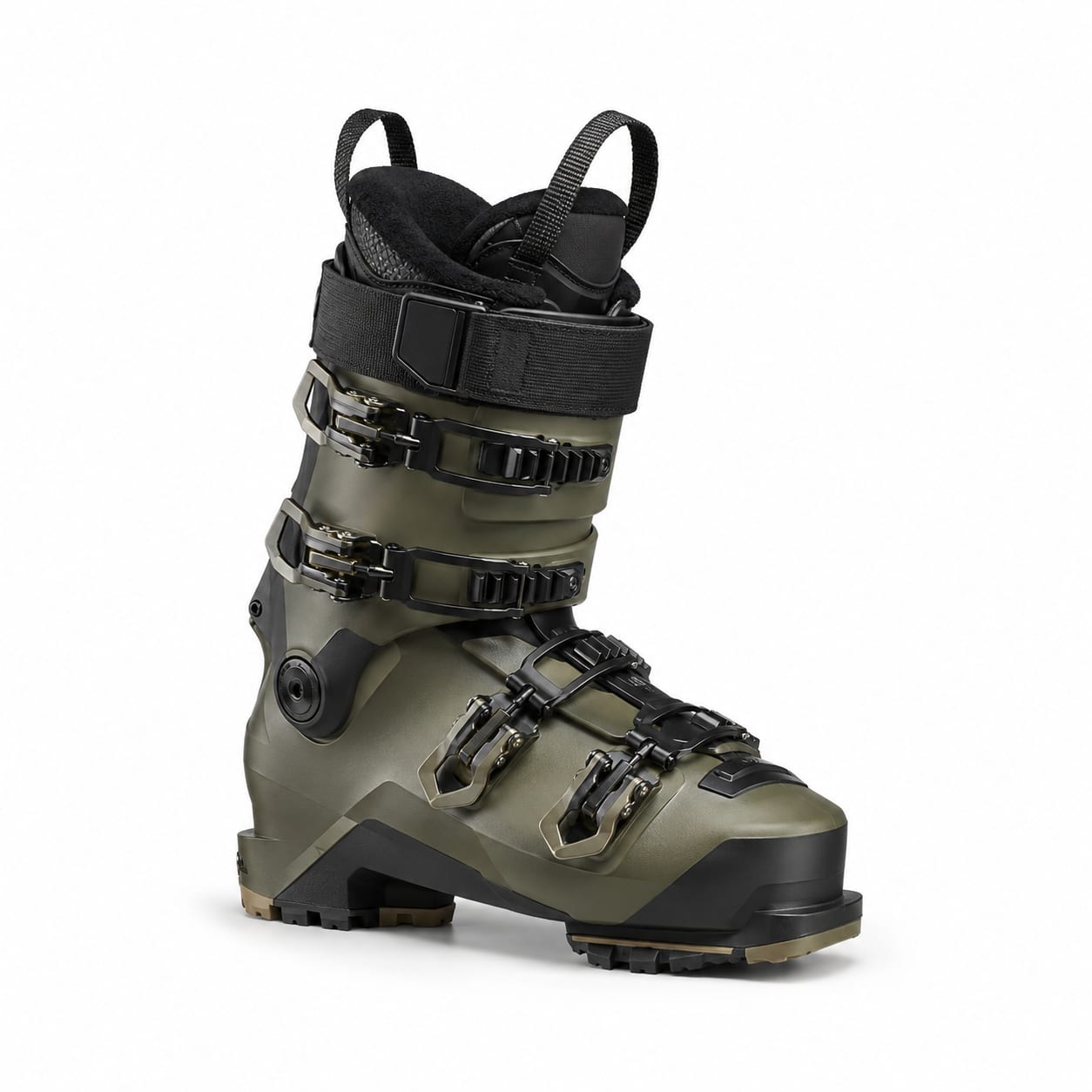
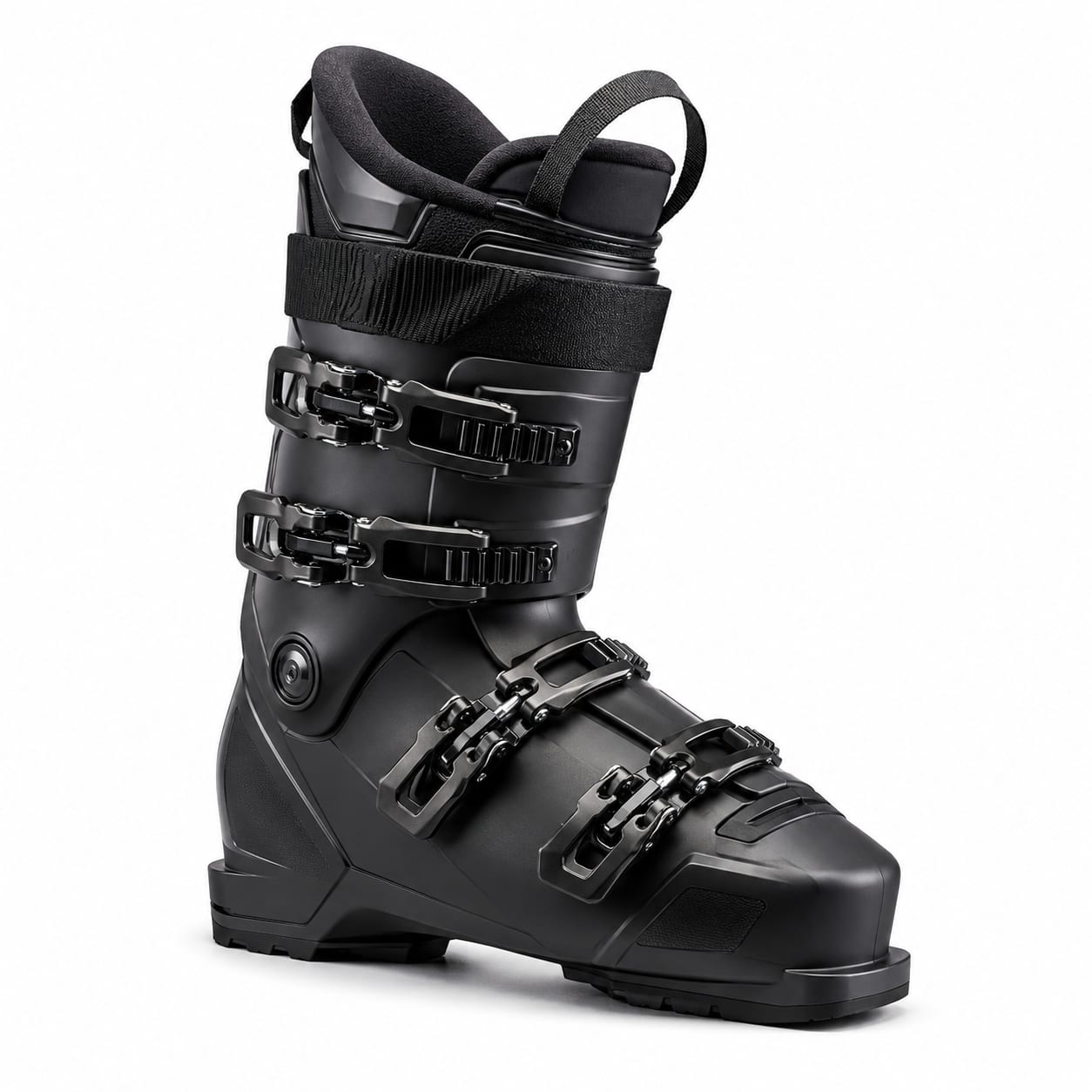
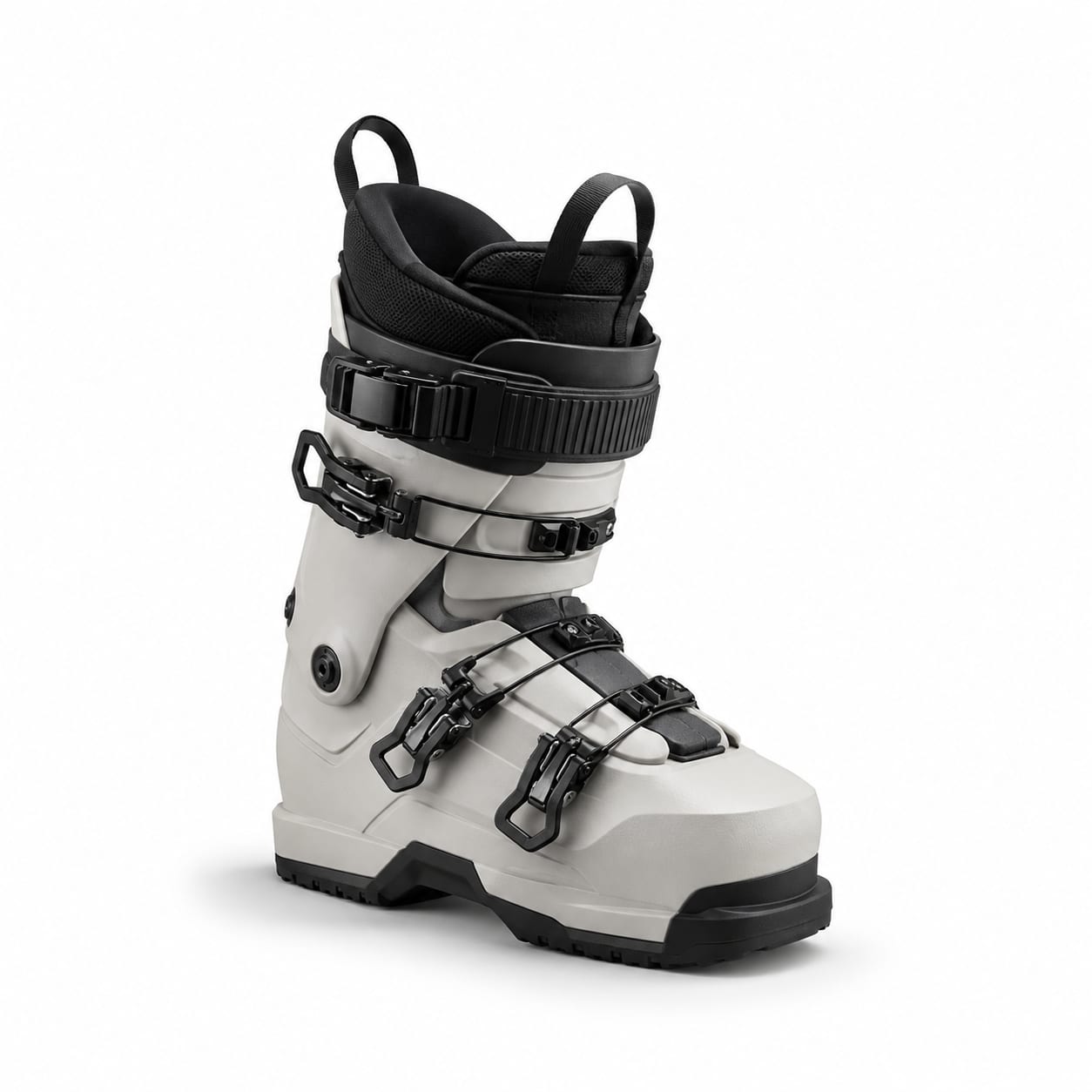
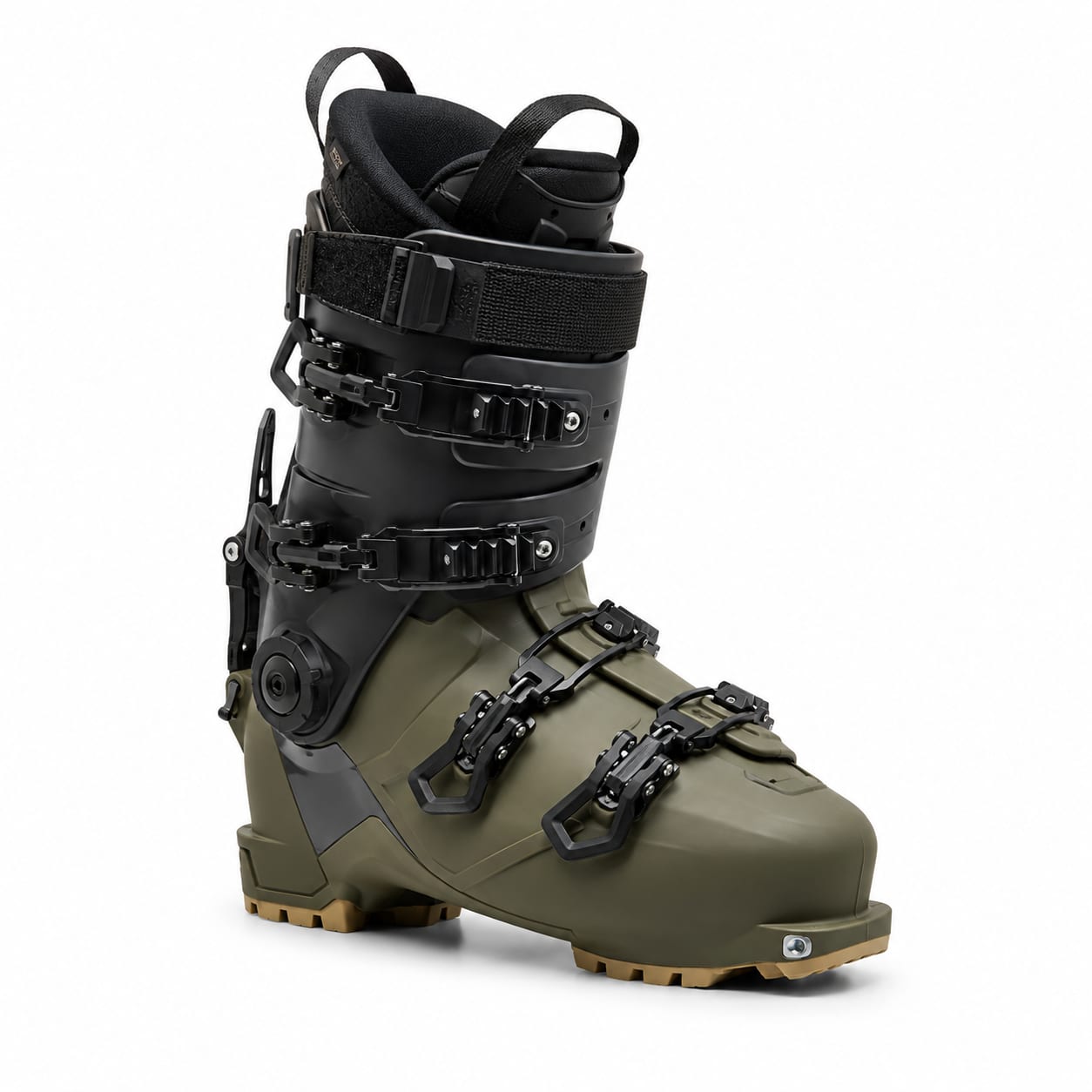
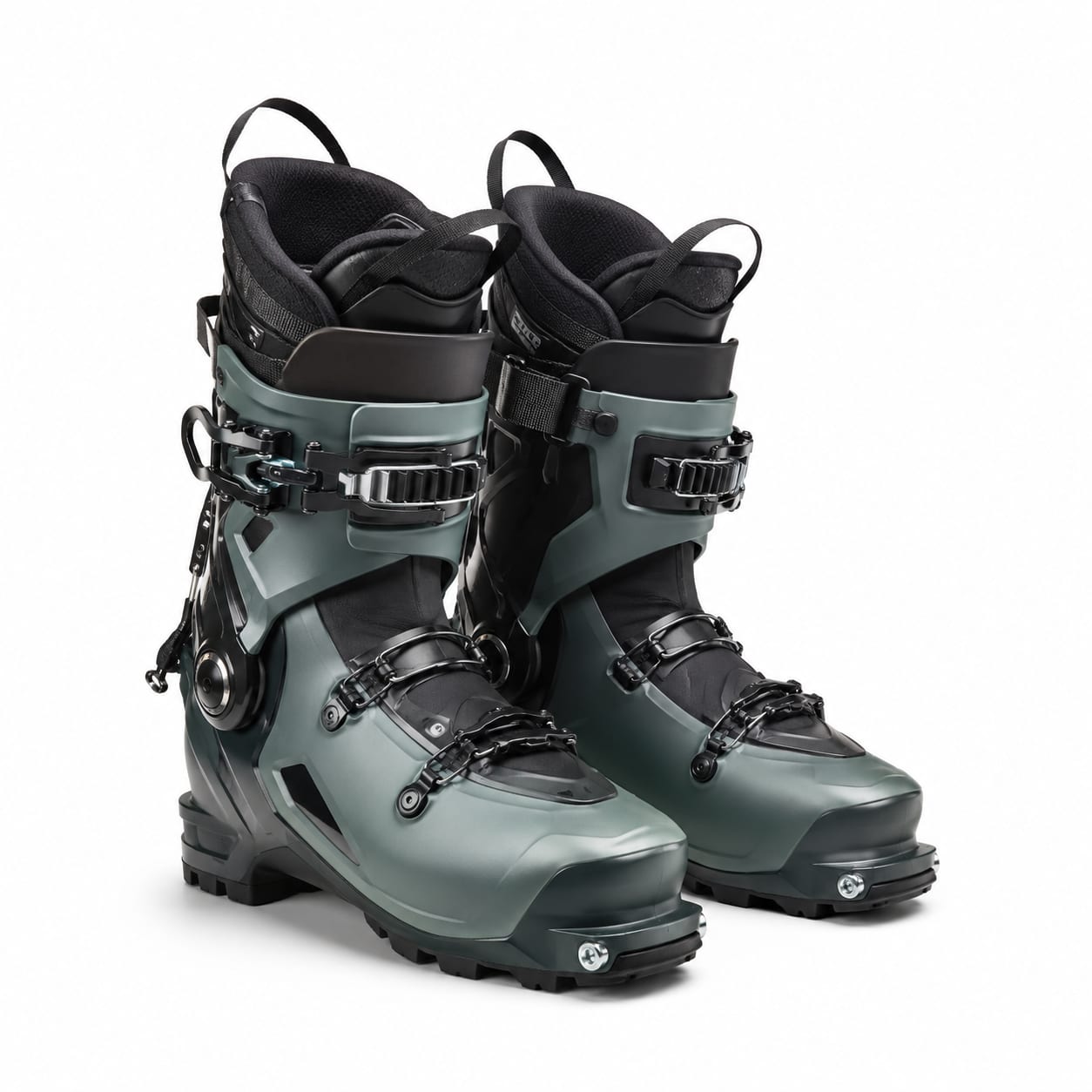
Telemark ski boots are specialized footwear designed for the unique biomechanics of free-heel skiing. Unlike alpine boots, they feature a flexible bellows under the ball of the foot, allowing the heel to lift off the ski while the toe remains engaged during the telemark turn. Modern telemark boots are primarily divided into two binding compatibility standards: the traditional 75mm (duckbill) norm and the newer NTN (New Telemark Norm), which offers enhanced lateral control and a releasable binding system. Built with stiff cuffs for downhill control and flexible toes for touring and turning, they represent a unique blend of uphill efficiency and downhill artistry.

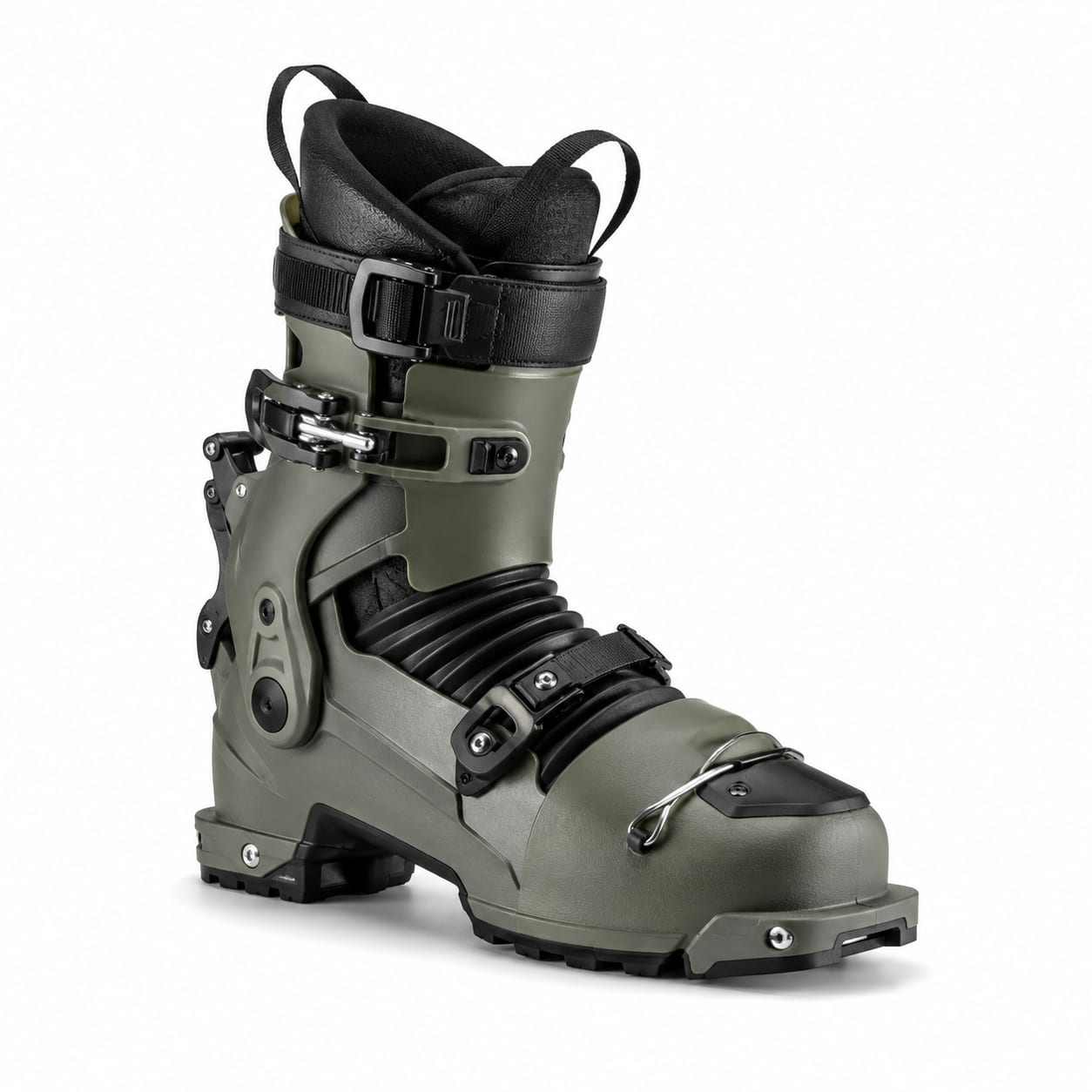
Telemark skiing is often called the beautiful turn, and the boots driving this turn are unlike any other on the mountain. The defining feature of a telemark boot is the bellows—a flexible, accordion-like section built into the toe box that allows the foot to flex forward while the toe remains secured to the ski. This design enables the deep, lunging telemark turn where the heel lifts off the ski, creating the signature drop-knee aesthetic. Without this bellows, the rigid sole of an alpine boot would make telemark turns impossible.

The modern telemark boot market is split between two primary binding standards: 75mm and NTN. Traditional 75mm boots feature a duckbill toe that inserts into a toe box binding, secured by a cable around the heel. While beloved for their simplicity and classic feel, 75mm setups lack lateral rigidity and release capabilities. NTN (New Telemark Norm) boots use a flat, alpine-like sole with side-mounted fittings that click into NTN bindings. This system provides dramatically better lateral edge control, active heel return, and reliable release safety, making it the preferred choice for aggressive freeride telemark skiers.

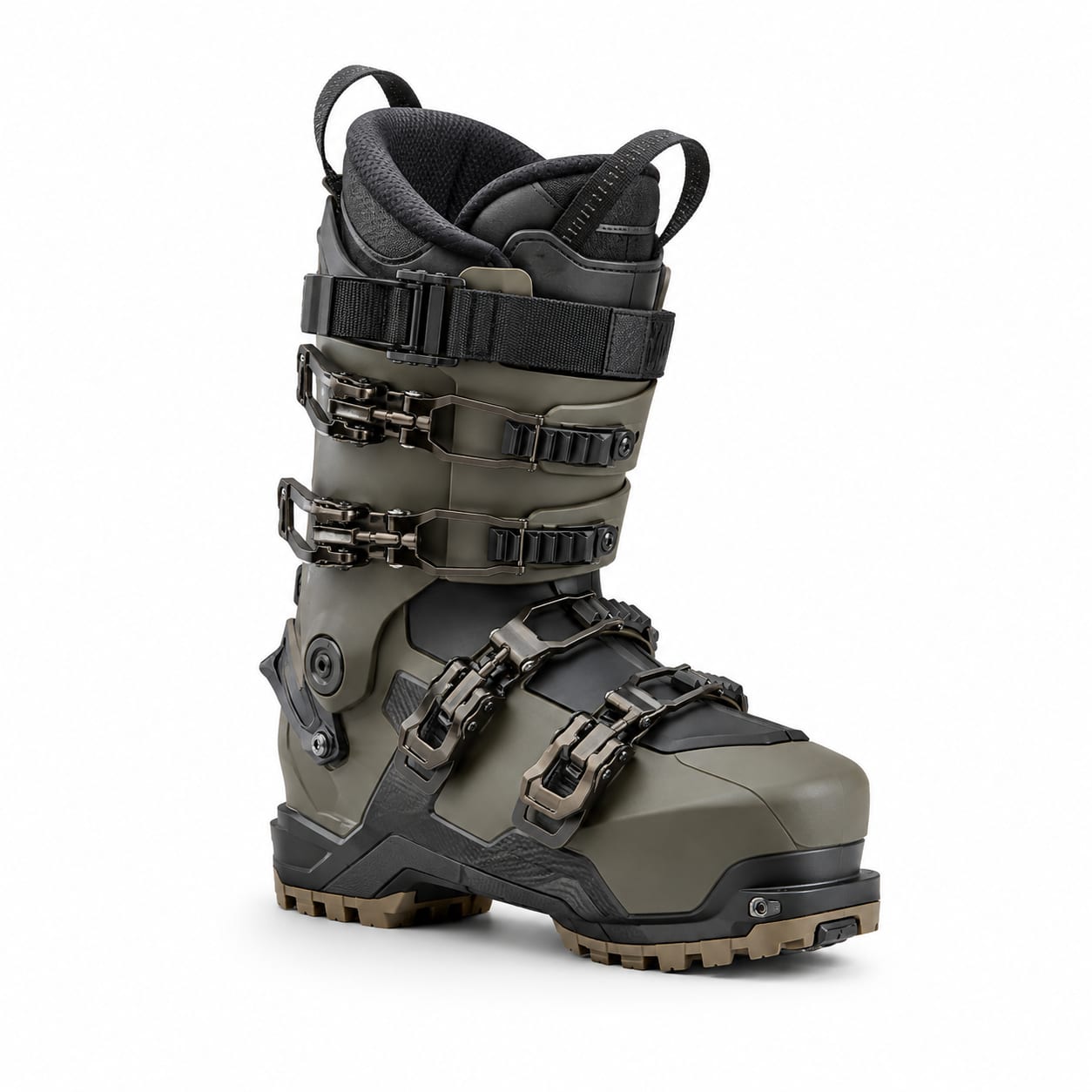
Fit and flex are critical in telemark boots, perhaps even more so than in alpine boots, because the skier must drive the ski with a flexing foot. Telemark boots typically feature a stiff rear cuff to resist backward lean during the lead change, while the lower shell must balance stiffness for edge control with the flexibility needed for the bellows to compress smoothly. Most modern telemark boots are built on 4-buckle designs with overlapping shells, closely resembling freeride alpine boots from the ankle up, but the magic happens in that flexible toe.

For backcountry enthusiasts, telemark boots offer an inherent advantage: the free-heel design naturally excels at touring. With the heel free, skinning is intuitive and efficient, and the bellows allows for a natural walking stride. Many telemark boots feature walk modes that unlock the cuff for even greater range of motion on the ascent. While they are slightly heavier than the lightest AT setups, the seamless transition from touring to dropping a knee without switching modes makes telemark a uniquely fluid way to experience the backcountry.

Quick facts

Primary purpose
Free-heel telemark skiing for both resort and backcountry descents
Popular brands
ScarpaCrispi22 DesignsGarmontBlack Diamond
Typical terrain
resortbackcountrygroomed runspowdermixed conditions

What makes it different

Bellows flex zone unique to telemark; Duckbill or NTN toe interface; Combines touring mobility with downhill support; Smaller but dedicated brand ecosystem

Recommended ranges

How this type usually specs out

Each spec is explained in plain language, then we show what buyers usually look for on this type.

Boot Type / Discipline

Boot Type

What it means

The primary intended use category of the ski boot, which determines overall construction, features, and performance characteristics.

Typical for this type

Touring / Freeride

In practice

While telemark is its own distinct discipline, the boots share DNA with touring and freeride categories due to their free-heel nature, walk modes, and backcountry utility. They are specifically designed for telemark bindings (75mm or NTN).

Compared to other types

Unlike alpine boot types that prioritize locked-in downhill power, telemark boots prioritize toe flexibility and touring efficiency alongside downhill control.

Why it matters: Telemark boots cannot be used with standard alpine bindings. Choosing this type means committing to the telemark binding ecosystem and the free-heel turning style.

Flex Rating (Stiffness)

Flex Rating

What it means

A numerical index indicating how resistant the boot cuff is to forward bending. Higher numbers mean stiffer boots that resist flex more, providing more precise power transfer but requiring more strength and technique to drive.

Typical for this type

90 - 130

Most common pick: 110

In practice

Telemark boots require a stiff rear cuff to resist backward lean during the telemark lead change, but the flex rating primarily reflects this cuff stiffness, not the bellows flex.

Compared to other types

Similar to freeride boots in stiffness, but the flex is engineered to work in concert with a flexible bellows rather than a rigid sole.

Why it matters: A boot that is too soft will cause the skier to fall backward into the backseat during a telemark turn, while one that is too stiff will fatigue the legs quickly when trying to compress the bellows.

Last Width (Forefoot Width)

Last Width

What it means

The width of the boot shell at the widest point (forefoot/ball area), measured in millimeters. This is the single most important fit dimension for comfort and control.

Typical for this type

97 - 102mm

Most common pick: 99mm

In practice

Most modern telemark boots are built on medium width lasts to accommodate the foot swelling that occurs during long tours while maintaining enough precision for edge control.

Compared to other types

Slightly more forgiving than race boots but similar to freeride boots, balancing comfort for touring with performance for descending.

Why it matters: Because the foot flexes intensely at the ball during a telemark turn, a precise fit in the forefoot is critical to prevent slop and blisters.

Volume / Instep Height

Volume / Instep Height

What it means

The overall internal volume and height of the boot through the instep and midfoot area. Categorized as low, medium, or high volume, this affects both comfort and heel hold.

Typical for this type

Low Volume to Medium Volume

In practice

Medium volume is standard to accommodate a range of foot shapes, but performance-oriented telemark skiers often prefer low volume for maximum heel lock during the dynamic up-and-down motion of the telemark turn.

Compared to other types

Heel hold is arguably more critical in telemark than in almost any alpine subcategory due to the heel-free nature of the turn.

Why it matters: Heel lift is the enemy of the telemark turn; if the heel comes up inside the boot during the bellows compression, control is lost and blisters form.

Shell Material

Shell Material

What it means

The primary plastic or composite material used in the boot shell and cuff, which affects weight, stiffness, cold-weather performance, and ease of entry.

Typical for this type

Polyurethane Pu Or Composite

In practice

PU is the most common material for the cuff and lower shell, providing consistent flex and durability. Some high-end models use composite materials, pairing a PU lower with a Grilamid cuff to save weight for touring.

Compared to other types

Similar to freeride boots; pure touring boots use lighter plastics, but telemark boots need the robust power transfer of PU for the drop-knee turn.

Why it matters: The shell material must be stiff enough to drive the ski edge but not so heavy that it exhausts the skier on long ascents.

Liner Type

Liner Type

What it means

The type of inner boot/liner that provides insulation, cushioning, and customizable fit around the foot and ankle.

Typical for this type

Intuition Or Thermo Formable

In practice

Heat-moldable Intuition-style liners are highly favored in telemark boots for their ability to lock down the heel and customize the fit around the foot during the extreme flexing motions of telemark skiing.

Compared to other types

Intuition liners are standard in telemark, much like in touring and freeride boots, prioritizing moldability over the custom foam often found in race boots.

Why it matters: A custom-molded liner prevents heel slip and minimizes the friction that causes blisters during the thousands of bellows compressions in a single day.

Number of Buckles

Buckle Count

What it means

The number of closure buckles on each boot. More buckles provide finer adjustment and more even closure pressure, while fewer buckles save weight and simplify entry.

Typical for this type

4

In practice

Modern 4-buckle designs are the standard for performance telemark boots, providing the precise closure needed to hold the foot back in the heel pocket during the bellows flex.

Compared to other types

Unlike touring boots where 2 or 3 buckles save weight, telemark boots rely on 4 buckles for performance, matching the standard of alpine all-mountain boots.

Why it matters: Four buckles ensure the foot is anchored securely; older 3-buckle telemark boots often suffered from heel lift and inadequate power transfer.

Walk Mode / Hike Mechanism

Walk Mode

What it means

A mechanism that unlocks the cuff from the lower shell, allowing a greater range of forward motion for walking, hiking, or skinning.

Typical for this type

True

In practice

Almost all modern telemark boots feature a walk mode that unlocks the upper cuff from the lower shell, allowing for a much greater range of motion when skinning or walking.

Compared to other types

Similar to freeride and touring boots, walk mode is considered a standard feature rather than a luxury in telemark boots.

Why it matters: While the free heel naturally aids touring, a walk mode is essential for efficient uphill travel, preventing the cuff from fighting against your forward stride.

Walk Range of Motion (Degrees)

Walk Range of Motion

What it means

The total range of forward cuff rotation when in walk mode, measured in degrees. Greater range makes walking, skinning, and hiking easier and more natural.

Typical for this type

40 - 55 degrees

Most common pick: 45 degrees

In practice

Telemark boots typically offer a generous walk range to facilitate efficient skinning and hiking, bridging the gap between alpine freeride boots and dedicated touring boots.

Compared to other types

Higher than freeride boots (usually 25-40 degrees) but slightly lower than dedicated ultralight touring boots (50-70 degrees).

Why it matters: A larger range of motion makes uphill travel significantly easier and less fatiguing, which is critical for backcountry telemark skiing.

Boot Sole Length (BSL)

Boot Sole Length

What it means

The length of the boot sole in millimeters, critical for binding setup and adjustment. Different from mondo point size; the same size boot can have different BSL across brands.

Typical for this type

263 - 340mm (size dependent)

Most common pick: 305mm

In practice

BSL is determined by the boot's mondo size. It is critical to know your BSL for setting up telemark bindings, especially NTN bindings which require precise forward pressure adjustment.

Compared to other types

Functionally identical to alpine boots in how it dictates binding setup, though the sole shapes (duckbill or NTN) differ significantly.

Why it matters: Incorrect BSL settings on NTN bindings can prevent the binding from releasing properly, posing a safety risk.

Forward Lean Angle

Forward Lean Angle

What it means

The angle of the cuff relative to vertical, positioning the skier's body forward over the skis. Affects stance, balance, and the ability to drive the ski tips.

Typical for this type

14 - 18 degrees

Most common pick: 16 degrees

In practice

A slightly more aggressive forward lean helps telemark skiers drive their knees forward into the bellows and maintain a centered stance over the ski.

Compared to other types

Similar to freeride and all-mountain boots; often adjustable to accommodate different skiing styles and terrain preferences.

Why it matters: Proper forward lean encourages the athletic, forward-leaning posture necessary to initiate a telemark turn and prevent sitting back.

GripWalk Sole Compatibility

GripWalk Compatible

What it means

Whether the boot features a GripWalk sole profile (rockered, rubberized) that requires GripWalk-compatible bindings for safe use.

Typical for this type

Alpine Standard (NTN) Or Tech Touring (T1/T2)

In practice

NTN telemark boots feature flat, alpine-standard-like soles with metal tech fittings on the sides for NTN bindings. Traditional 75mm boots have a duckbill toe that fits into 75mm toe boxes. GripWalk is not a standard in the telemark world.

Compared to other types

Unlike alpine boots which are moving towards GripWalk, telemark soles remain specialized for their specific binding norms (NTN or 75mm).

Why it matters: You must match the boot sole type to the binding system: NTN soles for NTN bindings, and 75mm duckbill soles for 75mm bindings. They are not interchangeable.

Weight Per Pair (grams)

Weight Per Pair

What it means

The total weight of both boots in grams. Weight significantly affects touring efficiency and all-day fatigue, with lighter boots being easier on the uphill but sometimes sacrificing downhill performance.

Typical for this type

3400 - 4200g

Most common pick: 3800g

In practice

Telemark boots are inherently heavier than pure touring boots due to the robust construction needed for downhill performance and the added complexity of the bellows and heavy-duty cuffs.

Compared to other types

Heavier than touring boots (1800-3200g) and similar to freeride boots (3200-4000g), reflecting their dual-purpose design.

Why it matters: Weight is a significant factor for backcountry touring, but in telemark, shedding too much weight often sacrifices the torsional rigidity needed for a powerful turn.

Micro-Adjustable Buckles

Micro-Adjustable Buckles

What it means

Whether the buckles can be fine-tuned with a screw mechanism for precise tension adjustment beyond the standard catch positions.

Typical for this type

True

In practice

Micro-adjustable buckles are essential on telemark boots to fine-tune the tension, particularly across the instep, to prevent heel lift during the bellows flex.

Compared to other types

Considered a critical feature rather than a luxury, similar to high-end all-mountain and freeride boots.

Why it matters: The constant flexing motion of telemark skiing can cause feet to shift; micro-adjustments allow skiers to dial in the perfect tension to lock the heel down without cutting off circulation.

Power Strap Type

Power Strap Type

What it means

The velcro or mechanical strap at the top of the cuff that provides additional closure power and fine-tuning of upper cuff tension.

Typical for this type

Wide Velcro Or Buckle Strap

In practice

A wide velcro strap or a ratchet buckle strap is used to secure the upper cuff tightly around the lower leg, maximizing power transfer to the ski.

Compared to other types

Similar to freeride boots; performance telemarkers often favor the maximum closure of a buckle strap.

Why it matters: A secure power strap prevents the calf from separating from the boot cuff during the aggressive forward lean of a telemark turn, ensuring immediate ski response.

Cuff Alignment / Cant Adjustment

Cuff Alignment Adjustment

What it means

The ability to adjust the lateral angle of the cuff relative to the lower shell, accommodating bowlegged or knock-kneed stances for proper edge engagement.

Typical for this type

True

In practice

Cuff alignment allows the skier to adjust the lateral angle of the cuff to match their natural leg stance, ensuring both skis engage edges simultaneously.

Compared to other types

Just as important as in alpine boots, particularly for advanced skiers looking to perfect their edge control on steep, variable terrain.

Why it matters: Proper alignment is crucial in telemark to ensure the trailing ski can hold an edge effectively, which is often harder than on the leading ski.

Recommended Skill Level

Recommended Skill Level

What it means

The skier ability level the boot is designed and optimized for, which correlates with flex, features, and overall construction philosophy.

Typical for this type

Advanced to Expert

In practice

Telemark skiing requires significant strength, balance, and technique. The boots are built to perform at a high level and are generally too stiff and unforgiving for beginners.

Compared to other types

Skews higher than alpine subcategories; there is rarely a true 'beginner' telemark boot as the discipline itself requires intermediate+ alpine skills to start.

Why it matters: A beginner will struggle to flex the bellows of an advanced telemark boot, leading to fatigue and poor technique, while an expert needs the stiffness to drive the ski at speed.

Evaluation

Strengths and trade-offs

Pros

What this type does best

Fluid Touring Transitions

High

The free-heel design means no switching between walk and ski modes at the heel; simply step in and go, making transitions incredibly fast and efficient in the backcountry.

Unique Drop-Knee Turn Style

Critical

The bellows allows for the signature telemark turn, offering a dynamic, rhythmic, and deeply satisfying turning style that is fundamentally different from alpine skiing.

NTN Lateral Control

High

Modern NTN boots and bindings provide lateral rigidity and edge control that rivals alpine setups, eliminating the floppy feel of older 75mm cable systems.

Natural Walking Stride

Medium

The bellows flex makes walking, scrambling, and skinning feel much more natural than walking in rigid alpine or AT boots, even with the heel free.

Active Heel Return (NTN)

High

NTN systems feature active heel return that pulls the boot down onto the ski, providing unparalleled edge grip and responsiveness for a free-heel setup.

Versatility

Medium

Capable of touring efficiently and driving fat freeride skis aggressively down steep lines, making them true quiver-killers for backcountry skiers.

Cons

Trade-offs to be aware of

Steep Learning Curve

Significant

Telemark turns require completely different muscle memory, balance, and leg strength compared to alpine skiing, taking seasons to truly master.

Less Edge Power than Alpine

Moderate

Even with NTN, the free-heel design inherently provides less edge-to-edge power and immediate response than a locked-down alpine boot.

75mm Safety Concerns

Significant

Traditional 75mm duckbill bindings do not have reliable lateral or vertical release, increasing the risk of knee injuries in a crash.

Limited Boot Options

Moderate

The telemark market is much smaller than alpine, resulting in fewer boot models, limited sizing runs, and less frequent tech updates.

Heel Lift and Blisters

Minor

Achieving a perfect fit that prevents the heel from lifting inside the boot during bellows compression is difficult, often leading to blisters.

Best for

Terrain

BackcountrySidecountrySoft snow groomersPowder

Snow conditions

PowderSoft snowSpring cornVariable backcountry snow

Skill level

AdvancedExpert

Riding style

TelemarkBackcountry touringFreeride (tele)

Rider profile

Free-heel enthusiastsBackcountry puristsSkiers seeking a challenging and rewarding disciplineRhythmic and dynamic turn lovers

Not ideal for

Reasons

Requires specific telemark technique and strengthLacks the instantaneous edge grip needed for icy conditionsHeel-free design is not suitable for park landings or alpine carving

Terrain

Icy race coursesHardpacked frontsideTerrain parks

Skill level

BeginnerIntermediate (unless taking tele-specific lessons)

Riding style

Alpine carvingFreestyle parkHigh-speed GS turns

Compare

How it stacks up

This page

Telemark Ski Boots

Seamless transitions without switching walk/ski modes at the heel; more natural walking stride due to the bellows; the artful telemark turn.

Alternative

Touring / AT Boots

AT boots offer superior downhill performance with a locked heel, better safety release, and lighter weight options for long ascents.

Bottom line

Choose telemark if the free-heel turn is your passion and you value fluid transitions. Choose AT if you prioritize maximum downhill performance and safety release in the backcountry.

This page

Telemark Ski Boots

Telemark boots offer inherent touring capability and the unique telemark turn style, whereas freeride boots are strictly locked-heel.

Alternative

Freeride Boots

Freeride boots provide unmatched power, torsional rigidity, and ease of use for charging big lines without the physical demands of a drop-knee turn.

Bottom line

Choose telemark for the free-heel experience and backcountry versatility. Choose freeride if you want to charge hard with maximum alpine power and minimal technique demands.

This page

Telemark Ski Boots

Telemark boots can tour and handle diverse backcountry terrain, offering far more versatility than a rigid frontside boot.

Alternative

Frontside / Piste Boots

Frontside boots offer the highest level of edge grip, precision, and power transmission for high-speed carving on groomed snow.

Bottom line

Choose telemark for all-mountain and backcountry versatility. Choose frontside if you exclusively ski groomers and prioritize carving performance above all else.

Shopping

Buying tips

  • 1

    Decide between NTN and 75mm first: NTN is the modern standard offering better safety, power, and active heel return, while 75mm is simpler, cheaper, and preferred by traditionalists.

  • 2

    Prioritize heel hold: When trying on boots, simulate a telemark lunge to ensure your heel does not lift inside the liner. Heel lift will ruin your day.

  • 3

    Consider the bellows flex: Make sure you can comfortably compress the bellows with your body weight. If it's too stiff, you will fatigue quickly; too soft, and you'll lose control at speed.

  • 4

    Buy for the binding: Ensure the boot sole (NTN flat sole or 75mm duckbill) perfectly matches your existing or planned binding system. They are not interchangeable.

  • 5

    Size aggressively: Like alpine boots, telemark liners will pack out. A snug fit that causes slight toe curl when standing straight (which relieves when you flex into the bellows) is ideal.

Care

Maintenance notes

  • Regularly inspect the bellows for cracks, deep creases, or UV degradation, as this is the most stressed part of the boot and failure will end your day.
  • For 75mm boots, keep the duckbill tip free of deep scratches and burrs to ensure it seats properly in the toe box.
  • Dry liners completely after every use by removing them from the shell to prevent mold, odor, and breakdown of the heat-moldable foam.
  • If using 75mm cable bindings, regularly inspect the cables for fraying and the heel throw mechanisms for wear, replacing them before they fail on the mountain.

Progression

Skill development path

Telemark skiing requires dedicated practice. Start on gentle, soft snow groomers to master the drop-knee stance, lead changes, and weighting the rear ski. Progress to steeper terrain and variable snow as your leg strength and balance improve. Backcountry telemark skiing should only be attempted after achieving solid resort proficiency, as the physical demands and consequences of falls are magnified in the backcountry.

FAQ

Common questions

Each question has a dedicated page with a full answer and links to the buying guide.