What it means
The total length of the ski pole from tip to top of the grip, measured in centimeters. The most critical dimension for proper fit and performance.
Typical for this type
90-140 cm
Most common pick: 110-120 cm
In practice
Alpine poles come in fixed lengths, typically in 2cm increments, sized to the skier's height and skiing style.
Compared to other types
Alpine poles are sized specifically for downhill skiing, whereas touring poles are adjustable and Nordic poles are significantly longer for propulsion.
Why it matters: Proper length ensures a 90-degree elbow angle when planting, preventing shoulder strain and enabling efficient turn initiation.
What it means
The primary material used in the pole shaft, which determines weight, durability, stiffness, vibration dampening, and price.
Typical for this type
Aluminum, Carbon Fiber, Composite
In practice
Aluminum is the most common due to its durability and value, while carbon fiber is chosen for performance and low weight.
Compared to other types
Alpine poles frequently use carbon fiber for racing and performance, whereas backcountry poles often use composite or aluminum-carbon mixes to balance weight with durability against rocks.
Why it matters: Material dictates the pole's weight, vibration dampening, and failure mode (aluminum bends, carbon snaps).
Weight (Pair)
Weight Per Pair
What it means
The total weight of a pair of ski poles measured in grams. Lighter poles reduce arm fatigue and improve swing dynamics.
Typical for this type
300-550 g
Most common pick: 400 g
In practice
A typical pair of aluminum alpine poles weighs around 400g, while carbon models can drop below 300g.
Compared to other types
Alpine poles are generally lighter than adjustable backcountry poles due to the absence of locking mechanisms, but heavier than ultralight Nordic poles.
Why it matters: Lighter poles reduce arm fatigue over a full day of skiing and offer a snappier swing weight for quick pole plants.
What it means
The disc or cone near the pole tip that prevents the pole from sinking into soft snow. Basket size and shape affect performance in different snow conditions.
Typical for this type
Standard, Powder
In practice
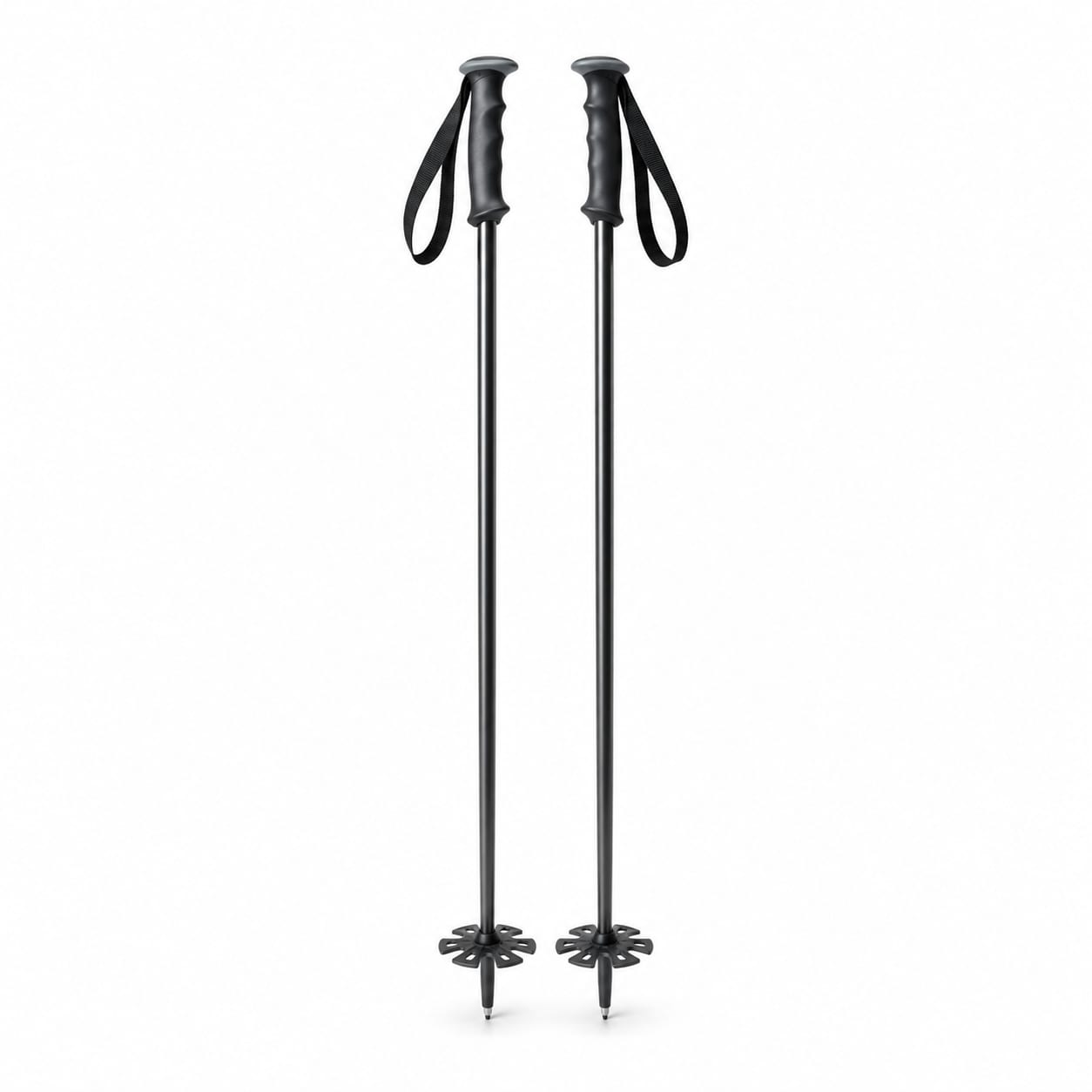
Standard 40-50mm baskets are the default for alpine poles, designed to minimize drag and catch on gates.
Compared to other types
Alpine poles use smaller baskets than backcountry/freeride poles, and cone baskets are specific to alpine speed racing.
Why it matters: Correct basket size prevents the pole from sinking into snow while avoiding unnecessary air resistance or snagging in tight trees.
What it means
The design and shape of the pole grip which affects comfort, security, and technique. Grip ergonomics are crucial for all-day skiing comfort.
Typical for this type
Standard, Ergonomic
In practice
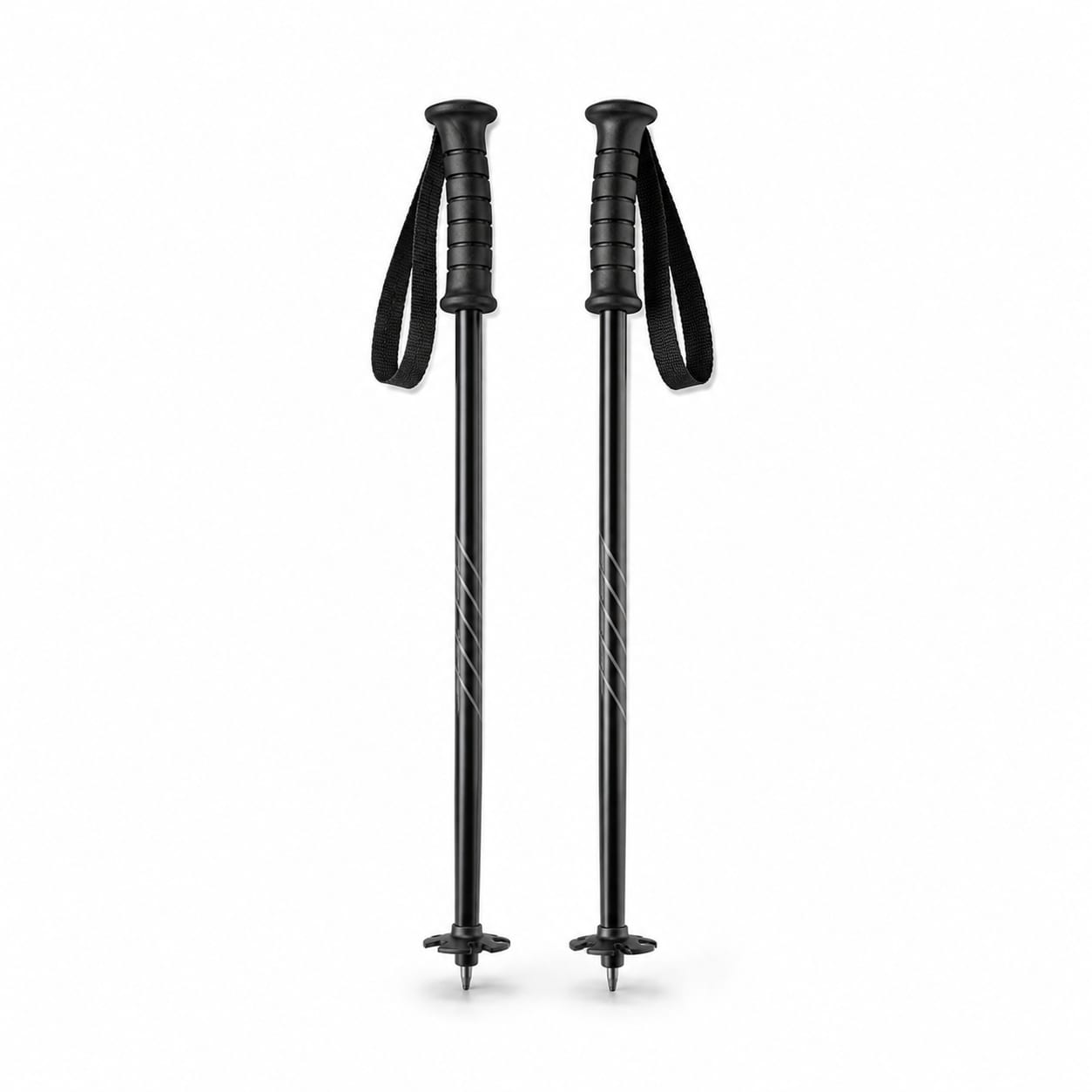
Standard cylindrical grips are ubiquitous, though ergonomic contoured grips are popular for comfort on long resort days.
Compared to other types
Alpine poles rarely use the extended freeride grips or pistol grips common in backcountry and Nordic skiing, respectively.
Why it matters: Grip shape affects hand fatigue, security, and the natural feel of pole plants over the course of a full ski day.
Grip Material
Grip Material
What it means
The material covering the grip area, affecting comfort, insulation, grip security, and moisture management.
Typical for this type
Rubber, Plastic, Cork
In practice
Rubber offers the best all-around balance of grip, insulation, and comfort for resort skiing.
Compared to other types
Alpine poles favor rubber and plastic, whereas touring and backcountry poles frequently use cork or foam for moisture management during sweaty ascents.
Why it matters: Material affects how secure the pole feels in wet conditions and how warm the grip stays on cold chairlift rides.
What it means
The design of the strap or loop that secures the pole to the skier's wrist, affecting security, comfort, and release characteristics.
Typical for this type
Standard Strap, Trigger S, Trigger 3d
In practice
Standard nylon webbing straps are the most common, though Leki's Trigger systems are highly popular in alpine skiing for convenience and safety.
Compared to other types
Alpine skiing readily adopts Trigger S and 3D systems for performance and safety, while backcountry poles generally stick to simple standard straps to avoid glove compatibility issues.
Why it matters: Straps provide the leverage needed for effective pole planting and can prevent wrist injuries if they feature a release mechanism.
Construction
Construction Type
What it means
Whether the pole is a fixed single shaft, telescoping adjustable, or folding design. Affects packability, versatility, and weight.
Typical for this type
Fixed
In practice
Alpine poles are almost exclusively fixed-length, one-piece shafts.
Compared to other types
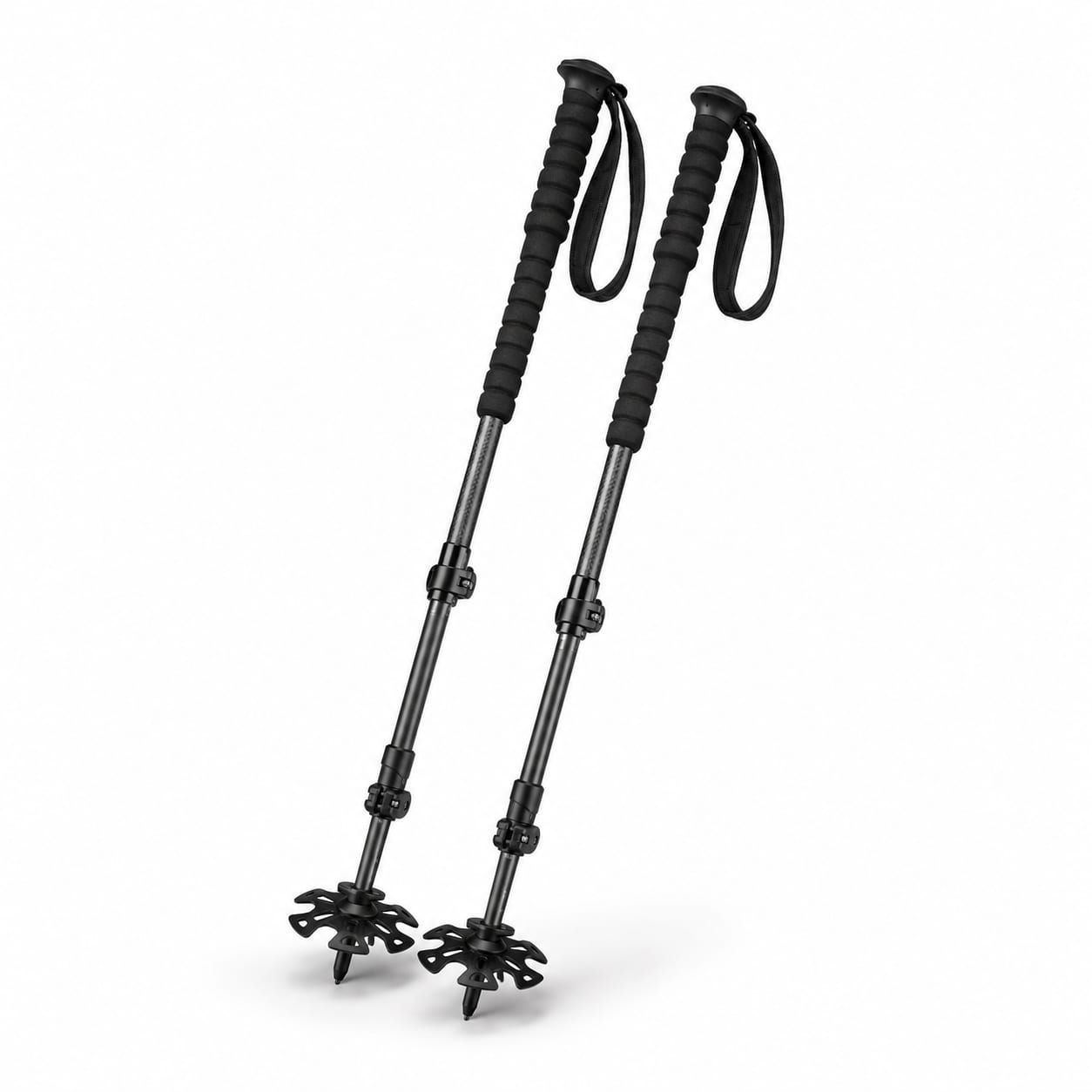
This is the defining contrast to backcountry/touring poles, which are telescopic or folding to adjust for uphill travel and packability.
Why it matters: Fixed construction provides the best stiffness, lowest weight, and highest durability with no moving parts to fail during aggressive skiing.
What it means
The material of the pole tip (point), which affects durability, grip on hard snow and ice, and longevity.
Typical for this type
Carbide, Steel
In practice
Carbide/tungsten tips are standard on quality alpine poles for superior grip on icy groomers.
Compared to other types
Alpine poles rely heavily on carbide tips for icy resort conditions, whereas budget rental poles often use steel tips that dull faster.
Why it matters: Carbide maintains a sharp point season after season, ensuring reliable pole plants on hardpack and ice.
Shaft Diameter
Shaft Diameter
What it means
The diameter of the pole shaft, typically tapering from grip to tip. Affects swing weight, stiffness, and aerodynamics.
Typical for this type
12-20 mm
Most common pick: 16-18 mm tapering to 12-14 mm
In practice
Alpine poles typically feature a tapered shaft, thicker at the grip for stiffness and thinner at the tip for reduced swing weight.
Compared to other types
Race-specific alpine poles may feature more aggressive tapering or larger upper diameters for aerodynamic and stiffness benefits compared to standard all-mountain poles.
Why it matters: Tapering optimizes the balance of the pole, making it feel lighter in the hand while remaining stiff where it matters.
Vibration Dampening
Vibration Dampening
What it means
The pole's ability to absorb and reduce vibrations transmitted from the tip through the shaft to the grip. Affects comfort and feel on hard, choppy snow.
Typical for this type
Moderate, High
In practice
Aluminum poles offer moderate dampening, while carbon alpine poles provide high dampening to absorb chatter from hard snow.
Compared to other types
Alpine racers sometimes prefer low dampening for snow feel, but general alpine skiers favor the moderate to high dampening that distinguishes carbon and composite from stiff aluminum race poles.
Why it matters: Good dampening reduces hand and arm fatigue when skiing hard, choppy, or icy snow conditions common at resorts.
Discipline
Intended Discipline
What it means
The primary skiing discipline the pole is designed for, which influences all other design choices from length to basket to material.
Typical for this type
Alpine All Mountain, Racing, Freestyle
In practice
Designed primarily for lift-served downhill skiing, including all-mountain, racing, and freestyle applications.
Compared to other types
Alpine poles are strictly for downhill, unlike backcountry/touring poles which are designed for uphill travel, or Nordic poles which are designed for flat propulsion.
Why it matters: Discipline dictates the pole's feature set, from aerodynamic curved shafts for racing to shorter durable builds for freestyle.
What it means
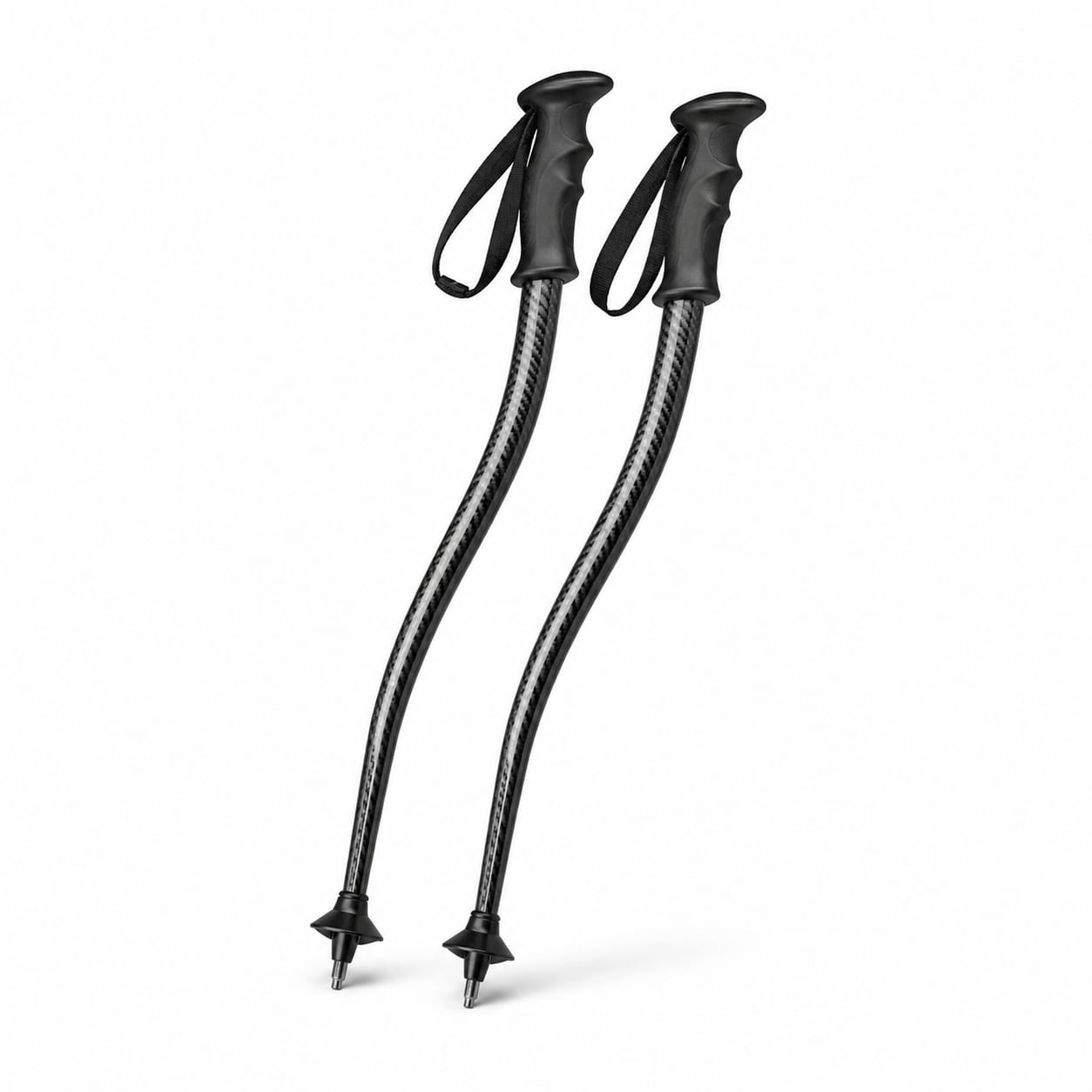
Whether the pole shaft is straight or features a bend/curve, typically designed for aerodynamic tuck positions in racing.
Typical for this type
False
In practice
Straight shafts are standard for all-mountain and recreational alpine skiing.
Compared to other types
Curved shafts are specific to alpine racing (GS and above), whereas freestyle, backcountry, and Nordic poles are always straight.
Why it matters: Curved shafts are only beneficial for aerodynamic tuck positions in speed disciplines; they offer no advantage for general skiing.
Adjustment Range
Adjustment Range
What it means
The range of lengths an adjustable pole can be set to, relevant only for telescopic and folding poles.
Typical for this type
N/A
Most common pick: N/A (Fixed Length)
In practice
Alpine poles do not adjust in length; they are manufactured to a specific fixed size.
Compared to other types
This contrasts sharply with backcountry/touring poles, which typically offer 20-40cm of adjustment range for uphill/downhill transitions.
Why it matters: Skiers must select the correct fixed length at the time of purchase, as no on-hill adjustments can be made.
Lock Mechanism
Locking Mechanism
What it means
The type of mechanism used to secure adjustable poles at the desired length. Affects reliability, ease of use, and durability.
Typical for this type
N/A
Most common pick: N/A (Fixed Length)
In practice
Fixed-length alpine poles have no locking mechanisms, which reduces weight and eliminates a potential point of failure.
Compared to other types
Unlike adjustable touring poles that use external clamps or internal expanders, alpine poles are a single continuous shaft.
Why it matters: The absence of a locking mechanism increases reliability and durability during aggressive skiing.
Packed Length
Packed Length
What it means
The length of the pole when collapsed or folded to its minimum size. Relevant for travel and backcountry applications where poles need to fit in or on a pack.
Typical for this type
N/A
Most common pick: N/A (Fixed Length)
In practice
Fixed-length alpine poles cannot be collapsed; their packed length is equal to their full pole length.
Compared to other types
Folding backcountry poles can pack down to 35-45cm, and telescopic poles collapse to roughly half their length, making alpine poles the least travel-friendly option.
Why it matters: This makes them more difficult to fit into luggage or small ski bags for air travel.