Kitvore.com

Kitvore.com

Specs that matter. Gear that fits.

Ski Poles · Subcategory

Backcountry/Touring Poles

Adjustable, lightweight poles designed for efficient uphill skinning and confident downhill skiing in the backcountry.

Backcountry/touring poles are purpose-built for human-powered ascent and variable off-piste descent. Featuring adjustable or folding construction, powder baskets, and ultralight materials, they allow skiers to lengthen poles for efficient uphill travel and shorten them for downhill control. Essential gear for anyone leaving the resort boundary.

$60 – $280premium tierintermediateadvancedexpert

Best known for

Adjustable length for uphill and downhill modesUltralight construction to save energy on long ascentsCompact packed size for stowing on steep climbsPowder baskets for deep snow flotationExtended grips for steep traverses without adjusting length
Backcountry/Touring Poles

Guide

Detailed overview

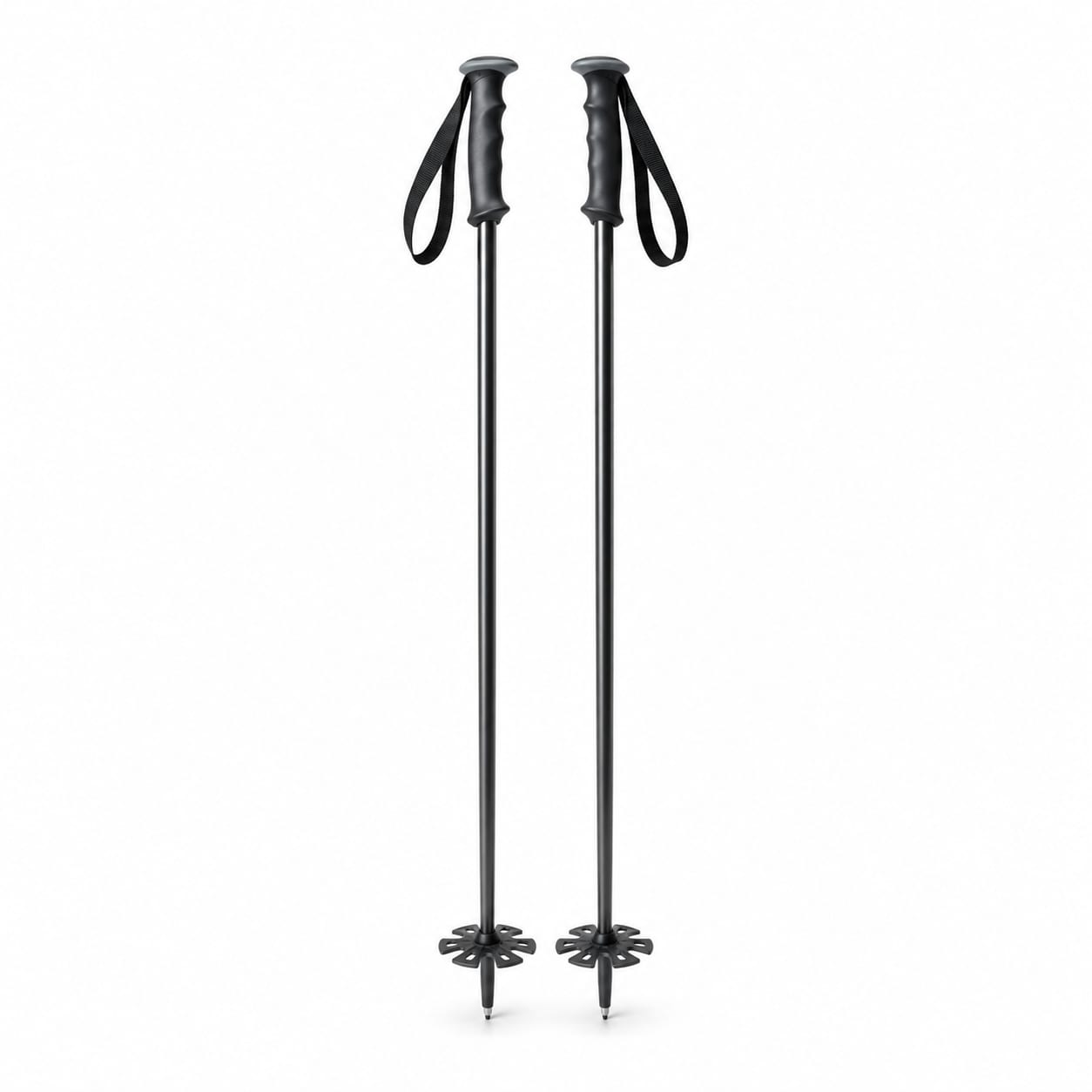
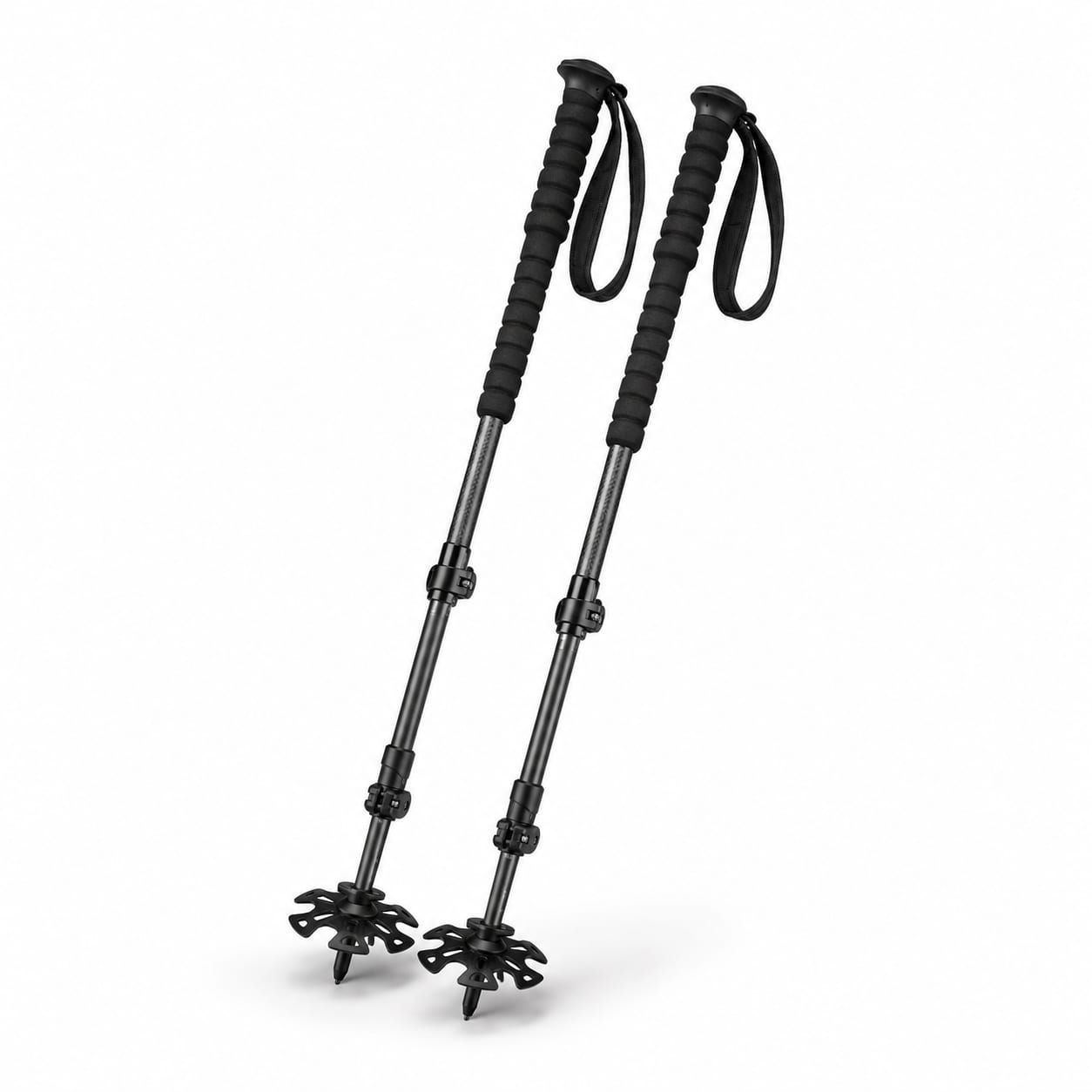
Backcountry/touring poles are the unsung workhorses of ski touring, splitboarding, and ski mountaineering. Unlike fixed-length resort poles, touring poles must serve two very different purposes: providing efficient propulsion on long uphill skin tracks and offering reliable planting on variable downhill terrain. This dual requirement drives their defining feature—adjustability. Most touring poles use either telescopic (two or three sliding sections) or folding (articulating segments connected by an internal cord) construction, allowing users to lengthen poles by 5–10 cm for uphill travel and shorten them for the descent. This adjustability is not a luxury; it is essential for maintaining efficient technique across changing terrain and steepness. Weight is the other critical consideration. Every gram carried uphill translates to cumulative fatigue over thousands of vertical feet, so touring poles prioritize lightweight materials like carbon fiber and aluminum-carbon hybrids. Powder baskets are standard equipment, preventing poles from punching through deep snow during both ascent and descent. Grip design also differs from resort poles, with many touring models featuring extended foam or rubber grips below the main handle, allowing skiers to choke down on sidehill traverses without stopping to adjust pole length. Locking mechanisms must be reliable in cold, wet, and icy conditions—external clamp systems are the preferred choice for their ease of use with gloves and visual confirmation of security.

Backcountry ski poles occupy a unique niche in ski equipment because they must excel at two fundamentally different tasks. On the ascent, poles serve as propulsion tools, helping skiers maintain rhythm and push forward on skin tracks. Longer pole lengths optimize stride efficiency, and lighter swing weight reduces arm fatigue over hours of climbing. On the descent, poles revert to their traditional role of providing balance, timing, and stability on variable snow. Shorter lengths improve maneuverability in tight terrain and steep couloirs. This Jekyll-and-Hyde requirement is why adjustable length is non-negotiable for touring poles.

The choice between telescopic and folding construction depends on your specific touring style. Telescopic poles offer infinite adjustment within their range and are generally more durable for aggressive downhill skiing. They are the best choice for skiers who spend significant time skiing downhill in varied backcountry terrain. Folding poles excel in ski mountaineering scenarios where poles are frequently stowed on a pack for steep climbing sections. Their compact packed length (often 35–45 cm) fits easily inside or attached to touring packs, and their push-button deployment is fast and reliable. However, folding poles typically offer fewer length options and may feel slightly less rigid on the descent.

Material selection for touring poles involves a direct tradeoff between weight and durability. Pure carbon fiber poles offer the lightest weight—some models weigh under 200 grams per pair—which is a significant advantage on long ascents. However, carbon can be brittle; a sharp impact against a rock or an awkward fall can snap a carbon pole irreparably in the backcountry, leaving you in a difficult situation. Aluminum-carbon hybrid poles offer a smart compromise, with durable aluminum near the grip where impacts occur and lightweight carbon in the lower sections where swing weight matters most. Full aluminum poles are the most durable and affordable option, but the weight penalty is noticeable on multi-thousand-foot ascents.

Beyond the basics, several features distinguish excellent touring poles from merely adequate ones. Extended grips with foam or rubber sleeves below the main handle are invaluable for sidehill traverses, allowing you to move your hand lower without adjusting the pole length—a small convenience that saves enormous time and frustration over a full day. Interchangeable basket systems let you swap between standard and powder baskets depending on conditions. Reliable external clamp locking mechanisms provide confidence that your poles won't collapse under load, even when iced up. And comfortable, moisture-wicking grip materials like cork or EVA foam keep your hands secure and relatively dry during high-output climbing. These details may seem minor, but they compound over long days in the mountains and can meaningfully affect your touring experience.

Quick facts

Primary purpose
Versatile length adjustment for efficient uphill travel and controlled downhill skiing in backcountry
Popular brands
Black DiamondLekiKomperdellDynafitG3BD
Typical terrain
BackcountryOff-pisteMountain terrainUntracked snow

What makes it different

Length adjustability for uphill vs downhill; extended foam grips for side-hilling; compatible with powder baskets; often feature avalanche probe compatibility or integrated probe features

Recommended ranges

How this type usually specs out

Each spec is explained in plain language, then we show what buyers usually look for on this type.

Length

Pole Length

What it means

The total length of the ski pole from tip to top of the grip, measured in centimeters. The most critical dimension for proper fit and performance.

Typical for this type

105-135 cm depending on user height and adjustment needs

Most common pick: 110-125 cm (adjustable within range)

In practice

Touring poles must accommodate both uphill (longer, typically +5-10 cm over resort length) and downhill (shorter, standard resort length or slightly less) skiing. The typical value represents the midpoint of the adjustment range most users settle on.

Compared to other types

Unlike fixed-length alpine poles where a single length suffices, touring poles require a range. The uphill length is typically 5-10 cm longer than the user's resort pole length, while the downhill length matches or is slightly shorter than their resort length.

Why it matters: Proper length on the ascent enables efficient striding and reduces hip and shoulder fatigue. Proper length on the descent ensures accurate pole plants and maneuverability. A single fixed length cannot optimize both.

Material

Shaft Material

What it means

The primary material used in the pole shaft, which determines weight, durability, stiffness, vibration dampening, and price.

Typical for this type

Carbon Fiber For Weight-Conscious Touring; Aluminum-Carbon Mix For Durability-Minded Skiers

Most common pick: Carbon Fiber Or Aluminum Carbon Mix

In practice

Carbon fiber dominates the touring pole market due to its exceptional strength-to-weight ratio. Aluminum-carbon hybrids are popular for skiers who prioritize durability without accepting full aluminum weight. Pure aluminum is used in budget touring poles.

Compared to other types

Touring poles prioritize carbon fiber more heavily than alpine poles, where aluminum is common and acceptable. The weight savings matter far more on multi-hour ascents than on resort chairlift rides. Racing poles also use carbon but for swing weight, not cumulative fatigue reduction.

Why it matters: Weight is the primary concern for touring poles because every gram is carried uphill under human power. A 100-gram weight savings per pair translates to noticeably less fatigue over a 4,000-foot ascent. However, durability matters because a broken pole in the backcountry is a serious problem.

Weight (Pair)

Weight Per Pair

What it means

The total weight of a pair of ski poles measured in grams. Lighter poles reduce arm fatigue and improve swing dynamics.

Typical for this type

Under 450 G For Carbon Touring Poles; Under 520 G For Aluminum Or Hybrid Touring Poles

Most common pick: 380-480 g (adjustable carbon); 450-550 g (adjustable aluminum)

In practice

Touring poles are heavier than fixed-length poles of the same material due to locking mechanisms and overlapping sections. Carbon adjustable poles typically weigh 380-480 g per pair, while aluminum adjustables range from 450-550 g.

Compared to other types

Touring poles are typically 50-100 g heavier than fixed-length poles of the same material due to adjustment hardware. However, the lightest carbon touring poles approach the weight of mid-range fixed aluminum poles, offering adjustability with minimal weight penalty.

Why it matters: Weight directly affects uphill efficiency and fatigue. On a full day of touring with thousands of pole plants, lighter poles reduce arm and shoulder fatigue significantly. However, very light adjustable poles (under 350 g) may sacrifice durability and stiffness.

Basket

Basket Type

What it means

The disc or cone near the pole tip that prevents the pole from sinking into soft snow. Basket size and shape affect performance in different snow conditions.

Typical for this type

Powder Baskets (80-100 Mm) For Consistent Backcountry Use; Interchangeable For Maximum Versatility

Most common pick: Powder Or Interchangeable

In practice

Backcountry skiing regularly involves deep snow where standard baskets punch through to the grip. Powder baskets are essentially mandatory for touring. Interchangeable systems offer the flexibility to switch to smaller baskets for firm spring conditions.

Compared to other types

Touring poles almost universally feature powder or interchangeable baskets, unlike alpine all-mountain poles where standard baskets are common. This is a defining feature that distinguishes touring poles from resort equipment.

Why it matters: A pole that sinks to the grip in powder provides no support on the descent and no efficient push on the ascent. This is both a performance issue and a safety concern in avalanche terrain where reliable pole plants aid stability.

Grip

Grip Type

What it means

The design and shape of the pole grip which affects comfort, security, and technique. Grip ergonomics are crucial for all-day skiing comfort.

Typical for this type

Freeride/Extended Grip For Steep Terrain; Ergonomic For Long Comfort On Ascents

Most common pick: Freeride Grip Or Ergonomic

In practice

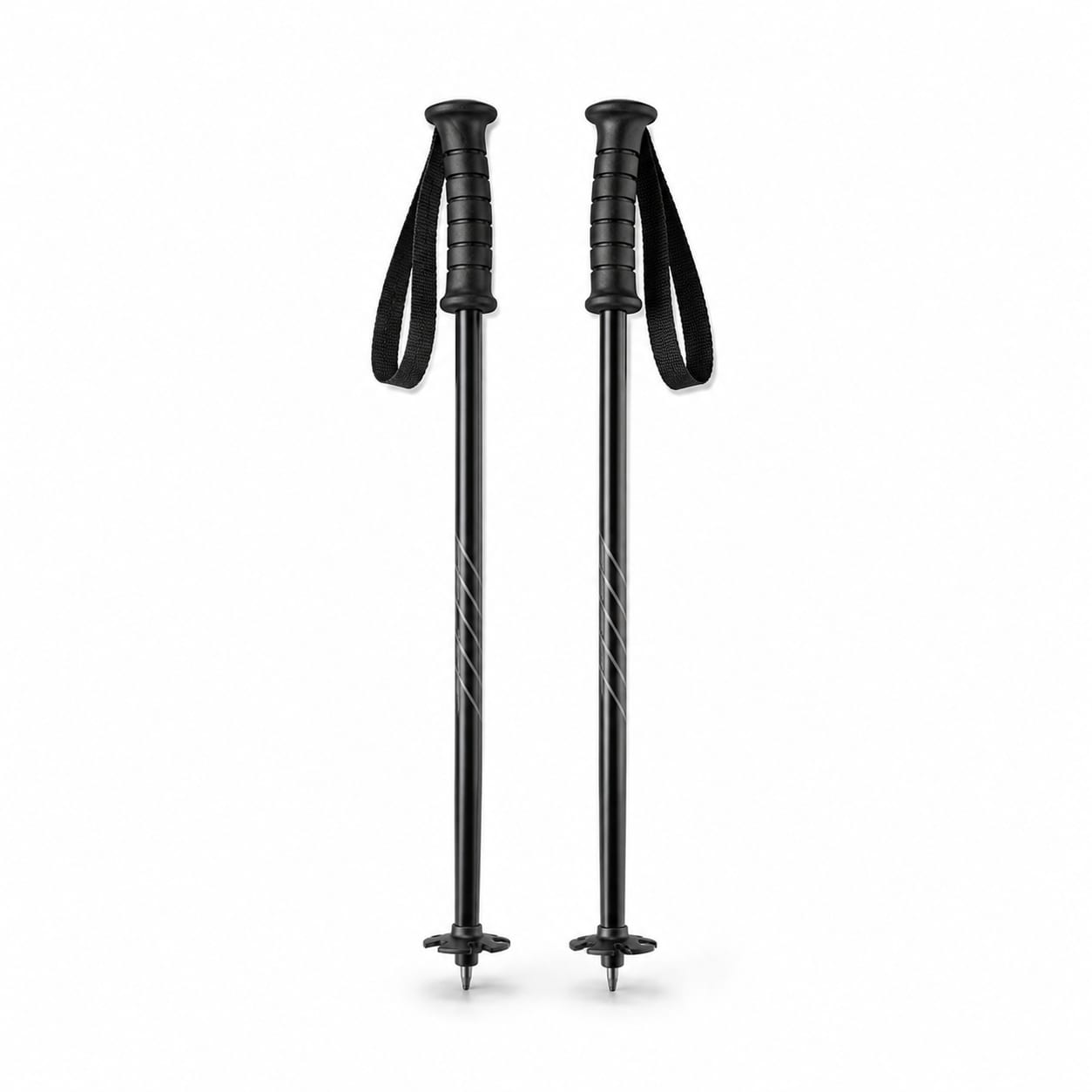
Extended grips with foam or rubber sleeves below the main handle are extremely popular for touring because they allow quick hand position changes on sidehill traverses without adjusting pole length. Ergonomic grips reduce fatigue during long uphill sessions.

Compared to other types

Touring poles feature extended grips far more often than any other subcategory. Standard cylindrical grips, common on alpine poles, are less suitable for touring because they lack the lower grip area needed for variable terrain.

Why it matters: On long ascents, grip comfort directly affects hand fatigue and overall endurance. On steep traverses, the ability to choke down on the grip without stopping saves time and maintains momentum. These scenarios are common in backcountry skiing and rare at resorts.

Grip Material

Grip Material

What it means

The material covering the grip area, affecting comfort, insulation, grip security, and moisture management.

Typical for this type

Cork For Moisture Management And Durability; Foam For Comfort And Extended Grip Sections

Most common pick: Cork Or Foam

In practice

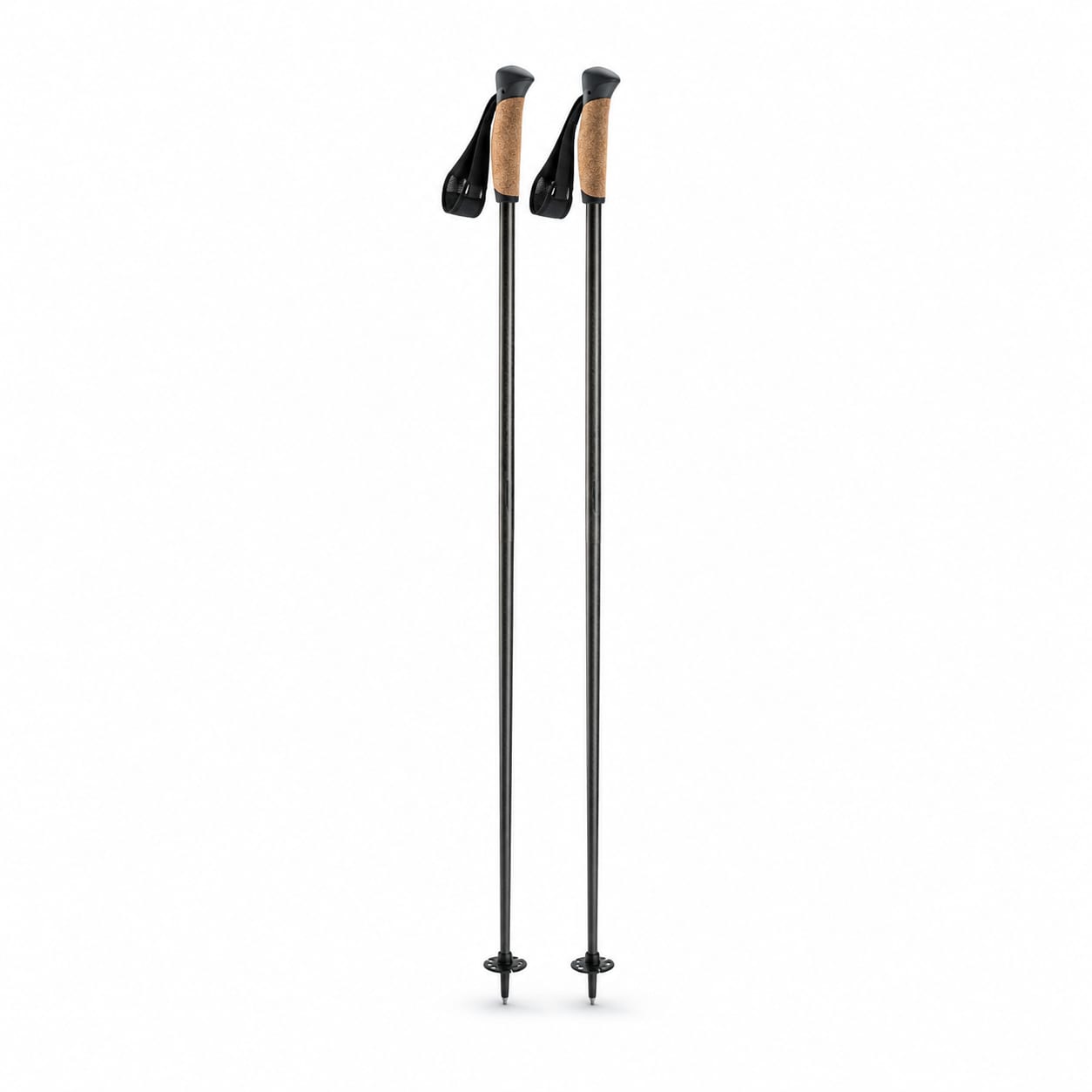
Cork is prized in touring poles for its excellent moisture wicking—keeping hands drier during high-output climbing—and its ability to mold slightly to the hand over time. Foam (EVA) is commonly used for extended grip sections below the main handle due to its comfort and light weight.

Compared to other types

Touring poles favor cork and foam over rubber and plastic, which dominate alpine and racing poles respectively. The moisture management and comfort benefits of cork and foam are more important during hours of uphill travel than during short resort runs.

Why it matters: Touring involves sustained high-output climbing where hands sweat significantly. Moisture-wicking grip materials prevent slippery, uncomfortable grips. Extended foam sections provide comfortable hand positions for traversing and steep terrain.

Strap

Strap Type

What it means

The design of the strap or loop that secures the pole to the skier's wrist, affecting security, comfort, and release characteristics.

Typical for this type

Standard Straps For Simplicity And Compatibility; Trigger S For Injury Prevention And Convenience

Most common pick: Standard Strap Or Trigger S

In practice

Standard nylon straps are most common on touring poles for their reliability, light weight, and glove compatibility. Leki's Trigger S system is increasingly popular in touring for its quick click-in/click-out convenience during transitions and its injury-prevention release mechanism.

Compared to other types

Touring poles use standard straps more frequently than Trigger systems compared to alpine racing poles, but Trigger adoption is growing in the touring market. Strapless designs, occasionally seen in freestyle, are inappropriate for touring where straps aid uphill propulsion.

Why it matters: Touring involves frequent transitions where removing and donning poles is necessary—adjusting length, stowing poles on a pack, or switching to ice axe. Quick-release systems like Trigger S speed up these transitions. The release mechanism also reduces injury risk during falls in variable backcountry terrain.

Construction

Construction Type

What it means

Whether the pole is a fixed single shaft, telescoping adjustable, or folding design. Affects packability, versatility, and weight.

Typical for this type

Telescopic For Versatile Touring; Folding For Ski Mountaineering And Compact Storage Needs

Most common pick: Telescopic Or Folding

In practice

Adjustable construction is the defining feature of touring poles. Telescopic (two or three sliding sections) is most common, offering infinite adjustment and good downhill performance. Folding (articulating segments with internal cord) offers the most compact packed size for stowing on packs during steep climbs.

Compared to other types

This is the primary differentiator from alpine poles, which are almost exclusively fixed length. Touring poles are never fixed length—adjustability is a requirement, not a feature. The choice between telescopic and folding is specific to touring and ski mountaineering.

Why it matters: Without adjustability, touring poles cannot efficiently serve both uphill and downhill purposes. The ability to lengthen for ascending and shorten for descending is fundamental to touring technique. Compact packed size matters for ski mountaineering where poles are frequently stowed.

Tip Material

Tip Material

What it means

The material of the pole tip (point), which affects durability, grip on hard snow and ice, and longevity.

Typical for this type

Carbide/Tungsten For All Touring Applications

Most common pick: Carbide

In practice

Carbide tips are standard on quality touring poles. They provide reliable grip on icy skin tracks, frozen crust, and mixed conditions common in the backcountry. Their superior wear resistance ensures consistent performance over many touring days.

Compared to other types

Carbide tips are even more important for touring poles than resort poles due to the variable and often firm conditions encountered in the backcountry. Steel tips, sometimes acceptable for casual resort skiing, are inadequate for reliable backcountry use.

Why it matters: Backcountry conditions are often firmer and more variable than groomed resort snow. Icy skin tracks require confident tip penetration for safe and efficient ascending. Worn tips compromise grip on critical terrain. Carbide's longevity is especially valuable for touring poles that see rough, rocky conditions.

Shaft Diameter

Shaft Diameter

What it means

The diameter of the pole shaft, typically tapering from grip to tip. Affects swing weight, stiffness, and aerodynamics.

Typical for this type

Not A Primary Consideration For Touring Poles; Standard Tapering Designs Are Universal

Most common pick: 14-18 mm at grip, tapering to 10-14 mm at tip

In practice

Touring pole shafts follow similar tapering profiles to other poles but may have slightly larger upper diameters to accommodate telescopic overlap. The internal diameter of the upper section must allow the lower section to slide smoothly.

Compared to other types

Touring telescopic poles may have slightly larger grip-end diameters (16-18 mm) than fixed alpine poles (16-17 mm) to accommodate the telescoping mechanism. This difference is negligible in practice.

Why it matters: Shaft diameter has minimal direct impact on touring performance. The tapering design reduces swing weight at the tip end, which is beneficial for uphill striding efficiency. However, this dimension is determined by the construction and material requirements rather than user preference.

Vibration Dampening

Vibration Dampening

What it means

The pole's ability to absorb and reduce vibrations transmitted from the tip through the shaft to the grip. Affects comfort and feel on hard, choppy snow.

Typical for this type

High Dampening Preferred For Comfort On Long Days; Moderate Acceptable For Durability-Focused Choices

Most common pick: High (Carbon) Or Moderate (Aluminum/Hybrid)

In practice

Carbon fiber touring poles offer excellent vibration dampening, which reduces hand fatigue during long days with thousands of pole plants. Aluminum and hybrid poles provide moderate dampening—sufficient for most touring but noticeably harsher on firm, choppy descents.

Compared to other types

Touring poles prioritize dampening more than racing poles (which prefer low dampening for feel) but similarly to high-end all-mountain poles. The emphasis is on all-day comfort rather than racing feedback or resort convenience.

Why it matters: Touring days are long, often involving 4-8 hours of sustained physical effort. Vibration fatigue compounds over these durations, making dampening more important than for short resort sessions. Comfort on the descent also matters when legs are already tired from the climb.

Discipline

Intended Discipline

What it means

The primary skiing discipline the pole is designed for, which influences all other design choices from length to basket to material.

Typical for this type

Backcountry/Touring As Primary; Freeride/Big Mountain As Secondary

Most common pick: Backcountry Touring, Freeride Big Mountain

In practice

These poles are designed specifically for backcountry touring and ski mountaineering, with secondary application in freeride/big mountain skiing where adjustable length and powder baskets are also valuable.

Compared to other types

Touring poles are the only subcategory where adjustability is standard and weight is prioritized for uphill efficiency. Alpine poles optimize for simplicity and downhill performance; racing poles optimize for aerodynamics; freestyle poles optimize for durability and short length.

Why it matters: Discipline-specific design ensures the pole includes essential features (adjustability, powder baskets, lightweight construction) rather than optimizing for incompatible uses (racing aerodynamics, park durability).

Curved Shaft

Curved Shaft

What it means

Whether the pole shaft is straight or features a bend/curve, typically designed for aerodynamic tuck positions in racing.

Typical for this type

Straight Shaft Only—Curved Shafts Offer No Benefit For Touring

Most common pick: False

In practice

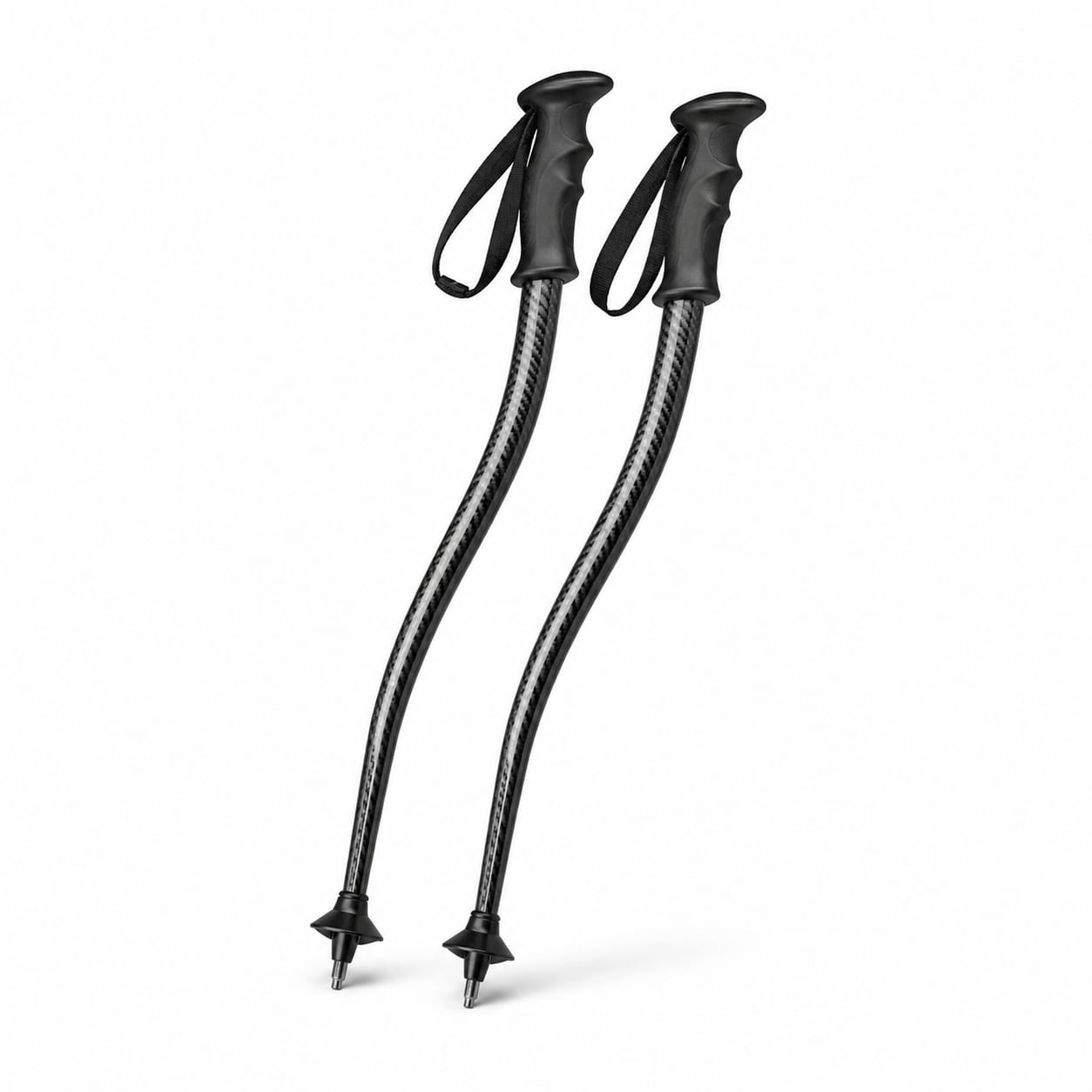
Touring poles universally feature straight shafts. Curved shafts are designed exclusively for aerodynamic tuck positions in GS and speed discipline racing, which is irrelevant for backcountry skiing.

Compared to other types

Unlike GS racing poles which feature curved shafts, touring poles are always straight. This is one dimension where touring and racing poles are fundamentally opposed in design philosophy.

Why it matters: Straight shafts are simpler, lighter, and more versatile for the varied terrain and techniques used in touring. Curved shafts would interfere with adjustable mechanisms and provide no aerodynamic benefit at touring speeds.

Adjustment Range

Adjustment Range

What it means

The range of lengths an adjustable pole can be set to, relevant only for telescopic and folding poles.

Typical for this type

At Least 20 Cm Of Adjustment Range; Ensure Your Ideal Uphill And Downhill Lengths Fall Within Range

Most common pick: 100-140 cm (telescopic); 105-130 cm (folding)

In practice

Telescopic touring poles typically offer 30-40 cm of adjustment range, commonly in configurations like 100-135 cm, 105-140 cm, or 110-145 cm. Folding poles often have a more limited range (20-25 cm) due to fixed segment lengths.

Compared to other types

Adjustment range is unique to touring, freeride, and some Nordic poles. Alpine, racing, and freestyle poles are fixed length and do not have an adjustment range. This is a defining specification for touring poles.

Why it matters: Insufficient adjustment range forces compromises—either your uphill length is too short for efficient striding or your downhill length is too long for maneuverability. The range must span at least 15-20 cm to accommodate both modes comfortably.

Lock Mechanism

Locking Mechanism

What it means

The type of mechanism used to secure adjustable poles at the desired length. Affects reliability, ease of use, and durability.

Typical for this type

External Clamp (Flicklock-Style) For Reliability And Ease Of Use In Cold/Wet Conditions

Most common pick: External Clamp

In practice

External clamp mechanisms are the gold standard for touring poles because they are easy to operate with gloves, visually confirm when secured, and reliable in cold and icy conditions. Push-button systems are common on folding poles for their quick deployment to preset lengths.

Compared to other types

Locking mechanisms are irrelevant for fixed-length alpine, racing, and freestyle poles. Touring poles demand the most reliable locking systems because failure has more serious consequences in the backcountry than at a resort.

Why it matters: A pole that collapses under load on a steep descent or during an aggressive pole plant is dangerous. External clamps provide the most reliable lock in the variable conditions encountered in the backcountry. They can also be easily adjusted and tightened in the field if they begin to slip.

Packed Length

Packed Length

What it means

The length of the pole when collapsed or folded to its minimum size. Relevant for travel and backcountry applications where poles need to fit in or on a pack.

Typical for this type

Under 45 Cm For Fitting Inside Touring Packs (Folding); Under 65 Cm For Attaching to Pack Exterior (Telescopic)

Most common pick: 35-45 cm (folding); 55-70 cm (telescopic)

In practice

Folding poles pack down to 35-45 cm, small enough to fit inside most touring packs. Telescopic poles collapse to roughly half their extended length, typically 55-70 cm, which usually must be attached to the outside of a pack.

Compared to other types

Packed length is irrelevant for fixed-length alpine, racing, and freestyle poles. It is most important for ski mountaineering and technical touring where poles are frequently stowed, and least important for simple up-and-down touring where poles remain in hand.

Why it matters: Compact packed size matters when stowing poles for steep climbing sections where an ice axe is needed instead, or during ski mountaineering transitions. Poles that fit inside a pack are less likely to snag on terrain or get knocked off during technical climbing.

Evaluation

Strengths and trade-offs

Pros

What this type does best

Adjustable length for uphill and downhill optimization

Critical

The ability to lengthen poles for efficient uphill striding and shorten them for downhill control is the fundamental advantage of touring poles. This adjustability improves technique, reduces fatigue, and enhances safety across the full range of touring terrain.

Significant weight savings reduce ascent fatigue

Critical

Touring poles prioritize lightweight construction, with carbon models often weighing under 400 g per pair. Over thousands of pole plants on a long ascent, this weight savings translates to noticeably less arm and shoulder fatigue compared to heavier resort poles.

Compact packed size for stowing on technical terrain

High

Folding and telescopic designs allow poles to be stowed on or in a pack when an ice axe is needed for steep climbing, or during technical transitions. This versatility is essential for ski mountaineering and complex tours.

Extended grips for steep traverses and sidehills

High

Many touring poles feature extended foam or rubber grips below the main handle, allowing skiers to choke down for sidehill traverses without stopping to adjust pole length. This saves significant time and frustration over a full day of touring.

Powder baskets provide flotation in deep snow

High

Standard equipment on touring poles, powder baskets prevent poles from punching through deep snow on both ascent and descent. This provides reliable planting for stability and efficient pushing on the uphill.

Versatility across multiple snow sports

Medium

Adjustable touring poles can be used for ski touring, splitboarding, snowshoeing, and even Nordic skiing in a pinch. This versatility makes them a good investment for multi-discipline winter athletes.

Reliable locking mechanisms designed for cold conditions

Medium

Quality touring poles use external clamp locking systems that are easy to operate with gloves and reliable in icy, wet conditions. This is a significant advantage over budget adjustable poles with twist-lock mechanisms that can freeze or slip.

Cons

Trade-offs to be aware of

Heavier than fixed-length poles of the same material

Minor

The adjustment mechanism adds 50-100 g per pair compared to fixed-length poles of the same material. Overlapping sections and locking hardware are the primary contributors to this weight penalty.

Potential for mechanism failure in the backcountry

Significant

Locking mechanisms can slip, freeze, or break, potentially leaving you with a non-functional pole far from help. External clamps are generally reliable but require periodic maintenance and can collect ice in wet conditions.

Higher cost than comparable fixed-length poles

Moderate

The complexity of adjustable mechanisms, lightweight materials, and touring-specific features makes touring poles significantly more expensive than basic aluminum resort poles. Quality carbon adjustable poles typically cost $120-250+ per pair.

Slight flex and reduced stiffness on the descent

Minor

Telescopic and folding poles may exhibit slight flex at the joint sections during aggressive downhill skiing, particularly in longer configurations. This can feel less confidence-inspiring than fixed poles when planting hard at speed.

More maintenance required than fixed poles

Moderate

Locking mechanisms need periodic cleaning, lubrication, and tension adjustment to maintain reliability. Sand, dirt, and ice can accumulate in the telescoping sections, requiring field maintenance. Fixed poles are essentially maintenance-free.

Carbon models can be fragile against sharp impacts

Moderate

Pure carbon fiber poles, while extremely light, can snap under sharp impacts against rocks or in awkward falls. Unlike aluminum, which bends, carbon fails catastrophically. A broken pole in the backcountry is a serious inconvenience at best.

Best for

Terrain

Backcountry bowlsOpen powder fieldsRidgelines and passesGlaciated terrainTree skiingSteep couloirs and chutes

Snow conditions

Deep powderVariable snowpackSpring cornBreakable crustWind-affected snow

Skill level

Intermediate backcountry skiersAdvanced backcountry skiersExpert ski mountaineers

Riding style

Ski touringSplitboardingSki mountaineeringFreeride touring

Rider profile

Fitness-oriented skiers who prioritize uphill efficiencyAdventure skiers exploring remote terrainMulti-day tourers and hut trip participantsSkiers who regularly transition between ascending and descendingSplitboarders who need poles for the ascent

Not ideal for

Reasons

Unnecessary weight and complexity for resort-only skiing where fixed poles perform betterAdjustable mechanisms can slip under the aggressive, repetitive planting of mogul skiingNot optimized for the aerodynamic requirements of racing or the durability needs of park ridingNordic skiing requires longer, stiffer poles with different grip and strap designs

Terrain

Groomed resort runs onlyTerrain parksMogul fields (adjustable poles may slip under aggressive planting)

Skill level

Beginners who have not learned pole techniqueResort-only skiers with no backcountry aspirations

Riding style

Alpine racingFreestyle park ridingNordic track skiing

Compare

How it stacks up

This page

Backcountry/Touring Poles

Adjustable length for uphill/downhill optimization, lighter weight for reduced fatigue on ascents, powder baskets for deep snow, compact packed size for stowing on packs.

Alternative

Alpine/All-Mountain Poles

Simpler construction with no moving parts to fail, lighter than adjustable poles at the same price point, stiffer and more responsive on the descent, lower cost, zero maintenance required.

Bottom line

Choose backcountry/touring poles if you regularly leave the resort boundary or skin uphill. Choose alpine/all-mountain poles if you exclusively ride lifts and value simplicity, durability, and lower cost.

This page

Backcountry/Touring Poles

Lighter weight for uphill travel, adjustable length for touring transitions, compact packed size for stowing, optimized for both ascending and descending.

Alternative

Freeride/Big Mountain Poles

Often burlier construction for aggressive charging, may feature fixed length for maximum downhill performance, typically less expensive than ultralight touring poles, designed specifically for descending big lines.

Bottom line

Choose backcountry/touring poles if you earn your turns with significant uphill travel. Choose freeride poles if you primarily access big terrain via helicopter, snowcat, or short sidecountry hikes where adjustability matters less than downhill performance.

This page

Backcountry/Touring Poles

Adjustable length for varied terrain, powder baskets for deep snow, durable construction for downhill skiing, compact packed size for mountaineering.

Alternative

Nordic/Cross-Country Poles

Significantly longer for maximum skating and striding efficiency, lighter weight for racing, specialized grips and straps optimized for Nordic technique, stiffer shafts for power transfer.

Bottom line

Choose backcountry/touring poles for any skiing that involves downhill travel in avalanche terrain. Choose Nordic poles exclusively for track skiing at Nordic centers where no downhill skiing occurs.

This page

Backcountry/Touring Poles

Adjustable length, powder baskets, lightweight construction for touring, extended grips for variable terrain.

Alternative

Freestyle/Park Poles

Shorter length keeps poles out of the way during tricks, extremely durable construction withstands impacts, minimal baskets reduce catch points, lower cost.

Bottom line

Choose backcountry/touring poles for any off-resort or touring application. Choose freestyle poles exclusively for terrain park and pipe riding where short, durable poles are advantageous.

Shopping

Buying tips

  • 1

    Verify your ideal pole length falls within the adjustment range—measure your resort pole length and ensure the touring pole adjusts at least 5 cm longer for uphill and 5 cm shorter for downhill.

  • 2

    Prioritize external clamp (Flicklock-style) locking mechanisms over internal twist locks for reliability in cold, wet, and icy backcountry conditions.

  • 3

    If you ski mountaineer or frequently stow poles on your pack, choose folding poles with a packed length under 45 cm. If you primarily tour up and down without stowing poles, telescopic poles offer better downhill performance.

  • 4

    Carbon fiber is worth the investment if you tour frequently, but consider aluminum-carbon hybrids if you ski rocky, variable terrain where pole impacts are common.

  • 5

    Look for extended grips with foam or rubber sleeves below the main handle—this feature is invaluable for sidehill traverses and saves significant time over a full day.

  • 6

    Ensure the poles come with powder baskets or have interchangeable basket systems. Standard baskets are inadequate for most backcountry snow conditions.

  • 7

    Test the locking mechanism with gloves on before purchasing—some external clamps are easier to operate with cold, gloved hands than others.

  • 8

    Consider the packed length if you plan to travel with your poles or attach them to a touring pack during technical sections.

  • 9

    If you use Leki gloves, consider Trigger S-compatible poles for convenience and injury prevention, but factor in the additional cost of compatible gloves or strap adapters.

Care

Maintenance notes

  • Clean telescoping sections after each tour in sandy, dirty, or salty conditions—debris in the mechanism causes slipping and wear.
  • Periodically disassemble telescopic poles to clean and dry the inner sections, preventing corrosion and ice buildup.
  • Check external clamp tension regularly and adjust as needed—clamps that are too loose will slip, while over-tightened clamps can damage shafts.
  • Inspect folding pole internal cords for fraying or stretching—if the cord loses tension, the pole sections may not seat securely.
  • Lubricate locking mechanisms with silicone-based lubricant if they become difficult to operate; avoid petroleum-based products that can degrade plastic components.
  • Replace worn carbide tips promptly—dull tips compromise grip on icy skin tracks and hard snow, which is a safety concern in steep terrain.
  • Store poles fully extended with clamps loosened to reduce stress on the mechanism and prevent compression set in the locking components.
  • Check basket attachments before each tour—loose baskets can detach in deep snow, leaving you without flotation when you need it most.

Progression

Skill development path

Backcountry/touring poles are appropriate for intermediate skiers and above who have basic pole planting technique and are venturing into backcountry terrain. Beginners should first develop solid pole technique on resort with fixed-length poles before investing in touring-specific equipment. As skiers progress to more technical ski mountaineering, they may upgrade from telescopic to folding poles for compact packed size, or from aluminum to carbon for weight savings. Expert ski mountaineers often own multiple pole sets—lightweight carbon folding poles for speed touring and racing, and more durable telescopic poles for aggressive freeride touring where downhill performance matters more than weight.

FAQ

Common questions

Each question has a dedicated page with a full answer and links to the buying guide.

Do I really need adjustable poles for backcountry skiing, or can I just use my resort poles?

Adjustable poles are strongly recommended for backcountry skiing. On the ascent, you need longer poles for efficient striding on skin tracks—typically 5-10 cm longer than your resort length. On the descent, you want your standard length or slightly shorter for maneuverability in variable terrain. Using fixed resort poles means compromising on one or both. Additionally, touring poles feature powder baskets, lighter weight, and often extended grips that resort poles lack. If you tour more than occasionally, proper touring poles are a worthwhile investment.

Should I choose telescopic or folding poles for ski touring?

It depends on your touring style. Telescopic poles offer infinite adjustment within their range and generally feel stiffer and more reliable on the descent—ideal for skiers who spend significant time skiing downhill in the backcountry. Folding poles pack down much smaller (35-45 cm vs. 55-70 cm), making them better for ski mountaineering where you frequently stow poles on your pack for technical climbing. If you primarily do up-and-down day tours without technical climbing, telescopic poles are usually the better choice. If you do technical mountaineering or want poles that fit inside your pack, go with folding.

Are carbon fiber touring poles worth the extra cost, or should I save money with aluminum?

Carbon fiber is worth it if you tour frequently or tackle long ascents. The weight savings of 50-100 g per pair compared to aluminum translates to noticeably less fatigue over thousands of pole plants on a big day. Carbon also provides better vibration dampening for comfort on the descent. However, carbon poles can snap under sharp impacts (like hitting a rock), while aluminum bends. If you ski rocky, variable terrain or are hard on equipment, aluminum-carbon hybrid poles offer a good compromise—durable aluminum near the grip where impacts occur and lightweight carbon in the lower sections where swing weight matters.

How do I properly adjust my pole length for uphill versus downhill touring?

For uphill skinning, extend your poles 5-10 cm longer than your standard resort length. This longer length enables a more efficient stride and reduces the need to reach, saving energy on long ascents. For downhill skiing, shorten poles to your standard resort length or 2-3 cm shorter for better maneuverability in tight terrain. On steep sidehill traverses, instead of adjusting length, use the extended grip section (if available) to choke down on the uphill pole. Always ensure locking mechanisms are fully engaged before weighting the poles—check both clamps before each run.