Kitvore.com

Kitvore.com

Specs that matter. Gear that fits.

Ski Poles · Subcategory

Freestyle Ski Poles

Short, durable poles designed to stay out of the way during park tricks and spins.

Freestyle ski poles are purpose-built for terrain park and halfpipe riding, featuring shorter lengths that minimize interference during aerial maneuvers, robust construction to withstand impacts, and minimal baskets that reduce catch points on rails and boxes.

$30 – $120budget tierintermediateadvancedexpert

Best known for

Short length for trick mobilityDurable impact-resistant constructionMinimalist baskets to avoid catching on featuresBold graphics and park-focused styling
Freestyle Ski Poles

Guide

Detailed overview

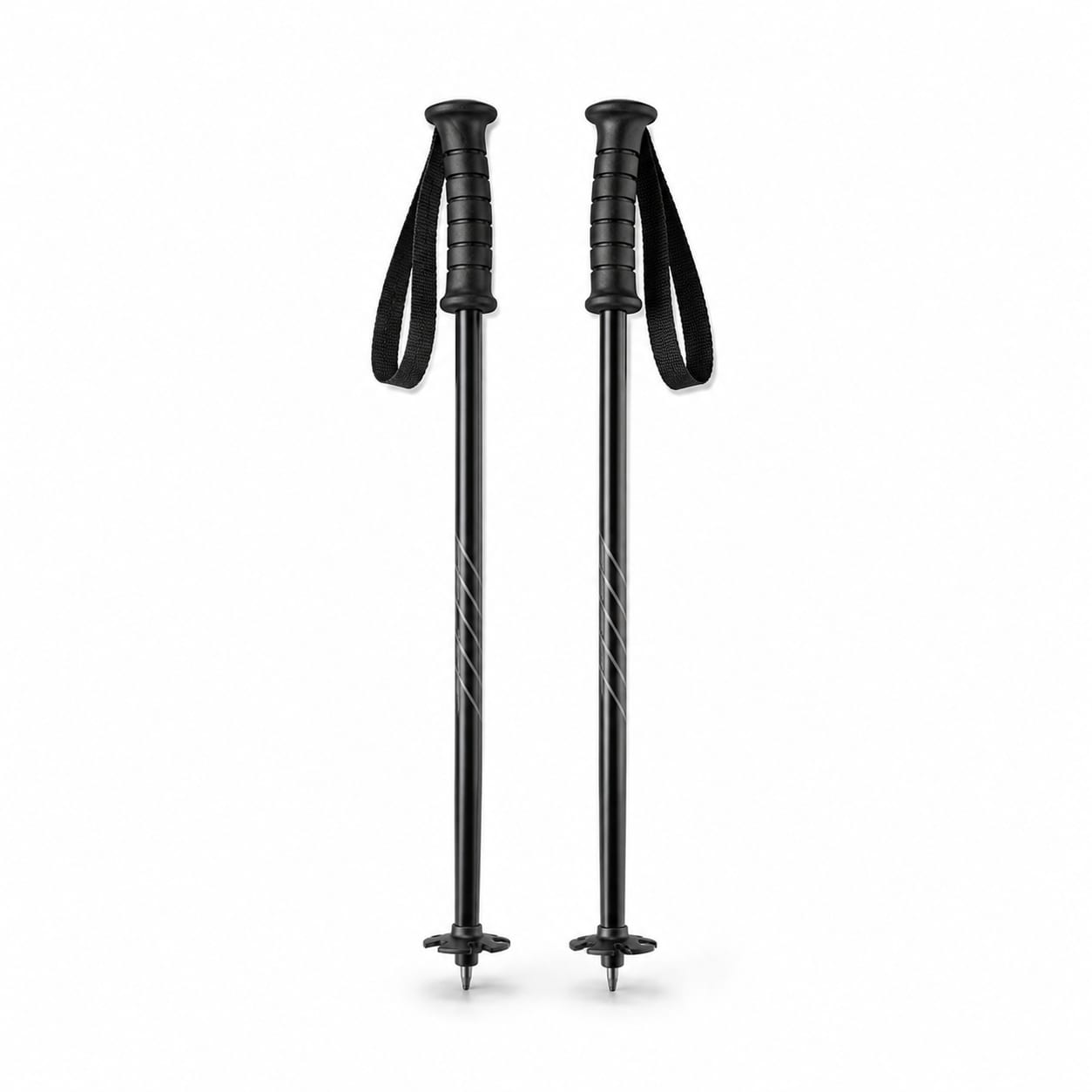
Freestyle ski poles are specialized equipment designed specifically for terrain park, halfpipe, and freestyle skiing. Unlike traditional alpine poles, freestyle poles prioritize maneuverability and durability over power transfer and deep snow flotation. The defining characteristic is their shorter length, which keeps the poles out of the way during spins, grabs, and inversions. Construction typically emphasizes impact resistance, with aluminum being the material of choice for its ability to bend rather than shatter on hard landings. Baskets are kept small or eliminated entirely to prevent catching on rails, boxes, and other park features.

Freestyle ski poles occupy a unique niche in the skiing equipment world, prioritizing mobility and durability over traditional pole functions like propulsion and balance. The shorter length—typically 90 to 110 cm—is the most immediately noticeable feature, allowing skiers to tuck their arms and poles close to the body during rotations without the pole tips crossing or catching. This compact size also reduces swing weight, making it easier to initiate spins and maintain balance in the air.

Durability is paramount in freestyle pole design. Park skiers subject their equipment to repeated impacts from hard landings, rail slides, and general abuse that would destroy lighter, more fragile poles. Aluminum remains the dominant material choice for this reason; it bends under stress rather than snapping catastrophically like carbon fiber, and bent poles can often be bent back into shape to finish the day. Some freestyle skiers even prefer the cheapest aluminum poles available, treating them as semi-disposable items.

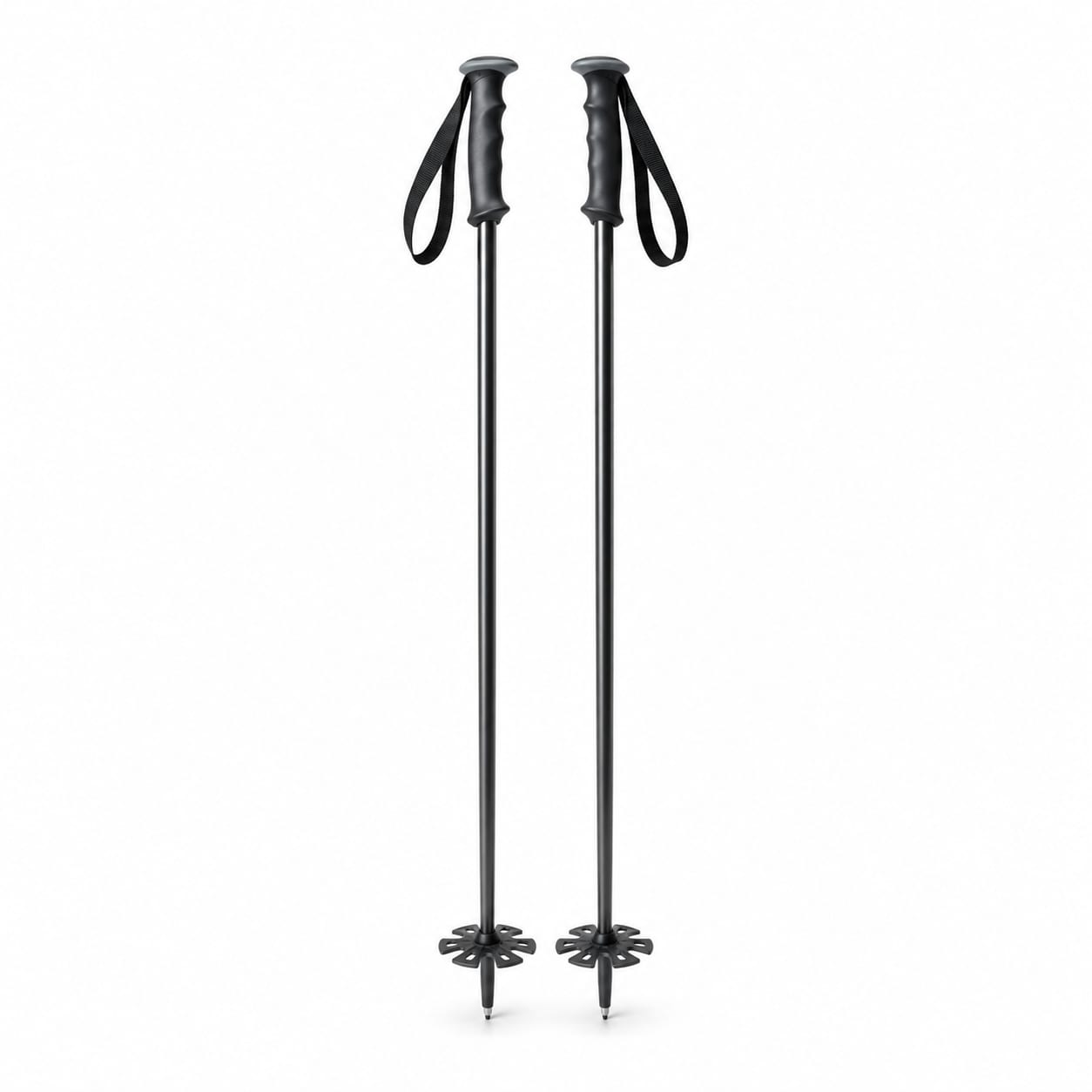
The basket design on freestyle poles is typically minimal, with small standard baskets or even no baskets at all. This is a deliberate choice to prevent the pole from catching on rails, boxes, and other park features during slides and butters. A caught pole can cause serious wrist or shoulder injuries, so minimizing this risk is a key safety consideration. Grip and strap choices tend toward simplicity—standard straps are common, and many park skiers prefer to run their straps loose or not use them at all to facilitate quick pole throws and reduce injury risk during falls.

Quick facts

Primary purpose
Minimal interference and lightweight handling for terrain park tricks and freestyle skiing
Popular brands
LineArmadaK2SalomonRossignolDalbello
Typical terrain
Terrain parksHalfpipesUrban featuresFreestyle zones

What makes it different

Significantly shorter than alpine poles; often feature thin profiles and minimal baskets; emphasis on visual design and personal style; built to withstand impacts

Recommended ranges

How this type usually specs out

Each spec is explained in plain language, then we show what buyers usually look for on this type.

Length

Pole Length

What it means

The total length of the ski pole from tip to top of the grip, measured in centimeters. The most critical dimension for proper fit and performance.

Typical for this type

90-110 cm

Most common pick: 100 cm

In practice

Freestyle poles are intentionally shorter than all-mountain poles to keep them out of the way during spins, grabs, and inversions.

Compared to other types

Significantly shorter than all-mountain (110-125 cm) and racing poles, prioritizing aerial maneuverability over ground-level leverage.

Why it matters: A shorter pole prevents the tips from crossing during tight rotations and reduces the chance of catching a pole on a rail or landing awkwardly.
Material

Shaft Material

What it means

The primary material used in the pole shaft, which determines weight, durability, stiffness, vibration dampening, and price.

Typical for this type

Aluminum (6000 Or 7000 Series)

In practice

Aluminum is the dominant material for freestyle poles because it bends under impact rather than shattering.

Compared to other types

Unlike racing or touring where carbon fiber is popular for its low weight, freestyle skiers overwhelmingly prefer aluminum for its durability and forgiving failure mode.

Why it matters: Park skiing involves high-impact landings and rail hits that easily break carbon fiber. Aluminum can be bent back into shape, extending the pole's usable life.

Weight (Pair)

Weight Per Pair

What it means

The total weight of a pair of ski poles measured in grams. Lighter poles reduce arm fatigue and improve swing dynamics.

Typical for this type

350-500 g

Most common pick: 420 g

In practice

Freestyle poles strike a balance between durability and swing weight, typically falling in the mid-range for pole weight.

Compared to other types

Heavier than ultralight carbon race poles (180-350 g) but comparable to standard all-mountain aluminum poles.

Why it matters: While lighter poles are easier to maneuver in the air, ultra-light carbon poles are too fragile for park impacts. A moderate weight indicates durable aluminum construction.

Basket

Basket Type

What it means

The disc or cone near the pole tip that prevents the pole from sinking into soft snow. Basket size and shape affect performance in different snow conditions.

Typical for this type

Standard/Small Or No Basket

In practice

Small, low-profile baskets minimize the chance of catching on rails, boxes, and other park features.

Compared to other types

Much smaller than powder or freeride baskets; prioritizes safety in the park over deep snow flotation.

Why it matters: A caught basket can violently jerk the skier's arm or cause a crash. Smaller baskets slide over park features more safely.

Grip

Grip Type

What it means

The design and shape of the pole grip which affects comfort, security, and technique. Grip ergonomics are crucial for all-day skiing comfort.

Typical for this type

Standard/Cylindrical

In practice

Simple, straight grips allow for quick hand adjustments and easy pole releases during tricks.

Compared to other types

Lacks the extended lower section of freeride grips or the contouring of ergonomic grips, favoring simplicity and freedom of movement.

Why it matters: Freestyle skiers frequently adjust their grip and need to throw or drop poles quickly without ergonomic contours locking their hands in place.

Grip Material

Grip Material

What it means

The material covering the grip area, affecting comfort, insulation, grip security, and moisture management.

Typical for this type

Rubber Or Plastic

In practice

Rubber provides a secure, shock-absorbing grip that performs well in cold, wet park conditions.

Compared to other types

Similar to all-mountain poles, but avoids cork or foam which can degrade faster with the abrasive impacts common in park skiing.

Why it matters: A reliable grip is essential when grabbing the pole during aerial maneuvers or after setting it down for rail slides.

Strap

Strap Type

What it means

The design of the strap or loop that secures the pole to the skier's wrist, affecting security, comfort, and release characteristics.

Typical for this type

Standard Strap Or Strapless

In practice

Standard straps are used loosely or not at all, allowing quick pole drops to avoid injury during falls.

Compared to other types

Unlike racing where secure strap systems like Leki Trigger are used for power transfer, freestyle skiers prioritize easy escape from the pole.

Why it matters: In the park, a tightly gripped or heavily strapped pole can cause thumb or wrist injuries during a crash. Easy release is a safety feature.

Construction

Construction Type

What it means

Whether the pole is a fixed single shaft, telescoping adjustable, or folding design. Affects packability, versatility, and weight.

Typical for this type

Fixed Length

In practice

One-piece fixed-length poles are the standard for freestyle skiing due to their durability and lack of failure points.

Compared to other types

Differs from backcountry/touring poles which require adjustable lengths for uphill/downhill transitions.

Why it matters: Adjustable mechanisms can slip or break under the shock loads of park landings. Fixed poles offer maximum reliability and the lowest weight.

Tip Material

Tip Material

What it means

The material of the pole tip (point), which affects durability, grip on hard snow and ice, and longevity.

Typical for this type

Carbide Or Steel

In practice

Carbide tips withstand the abrasion of hitting metal rails and icy takeoff ramps better than steel.

Compared to other types

Similar to other subcategories, though the abuse from metal rails makes carbide particularly valuable for freestyle.

Why it matters: Park features and hard icy landings rapidly wear down pole tips. Carbide maintains a sharp point longer.

Shaft Diameter

Shaft Diameter

What it means

The diameter of the pole shaft, typically tapering from grip to tip. Affects swing weight, stiffness, and aerodynamics.

Typical for this type

16-18 mm

Most common pick: 17 mm

In practice

Standard shaft diameters provide the necessary wall thickness for aluminum poles to resist bending and denting.

Compared to other types

Often slightly thicker or less aggressively tapered than race poles, trading aerodynamic drag for structural integrity.

Why it matters: Thicker shaft walls increase durability against rail impacts and hard landings, which are frequent in freestyle skiing.

Vibration Dampening

Vibration Dampening

What it means

The pole's ability to absorb and reduce vibrations transmitted from the tip through the shaft to the grip. Affects comfort and feel on hard, choppy snow.

Typical for this type

Moderate

In practice

Aluminum shafts provide a moderate level of vibration dampening, absorbing some shock from hard landings.

Compared to other types

More dampening than stiff race poles, but less than dedicated carbon touring poles.

Why it matters: While not as plush as carbon, moderate dampening prevents hand fatigue during long park sessions without feeling dead.

Discipline

Intended Discipline

What it means

The primary skiing discipline the pole is designed for, which influences all other design choices from length to basket to material.

Typical for this type

Freestyle/Park

In practice

These poles are specifically designed for terrain park, halfpipe, and urban freestyle skiing.

Compared to other types

Highly specialized compared to all-mountain poles; not intended for racing, touring, or general resort cruising.

Why it matters: Every design choice—from short length to durable material—is optimized for the unique demands of freestyle riding.

Curved Shaft

Curved Shaft

What it means

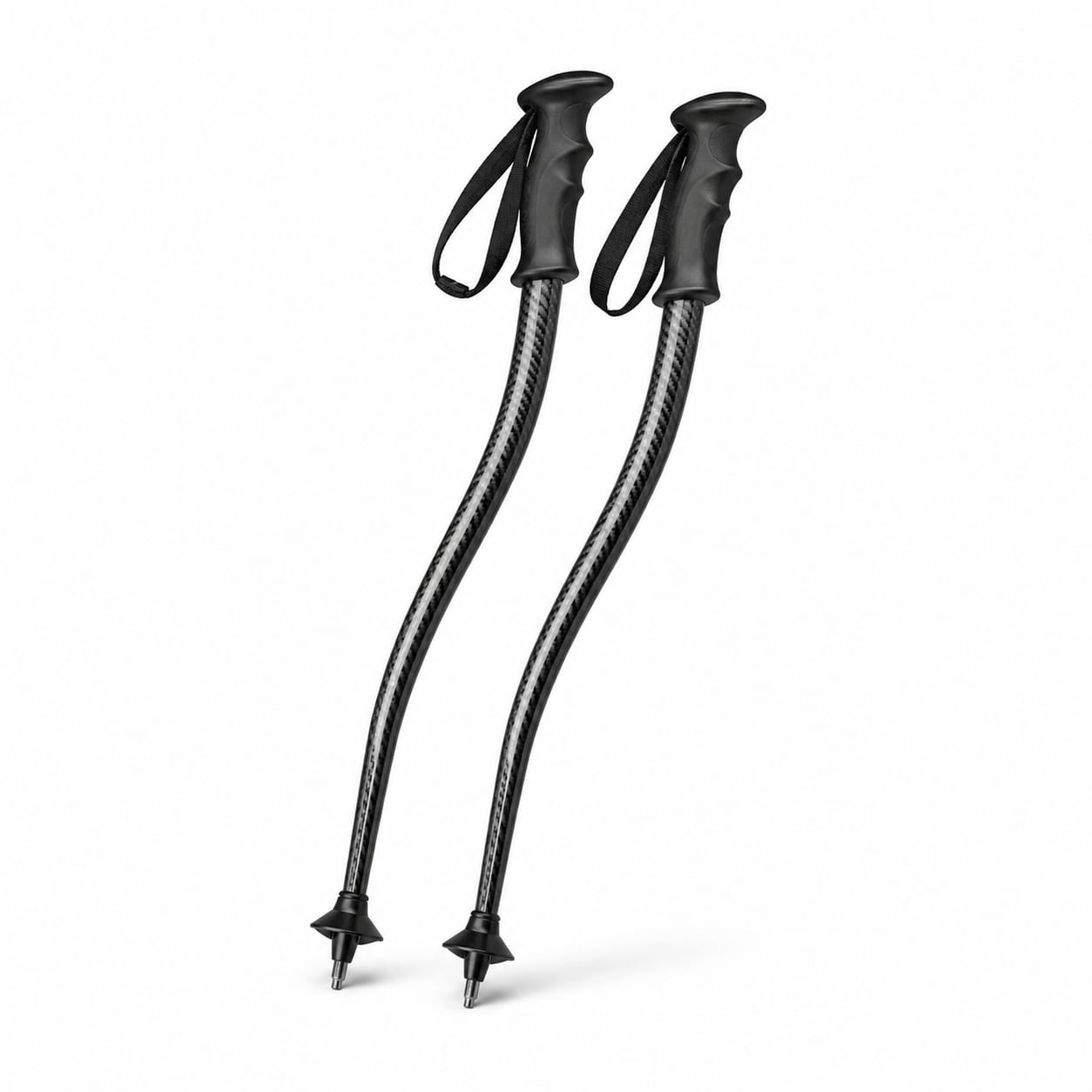
Whether the pole shaft is straight or features a bend/curve, typically designed for aerodynamic tuck positions in racing.

Typical for this type

Straight (False)

In practice

Freestyle poles feature straight shafts, as aerodynamic tuck positions are irrelevant in the terrain park.

Compared to other types

Unlike GS and speed racing poles that use curved shafts for aerodynamics, freestyle poles have no need for this feature.

Why it matters: A straight shaft is easier to grip during spins and grabs, and simpler to manufacture robustly.

Adjustment Range

Adjustment Range

What it means

The range of lengths an adjustable pole can be set to, relevant only for telescopic and folding poles.

Typical for this type

N/A (Fixed Length)

In practice

Freestyle poles are almost exclusively fixed length, so they do not have an adjustment range.

Compared to other types

Unlike backcountry/touring poles which adjust 20-40 cm for varied terrain, freestyle poles have zero adjustment.

Why it matters: Fixed length provides the maximum durability and minimum weight required for park skiing.

Lock Mechanism

Locking Mechanism

What it means

The type of mechanism used to secure adjustable poles at the desired length. Affects reliability, ease of use, and durability.

Typical for this type

N/A (Fixed Length)

In practice

Since freestyle poles are fixed length, there is no locking mechanism to fail under impact.

Compared to other types

Adjustable poles use external clamps or internal expanders, which are unnecessary and undesirable for freestyle applications.

Why it matters: Eliminating the locking mechanism removes a potential point of failure during high-impact park landings.

Packed Length

Packed Length

What it means

The length of the pole when collapsed or folded to its minimum size. Relevant for travel and backcountry applications where poles need to fit in or on a pack.

Typical for this type

90-110 cm (same as pole length)

Most common pick: 100 cm

In practice

Fixed-length freestyle poles cannot collapse, so their packed length equals their full length.

Compared to other types

Much longer when packed than folding touring poles (35-45 cm) or telescopic poles, but packability is rarely a priority for park skiers.

Why it matters: These poles will not fit inside a backpack, which is rarely a concern for lift-accessed terrain park skiing.

Evaluation

Strengths and trade-offs

Pros

What this type does best

Short length keeps poles out of the way

Critical

The reduced length prevents poles from crossing during spins and keeps them manageable during grabs and inversions.

Durable construction withstands impacts

Critical

Aluminum shafts bend rather than break, surviving the repeated hard landings and rail hits common in park skiing.

Minimal baskets reduce catching

High

Small or absent baskets prevent the pole from snagging on rails, boxes, and other park features, reducing injury risk.

Affordable replacement cost

High

Since park poles take heavy abuse, the preference for simple aluminum construction means they are relatively cheap to replace when eventually destroyed.

Lightweight swing weight aids maneuverability

Medium

Shorter length and minimal baskets reduce swing weight, making it easier to initiate and control rotations in the air.

Simple design with fewer parts to break

Medium

Fixed length, standard grips, and basic straps mean there are no adjustable mechanisms or complex components to fail.

Cons

Trade-offs to be aware of

Too short for effective all-mountain skiing

Moderate

The short length that is beneficial in the park provides poor leverage for traditional pole planting on groomed runs or moguls.

Not suitable for deep powder

Moderate

Short length combined with small baskets means these poles will punch through deep snow, offering no flotation or support.

Lack of premium features

Minor

Focus on simplicity and durability means missing out on ergonomic grips, vibration dampening, and quick-release strap systems found on higher-end poles.

Aluminum can bend permanently

Minor

While aluminum bends instead of snapping, a hard impact can leave the pole permanently bent, requiring replacement or manual bending.

Aesthetic wear and tear

Minor

Anodized aluminum and graphics scratch and chip easily from rail slides and impacts, leading to a worn appearance quickly.

Best for

Terrain

Terrain parkHalfpipeUrban featuresSlopestyle courses

Snow conditions

Groomed park featuresSoft landingsHardpackIcy takeoffs

Skill level

IntermediateAdvancedExpert

Riding style

FreestyleParkJibbingNew school

Rider profile

Park ratsFreestyle skiersTrick-focused ridersUrban skiers

Not ideal for

Reasons

Short length provides poor leverage for pole plantingSmall baskets sink in powder offering no supportLack of adjustability limits versatility for varied terrainDurability focus makes them heavier than carbon alternatives

Terrain

Deep backcountrySteep big mountain linesGroomed cruisersMogul fields

Skill level

Beginners who need poles for balance

Riding style

RacingTouringAll-mountain cruisingCarving

Compare

How it stacks up

This page

Freestyle Ski Poles

Shorter length and minimal baskets keep poles out of the way during spins and rail slides, significantly reducing the risk of catching or injury in the park.

Alternative

Alpine/All-Mountain Ski Poles

All-mountain poles provide better leverage for pole planting, more versatile performance on varied terrain, and often feature more comfortable ergonomic grips.

Bottom line

Choose freestyle poles if you spend the majority of your time in the terrain park; choose all-mountain poles if you only occasionally hit the park and mostly ski the rest of the mountain.

This page

Freestyle Ski Poles

Far more durable and impact-resistant, with a lower cost of replacement. Will not shatter on hard park landings like carbon race poles.

Alternative

Racing Ski Poles

Racing poles are significantly lighter and feature aerodynamic designs (curved shafts, cone baskets) for maximum speed in a tuck.

Bottom line

Freestyle poles are the clear choice for any park or freestyle riding. Racing poles are too fragile and specialized for park use.

This page

Freestyle Ski Poles

Shorter length is much easier to manage during aerial maneuvers and spins. Simpler construction is more durable against direct impacts.

Alternative

Freeride/Big Mountain Ski Poles

Freeride poles feature extended grips for steep traverses and powder baskets for deep snow, making them far superior for big mountain lines.

Bottom line

If you are hitting big mountain cliffs and spinning, you might compromise with a durable freeride pole, but for pure park, freestyle poles are best.

Shopping

Buying tips

  • 1

    Size down 5-10 cm from your normal all-mountain pole length to ensure they stay out of the way during rotations.

  • 2

    Don't overspend on park poles—they take a beating and are essentially consumables. A simple aluminum pole is often the best choice.

  • 3

    Aluminum is king for park poles; carbon fiber snaps on hard impacts and is a poor choice for freestyle.

  • 4

    Consider going strapless or using simple, loose straps to reduce thumb and wrist injury risk during falls.

  • 5

    Remove powder baskets if your poles come with them, or swap them for the smallest available standard baskets to prevent catching on rails.

  • 6

    Buy two pairs if you find a pole you like at a good price; having a backup saves a ruined park day when a pole inevitably bends.

Care

Maintenance notes

  • Bend back aluminum poles carefully by hand or against a tree if they deform, but replace them if the metal has kinked or fatigued.
  • Check basket security regularly—the vibration from hard landings can loosen basket screws over time.
  • Inspect grips for wear and replace them if they become slippery, as a secure grip is vital for park riding.
  • Don't worry about cosmetic scratches and chips from rails; they are unavoidable and do not affect structural integrity.
  • Periodically check the tip for excessive wear; carbide tips can still dull after repeated rail impacts.

Progression

Skill development path

Freestyle poles support the progression from basic park features to advanced aerial maneuvers. Beginners should start with standard-length freestyle poles and gradually size down as they become comfortable with spins and grabs. As trick complexity increases, shorter poles become more valuable for keeping limbs compact in the air. Advanced riders often prefer the shortest poles they can comfortably use, sometimes even cutting down older poles to achieve the ideal length.

FAQ

Common questions

Each question has a dedicated page with a full answer and links to the buying guide.