Kitvore.com

Kitvore.com

Specs that matter. Gear that fits.

Ski Poles · Subcategory

Cross-Country Classic Poles

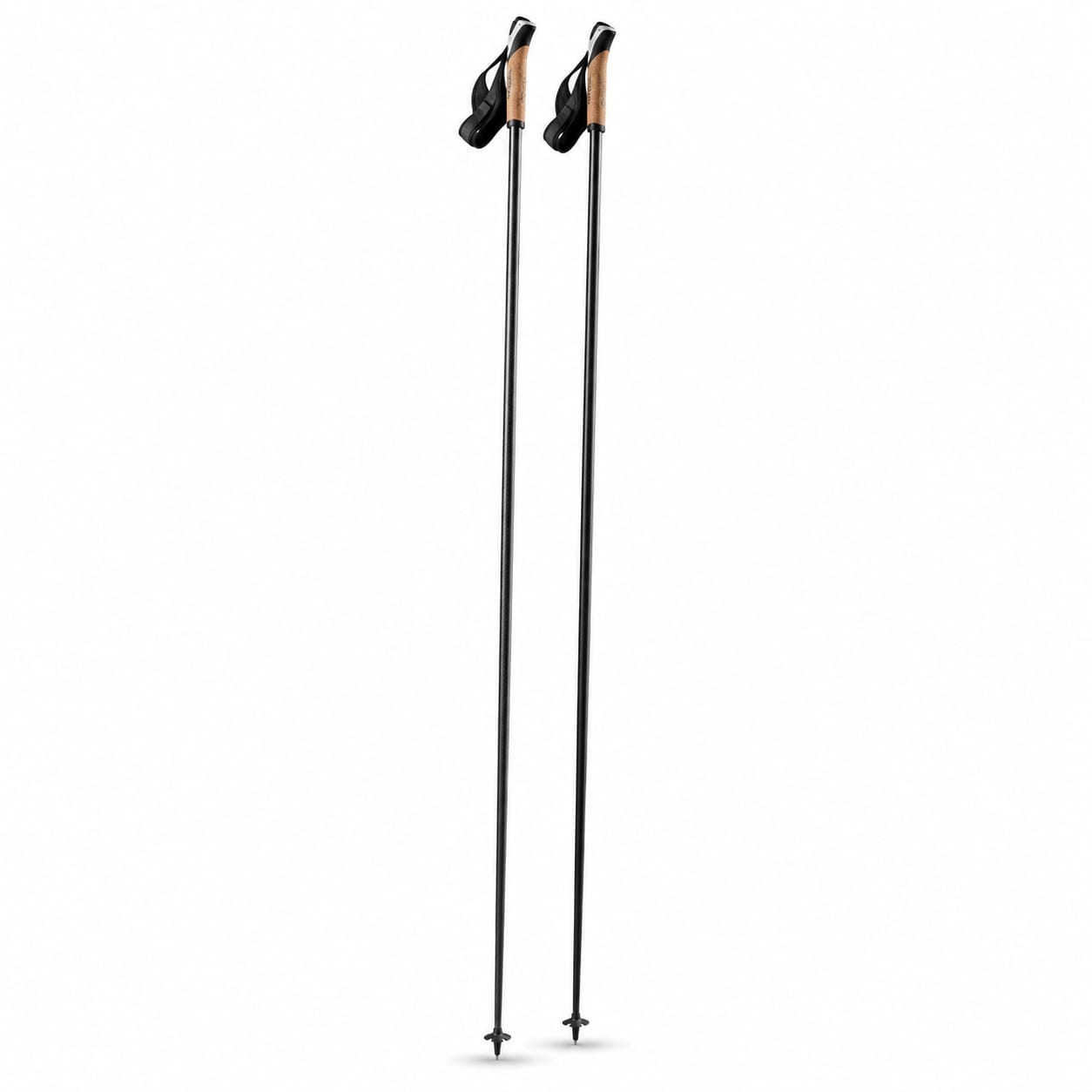
Ultralight, long poles engineered for efficient diagonal stride and kick-double-pole technique in classic cross-country skiing.

Cross-country classic poles are purpose-built for the rhythmic, propulsive motions of classic Nordic skiing. Significantly longer and lighter than alpine poles, they feature ergonomic grips with specialized straps that maximize power transfer during diagonal stride and kick-double-pole techniques. Their extended length—typically reaching to the skier's armpit—enables a more effective push angle, while ultra-lightweight carbon or composite shafts reduce fatigue over long distances. Whether you're gliding through groomed tracks at a recreational pace or racing in a loppet, the right classic pole transforms your skiing efficiency.

$25 – $250mid tierbeginnerintermediateadvanced

Best known for

Exceptional lightness for reduced arm fatigue over long distancesExtended length optimized for diagonal stride propulsionSpecialized grips and straps that maximize power transferStiff shafts that convert arm force directly into forward motion
Cross-Country Classic Poles

Guide

Detailed overview

Cross-country classic poles are a specialized category of Nordic ski poles designed specifically for the classic technique, which includes diagonal stride, kick-double-pole, and double-pole motions. Unlike alpine poles that serve primarily for balance and timing, classic XC poles are fundamental propulsion tools—the engine that drives the skier forward. This functional difference shapes every aspect of their design, from their notably greater length to their ultra-lightweight construction and specialized grip-strap systems. Classic poles are typically 10-20 cm longer than skate poles for the same skier, reflecting the different body angles and push mechanics of the classic stride. The extra length allows a more effective push angle during diagonal stride, where the pole plants behind the skier and pushes backward to generate forward momentum. In kick-double-pole technique, the longer pole enables a deeper, more powerful compression and push phase. The emphasis on light weight is not merely about comfort—every gram matters when you're performing thousands of pole plants over a 10-50 km distance. High-end racing poles weigh under 200g per pair, achieved through high-modulus carbon fiber construction and minimalist component design. The trade-off is fragility; these poles are engineered for track skiing and can snap under lateral loads or impacts that alpine poles would shrug off. Grip and strap design is where classic poles differ most visibly from other ski poles. The straps are not simple wrist loops but sophisticated support systems—often called 'race straps' or 'power straps'—that cradle the hand and transfer force from the entire forearm through the pole shaft. This allows skiers to push forcefully while maintaining a relaxed grip, reducing fatigue and enabling the quick release needed for efficient recovery between strokes.

Choosing the right cross-country classic pole begins with understanding that length is the single most important factor affecting your technique and efficiency. Classic poles should reach approximately to your armpit when standing on a flat surface, or roughly 83% of your body height. This is significantly longer than skate poles (which target ~90% of body height) and alpine poles (which reach to the elbow at a 90-degree bend). A pole that's too short forces you to lean excessively and reduces your push angle, robbing power from every stride. A pole that's too long causes over-reaching, poor timing, and shoulder strain. Most adult classic skiers use poles between 120-140 cm, with precise sizing depending on height, arm length, and skiing style.

Material choice in classic poles is driven by the relentless pursuit of light weight without excessive flex. Carbon fiber dominates the performance segment, with high-modulus carbon offering the best stiffness-to-weight ratio. A stiff pole transfers more of your energy directly into forward motion rather than being absorbed by shaft flex. However, not all carbon is equal—cheaper carbon poles may use lower-modulus fibers that are heavier or more flexible. Composite poles blending carbon and fiberglass offer a good entry point, providing much of the weight savings at a more accessible price. Aluminum poles, while durable, are generally too heavy for serious classic skiing and are best reserved for casual recreational use or rental fleets.

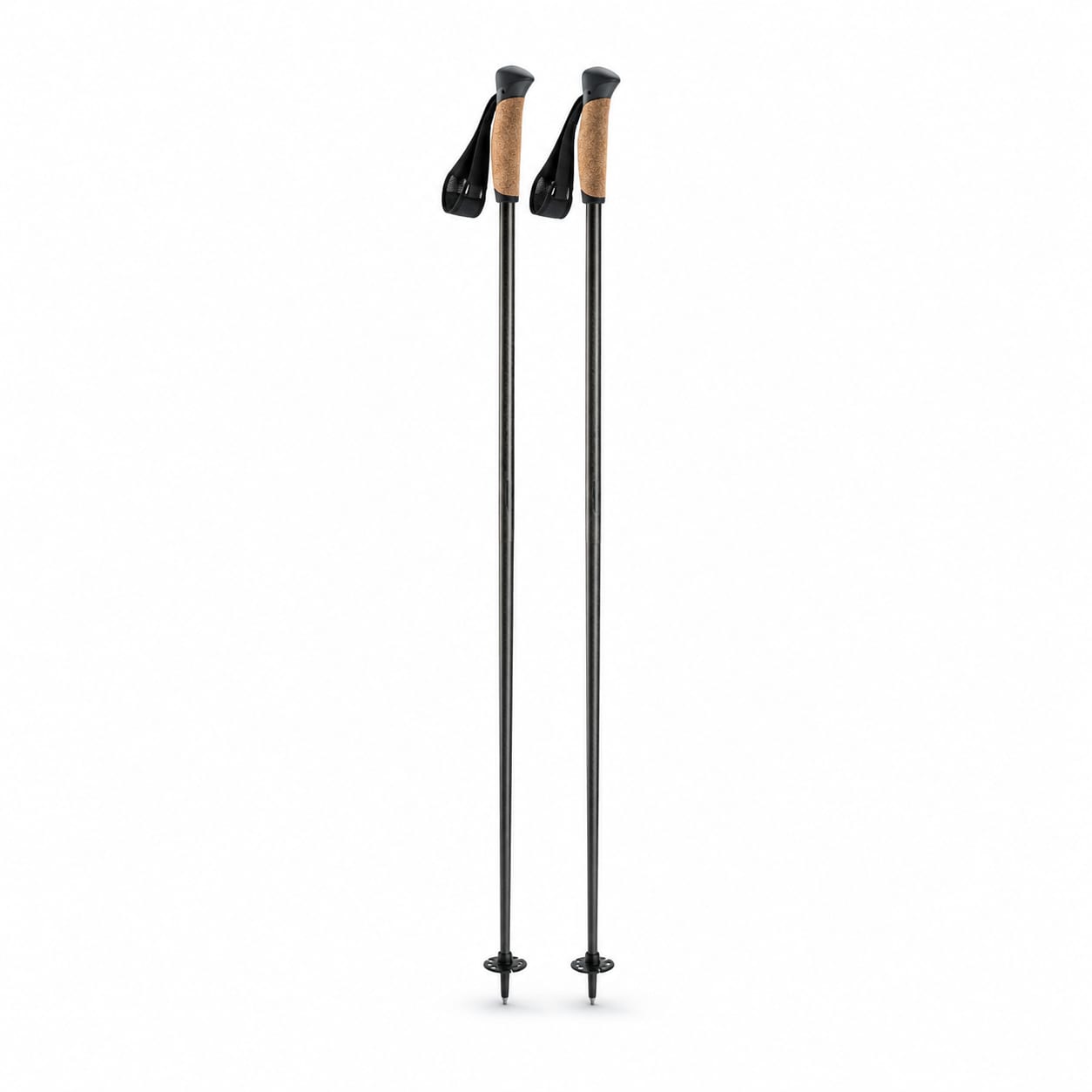
The grip-strap interface is the critical connection point where your body meets the pole. Nordic-specific straps are dramatically different from alpine straps—they wrap around the hand with a supportive panel that covers the palm, allowing you to push against the strap rather than gripping the pole tightly. This 'open hand' technique is fundamental to efficient classic skiing: you plant the pole with a relaxed hand, push forcefully against the strap during the power phase, and release cleanly as the hand comes forward for the next plant. Premium poles feature adjustable strap systems that can be fine-tuned to your hand size and preference. Cork grip surfaces are popular for their moisture-wicking properties and comfortable feel during long outings, though rubber and plastic grips are also common.

Basket selection for classic poles is straightforward: small, aerodynamic baskets are the norm since classic skiing primarily occurs in groomed tracks. The track itself provides the resistance that prevents the pole from sinking, so large powder baskets are unnecessary and would only add weight and air resistance. However, if you frequently ski in soft or poorly groomed tracks, a slightly larger basket can prevent frustrating pole plunge. Some skiers keep a pair of poles with larger baskets for early-season or low-snow conditions when tracks may be soft or shallow.

For beginners and recreational skiers, the most important advice is to invest in properly sized poles before chasing premium materials. A correctly sized aluminum or composite pole will serve you far better than a carbon pole that's the wrong length. As your technique and commitment to the sport grow, upgrading to lighter, stiffer carbon poles becomes worthwhile—not just for performance, but for the reduced fatigue that makes long skis more enjoyable. Consider that you'll be lifting these poles thousands of times per outing; even small weight savings compound significantly over distance.

Quick facts

Primary purpose
Efficient propulsion and rhythm for classic diagonal stride and double-poling technique
Popular brands
SwixExelLekiOne WayFischerRossignol
Typical terrain
Nordic trailsGroomed tracksCross-country centersRolling terrain

What makes it different

Specific length range for classic technique; optimized for diagonal stride timing; lighter than alpine poles with smaller basket profiles; grips designed for extended repetitive use

Recommended ranges

How this type usually specs out

Each spec is explained in plain language, then we show what buyers usually look for on this type.

Length

Pole Length

What it means

The total length of the ski pole from tip to top of the grip, measured in centimeters. The most critical dimension for proper fit and performance.

Typical for this type

120-140 cm

Most common pick: 130 cm

In practice

Classic poles are sized to reach approximately to the skier's armpit, or about 83% of body height. This is notably longer than skate poles (~90% body height) and alpine poles (elbow at 90 degrees). Most adults use 120-140 cm for classic technique.

Compared to other types

Classic poles are 10-20 cm longer than skate poles for the same skier and 20-30 cm longer than alpine poles. This extra length enables the deeper push angle needed for diagonal stride, where the pole plants behind the body.

Why it matters: Proper length is critical for efficient diagonal stride and kick-double-pole technique. Too short and you lose push angle and power; too long and you over-reach, causing poor timing and shoulder strain. In classic skiing, the pole is a primary propulsion tool, making correct length essential.

Material

Shaft Material

What it means

The primary material used in the pole shaft, which determines weight, durability, stiffness, vibration dampening, and price.

Typical for this type

Carbon Fiber (Performance), Composite (Mid-Range), Aluminum (Budget)

In practice

Carbon fiber is the dominant material for classic poles due to its unmatched stiffness-to-weight ratio. High-modulus carbon shafts provide maximum power transfer with minimal weight. Composite poles offer a more affordable entry point, while aluminum is reserved for budget and recreational use.

Compared to other types

Classic poles prioritize carbon more aggressively than alpine poles, where aluminum remains common and acceptable. The weight savings matter more in XC due to the repetitive motion and distance covered. Carbon is also more prevalent in classic poles than in backcountry/touring poles, where durability takes priority.

Why it matters: In classic skiing, every gram matters because you perform thousands of pole plants per outing. Carbon's stiffness also ensures that your pushing force goes directly into forward motion rather than being lost to shaft flex. The weight difference between aluminum and carbon poles can be 200+ grams per pair—significant over a 30 km ski.

Weight (Pair)

Weight Per Pair

What it means

The total weight of a pair of ski poles measured in grams. Lighter poles reduce arm fatigue and improve swing dynamics.

Typical for this type

180-350 g

Most common pick: 220 g

In practice

High-end racing classic poles weigh 180-220g per pair, while performance recreational poles range from 250-350g. Budget aluminum poles may reach 400g. The lightest poles use high-modulus carbon with minimalist grips and straps.

Compared to other types

Classic poles are among the lightest ski poles available, often 100-300g lighter than alpine poles and 50-150g lighter than touring poles. Only skate poles approach similar weights. This extreme lightness comes at the cost of durability—classic poles are not designed to withstand impacts.

Why it matters: Weight is arguably more important in classic poles than any other pole subcategory. Over a 30-50 km ski, you'll plant each pole thousands of times. Even 50g difference per pair compounds into significant fatigue reduction over distance. Lighter poles also have better swing dynamics for quicker recovery between strokes.

Basket

Basket Type

What it means

The disc or cone near the pole tip that prevents the pole from sinking into soft snow. Basket size and shape affect performance in different snow conditions.

Typical for this type

Standard (Groomed Tracks), Powder (Soft/Ungroomed Conditions)

In practice

Small standard baskets (40-50mm) are the norm for classic skiing since groomed tracks provide the resistance to prevent pole plunge. The track walls hold the pole tip, making large baskets unnecessary. Some skiers use slightly larger baskets for soft or poorly set tracks.

Compared to other types

Classic poles use smaller baskets than backcountry/freeride poles (which need powder baskets for deep snow) and similar sizes to skate and racing poles. Unlike alpine racing poles that may use cone baskets for aerodynamics, classic poles typically use small disc baskets that work well in track grooves.

Why it matters: Oversized baskets add weight and air resistance with no benefit in groomed tracks. However, if you frequently ski in soft, shallow, or poorly groomed tracks, a slightly larger basket prevents the pole from punching through the track bottom, which is both inefficient and frustrating.

Grip

Grip Type

What it means

The design and shape of the pole grip which affects comfort, security, and technique. Grip ergonomics are crucial for all-day skiing comfort.

Typical for this type

Ergonomic (Most Common), Pistol Grip (Some Racing Preferences)

In practice

Ergonomic grips with contoured shapes and thumb shelves dominate classic pole design. These grips support the hand during the push phase and allow quick release during recovery. Some racers prefer pistol-grip styles for maximum leverage in double-poling.

Compared to other types

Classic grips are more specialized than alpine grips, with more pronounced ergonomic shaping and often a slight forward angle that facilitates the pushing motion. Unlike freeride grips, they lack extended lower sections. The emphasis is on efficient force transfer during thousands of repetitive pushes rather than versatility.

Why it matters: The grip is your primary connection to the pole and directly affects technique efficiency. A well-shaped ergonomic grip reduces hand fatigue during long outings and supports proper hand position for the 'open hand' pushing technique. Poor grip design causes hand cramping and inefficient power transfer.

Grip Material

Grip Material

What it means

The material covering the grip area, affecting comfort, insulation, grip security, and moisture management.

Typical for this type

Cork (Preferred For Touring/Recreational), Rubber (All-Around), Plastic (Racing/Ultralight)

In practice

Cork is the most popular grip material for classic poles due to its excellent moisture management, comfortable feel, and ability to mold slightly to the hand over time. Rubber offers good grip in all conditions. Plastic is used on the lightest race poles where weight savings matter more than comfort.

Compared to other types

Cork is more prevalent in classic poles than in alpine poles, reflecting the longer duration and repetitive nature of XC skiing. Plastic grips, while common on race poles, are less popular for recreational classic skiing than they are in alpine racing, because XC skiers spend more continuous time on snow.

Why it matters: Classic skiing involves sustained, repetitive gripping over long distances in cold conditions. Cork's moisture-wicking properties keep hands drier and more comfortable. The insulation value of cork and rubber versus plastic is noticeable in sub-zero temperatures. Over a 2-4 hour ski, grip comfort significantly affects enjoyment and performance.

Strap

Strap Type

What it means

The design of the strap or loop that secures the pole to the skier's wrist, affecting security, comfort, and release characteristics.

Typical for this type

Standard Strap (With Nordic-Specific Design), Trigger S Or Trigger 3d (Leki Ecosystem)

In practice

Classic poles use standard straps but with a Nordic-specific design that is wider and more supportive than alpine straps. These 'race straps' or 'power straps' feature a broad palm panel that distributes pushing force across the hand. Leki's Trigger S and 3D systems are popular in the XC racing world for their secure connection and quick release.

Compared to other types

Nordic straps are dramatically different from alpine straps—they're wider, more supportive, and designed for pushing rather than just security. The Leki Trigger systems are more popular in XC than in alpine skiing due to the convenience of quick in/out during training sessions and the secure connection needed for powerful double-poling.

Why it matters: The strap is the primary force-transfer mechanism in classic skiing—you push against the strap, not by gripping the pole. A well-designed Nordic strap allows powerful pushing with a relaxed hand, reducing fatigue and enabling clean release during recovery. Poor straps cause hand cramping and inefficient technique.

Construction

Construction Type

What it means

Whether the pole is a fixed single shaft, telescoping adjustable, or folding design. Affects packability, versatility, and weight.

Typical for this type

Fixed (Standard For Classic), Telescopic (Recreational/Versatile Use Only)

In practice

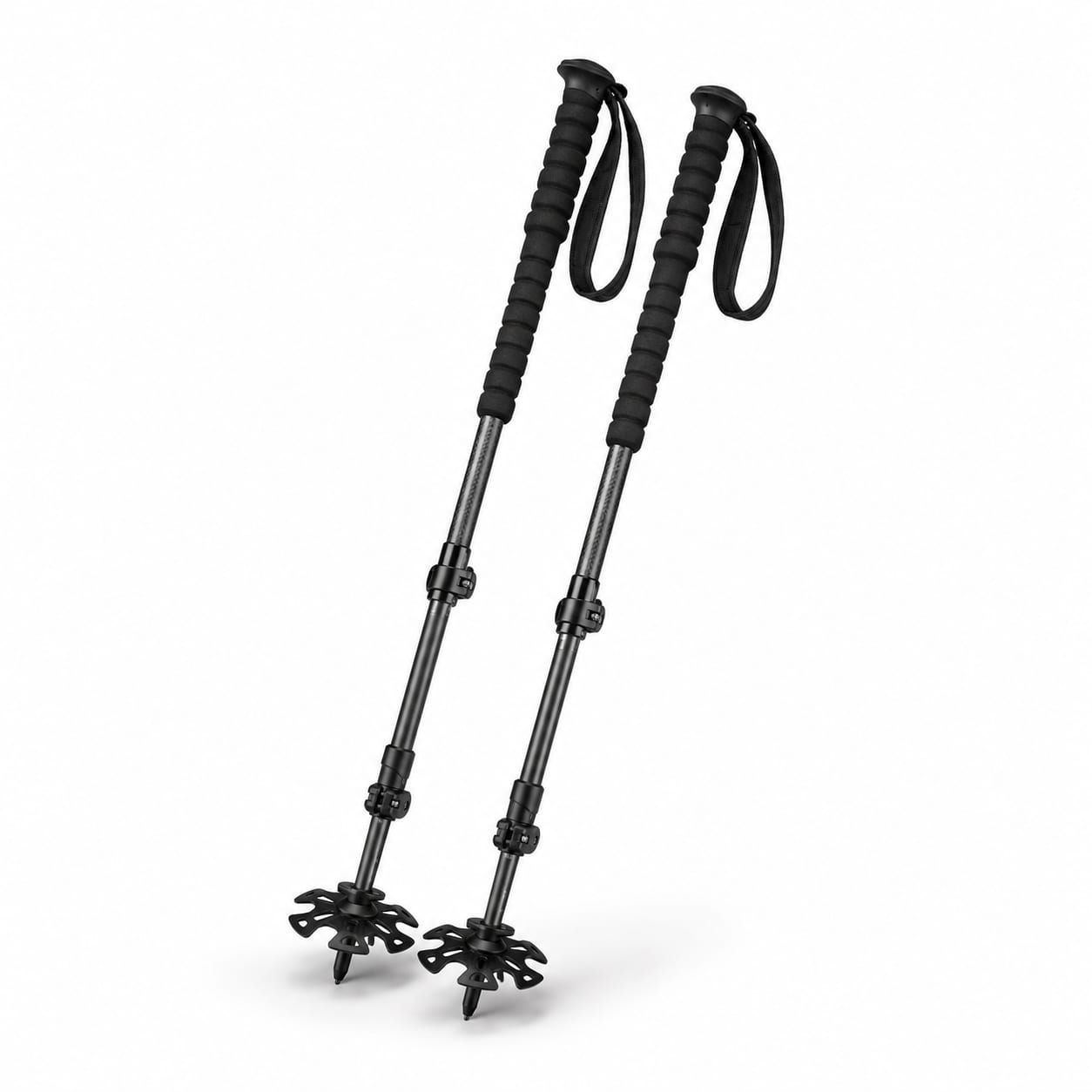
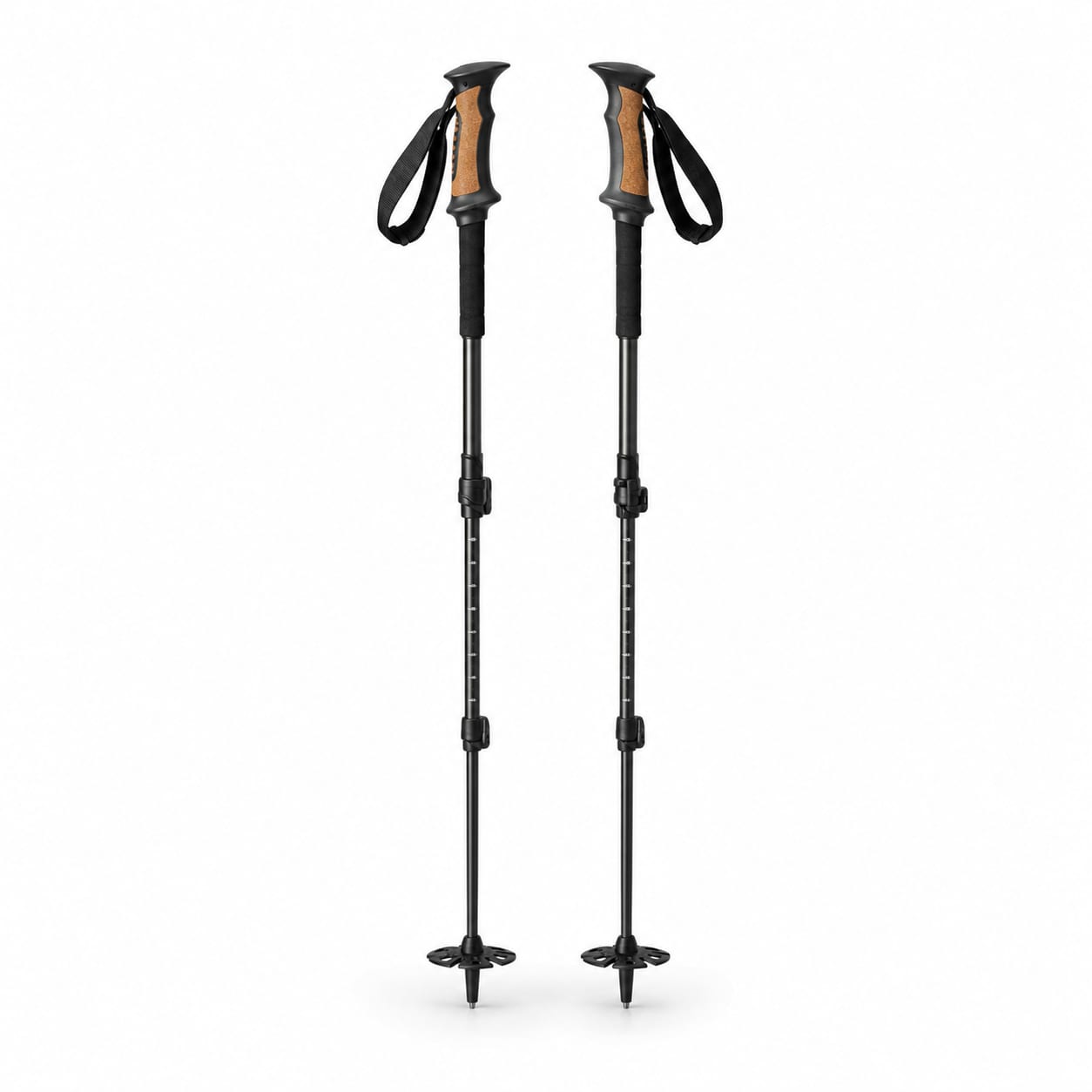
Fixed-length construction is standard for classic poles because it provides the lightest weight, best stiffness, and most reliable performance. Telescopic poles are available for recreational skiers who want versatility or shared use, but they add weight and potential failure points.

Compared to other types

Unlike backcountry/touring poles where adjustable length is essential for uphill/downhill transitions, classic poles are used on consistent terrain where a single optimal length suffices. This makes fixed construction the clear choice, whereas touring poles are almost exclusively telescopic or folding.

Why it matters: Fixed poles are lighter, stiffer, and more durable than adjustable alternatives—critical advantages in a discipline where every gram and every watt of power transfer matters. Adjustable poles can slip under the heavy pushing loads of double-poling, which is both inefficient and potentially dangerous.

Tip Material

Tip Material

What it means

The material of the pole tip (point), which affects durability, grip on hard snow and ice, and longevity.

Typical for this type

Carbide (Standard For Quality Poles), Steel (Budget Only)

In practice

Carbide/tungsten tips are standard on quality classic poles. They maintain sharp points for reliable grip on hard-packed track surfaces and ice. Steel tips are found on budget poles but dull quickly, reducing grip on firm tracks.

Compared to other types

Carbide tips are even more important in classic skiing than in alpine because the pole is a propulsion tool—a slipped plant means lost power and broken rhythm. The firm, groomed track surfaces of XC skiing can be extremely hard, making sharp tips critical.

Why it matters: A sharp tip is essential for secure pole plants in groomed tracks, which can become very firm or icy, especially on hills. A dull tip skates on hard surfaces, causing slipped pole plants that disrupt rhythm and can cause falls. Carbide tips maintain their edge over many seasons of use.

Shaft Diameter

Shaft Diameter

What it means

The diameter of the pole shaft, typically tapering from grip to tip. Affects swing weight, stiffness, and aerodynamics.

Typical for this type

12-16 mm (grip end), 9-12 mm (tip end)

Most common pick: 14 mm (grip end), tapering to 10 mm (tip end)

In practice

Classic poles feature aggressive tapering from approximately 14-16mm at the grip to 9-10mm at the tip. This reduces swing weight at the tip end while maintaining stiffness at the grip where pushing forces are applied. Racing poles often have the most aggressive taper profiles.

Compared to other types

Classic poles typically have thinner shafts and more aggressive tapering than alpine poles, prioritizing swing weight over durability. The shafts are noticeably more slender than freeride or backcountry poles, which need thicker profiles to withstand off-piste impacts.

Why it matters: Aggressive tapering reduces swing weight, making the pole feel lighter and quicker during the recovery phase between plants. The concentration of mass near the grip also improves the pendulum dynamics of the poling motion. However, very thin tip sections can be fragile.

Vibration Dampening

Vibration Dampening

What it means

The pole's ability to absorb and reduce vibrations transmitted from the tip through the shaft to the grip. Affects comfort and feel on hard, choppy snow.

Typical for this type

High (Carbon Poles), Moderate (Composite/Aluminum Poles)

In practice

Carbon fiber classic poles typically offer high vibration dampening, which reduces hand and arm fatigue during long outings. The dampening characteristics of carbon are beneficial in classic skiing where firm track surfaces transmit significant vibration through the shaft.

Compared to other types

Classic poles generally prioritize dampening more than alpine race poles (which favor maximum feedback) but similarly to touring poles. The long duration of XC outings makes dampening more important than in alpine skiing, where runs are shorter and rest occurs on chairlifts.

Why it matters: Over thousands of pole plants on firm tracks, vibration contributes to hand and arm fatigue. High dampening makes long skis more comfortable and can reduce the risk of overuse injuries in the wrists and forearms. However, some racers prefer moderate dampening for better feel of the snow surface.

Discipline

Intended Discipline

What it means

The primary skiing discipline the pole is designed for, which influences all other design choices from length to basket to material.

Typical for this type

Nordic (Classic Technique Specifically)

In practice

Classic poles are designed exclusively for Nordic/cross-country skiing in the classic technique. They are not suitable for alpine skiing, skate skiing, or backcountry touring. Their length, lightness, and fragility are optimized specifically for groomed-track classic skiing.

Compared to other types

Unlike all-mountain alpine poles that serve multiple alpine applications, classic poles are highly specialized. They differ from skate poles in length (longer), from alpine poles in every dimension, and from touring poles in construction (fixed vs. adjustable). This specialization reflects the unique demands of classic technique.

Why it matters: Using classic poles for other disciplines is ineffective and potentially dangerous. Their length is wrong for skating, their light construction can't withstand alpine forces, and they lack the adjustability needed for touring. Discipline-specific design ensures optimal performance and safety.

Curved Shaft

Curved Shaft

What it means

Whether the pole shaft is straight or features a bend/curve, typically designed for aerodynamic tuck positions in racing.

Typical for this type

False (Straight Shafts Only)

In practice

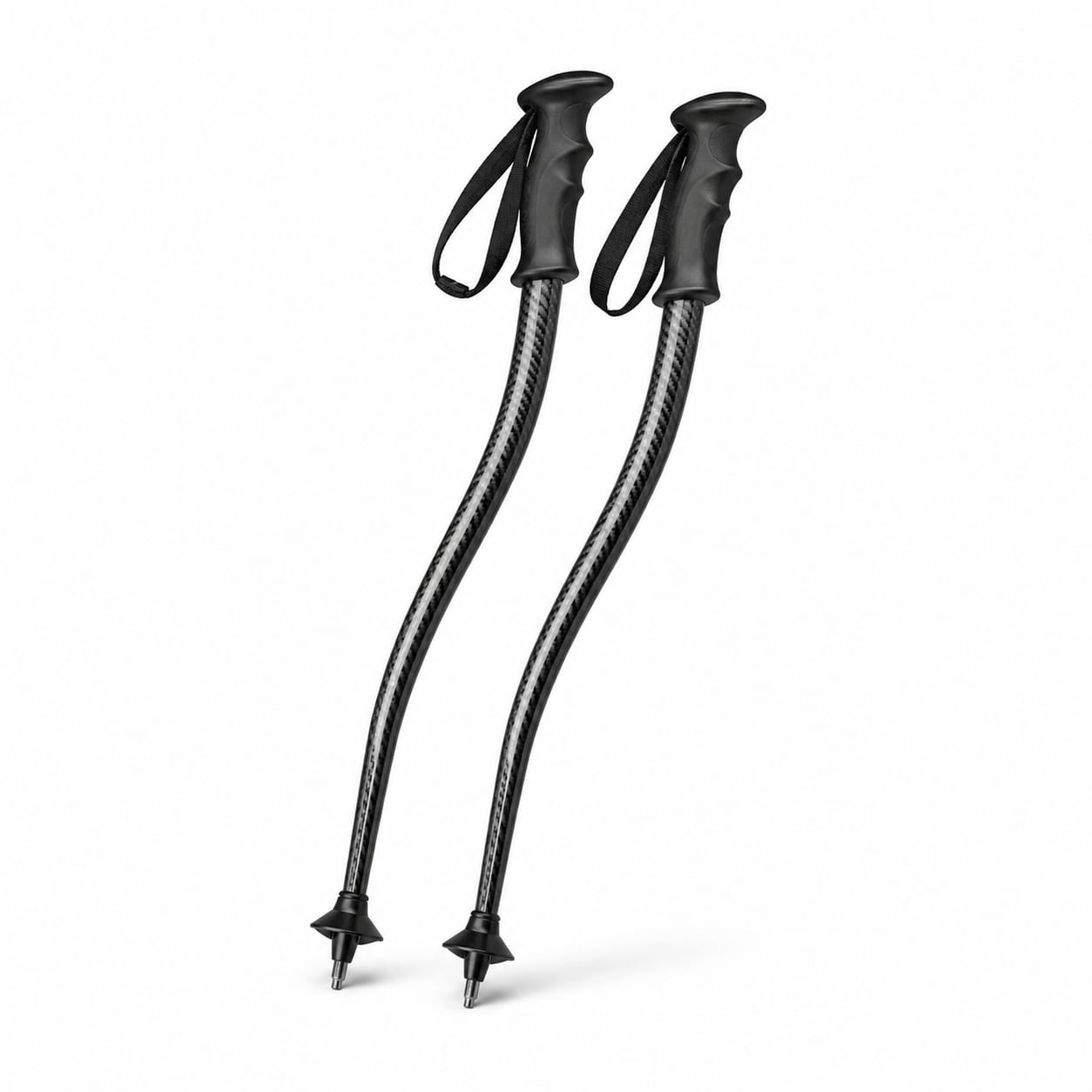
Classic poles always feature straight shafts. Curved shafts are designed exclusively for alpine speed disciplines (GS, super-G, downhill) to reduce aerodynamic drag in tuck positions. They serve no purpose in classic skiing and would interfere with proper technique.

Compared to other types

Unlike GS/downhill racing poles that feature curved shafts for aerodynamic tuck positions, classic poles are always straight. This is consistent with skate poles, freestyle poles, and most other non-speed-discipline pole types.

Why it matters: Straight shafts provide consistent feel and predictable behavior during the varied poling motions of classic technique (diagonal stride, kick-double-pole, double-pole). A curved shaft would alter the pole's swing dynamics and planting characteristics without providing any benefit.

Adjustment Range

Adjustment Range

What it means

The range of lengths an adjustable pole can be set to, relevant only for telescopic and folding poles.

Typical for this type

N/A For Fixed Poles; 110-140 Cm For Adjustable Recreational Models

Most common pick: N/A (Fixed Length)

In practice

The vast majority of classic poles are fixed length with no adjustment range. Adjustable telescopic models exist for recreational use, typically offering ranges like 110-140 cm, but they are heavier and less efficient than fixed poles.

Compared to other types

Unlike backcountry/touring poles where 20+ cm of adjustment is essential for uphill/downhill transitions, classic poles are used on consistent terrain. This makes adjustment range largely irrelevant for most classic skiers, whereas it's a primary specification for touring poles.

Why it matters: Fixed-length poles are preferred because they're lighter, stiffer, and more reliable—critical for the repetitive, forceful poling of classic technique. Adjustable poles add weight and can slip under load. If you choose adjustable poles, ensure your optimal classic length falls within the range.

Lock Mechanism

Locking Mechanism

What it means

The type of mechanism used to secure adjustable poles at the desired length. Affects reliability, ease of use, and durability.

Typical for this type

N/A For Fixed Poles; External Clamp For Adjustable Recreational Models

Most common pick: N/A (Fixed Length)

In practice

Most classic poles are fixed length and have no locking mechanism. For the minority of adjustable recreational models, external clamp (Flicklock-style) mechanisms are preferred for reliability and ease of use with gloves in cold conditions.

Compared to other types

Locking mechanism is a primary concern for backcountry/touring poles but largely irrelevant for classic poles since most are fixed length. When adjustable classic poles are used, the same external clamp preference applies as in touring poles.

Why it matters: For adjustable classic poles, a reliable locking mechanism is essential because the heavy pushing forces of double-poling can cause poorly locked poles to collapse. External clamps are visible when secured and easy to adjust, making them the best choice for adjustable XC poles.

Packed Length

Packed Length

What it means

The length of the pole when collapsed or folded to its minimum size. Relevant for travel and backcountry applications where poles need to fit in or on a pack.

Typical for this type

N/A For Fixed Poles; 60-70 Cm For Telescopic Recreational Models

Most common pick: N/A (Fixed Length, Does Not Collapse)

In practice

Fixed-length classic poles cannot be collapsed and must be transported at full length (120-140 cm). Telescopic recreational models collapse to roughly half their extended length. This is a consideration for travel and storage but not a factor for most classic skiers.

Compared to other types

Backcountry/touring poles and folding poles prioritize compact packed length for stowing in packs during ascents. Classic poles have no such requirement since they're always in hand during skiing. This is a key differentiator from touring and mountaineering pole designs.

Why it matters: If you travel frequently with your poles, packed length matters for airline transport and vehicle storage. Fixed poles require a full-length ski bag or careful packing. However, most serious classic skiers accept this limitation because the performance benefits of fixed poles outweigh the transport inconvenience.

Evaluation

Strengths and trade-offs

Pros

What this type does best

Exceptional Lightness

Critical

Classic poles are among the lightest ski poles available, with high-end carbon models under 200g per pair. This dramatically reduces arm fatigue over long distances where you perform thousands of pole plants.

Optimized Propulsion Length

Critical

The extended length (to armpit height) provides the ideal push angle for diagonal stride and kick-double-pole techniques, converting arm force into forward motion more efficiently than shorter poles.

Superior Power Transfer

High

Stiff carbon shafts and supportive Nordic straps work together to transfer maximum force from your arms directly into forward propulsion, with minimal energy lost to shaft flex or poor connection.

Specialized Grip-Strap Interface

High

Nordic-specific ergonomic grips and power straps enable the 'open hand' technique where you push against the strap rather than gripping tightly, reducing fatigue and improving efficiency over long distances.

Excellent Swing Dynamics

Medium

The aggressive taper and concentration of mass near the grip creates excellent swing weight, allowing quick, effortless pole recovery between plants—a subtle but important advantage over thousands of cycles.

Track-Optimized Baskets

Medium

Small, aerodynamic baskets are perfectly suited to groomed tracks, adding minimal weight and air resistance while providing adequate flotation in the track groove.

Vibration Dampening for Long-Distance Comfort

Medium

Carbon construction provides excellent vibration dampening that reduces hand and arm fatigue during multi-hour skis on firm track surfaces.

Cons

Trade-offs to be aware of

Fragility Under Impact

Significant

Carbon classic poles can snap under lateral loads, impacts, or being stepped on. They're engineered for track skiing and cannot withstand the abuse that aluminum alpine poles handle routinely. A single crash or improper transport can destroy an expensive pole.

Single-Discipline Specialization

Moderate

Classic poles cannot be used for skate skiing (too long), alpine skiing (too long and fragile), or backcountry touring (not adjustable, too fragile). This means dedicated classic skiers need separate poles for other disciplines.

Premium Pricing for Performance

Moderate

Quality carbon classic poles are expensive, with high-end racing models costing $150-300+ per pair. The lightest, stiffest poles command premium prices that may be difficult to justify for recreational skiers.

Sizing Sensitivity

Moderate

Classic poles are more sensitive to correct sizing than alpine poles. Being off by even 5 cm can significantly impact technique efficiency and cause shoulder or arm strain. Fixed-length poles cannot be adjusted if you're between sizes.

Poor Performance in Soft or Deep Snow

Minor

The small baskets and long length that work perfectly in groomed tracks become liabilities in deep or soft snow outside of tracks. Poles punch through easily, and the long length becomes unwieldy in unconsolidated conditions.

Transport and Storage Challenges

Minor

Fixed-length poles are long (120-140 cm) and cannot be collapsed, making them awkward to transport in vehicles and store. They require full-length ski bags for air travel and don't fit easily in small car trunks.

Best for

Terrain

Groomed classic tracksNordic center trail systemsPrepared cross-country ski areasMachine-groomed green and blue trails

Snow conditions

Groomed tracks with firm baseCold, hard-packed tracksWell-set classic tracksNordic center conditions

Skill level

Beginner (properly sized poles improve technique from day one)Intermediate (efficiency gains become noticeable)Advanced (performance poles match refined technique)Expert/Racer (marginal gains in weight and stiffness matter)

Riding style

Diagonal strideKick-double-poleDouble-polingClassic touringClassic racing

Rider profile

Fitness-oriented Nordic skiersClassic technique puristsLong-distance tourersCitizen racers and loppet participantsNordic center members who primarily ski classic

Not ideal for

Reasons

Pole length optimized for classic technique is incorrect for skating and alpineCarbon construction cannot withstand impacts and lateral loads common in off-track skiingFixed length prevents adjustment needed for touring transitionsSmall baskets provide insufficient flotation in deep snow

Terrain

Deep backcountry snowSteep alpine terrainUngroomed wildernessRocky or obstacle-filled terrain

Skill level

Complete beginners who haven't committed to classic technique (consider adjustable poles initially)

Riding style

Skate skiing (poles are too long)Alpine skiing (poles are too long and fragile)Backcountry touring (need adjustable, durable poles)Telemark skiing (need shorter, stronger poles)

Compare

How it stacks up

This page

Cross-Country Classic Poles

Longer length provides better push angle for diagonal stride and kick-double-pole; optimized for the specific mechanics of classic technique where the pole plants behind the body.

Alternative

Cross-Country Skate Poles

Skate poles are shorter (to chin/mouth height), which is correct for the lateral push of skate technique and provides better clearance during V1 and V2 skating motions.

Bottom line

Choose based on your primary technique. If you classic ski 70%+ of the time, invest in dedicated classic poles. If you skate more, prioritize skate poles. For 50/50 skiers, consider separate pairs—compromise poles serve neither technique well.

This page

Cross-Country Classic Poles

Dramatically lighter with superior swing weight; specialized grip-strap system for efficient propulsion; correct length for classic technique; optimized for thousands of repetitive plants.

Alternative

Alpine/All-Mountain Poles

Far more durable and versatile; can withstand crashes, impacts, and rough handling; work for any alpine skiing; adjustable options available; much more affordable at entry level.

Bottom line

These are completely different tools for different sports. Never use alpine poles for classic skiing (too short, too heavy, wrong straps) or classic poles for alpine skiing (too long, too fragile, wrong design). Invest in discipline-specific equipment.

This page

Cross-Country Classic Poles

Significantly lighter for less fatigue on long tours; stiffer shaft for better power transfer; correct length for in-track classic technique; simpler fixed construction with no moving parts to fail.

Alternative

Backcountry/Touring Poles

Adjustable length for uphill/downhill transitions; more durable construction for variable conditions; powder baskets for deep snow; compact packed size for stowing on steep ascents.

Bottom line

If you ski exclusively in groomed tracks at Nordic centers, classic poles are the clear choice. If you venture into the backcountry or do any touring with elevation changes, you need adjustable touring poles instead. Some skiers own both for different outings.

This page

Cross-Country Classic Poles

Longer and stiffer for actual skiing propulsion; proper ski baskets for snow conditions; designed for the forces and dynamics of skiing rather than walking; carbide tips grip ice and hard snow.

Alternative

Nordic Walking Poles

Rubber tip boots for pavement and indoor use; shorter and more upright for walking posture; often more affordable; telescopic adjustability for sharing between users.

Bottom line

Nordic walking poles are for dryland training and walking, not skiing. Their rubber tips, shorter length, and walking-oriented design make them ineffective on snow. For actual cross-country skiing, always use proper classic poles.

Shopping

Buying tips

  • 1

    Size poles to armpit height (approximately 83% of body height). When in doubt, choose the longer option within 2 cm—slightly long is generally better than slightly short for classic technique.

  • 2

    Invest in carbon fiber if you ski more than 20 times per season. The weight savings and stiffness improvement are noticeable and compound over distance. For occasional skiers, composite poles offer good value.

  • 3

    Prioritize the grip-strap system when testing poles. The strap should feel supportive during pushing without pinching or chafing. Try before you buy if possible—strap comfort is highly personal.

  • 4

    Don't buy adjustable poles for dedicated classic skiing unless you have a specific need (shared family use, travel convenience). Fixed poles are lighter, stiffer, more reliable, and less expensive for the same quality.

  • 5

    Consider buying from a Nordic specialty shop rather than a general sporting goods store. Staff at Nordic centers understand classic pole sizing and can help you find the right length and flex for your technique level.

  • 6

    If you're between sizes, consider your technique: skiers who double-pole extensively may prefer slightly longer poles for a deeper push, while those who focus on diagonal stride may prefer slightly shorter poles for quicker tempo.

  • 7

    Budget for replacement baskets and tips. Classic pole tips wear down over time on firm tracks, and replacement is much cheaper than buying new poles. Check tip sharpness annually.

  • 8

    Store poles carefully—carbon poles can be damaged by being stepped on, having heavy objects placed on them, or being jammed into crowded equipment bags. Use a dedicated pole bag or store them where they won't be crushed.

Care

Maintenance notes

  • Inspect carbon shafts before each season for cracks, chips, or delamination. Any visible damage to a carbon shaft means the pole should be replaced—damaged carbon can fail catastrophically under load.
  • Check tip sharpness regularly. Dull tips slip on hard tracks and should be replaced. Most quality poles have replaceable tips that screw or press into the shaft.
  • Tighten baskets if they become loose on the shaft. A spinning basket is annoying and can eventually work its way off the pole. Some baskets can be secured with a small set screw or adhesive.
  • Clean grips and straps after sweaty or dirty outings. Hand oils and sweat degrade grip materials over time. A gentle wash with mild soap extends grip life.
  • Store poles in a cool, dry place away from direct sunlight. UV exposure degrades carbon fiber resin and grip materials over time. Avoid storing in hot car trunks or near heat sources.
  • If using Leki Trigger system poles, periodically check the release mechanism function and clean any ice or debris from the connection point. Carry the small adjustment tool for field repairs.
  • For adjustable poles, clean and lubricate the locking mechanism periodically. Check that the clamp or twist lock holds securely under your full body weight before each tour.

Progression

Skill development path

Beginners should start with properly sized composite or aluminum poles that match their armpit height, focusing on learning correct pole planting technique and timing. As diagonal stride becomes natural and you begin incorporating kick-double-pole, the efficiency benefits of lighter, stiffer poles become apparent. Intermediate skiers who are logging regular distance will notice significant fatigue reduction when upgrading to carbon poles—the lighter swing weight and better power transfer make a real difference over 10+ km. Advanced skiers and racers should invest in high-modulus carbon poles with racing straps, as the marginal gains in stiffness and weight directly translate to faster times and reduced fatigue in competition. At every level, correct pole length is more important than material—don't upgrade to carbon before ensuring you have the right size.

FAQ

Common questions

Each question has a dedicated page with a full answer and links to the buying guide.

How do I determine the correct length for classic poles?

The standard formula is approximately 83% of your body height, or the pole should reach to your armpit when standing on a flat floor in your ski boots. For example, a 175 cm tall skier would typically use 145 cm poles. However, arm length and torso proportions vary, so the armpit test is more reliable than the percentage formula. When between sizes, classic skiers generally go slightly longer for better push angle, especially if they do a lot of double-poling.

Can I use my classic poles for skate skiing?

No, classic poles are too long for skate skiing. Skate poles should reach to your chin or mouth (approximately 90% of body height), while classic poles reach to your armpit (83% of body height). Using classic poles for skating causes over-reaching, poor technique, and shoulder strain. If you do both disciplines, you need separate poles for each.

Are carbon poles worth the extra cost for recreational classic skiing?

If you ski more than 15-20 times per season, carbon poles are worth the investment. The weight savings of 100-200g per pair compared to aluminum is very noticeable over distance, and the stiffness improves power transfer. For occasional skiers (under 10 times per season), composite poles offer a good balance of weight savings and affordability. Aluminum poles are adequate for beginners but become tiring on longer skis.

Why do classic pole straps look so different from alpine pole straps?

Classic pole straps are designed for propulsion, not just security. They feature a wide, supportive panel that wraps around the palm, allowing you to push forcefully against the strap with a relaxed hand. This 'open hand' technique is fundamental to efficient classic skiing—you plant the pole with a relaxed grip, push against the strap during the power phase, and release cleanly as the hand comes forward. Alpine straps are simpler wrist loops designed mainly to prevent dropping poles.