What it means
The total length of the ski pole from tip to top of the grip, measured in centimeters. The most critical dimension for proper fit and performance.
Typical for this type
155-175 cm
Most common pick: 165 cm
In practice
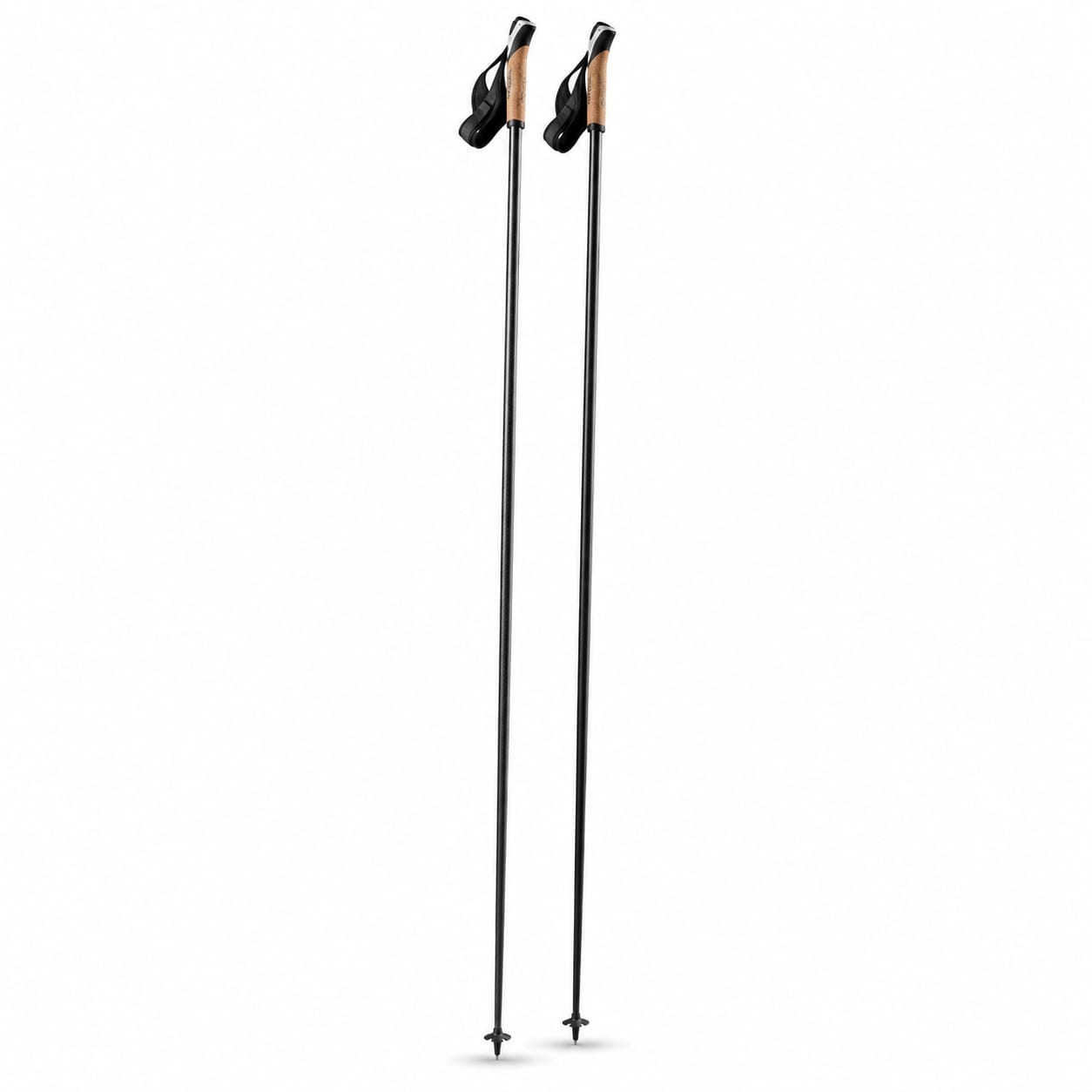
Skate poles are significantly longer than classic poles to provide a longer lever arm for the V-skate push. They typically reach between the skier's chin and upper lip.
Compared to other types
Much longer than classic cross-country poles (which reach the armpit) and alpine poles, due to the biomechanics of the skating push.
Why it matters: Proper length ensures maximum power transfer and efficient body positioning. Too short, and you lose push distance; too long, and you sit back and strain your shoulders.
What it means
The primary material used in the pole shaft, which determines weight, durability, stiffness, vibration dampening, and price.
Typical for this type
Carbon Fiber, Composite
In practice
High-modulus carbon fiber is the standard for skate poles, offering the highest stiffness-to-weight ratio.
Compared to other types
Unlike alpine poles where aluminum is common, carbon fiber is virtually mandatory for skate skiing due to the critical need for low swing weight and high stiffness.
Why it matters: A stiff, light shaft ensures that all the energy from your push goes directly into forward motion rather than bending the pole or lifting unnecessary weight.
Weight (Pair)
Weight Per Pair
What it means
The total weight of a pair of ski poles measured in grams. Lighter poles reduce arm fatigue and improve swing dynamics.
Typical for this type
180-300 g
Most common pick: 220 g
In practice
Skate poles are among the lightest ski poles available, with high-end race poles weighing under 200g per pair.
Compared to other types
Significantly lighter than alpine poles (400-600g) and even lighter than many classic Nordic poles due to the extreme focus on weight reduction.
Why it matters: Because skate skiing involves rapid, continuous pole plants, every gram saved reduces arm fatigue and allows for a faster swing rate.
What it means
The disc or cone near the pole tip that prevents the pole from sinking into soft snow. Basket size and shape affect performance in different snow conditions.
Typical for this type
Standard, Cone
In practice
Small, aerodynamic Nordic baskets designed for groomed trails.
Compared to other types
Smaller and more aerodynamic than backcountry or powder baskets, and often more streamlined than standard alpine baskets.
Why it matters: Large baskets add unnecessary weight and air resistance. Small baskets provide enough flotation for the firm groomed tracks where skate skiing occurs.
What it means
The design and shape of the pole grip which affects comfort, security, and technique. Grip ergonomics are crucial for all-day skiing comfort.
Typical for this type
Pistol Grip, Ergonomic
In practice
Ergonomic or pistol-style grips designed to fit the hand naturally during the angled push of skate skiing.
Compared to other types
More specialized than standard cylindrical alpine grips, focusing on the specific hand angles used in Nordic skating.
Why it matters: Reduces hand fatigue and allows for a relaxed grip during the recovery phase, while providing a secure platform for pushing.
Grip Material
Grip Material
What it means
The material covering the grip area, affecting comfort, insulation, grip security, and moisture management.
Typical for this type
Cork, Rubber
In practice
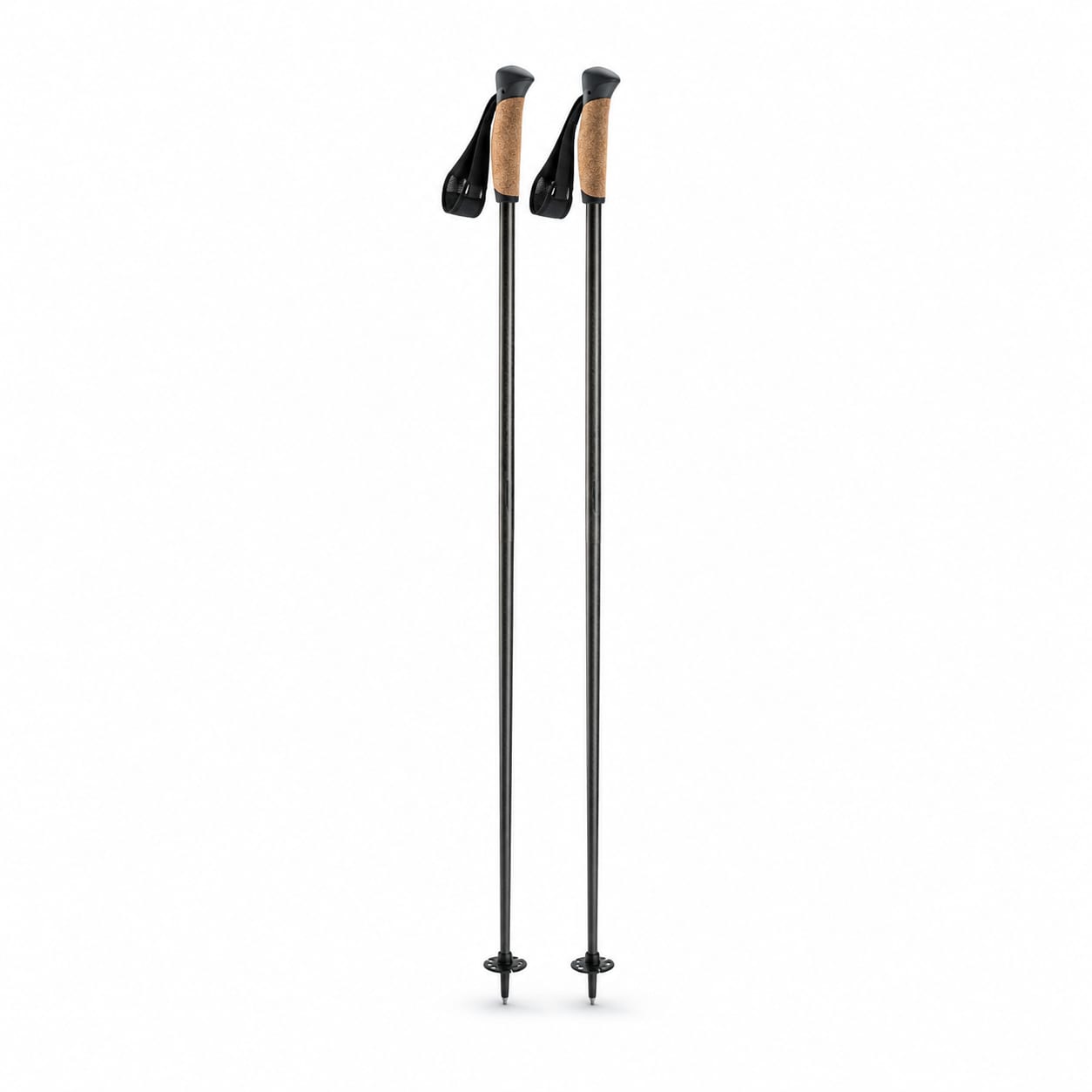
Cork or high-friction rubber that provides excellent grip even when wet with sweat or snow.
Compared to other types
Cork is much more common in Nordic skiing than in alpine skiing due to its moisture management properties during high-output activity.
Why it matters: Skate skiing generates significant body heat and sweat; cork wicks moisture and prevents the grip from becoming slippery.
What it means
The design of the strap or loop that secures the pole to the skier's wrist, affecting security, comfort, and release characteristics.
Typical for this type
Standard Strap, Trigger S
In practice
Wide, supportive straps (often with quick-click systems) that wrap around the hand and wrist to transfer pushing force.
Compared to other types
Nordic straps are typically wider and more supportive than alpine straps, and often feature proprietary click-in systems for seamless connection.
Why it matters: The strap does the majority of the work during the push, allowing the hand to remain relaxed. A supportive strap prevents hand cramping and maximizes power transfer.
Construction
Construction Type
What it means
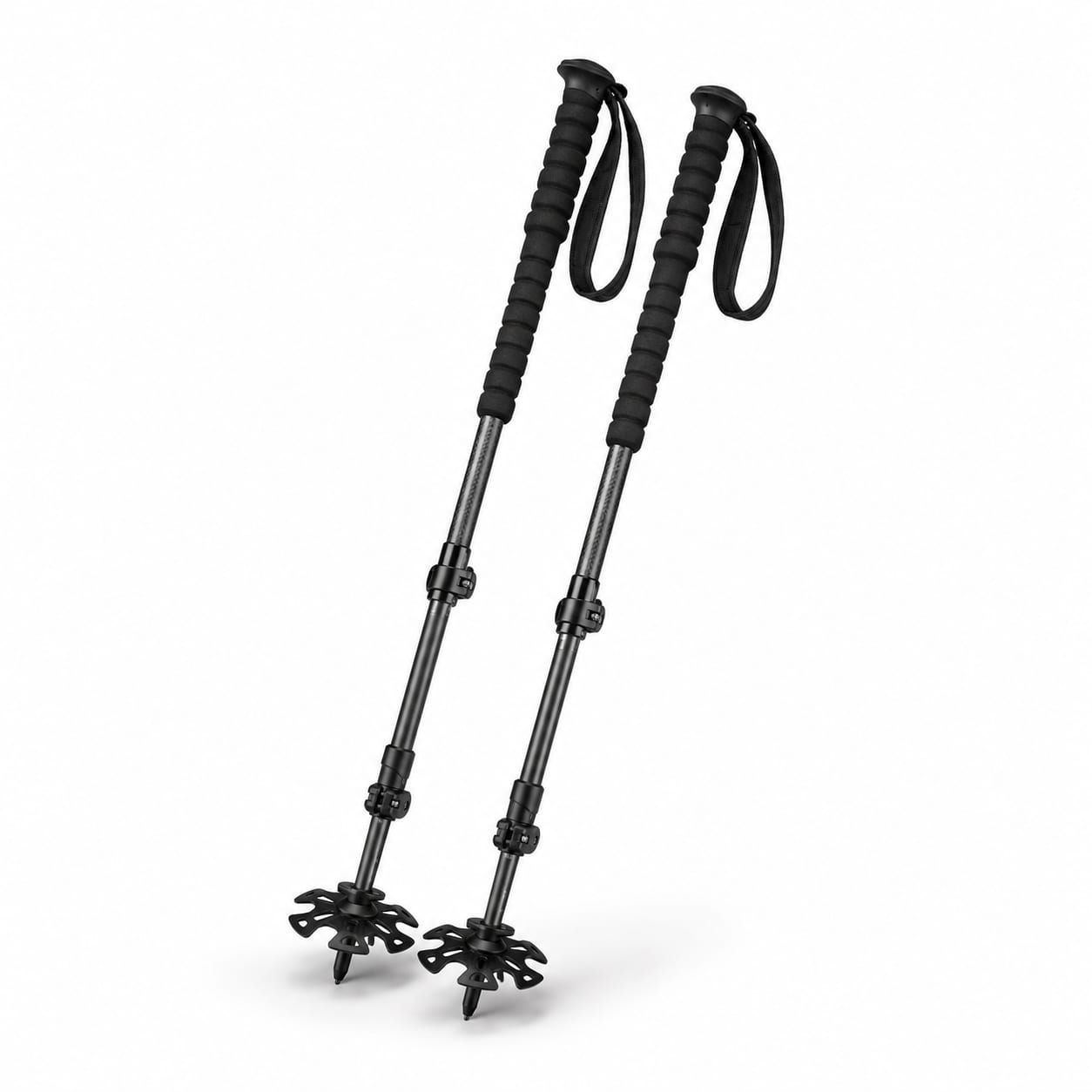
Whether the pole is a fixed single shaft, telescoping adjustable, or folding design. Affects packability, versatility, and weight.
Typical for this type
Fixed
In practice
Fixed-length, one-piece shafts are standard for cross-country skate poles.
Compared to other types
Unlike backcountry touring poles which are adjustable, skate poles are always fixed length to save weight and maximize stiffness.
Why it matters: Fixed construction provides the best stiffness, lowest weight, and most reliable power transfer—critical for skate skiing.
What it means
The material of the pole tip (point), which affects durability, grip on hard snow and ice, and longevity.
Typical for this type
Carbide
In practice
Carbide or tungsten carbide tips for maximum grip on hard, icy groomed trails.
Compared to other types
Carbide is standard here, just as in alpine, but the tips are often narrower and sharper to penetrate the firm Nordic track.
Why it matters: A slipped pole plant during a powerful skate push can cause a fall. Carbide tips bite firmly into hardpack and ice.
Shaft Diameter
Shaft Diameter
What it means
The diameter of the pole shaft, typically tapering from grip to tip. Affects swing weight, stiffness, and aerodynamics.
Typical for this type
12-16 mm
Most common pick: 14 mm
In practice
Very thin shafts, often aggressively tapered from 14-16mm at the grip down to 8-10mm at the tip.
Compared to other types
Noticeably thinner than alpine poles, prioritizing low weight over the durability needed for alpine skiing impacts.
Why it matters: A thinner shaft reduces swing weight and air resistance, making the pole feel practically weightless during rapid pole swings.
Vibration Dampening
Vibration Dampening
What it means
The pole's ability to absorb and reduce vibrations transmitted from the tip through the shaft to the grip. Affects comfort and feel on hard, choppy snow.
Typical for this type
High, Moderate
In practice
Carbon fiber naturally provides high vibration dampening, which is comfortable during high-tempo skiing.
Compared to other types
Higher dampening than stiff aluminum race poles, though the primary goal is stiffness rather than dampening.
Why it matters: Reduces arm fatigue and hand numbness on hard, icy trails where vibration is transmitted with every pole plant.
Discipline
Intended Discipline
What it means
The primary skiing discipline the pole is designed for, which influences all other design choices from length to basket to material.
Typical for this type
Nordic
In practice
Designed exclusively for Nordic cross-country skate skiing.
Compared to other types
Nordic skate poles are longer and stiffer than classic poles, and vastly different from alpine or freestyle poles.
Why it matters: The length, stiffness, and grip/strap system are entirely optimized for the V-skate technique and are unsuitable for other disciplines.
What it means
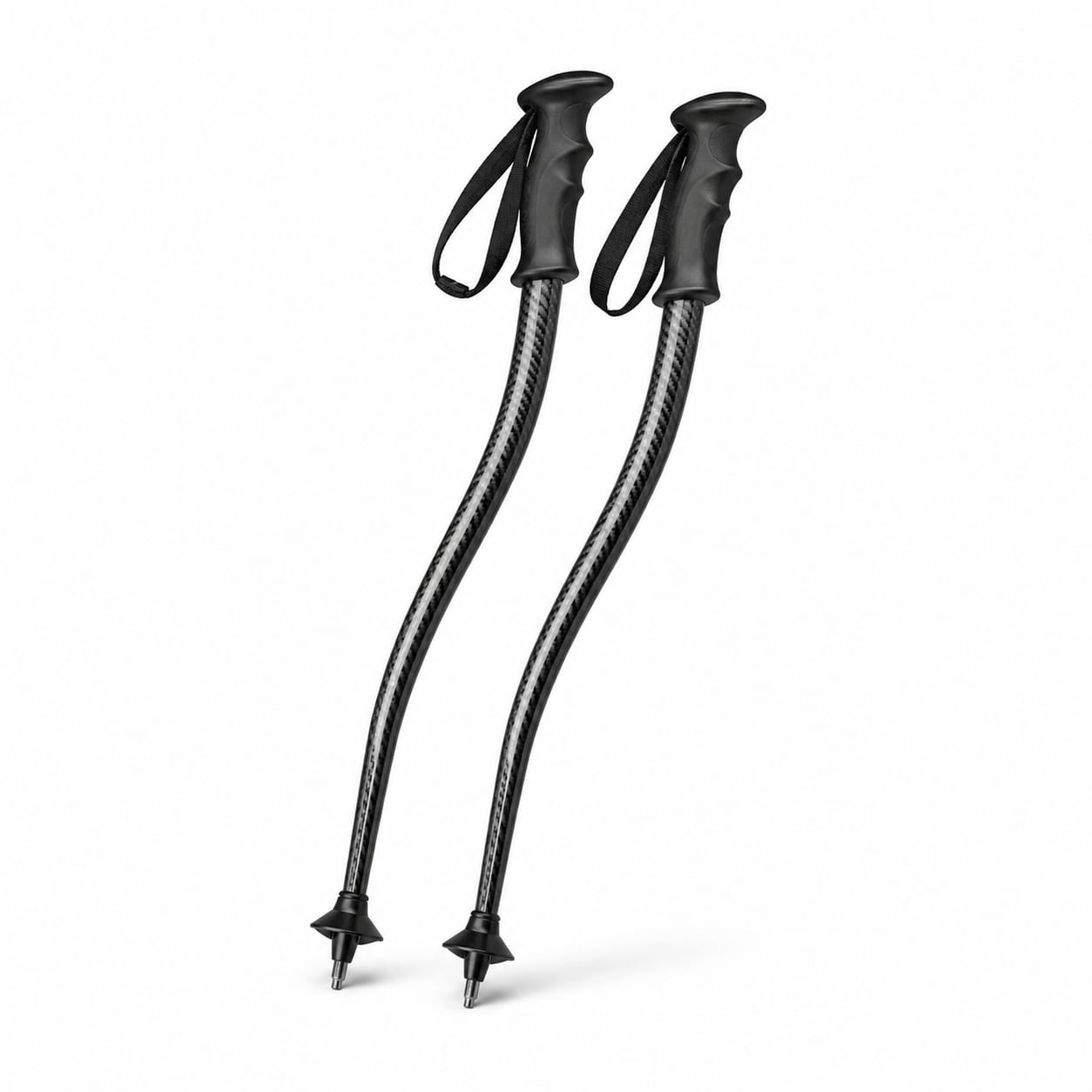
Whether the pole shaft is straight or features a bend/curve, typically designed for aerodynamic tuck positions in racing.
Typical for this type
False
In practice
Skate poles feature straight shafts.
Compared to other types
Unlike GS alpine poles which are curved for aerodynamic tucking, skate poles are straight to facilitate direct power transfer.
Why it matters: A straight shaft provides consistent flex and push dynamics for the side-to-side skating motion.
Adjustment Range
Adjustment Range
What it means
The range of lengths an adjustable pole can be set to, relevant only for telescopic and folding poles.
In practice
Skate poles are fixed length and do not adjust.
Compared to other types
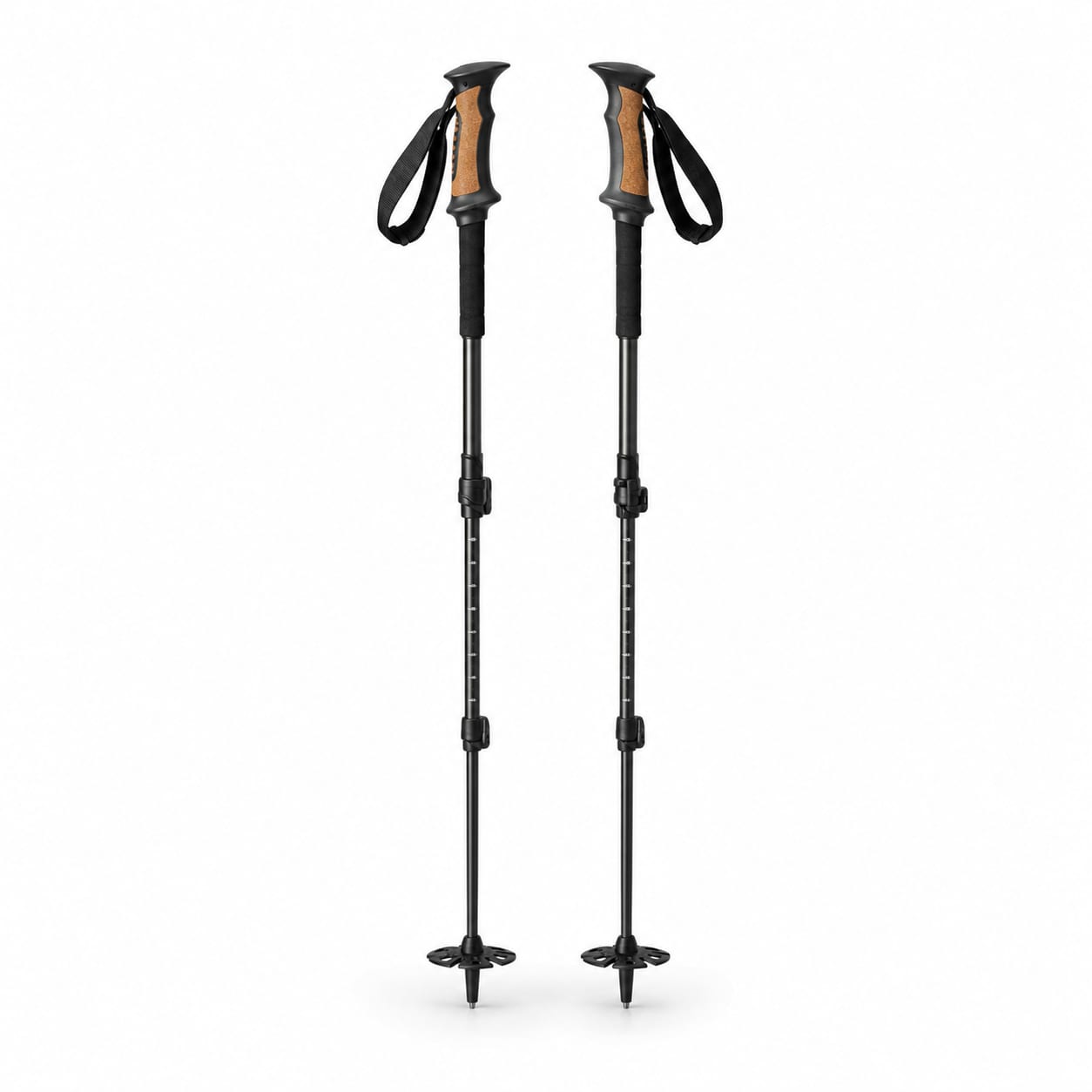
Unlike backcountry/touring poles which have a 20-40cm adjustment range, skate poles have zero.
Why it matters: No moving parts ensures maximum stiffness and minimum weight.
Lock Mechanism
Locking Mechanism
What it means
The type of mechanism used to secure adjustable poles at the desired length. Affects reliability, ease of use, and durability.
In practice
No locking mechanism is present on fixed-length skate poles.
Compared to other types
Backcountry poles use external clamps or internal expanders; skate poles have no such mechanism.
Why it matters: Eliminates the risk of the pole collapsing under the heavy pushing loads of skate skiing.
Packed Length
Packed Length
What it means
The length of the pole when collapsed or folded to its minimum size. Relevant for travel and backcountry applications where poles need to fit in or on a pack.
Typical for this type
155-175 cm
Most common pick: 165 cm
In practice
The packed length is the same as the pole length, as they do not collapse.
Compared to other types
Much longer packed length than folding or telescopic backcountry poles, making transport slightly more cumbersome.
Why it matters: Requires a long ski bag or specialized pole bag for travel.