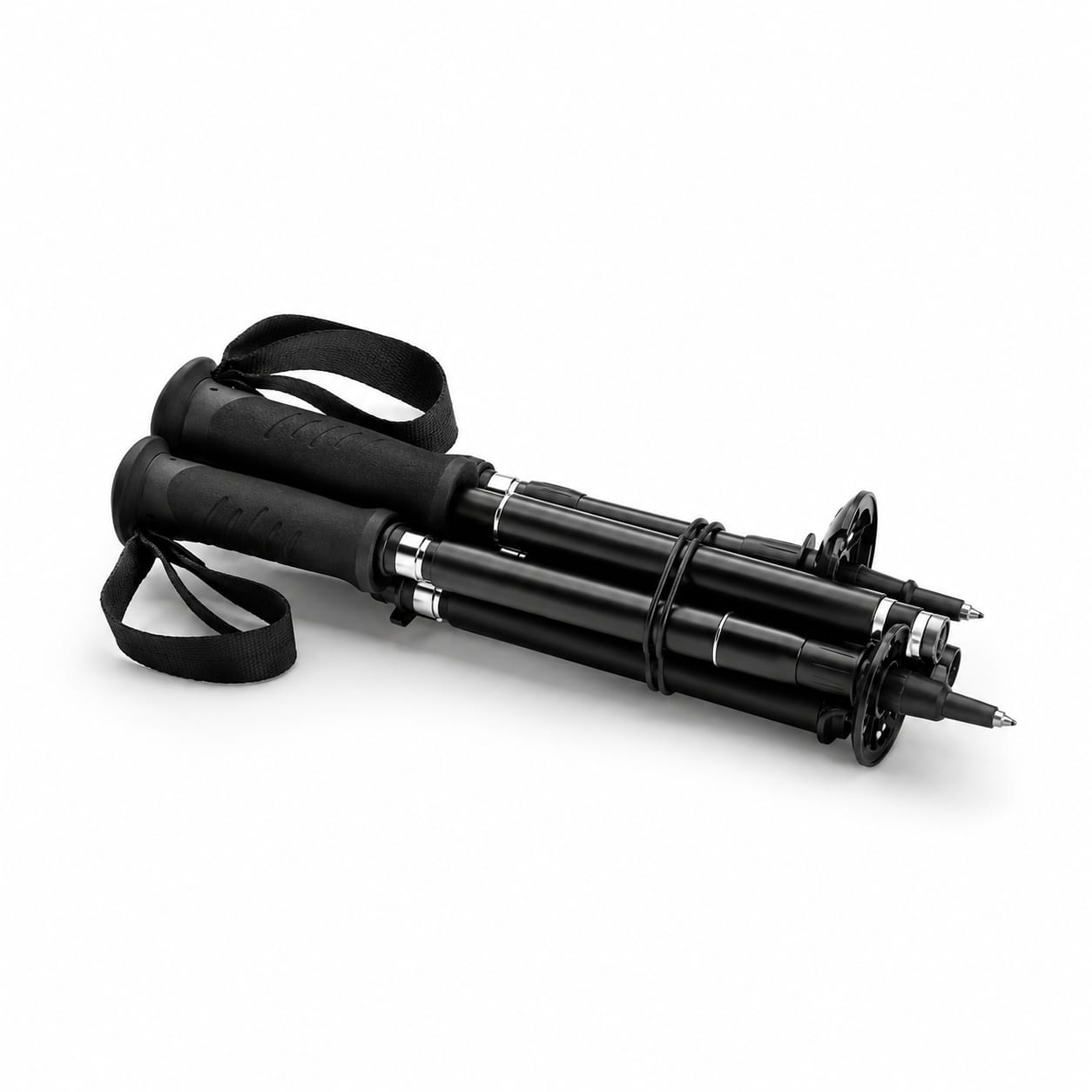
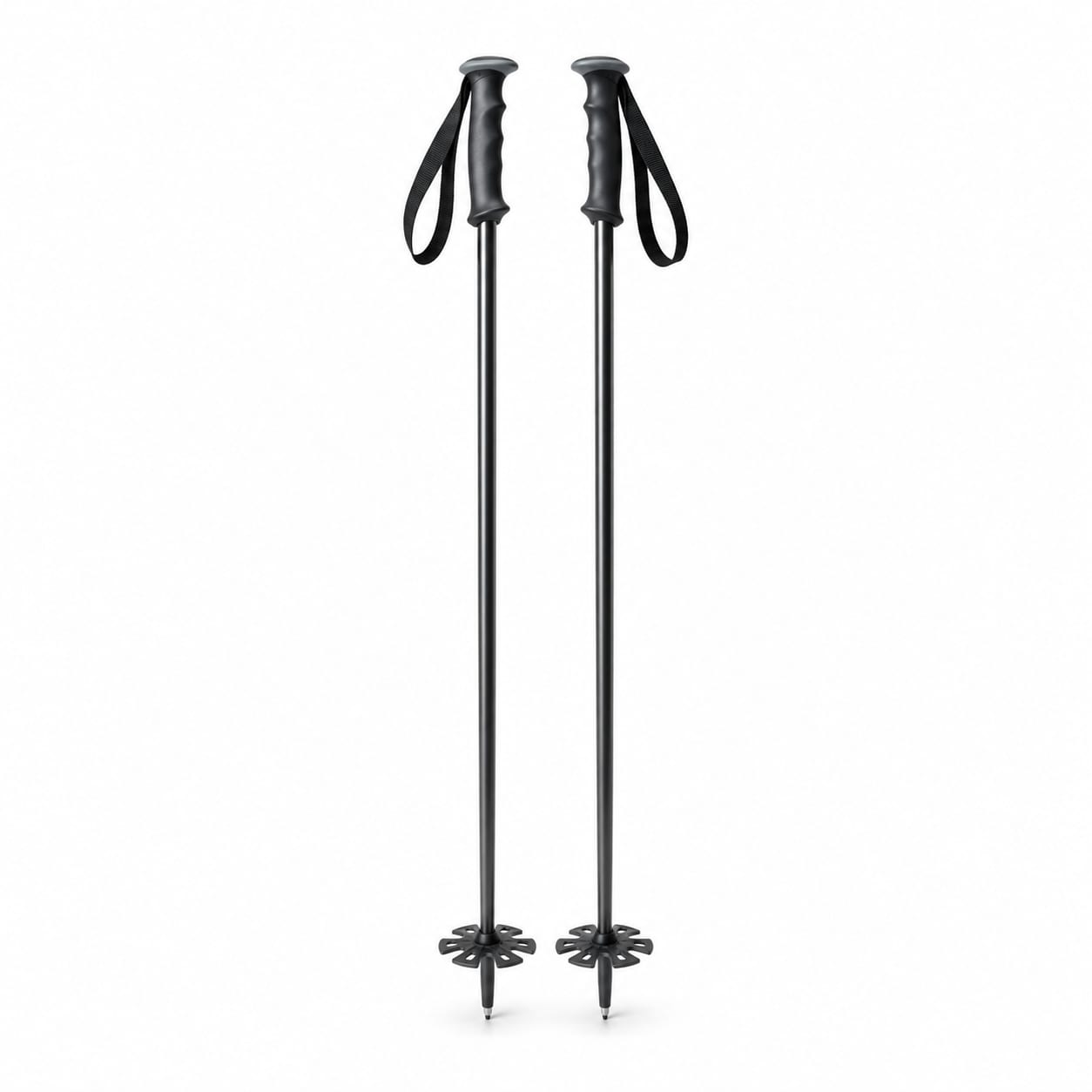
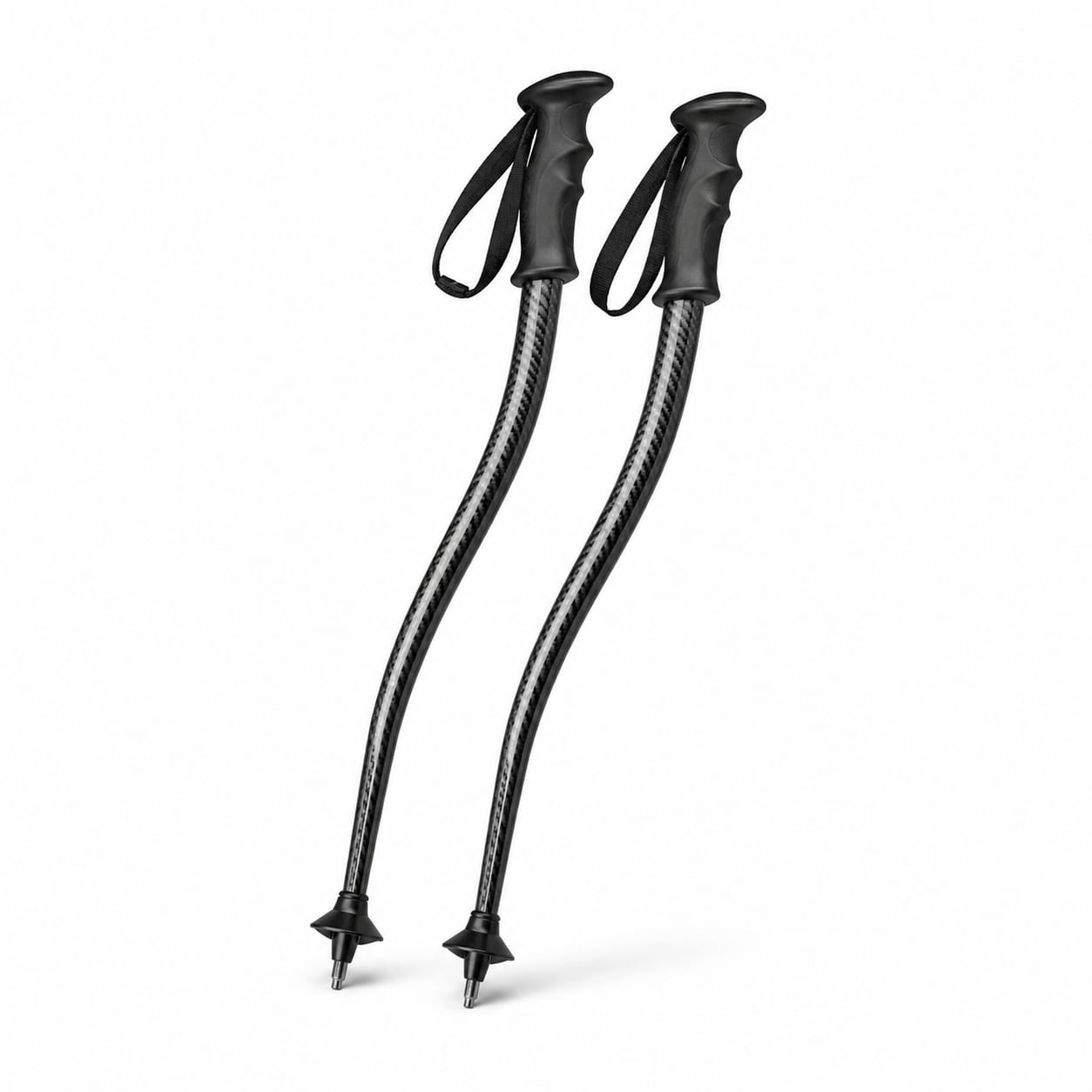
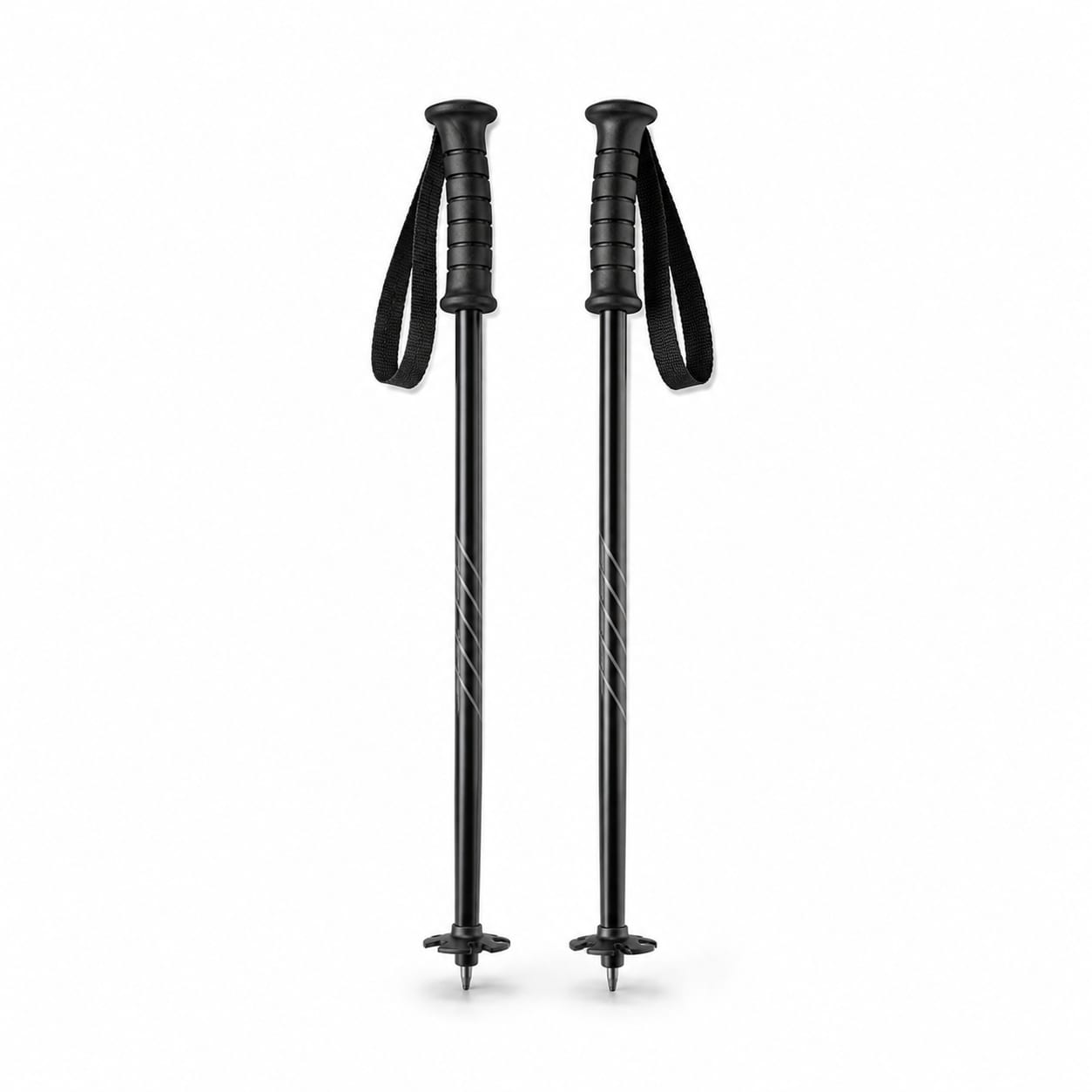
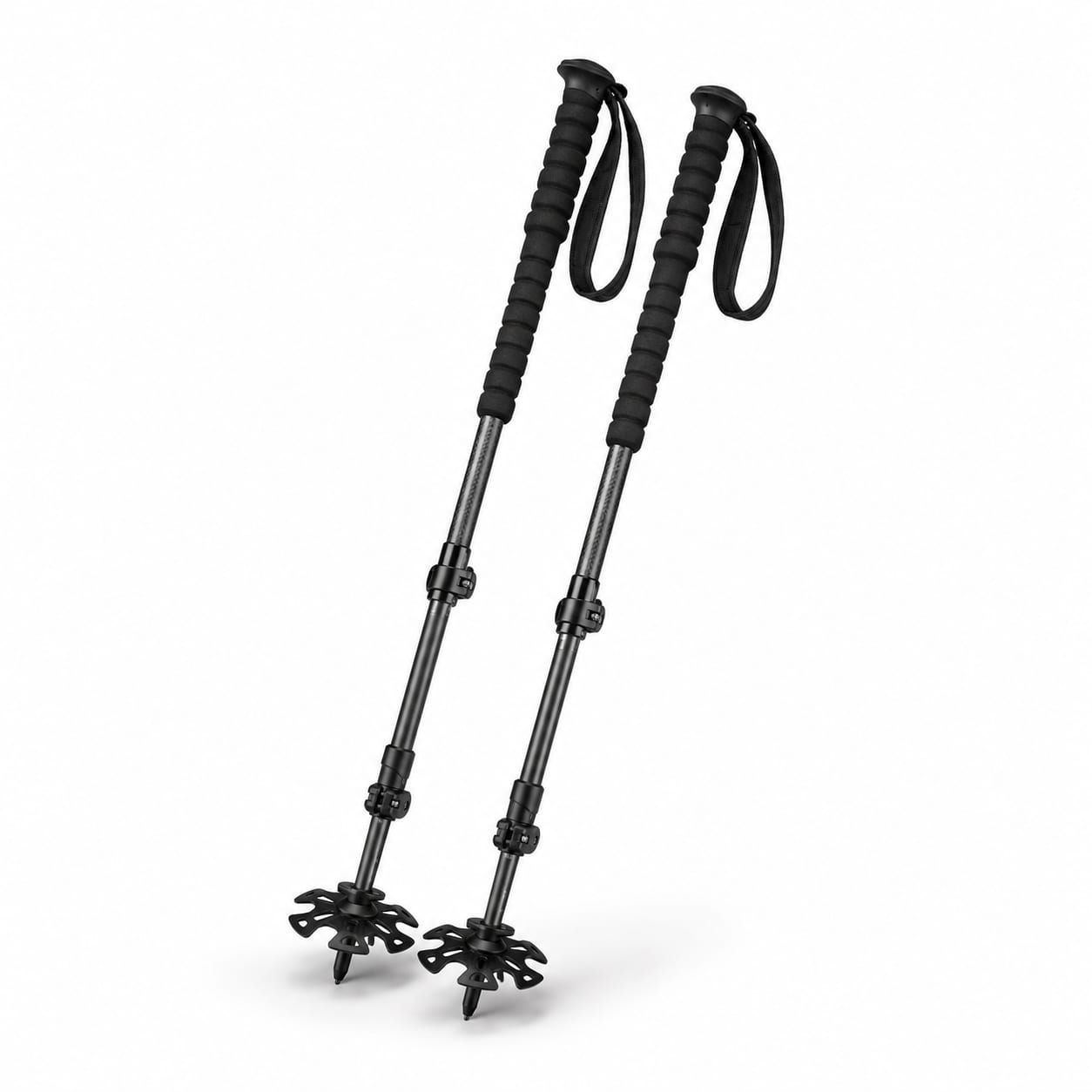
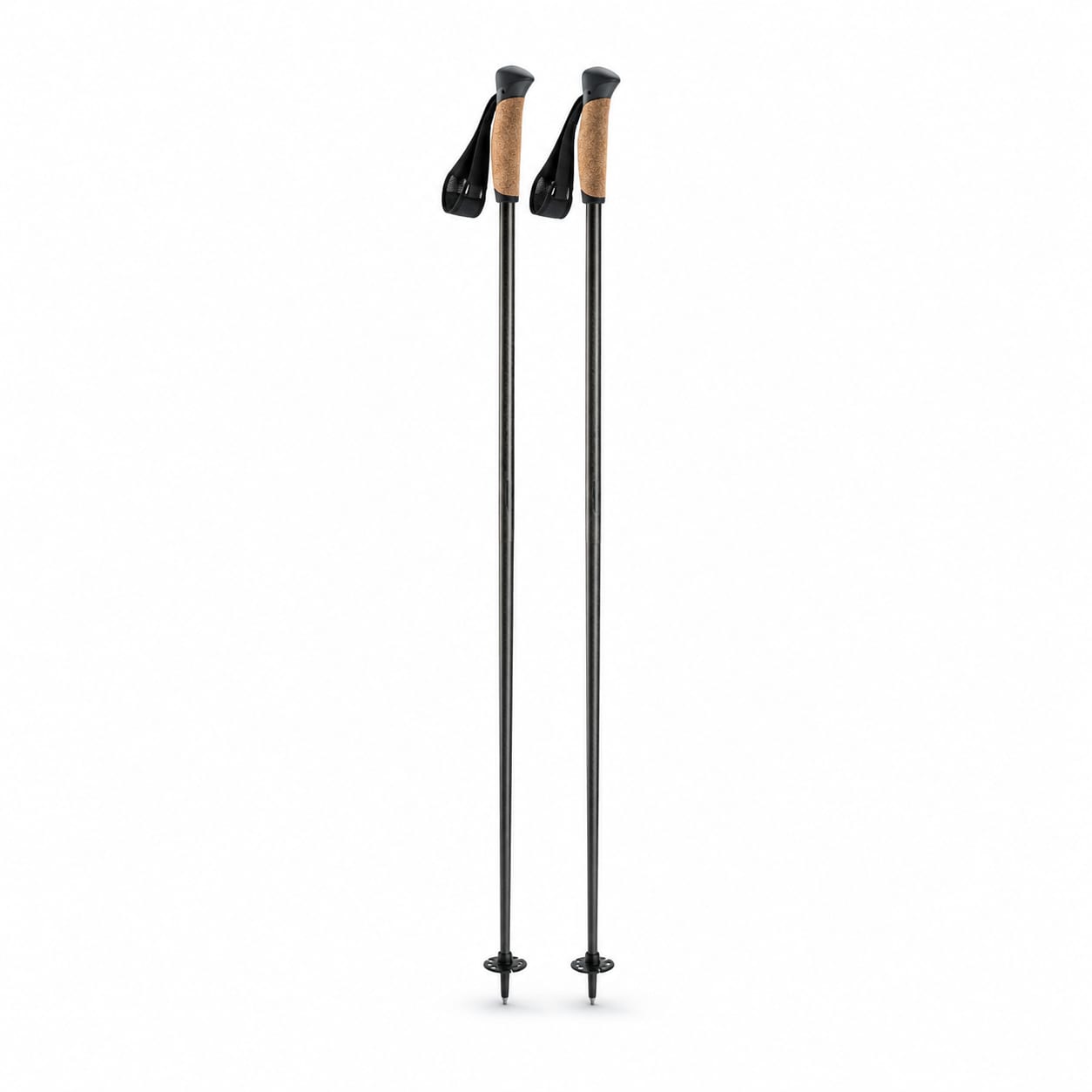
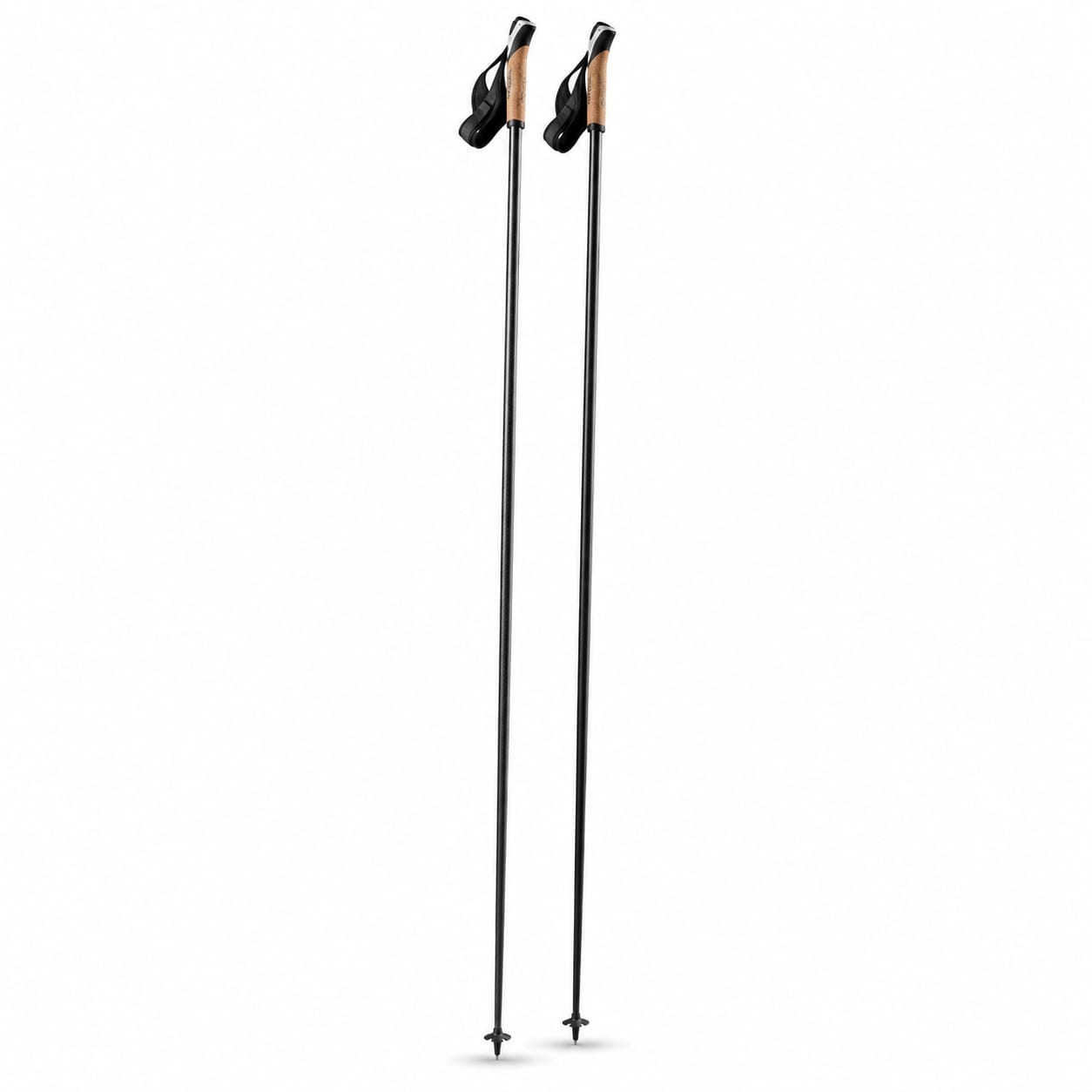
Folding ski poles, often referred to as collapsible or Z-poles, utilize an internal elastic cord to connect three or four shaft sections. When assembled, the sections snap together securely under the cord's tension, forming a rigid pole. When disassembled, the sections fold down parallel to each other, achieving a remarkably short packed length typically between 35 and 45 centimeters. This design is directly borrowed from trekking and mountaineering poles, adapted for the specific demands of skiing.
The primary advantage of folding ski poles is their unparalleled packability. In backcountry skiing and ski mountaineering, there are frequent transitions where poles must be stowed—such as climbing steep couloirs, navigating exposed ridges, or performing technical ice axe arrests. Traditional telescopic poles, even when fully collapsed, often protrude dangerously from a pack or interfere with arm movement. Folding poles solve this by shrinking down to the size of a water bottle, easily slipping inside almost any touring pack.
Performance-wise, folding poles have evolved significantly. Early models suffered from flex at the joint points and unreliable locking, but modern folding poles are remarkably rigid. The internal cord pulls the sections tightly together, and many models supplement this with external clamps or push-button locks for the upper adjustment section. Carbon fiber construction is prevalent, keeping weight low while maintaining the stiffness needed for aggressive downhill skiing in variable backcountry snow.
However, the folding mechanism does introduce some compromises. The internal cord can stretch over time or freeze in wet, cold conditions, making assembly difficult. Unlike telescopic poles that offer infinite adjustment within a range, folding poles typically only allow length adjustment on the uppermost section, limiting fine-tuning. They are also generally more expensive than both fixed and telescopic poles due to the complex engineering and materials required.
Despite these drawbacks, for the dedicated backcountry skier, the benefits far outweigh the downsides. The ability to completely stow your poles inside your pack transforms your experience on technical terrain. When paired with interchangeable baskets and freeride grips, modern folding poles are no longer just for the ascent—they are fully capable performance tools for the descent as well.