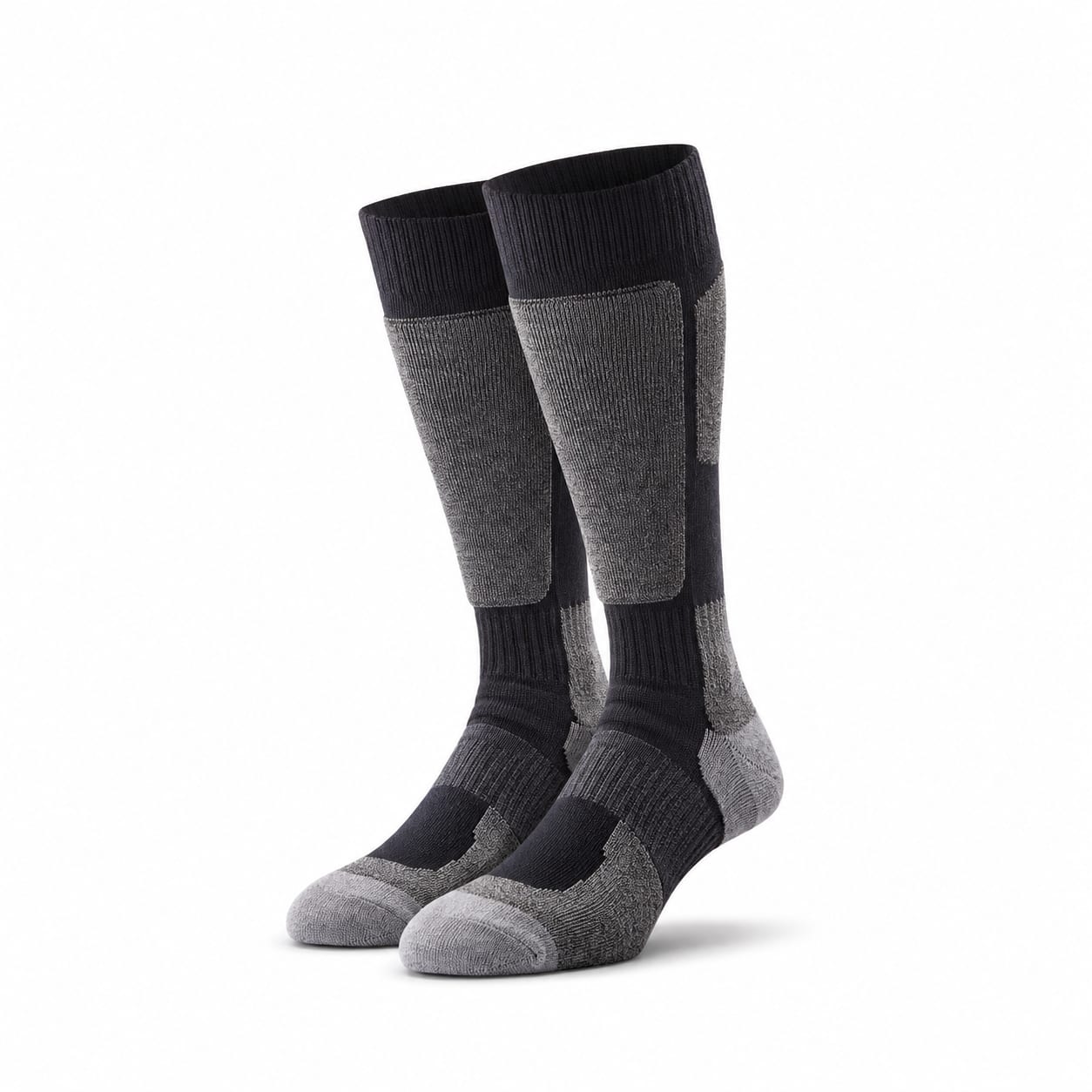
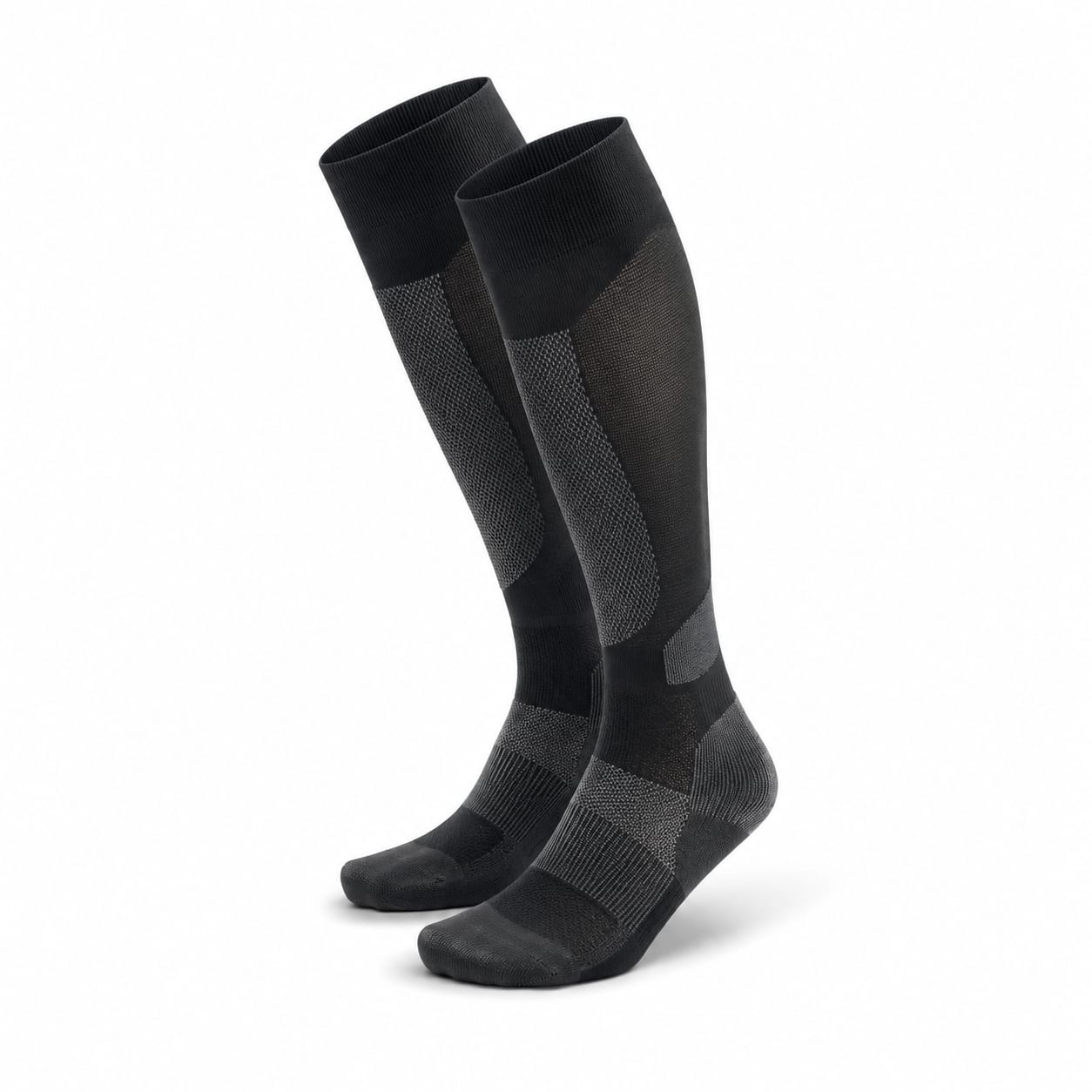
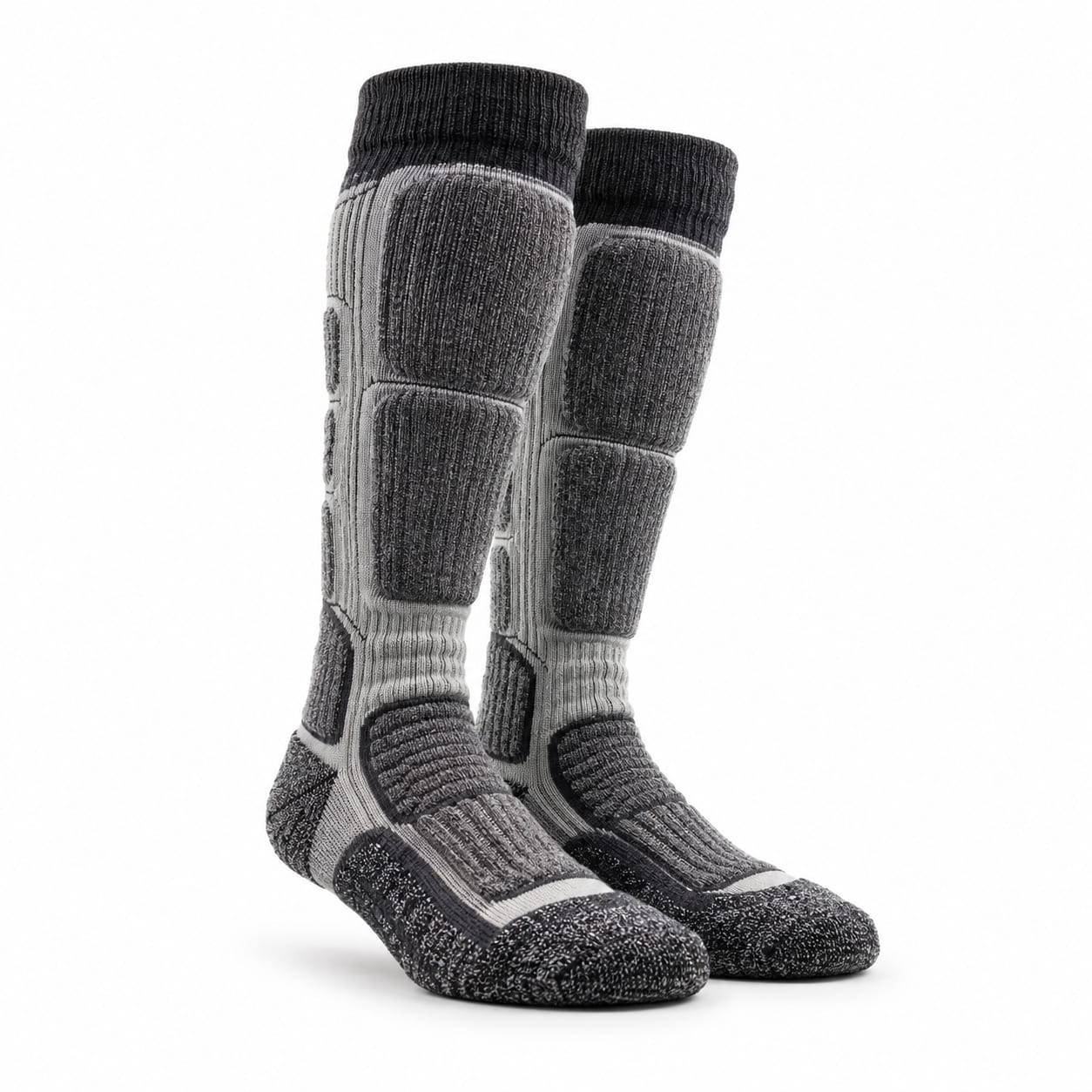
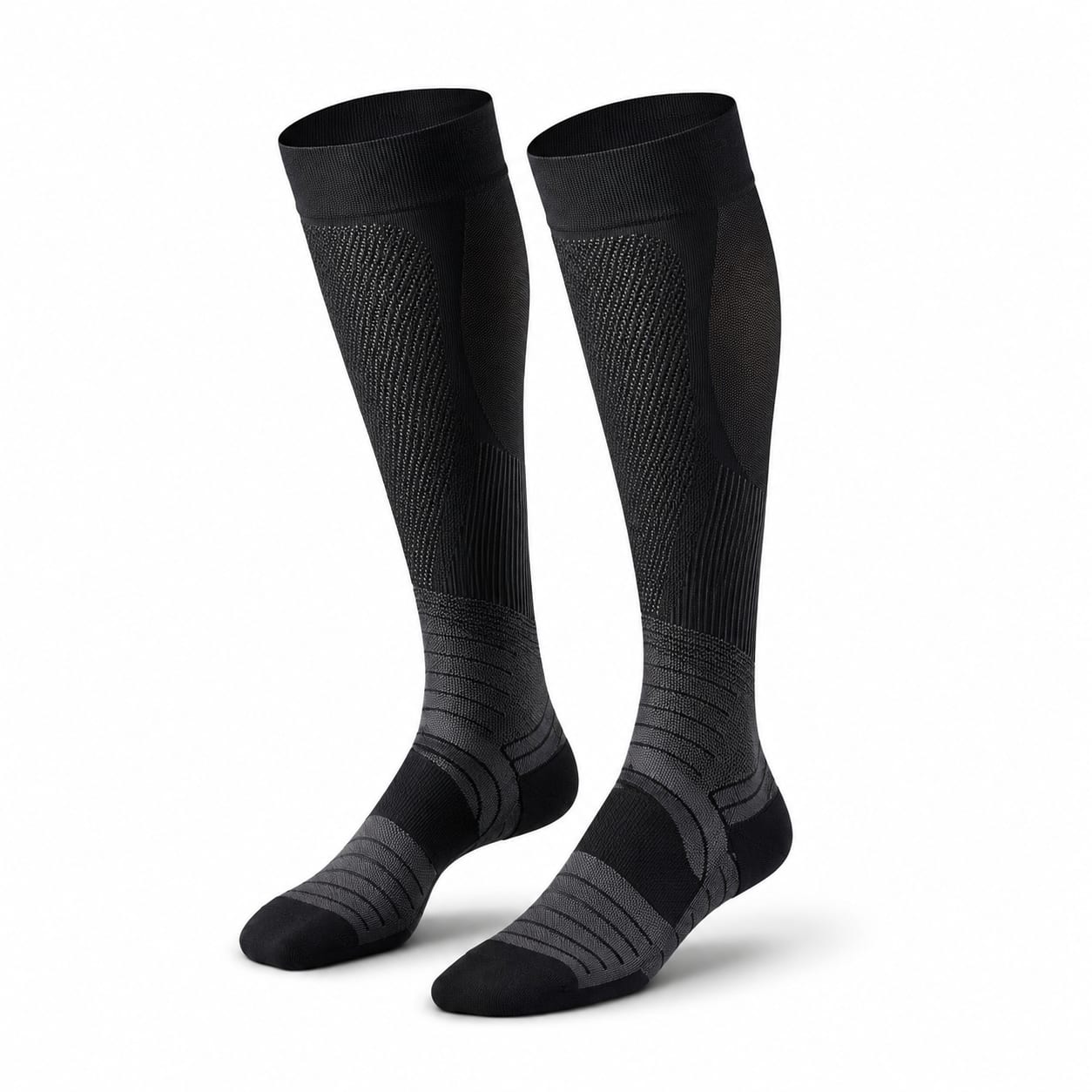
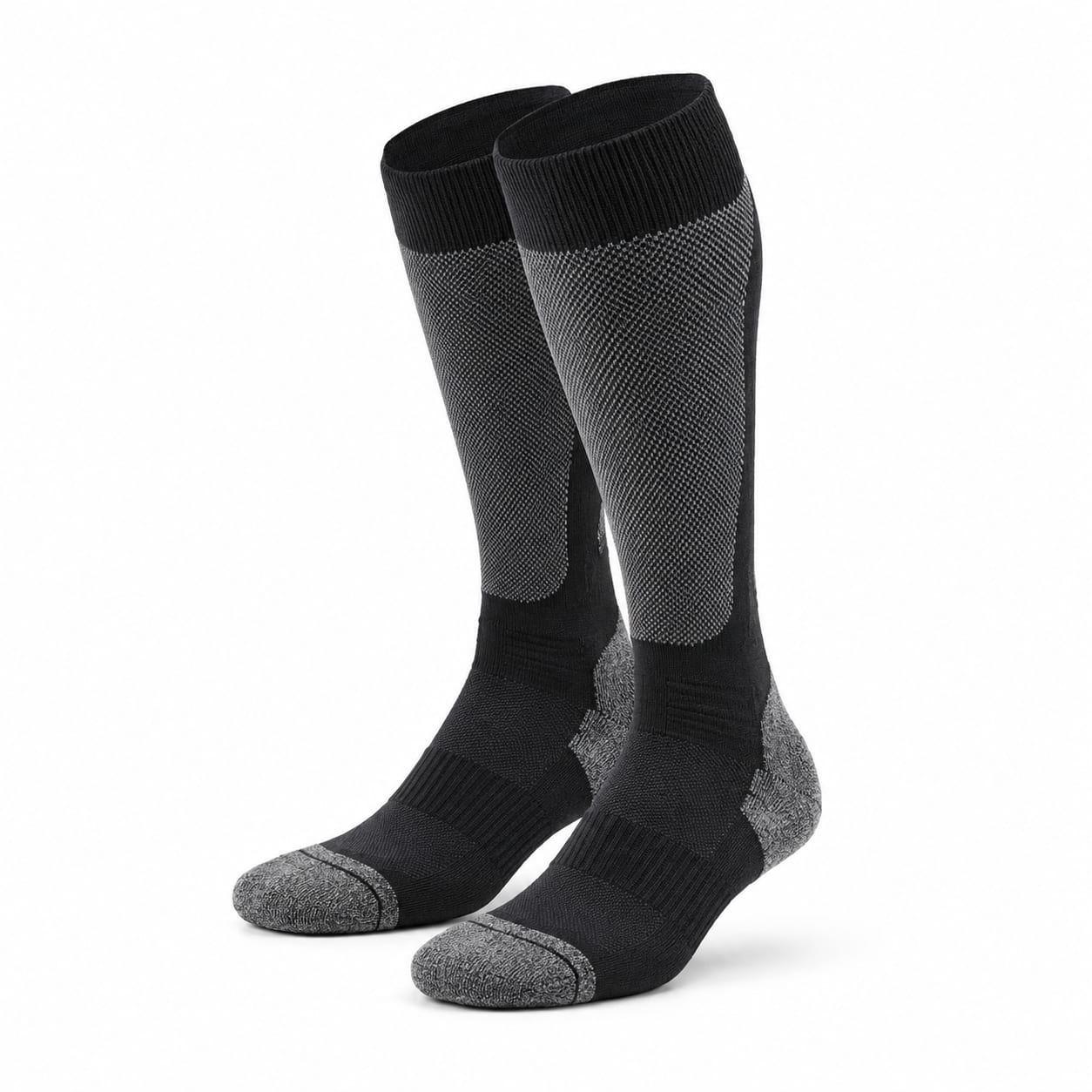
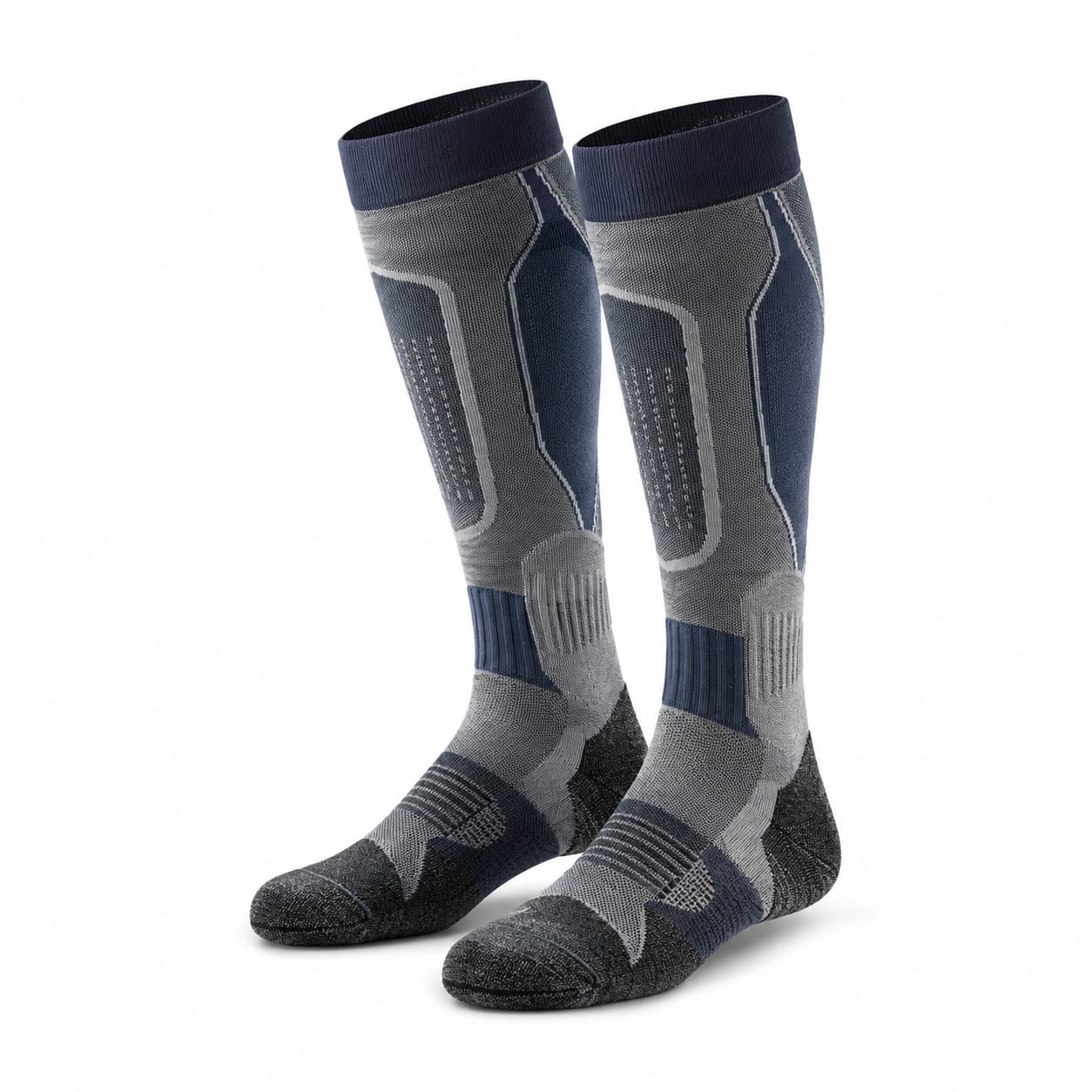
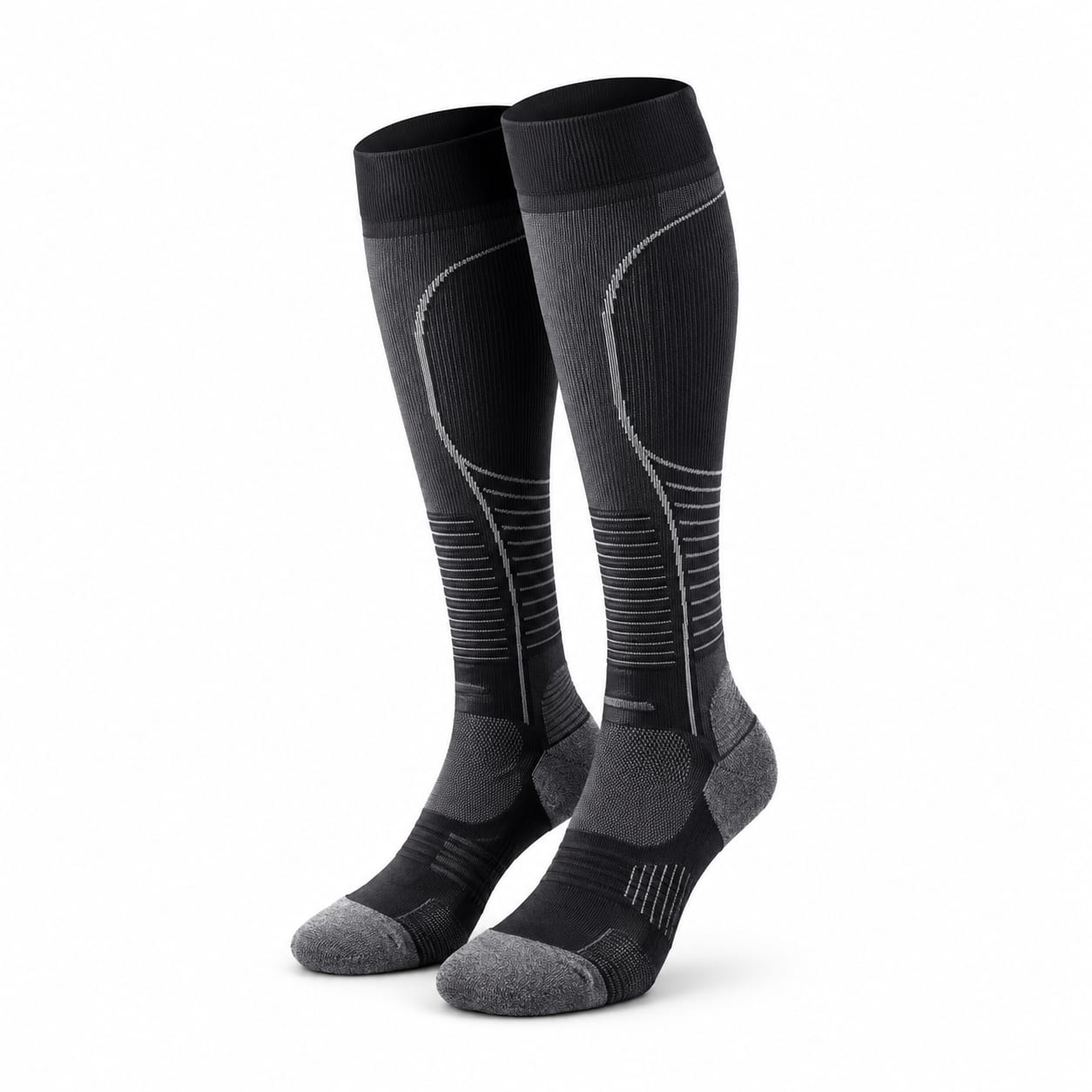
Medium cushion ski socks feature moderate padding distributed throughout the foot and leg, with concentrated cushioning in high-impact zones like the shin, heel, and toe. They represent the middle ground in ski sock construction — more protective and warmer than light or ultralight options, but less bulky and more responsive than heavy cushion models. This balance makes them the most commonly recommended and purchased ski sock type, suitable for the broadest range of skiers, conditions, and boot fits. The medium cushion construction typically uses terry-loop knitting in key areas to create air pockets that trap warmth while absorbing moisture, providing insulation that works with the body's natural thermal regulation rather than relying on sheer bulk.
Medium cushion ski socks occupy the sweet spot in the ski sock spectrum, and for good reason. They provide enough padding to protect against the constant pressure and impact of ski boots — particularly on the shin where the boot tongue presses during forward lean, and underfoot where repetitive shock travels through the sole. Yet they maintain enough sensitivity that you can still feel the snow beneath your skis and respond to terrain changes with precision. This balance is why most ski shops stock medium cushion as their default recommendation, and why most major sock manufacturers offer more models in this category than any other.
The construction of a quality medium cushion ski sock is more sophisticated than simply adding thickness. Strategic zoning places denser terry-loop cushioning where impact and pressure are greatest — the shin, heel, and underfoot — while using thinner, more breathable knitting on the top of the foot and along the calf where ventilation matters most. This targeted approach means the sock works with your boot's interior shape rather than fighting against it. The result is a sock that fills the micro-gaps between your foot and the boot liner for a more connected feel, rather than creating the loose, sloppy sensation that overly thick socks can produce.
For boot fit considerations, medium cushion socks pair best with average to slightly snug boot fits. If your boots are already very tight — common for race-oriented or high-performance fits — you may find that medium cushion creates pressure points or restricts circulation, and should consider light cushion instead. Conversely, if your boots are on the looser side, medium cushion will take up some volume but may not provide enough fill; in that case, heavy cushion or better yet a boot fitting session would be the right call. The key insight is that your sock should complement your boot fit, not compensate for a poor one.
Temperature-wise, medium cushion socks are genuinely all-season performers for most skiers. In typical winter conditions (15°F to 30°F / -9°C to -1°C), they provide ample warmth when paired with proper boots and without the overheating risk that heavy cushion socks create during active skiing. On colder days, layering warmth through boot heaters or insulated boots is more effective than switching to thicker socks, which can restrict the blood flow that actually keeps your feet warm. On warmer spring days, medium cushion may feel slightly warm during high-output skiing, but the moisture-wicking properties of quality merino blends manage this well for most skiers.
Durability is another area where medium cushion socks excel. The moderate thickness provides enough material that high-friction zones — particularly the heel and toe — resist wear longer than ultralight models. Combined with reinforced zones and a merino-synthetic blend, a quality medium cushion sock can easily last 60-80 ski days with proper care. This makes them not only the most versatile choice but also one of the best values in ski socks, as their lifespan typically exceeds that of thinner performance models while costing the same or only slightly more.