Ski Type / Category
Ski Type
What it means
The primary intended use and design category of the ski, which dictates its overall geometry, flex, and feature set.
Typical for this type
Frontside
In practice
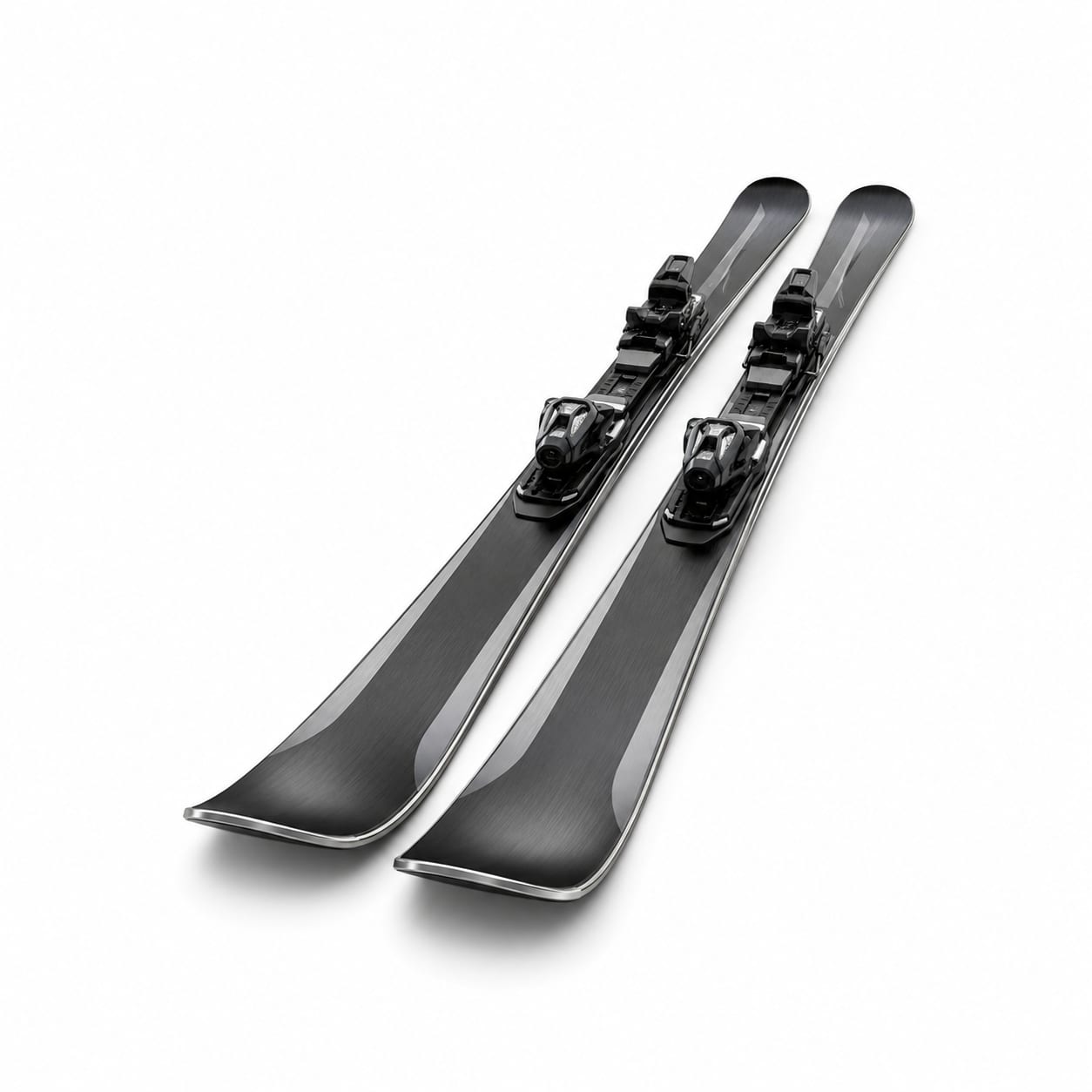
Frontside/carving is the defining ski type for this subcategory. These skis are specifically categorized by their groomed-run optimization.
Compared to other types
Unlike all-mountain skis that compromise for versatility, frontside skis commit fully to groomed-run performance. Compared to racing skis, they are slightly more forgiving and recreational while sharing the same design priorities.
Why it matters: The frontside designation tells you this ski is built from the ground up for on-piste performance with narrow dimensions, aggressive sidecut, and camber-dominant profiles.
What it means
The total length of the ski from tip to tail, measured in centimeters. Affects stability, turn radius, and maneuverability.
Typical for this type
150–175 cm
Most common pick: 160 cm
In practice
Frontside skis are typically sized between the chin and nose for most riders. The deep sidecut means shorter lengths still deliver stable, complete turns. Advanced carvers may size up for more edge contact and stability at speed.
Compared to other types
Frontside skis tend to run shorter than freeride and all-mountain wide skis, which need more length for flotation. They are similar in length to racing skis but slightly shorter since recreational carvers don't need the same running length at lower speeds.
Why it matters: Proper length ensures the ski's sidecut can fully express itself in a carved turn. Too long and the ski becomes sluggish to initiate; too short and you lose edge contact and stability at the end of the turn.
What it means
The width of the ski at its narrowest point (underfoot), measured in millimeters. The single most important geometry measurement that determines terrain suitability.
Typical for this type
63–75 mm
Most common pick: 70 mm
In practice
The narrow waist is the hallmark of a frontside ski. Most fall between 65–72mm, with some recreational models reaching 75mm. Sub-70mm waists deliver the quickest edge-to-edge transition and most direct power transfer to the edge.
Compared to other types
Frontside skis are the narrowest category outside of dedicated racing skis. All-mountain skis typically range 85–95mm, and freeride skis exceed 100mm. Every millimeter wider than 75mm compromises hardpack edge hold for soft-snow flotation.
Why it matters: Waist width is the single biggest factor in on-piste performance. Narrower waists mean less distance between your foot and the edge, resulting in faster edge engagement, better edge hold, and less effort to maintain a carved turn.
What it means
The width of the ski at its widest point near the tip, measured in millimeters. Works with waist width to determine the ski's sidecut and floatation characteristics.
Typical for this type
110–125 mm
Most common pick: 118 mm
In practice
Frontside ski tips are wide enough to create a deep sidecut with the narrow waist but not so wide as to make turn initiation feel sluggish. The tip width works in concert with the waist and tail to determine the ski's turn radius.
Compared to other types
Frontside ski tips are narrower than all-mountain (120–135mm) and freeride skis (130–155mm), reflecting their firm-snow focus. The tip-to-waist differential is often more dramatic in frontside skis, creating their signature deep sidecut.
Why it matters: A wider tip relative to the waist creates a deeper sidecut and shorter turn radius, making the ski quicker edge-to-edge. However, excessively wide tips can catch and feel hooky in variable conditions.
What it means
The width of the ski at its widest point near the tail, measured in millimeters. Affects turn completion, stability, and how the ski releases from turns.
Typical for this type
95–115 mm
Most common pick: 104 mm
In practice
Frontside ski tails are relatively wide to provide a powerful platform for finishing turns. The tail width is typically closer to the tip width than in freeride skis, creating a more symmetric sidecut that supports complete carved arcs.
Compared to other types
Frontside tails are wider relative to their tips compared to freeride skis, which often have pin tails for slashy feel. This relatively wide tail is what gives frontside skis their powerful turn completion and prevents the tail from washing out under load.
Why it matters: A wider tail provides more support and power at the end of a turn, allowing the skier to accelerate out of the carve. This is essential for the rhythmic, linked carved turns that define frontside skiing.
What it means
The theoretical radius of the smallest turn the ski can make when tipped on edge, measured in meters. Derived from the sidecut dimensions. Determines the natural turn shape of the ski.
Typical for this type
10–17 m
Most common pick: 14 m
In practice
Frontside skis feature short to medium turn radii, typically between 11–16m. This produces the quick, snappy turns that make groomer skiing so dynamic. Some models offer multi-radius sidecuts for versatility in turn shape.
Compared to other types
Frontside skis have significantly shorter turn radii than all-mountain (15–22m) and freeride skis (18–30m+). Only racing slalom skis go shorter (under 12m). This short radius is what makes frontside skis feel so responsive and playful on groomers.
Why it matters: Turn radius determines the natural arc of your carved turns. Shorter radii (under 14m) produce quick, slalom-like turns that are exhilarating and easy to link. Medium radii (14–17m) offer more versatility for varied turn shapes and higher speeds.
Rocker/Camber Profile
Rocker/Camber Profile
What it means
The longitudinal shape of the ski when unweighted—how it curves from tip to tail. The most influential design element for how a ski feels and performs.
Typical for this type
Full Camber Or Tip Rocker With Substantial Camber Zone
In practice
Full camber is the traditional and most common profile for frontside skis, providing maximum edge hold, energy return, and carving precision. Some modern frontside skis add subtle tip rocker for easier turn initiation while maintaining a strong camber zone underfoot.
Compared to other types
Frontside skis are the last bastion of full camber. All-mountain skis have largely moved to tip rocker, and freeride skis use tip and tail rocker. Full camber gives frontside skis their unmatched edge hold but makes them less forgiving and less capable in soft snow.
Why it matters: Camber stores energy when the ski is flexed in a turn and releases it as acceleration. Full camber provides the most consistent edge contact along the ski's length, which is essential for holding an edge on firm snow at high speeds.
Flex / Stiffness
Flex Rating
What it means
How stiff or soft the ski is along its length, typically rated on a scale. Affects edge hold, stability, energy transfer, and forgiveness.
Typical for this type
5–9
Most common pick: 7
In practice
Frontside skis range from medium (5–6) to very stiff (8–9). Most recreational carving models fall in the 6–7 range, offering a balance of responsiveness and forgiveness. Expert-oriented models reach 8–9 for maximum edge hold and power transmission at speed.
Compared to other types
Frontside skis are generally stiffer than all-mountain and freestyle skis of similar target ability levels. This stiffness is necessary for the edge hold that defines the category. Only racing skis are consistently stiffer.
Why it matters: Stiffness determines how much force is required to flex the ski into a carved turn and how much energy it returns. Stiffer skis hold better at speed but require more strength and technique. Softer skis are more forgiving but may wash out under aggressive carving loads.
Core Material
Core Material
What it means
The primary material used in the ski's core, which largely determines its weight, flex characteristics, dampening, and feel.
Typical for this type
Wood Or Wood Composite
In practice
Most frontside skis use wood cores (poplar, ash, beech, or multi-wood laminates) reinforced with composite materials like titanal, fiberglass, or carbon. The wood provides liveliness and consistent flex; the composites add torsional rigidity and dampening.
Compared to other types
Frontside skis almost exclusively use wood or wood-composite cores, whereas foam cores appear in entry-level all-mountain models. Touring skis may use lightweight hybrids, but frontside skis prioritize performance over weight savings.
Why it matters: The core material combination determines the ski's feel, energy return, and durability. Wood cores with composite reinforcement deliver the precise, powerful feel that frontside skiers demand. Foam cores are rare in this category and generally indicate a budget model.
Construction Type
Construction Type
What it means
The method used to build the ski's structure, affecting durability, edge hold, weight, and price.
Typical for this type
Sandwich Preferred; Hybrid Acceptable
In practice
Sandwich/sidewall construction is the standard for frontside skis because it provides the best edge hold and torsional rigidity. The vertical sidewalls create a direct, rigid connection between the edge and the core, which is essential for firm-snow performance.
Compared to other types
Frontside skis almost universally use sandwich construction, while cap construction is more common in entry-level all-mountain and freestyle skis. The performance difference is most noticeable on firm snow, where sandwich construction's edge hold advantage is undeniable.
Why it matters: On hardpack and ice, edge hold is everything. Sandwich construction maximizes the force transmitted to the edge by preventing the ski from twisting under load. Cap construction allows more torsional flex, which can cause the edge to release prematurely in a carved turn.
Weight (Per Pair)
Weight Per Pair
What it means
The total weight of both skis, measured in grams. Affects swing weight, touring efficiency, and overall maneuverability.
Typical for this type
3200–4600 g
Most common pick: 3800 g
In practice
Frontside skis are moderate to heavy, reflecting their substantial construction with metal layers and sidewalls. Most fall between 3400–4400g per pair. The weight contributes to stability and dampening at speed, which is desirable for high-speed carving.
Compared to other types
Frontside skis are heavier than touring skis (under 3000g) and similar to all-mountain skis. They are lighter than many freeride skis despite their metal construction because they are narrower. The weight is a feature, not a bug, for resort carving.
Why it matters: Weight in frontside skis is largely a byproduct of the construction features (metal layers, sidewalls) that provide performance. Lighter frontside skis exist but may sacrifice edge hold and stability. Heavier models tend to be smoother and more planted at speed.
Recommended Skill Level
Skill Level
What it means
The rider ability level the ski is designed for, which determines flex, forgiveness, and performance characteristics.
Typical for this type
Intermediate to Expert
Most common pick: Advanced
In practice
Frontside carving skis are best suited for intermediate through expert skiers. Intermediates benefit from the ski's natural carving tendency, while advanced and expert skiers unlock the full performance potential with aggressive technique. True beginners may find them too demanding.
Compared to other types
Frontside skis are more demanding than entry-level all-mountain models but more accessible than racing skis. The skill floor is higher than freestyle skis but lower than FIS-compliant race skis. Many frontside models bridge intermediate-advanced ability levels.
Why it matters: The stiff flex and responsive nature of frontside skis require reasonable technique to control. An intermediate skier can enjoy the carving assistance these skis provide, but a beginner may struggle with the responsiveness and lack of forgiveness at slow speeds.
What it means
The primary terrain and snow conditions the ski is optimized for. Most skis handle multiple terrain types but excel in specific conditions.
Typical for this type
Groomed Primarily; Mixed As Secondary
In practice
Frontside skis are optimized for groomed/piste terrain. They can handle mixed conditions in a pinch but are not designed for powder, backcountry, or park. Some frontside skis with slight tip rocker handle cut-up groomers and light mixed conditions adequately.
Compared to other types
Frontside skis are the opposite of freeride skis in terrain suitability. Where freeride skis shine off-piste and struggle on groomers, frontside skis excel on groomers and suffer off-piste. All-mountain skis split the difference.
Why it matters: Using a frontside ski in its intended terrain delivers the best experience. On groomers, these skis are magical. In powder or heavy crud, they are a liability. Matching terrain to ski design is the most important factor in satisfaction.
What it means
Whether the ski has an upward-curving tail matching the tip, allowing the skier to land and ski backwards (switch).
Typical for this type
False (Flat/Square Tail Preferred)
In practice
Frontside skis almost universally feature flat or slightly raised tails rather than twin tips. The flat tail provides maximum edge contact through the end of a turn, allowing the skier to finish carves with power and precision rather than the tail releasing early.
Compared to other types
Unlike freestyle and many all-mountain skis that feature twin tips, frontside skis prioritize tail edge hold over switch capability. This is a fundamental design choice that reflects the category's focus on carved turn performance.
Why it matters: A flat tail is essential for complete carved turns. The tail edge holds firm through the finish of the turn, providing a stable platform to push against and transition into the next turn. Twin tips would compromise this by allowing the tail to release prematurely.
Dampening / Vibration Control
Dampening
What it means
The ski's ability to absorb vibrations and chatter at speed, typically achieved through metal layers, rubber, or specialized technologies. Affects smoothness and edge contact.
Typical for this type
Moderate to High
In practice
Frontside skis typically feature moderate to high dampening, often achieved through titanal/metal layers in the construction. This smooths out vibrations at speed and keeps the edge in consistent contact with the snow surface, which is critical for edge hold on firm snow.
Compared to other types
Frontside skis generally have higher dampening than freestyle and touring skis, similar to freeride skis, and approaching racing ski levels. This reflects their speed-oriented design. Skiers who prefer a livelier, more playful feel may prefer moderate dampening.
Why it matters: At the speeds frontside skis are designed for, vibration and chatter can cause the edge to lose contact with the snow, resulting in a loss of grip. High dampening keeps the ski smooth and planted, allowing the skier to maintain confidence in their edge hold.
Metal Reinforcement
Metal Layers
What it means
Whether and how the ski incorporates metal (typically titanal/aluminum) layers in its construction for added torsional rigidity, edge hold, and dampening.
Typical for this type
Single Or Double
In practice
Most performance frontside skis incorporate at least one titanal/metal layer, and many high-end models use double metal. Single metal offers a great balance of edge hold, dampening, and weight. Double metal provides maximum performance for aggressive experts.
Compared to other types
Frontside skis are more likely to include metal layers than all-mountain, freestyle, or touring skis. Double-metal construction is more common here than in any category except racing. This reflects the priority placed on edge hold and stability at speed.
Why it matters: Metal layers are the primary contributor to the torsional rigidity and dampening that make frontside skis grip so well on firm snow. Without metal, a frontside ski would lack the edge hold that defines the category. The number of metal layers is a key differentiator within the category.
Binding Compatibility
Binding Compatibility
What it means
The type of binding mounting system the ski supports, which determines which bindings can be installed.
Typical for this type
Flat Alpine Or System Alpine
In practice
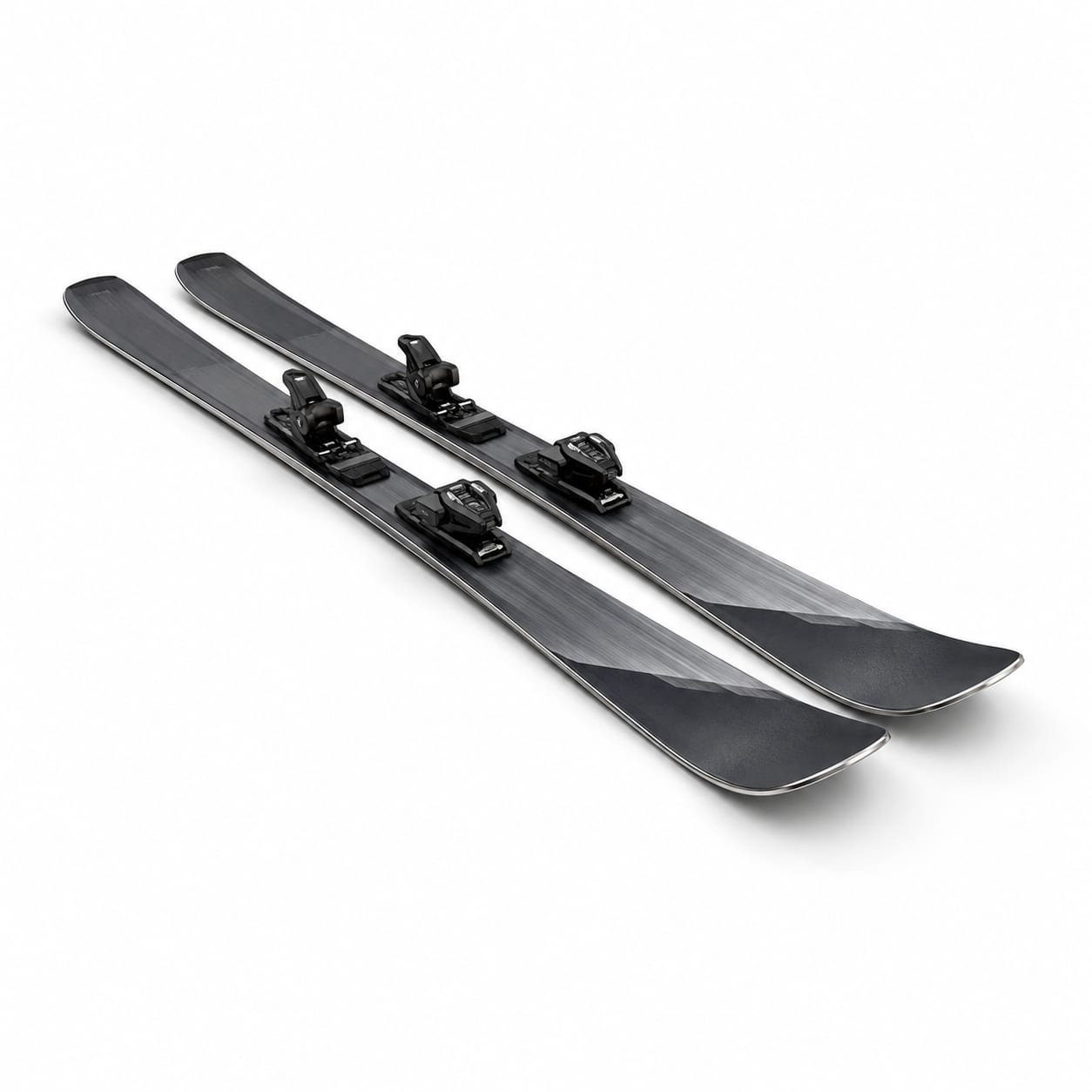
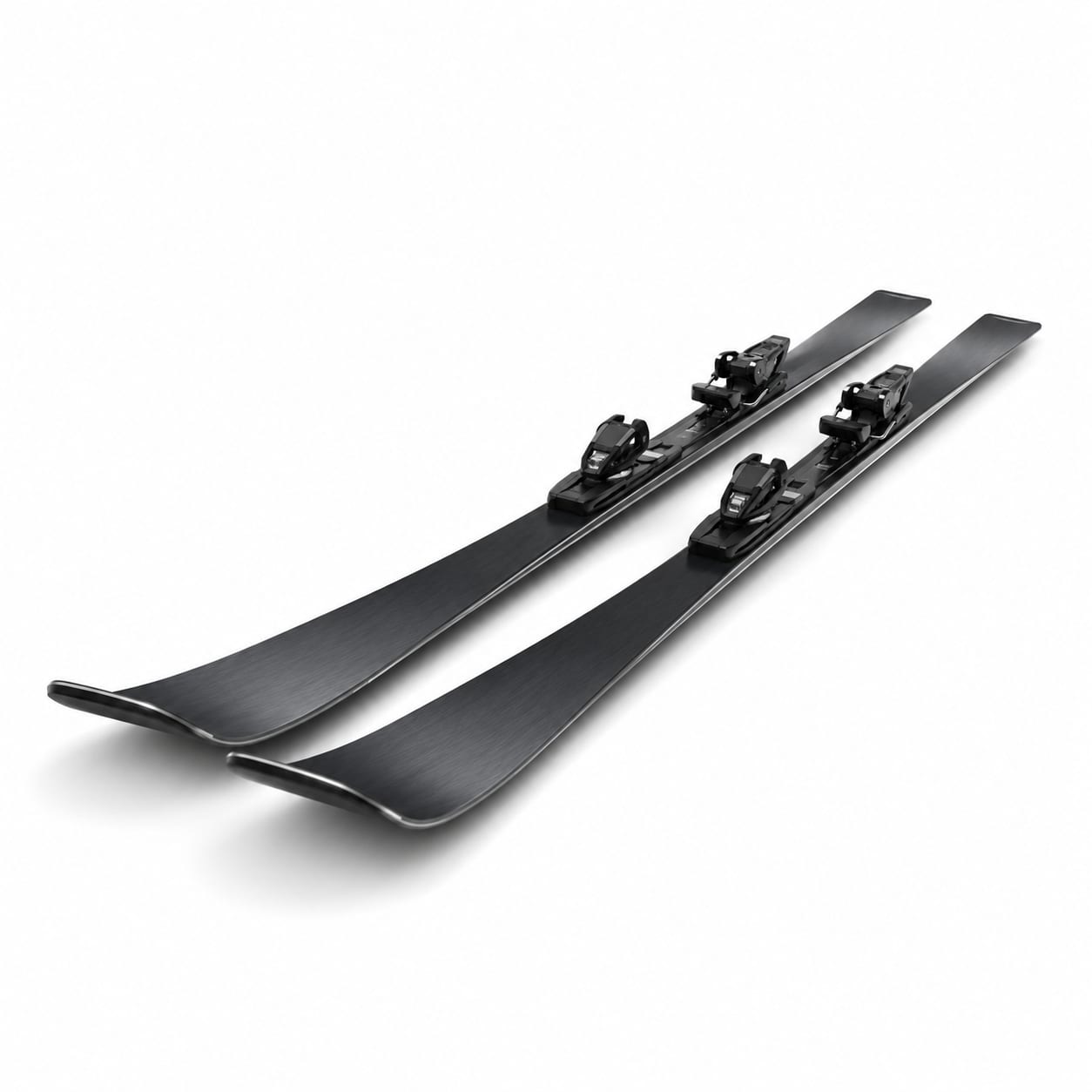
Frontside skis come in both flat (drill-mount) and system/integrated configurations. System bindings are common on recreational frontside skis for convenience and sometimes include performance plates. Flat mounts are preferred by performance-oriented skiers for direct power transfer and binding choice flexibility.
Compared to other types
System/integrated bindings are more common in the frontside category than any other, reflecting the recreational resort focus. Freeride, touring, and freestyle skis almost exclusively use flat mounts. System bindings can be an advantage for frontside skiing if they include performance-oriented plates.
Why it matters: System bindings can be convenient and sometimes include riser plates that enhance carving performance by increasing leverage. Flat mounts offer more binding options and typically better power transfer. Your choice affects both performance and convenience.