Ski Type / Category
Ski Type
What it means
The primary intended use and design category of the ski, which dictates its overall geometry, flex, and feature set.
Typical for this type
Racing
In practice
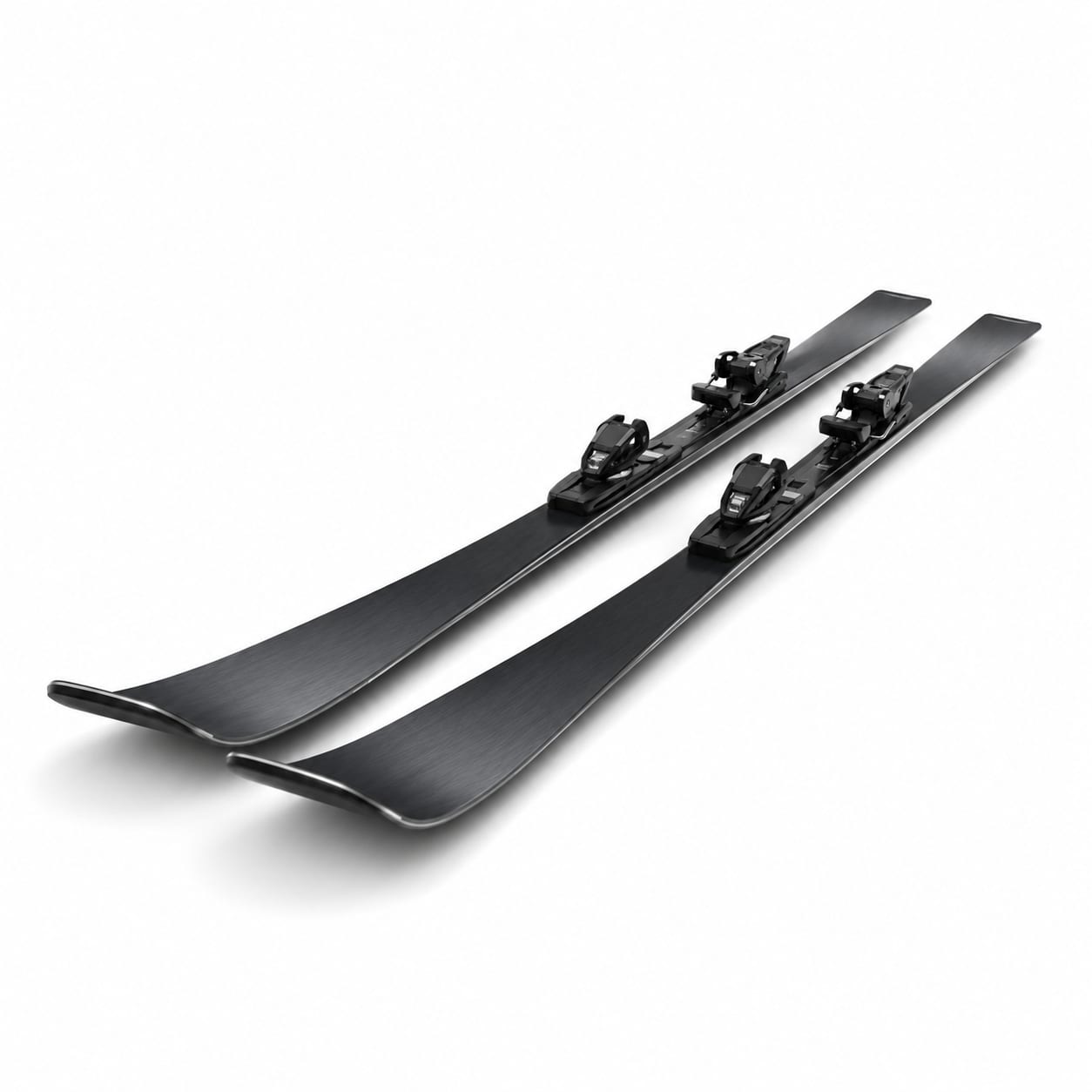
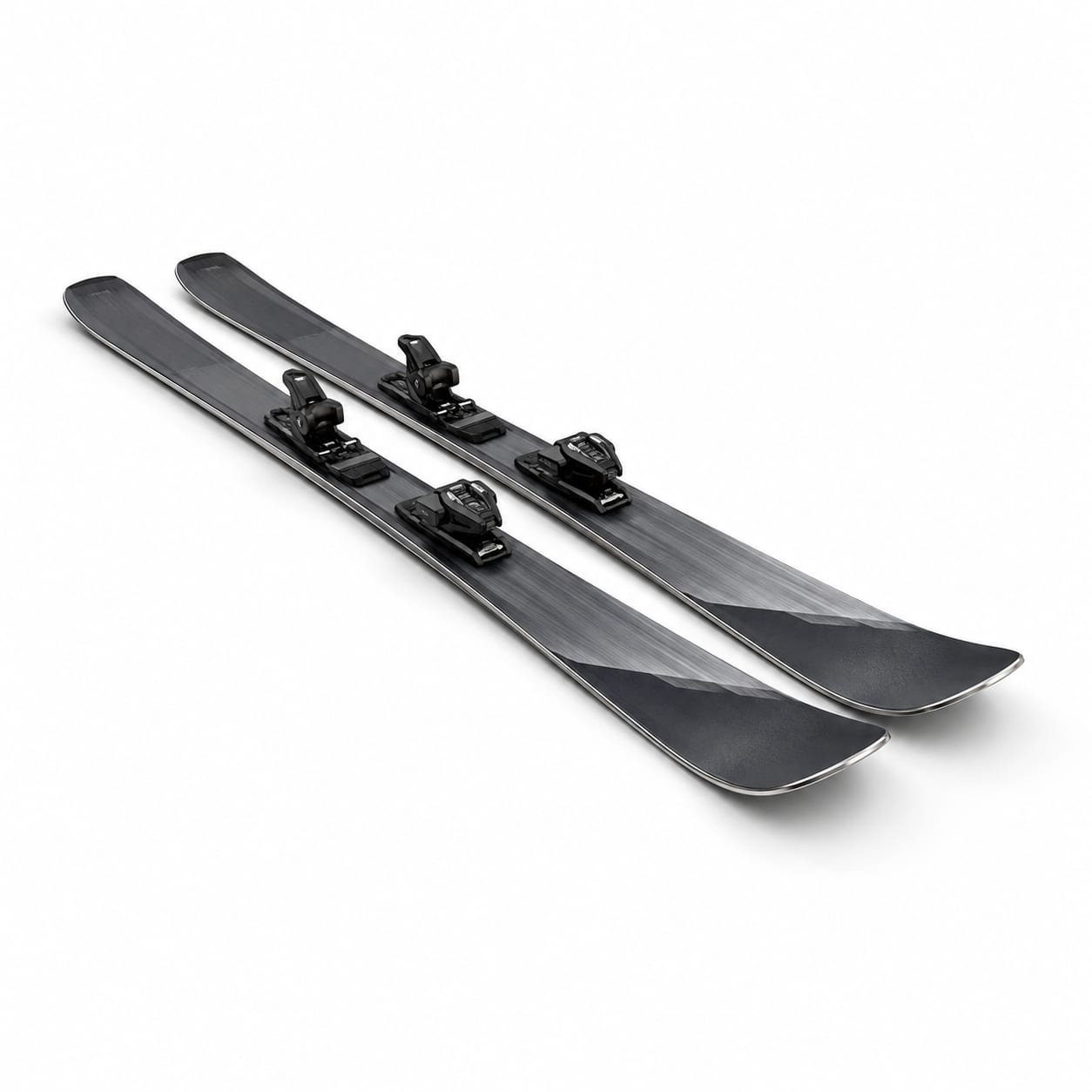
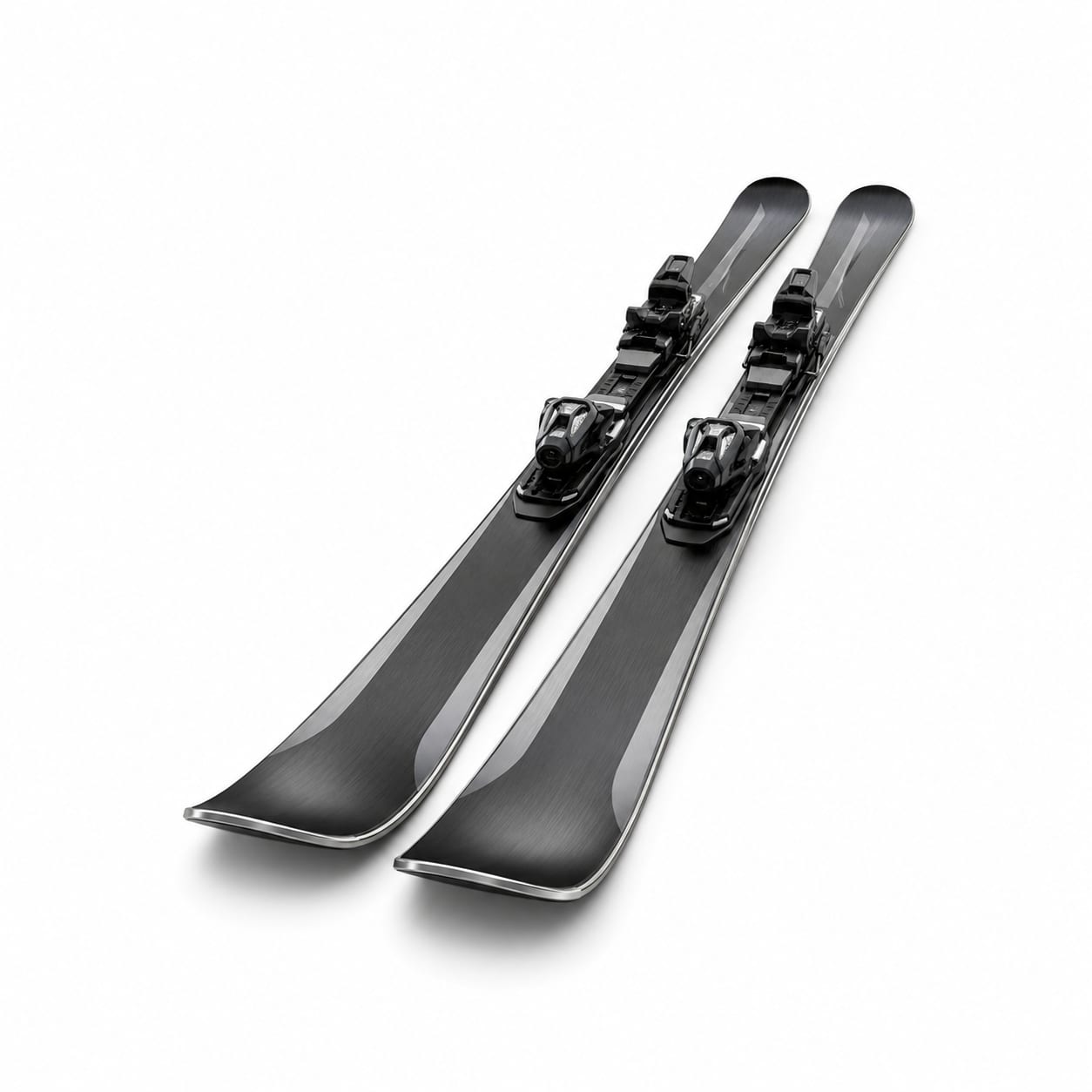
Race skis are exclusively classified as the 'racing' ski type, designed for FIS-sanctioned competition and gate training across slalom, giant slalom, super-G, and downhill disciplines.
Compared to other types
Unlike all-mountain or frontside skis which prioritize versatility, race skis sacrifice all-around usability for maximum performance within a specific discipline's parameters.
Why it matters: The racing designation ensures the ski meets FIS regulations for competition use and is built with the aggressive geometry, stiff flex, and precise construction that competitive skiing demands.
What it means
The total length of the ski from tip to tail, measured in centimeters. Affects stability, turn radius, and maneuverability.
Typical for this type
155-165cm (SL), 183-195cm (GS), 195-210cm (SG/DH)
Most common pick: 165cm (SL), 188cm (GS), 200cm+ (SG/DH)
In practice
Race ski length is dictated by FIS regulations which set minimum lengths by discipline and gender. Men's WC SL minimum is 165cm, GS is 188cm, while women's minimums are 155cm and 183cm respectively. SG and DH skis range from 195-210cm+.
Compared to other types
Race skis span a wider length range than any other category due to discipline-specific requirements. SL skis are shorter than most adult recreational skis, while DH skis are among the longest skis made.
Why it matters: Length directly affects the ski's stability at speed and turn radius. Longer skis provide more stability for high-speed GS/SG/DH events, while shorter SL skis enable quicker gate-to-gate transitions.
What it means
The width of the ski at its narrowest point (underfoot), measured in millimeters. The single most important geometry measurement that determines terrain suitability.
Typical for this type
63-68mm
Most common pick: 65mm
In practice
Race skis have the narrowest waists of any ski category, typically between 63-68mm. This narrow profile allows the ski to be tipped onto edge quickly and creates a long effective edge contact for maximum grip.
Compared to other types
Race skis are 15-30mm narrower than frontside/carving skis and 30-65mm narrower than all-mountain skis. This makes them the most edge-responsive skis available but completely unsuitable for soft snow.
Why it matters: A narrow waist enables rapid edge-to-edge transitions—critical for slalom—and maximizes edge angle for grip on icy courses. Every millimeter of width adds leverage required to roll the ski over.
What it means
The width of the ski at its widest point near the tip, measured in millimeters. Works with waist width to determine the ski's sidecut and floatation characteristics.
Typical for this type
105-120mm
Most common pick: 108mm (SL), 115mm (GS)
In practice
Tip widths on race skis are moderate, designed to work with the narrow waist to create aggressive sidecut geometry. SL skis have slightly narrower tips relative to their waist for quicker initiation, while GS skis have wider tips for stability at speed entering turns.
Compared to other types
Race ski tips are narrower than all-mountain and freeride skis but the differential between tip and waist is often larger, creating the deep sidecut needed for aggressive carving.
Why it matters: The tip width, combined with waist and tail dimensions, determines the ski's sidecut and therefore its natural turn radius. FIS regulations often constrain the maximum tip width and resulting sidecut depth.
What it means
The width of the ski at its widest point near the tail, measured in millimeters. Affects turn completion, stability, and how the ski releases from turns.
Typical for this type
95-110mm
Most common pick: 100mm (SL), 105mm (GS)
In practice
Race ski tails are relatively wide to provide a solid platform for finishing turns with power. The tail width supports the ski's ability to hold through the completion of a carve without washing out.
Compared to other types
Unlike freeride skis which often have pin tails for slashy release, race ski tails maintain substantial width to ensure the tail edge stays engaged through the full arc of a carve.
Why it matters: A wider tail ensures the ski finishes turns with authority, providing the acceleration out of each arc that racers depend on. SL tails are slightly narrower for quicker release between gates.
What it means
The theoretical radius of the smallest turn the ski can make when tipped on edge, measured in meters. Derived from the sidecut dimensions. Determines the natural turn shape of the ski.
Typical for this type
10-13m (SL), 23-30m (GS), 33-45m (SG/DH)
Most common pick: 13m (SL), 27m (GS), 35-45m (SG/DH)
In practice
Turn radius is discipline-specific and heavily regulated by FIS. Men's WC SL minimum is 13m, GS minimum is 30m. Women's minimums are 13m and 30m respectively. The radius determines the natural turn shape the ski wants to make.
Compared to other types
SL race skis have the shortest turn radii of any ski type (10-13m), while GS and speed event skis have some of the longest (23-45m+). This range far exceeds the typical 14-17m of all-mountain skis.
Why it matters: Turn radius must match the discipline's gate spacing and speed. SL requires tight, quick turns; GS requires powerful, medium-radius arcs; SG/DH require long, sweeping turns at high speed. FIS minimums prevent excessively tight radii for safety.
Rocker/Camber Profile
Rocker/Camber Profile
What it means
The longitudinal shape of the ski when unweighted—how it curves from tip to tail. The most influential design element for how a ski feels and performs.
Typical for this type
Full Camber
In practice
Race skis are exclusively full camber. The traditional camber profile loads energy into the ski when weighted and ensures maximum effective edge contact when tipped on edge. Some modern race skis have minimal tip rise for vibration dampening but this is not rocker in the traditional sense.
Compared to other types
Race skis are the only remaining category that universally uses full camber. Even frontside carving skis increasingly incorporate tip rocker. Race skis sacrifice the easy initiation of rocker for maximum edge engagement.
Why it matters: Full camber provides the edge hold, energy storage, and explosive release that racing demands. Any rocker would reduce effective edge length and compromise grip on hard snow—unacceptable in competition.
Flex / Stiffness
Flex Rating
What it means
How stiff or soft the ski is along its length, typically rated on a scale. Affects edge hold, stability, energy transfer, and forgiveness.
Typical for this type
8-10
Most common pick: 9
In practice
Race skis are among the stiffest skis made, typically rating 8-10 on the flex scale. The stiff longitudinal and torsional flex ensures the ski resists deformation under the extreme forces of racing, maintaining edge contact and stability at speed.
Compared to other types
Race skis are significantly stiffer than all other categories. Even expert-level all-mountain skis typically max out at 7-8. A flex rating of 9-10 makes race skis nearly impossible for intermediate skiers to bend properly.
Why it matters: Stiff flex prevents the ski from folding under the centrifugal forces of high-speed turns and ensures energy is stored and released efficiently. However, it requires significant strength and technique to properly flex the ski into a carved turn.
Core Material
Core Material
What it means
The primary material used in the ski's core, which largely determines its weight, flex characteristics, dampening, and feel.
Typical for this type
Wood Composite
In practice
Race skis use dense wood cores (ash, beech, poplar laminates) combined with composite layers including titanal, fiberglass, and sometimes carbon or aramid. The wood provides liveliness and consistent flex while composites add torsional rigidity and dampening.
Compared to other types
Race skis use denser wood species and more composite reinforcement than any other category. Touring skis use lightweight hybrids, freestyle skis may use simpler wood cores, but race skis demand the full wood-composite treatment.
Why it matters: The wood-composite combination delivers the precise, responsive flex pattern racers need while the metal layers provide the torsional rigidity and vibration control essential for edge hold at speed.
Construction Type
Construction Type
What it means
The method used to build the ski's structure, affecting durability, edge hold, weight, and price.
Typical for this type
Sandwich
In practice
All serious race skis use sandwich/sidewall construction. Vertical ABS or phenolic sidewalls provide direct power transmission from skier to edge with no energy loss. This construction also offers the durability needed for gate impact and high-force carving.
Compared to other types
While many performance skis use sandwich construction, race skis demand it exclusively. Cap construction, common on entry-level skis, cannot match the edge hold and torsional rigidity of sidewall construction.
Why it matters: Sandwich construction delivers the most precise and efficient power transfer of any construction method. In racing, where races are won by hundredths of a second, any energy lost through the ski's structure is unacceptable.
Weight (Per Pair)
Weight Per Pair
What it means
The total weight of both skis, measured in grams. Affects swing weight, touring efficiency, and overall maneuverability.
Typical for this type
4000-5200g
Most common pick: 4400g
In practice
Race skis are among the heaviest skis due to their double-metal construction, dense wood cores, and sandwich sidewalls. A typical pair of GS race skis weighs 4200-4800g, while DH skis can exceed 5000g per pair. SL skis are slightly lighter due to shorter length.
Compared to other types
Race skis are heavier than all-mountain (3400-4400g) and frontside skis (3200-4000g), and dramatically heavier than touring skis (2400-3200g). Only the heaviest freeride skis approach race ski weights.
Why it matters: The weight comes from materials (titanal, dense wood) that provide the edge hold, stability, and dampening racers need. While heavy for touring, this mass helps the ski track cleanly through rough snow at speed and resist deflection from gate contact.
Recommended Skill Level
Skill Level
What it means
The rider ability level the ski is designed for, which determines flex, forgiveness, and performance characteristics.
Typical for this type
Advanced, Expert
In practice
Race skis are designed for expert-level skiers—competitive racers and coaches who have the technique, strength, and aggression to properly drive these demanding skis. Some cheater/club race models can accommodate advanced-level skiers who are developing their racing skills.
Compared to other types
Race skis are the most skill-demanding category. Even expert-level all-mountain or freeride skis are more forgiving. Only experts with specific racing technique should consider true FIS-compliant race skis.
Why it matters: Race skis require the ability to carve at high speeds, generate significant edge angles, and apply consistent pressure throughout the turn. Without these skills, the ski cannot be properly flexed and will feel dead, grabby, and uncontrollable.
What it means
The primary terrain and snow conditions the ski is optimized for. Most skis handle multiple terrain types but excel in specific conditions.
Typical for this type
Groomed
In practice
Race skis are designed exclusively for groomed/piste terrain—specifically prepared race courses and firm, groomed snow. They are optimized for the hard, sometimes icy conditions typical of race courses that have been salted and prepared.
Compared to other types
Race skis are the least versatile category for terrain. All-mountain skis handle groomed and mixed terrain; freeride skis handle powder and variable snow. Race skis do one thing—carve firm snow—but do it better than anything else.
Why it matters: The narrow waist, full camber, and stiff construction that make race skis devastating on groomers make them virtually unskiable in powder, crud, or soft snow. They will dive in powder and bounce violently in variable conditions.
What it means
Whether the ski has an upward-curving tail matching the tip, allowing the skier to land and ski backwards (switch).
Typical for this type
False
In practice
Race skis have flat or slightly raised tails—never twin tips. A flat tail provides maximum edge contact through the completion of a turn and ensures the ski finishes each arc with power and acceleration rather than releasing prematurely.
Compared to other types
Unlike freestyle and many all-mountain skis which feature twin tips for versatility and playfulness, race skis prioritize tail edge hold above all else. The tail must drive the skier out of each turn.
Why it matters: The flat tail allows the skier to hold the edge through the full carve and generate maximum exit speed from each turn. A twin tip would reduce tail edge engagement and compromise the ski's ability to finish turns cleanly.
Dampening / Vibration Control
Dampening
What it means
The ski's ability to absorb vibrations and chatter at speed, typically achieved through metal layers, rubber, or specialized technologies. Affects smoothness and edge contact.
Typical for this type
High
In practice
Race skis feature high dampening through double titanal layers, dense wood cores, and sometimes additional vibration-absorbing materials. This eliminates chatter and maintains edge contact at the high speeds and forces encountered in racing.
Compared to other types
Race skis have the highest dampening of any ski category, even exceeding heavy freeride skis. This comes at the cost of weight and low-speed playfulness, but racers prioritize smoothness at speed above all else.
Why it matters: At racing speeds, even small vibrations can cause edge chatter and loss of grip. High dampening ensures the ski stays glued to the snow surface through rough patches, ruts, and the extreme forces of carved turns.
Metal Reinforcement
Metal Layers
What it means
Whether and how the ski incorporates metal (typically titanal/aluminum) layers in its construction for added torsional rigidity, edge hold, and dampening.
Typical for this type
Double
In practice
Serious race skis feature double titanal layers—one above and one below the wood core. This double-metal construction provides maximum torsional rigidity, edge hold, and dampening. Some cheater/club race models may use a single metal layer for slightly more accessibility.
Compared to other types
Race skis are the primary users of double-metal construction. Most all-mountain skis use single metal or no metal. The double-metal approach is too heavy and demanding for most recreational skiing but essential for competition.
Why it matters: Double metal ensures the ski resists twisting forces that would cause edge release at high speeds. The two titanal sheets work together to create a torsionally rigid platform that holds an edge on the hardest, iciest surfaces.
Binding Compatibility
Binding Compatibility
What it means
The type of binding mounting system the ski supports, which determines which bindings can be installed.
Typical for this type
Flat Alpine, System Alpine
In practice
Race skis typically use flat alpine mounting for direct drill-mount bindings, allowing racers to choose their preferred race binding and mount position. Some models feature integrated race plates (system alpine) that provide a raised platform for increased leverage and power transmission.
Compared to other types
Unlike touring-compatible skis, race skis are exclusively designed for alpine bindings. The focus is on maximum power transfer and edge leverage, not uphill capability or binding versatility.
Why it matters: Flat mounting allows precise positioning of bindings for individual preference and optimal performance. Race plates/lifters increase the skier's leverage over the edge, enabling higher edge angles and more powerful carves.