Ski Type / Category
Ski Type
What it means
The primary intended use and design category of the ski, which dictates its overall geometry, flex, and feature set.
Typical for this type
Freestyle
In practice
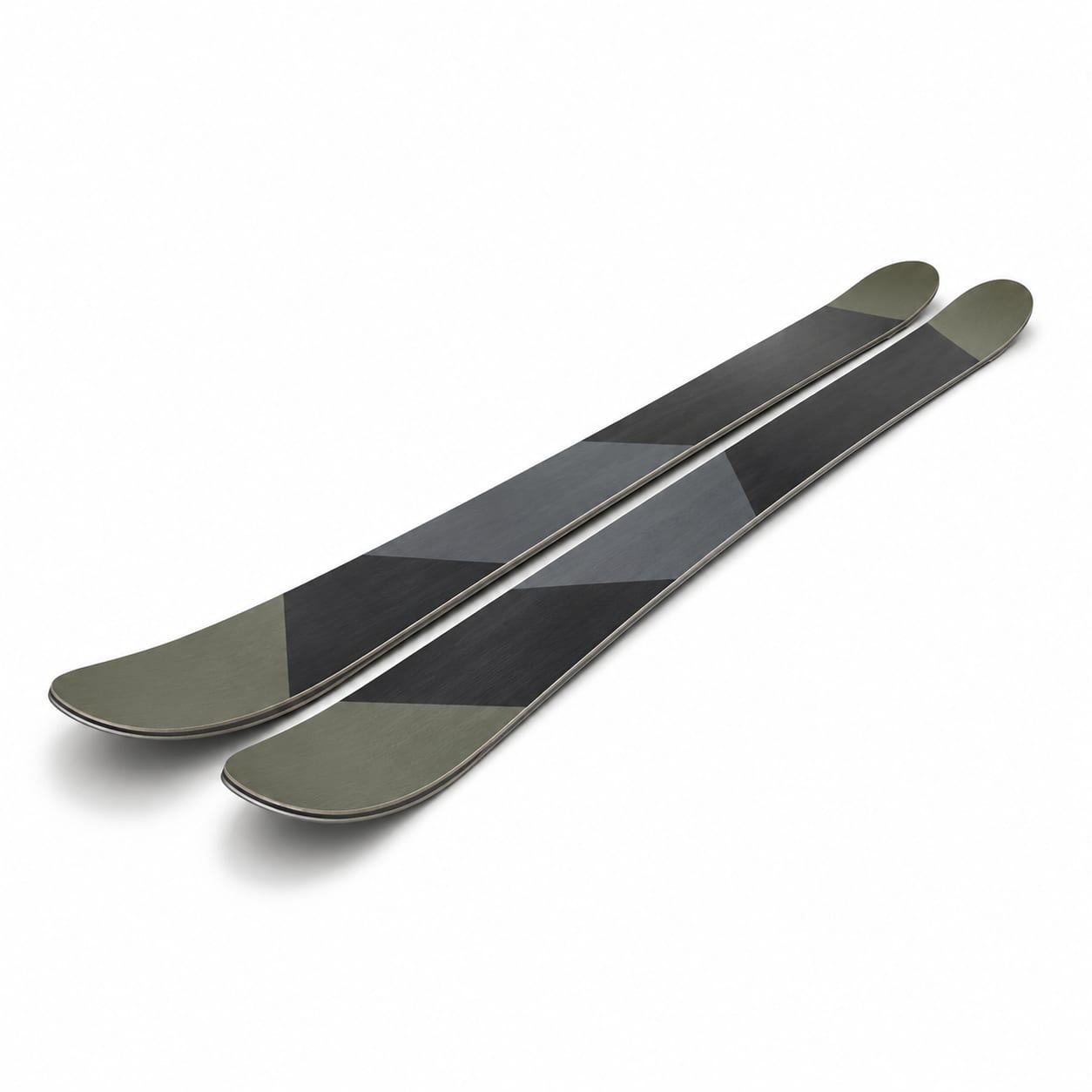
Park skis are classified as freestyle type, defined by twin-tip design, symmetric or near-symmetric geometry, and construction optimized for terrain park features and switch riding.
Compared to other types
Unlike all-mountain skis that prioritize versatility or freeride skis built for powder flotation, freestyle skis sacrifice off-piste performance and high-speed stability for park-specific features like switch capability and rail durability.
Why it matters: The freestyle classification dictates the entire design philosophy—twin tips, durable edges, softer flex, and centered mount points that distinguish these skis from all other categories.
What it means
The total length of the ski from tip to tail, measured in centimeters. Affects stability, turn radius, and maneuverability.
Typical for this type
155-185 cm
Most common pick: 170 cm
In practice
Park skis are typically sized shorter than all-mountain skis for the same rider—often reaching between the chin and nose. Shorter lengths reduce swing weight for spins and make the ski more maneuverable for quick rotations and rail tricks.
Compared to other types
Park skis are typically sized 5-10 cm shorter than equivalent all-mountain or freeride skis for the same rider. Freeride skis are often sized longer for stability and flotation, while park skis prioritize maneuverability.
Why it matters: Length directly affects swing weight and spin speed. A shorter ski is easier to spin and maneuver in the park, while a longer ski provides more stability on large jump landings and at higher speeds.
What it means
The width of the ski at its narrowest point (underfoot), measured in millimeters. The single most important geometry measurement that determines terrain suitability.
Typical for this type
85-100 mm
Most common pick: 92 mm
In practice
Park ski waist widths typically fall in the 85-100mm range. This provides enough surface area for stable landings and some soft-snow capability while remaining narrow enough for quick edge-to-edge transitions on hard park snow and precise rail approaches.
Compared to other types
Narrower than freeride (105-120mm) and all-mountain wide (95-105mm) skis, but wider than frontside/carving skis (65-75mm). The 85-100mm range is a deliberate compromise for park performance.
Why it matters: Waist width affects how quickly you can transition from edge to edge on hard park snow and how stable your landings feel. Too narrow and landings feel twitchy; too wide and the ski feels sluggish on rails and pipe walls.
What it means
The width of the ski at its widest point near the tip, measured in millimeters. Works with waist width to determine the ski's sidecut and floatation characteristics.
Typical for this type
110-125 mm
Most common pick: 118 mm
In practice
Park ski tip widths typically range from 110-125mm, working with the waist width to create a moderate sidecut. In symmetric park skis, the tip width equals the tail width for balanced performance in both directions.
Compared to other types
Narrower than freeride ski tips (130-155mm) which prioritize flotation, and wider than frontside tips (95-110mm) which prioritize quick edge engagement. Park tips balance moderate turn initiation with switch performance.
Why it matters: Tip width affects turn initiation and the ski's sidecut. In symmetric park skis, identical tip and tail widths ensure the ski carves and releases turns identically whether riding forward or switch.
What it means
The width of the ski at its widest point near the tail, measured in millimeters. Affects turn completion, stability, and how the ski releases from turns.
Typical for this type
110-125 mm
Most common pick: 118 mm
In practice
In true symmetric park skis, the tail width is identical to the tip width. This symmetry ensures the ski performs identically riding switch as it does forward—critical for park riders who spend significant time skiing backwards.
Compared to other types
Unlike freeride skis which often have narrower pin tails for slashy turn release, or frontside skis with slightly narrower tails for powerful turn completion, park skis maintain tail width equal to or very close to tip width for switch symmetry.
Why it matters: Symmetric tip and tail dimensions are essential for consistent switch performance. When the tail matches the tip, turn initiation, edge hold, and release feel the same in both directions.
What it means
The theoretical radius of the smallest turn the ski can make when tipped on edge, measured in meters. Derived from the sidecut dimensions. Determines the natural turn shape of the ski.
Typical for this type
15-22 m
Most common pick: 17 m
In practice
Park skis typically have turn radii in the 15-22m range, providing medium turn shapes that work well for carving into jump takeoffs, maintaining speed through pipe transitions, and making controlled turns on rail approaches.
Compared to other types
Longer than racing/slalom skis (8-14m) which need ultra-quick turns, and shorter than many freeride skis (22-35m) designed for high-speed arcs. Park skis occupy a middle ground suited to park feature approaches.
Why it matters: A moderate turn radius allows park skiers to carry speed into features with smooth, predictable turns. Too short a radius feels hooky on fast run-ins; too long makes it hard to adjust speed and line quickly.
Rocker/Camber Profile
Rocker/Camber Profile
What it means
The longitudinal shape of the ski when unweighted—how it curves from tip to tail. The most influential design element for how a ski feels and performs.
Typical for this type
Flat Or Tip Tail Rocker
In practice
Flat profiles are extremely popular in park skis for their loose, playful feel and easy pressing capability. Tip-and-tail rocker with camber underfoot is also common, providing more pop and edge hold while maintaining loose tips for butters and switch riding.
Compared to other types
Unlike all-mountain skis which commonly use tip-rocker-with-camber for versatile performance, or freeride skis with extensive tip-and-tail rocker for flotation, park skis use flat or moderate tip-and-tail rocker profiles that prioritize press-ability and switch performance over edge hold or flotation.
Why it matters: The profile determines how the ski feels on rails, how easily it presses and butters, and how much pop it generates off jumps. Flat profiles are the most playful; camber-underfoot profiles offer more pop and edge hold.
Flex / Stiffness
Flex Rating
What it means
How stiff or soft the ski is along its length, typically rated on a scale. Affects edge hold, stability, energy transfer, and forgiveness.
Typical for this type
3-7
Most common pick: 5
In practice
Park skis typically range from 3-7 on the flex scale. Softer skis (3-4) are preferred by rail and jib specialists for easy pressing and forgiveness. Medium flex (5-6) suits all-around park riders. Stiffer park skis (6-7) are chosen by jump-line specialists who need stability on large jump landings.
Compared to other types
Significantly softer than racing skis (8-10) and freeride chargers (7-9). Even the stiffest park skis are softer than most all-mountain skis because playfulness and forgiveness are more valued in the park than raw power transmission.
Why it matters: Flex is the primary tuning variable within the park ski category. It determines how easily you can butter and press, how forgiving the ski is on imperfect landings, and how stable it feels at speed on large jump takeoffs and landings.
Core Material
Core Material
What it means
The primary material used in the ski's core, which largely determines its weight, flex characteristics, dampening, and feel.
Typical for this type
Wood Or Wood Composite
In practice
Most quality park skis use wood cores (poplar, ash, or beech) or wood-composite constructions that add fiberglass layers for tuned flex and durability. Wood cores provide the snap and pop essential for ollies and jump takeoffs, while composite layers add durability against rail impacts.
Compared to other types
Similar to all-mountain and freeride skis in using wood or wood-composite cores. Foam cores are rare in park skis because they lack the pop and durability needed for freestyle riding, and they break down faster under the repeated impacts of park skiing.
Why it matters: Core material affects the ski's pop (energy return), durability, and feel. Wood cores deliver the snappy, responsive feel park skiers need for generating pop off jumps and features. Composite additions can reinforce high-impact zones.
Construction Type
Construction Type
What it means
The method used to build the ski's structure, affecting durability, edge hold, weight, and price.
Typical for this type
Sandwich Or Hybrid
In practice
Sandwich/sidewall construction is preferred for park skis because it provides superior edge hold and durability—critical for rail slides and hard park snow. Hybrid construction (sidewall underfoot, cap at tips/tails) reduces swing weight while maintaining edge integrity where it matters most.
Compared to other types
Unlike entry-level recreational skis which often use cap construction to save weight and cost, park skis almost universally use sandwich or hybrid construction because cap construction doesn't hold up to rail abuse and provides inferior edge hold on hard park snow.
Why it matters: Park skis take more abuse than almost any other category. Sidewall construction underfoot resists edge cracking from rail impacts and maintains edge hold on icy pipe walls and rail approaches. The construction directly affects how long your edges and sidewalls survive heavy park use.
Weight (Per Pair)
Weight Per Pair
What it means
The total weight of both skis, measured in grams. Affects swing weight, touring efficiency, and overall maneuverability.
Typical for this type
3200-4200 g
Most common pick: 3600 g
In practice
Park skis typically weigh 3200-4200g per pair, balancing low swing weight for spins with enough mass for stability on jump landings. Lighter skis spin faster and are easier to maneuver; heavier skis provide more stability and dampening on large jump landings.
Compared to other types
Lighter than most freeride (4400-5500g) and racing skis, but heavier than touring skis (2400-3200g). Park skis prioritize a weight that allows easy spinning without sacrificing landing stability.
Why it matters: Weight affects swing weight—the rotational inertia you feel when spinning. Lighter skis make rotations easier and faster, which is why many park skiers prefer lighter setups. However, some weight helps absorb impact on big landings.
Recommended Skill Level
Skill Level
What it means
The rider ability level the ski is designed for, which determines flex, forgiveness, and performance characteristics.
Typical for this type
Intermediate to Expert
Most common pick: Intermediate, Advanced
In practice
Park skis cater primarily to intermediate through expert skiers. Intermediates benefit from softer, more forgiving park skis as they learn basic park skills. Advanced and expert park riders choose stiffer, more responsive models for technical tricks and larger features.
Compared to other types
Unlike beginner-oriented frontside skis that are designed for easy turn initiation on groomers, park skis assume you can already ski competently and are adding freestyle skills. True beginners should learn basic skiing on appropriate beginner skis before moving to park-specific equipment.
Why it matters: Matching flex and performance to your skill level is crucial in the park. A ski that's too stiff won't allow you to press or butter and will punish imperfect landings. A ski that's too soft will fold on big jump landings and lack precision on rail approaches.
What it means
The primary terrain and snow conditions the ski is optimized for. Most skis handle multiple terrain types but excel in specific conditions.
Typical for this type
Park, Groomed
In practice
Park skis are optimized for terrain parks with jumps, rails, boxes, and halfpipes. They also perform adequately on groomed runs for park laps and resort traversal. Their twin-tip design and softer flex make them less suitable for powder, backcountry, or moguls.
Compared to other types
Unlike all-mountain skis designed for mixed terrain or freeride skis built for powder and steep lines, park skis are single-purpose tools. They can handle groomed runs for accessing the park but are not designed for off-piste or variable conditions.
Why it matters: Terrain optimization determines the ski's entire design. Park-focused design means features like symmetric geometry, durable edges, and centered mount points that specifically enhance park performance but may compromise performance elsewhere.
What it means
Whether the ski has an upward-curving tail matching the tip, allowing the skier to land and ski backwards (switch).
Typical for this type
True (Essential)
In practice
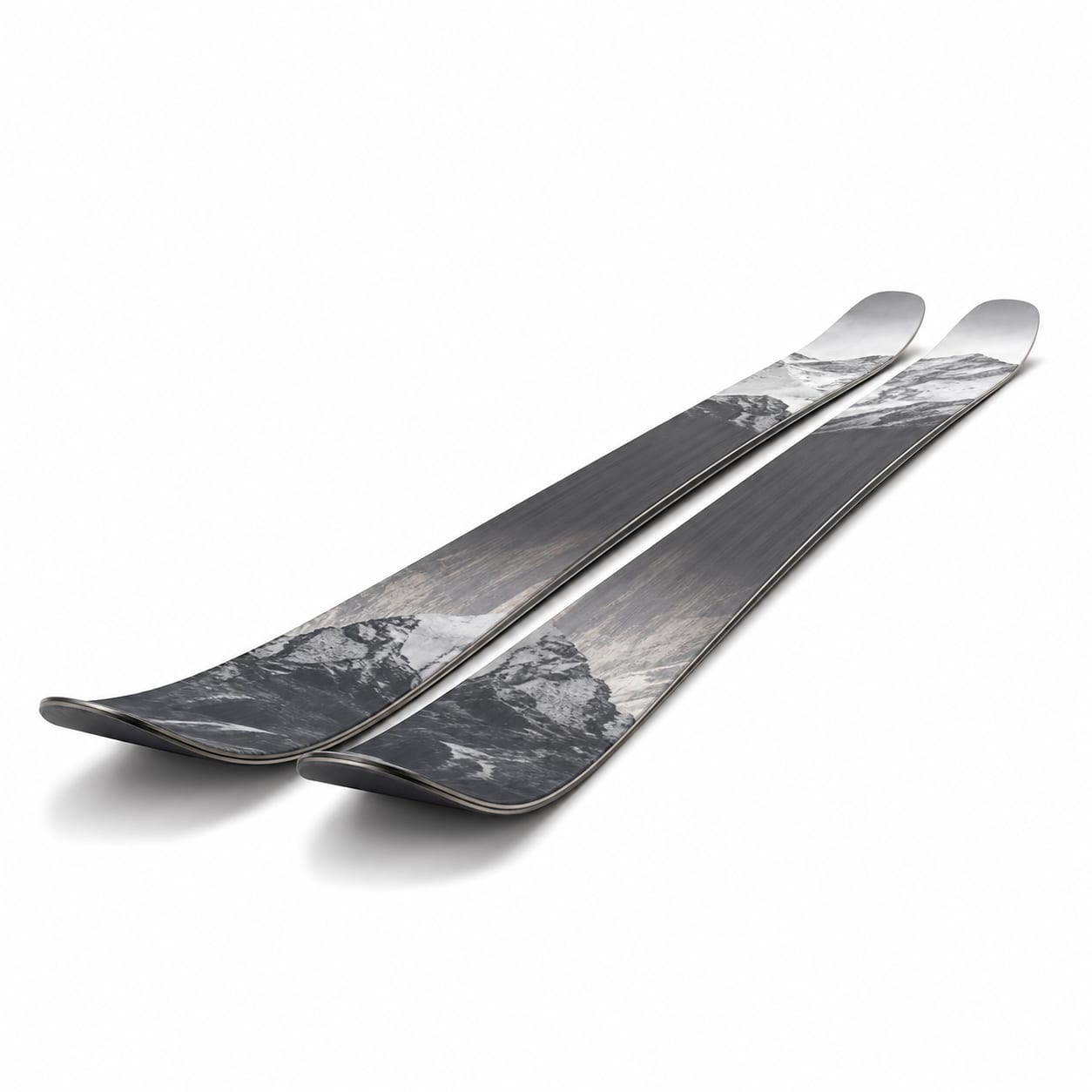
All true park skis are twin-tip—it is the defining, non-negotiable feature of the category. The upward-curving tail enables switch takeoffs, switch landings, and riding backwards, all of which are fundamental to freestyle skiing.
Compared to other types
Unlike frontside, racing, and many freeride skis that use flat or slightly raised tails for maximum edge hold and turn completion, park skis require full twin tips. Some all-mountain skis offer partial twin tips as a compromise, but true park performance demands full symmetric twin tips.
Why it matters: Without twin tips, you cannot effectively ski switch, land backwards off jumps, or perform the vast majority of freestyle tricks. Twin tips are as essential to park skiing as edges are to carving.
Dampening / Vibration Control
Dampening
What it means
The ski's ability to absorb vibrations and chatter at speed, typically achieved through metal layers, rubber, or specialized technologies. Affects smoothness and edge contact.
Typical for this type
Minimal to Moderate
In practice
Park skis typically have minimal to moderate dampening. The priority is a lively, responsive feel for generating pop and feeling the feature under your feet, not the smooth, quiet ride valued by high-speed chargers. Some jump-oriented park skis add moderate dampening for stability on large jump landings.
Compared to other types
Much less dampening than freeride chargers and racing skis that use metal layers for high-speed smoothness. Park skis prioritize liveliness and pop over the vibration absorption that matters at 50+ mph on rough snow.
Why it matters: Dampening affects how the ski feels on features. Minimal dampening provides maximum feel and pop but can feel chattery at high speeds. Moderate dampening smooths out big jump landings but may reduce the snappy, responsive feel that makes butters and presses satisfying.
Metal Reinforcement
Metal Layers
What it means
Whether and how the ski incorporates metal (typically titanal/aluminum) layers in its construction for added torsional rigidity, edge hold, and dampening.
Typical for this type
None
In practice
Park skis almost universally use no metal layers. Metal adds weight and stiffness that work against the light, playful, poppy feel park skiers need. Fiberglass reinforcement provides sufficient torsional rigidity without the weight penalty of titanal layers.
Compared to other types
Unlike high-performance all-mountain and freeride skis that often use single or double metal layers for edge hold and dampening at speed, park skis avoid metal entirely. The trade-off is less edge hold on icy pipe walls and less stability at high speeds, but these are acceptable compromises for park-focused performance.
Why it matters: Metal layers would make park skis heavier (increasing swing weight for spins), stiffer (reducing playfulness and press-ability), and more demanding to ski. The absence of metal is a deliberate choice that supports the performance characteristics park riders value.
Binding Compatibility
Binding Compatibility
What it means
The type of binding mounting system the ski supports, which determines which bindings can be installed.
Typical for this type
Flat Alpine
In practice
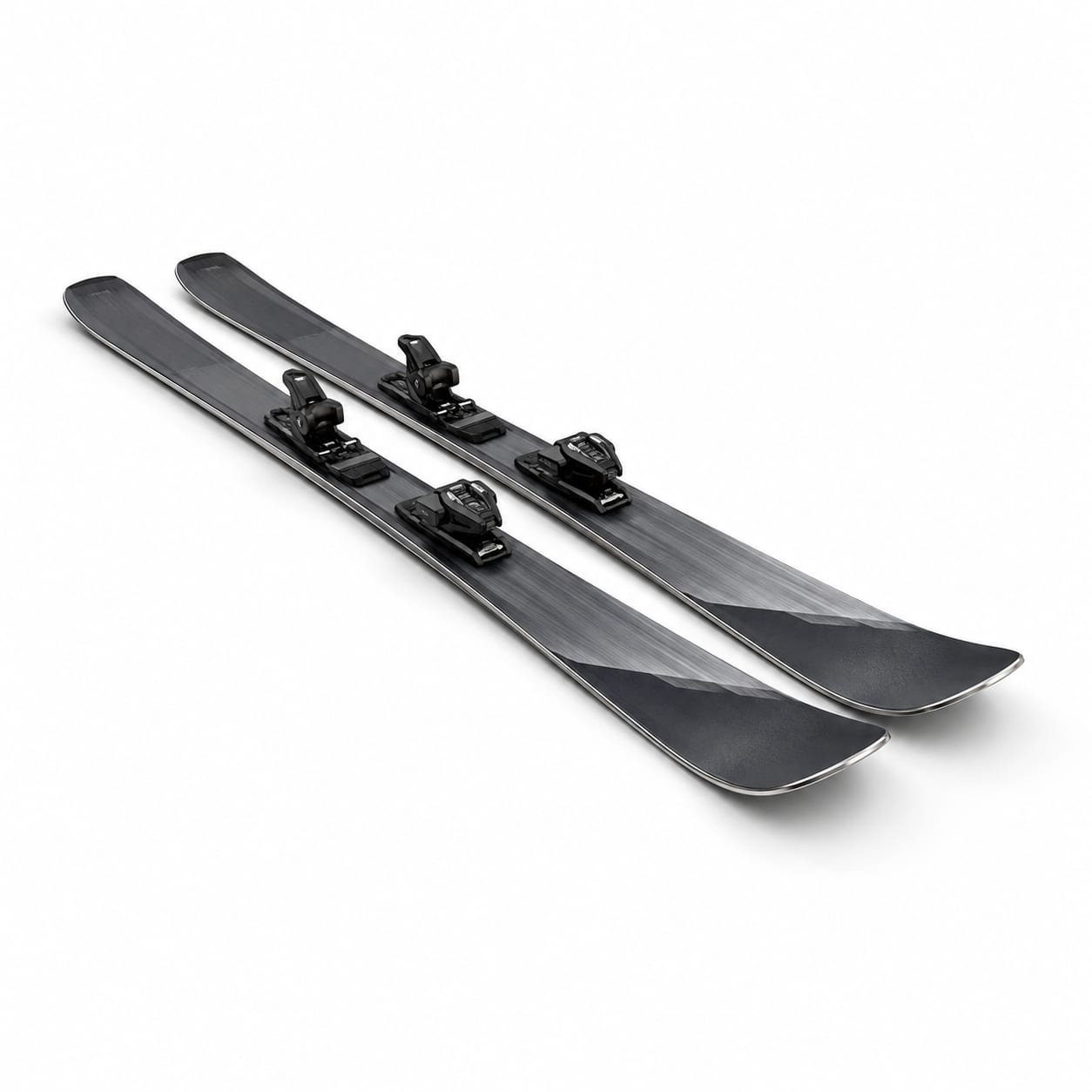
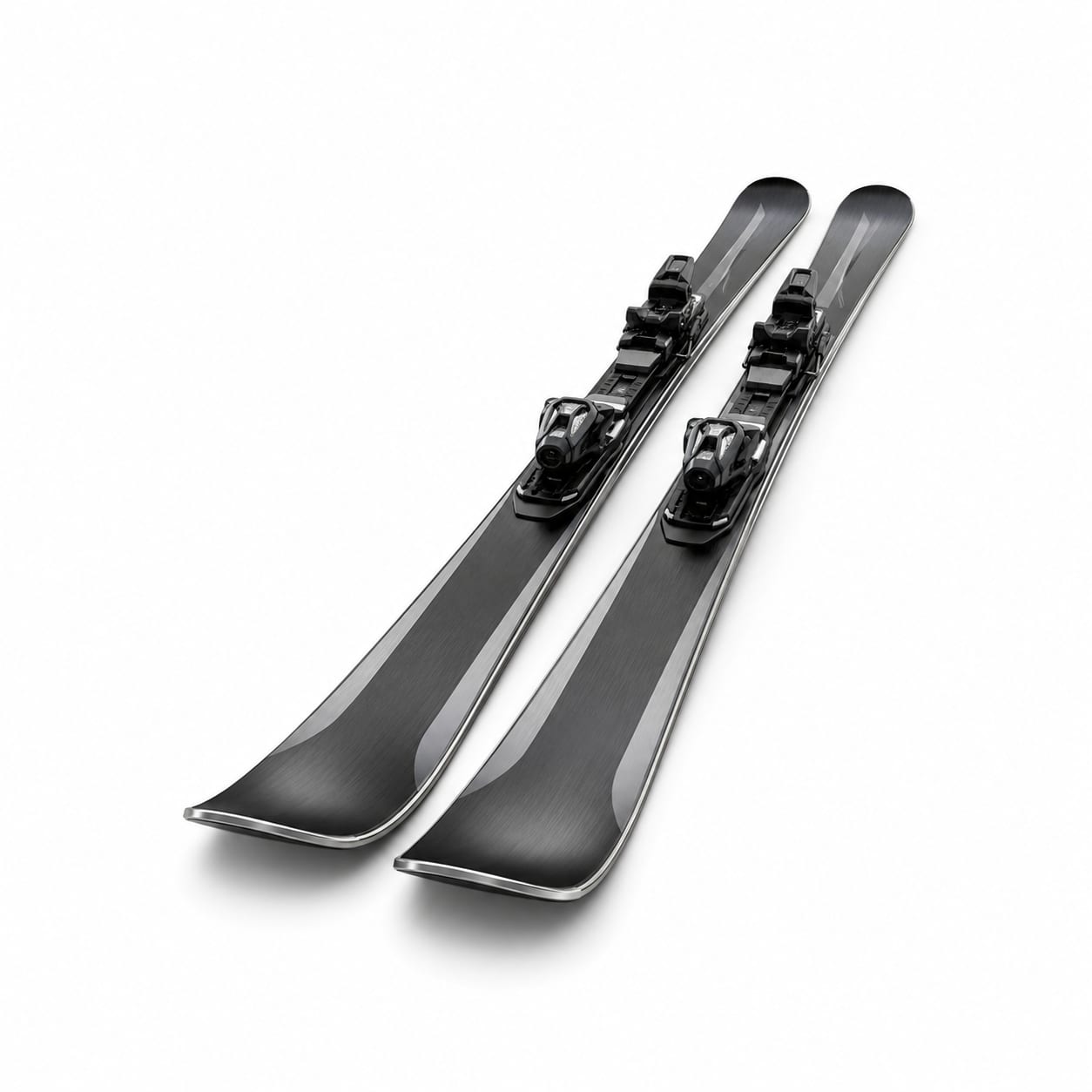
Park skis use flat alpine (drill mount) compatibility, allowing freestyle-specific alpine bindings to be mounted at the desired position—typically true center or slightly behind. This provides the most direct power transfer and allows precise mount point customization.
Compared to other types
Unlike frontside skis that often use integrated system bindings for convenience, or touring skis that need tech binding compatibility, park skis use flat alpine mounts for maximum customization and direct power transfer. The mount point is too critical in park skiing to leave to a fixed system.
Why it matters: Flat mounting gives park skiers control over their mount point, which significantly affects how the ski performs. Center mounting enables symmetric switch performance; a slightly set-back mount adds versatility. System bindings don't offer this flexibility.