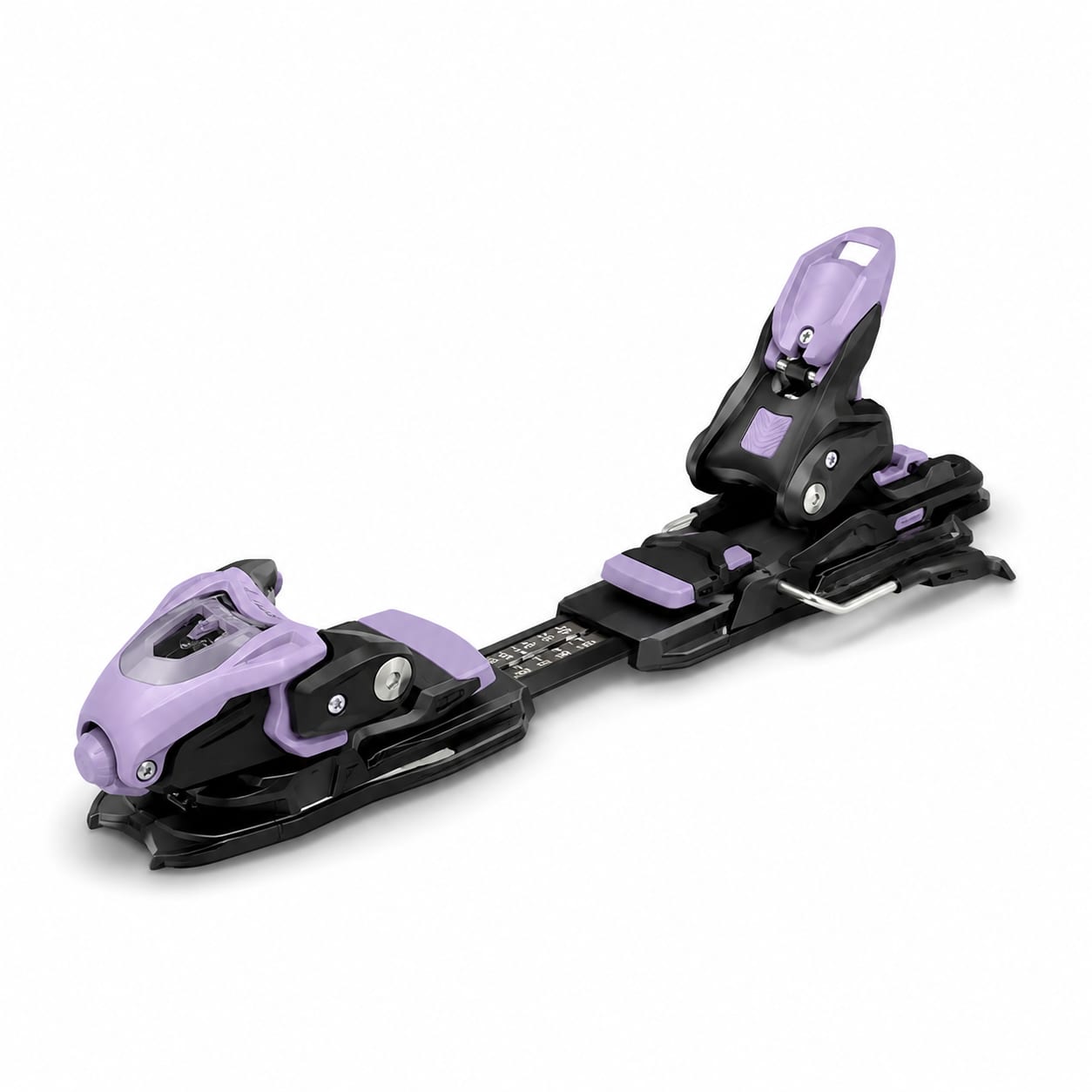
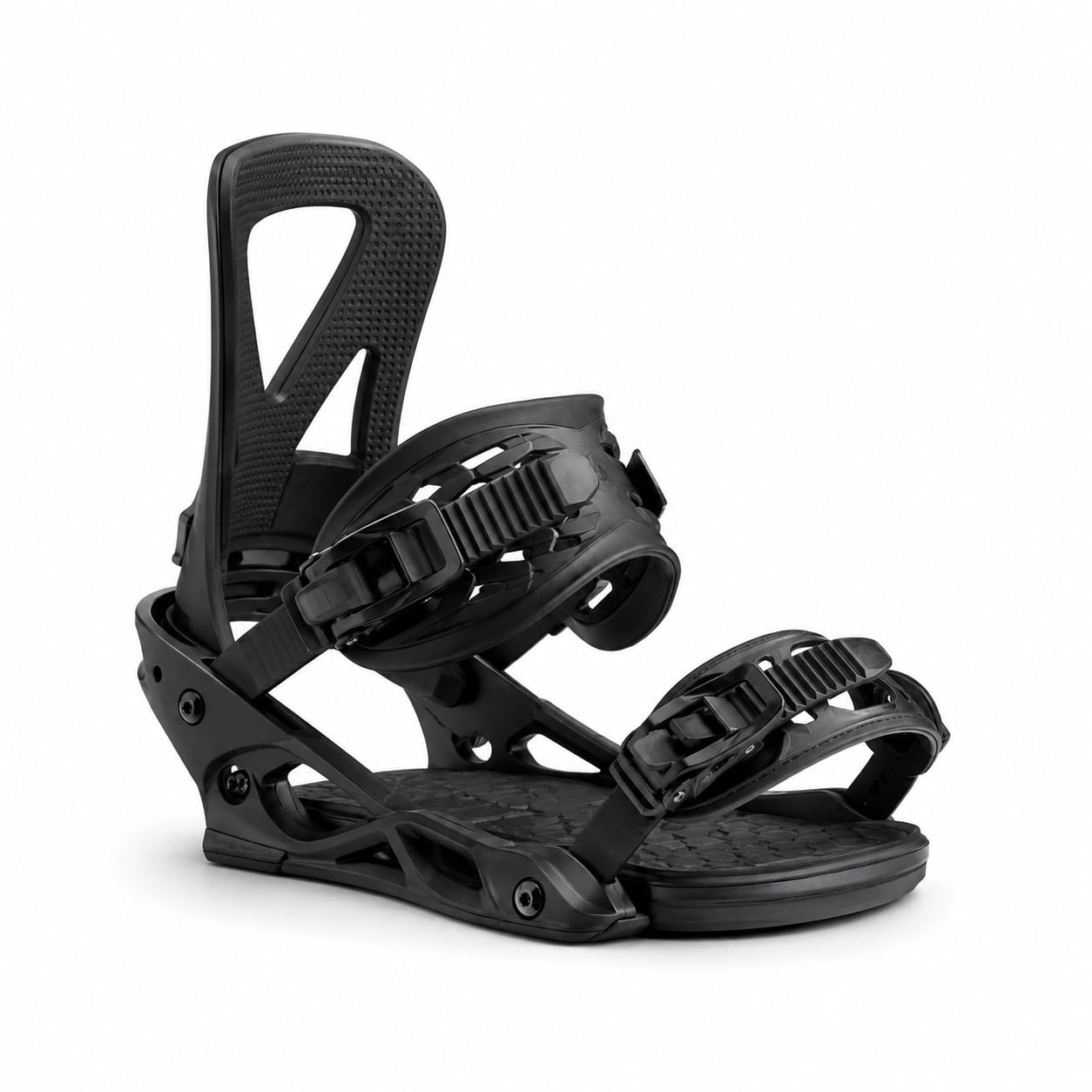
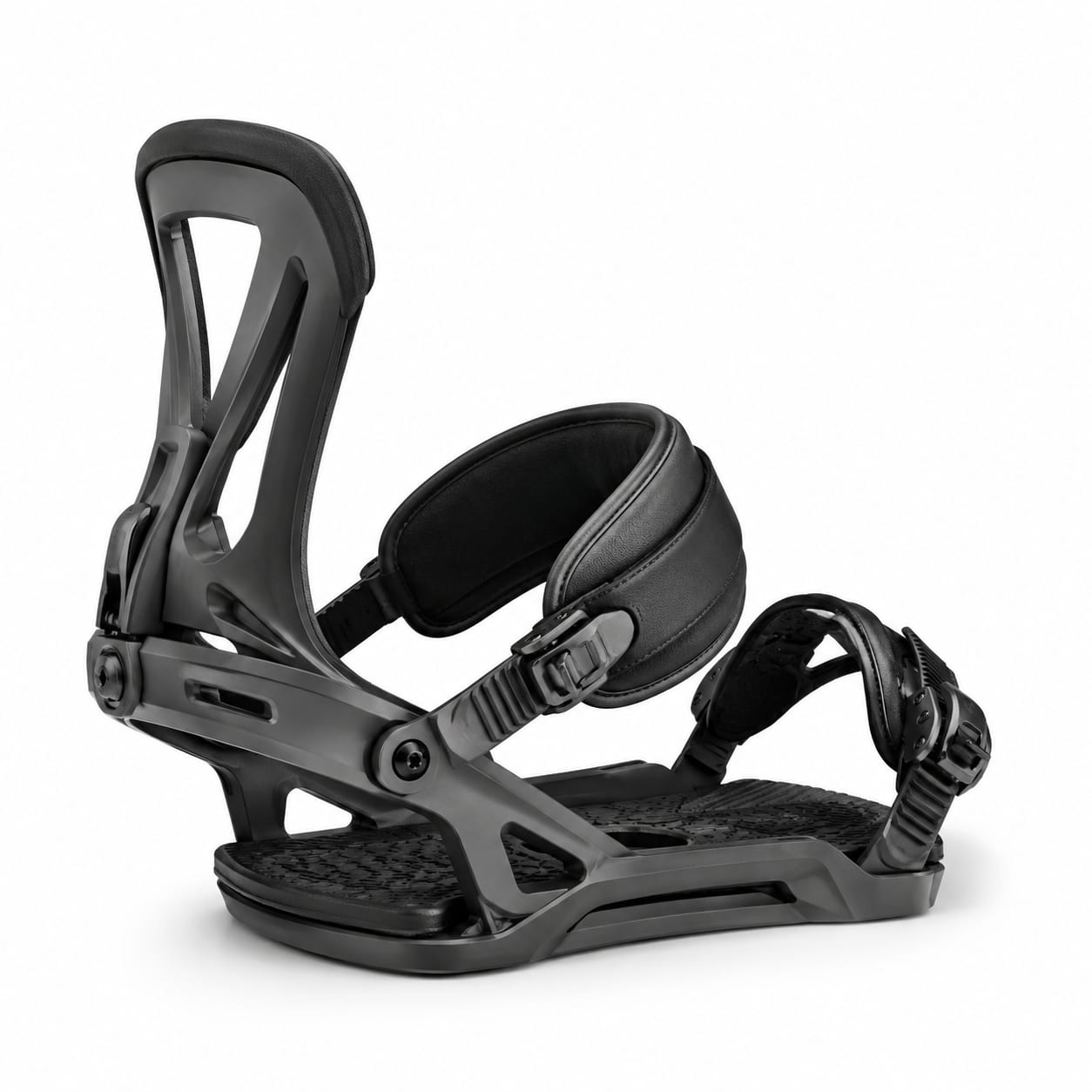
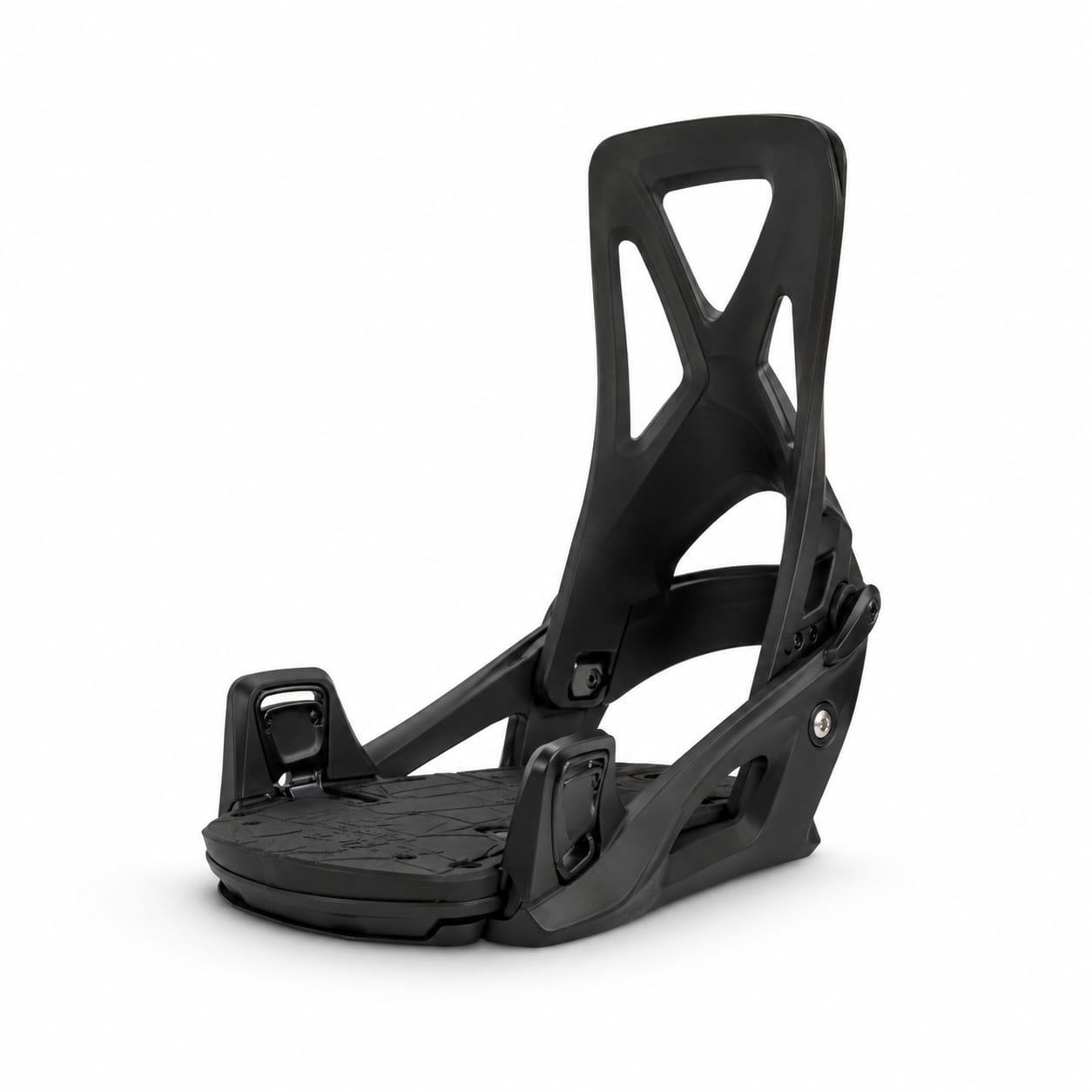
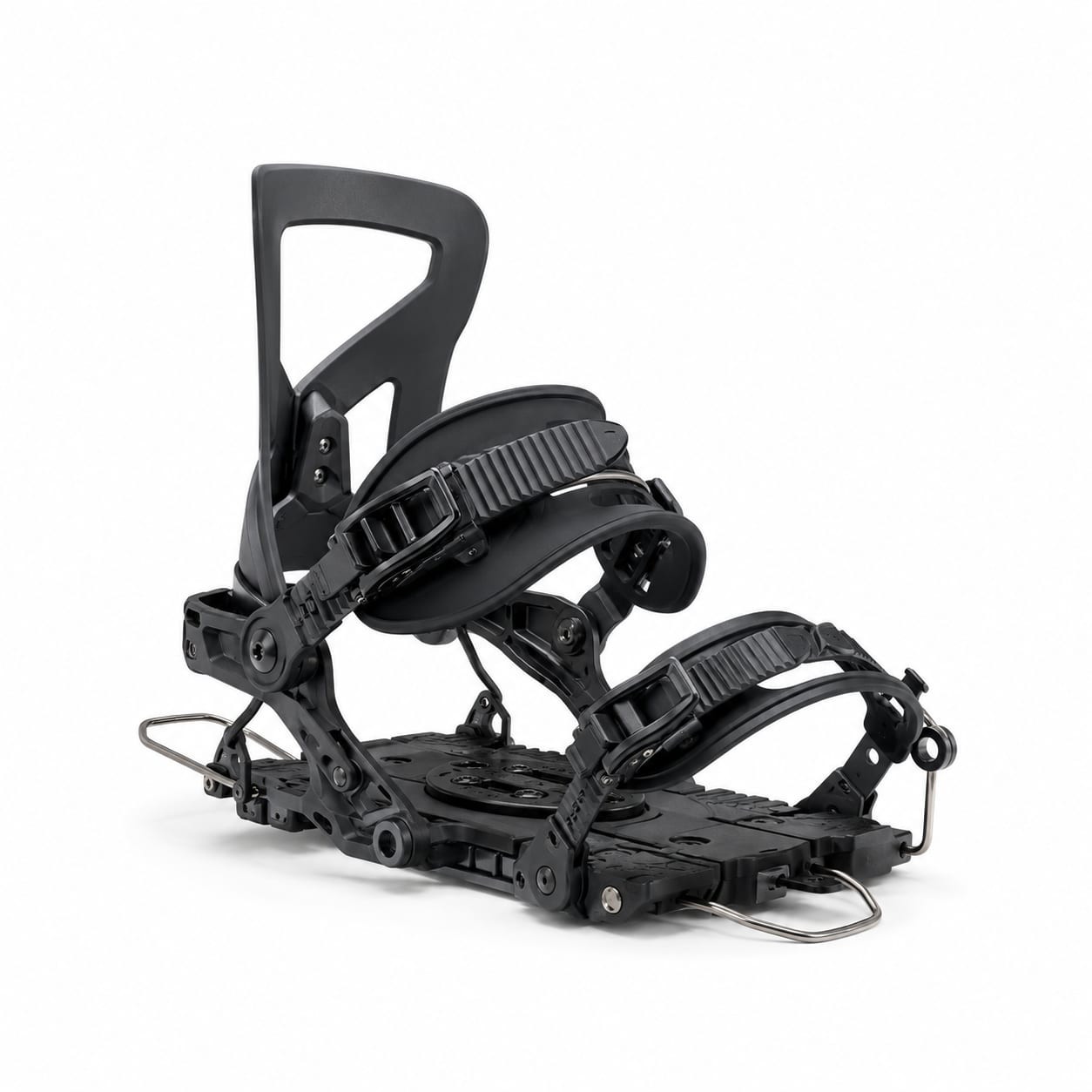
Junior/Kids snowboard bindings are a distinct subcategory engineered for riders approximately 4–13 years old whose boot sizes, body weight, and skill levels differ significantly from adults. Every component — baseplate, highback, straps, and ratchets — is scaled down to match youth boot dimensions, ensuring the heel cup cradles a smaller boot correctly and straps apply even pressure without excess ladder dangling. The flex pattern is deliberately soft (typically 1–4 on a 10-point scale) so lightweight riders can initiate turns and control edges without the resistance that adult-stiff bindings would create. This forgiving feel builds confidence and reduces the frustration that drives many kids away from the sport early. Materials skew toward durable nylon composites rather than premium aluminum or carbon, keeping costs reasonable for parents who know their child will outgrow the binding in one to two seasons. Cushioning is straightforward EVA foam — adequate for the lower-impact forces kids generate. Most junior bindings use traditional strap entry because it offers the widest boot compatibility and easiest fit adjustment as kids grow, though some step-on systems are emerging in youth sizes. Mounting compatibility is typically 4x4/2x4 with some Burton Channel options, covering the majority of kids' boards on the market.
Choosing the right binding for a young snowboarder is arguably more important than for an adult, because kids have less strength, less body weight, and less experience to compensate for poorly matched equipment. A binding that is too stiff, too heavy, or too large makes every turn harder than it needs to be, turning what should be fun into frustration. Junior bindings solve this by scaling every dimension to the youth rider: the baseplate is narrower and shorter, the highback is lower and softer, the straps are sized for smaller boots, and the overall weight is minimized so the board feels nimble beneath them.
The most critical factor is sizing. Kids' feet grow fast, and a binding that fit in November may be too small by March. Parents should check the specific brand's size chart against the child's current snowboard boot size — not street shoe size — and consider sizing up slightly if the child is between sizes or in a growth spurt. However, avoid buying adult bindings that are 'only a little too big,' because an oversized heel cup allows the boot to shift laterally, reducing edge control and creating safety risks. The binding must hold the boot snugly with the heel seated firmly in the cup and straps applying even pressure without bottoming out or leaving excessive ladder strap dangling.
Flex and response are where junior bindings truly differ from adult models. A typical kids' binding flexes in the 1–4 range, meaning the highback and baseplate yield easily under the modest force a 50–90 lb rider can generate. This soft flex allows the child to initiate heel-side and toe-side turns without having to muscle through resistance, which accelerates skill development and keeps riding enjoyable. As kids progress into confident intermediate and advanced riding — hitting park features, carving groomers, or exploring off-piste — some brands offer slightly stiffer junior models (flex 4–5) that provide more response without crossing into adult territory.
Durability and value are practical concerns unique to this subcategory. Kids outgrow bindings before they wear them out in most cases, so investing in premium materials like carbon fiber or multi-density gel cushioning rarely makes financial sense. Nylon composite baseplates and highbacks, EVA foam cushioning, and composite ratchets are the norm — and they perform perfectly well for the forces and usage patterns of youth riders. Parents should focus budget on proper fit and appropriate flex rather than premium features. That said, ensure ratchets operate smoothly; sticky or stiff ratchets frustrate kids who are already struggling with cold hands and bulky gloves.
Finally, consider the mounting system and board compatibility. Most kids' boards use a standard 4x4 or 2x4 insert pattern, and most junior bindings include compatible discs. If the child rides a Burton board with the Channel system, confirm the binding includes Channel-compatible discs or consider Burton's own youth EST bindings for the best integration. Step-on systems are beginning to appear in kids' sizes and offer compelling convenience — no straps to fumble with — but they require dedicated compatible boots and limit future boot choices. For most families, traditional strap bindings remain the most versatile and cost-effective choice for young riders.