Binding Entry Type
Binding Type
What it means
The mechanism by which the rider's boot is secured into the binding, affecting convenience, response, and compatibility with specific boot models.
Typical for this type
Strap (This Is The Defining Characteristic Of The Subcategory)
In practice
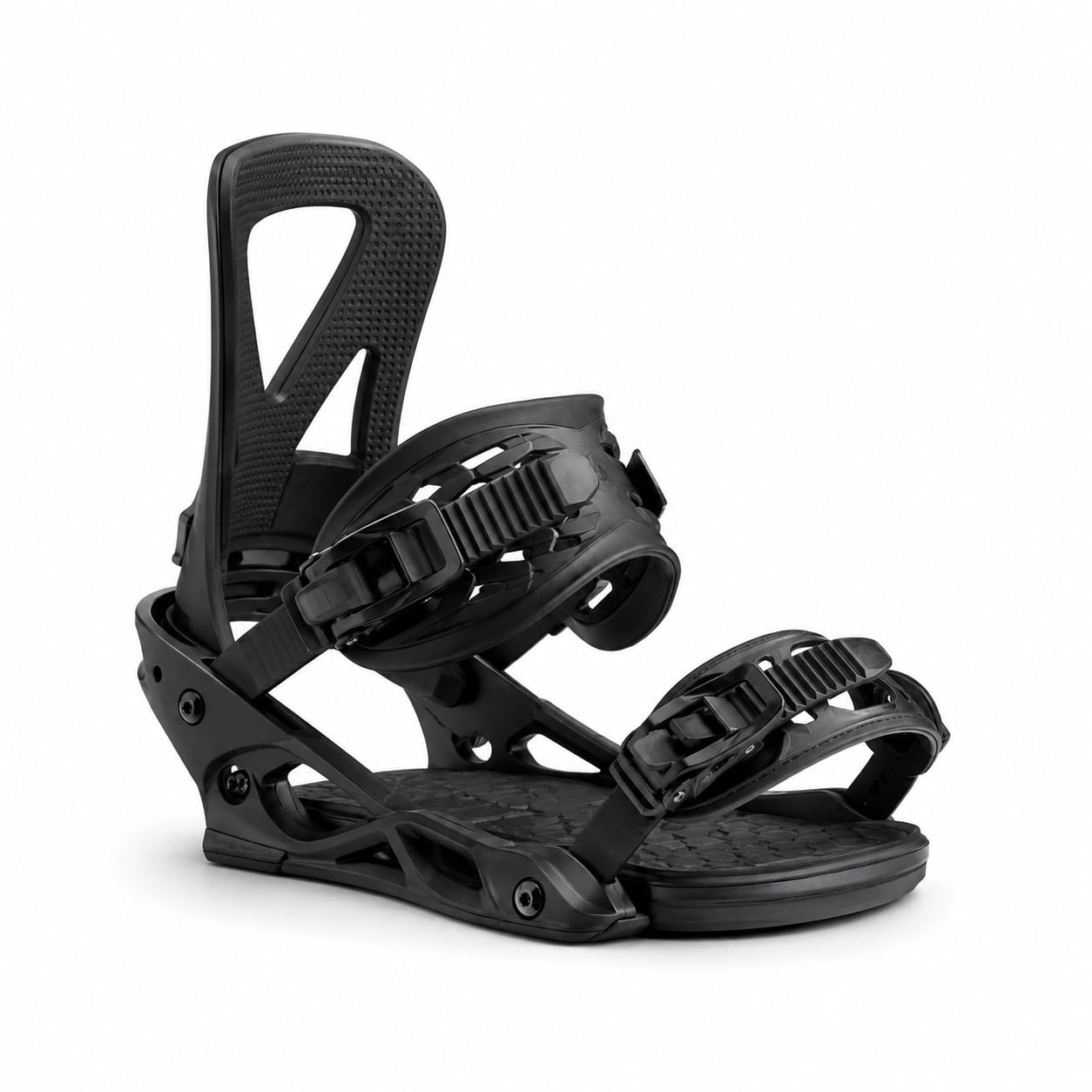
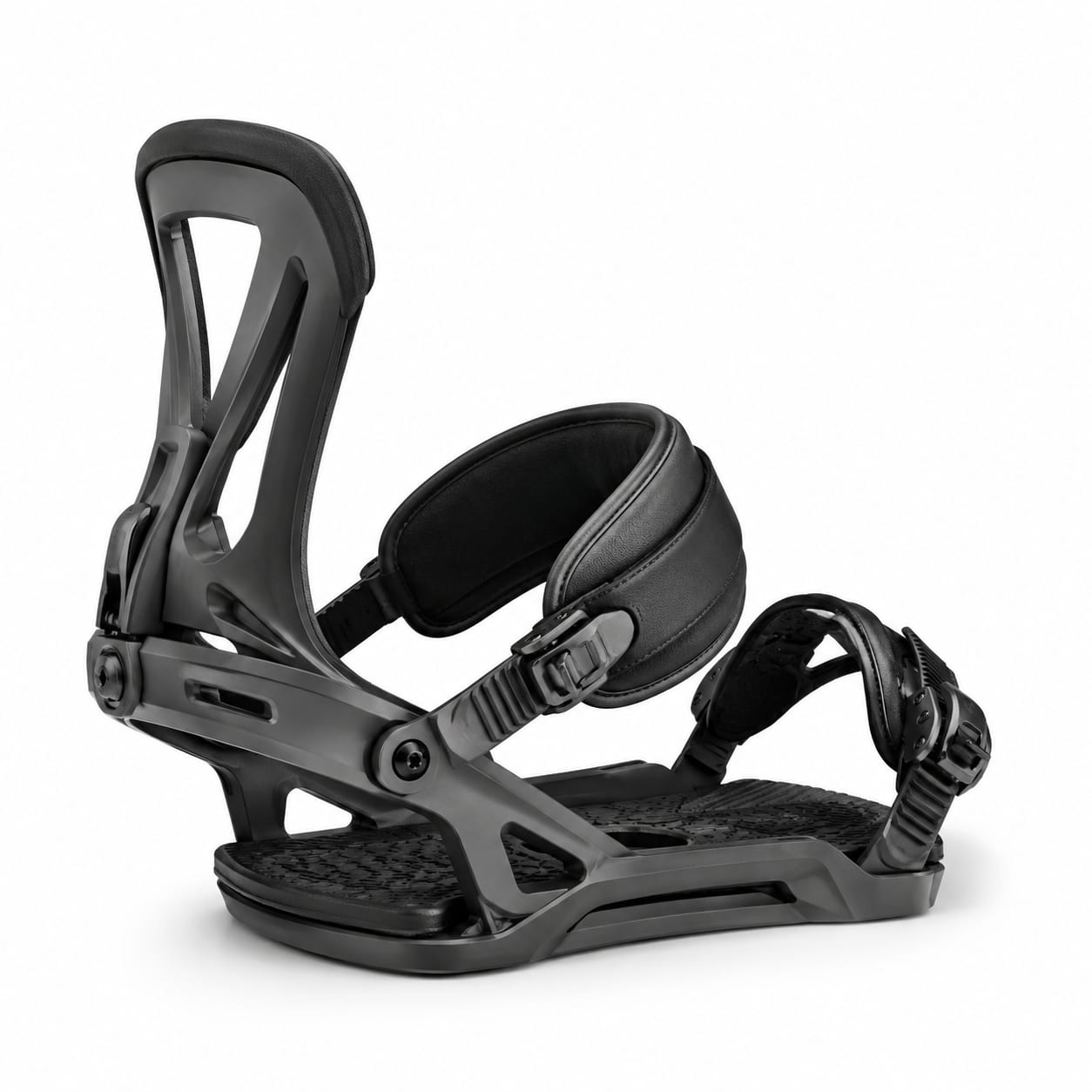
Snowboard strap bindings are defined by their traditional two-strap entry system — an ankle strap and a toe strap — each secured with a ratchet mechanism. This is the most common binding type in snowboarding.
Compared to other types
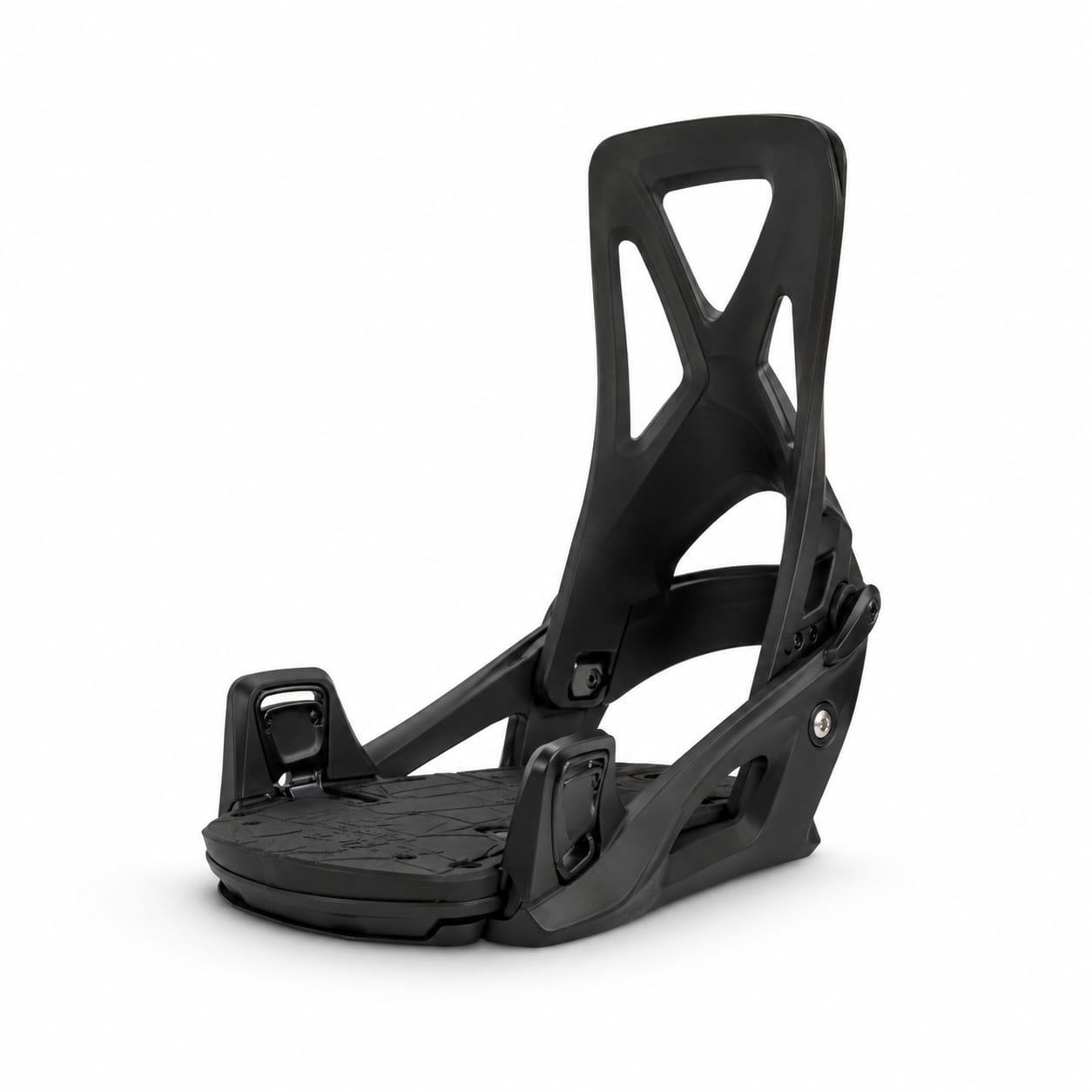
Unlike step-on bindings (which require specific boots with cleats) and rear-entry bindings (which use a reclining highback for speed entry), strap bindings offer the widest boot compatibility and most customizable fit, at the cost of slower entry/exit speed.
Why it matters: The strap entry type determines the core user experience: universal boot compatibility, adjustable fit, and proven reliability. It is the baseline against which all other binding types are compared.
Flex Stiffness
Flex Rating
What it means
How stiff or soft the binding feels, affecting responsiveness, comfort, and the type of riding it supports. Typically rated on a 1-10 scale by manufacturers.
Typical for this type
3–8 depending on riding style (3–4 for park, 5–7 for all-mountain, 7–8 for freeride)
In practice
Strap bindings are available across the entire flex spectrum. The most common configuration is medium flex (5–6) for all-mountain versatility, but park-specific models go as soft as 2–3 and freeride models reach 8–9.
Compared to other types
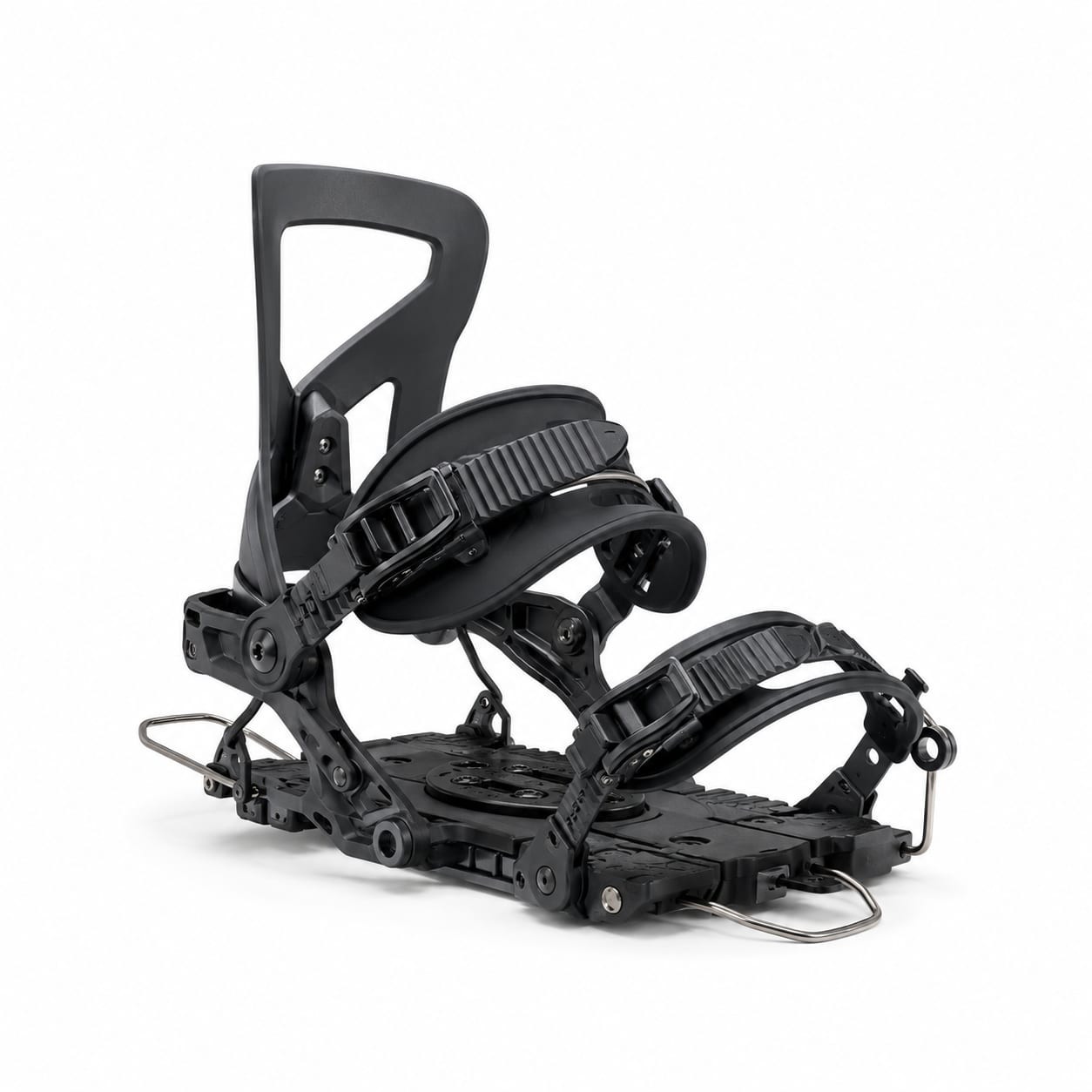
Strap bindings offer the widest flex range of any binding type. Step-on bindings tend to be medium-to-stiff due to their rigid connection design. Rear-entry bindings skew medium. Splitboard bindings vary but often lean stiffer for touring stability.
Why it matters: Flex directly affects responsiveness, comfort, and the type of riding the binding supports. Softer flex is forgiving and playful; stiffer flex maximizes power transfer and edge control at speed.
Mounting Pattern Compatibility
Mounting System
What it means
The bolt pattern and disc system the binding uses to attach to the snowboard. Must be compatible with the board's insert pattern.
Typical for this type
4x4 and 2x4 standard; Channel-compatible discs included with most models; 3D discs often included or available
Most common pick: 4x4, 2x4
In practice
Most strap bindings ship with discs compatible with 4x4 and 2x4 insert patterns, which cover the majority of non-Burton boards. Many also include or offer Channel-compatible discs. Burton's EST strap bindings are Channel-exclusive.
Compared to other types
Strap bindings have the broadest mounting compatibility overall. Step-on bindings (especially Burton) are heavily tied to the Channel system. Splitboard bindings use specialized pucks or pin systems unique to splitboard setups.
Why it matters: Mounting compatibility determines whether the binding can be attached to your board. Mismatched systems mean the binding won't mount properly or at all.
What it means
The frame size of the binding, which must correspond to the rider's boot size for proper fit, support, and safety.
Typical for this type
Match to Your Snowboard Boot Size Using The Manufacturer'S Specific Size Chart
Most common pick: Medium (Men's 8–10 / Women's 9–11)
In practice
Strap bindings come in XS through XL to accommodate the full range of boot sizes. Proper sizing ensures the heel cup engages correctly, straps align with the boot, and there is no toe or heel drag.
Compared to other types
Size ranges are similar across binding types, but strap bindings tend to have the most forgiving fit within each size due to adjustable strap positioning. Step-on bindings have tighter size tolerances because the cleat interface must align precisely.
Why it matters: Incorrectly sized bindings compromise safety, comfort, and performance. Too small and the boot overhangs; too large and the boot shifts inside the frame.
Baseplate Material
Baseplate Material
What it means
The primary material composing the baseplate, which affects weight, responsiveness, vibration dampening, and durability.
Typical for this type
Nylon/Composite For Most Riders; Multi-Material For Performance All-Mountain; Aluminum Or Carbon For Aggressive Freeride
Most common pick: Nylon Composite
In practice
Nylon/glass-filled composite is the most common baseplate material in strap bindings, offering a balance of flex, dampening, durability, and cost. Higher-end models may use multi-material designs (aluminum heel cup + composite footbed) or carbon fiber for reduced weight and increased stiffness.
Compared to other types
Strap bindings offer the widest material selection. Step-on bindings typically use stiffer composite or multi-material designs. Rear-entry bindings often use composite for the baseplate with specialized hardware for the reclining mechanism. Splitboard bindings may use aluminum or carbon for touring weight savings.
Why it matters: Baseplate material affects weight, responsiveness, vibration dampening, and durability. It is one of the primary factors differentiating price tiers within strap bindings.
Highback Material
Highback Material
What it means
Material composition of the highback, which affects heel-side response, lateral mobility, and weight.
Typical for this type
Nylon/Composite For All-Mountain And Park; Multi-Material For Aggressive All-Mountain; Carbon Fiber For Freeride And Weight Savings
Most common pick: Nylon Composite
In practice
Composite highbacks dominate the strap binding market, providing a versatile balance of heel-side response and lateral flex. Multi-material highbacks with a stiff spine and forgiving outer frame are increasingly popular in performance models. Carbon fiber appears in premium freeride bindings.
Compared to other types
Strap bindings offer the full range of highback materials and designs. Rear-entry bindings require specific highback designs with reclining mechanisms, limiting material choices. Step-on bindings use integrated highbacks that are typically medium-stiff composite.
Why it matters: Highback material determines heel-side power transfer, lateral mobility for tweaking and freestyle, and overall weight. It should complement the baseplate material and the rider's style.
Canted Footbed
Canted Footbed
What it means
Whether the binding footbed is angled outward (canted) to align the rider's knees and legs in a more natural stance, reducing fatigue and improving leverage.
Typical for this type
Canted Footbed Recommended For Most Riders, Especially With Wider Stances
Most common pick: True
In practice
The majority of mid-to-high-end strap bindings now include canted footbeds, typically angled 2.5°–4° outward. This ergonomic feature aligns the knees in a more natural position, reducing fatigue and improving edge power leverage.
Compared to other types
Canted footbeds are common across all modern binding types. Strap bindings were among the first to adopt canting widely, and it is now a standard feature in most models above entry-level price points.
Why it matters: Canting reduces knee strain during long days and improves biomechanical efficiency for edge-to-edge transitions. Riders with wider stances benefit most significantly.
Dampening / Cushioning
Cushioning System
What it means
The type and amount of shock-absorbing material between the baseplate and the rider's foot, affecting impact absorption, vibration dampening, and comfort.
Typical for this type
EVA Foam For Casual Riding; Multi-Density Foam For All-Mountain; Gel Inserts For Park And High-Impact Riding
Most common pick: Multi Density Foam
In practice
Most modern strap bindings use multi-density foam cushioning that places softer material under high-impact zones (heel) and firmer material under power-transfer zones (toe, ball of foot). Entry-level models use single-density EVA foam. Premium models may add gel heel inserts for big-impact protection.
Compared to other types
Strap bindings offer the widest range of cushioning options. Step-on bindings use cushioning pods integrated into the binding-boot interface. Rear-entry bindings often have less room for elaborate cushioning due to the reclining mechanism. EST bindings use specialized SensoryBED cushioning pods.
Why it matters: Cushioning affects comfort, fatigue, and impact protection. Riders who spend time on choppy snow, ice, or in the park benefit most from advanced cushioning systems.
Ankle Strap Design
Ankle Strap Type
What it means
The design and construction of the ankle strap, which is the primary retention mechanism affecting comfort, hold, and pressure distribution.
Typical for this type
Asymmetrical/Contoured For Most Riders; Grip/Traction For Aggressive Freeride; Minimal For Park; Standard Padded For Budget
Most common pick: Asymmetrical
In practice
Asymmetrical ankle straps are the most common design in modern strap bindings, shaped to follow the natural contour of the ankle for reduced pressure points and better hold with less overtightening. Grip-style straps with textured interiors are popular in freeride models, while minimal low-profile straps appear in park bindings.
Compared to other types
Strap bindings are the only type where ankle strap design is a primary differentiator — it is the core retention mechanism. Step-on bindings use cleats instead of straps. Rear-entry bindings may use a single cable or strap that functions differently.
Why it matters: The ankle strap is the primary retention mechanism. Its design directly affects comfort, hold quality, and whether riders experience pressure points or hot spots during long sessions.
Toe Strap Design
Toe Strap Type
What it means
The design of the toe strap, which secures the front of the boot and affects both hold and toe drag management.
Typical for this type
Cap Style For Most Riders; Hybrid For Those Who Want Flexibility; Over-The-Top Is Largely Outdated
Most common pick: Cap
In practice
Cap-style toe straps dominate modern strap bindings. They pull down and slightly back over the toe box, securing the heel into the heel cup while minimizing pressure on top of the foot and reducing toe drag. Hybrid/convertible straps that work in either cap or over-the-top position are available from some brands.
Compared to other types
Toe strap design is unique to strap bindings. Step-on bindings use toe cleats instead. Rear-entry bindings may have a toe strap or integrated retention that differs from traditional two-strap designs.
Why it matters: Toe strap design affects boot hold, toe drag, and foot comfort. Cap straps provide superior hold with less pressure compared to older over-the-top designs.
Highback Forward Lean
Forward Lean
What it means
The angle at which the highback tilts forward toward the rider's calf, affecting heel-edge responsiveness, knee positioning, and riding posture.
Typical for this type
0–8° for park/freestyle; 8–15° for all-mountain; 12–20° for freeride/carving
Most common pick: 12°
In practice
Most strap bindings ship with forward lean set around 10–15° and offer adjustment via a lever or screws on the highback. More forward lean creates an aggressive, bent-knee stance for quicker heel-edge response; less lean allows a more upright, relaxed stance.
Compared to other types
Forward lean adjustment is available on all strap bindings and most other binding types. Rear-entry bindings may have more limited forward lean adjustment due to the reclining mechanism. Step-on bindings offer forward lean adjustment on the highback.
Why it matters: Forward lean affects riding posture, heel-edge responsiveness, and knee positioning. It is one of the most impactful adjustments a rider can make to their binding setup.
Weight (Pair)
Weight Per Pair
What it means
The combined weight of both bindings, affecting overall setup weight and fatigue on long days or hiking.
Typical for this type
850–1200g for most riders; under 900g for weight-conscious park and touring; 1200–1500g for freeride with maximum dampening
Most common pick: 1050g
In practice
A typical pair of mid-range strap bindings weighs approximately 1000–1100g. Lightweight park models can dip below 850g, while freeride bindings with heavy dampening and reinforced construction may reach 1300–1500g. Weight includes hardware but may exclude mounting discs depending on the brand.
Compared to other types
Strap bindings are generally comparable in weight to rear-entry bindings. Step-on bindings are similar when including the boot cleat weight. Splitboard bindings are often heavier due to touring mechanisms. Carbon fiber strap bindings can be among the lightest options available.
Why it matters: Weight affects swing weight for spins, fatigue on long days, and hiking effort. However, weight differences under 150g are barely noticeable for most riders and should not be the primary selection criterion.
Ratchet Mechanism
Ratchet Type
What it means
The type and material of the ratchets used to tighten straps, affecting ease of use, durability, and smoothness of operation.
Typical for this type
Aluminum For Most Riders; Magnesium For Premium Performance; Composite For Budget And Weight Savings
Most common pick: Aluminum
In practice
Aluminum ratchets are the standard in mid-to-high-end strap bindings, offering smooth operation, good durability, and resistance to stripping. Composite ratchets appear on entry-level models. Magnesium ratchets are found on premium bindings, providing similar strength to aluminum at lower weight.
Compared to other types
Ratchet type is specific to strap bindings and some rear-entry models. Step-on bindings do not use ratchets. Splitboard bindings may use ratchets for ride mode but also feature pin systems for touring.
Why it matters: Ratchet quality affects daily usability — smooth, reliable ratchets make strapping in quick and frustration-free. Poor ratchets that slip, jam, or ice up can be a significant annoyance.
Response Level
Response Rating
What it means
How quickly and directly the binding transfers rider input to the board edge, influenced by the combined effect of flex, materials, and construction design.
Typical for this type
3–5 for park/freestyle; 5–7 for all-mountain; 7–9 for freeride/carving
Most common pick: 6
In practice
Strap bindings span the full response spectrum. Medium response (5–7) is most common for all-mountain models. Response is influenced by the combined effect of baseplate material, highback stiffness, strap design, and baseplate construction — not just flex alone.
Compared to other types
Strap bindings offer the widest response range. Step-on bindings tend to feel very responsive due to the rigid cleat interface. Rear-entry bindings vary but often feel slightly less direct than comparable strap bindings due to the cable mechanism. Splitboard bindings may feel slightly less responsive than dedicated resort bindings.
Why it matters: Response determines how quickly and directly rider input transfers to the board edge. Higher response means quicker edge engagement and more precise control at speed; lower response is more forgiving and playful.
Optimized Riding Style
Riding Style
What it means
The primary riding style(s) the binding is designed for, which informs its flex, response, and feature set.
Typical for this type
All Mountain For Versatile Riders; Park Freestyle For Park-Focused; Freeride For Off-Piste And Big Mountain
In practice
Strap bindings are designed for every riding style. All-mountain is the most common category, but dedicated park/freestyle and freeride strap bindings are widely available. The strap design works well across all styles because strap tension can be adjusted to suit different needs — looser for park, tighter for freeride.
Compared to other types
Strap bindings cover all riding styles more comprehensively than any other binding type. Step-on bindings are primarily all-mountain and freeride focused. Rear-entry bindings skew all-mountain. Splitboard bindings are purpose-built for backcountry touring.
Why it matters: Riding style should be the primary filter when selecting bindings. A park binding will feel sloppy at high speeds in choppy snow; a freeride binding will feel harsh and unforgiving in the park.
Baseplate Design
Baseplate Construction
What it means
The structural design philosophy of the baseplate, affecting board feel, dampening, and how the binding interfaces with the snowboard.
Typical for this type
Minimized Contact For Park And All-Mountain; Full Contact For Freeride And Response-Focused Riding; Suspended For Comfort Priority; EST For Burton Channel Boards
Most common pick: Minimized Contact
In practice
Modern strap bindings use a variety of baseplate constructions. Minimized contact / living hinge designs are popular for the board feel they provide. Full contact plates appear in freeride models for maximum response. Suspended footbed designs add comfort for choppy conditions. EST is Burton's Channel-specific design that eliminates the traditional baseplate entirely.
Compared to other types
Strap bindings offer the most variety in baseplate construction. Step-on bindings use specific baseplate designs for their cleat interface. Rear-entry bindings require baseplates that accommodate the reclining mechanism. EST construction is exclusive to Burton strap bindings for Channel boards.
Why it matters: Baseplate construction affects board feel, power transfer efficiency, and underfoot comfort. It is a subtle but meaningful contributor to the overall ride experience.
Strap Durability Rating
Ladder Strap Durability
What it means
The expected durability of the strap ladders (the toothed strips that feed through ratchets), which are the most common wear item on bindings.
Typical for this type
Standard For Casual Riders; Reinforced For 50+ Day Seasons; Toolless Replaceable For Travelers And High-Mileage Riders
Most common pick: Standard
In practice
Most strap bindings come with standard nylon or polyurethane ladder straps that last 1–3 seasons of regular riding. Reinforced straps resist stripping longer. Toolless replaceable ladders are increasingly common on mid-to-high-end models, allowing quick field swaps without tools.
Compared to other types
Ladder strap durability is primarily relevant to strap bindings, as they are the only type that relies on ratcheted ladder straps as the primary retention mechanism. Rear-entry bindings may use ladders for secondary straps. Step-on and splitboard bindings do not use traditional ladder straps.
Why it matters: Ladder straps are the most commonly replaced binding component. A stripped ladder strap can end a day on the mountain. Durability and replaceability matter for frequent riders and those who travel to remote locations.