Binding Entry Type
Binding Type
What it means
The mechanism by which the rider's boot is secured into the binding, affecting convenience, response, and compatibility with specific boot models.
Typical for this type
Step On
In practice
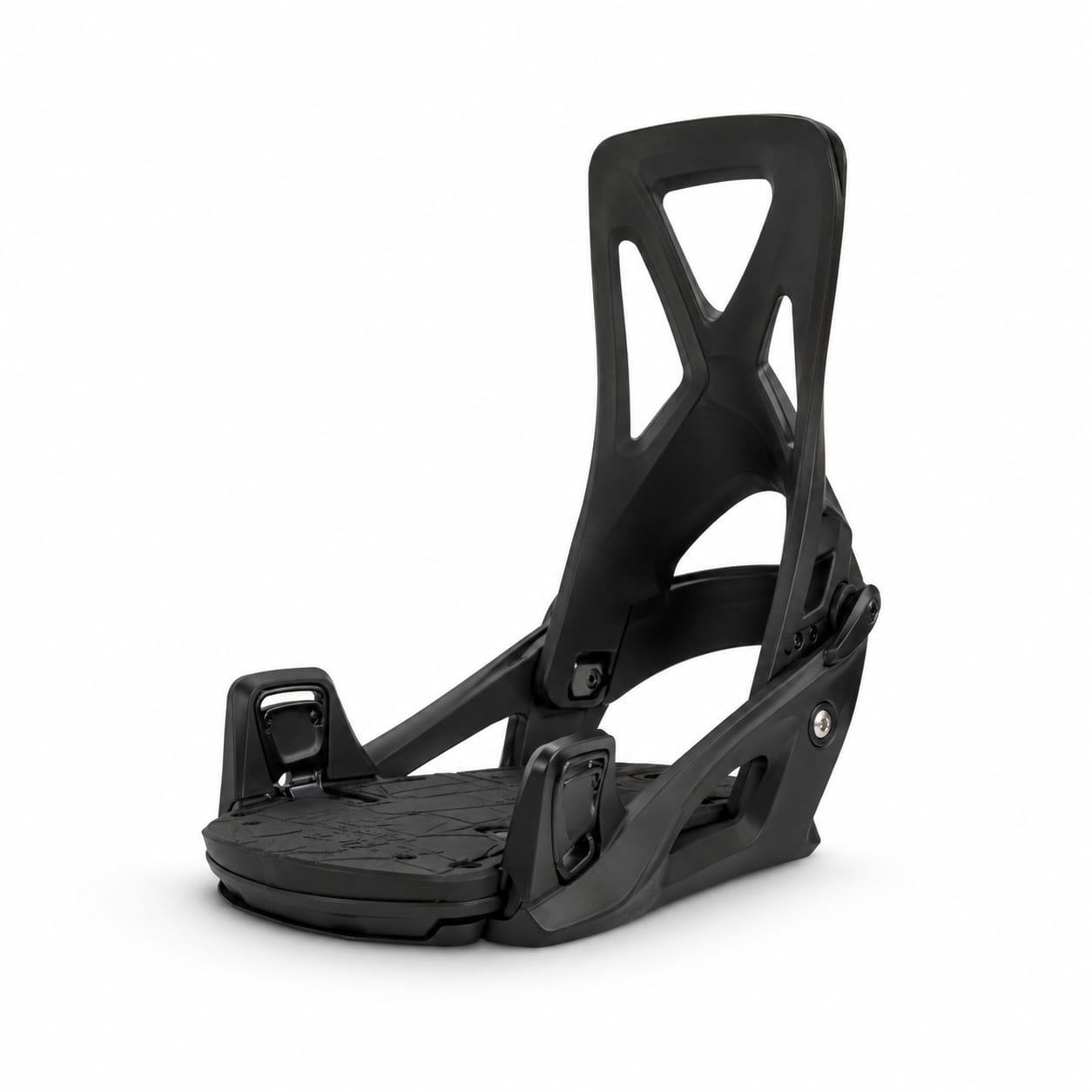
Step-on bindings use a cleat-and-receptor mechanism with no straps. The boot's toe and heel cleats lock into precision receptors on the binding baseplate when the rider steps down.
Compared to other types
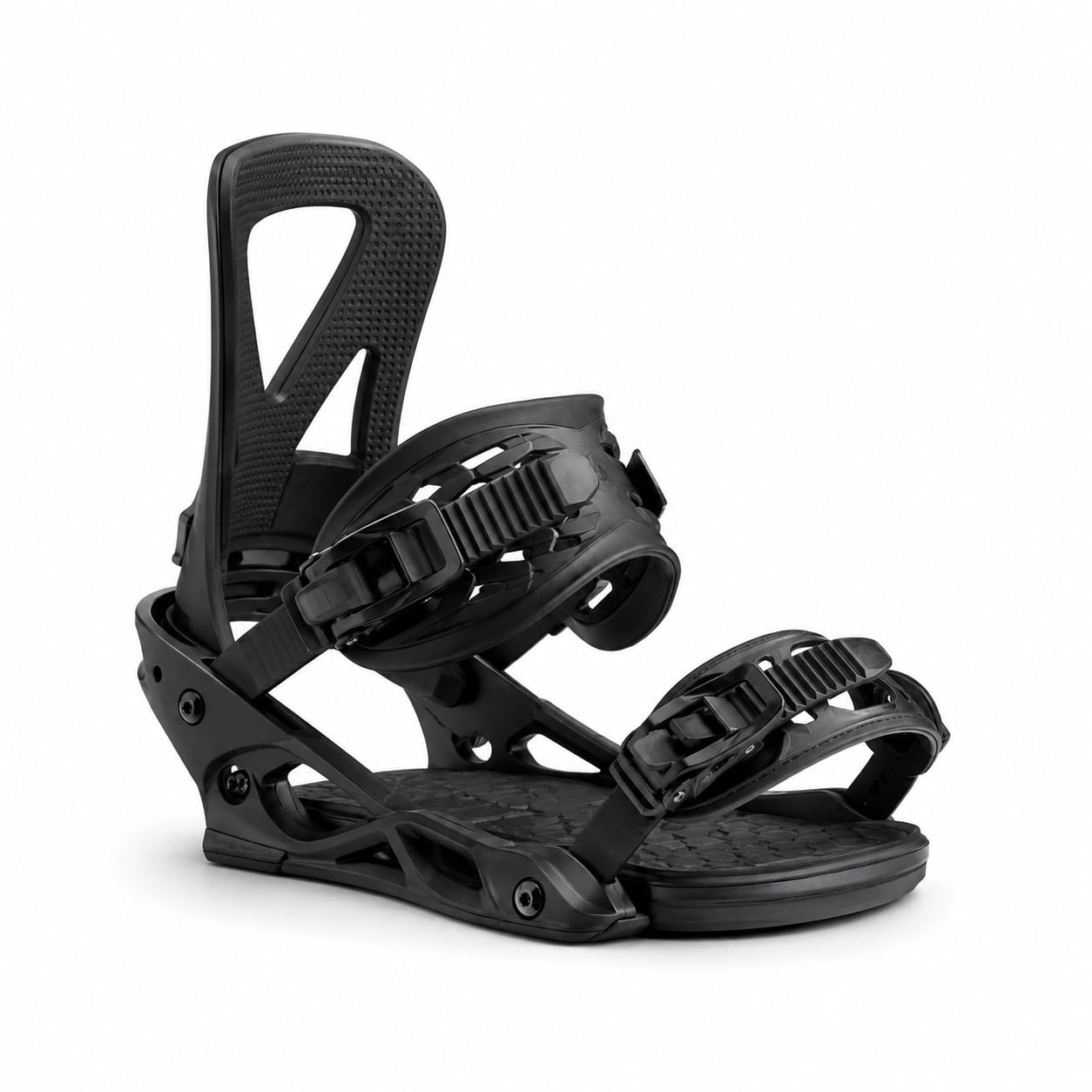
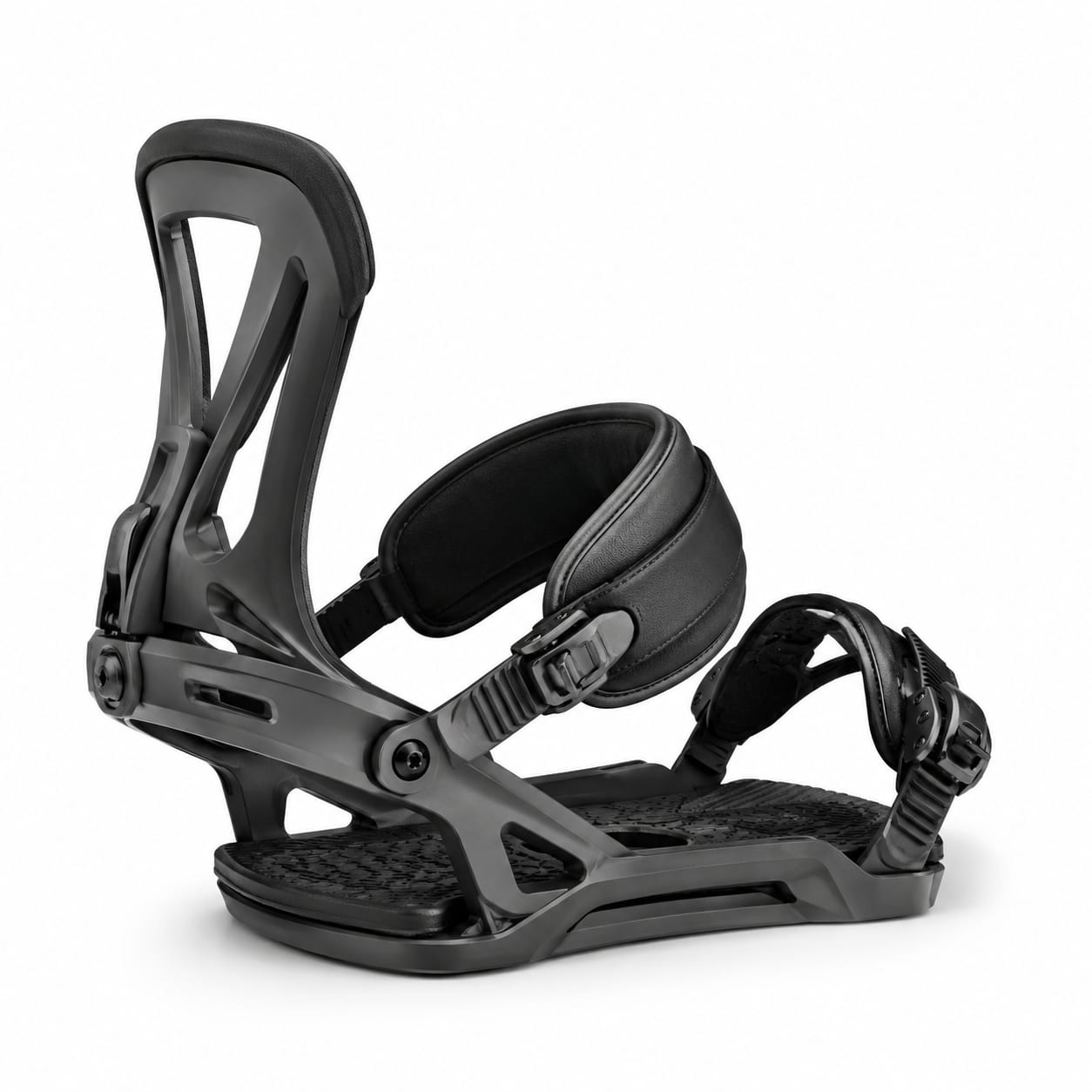
Unlike strap bindings that use ratcheted ankle and toe straps, or rear-entry bindings that use a reclining highback, step-on bindings have no straps at all. This makes them the fastest entry/exit system but requires dedicated boots, unlike strap and rear-entry bindings that work with any boot.
Why it matters: This is the defining characteristic of the subcategory. The step-on mechanism determines boot compatibility, entry/exit speed, and the overall ride feel. It eliminates straps entirely, which is the core value proposition.
Flex Stiffness
Flex Rating
What it means
How stiff or soft the binding feels, affecting responsiveness, comfort, and the type of riding it supports. Typically rated on a 1-10 scale by manufacturers.
Typical for this type
5-8
Most common pick: 6
In practice
Step-on bindings are available in medium to stiff flex ratings. Burton's Step On lineup ranges from about 5 (Photon) to 8 (Ion), with the standard model around 6. The direct cleat connection naturally enhances perceived stiffness even on softer models.
Compared to other types
Step-on bindings tend to feel slightly more responsive at the same flex rating compared to strap bindings due to the direct cleat connection with zero strap stretch. A step-on binding rated at 6 may feel closer to a 7 in a strap binding in terms of perceived response.
Why it matters: Flex affects responsiveness and comfort. Because step-on bindings transfer power so directly, even mid-flex models can feel more responsive than equivalent strap bindings. Choose softer flex for park and freestyle, stiffer for freeride and carving.
Mounting Pattern Compatibility
Mounting System
What it means
The bolt pattern and disc system the binding uses to attach to the snowboard. Must be compatible with the board's insert pattern.
Typical for this type
Compatible With Your Board'S Insert Pattern
Most common pick: 4x4, 2x4, Channel
In practice
Burton Step On bindings are available in both Re:Flex (4x4/2x4/3D compatible) and EST (Channel-only) versions. Nidecker Supermatic uses a universal disc compatible with 4x4/2x4 and Channel with adapter.
Compared to other types
Same mounting compatibility considerations as strap bindings. However, Burton Step On EST versions are particularly popular since Burton riders are the most likely to adopt the Step On system, and many Burton boards use the Channel system.
Why it matters: You must match the mounting system to your snowboard. Burton Channel boards require EST or Channel-compatible discs. Non-Burton boards typically use the Re:Flex version. Getting this wrong means the bindings won't mount to your board.
What it means
The frame size of the binding, which must correspond to the rider's boot size for proper fit, support, and safety.
Typical for this type
Match Exactly to Your Step On Boot Size Per Manufacturer Chart
Most common pick: Varies By Boot Size (XS Through XL)
In practice
Step-on bindings must be sized precisely to match the boot because the cleat-to-receptor alignment is critical for proper engagement and release. Burton Step On uses specific size pairings: S/M boots fit the S/M binding, L/XL boots fit the L/XL binding.
Compared to other types
Sizing is more critical and less forgiving than strap bindings, where straps can accommodate some size variation. Step-on bindings have a precise mechanical interface that requires exact boot-to-binding matching.
Why it matters: Improper sizing in step-on bindings is more serious than in strap bindings. If the boot and binding are mismatched, the cleats may not engage the receptors correctly, leading to unreliable retention or failure to click in. Always follow the manufacturer's specific size chart.
Baseplate Material
Baseplate Material
What it means
The primary material composing the baseplate, which affects weight, responsiveness, vibration dampening, and durability.
Typical for this type
Nylon Composite For All-Mountain; Multi-Material For Enhanced Response
Most common pick: Nylon Composite
In practice
Most step-on bindings use glass-filled nylon composite baseplates that balance durability, dampening, and weight. The baseplate integrates the heel receptor and toe ramp as structural elements, so material choice affects both feel and the precision of the cleat interface.
Compared to other types
Similar to strap bindings in material options, but the baseplate design is more complex due to the integrated receptor mechanisms. This makes the baseplate slightly more expensive to produce but doesn't significantly affect the riding feel compared to equivalent strap binding materials.
Why it matters: The baseplate material influences vibration dampening, response, and long-term durability of the receptor mechanism. Composite materials provide good dampening while maintaining the precision needed for the cleat engagement system.
Highback Material
Highback Material
What it means
Material composition of the highback, which affects heel-side response, lateral mobility, and weight.
Typical for this type
Nylon Composite For All-Mountain; Multi-Material For Freeride Performance
Most common pick: Nylon Composite
In practice
Step-on highbacks are typically nylon composite, matching the all-mountain orientation of most models. The highback design often incorporates the heel release lever as an integrated component, which influences the material and construction choices.
Compared to other types
Functionally similar to strap binding highbacks in terms of material performance, but the integrated release mechanism adds a design constraint. Step-on highbacks may feel slightly different because there are no ankle straps pulling the boot into the highback—the boot is held by the cleat system instead.
Why it matters: The highback provides heel-side response and houses the release mechanism in most step-on designs. Material stiffness affects both heel-edge power and the ease of operating the release lever. The highback must be stiff enough for response but allow the release mechanism to function smoothly.
Canted Footbed
Canted Footbed
What it means
Whether the binding footbed is angled outward (canted) to align the rider's knees and legs in a more natural stance, reducing fatigue and improving leverage.
Typical for this type
Yes, With 2-3° Canting
Most common pick: True
In practice
Most step-on bindings include a canted footbed, typically around 2-3 degrees. Burton Step On bindings feature a slight cant built into the footbed design. This aligns with the all-mountain orientation of the system.
Compared to other types
Similar to strap bindings in canting approach. The canting angle in step-on bindings is generally moderate since the system already provides strong edge-to-edge response through the direct cleat connection.
Why it matters: Canting reduces knee strain during long days and improves leverage for edge engagement. Since step-on bindings already provide excellent heel-side response through the cleat connection, canted footbeds complement this by optimizing the rider's biomechanical alignment.
Dampening / Cushioning
Cushioning System
What it means
The type and amount of shock-absorbing material between the baseplate and the rider's foot, affecting impact absorption, vibration dampening, and comfort.
Typical for this type
Multi-Density Foam Or EVA Foam
Most common pick: Multi Density Foam
In practice
Step-on bindings typically use multi-density or EVA foam cushioning under the footbed. Burton Step On uses a specialized cushioning system with different densities under the heel and toe zones. The cushioning must work around the cleat receptors without interfering with engagement.
Compared to other types
Cushioning is arguably more important in step-on bindings than in strap bindings because there are no straps to provide any additional shock absorption. The direct cleat connection transmits more vibration to the foot, making good cushioning essential for comfort on choppy terrain.
Why it matters: Because step-on bindings create a very direct connection to the board, cushioning plays an important role in absorbing vibration and impacts. Without straps to absorb some energy, the footbed cushioning is the primary dampening layer between the rider and the board.
Ankle Strap Design
Ankle Strap Type
What it means
The design and construction of the ankle strap, which is the primary retention mechanism affecting comfort, hold, and pressure distribution.
Typical for this type
N/A — Step-On Bindings Do Not Use Ankle Straps
Most common pick: Not Applicable
In practice
Step-on bindings do not have ankle straps. Boot retention is achieved entirely through the cleat-and-receptor system. The heel cleat locks into the heel receptor, and the toe cleats engage the toe ramp, holding the boot securely without any strap contact on the foot.
Compared to other types
All other binding subcategories use some form of ankle retention (straps or rear-entry cables). Step-on bindings are unique in having no ankle strap at all, relying entirely on the mechanical cleat connection for boot retention.
Why it matters: This is one of the key differences of step-on bindings. The absence of ankle straps eliminates pressure points on the top of the foot and ankle area, which some riders find more comfortable. However, it also means the fit cannot be fine-tuned through strap tension adjustments.
Toe Strap Design
Toe Strap Type
What it means
The design of the toe strap, which secures the front of the boot and affects both hold and toe drag management.
Typical for this type
N/A — Step-On Bindings Do Not Use Toe Straps
Most common pick: Not Applicable
In practice
Step-on bindings do not have toe straps. The toe cleats on the boot engage with receptors on the binding's toe ramp, providing toe-side hold without any strap. The toe ramp itself is designed to cradle the toe box of the boot.
Compared to other types
Strap and rear-entry bindings all use some form of toe strap (cap, over-the-top, or hybrid). Step-on bindings replace this with a fixed toe ramp and cleat system that provides hold without adjustability.
Why it matters: No toe strap means no pressure on the top of the foot and no risk of toe strap slippage. The toe cleat engagement provides secure hold, but it cannot be adjusted for tension like a toe strap can. The fit depends on proper boot-to-binding sizing.
Highback Forward Lean
Forward Lean
What it means
The angle at which the highback tilts forward toward the rider's calf, affecting heel-edge responsiveness, knee positioning, and riding posture.
Typical for this type
8-18°
Most common pick: 12°
In practice
Step-on bindings typically come with moderate forward lean settings, around 10-14° out of the box. Burton Step On allows forward lean adjustment via the highback mechanism. The release lever design is compatible with a range of lean angles.
Compared to other types
Adjustment range is similar to strap bindings. However, the perceived need for forward lean may be slightly less because the cleat connection already provides excellent heel-side response without relying as heavily on highback leverage.
Why it matters: Forward lean affects heel-edge response and riding posture. Because step-on bindings already deliver strong heel-side power through the cleat connection, some riders prefer slightly less forward lean than they would use on strap bindings. Adjust to your preference and riding style.
Weight (Pair)
Weight Per Pair
What it means
The combined weight of both bindings, affecting overall setup weight and fatigue on long days or hiking.
Typical for this type
950-1300g
Most common pick: 1050g
In practice
Step-on bindings typically weigh between 950-1300g per pair, comparable to mid-range strap bindings. The integrated receptor mechanisms add some weight, but the absence of straps and ratchets offsets this. Burton Step On bindings are in the 1000-1150g range depending on the model.
Compared to other types
Step-on bindings are roughly the same weight as comparable strap bindings. They are lighter than some rear-entry bindings and significantly lighter than splitboard bindings. The weight is well-distributed and not noticeable during riding.
Why it matters: Weight affects swing weight for spins and fatigue on long days. Step-on bindings are competitive with strap bindings in weight, so this is not a significant differentiator. The convenience benefit far outweighs any minor weight differences.
Ratchet Mechanism
Ratchet Type
What it means
The type and material of the ratchets used to tighten straps, affecting ease of use, durability, and smoothness of operation.
Typical for this type
N/A — Step-On Bindings Do Not Use Ratchets
Most common pick: Not Applicable
In practice
Step-on bindings have no ratchets because they have no straps. The boot is secured entirely through the cleat-and-receptor system. The only mechanical operation is the heel release lever, which uses a simple spring-loaded mechanism.
Compared to other types
All other binding subcategories use ratchets (aluminum, composite, or magnesium). Step-on bindings eliminate this entire wear item and potential failure point, which is a meaningful reliability benefit over the life of the binding.
Why it matters: No ratchets means no ratchet maintenance, no stripped ladder straps, no iced-up ratchets, and no cold fingers struggling to operate them. This is a significant reliability and convenience advantage, especially in cold or wet conditions.
Response Level
Response Rating
What it means
How quickly and directly the binding transfers rider input to the board edge, influenced by the combined effect of flex, materials, and construction design.
Typical for this type
6-9
Most common pick: 7
In practice
Step-on bindings typically offer medium-high to high response ratings. The direct cleat connection provides very immediate power transfer with zero strap stretch or boot lift. Burton Step On models range from about 6 (Photon) to 9 (Ion) in response.
Compared to other types
Step-on bindings generally deliver higher effective response than strap bindings at the same flex rating because there is no strap stretch or boot lift. The connection feels more like a ski binding—immediate and precise. Some riders find this too direct initially but appreciate it as they adjust.
Why it matters: Response is one of the key performance advantages of step-on bindings. The rigid cleat connection transfers input to the board edge faster and more directly than straps, which can stretch slightly under load. This makes step-on bindings particularly effective for carving and freeride performance.
Optimized Riding Style
Riding Style
What it means
The primary riding style(s) the binding is designed for, which informs its flex, response, and feature set.
Typical for this type
All-Mountain And Freeride; Park/Freestyle With Softer Flex Models
Most common pick: All Mountain, Freeride
In practice
Step-on bindings are primarily designed for all-mountain and freeride riding. Burton offers models across the spectrum, but the system's strengths—quick edge engagement, direct power transfer, and convenience—align best with all-mountain and freeride priorities. Softer models like the Photon work for park, but the limited boot selection and direct feel are less ideal for dedicated park riders.
Compared to other types
Strap bindings offer the widest range of riding style options and boot compatibility. Step-on bindings cover all-mountain and freeride well, with growing park options. The main limitation is boot selection within each riding style, not the binding's performance capability.
Why it matters: Choosing the right step-on model for your riding style ensures you get the flex and response characteristics you need. The system works well across styles, but the boot selection within each style category is more limited than with strap bindings.
Baseplate Design
Baseplate Construction
What it means
The structural design philosophy of the baseplate, affecting board feel, dampening, and how the binding interfaces with the snowboard.
Typical for this type
Full Contact For Maximum Response; EST For Burton Channel Boards
Most common pick: Full Contact
In practice
Step-on bindings typically use full contact baseplates to maximize the precision of the cleat-receptor interface. Burton offers both Re:Flex (full contact with universal disc) and EST (Channel-only, suspended cushioning pods) versions. The EST version provides enhanced board feel on Burton Channel boards.
Compared to other types
Similar construction options to strap bindings. The EST version is particularly popular for step-on bindings because many Burton Channel board owners are early adopters of the Step On system. The EST Step On combination is one of the most refined setups in the Burton ecosystem.
Why it matters: The baseplate construction affects board feel and response. Full contact plates provide the most direct power transfer, which complements the step-on system's responsive nature. EST versions add cushioning and board feel for Burton Channel board owners.
Strap Durability Rating
Ladder Strap Durability
What it means
The expected durability of the strap ladders (the toothed strips that feed through ratchets), which are the most common wear item on bindings.
Typical for this type
N/A — Step-On Bindings Do Not Have Ladder Straps
Most common pick: Not Applicable
In practice
Step-on bindings have no ladder straps because they have no straps or ratchets. This eliminates the most common wear item and replacement part on traditional bindings. The cleat-and-receptor system is designed for long-term durability with minimal maintenance.
Compared to other types
This is a significant advantage over strap and rear-entry bindings, where ladder straps are the most frequently replaced component. Step-on bindings reduce ongoing maintenance costs and the risk of strap failure on the mountain.
Why it matters: Eliminating ladder straps removes a common failure point and maintenance concern. Step-on binding wear items are primarily the heel release mechanism and the cleats on the boots, both of which are designed for long service life. Boot cleats can be replaced when worn.