Binding Entry Type
Binding Type
What it means
The mechanism by which the rider's boot is secured into the binding, affecting convenience, response, and compatibility with specific boot models.
Typical for this type
Strap
In practice
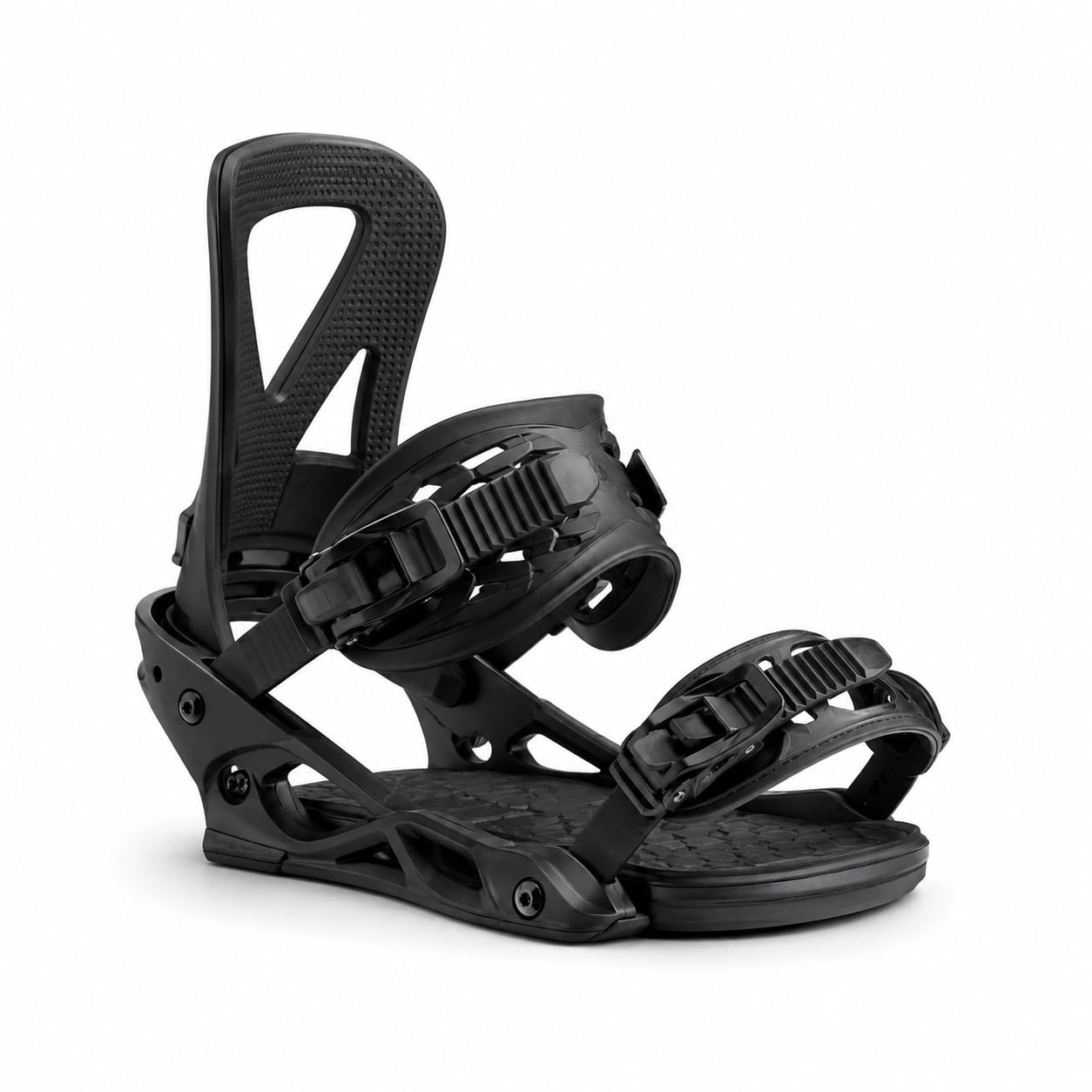
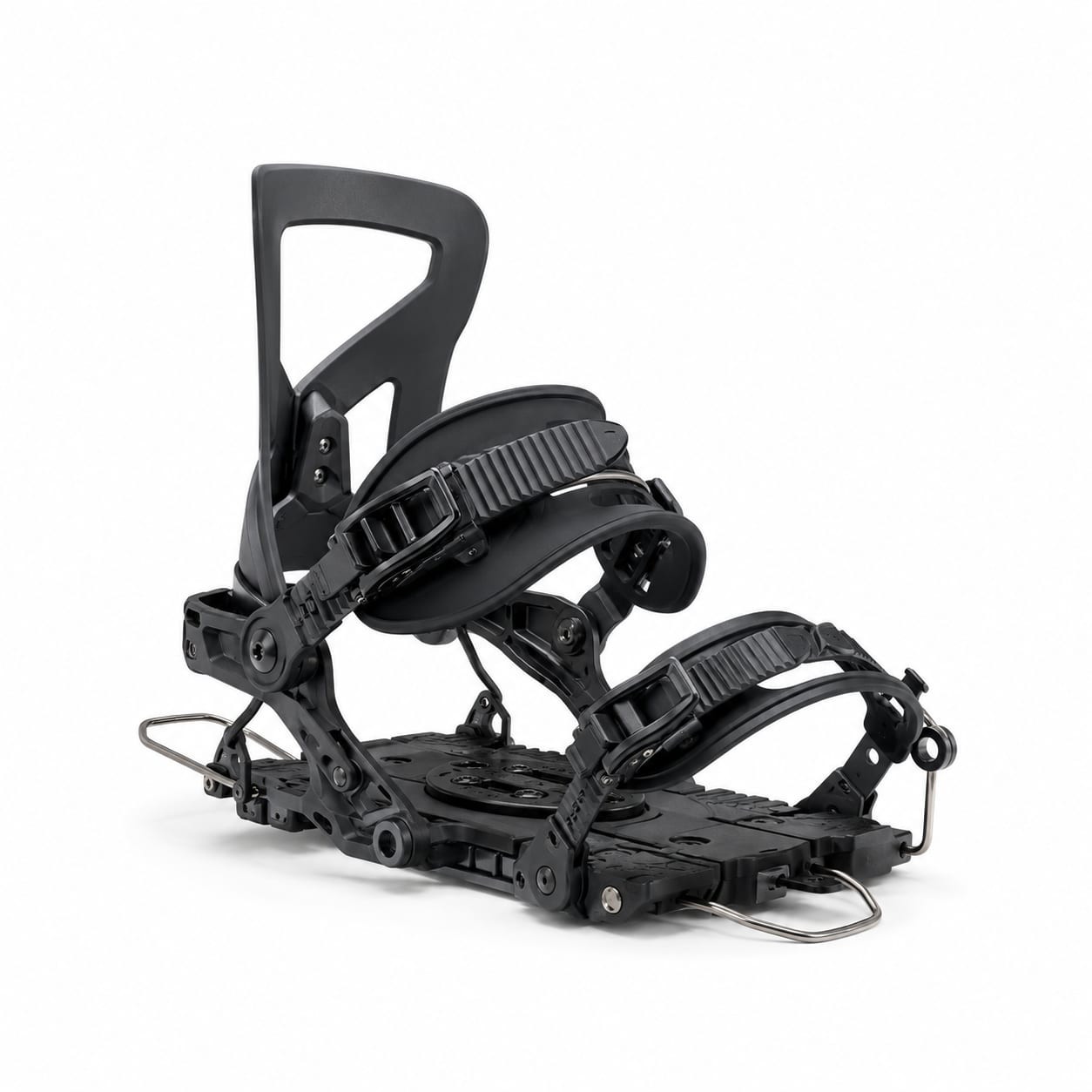
Alpine bindings overwhelmingly use traditional strap entry because it provides the most secure, adjustable, and universally boot-compatible retention system. The two-strap design allows riders to fine-tune ankle and toe tension independently, critical for the precise fit needed at high speeds.
Compared to other types
Unlike freestyle bindings where step-on convenience is appealing, or splitboard bindings where touring functionality is essential, alpine bindings prioritize hold and adjustability above entry speed—making strap the clear choice.
Why it matters: Strap bindings offer the maximum boot compatibility and adjustability needed to achieve the locked-in feel alpine riding demands. Step-on and rear-entry systems have improved but generally don't match the customizable hold of a well-adjusted strap system for aggressive riding.
Flex Stiffness
Flex Rating
What it means
How stiff or soft the binding feels, affecting responsiveness, comfort, and the type of riding it supports. Typically rated on a 1-10 scale by manufacturers.
Typical for this type
8-10
Most common pick: 9
In practice
Alpine bindings sit at the top of the flex spectrum, typically rated 8-10 by manufacturers. This stiffness ensures minimal energy loss between rider input and board response, which is critical for holding edges at speed and making rapid, powerful turns on steep terrain.
Compared to other types
Park/freestyle bindings typically range 3-5, all-mountain bindings 5-7. Alpine bindings are significantly stiffer than all other subcategories, which is both their defining advantage and their primary limitation.
Why it matters: Flex rating is the single most defining dimension for alpine bindings. A stiff binding provides instant edge engagement, stable landings at speed, and confidence in no-fall zones. Softer flex would introduce delay and unpredictability that's dangerous in alpine terrain.
Mounting Pattern Compatibility
Mounting System
What it means
The bolt pattern and disc system the binding uses to attach to the snowboard. Must be compatible with the board's insert pattern.
Typical for this type
Any (Must Match Board)
Most common pick: 4x4, 2x4, Channel
In practice
Alpine bindings are available in all mounting patterns to match whatever board the rider chooses. Many include multiple disc options. Burton Channel/EST compatibility is available from several brands and is particularly valued for its micro-adjustability in stance positioning.
Compared to other types
No significant difference from other subcategories in mounting compatibility, though alpine riders may particularly value the infinite micro-adjustability of Burton Channel systems for dialing in carving stances.
Why it matters: Stance precision matters more in alpine riding than most other styles. The ability to fine-tune stance width and angles (especially with Channel systems) allows riders to dial in their position for optimal carving biomechanics.
What it means
The frame size of the binding, which must correspond to the rider's boot size for proper fit, support, and safety.
Typical for this type
Match Boot Size Exactly Per Manufacturer Chart
Most common pick: Varies By Boot Size
In practice
Proper sizing is especially critical for alpine bindings because any heel lift or boot movement within the binding compromises the direct power transfer that defines the category. The boot must sit snugly in the heel cup with straps able to achieve secure closure without maxing out adjustment range.
Compared to other types
Sizing accuracy matters more for alpine bindings than for softer freestyle or all-mountain bindings, where a slightly loose fit is more forgiving. Alpine riders should be especially careful about sizing when between sizes.
Why it matters: Even minor heel lift or lateral play—acceptable in softer bindings—becomes a serious performance issue in alpine bindings where precision is paramount. An oversized binding allows boot shift; undersized bindings create pressure points and may not properly engage the heel cup.
Baseplate Material
Baseplate Material
What it means
The primary material composing the baseplate, which affects weight, responsiveness, vibration dampening, and durability.
Typical for this type
Aluminum Or Multi Material
In practice
Alpine bindings most commonly use multi-material (hybrid) baseplates that combine an aluminum heel cup for maximum response with a composite footbed for some vibration absorption. Full aluminum baseplates offer the most direct power transfer but can feel harsh on choppy terrain.
Compared to other types
Park and freestyle bindings favor full nylon/composite baseplates for forgiveness and board feel. Alpine bindings lean toward aluminum or multi-material for maximum response, accepting the trade-off of reduced vibration dampening.
Why it matters: The baseplate is the primary interface between boot and board. For alpine riding, the heel cup area must be extremely rigid to prevent any energy loss during heelside transitions. Multi-material designs offer the best balance of response and rideability.
Highback Material
Highback Material
What it means
Material composition of the highback, which affects heel-side response, lateral mobility, and weight.
Typical for this type
Multi Material Or Carbon Fiber
In practice
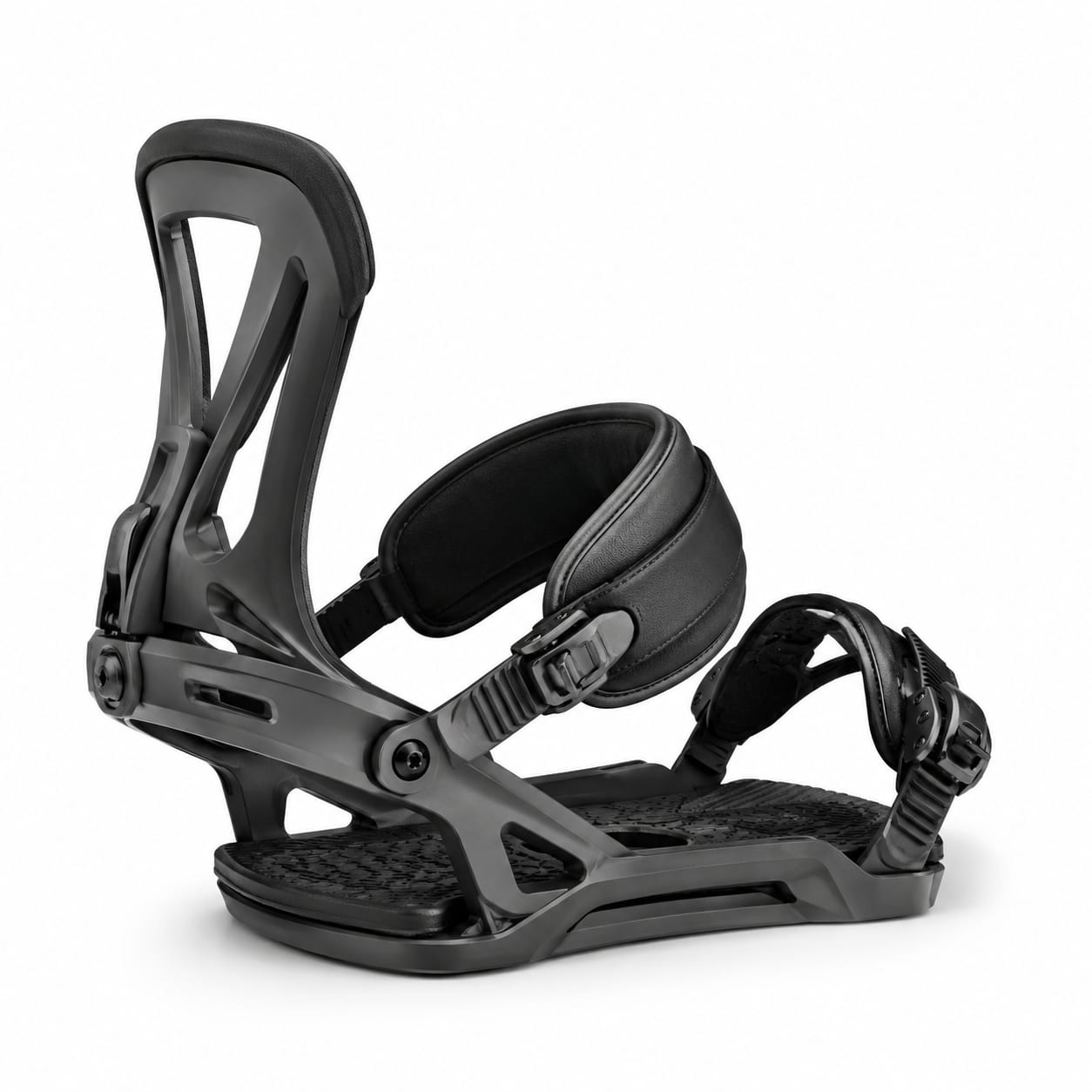
Multi-material highbacks with a stiff carbon or aluminum spine and slightly more compliant outer frame are most common in modern alpine bindings. Full carbon fiber highbacks appear in premium models for maximum stiffness with minimal weight. The highback is critical for heelside power in alpine riding.
Compared to other types
Freestyle bindings use softer composite highbacks for tweakability. Alpine bindings use the stiffest highback materials available, prioritizing heelside response over lateral mobility and comfort.
Why it matters: Heelside edge engagement is initiated through the highback. A stiff, responsive highback ensures instant, powerful heelside transitions—essential for carving and steep terrain control. The highback is arguably the most important component differentiating alpine bindings from other categories.
Canted Footbed
Canted Footbed
What it means
Whether the binding footbed is angled outward (canted) to align the rider's knees and legs in a more natural stance, reducing fatigue and improving leverage.
Typical for this type
True (2.5°-4° Canting)
In practice
Most alpine bindings include canted footbeds, typically in the 2.5°-4° range. The wider stances common in aggressive riding make canting valuable for knee alignment, and the improved leverage from proper leg alignment enhances edge power—particularly useful for deep carving angles.
Compared to other types
Canted footbeds are common across most mid-to-high-end binding categories, but they're especially valuable in alpine bindings where the rider's stance and edge pressure demands are more extreme.
Why it matters: Canting reduces knee strain during long days of aggressive riding and improves the biomechanical efficiency of edge engagement. For alpine riders who spend hours in a bent-knee stance, this reduces fatigue and injury risk significantly.
Dampening / Cushioning
Cushioning System
What it means
The type and amount of shock-absorbing material between the baseplate and the rider's foot, affecting impact absorption, vibration dampening, and comfort.
Typical for this type
Multi Density Foam Or Gel
In practice
Multi-density foam cushioning is the most common in alpine bindings, offering targeted dampening—softer under the heel for impact absorption, firmer under the toe and ball of the foot for power transfer. Gel inserts appear in some premium models for enhanced heel impact protection.
Compared to other types
Park bindings often use simpler EVA foam since they prioritize board feel. Alpine bindings benefit more from multi-density or gel systems because the stiff baseplate transmits more vibration and impact directly to the foot.
Why it matters: Alpine riders encounter high-speed chop, tracked-out snow, and hard landings that transmit significant shock through stiff bindings. Without adequate cushioning, foot fatigue and bruising become limiting factors, especially given the rigid baseplate construction.
Ankle Strap Design
Ankle Strap Type
What it means
The design and construction of the ankle strap, which is the primary retention mechanism affecting comfort, hold, and pressure distribution.
Typical for this type
Grip Tech Or Asymmetrical
In practice
Grip/traction ankle straps are the most popular choice for alpine bindings because they prevent boot shift within the binding during high-force maneuvers. The textured interior surface grips the boot shell, maintaining secure hold even under the extreme forces of high-speed carves and steep terrain.
Compared to other types
Park riders often prefer minimal straps for weight savings, and all-mountain riders may choose padded straps for comfort. Alpine riders prioritize secure hold above all else, making grip-tech straps the natural choice.
Why it matters: At the forces generated during aggressive carving and steep descents, any boot movement within the binding compromises control and can be dangerous. Grip-tech straps maintain hold with less ratchet tension, reducing pressure points while ensuring security.
Toe Strap Design
Toe Strap Type
What it means
The design of the toe strap, which secures the front of the boot and affects both hold and toe drag management.
In practice
Cap-style toe straps are standard on alpine bindings, pulling the heel firmly into the heel cup and securing the toe box without creating pressure on top of the foot. This design also minimizes toe drag—a concern when laying out deep carves at extreme angles.
Compared to other types
Cap straps are the dominant design across all modern binding categories, but the heel-lock and toe-drag benefits are particularly relevant for alpine riding where edge angles and forces are extreme.
Why it matters: Cap straps provide superior heel lock-down, which is critical for maintaining a solid connection during high-force heelside and toeside carves. Reduced toe drag is also valuable for alpine riders who ride with aggressive edge angles.
Highback Forward Lean
Forward Lean
What it means
The angle at which the highback tilts forward toward the rider's calf, affecting heel-edge responsiveness, knee positioning, and riding posture.
Typical for this type
12-20 degrees
Most common pick: 15
In practice
Alpine bindings typically run higher forward lean settings (12-20°) than other categories. This forces the rider into a bent-knee, athletic stance that keeps weight centered over the board and dramatically improves heelside response. Many alpine riders set forward lean at 15° or higher.
Compared to other types
Park riders often run 0-8° of forward lean for a more upright, relaxed stance. All-mountain riders typically use 8-12°. Alpine riders push toward 15-20° for maximum heelside power and aggressive posture.
Why it matters: Forward lean is a key tuning parameter for alpine riding. More lean equals faster, more powerful heelside initiation but requires more leg strength and can cause fatigue. The right setting balances responsiveness with endurance for long days of aggressive riding.
Weight (Pair)
Weight Per Pair
What it means
The combined weight of both bindings, affecting overall setup weight and fatigue on long days or hiking.
Typical for this type
1100-1600g
Most common pick: 1300g
In practice
Alpine bindings tend to be heavier than other categories due to their robust construction, stiff materials, and reinforced components. Typical weights range from 1100-1600g per pair, with multi-material and aluminum constructions on the heavier end and carbon-reinforced models on the lighter end.
Compared to other types
Park bindings often weigh 800-1100g per pair. All-mountain bindings typically range 900-1300g. Alpine bindings are among the heaviest, though the difference of 200-400g is rarely noticeable while riding for most people.
Why it matters: The extra weight is a direct result of the stiff, durable construction that defines alpine bindings. While weight matters for swing weight and fatigue, most alpine riders accept the penalty as a necessary trade-off for the performance benefits. Carbon fiber models can reduce weight while maintaining stiffness.
Ratchet Mechanism
Ratchet Type
What it means
The type and material of the ratchets used to tighten straps, affecting ease of use, durability, and smoothness of operation.
Typical for this type
Aluminum Or Magnesium
In practice
Aluminum ratchets are standard on alpine bindings, offering smooth, durable operation that withstands the high tensions and frequent adjustments typical of aggressive riding. Magnesium ratchets appear on premium models for weight savings without sacrificing strength.
Compared to other types
Entry-level and park bindings sometimes use composite ratchets to save weight and cost. Alpine bindings almost universally feature metal ratchets for durability and smooth operation under high tension.
Why it matters: Alpine riders tend to tighten straps more firmly and adjust them more frequently, placing higher demands on ratchet mechanisms. Aluminum and magnesium ratchets resist stripping and provide smoother, more reliable operation under these conditions.
Response Level
Response Rating
What it means
How quickly and directly the binding transfers rider input to the board edge, influenced by the combined effect of flex, materials, and construction design.
Typical for this type
8-10
Most common pick: 9
In practice
Alpine bindings sit at the top of the response scale (8-10), delivering near-instantaneous edge engagement and power transfer. This high response is the product of stiff materials, rigid baseplate construction, tall highbacks, and secure strap systems working together.
Compared to other types
Park bindings typically rate 3-5 for forgiveness and tweakability. All-mountain bindings rate 5-7 for versatility. Alpine bindings at 8-10 are the most responsive available, providing surgical precision at the cost of comfort and playfulness.
Why it matters: Response rating is the functional expression of all the stiffness and design choices in an alpine binding. High response means the board reacts immediately and precisely to rider input—essential for holding edges at speed, making quick transitions on steep terrain, and maintaining control in variable conditions.
Optimized Riding Style
Riding Style
What it means
The primary riding style(s) the binding is designed for, which informs its flex, response, and feature set.
Typical for this type
Freeride Primarily; All Mountain For Aggressive Riders
Most common pick: Freeride, All Mountain
In practice
Alpine bindings are optimized for freeride and aggressive all-mountain riding. They excel in high-speed scenarios, steep terrain, deep carves, and technical off-piste conditions. Some aggressive all-mountain riders prefer alpine bindings for their responsiveness even if they occasionally venture into the park.
Compared to other types
This is the key differentiator. Park/freestyle bindings prioritize softness and tweakability. All-mountain bindings balance versatility. Alpine/freeride bindings prioritize response and power above all else.
Why it matters: The riding style designation reflects the binding's entire design philosophy—stiff, responsive, and built for speed and precision. Using alpine bindings for park riding or casual cruising would be like using a race car for a grocery run: technically possible but poorly suited.
Baseplate Design
Baseplate Construction
What it means
The structural design philosophy of the baseplate, affecting board feel, dampening, and how the binding interfaces with the snowboard.
Typical for this type
Full Contact Or Minimized Contact (For Slightly More Forgiving Feel)
In practice
Full-contact baseplates are most common in alpine bindings because they maximize power transfer by ensuring the entire baseplate engages the board surface. Some alpine models use minimized-contact designs that allow slightly more natural board flex while maintaining high response.
Compared to other types
Park and freestyle bindings favor minimized-contact or suspended designs for board feel and comfort. Alpine bindings prioritize the maximum power transfer of full-contact construction, accepting the reduced board feel as an acceptable trade-off.
Why it matters: Full-contact construction provides the most direct, immediate power transfer—which is exactly what alpine riders need. The trade-off is a slightly more rigid underfoot feel and less natural board flex, but this is acceptable and even desirable for the precision-focused alpine rider.
Strap Durability Rating
Ladder Strap Durability
What it means
The expected durability of the strap ladders (the toothed strips that feed through ratchets), which are the most common wear item on bindings.
Typical for this type
Reinforced Or Toolless Replaceable
In practice
Alpine bindings typically feature reinforced ladder straps because riders apply higher ratchet tension and subject straps to greater forces during aggressive riding. Toolless-replaceable options are increasingly common and valued for convenience during travel or long seasons.
Compared to other types
Standard ladder straps are adequate for casual and park riding with lower tension demands. Alpine bindings benefit from reinforced construction due to the higher forces involved in aggressive riding.
Why it matters: The higher forces and tighter strap tensions of alpine riding accelerate ladder strap wear. Reinforced straps last longer under these conditions, and toolless replacement ensures quick fixes if failure occurs on a trip—critical for riders who depend on their equipment in remote or challenging terrain.