Binding Entry Type
Binding Type
What it means
The mechanism by which the rider's boot is secured into the binding, affecting convenience, response, and compatibility with specific boot models.
Typical for this type
Splitboard (Pin/Tech Interface)
In practice
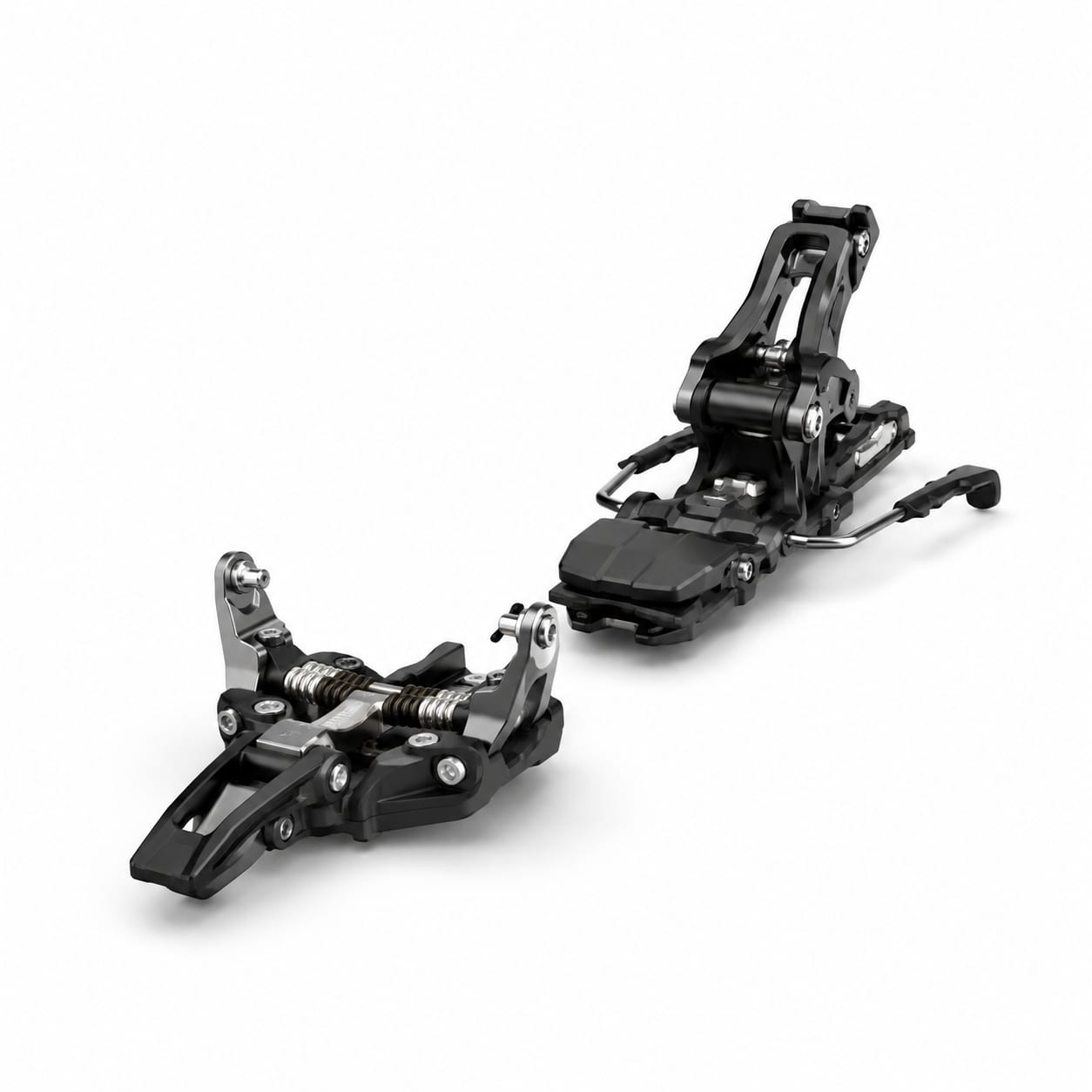
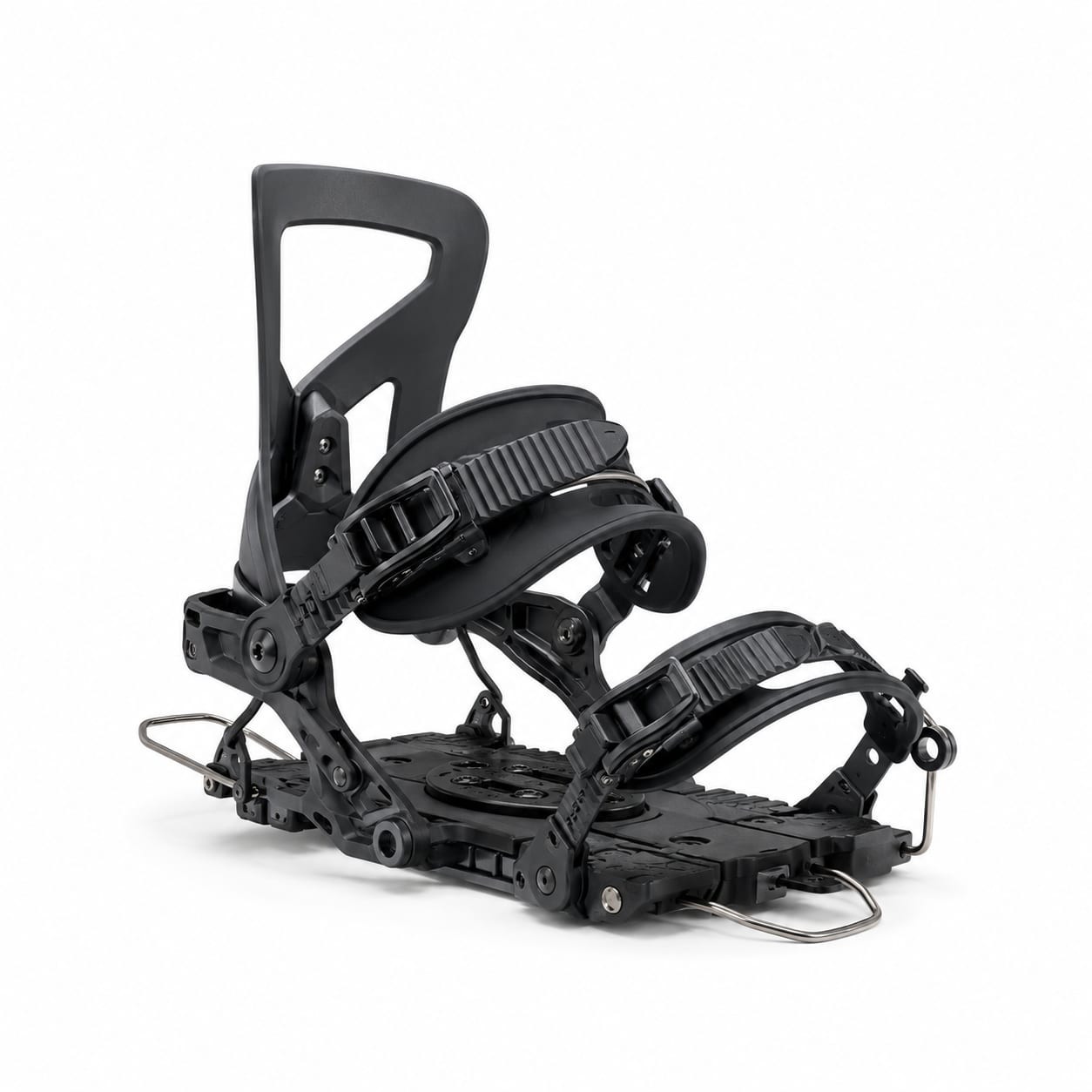
Tech/Pin bindings are exclusively splitboard-specific, using a pin-toe clamping mechanism that locks into touring brackets for walk mode and pucks for ride mode. They cannot be used as standard resort bindings.
Compared to other types
Unlike strap or step-on bindings designed for resort use, tech/pin bindings sacrifice resort versatility for touring efficiency. Compared to slider-track splitboard bindings, they offer significantly lighter weight and better stride mechanics but require more precise mounting and maintenance.
Why it matters: The splitboard pin interface is what defines this subcategory—it enables the ultra-lightweight touring performance that distinguishes tech/pin bindings from all other binding types. Choosing this type means committing to a splitboard-only setup.
Flex Stiffness
Flex Rating
What it means
How stiff or soft the binding feels, affecting responsiveness, comfort, and the type of riding it supports. Typically rated on a 1-10 scale by manufacturers.
Typical for this type
6-9
Most common pick: 7
In practice
Tech/Pin bindings typically feature medium-stiff to stiff flex ratings, tuned for freeride performance in variable backcountry snow conditions where reliable edge hold and response are critical.
Compared to other types
Stiffer than park/freestyle bindings (3-5) and comparable to freeride bindings (7-9). Slightly stiffer on average than slider-track splitboard bindings, which sometimes use softer composites to save weight.
Why it matters: Backcountry terrain demands confident, predictable response—soft flex would compromise control on steep, variable descents. The stiffer flex ensures reliable power transfer when riding technical lines far from resort infrastructure.
Mounting Pattern Compatibility
Mounting System
What it means
The bolt pattern and disc system the binding uses to attach to the snowboard. Must be compatible with the board's insert pattern.
Typical for this type
4x4 and 2x4 (via splitboard pucks and touring brackets)
Most common pick: 4x4, 2x4
In practice
Tech/Pin bindings mount to splitboards via two systems: standard splitboard pucks (4x4/2x4 pattern) for ride mode and dedicated touring brackets for walk mode. The pucks are semi-permanently attached to the splitboard halves, and the binding's pins clamp onto them.
Compared to other types
Unlike resort bindings that mount directly to board inserts, tech/pin bindings interface with an intermediary puck/bracket system unique to splitboards. This adds a setup step but enables the walk/ride conversion.
Why it matters: Proper puck and bracket alignment is critical for smooth transitions and secure retention. Misaligned pucks cause binding slop and difficult transitions. Most modern splitboards come pre-drilled for standard puck patterns.
What it means
The frame size of the binding, which must correspond to the rider's boot size for proper fit, support, and safety.
Typical for this type
Match to Boot Size Per Manufacturer Chart (S, M, L, Xl)
In practice
Tech/Pin bindings follow standard sizing conventions (S/M/L/XL) matched to boot size. Proper sizing ensures the pins align correctly with the pucks and the heel lock engages securely.
Compared to other types
Sizing principles are the same as other binding subcategories, but the stakes are higher—improper fit can compromise the pin-to-puck interface, which is critical for both touring efficiency and descent security.
Why it matters: Incorrect sizing can cause pin misalignment with pucks, leading to sloppy ride-mode engagement or difficulty transitioning. Always verify sizing with the specific manufacturer's chart, as pin geometry varies between brands.
Baseplate Material
Baseplate Material
What it means
The primary material composing the baseplate, which affects weight, responsiveness, vibration dampening, and durability.
Typical for this type
Nylon Composite Or Multi Material
In practice
Most tech/pin bindings use glass-filled nylon composite baseplates for the optimal balance of weight, durability, and vibration dampening. Some premium models use multi-material designs with aluminum heel cups for added response.
Compared to other types
More likely to use nylon composite than aluminum or carbon fiber, as the weight savings of metal/carbon are offset by their harsher ride feel—undesirable when riding variable backcountry snow. Resort freeride bindings more commonly use aluminum or carbon.
Why it matters: The baseplate must be light enough for efficient touring yet durable enough for backcountry descents. Nylon composite achieves this balance while absorbing vibrations from variable snow. Multi-material designs add response where it matters most—at the heel edge.
Highback Material
Highback Material
What it means
Material composition of the highback, which affects heel-side response, lateral mobility, and weight.
Typical for this type
Nylon Composite Or Multi Material
In practice
Nylon composite highbacks dominate the tech/pin category, offering reliable heel-side response with the torsional forgiveness needed for comfortable touring and surfy backcountry turns.
Compared to other types
Less likely to use carbon fiber or aluminum highbacks compared to resort freeride bindings, as the touring component demands some lateral compliance. Carbon highbacks are available in premium models but are less common.
Why it matters: The highback must provide confident heel-side response on steep descents while allowing enough lateral mobility for comfortable skinning and kick-turns. Multi-material designs with a stiff spine and forgiving frame are increasingly popular.
Canted Footbed
Canted Footbed
What it means
Whether the binding footbed is angled outward (canted) to align the rider's knees and legs in a more natural stance, reducing fatigue and improving leverage.
Typical for this type
True (2.5°-4° Canting Recommended)
In practice
Most modern tech/pin bindings include canted footbeds, typically 2.5°-4°, to reduce knee strain during long tours and improve edge power on descents. Canting is especially valuable for splitboarders who spend hours skinning in a wide stance.
Compared to other types
Canting is arguably more important in tech/pin bindings than any other subcategory due to the extended time spent touring. Most quality models now include it as standard, whereas some resort bindings still omit it.
Why it matters: Extended touring with a wide stance places significant stress on the knees and hips. Canted footbeds align the joints more naturally, reducing fatigue and injury risk over multi-hour ascents. The edge-power benefits are also noticeable on steep descents.
Dampening / Cushioning
Cushioning System
What it means
The type and amount of shock-absorbing material between the baseplate and the rider's foot, affecting impact absorption, vibration dampening, and comfort.
Typical for this type
Eva Foam Or Multi Density Foam
In practice
Tech/pin bindings typically use EVA foam or multi-density foam cushioning to keep weight minimal while providing adequate shock absorption for backcountry descents. Gel and air systems are rare due to weight penalties.
Compared to other types
Less cushioning overall compared to resort bindings, which can afford heavier gel or air systems. Tech/pin bindings prioritize weight savings over plush comfort, accepting a slightly more direct feel on the descent.
Why it matters: Backcountry snow is often variable and choppy, making some cushioning necessary. However, weight is at a premium in this category, so cushioning systems are kept minimal and efficient. Multi-density foam offers the best balance of targeted dampening and weight.
Ankle Strap Design
Ankle Strap Type
What it means
The design and construction of the ankle strap, which is the primary retention mechanism affecting comfort, hold, and pressure distribution.
Typical for this type
Asymmetrical Or Grip Tech
In practice
Asymmetrical ankle straps are common in tech/pin bindings, providing a comfortable, anatomical fit during long days. Grip/traction straps are also popular among riders who prioritize secure hold with minimal ratchet tension for easy transitions.
Compared to other types
Minimal/padded_standard straps are less common in this category than in park or entry-level bindings. The backcountry context demands reliable hold and comfort over multiple hours, favoring asymmetrical and grip designs.
Why it matters: Comfort matters on full-day backcountry tours, and asymmetrical straps reduce pressure points during hours in the binding. Grip straps allow secure hold with less tension, which also speeds up transitions—a meaningful benefit in cold conditions or when racing daylight.
Toe Strap Design
Toe Strap Type
What it means
The design of the toe strap, which secures the front of the boot and affects both hold and toe drag management.
In practice
Cap-style toe straps are standard on tech/pin bindings, providing secure heel lockdown with minimal pressure on top of the foot. This is critical for maintaining a secure fit during backcountry descents.
Compared to other types
Cap straps are universal across virtually all modern binding subcategories. Over-the-top straps are essentially obsolete in tech/pin bindings, as they offer no advantage and can compromise fit.
Why it matters: A secure toe cap ensures the heel stays locked in the heel cup—essential for confident riding in consequential terrain. Cap straps also reduce toe drag, which can be an issue with splitboards that have narrower waist widths.
Highback Forward Lean
Forward Lean
What it means
The angle at which the highback tilts forward toward the rider's calf, affecting heel-edge responsiveness, knee positioning, and riding posture.
Typical for this type
10-18 degrees
Most common pick: 14
In practice
Tech/pin bindings typically run moderate to high forward lean (12-16°) for aggressive heel-side response on steep backcountry terrain. Many riders adjust between a touring-friendly lower lean and a steeper descent setting.
Compared to other types
Similar forward lean to freeride bindings (12-18°) and stiffer than typical park settings (0-8°). The backcountry context favors the higher end of the range for reliable steeps performance.
Why it matters: Steep, consequential terrain demands confident heel-edge engagement—more forward lean ensures an athletic stance and immediate response. Some riders reduce lean slightly for touring comfort, though most find a single middle-ground setting works for both modes.
Weight (Pair)
Weight Per Pair
What it means
The combined weight of both bindings, affecting overall setup weight and fatigue on long days or hiking.
Typical for this type
700-1100 grams (including hardware)
Most common pick: 850
In practice
Tech/pin bindings are among the lightest splitboard bindings available, typically weighing 700-1100 grams per pair including pucks, pins, and touring brackets. This weight advantage is the primary reason for their existence.
Compared to other types
Significantly lighter than slider-track splitboard bindings (1200-1600g) and comparable to the lightest resort bindings. The weight savings over slider-track systems is the defining performance advantage of the tech/pin subcategory.
Why it matters: Every gram matters on the skin track. A 400-500 gram savings compared to slider-track bindings translates to noticeably less fatigue over long tours. Weight also affects swing weight during kick-turns and hiking efficiency on steep skin tracks.
Ratchet Mechanism
Ratchet Type
What it means
The type and material of the ratchets used to tighten straps, affecting ease of use, durability, and smoothness of operation.
Typical for this type
Aluminum Or Magnesium
In practice
Aluminum ratchets are standard on tech/pin bindings, offering reliable performance in cold, wet backcountry conditions. Magnesium ratchets appear on premium models for additional weight savings.
Compared to other types
Aluminum is more prevalent in tech/pin bindings than in entry-level resort bindings (which often use composite). The backcountry context demands the reliability and cold-weather performance of metal ratchets.
Why it matters: Reliable ratchet operation is critical in the backcountry, where frozen or malfunctioning ratchets can't be solved at a lodge. Aluminum resists icing better than composite and provides smooth, consistent tensioning with gloved hands.
Response Level
Response Rating
What it means
How quickly and directly the binding transfers rider input to the board edge, influenced by the combined effect of flex, materials, and construction design.
Typical for this type
6-9
Most common pick: 7
In practice
Tech/pin bindings offer medium-high to high response ratings, designed for confident riding in steep, technical backcountry terrain where immediate edge engagement is essential for safety.
Compared to other types
Comparable to freeride bindings (7-9) and significantly more responsive than park bindings (3-5). Earlier generations of tech/pin bindings had noticeably less response than resort bindings, but modern designs have largely closed this gap.
Why it matters: Backcountry descents often involve tight couloirs, wind-affected snow, and no fall zones. Responsive bindings provide the quick, reliable edge control needed to manage these conditions. The pin-to-puck interface on modern models delivers response approaching that of solid-board setups.
Optimized Riding Style
Riding Style
What it means
The primary riding style(s) the binding is designed for, which informs its flex, response, and feature set.
Typical for this type
Splitboard Touring And Freeride
Most common pick: Splitboard Touring, Freeride
In practice
Tech/Pin bindings are optimized for splitboard touring and freeride descents. They are purpose-built for riders who ascend under their own power and descend in backcountry terrain, with no design consideration for resort or park riding.
Compared to other types
The only binding subcategory that combines splitboard_touring and freeride as co-equal design priorities. Resort freeride bindings lack touring capability; park/all-mountain bindings lack both touring features and the response needed for technical backcountry terrain.
Why it matters: The splitboard_touring optimization means these bindings include touring-specific features (heel risers, pin interfaces, walk-mode pivots) that are essential for backcountry travel. The freeride tuning ensures confident performance on consequential descents.
Baseplate Design
Baseplate Construction
What it means
The structural design philosophy of the baseplate, affecting board feel, dampening, and how the binding interfaces with the snowboard.
Typical for this type
Minimized Contact Or Full Contact
In practice
Tech/pin bindings typically use minimized contact baseplates to reduce weight and allow natural board flex underfoot. The pin interface itself is inherently a minimized-contact design, as the binding only contacts the pucks at specific points.
Compared to other types
Unlike EST bindings (Burton Channel only) or suspended designs (which add weight), tech/pin bindings use a pragmatic minimized-contact approach that balances board feel, weight, and the unique requirements of the pin-to-puck interface.
Why it matters: The minimized contact approach aligns with the weight-saving philosophy of tech/pin bindings and allows the splitboard to flex more naturally underfoot. This is particularly important for splitboards, which can feel stiffer underfoot due to the split interface.
Strap Durability Rating
Ladder Strap Durability
What it means
The expected durability of the strap ladders (the toothed strips that feed through ratchets), which are the most common wear item on bindings.
Typical for this type
Reinforced Or Toolless Replaceable
In practice
Tech/pin bindings often feature reinforced ladder straps due to the consequential nature of backcountry riding—strap failure far from the trailhead is a serious problem. Toolless-replaceable straps are increasingly common for field serviceability.
Compared to other types
Higher durability standards than typical resort bindings, where a broken strap is merely inconvenient. The backcountry context demands more robust straps and the ability to perform field repairs, making toolless-replaceable designs particularly valuable.
Why it matters: A broken strap in the backcountry can end a day or create a dangerous situation. Reinforced straps resist stripping from aggressive ratcheting with gloved hands, and toolless replacement allows field repairs without carrying tools.