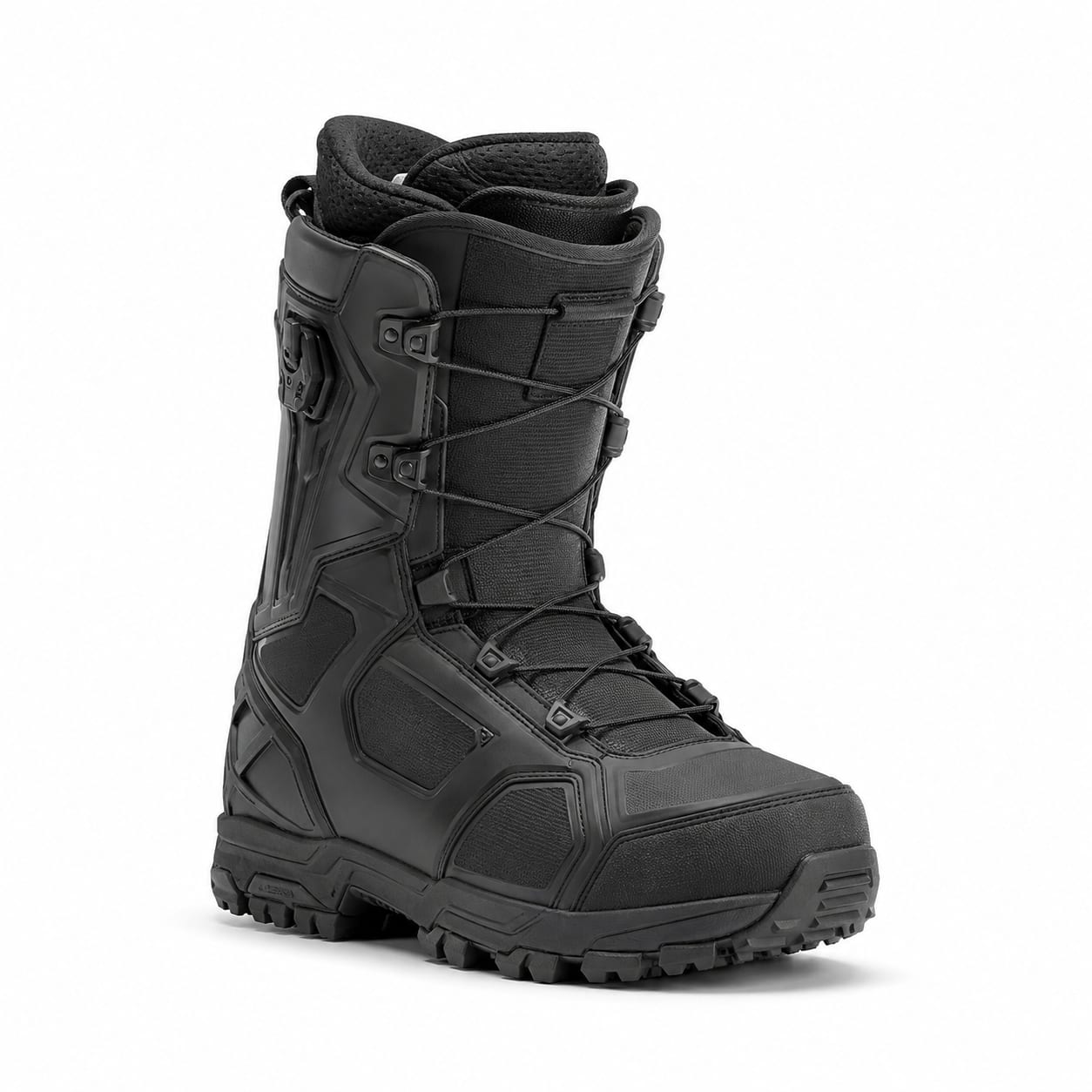
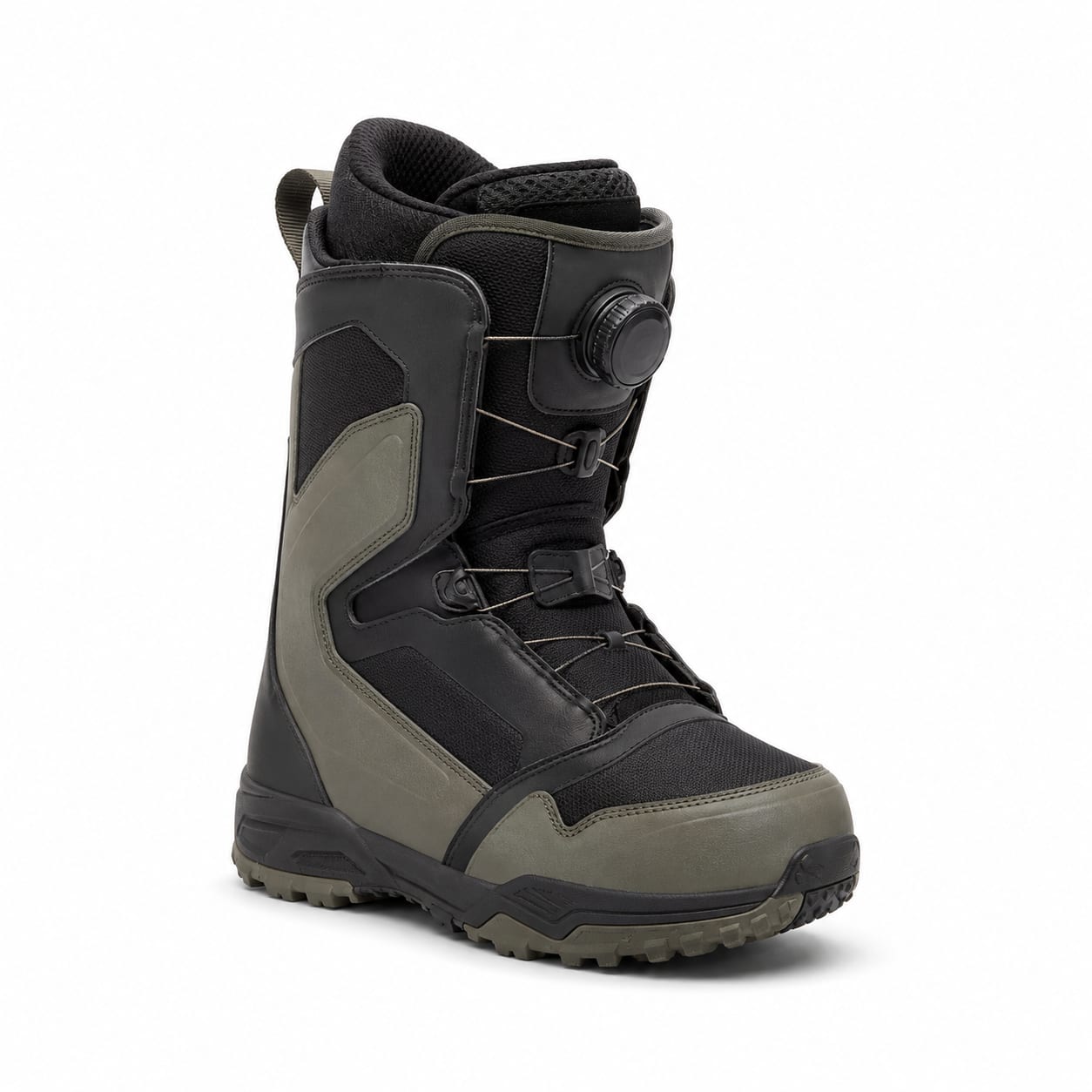
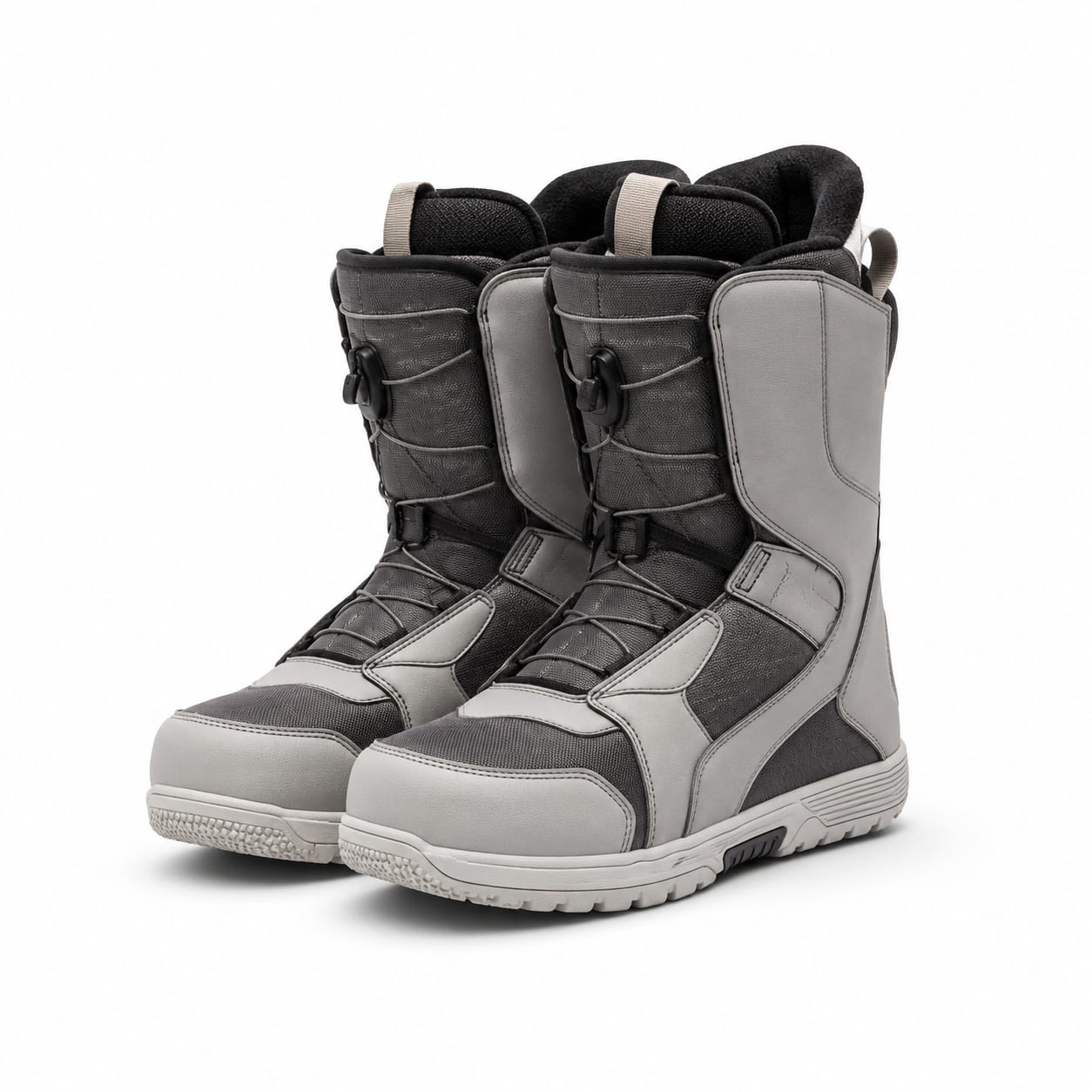
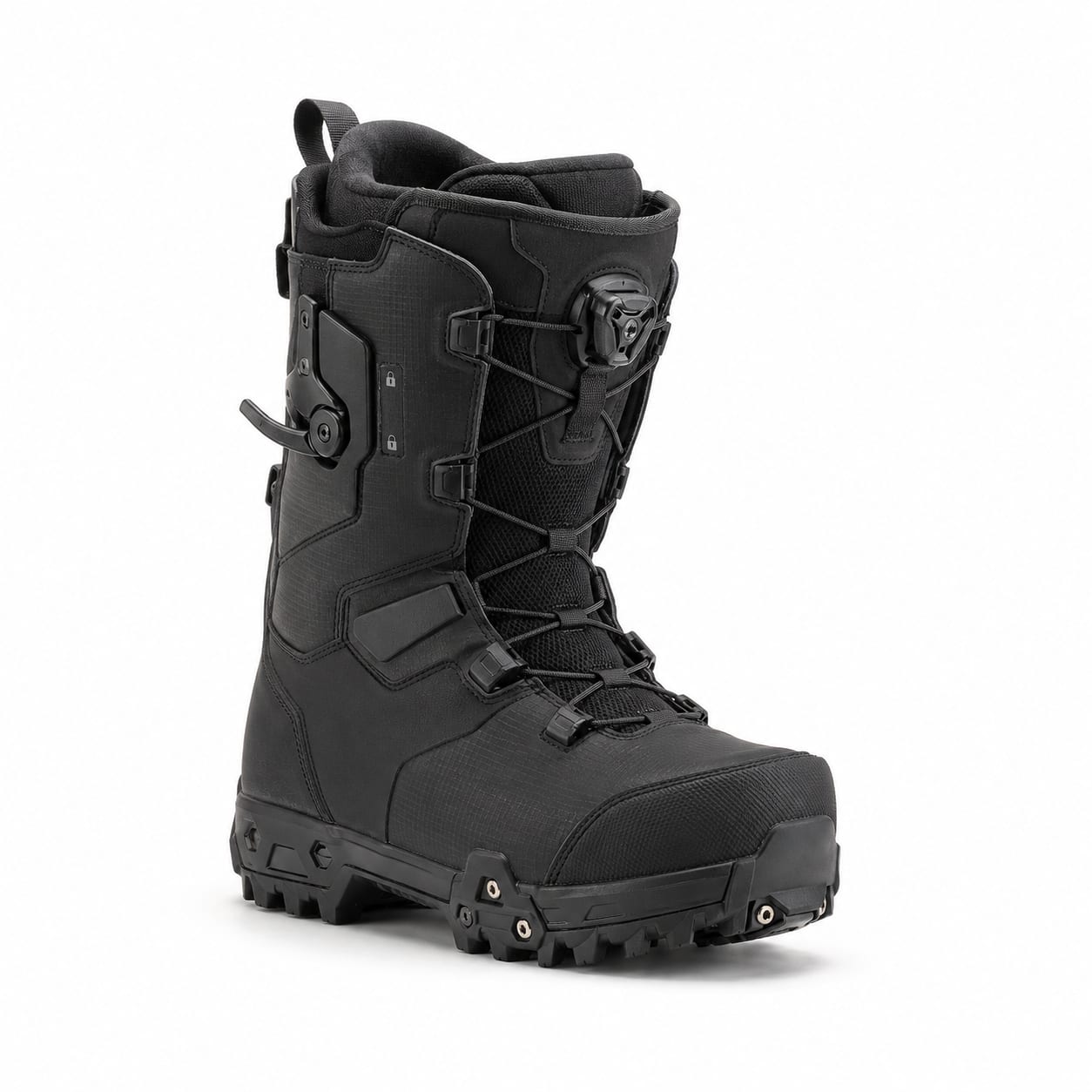
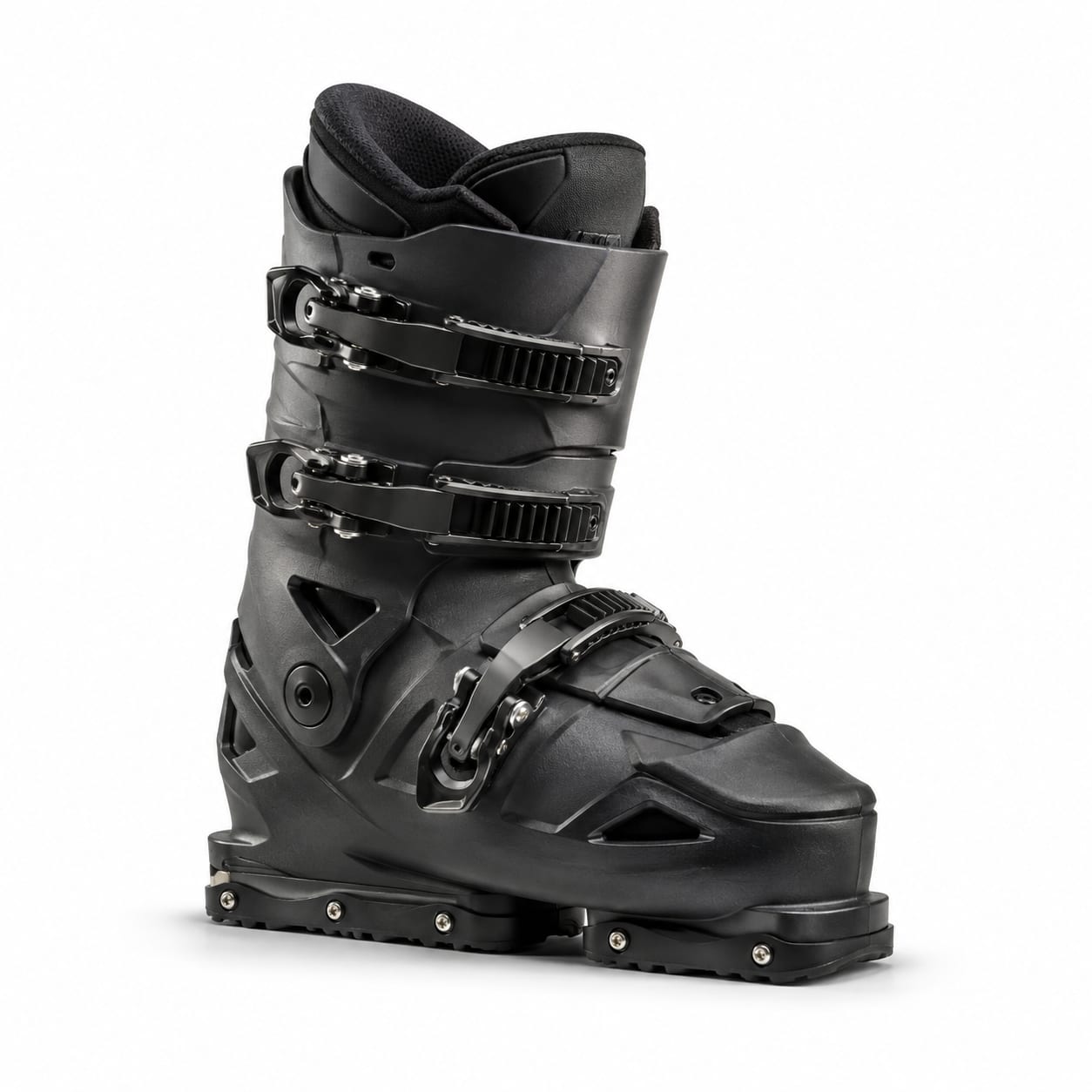
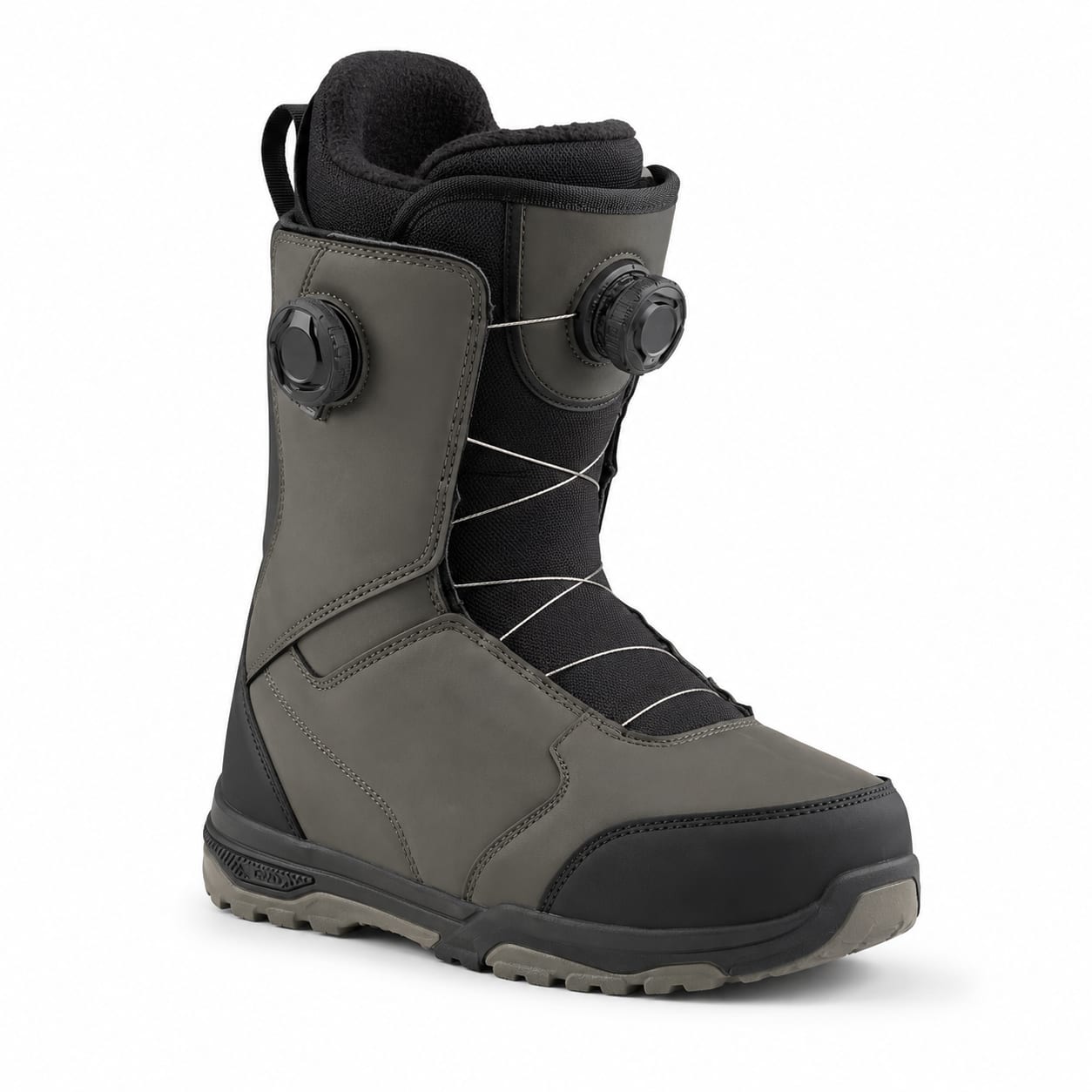
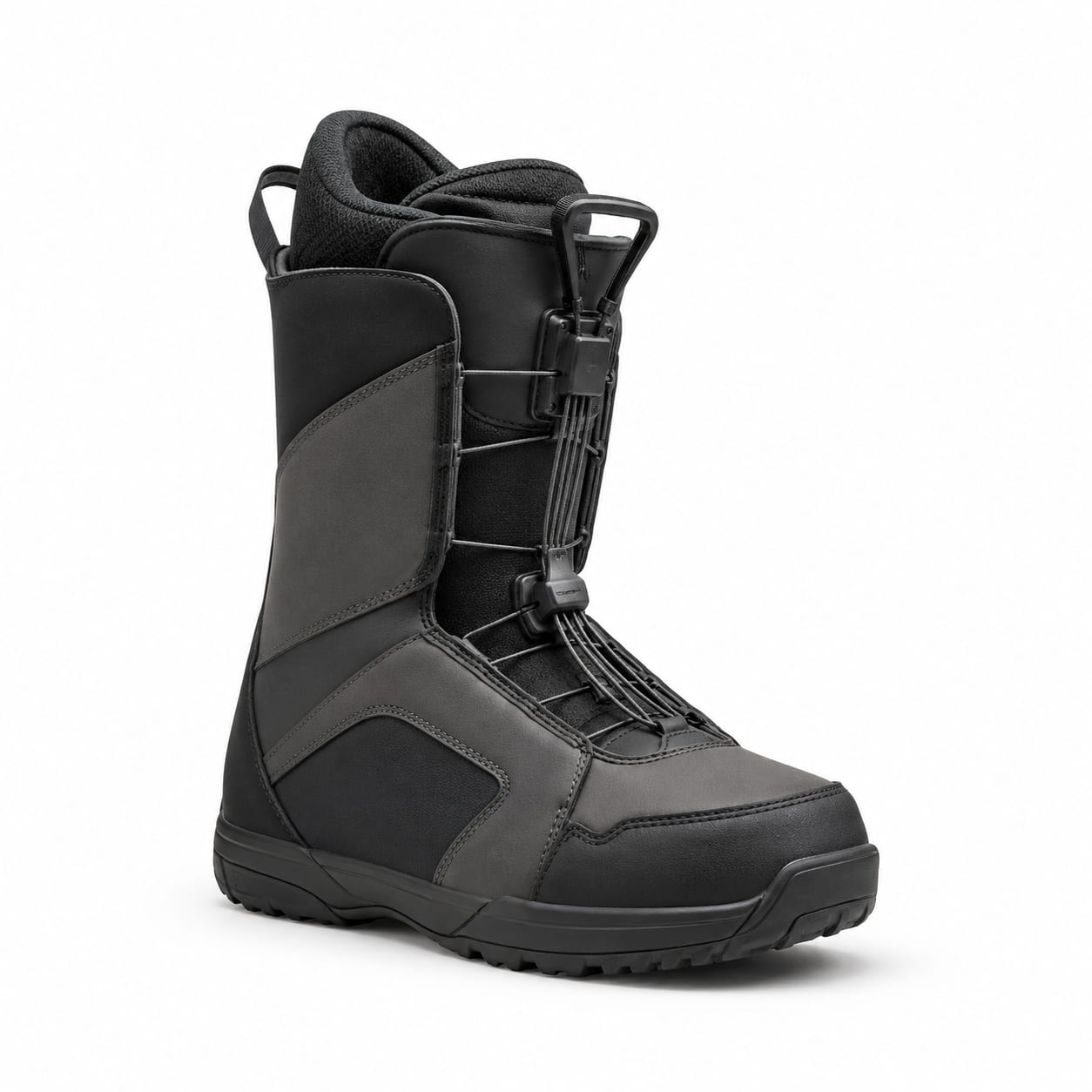
Freeride snowboard boots are the anchor of a big mountain setup, designed to deliver uncompromising performance and reliability in the most demanding terrain. Characterized by their stiff flex (typically 8-10 on a 1-10 scale), these boots minimize forward lean compliance to ensure that riders can drive power directly through their edges without boot-out or lag. This rigidity is crucial for carving at high velocities, holding an edge on icy traverses, and making quick, forceful turns in steep, technical terrain. They often feature premium liners like Intuition foam, robust lacing systems such as double BOA or traditional laces for maximum zonal control, and lugged outsoles for traction when hiking ridgelines. While they sacrifice the playfulness and comfort of softer boots, freeride boots are indispensable for riders who prioritize control, speed, and precision over everything else.
When you are dropping into a steep, untracked face or pointing it out through choppy, variable snow, there is no room for sloppy equipment. Freeride snowboard boots are purpose-built to handle the intense forces generated in big mountain environments. Their defining characteristic is a stiff flex profile, which locks the ankle in place and transforms your entire lower body into a rigid lever. This allows for instantaneous edge-to-edge transitions and the ability to hold a carve at mach speeds without the boot folding under pressure. For the dedicated freerider, this responsiveness isn't just a preference; it's a matter of safety and performance.
Beyond sheer stiffness, these boots incorporate premium components that enhance their performance in harsh conditions. High-end models frequently feature Vibram or heavily lugged rubber outsoles, providing crucial traction on icy ridgelines, rocky traverses, and while hiking to untouched stashes. Waterproofing is also heavily prioritized, with many featuring internal membranes like Gore-Tex to keep feet dry during deep powder days and wet spring tours. The liners are typically top-tier heat-moldable options, such as Intuition foam, which offer a custom, wrap-like fit that resists packing out over a long season of aggressive riding.
The lacing systems on freeride boots are selected for maximum security and adjustability. Double BOA configurations are incredibly popular, allowing riders to independently crank down the lower zone for heel lock and the upper zone for calf and ankle support. Traditional laces remain a favorite among purists who value infinite micro-adjustability and field-repairability. Heel hold technology is also paramount; any heel lift in a steep couloir can result in a loss of edge control, so features like internal ankle harnesses and J-bars are common.
However, the performance benefits of freeride boots come with distinct trade-offs. The rigid construction that makes them so responsive at speed also makes them significantly less forgiving and more fatiguing for casual cruising or park riding. They require more leg strength to drive and offer minimal ankle mobility for pressing and buttering. Additionally, they tend to be heavier than their freestyle counterparts. For riders who spend the vast majority of their time charging steep lines, riding fast, and seeking out deep snow, freeride boots are the only logical choice, providing the confidence and control necessary to push the limits.