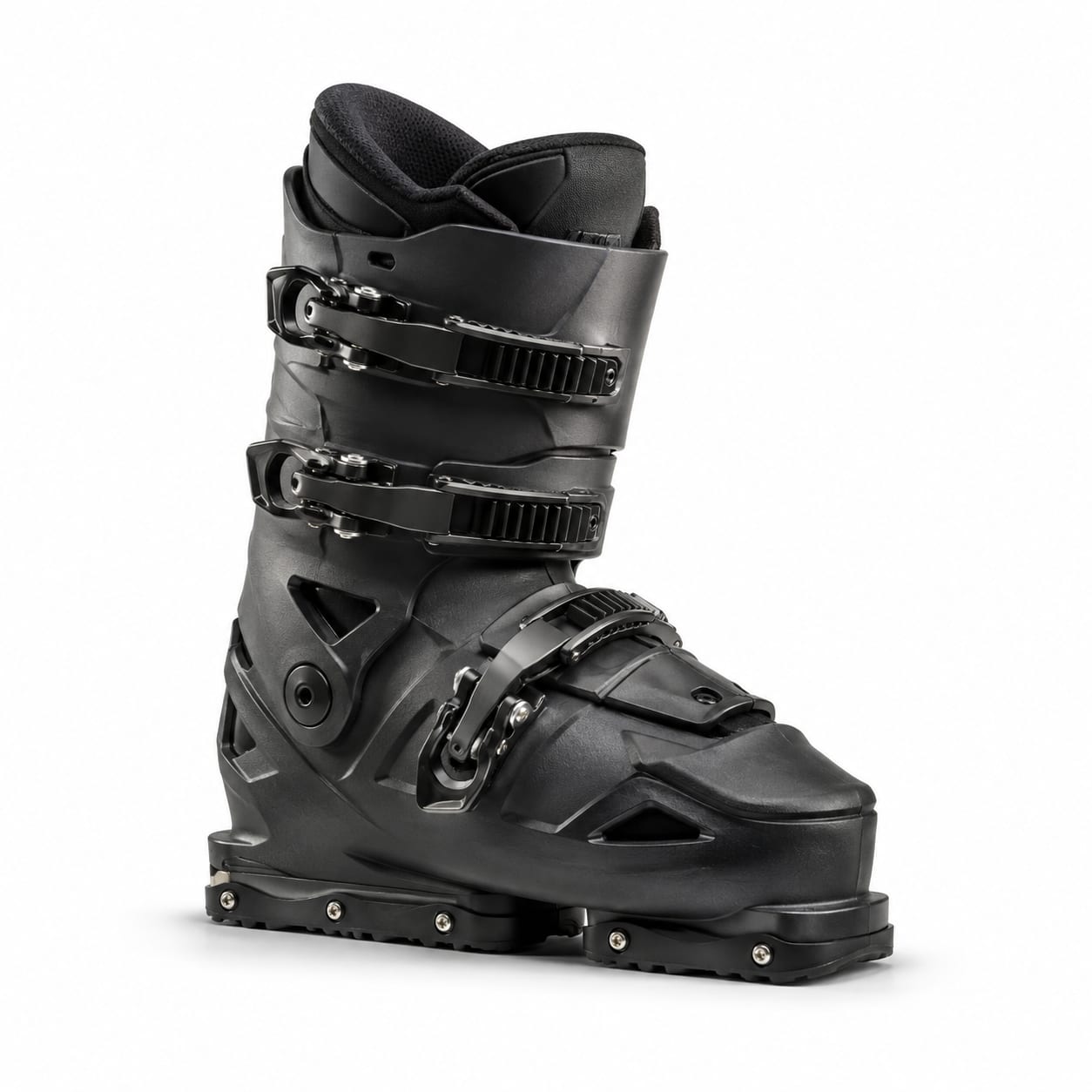
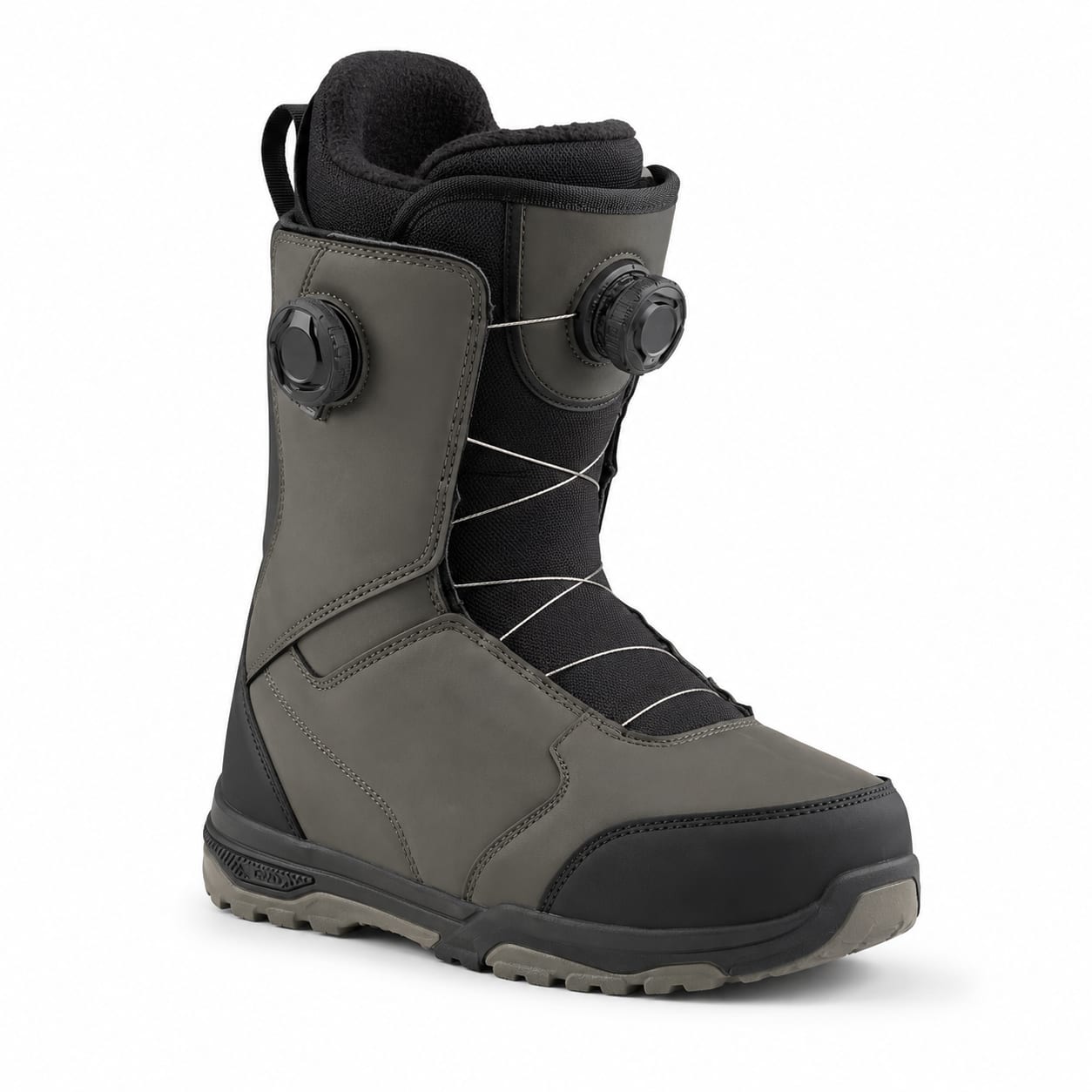
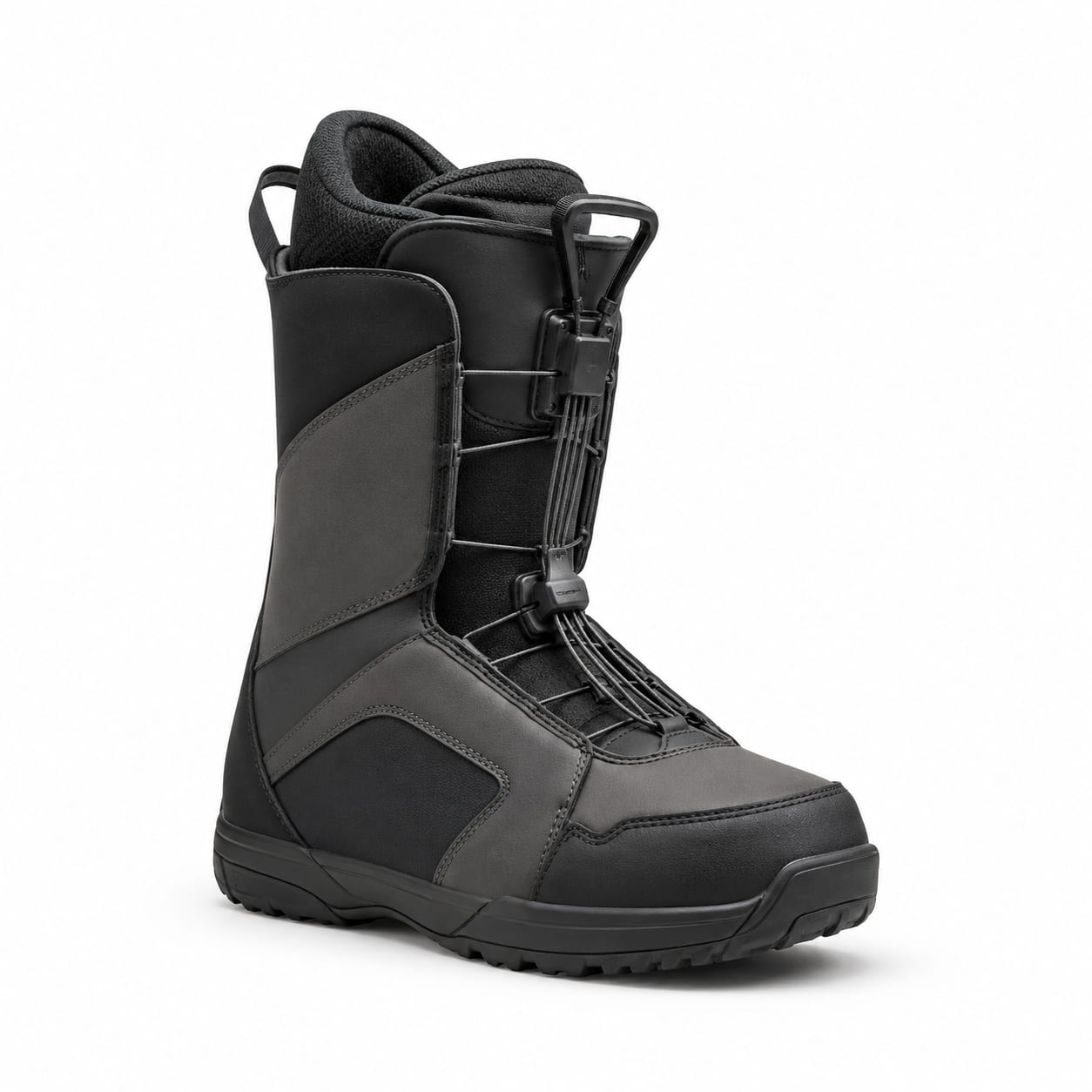
Stiffness / Flex
Flex Rating
What it means
How resistant the boot is to forward flexion. Softer boots allow more ankle mobility and are forgiving; stiffer boots deliver precise power transfer and edge control.
Typical for this type
Medium-Stiff to Stiff (7–10)
Most common pick: Medium Stiff
In practice
Splitboard boots typically feature a stiffer flex to provide the response and stability needed for riding steep, variable backcountry terrain.
Compared to other types
Stiffer than all-mountain and freestyle boots, aligning more closely with freeride boots to handle challenging descents.
Why it matters: A stiffer flex ensures precise edge control and power transfer when descending high-consequence alpine terrain, preventing ankle fatigue during long, committing runs.
Lacing System
Lacing System
What it means
The mechanism used to tighten and secure the boot. Affects speed, adjustability, reliability, and how evenly pressure is distributed across the foot.
Typical for this type
Double BOA Or Hybrid
Most common pick: Boa Double
In practice
Double BOA or hybrid lacing systems allow riders to independently adjust the lower and upper zones, which is crucial for transitioning between touring comfort and riding support.
Compared to other types
More emphasis on zonal adjustability and glove-friendly operation compared to standard resort boots, which often use single BOA or traditional laces.
Why it matters: Zonal adjustability lets you loosen the upper cuff for the uphill skin track and quickly crank it down for the descent, all while wearing gloves.
What it means
The internal volume and width of the boot shell, determining how snugly the boot fits across the forefoot and midfoot. Measured by the 'last'—the foot mold the boot is built around.
Typical for this type
Narrow to Wide (Based On Foot Shape)
Most common pick: Standard
In practice
Available in standard, narrow, and wide lasts to accommodate different foot volumes, though wide options can be slightly limited.
Compared to other types
Similar width options to freeride boots, but achieving the perfect fit is arguably more important here due to long tour durations.
Why it matters: Proper width is critical in the backcountry; a boot that is too narrow restricts circulation causing cold feet, while too wide causes blisters and heel lift.
Boot Size (Mondo)
Mondo Size
What it means
The length of the boot's internal footbed measured in centimeters (Mondo point sizing). This is the most accurate sizing standard for snowboard boots.
Typical for this type
21–31.5 cm
Most common pick: Varies By Rider
In practice
Mondo point sizing measures the internal footbed length in centimeters for the most accurate fit.
Compared to other types
Same sizing standard applies, but splitboarders should be extra cautious about sizing up too much, as heel lift is disastrous on steep skin tracks.
Why it matters: Sizing must account for foot swelling during long tours; a fit that is too tight will become painful, while pack-out over time can lead to slop.
What it means
The internal boot structure that provides cushioning, insulation, and fit. Liner type affects heat retention, moldability, and long-term fit quality.
Typical for this type
Intuition Foam Liner Or Heat-Moldable
Most common pick: Intuition
In practice
Premium heat-moldable liners, particularly Intuition foam, are standard in high-quality splitboard boots to provide a custom, locked-in fit.
Compared to other types
More likely to feature Intuition or premium moldable liners as standard compared to entry-level all-mountain or freestyle boots.
Why it matters: Dense, heat-moldable foam resists packing out over multi-day tours and provides superior heel hold and insulation compared to standard liners.
Heel Hold / Heel Lock
Heel Hold Technology
What it means
Design features that prevent the heel from lifting inside the boot during turns. Heel lift reduces edge control and causes fatigue. Includes internal harness systems, ankle pockets, and liner construction.
Typical for this type
Internal Ankle Harness Or Contoured Heel Pocket
Most common pick: Internal Harness
In practice
Splitboard boots often use an internal harness or highly contoured heel pocket to lock the ankle in place during steep skinning and aggressive descending.
Compared to other types
Heel hold is prioritized more heavily than in freestyle or all-mountain boots, often incorporating features similar to high-end freeride models.
Why it matters: Heel lift while skinning wastes enormous energy and ruins traction on steep switchbacks; while descending, it reduces edge control.
Outsole / Traction
Outsole Type
What it means
The bottom of the boot that contacts the ground when walking and the binding baseplate when riding. Affects grip, cushioning, durability, and weight.
Typical for this type
Vibram Or Rubber Lugged Outsole
Most common pick: Vibram
In practice
Aggressive, lugged rubber outsoles—often Vibram—are a hallmark of splitboard boots, designed for traction on rock, ice, and dirt.
Compared to other types
Significantly more aggressive and durable than EVA midsole or low-profile outsoles found on park and resort boots.
Why it matters: Backcountry riders frequently encounter bare rock, icy skin tracks, and dirt approaches where resort-focused soles would slip dangerously.
Insulation / Warmth
Insulation Rating
What it means
How effectively the boot retains heat. Determined by liner material, insulation type, and shell construction. Critical for riders in cold climates or with poor circulation.
Typical for this type
Standard to Heavy Insulation
Most common pick: Standard
In practice
Splitboard boots typically feature standard or slightly enhanced insulation to balance warmth during static transitions with breathability during strenuous ascents.
Compared to other types
Requires a more deliberate balance of warmth and breathability than resort boots, as the rider's exertion level varies drastically between uphill and downhill.
Why it matters: Over-insulating causes sweaty feet on the uphill, which then freeze on the descent; standard insulation with a waterproof membrane usually offers the best balance.
Walk Mode / Touring
Walk Mode
What it means
A mechanism that unlocks the boot's upper cuff from the lower shell, allowing a natural walking stride for touring and splitboarding. Sometimes called 'ride/hike mode' or 'touring mode'.
Typical for this type
Yes (Required)
Most common pick: True
In practice
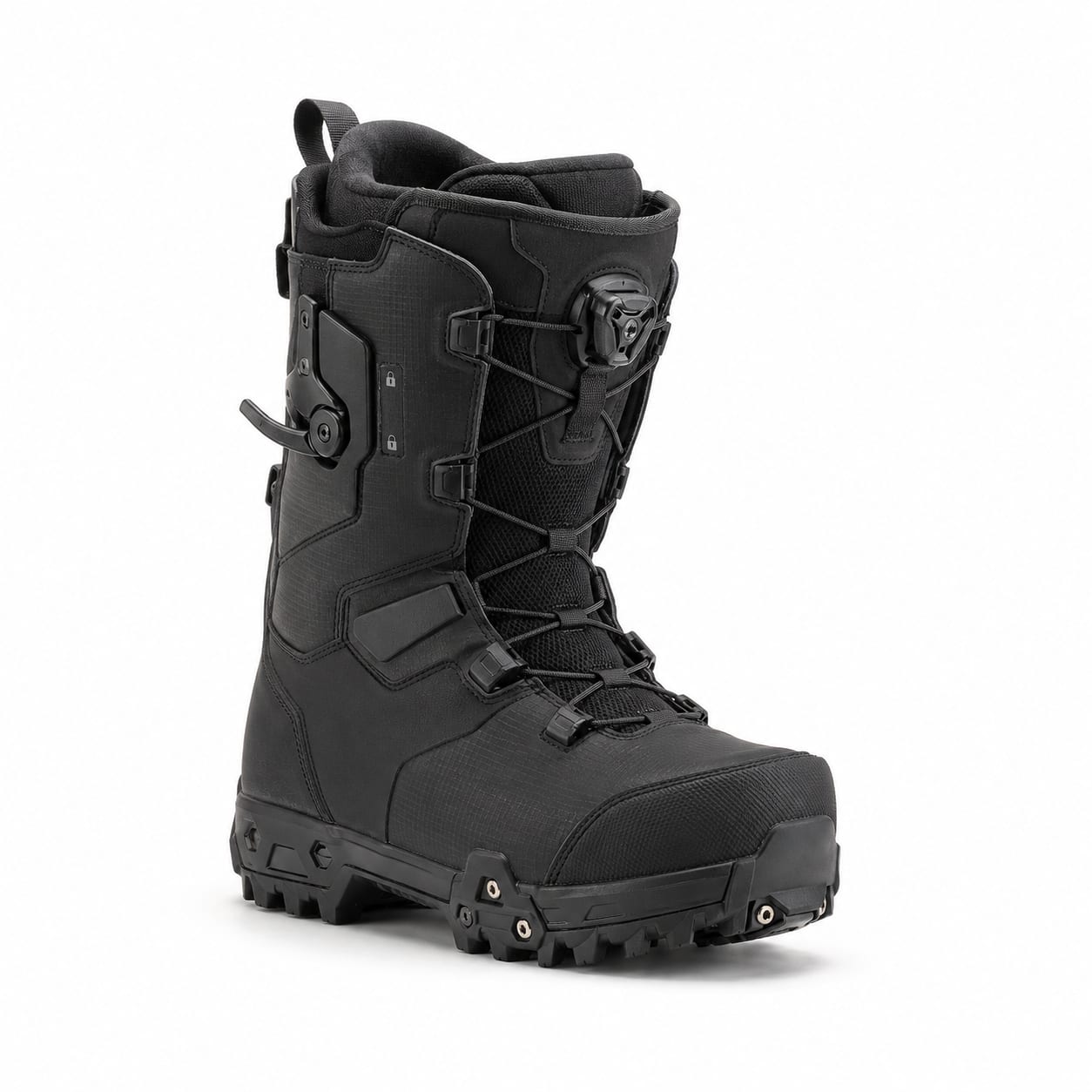
The defining feature of this subcategory: a mechanical lever that unlocks the boot's upper cuff from the lower shell for a natural walking stride.
Compared to other types
Exclusive to this subcategory; resort-specific boots (freestyle, all-mountain, freeride) do not have walk mode mechanisms.
Why it matters: Without walk mode, skinning is incredibly inefficient and exhausting, as the rigid boot prevents the ankle from flexing forward naturally.
Weight (per boot)
Boot Weight
What it means
The weight of a single boot, typically measured in grams or pounds. Lighter boots reduce fatigue but may sacrifice durability and dampening.
Typical for this type
1000–1300g (per boot)
Most common pick: 1100g
In practice
Splitboard boots are generally heavier than resort boots due to the walk mode mechanism, lugged outsoles, and reinforced construction.
Compared to other types
Noticeably heavier than freestyle and all-mountain boots, and slightly heavier than pure freeride boots due to the touring hardware.
Why it matters: Weight matters significantly on long tours, but reducing weight at the expense of downhill performance or durability can be a dangerous compromise.
Footbed / Insole
Footbed / Insole
What it means
The removable insole inside the liner that provides arch support, cushioning, and alignment. Stock footbeds are often minimal; many riders upgrade to aftermarket options.
Typical for this type
Pre-Molded Arch Or Custom Aftermarket
Most common pick: Molded Arch
In practice
While many come with pre-molded arch supports, upgrading to a custom aftermarket footbed is highly recommended for the support needed on long tours.
Compared to other types
Similar stock options to freeride boots, but the practical need for an aftermarket upgrade is much higher due to touring demands.
Why it matters: Proper arch support reduces foot fatigue and prevents plantar fasciitis during thousands of uphill steps.
Shell Construction
Shell Construction
What it means
The outer boot's material and build method. Affects durability, weight, water resistance, and how the boot flexes over time.
Typical for this type
Composite / Multi-Material
Most common pick: Composite
In practice
Composite construction is used to integrate the walk mode mechanism seamlessly while providing zoned flex and durability.
Compared to other types
More complex than injected TPU or synthetic leather resort boots, as it must house the touring mechanism and heavy-duty outsoles.
Why it matters: The shell must accommodate the walk mode hardware without compromising structural integrity or creating pressure points.
Impact Protection / Dampening
Impact Absorption
What it means
The boot's ability to absorb shock from flat landings, choppy terrain, and drops. Determined by midsole material, heel cushioning technology, and liner density.
Typical for this type
Standard to Enhanced Dampening
Most common pick: Standard Dampening
In practice
Splitboard boots typically feature standard dampening, though some high-end models add enhanced impact protection for cliff drops and rough terrain.
Compared to other types
Comparable to freeride boots, prioritizing dampening over the minimal cushioning found in freestyle boots.
Why it matters: Backcountry snow can be variable and harsh; adequate dampening prevents leg fatigue and injury on unexpected hard landings.
Optimized Riding Style
Riding Style
What it means
The primary riding discipline the boot is designed for. While any boot can be used anywhere, boots optimized for a specific style will perform best in that context.
Typical for this type
Backcountry / Splitboard & Freeride
Most common pick: Backcountry Splitboard
In practice
Specifically optimized for splitboarding and backcountry freeriding, where uphill efficiency and downhill power are equally important.
Compared to other types
The only subcategory optimized for backcountry_splitboard; freeride boots focus solely on the descent.
Why it matters: These boots are designed to excel in the unique demands of human-powered riding, from skinning to steep descents.
Waterproofing / Weather Resistance
Waterproofing
What it means
How well the boot prevents water and snow from penetrating to the foot and liner. Determined by shell treatment, seam sealing, and internal waterproof membranes.
Typical for this type
Waterproof Membrane Or Fully Sealed
Most common pick: Waterproof Membrane
In practice
A waterproof/breathable membrane (like Gore-Tex) is highly common in splitboard boots to keep feet dry during deep powder and wet spring tours.
Compared to other types
Much more likely to feature a waterproof membrane compared to standard water-resistant resort boots.
Why it matters: Wet feet in the backcountry can lead to frostbite or hypothermia; waterproofing is essential when post-holing or dealing with wet snow.
Forward Lean Angle
Forward Lean
What it means
The angle the boot's upper cuff is tilted forward relative to vertical. Affects default riding stance, knee bend, and how aggressively the rider is positioned over the board.
Typical for this type
12–18 degrees
Most common pick: 15 degrees
In practice
A moderate to aggressive forward lean positions the rider over the board for steep descents, though the walk mode overrides this on the uphill.
Compared to other types
Similar to freeride boots; forward lean is less of a concern during the ascent since the walk mode disengages the cuff.
Why it matters: Sufficient forward lean ensures an aggressive, ready stance for steep, technical riding right out of the transition.