Stiffness / Flex
Flex Rating
What it means
How resistant the boot is to forward flexion. Softer boots allow more ankle mobility and are forgiving; stiffer boots deliver precise power transfer and edge control.
Typical for this type
Soft to Stiff—BOA Boots Are Available Across The Entire Flex Spectrum
Most common pick: Medium
In practice
BOA boots span all flex ratings from soft park models to stiff freeride designs. The lacing system is independent of flex—any boot can use BOA. Medium and medium-stiff are the most common configurations because Double BOA appeals to all-mountain riders seeking both convenience and response.
Compared to other types
BOA boots offer the same flex range as traditional lace and speed lace boots. The lacing system does not constrain flex—BOA simply changes how you tighten, not how the boot rides.
Why it matters: Flex determines your boot's riding character more than the lacing system does. Don't choose BOA over traditional laces based on flex—both systems offer the same range. Focus on flex first, then decide on lacing convenience.
Lacing System
Lacing System
What it means
The mechanism used to tighten and secure the boot. Affects speed, adjustability, reliability, and how evenly pressure is distributed across the foot.
Typical for this type
Boa Single For Budget/Park, Boa Double For Most Riders, Boa Triple For Premium Freeride
In practice
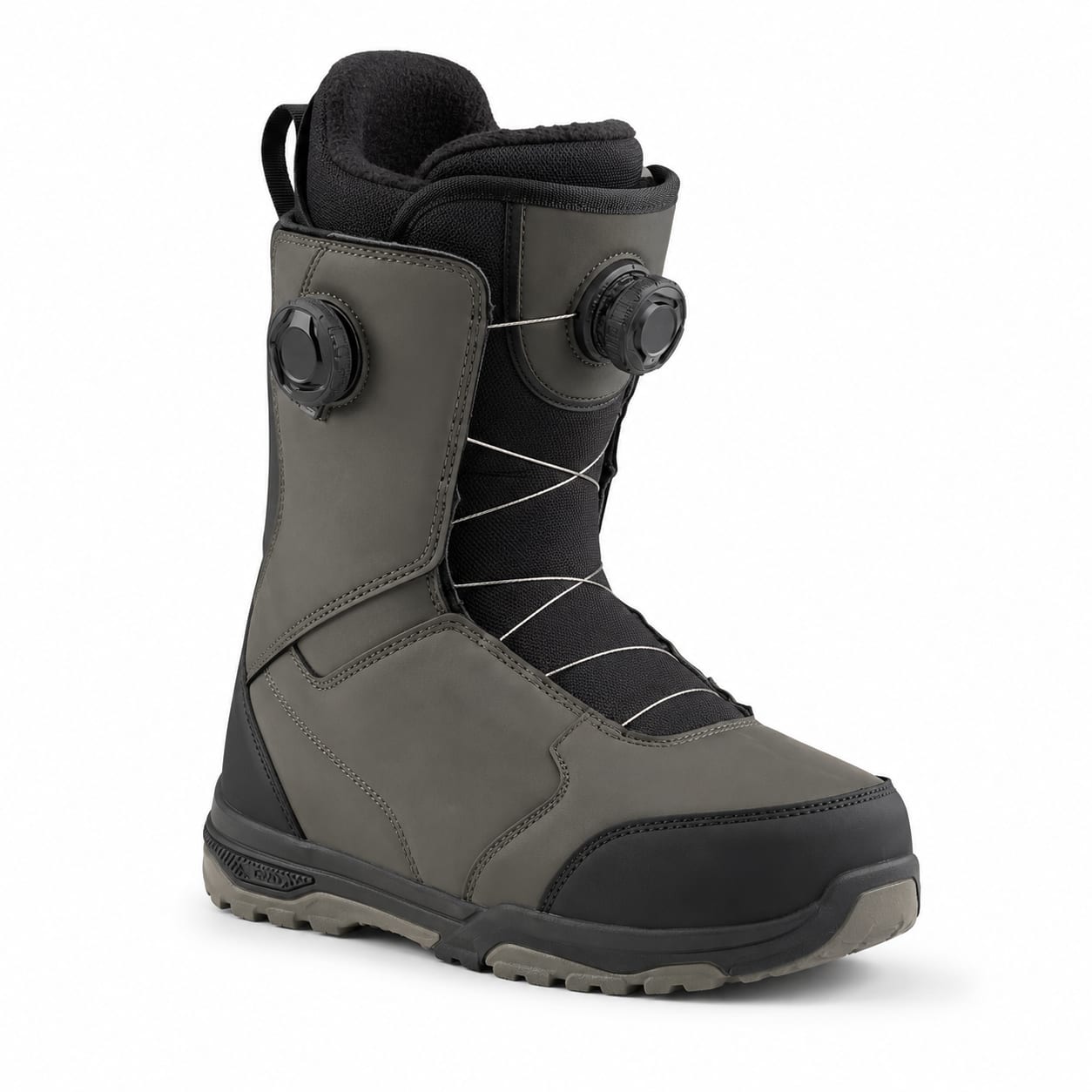
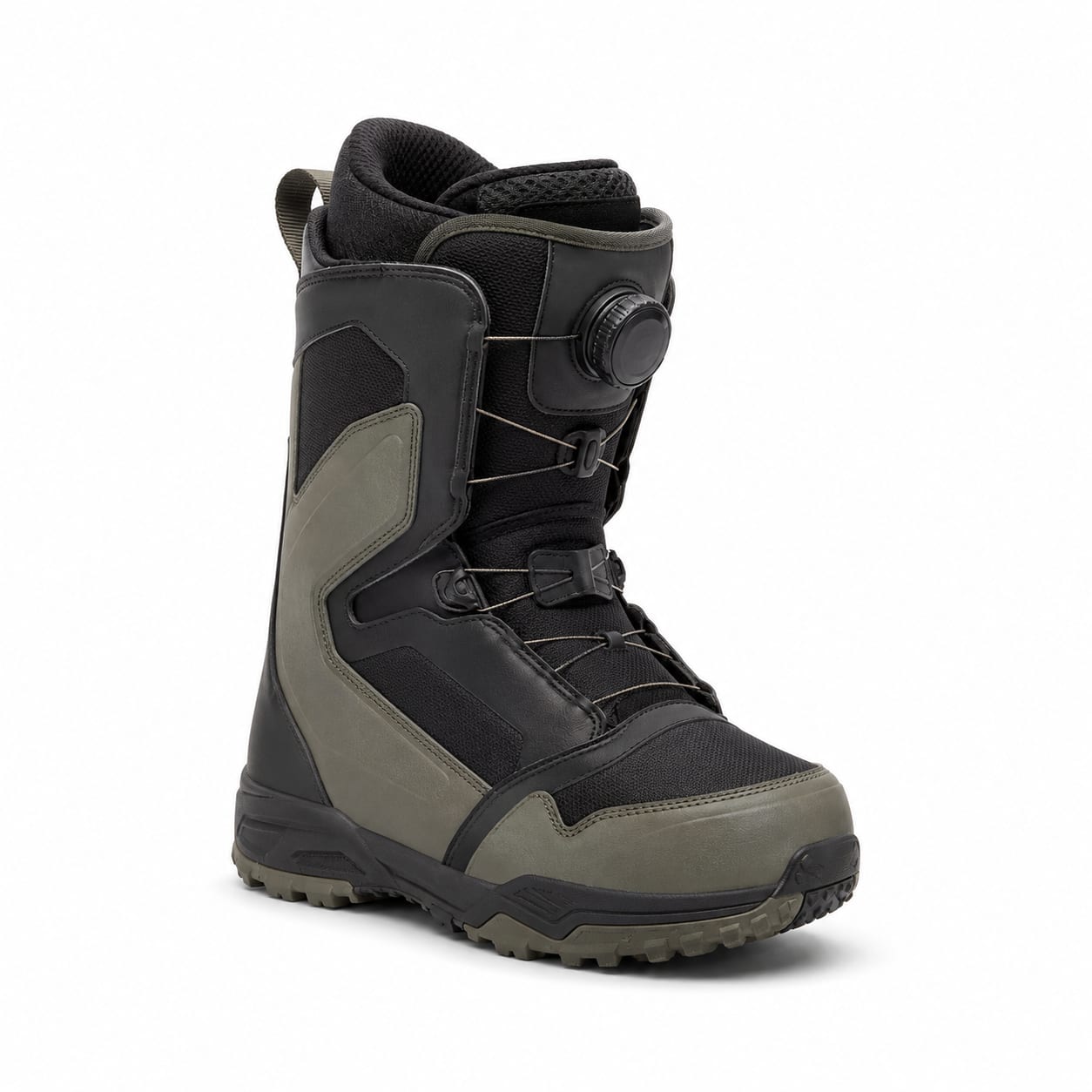
This is the defining dimension of the subcategory. Single BOA uses one dial for uniform pressure across the entire foot—fast but less adjustable. Double BOA splits upper and lower zones for independent heel-lock and forefoot tension—the most popular and versatile option. Triple BOA adds maximum zonal control at higher cost and weight.
Compared to other types
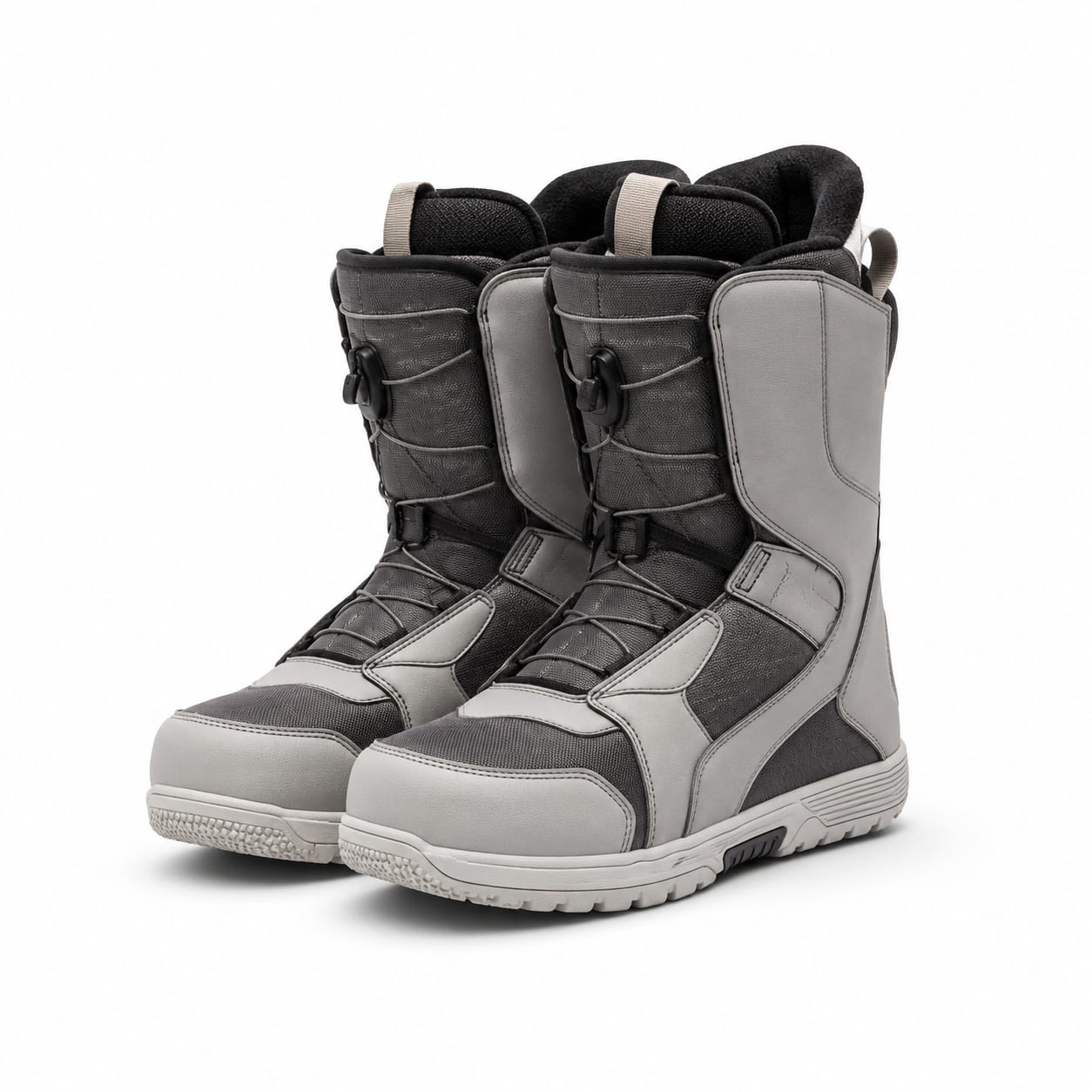
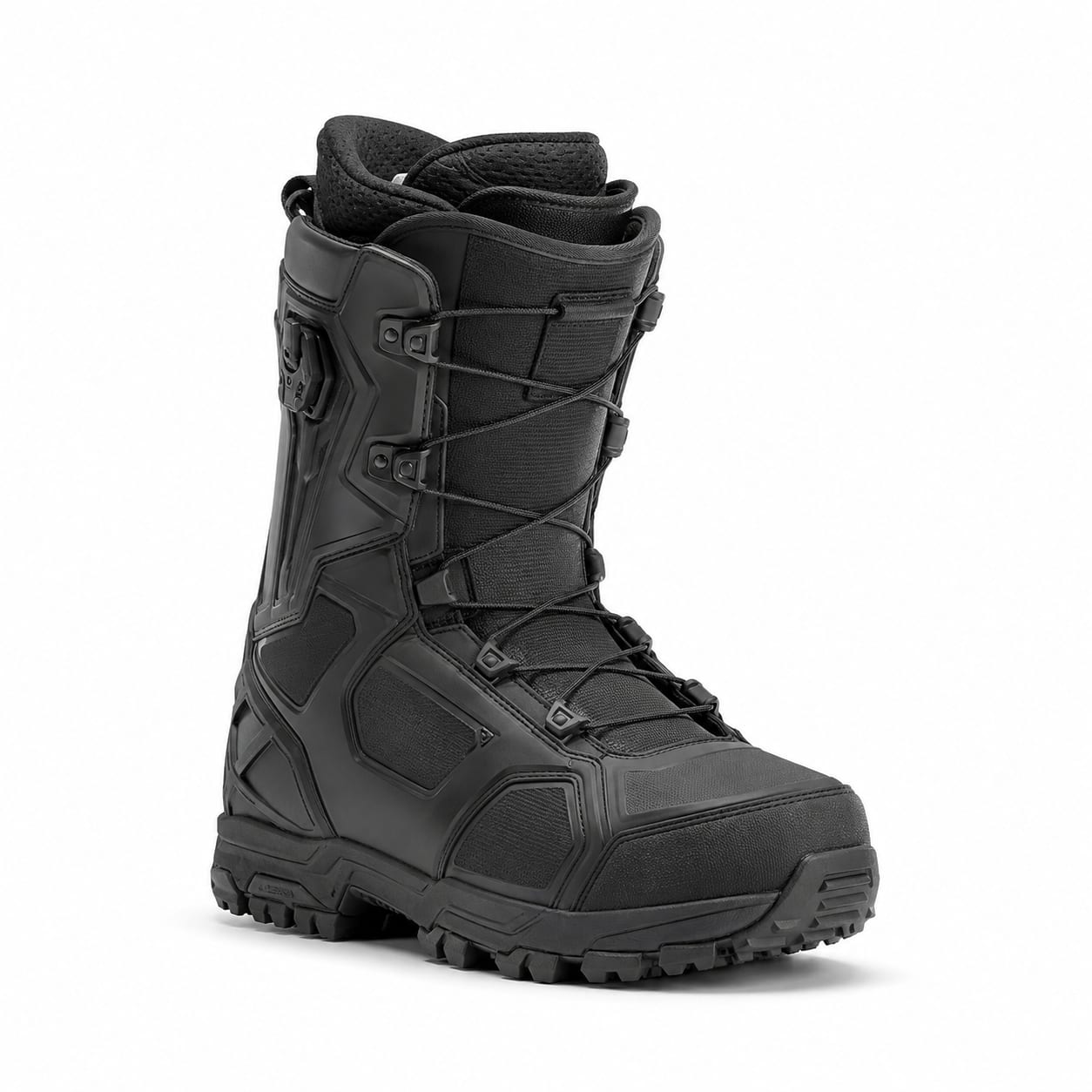
BOA provides the fastest entry/exit and easiest mid-run adjustments versus traditional laces (slowest but most customizable) and speed laces (fast but can slip). Single BOA offers less zonal control than traditional laces; Double BOA approaches traditional lace adjustability; Triple BOA exceeds it in convenience but not in granularity.
Why it matters: The number of BOA dials directly determines how precisely you can tune your fit. Double BOA is the sweet spot for most riders, offering separate ankle and toe zone control without excessive complexity.
What it means
The internal volume and width of the boot shell, determining how snugly the boot fits across the forefoot and midfoot. Measured by the 'last'—the foot mold the boot is built around.
Typical for this type
Narrow to Wide—BOA Boots Are Available In All Last Widths
Most common pick: Standard
In practice
BOA boots come in narrow, standard, and wide lasts across brands. The BOA system's even cable pressure can feel slightly different from lace pressure across the forefoot—some wide-footed riders find BOA's uniform distribution more comfortable, while narrow-footed riders may need Double BOA to independently tighten the ankle zone without over-compressing the forefoot.
Compared to other types
BOA, traditional lace, and speed lace boots all offer the same last width options. BOA's cable distribution tends to create more uniform pressure than laces, which can create pressure points at individual eyelets.
Why it matters: Last width determines fit more than any other dimension. BOA's even pressure distribution can be an advantage for wide feet (no lace pressure points) but may require zonal dials for narrow feet that need differentiated ankle versus toe tension.
Boot Size (Mondo)
Mondo Size
What it means
The length of the boot's internal footbed measured in centimeters (Mondo point sizing). This is the most accurate sizing standard for snowboard boots.
Typical for this type
21.0–31.5 cm (full size range available)
Most common pick: 26.0
In practice
BOA boots follow standard Mondo sizing identical to other boot types. Sizing is not affected by the lacing system. However, BOA's micro-adjustability can help fine-tune fit within a given size—if you're between sizes, BOA lets you dial in tension more precisely than laces, potentially making a slightly larger size work better by allowing tighter overall compression.
Compared to other types
Mondo sizing is identical across all lacing subcategories. BOA's micro-adjustability offers slightly more fine-tuning within a size versus traditional laces, but this should not influence your size selection.
Why it matters: Proper Mondo sizing is critical regardless of lacing system. BOA's adjustability can compensate for minor fit issues but cannot fix a fundamentally wrong size. Always start with accurate Mondo measurement.
What it means
The internal boot structure that provides cushioning, insulation, and fit. Liner type affects heat retention, moldability, and long-term fit quality.
Typical for this type
Heat Moldable to Intuition—Most BOA Boots Are Mid-Range
In practice
BOA boots skew toward mid-range and premium price points where heat-moldable and Intuition liners are standard. Entry-level BOA models may use removable standard liners, but most Double BOA boots feature heat-moldable liners. The BOA system works well with heat-moldable liners because the even cable pressure helps maintain the molded shape consistently.
Compared to other types
BOA boots tend to feature higher-quality liners than entry-level traditional lace models because BOA adds cost that brands offset with premium liner materials. Traditional lace boots span the full liner range from basic to Intuition.
Why it matters: Liner type affects comfort and longevity independently of the lacing system. Heat-moldable and Intuition liners are especially valuable in BOA boots because they complement the system's even pressure distribution for a more consistent, custom fit.
Heel Hold / Heel Lock
Heel Hold Technology
What it means
Design features that prevent the heel from lifting inside the boot during turns. Heel lift reduces edge control and causes fatigue. Includes internal harness systems, ankle pockets, and liner construction.
Typical for this type
Contoured Heel Pocket to Internal Harness—Double BOA Enhances Heel Lock
In practice
BOA boots—especially Double and Triple configurations—excel at heel hold because the upper dial can be independently tightened to lock the ankle without over-compressing the forefoot. Many BOA boots also incorporate internal ankle harnesses that work synergistically with the BOA upper zone cable. This combination is one of BOA's strongest practical advantages.
Compared to other types
Double BOA provides heel hold comparable to or better than traditional laces because the upper zone dial can be independently adjusted for ankle compression. Single BOA applies uniform pressure and may not achieve the same heel-specific lock. Traditional laces allow the most granular heel-zone tuning but require more skill and time.
Why it matters: Heel hold is where BOA's zonal tightening shines most. Double BOA lets you crank the upper dial for heel lock while keeping the lower dial comfortable—something single-lace systems struggle to achieve independently.
Outsole / Traction
Outsole Type
What it means
The bottom of the boot that contacts the ground when walking and the binding baseplate when riding. Affects grip, cushioning, durability, and weight.
Typical for this type
Low Profile to Vibram—BOA Boots Span All Outsole Types
Most common pick: Eva Midsole
In practice
BOA boots are available with all outsole types. EVA midsoles are most common in all-mountain Double BOA models. Low-profile outsoles appear in soft-flex park BOA boots. Vibram and rubber lugged outsoles feature on premium freeride and splitboard BOA models with walk mode. The lacing system has no influence on outsole choice.
Compared to other types
Outsole options are identical across lacing subcategories. BOA does not constrain or influence outsole design—any outsole type can be paired with any lacing system.
Why it matters: Outsole type should be matched to your terrain and riding style, not your lacing preference. BOA convenience and outsole performance are independent features—choose both based on your needs.
Insulation / Warmth
Insulation Rating
What it means
How effectively the boot retains heat. Determined by liner material, insulation type, and shell construction. Critical for riders in cold climates or with poor circulation.
Typical for this type
Lightweight to Heavy—BOA Boots Available Across All Insulation Levels
Most common pick: Standard
In practice
BOA boots come in all insulation ratings. Standard insulation is most common across the broad all-mountain BOA lineup. The BOA system's micro-adjustability is particularly useful with heavily insulated boots—you can loosen the dial slightly if thick insulation compresses and causes numbness, then re-tighten as the boot warms up.
Compared to other types
Insulation options are the same across all lacing subcategories. BOA's mid-run adjustability gives it a slight practical edge with insulated boots where internal volume shifts as the liner warms up.
Why it matters: Insulation and lacing system are independent. However, BOA's on-the-fly adjustability is especially helpful with insulated boots where foot volume changes as insulation warms and compresses during the day.
Walk Mode / Touring
Walk Mode
What it means
A mechanism that unlocks the boot's upper cuff from the lower shell, allowing a natural walking stride for touring and splitboarding. Sometimes called 'ride/hike mode' or 'touring mode'.
Typical for this type
False For Resort Riders, True For Splitboarders—BOA Walk-Mode Boots Available
In practice
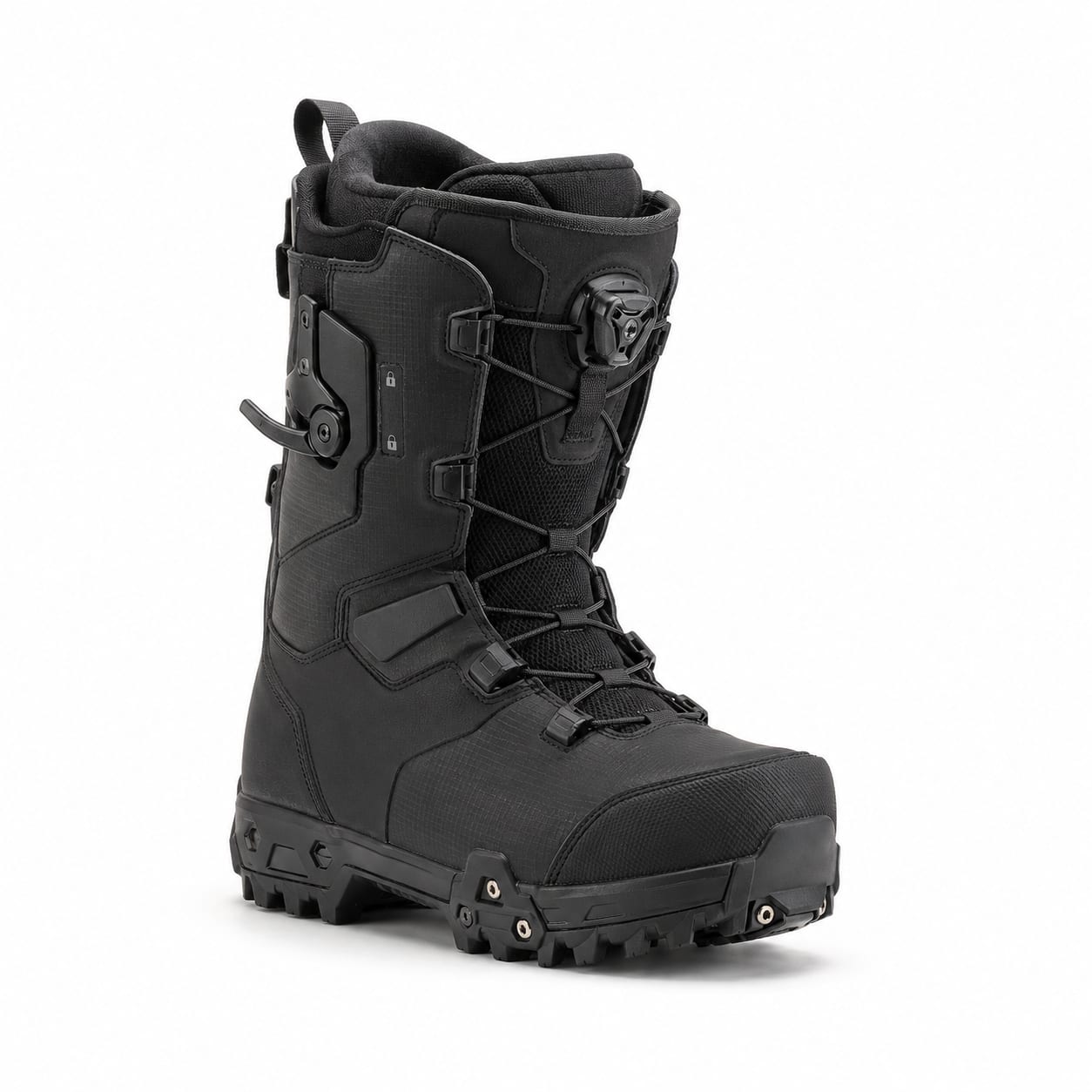
Most BOA boots are resort-focused without walk mode. However, premium splitboard-specific BOA boots (e.g., Burton Touring Photon, K2 Aspect) feature walk mode with a ride/hike switch. BOA convenience is especially appreciated during touring transitions—quick dial release for hike mode comfort, quick tighten for descent performance.
Compared to other types
Walk mode availability is similar across lacing types. BOA walk-mode boots offer faster transition adjustments—loosening dials for uphill comfort and tightening for downhill is faster than re-lacing traditional boots at each transition.
Why it matters: Walk mode is only necessary for splitboarding or hiking. If you tour, BOA walk-mode boots offer the best transition convenience. If you ride resort only, skip walk mode regardless of lacing system.
Weight (per boot)
Boot Weight
What it means
The weight of a single boot, typically measured in grams or pounds. Lighter boots reduce fatigue but may sacrifice durability and dampening.
Typical for this type
800–1200g per boot (size 9)—BOA hardware adds ~30–80g versus traditional lace
Most common pick: 950g
In practice
BOA boots are slightly heavier than equivalent traditional lace models due to dial hardware, cable guides, and retention mechanisms. Single BOA adds approximately 30–50g; Double BOA adds 50–80g; Triple BOA adds 80–120g versus the same boot with traditional laces. This weight penalty is minimal for most riders but noticeable for weight-sensitive park riders doing spins.
Compared to other types
BOA boots are 30–120g heavier per boot than traditional lace equivalents depending on dial count. Speed lace boots are similar in weight to traditional lace. The weight difference is noticeable in spins but negligible for general riding.
Why it matters: The BOA weight penalty is real but small—typically under 100g per boot for Double BOA. For most riders, the convenience outweighs the weight. Spin-heavy park riders may prefer traditional laces or Single BOA to minimize rotational weight.
Footbed / Insole
Footbed / Insole
What it means
The removable insole inside the liner that provides arch support, cushioning, and alignment. Stock footbeds are often minimal; many riders upgrade to aftermarket options.
Typical for this type
Basic Die Cut to Custom Aftermarket—Upgrade Recommended Regardless Of Lacing
Most common pick: Molded Arch
In practice
BOA boots typically come with molded arch or Ortholite stock footbeds, reflecting their mid-range-to-premium positioning. The stock footbed is the weakest component in any boot regardless of lacing system. Upgrading to an aftermarket footbed (Superfeet, Sidas, custom orthotic) dramatically improves comfort, alignment, and power transfer in BOA boots just as in any other boot.
Compared to other types
Stock footbed quality is similar across lacing subcategories at equivalent price points. BOA boots tend to include slightly better stock footbeds because they occupy mid-range-to-premium price tiers, but aftermarket upgrade remains essential for all.
Why it matters: Footbed quality matters equally in all boots. BOA's even pressure distribution actually makes a good footbed more important—consistent cable pressure across a poorly supported foot can create discomfort. Upgrade your footbed regardless of lacing system.
Shell Construction
Shell Construction
What it means
The outer boot's material and build method. Affects durability, weight, water resistance, and how the boot flexes over time.
Typical for this type
Synthetic Leather to Composite—BOA Boots Use All Shell Types
Most common pick: Injected Tpu
In practice
BOA boots are built with all shell construction types. Injected TPU is most common in medium-to-stiff BOA models where consistent flex matters. Synthetic leather appears in soft-flex park BOA boots. Composite multi-material shells feature on premium BOA boots with zoned flex. The BOA cable routing is integrated into the shell design regardless of construction material.
Compared to other types
Shell construction options are identical across lacing subcategories. BOA hardware is compatible with all shell materials and does not limit construction choices.
Why it matters: Shell construction affects flex consistency and durability independently of the lacing system. BOA cables are routed through the shell regardless of material—the lacing system works with any construction type.
Impact Protection / Dampening
Impact Absorption
What it means
The boot's ability to absorb shock from flat landings, choppy terrain, and drops. Determined by midsole material, heel cushioning technology, and liner density.
Typical for this type
Minimal to Enhanced Impact—BOA Boots Span All Absorption Levels
Most common pick: Standard Dampening
In practice
BOA boots offer all impact absorption levels. Standard dampening is most common in all-mountain Double BOA models. Enhanced impact protection appears in park-specific BOA boots (e.g., Burton Rampage, ThirtyTwo Lashed FT) and freeride BOA models. The lacing system has no effect on impact absorption technology.
Compared to other types
Impact absorption options are identical across lacing subcategories at equivalent price points. BOA does not influence dampening technology—any absorption level can be paired with any lacing system.
Why it matters: Impact absorption is determined by midsole and liner technology, not lacing system. Choose impact absorption based on your riding intensity and terrain, then select BOA or traditional laces as a separate convenience decision.
Optimized Riding Style
Riding Style
What it means
The primary riding discipline the boot is designed for. While any boot can be used anywhere, boots optimized for a specific style will perform best in that context.
Typical for this type
Freestyle Park to Backcountry Splitboard—BOA Boots Available For All Styles
Most common pick: All Mountain
In practice
BOA boots exist across all riding styles. All-mountain is the most common BOA category because Double BOA appeals to the broadest rider demographic. Freestyle BOA boots typically use Single BOA for simplicity and weight savings. Freeride BOA boots use Double or Triple BOA for maximum heel hold and response tuning. Splitboard BOA boots feature Double BOA with walk mode for touring convenience.
Compared to other types
All riding styles are equally available across lacing subcategories. BOA's convenience advantage is style-neutral—it benefits park riders doing frequent strap-in/strap-out cycles, all-mountain riders adjusting mid-run, and splitboarders managing transitions equally.
Why it matters: Riding style should drive your boot selection first—flex, liner, outsole, and impact absorption all follow from style. BOA lacing is a convenience overlay that works across all styles. Don't let lacing preference override style-specific needs.
Waterproofing / Weather Resistance
Waterproofing
What it means
How well the boot prevents water and snow from penetrating to the foot and liner. Determined by shell treatment, seam sealing, and internal waterproof membranes.
Typical for this type
Water Resistant to Fully Sealed—BOA Boots Available At All Waterproofing Levels
In practice
BOA boots come in all waterproofing levels. Water-resistant shells are most common in standard all-mountain BOA models. Waterproof membrane (Gore-Tex) BOA boots are available for wet climates and backcountry. Fully sealed storm-proof BOA boots exist in premium freeride lines. The BOA dial housing is inherently water-resistant and does not create a leak point.
Compared to other types
BOA boots may offer slightly better water resistance than traditional lace boots at equivalent shell treatments because cable routing creates fewer penetration points than lace eyelets. This difference is minor but measurable.
Why it matters: Waterproofing matters independently of lacing system. BOA dials are sealed units that don't compromise water resistance—in fact, BOA boots may have fewer stitch-and-eyelet penetration points than lace boots, potentially improving water resistance slightly.
Forward Lean Angle
Forward Lean Angle
What it means
The angle the boot's upper cuff is tilted forward relative to vertical. Affects default riding stance, knee bend, and how aggressively the rider is positioned over the board.
Typical for this type
12–18 degrees (fixed in most BOA boots; adjustable in some premium models)
Most common pick: 15
In practice
Most BOA boots have fixed forward lean of 12–18°, identical to traditional lace models. Some premium BOA boots (e.g., certain Burton and Salomon models) offer adjustable forward lean via interchangeable spine inserts or adjustable cuff mechanisms. Forward lean is a design parameter independent of lacing system.
Compared to other types
Forward lean options are identical across lacing subcategories. BOA does not affect lean angle design—any lean configuration can be paired with any lacing system.
Why it matters: Forward lean affects stance and knee positioning regardless of lacing. Most riders adjust lean via binding highbacks rather than boot construction. BOA does not influence forward lean design choices.