What it means
The discipline-specific category of the helmet, which determines its shape, coverage, ventilation pattern, and intended use scenario.
Typical for this type
Road (For Standard Road Riding); Aero Road (For Racing And Fast Group Rides Above 30 Km/H)
In practice
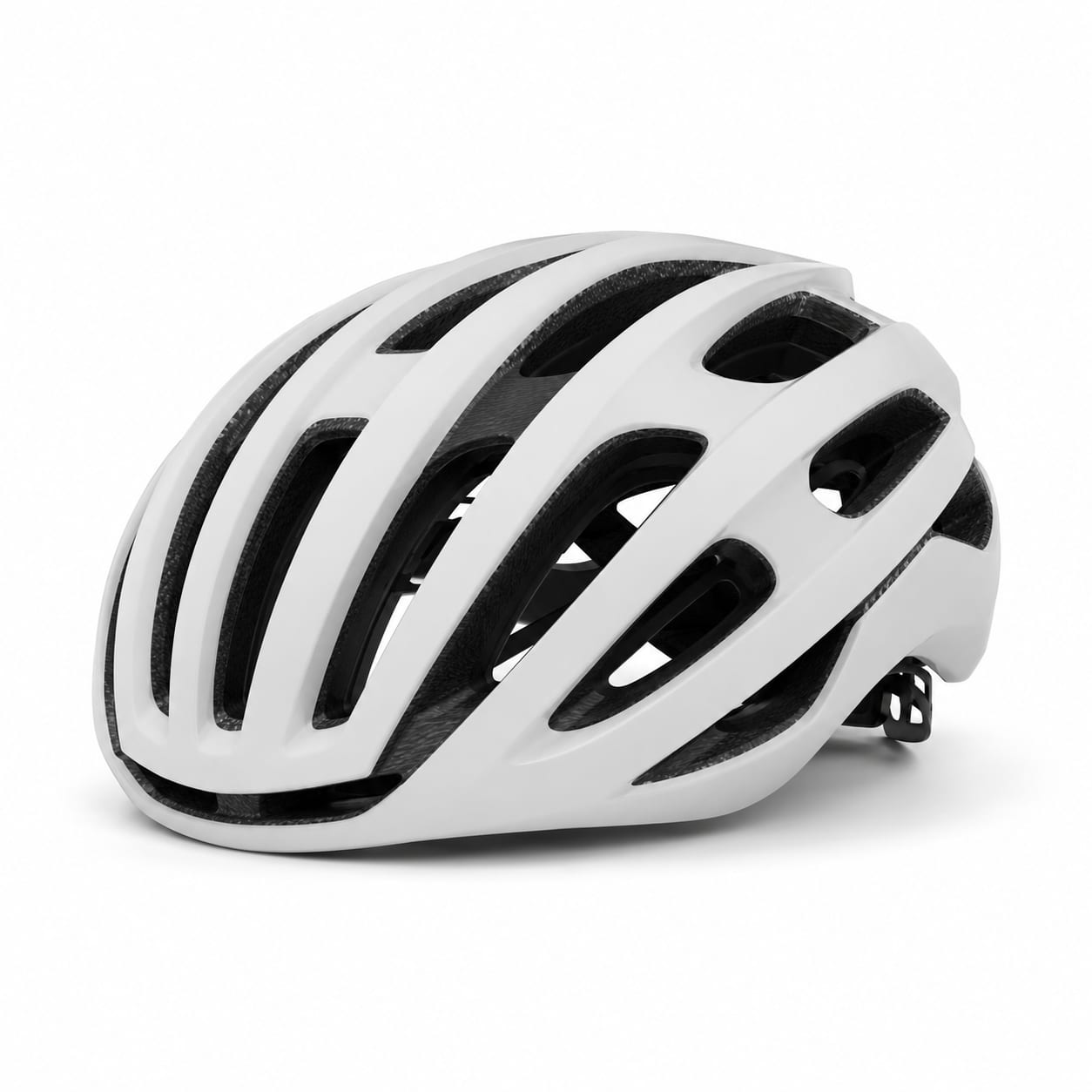
Road cycling helmets are classified as 'road' type, characterized by lightweight construction, extensive ventilation, minimal coverage, and no visor. This type is optimized for paved riding where aerodynamics, cooling, and low weight take priority over extended protection.
Compared to other types
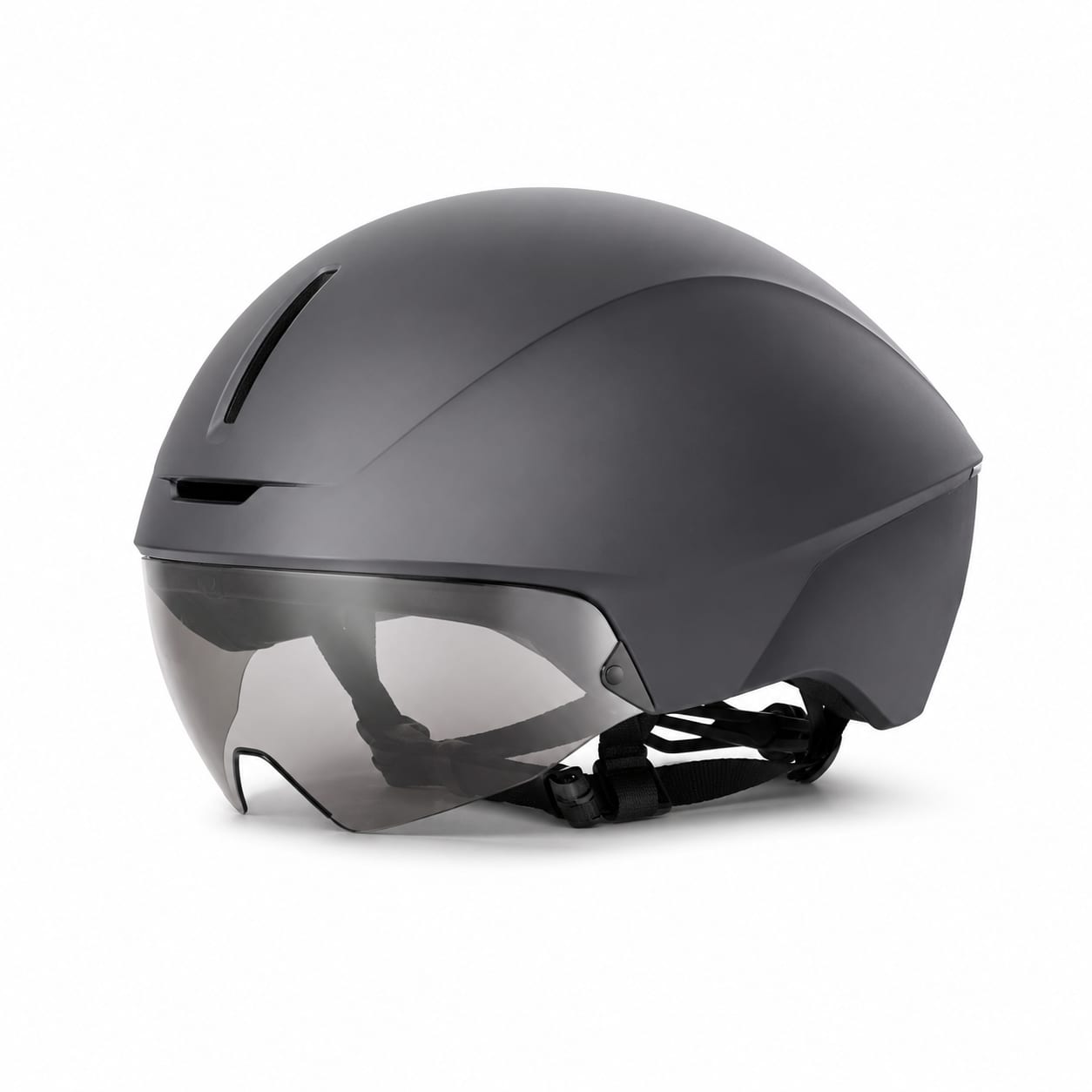
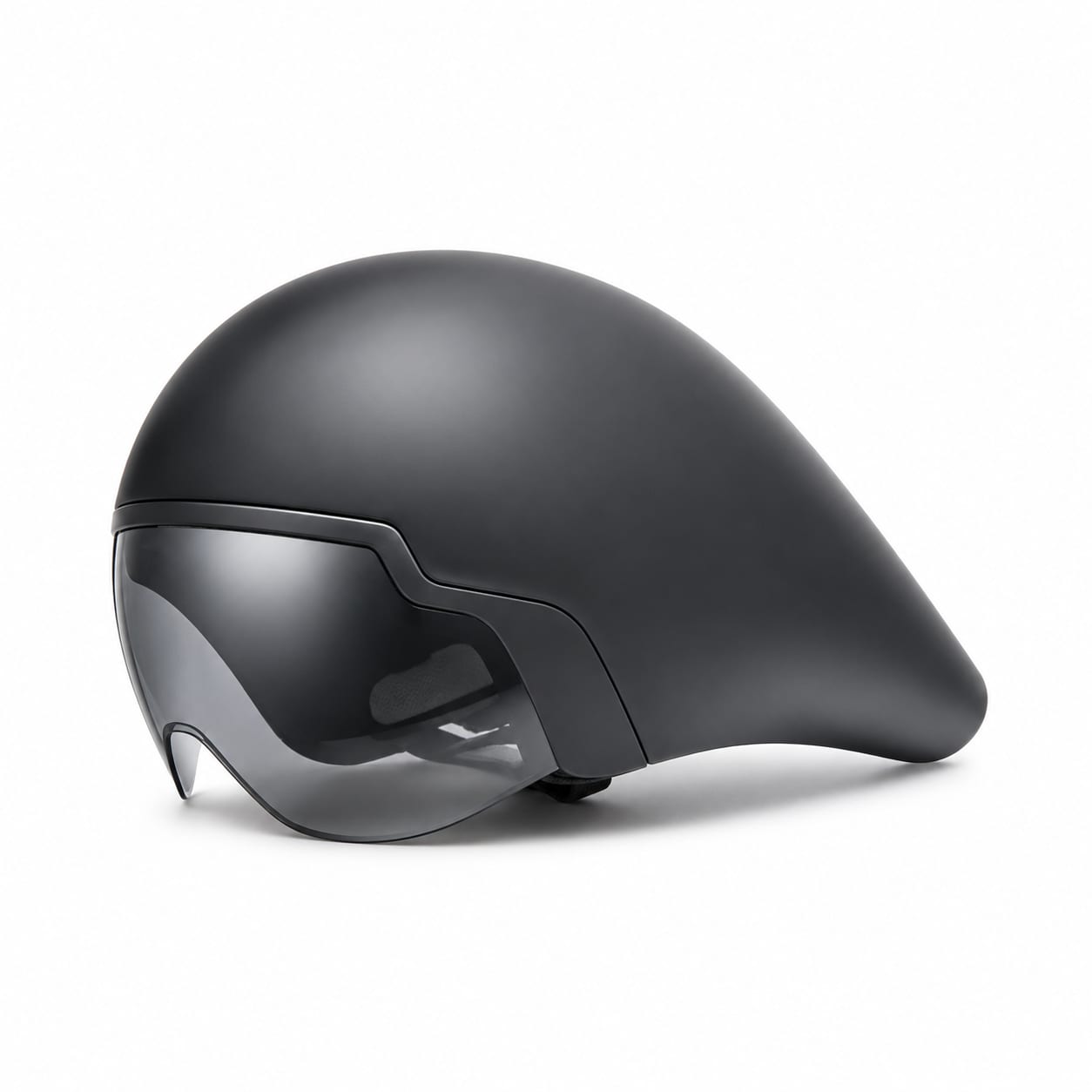
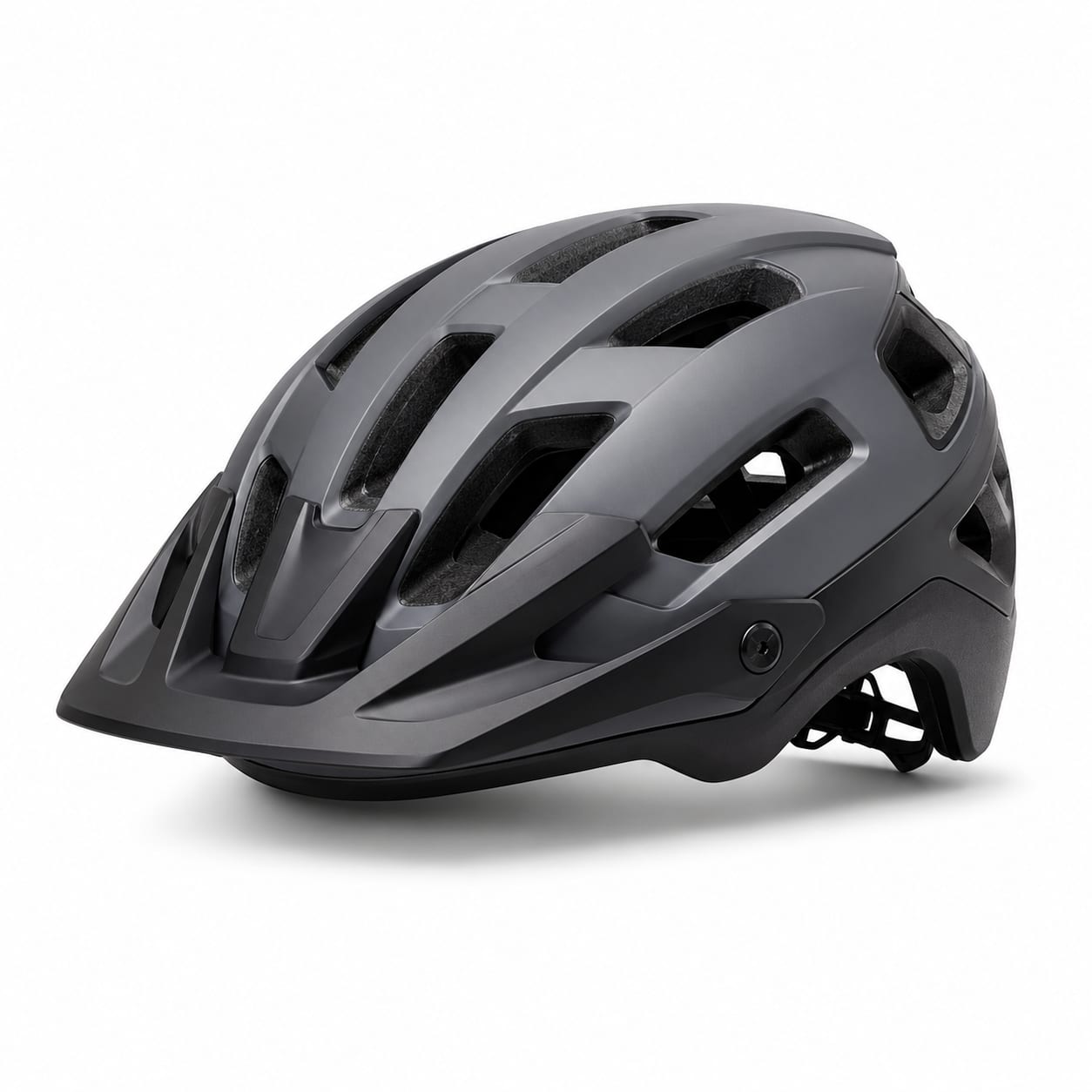
Road helmets have significantly more vents and less coverage than mountain bike helmets, no visor unlike MTB and gravel helmets, and far better ventilation than aero road or TT helmets. They are lighter than commuter, MTB, and full-face helmets but offer less impact protection coverage.
Why it matters: The helmet type determines the fundamental design philosophy—road type means maximum ventilation and minimum weight with aero-informed shaping, but less rear and temple coverage than MTB or gravel helmets.
Certification Standard
Certification Standard
What it means
Safety certification standards the helmet meets, indicating the impact testing protocols and minimum protection levels verified by independent testing bodies.
Typical for this type
CPSC (US Market) And EN 1078 (European Market) At Minimum; Snell B-95 For Premium Safety Assurance
Most common pick: CPSC, EN 1078
In practice
Road cycling helmets universally meet CPSC and/or EN 1078 baseline certification standards, which verify minimum impact absorption through standardized drop tests. These are mandatory legal requirements in their respective markets. Some premium road helmets also pursue voluntary Snell B-95 certification for enhanced safety differentiation.
Compared to other types
Road helmets meet the same baseline CPSC/EN 1078 standards as other helmet types. Unlike downhill MTB helmets that may carry ASTM F1952 for higher-impact testing, or speed pedelec helmets with NTA 8776, road helmets are not designed for the higher impact energies of those disciplines.
Why it matters: Certification ensures the helmet has passed independent impact testing. Without valid certification, there is no verified baseline of protection. All legitimate road helmets sold through authorized channels meet at least one mandatory standard.
Rotational Protection System
Rotational Protection System
What it means
Technology designed to reduce rotational forces transmitted to the brain during oblique impacts, which are the most common type of cycling crash impact.
Typical for this type
MIPS At Minimum; MIPS Spherical Or WaveCel For Premium Protection
In practice
MIPS is the most widely available rotational protection system in road helmets, using a low-friction layer between the head and EPS liner to allow sliding during oblique impacts. It adds 20-50g of weight and is found in most mid-range to premium road helmets. MIPS Spherical and WaveCel offer more advanced alternatives at higher price points.
Compared to other types
Road helmets commonly feature MIPS due to its ease of integration with lightweight, well-vented designs. Aero road helmets sometimes omit rotational protection due to integration challenges with smooth shells. Budget road helmets may lack any rotational system. MTB and enduro helmets increasingly include MIPS as standard.
Why it matters: Oblique impacts are the most common type of cycling crash, and rotational forces are strongly linked to brain injuries including concussions. A rotational protection system provides an additional safety layer beyond what standard EPS foam alone can offer.
What it means
The total mass of the helmet including all padding, retention system, and visor (if included), measured in grams.
Typical for this type
200-280g (under 250g is considered lightweight; under 220g is ultralight)
Most common pick: 230g
In practice
Road cycling helmets typically weigh between 200-280g, with premium models clustering around 220-250g. The lightest road helmets approach 200g by using minimal material, thin shells, and streamlined retention systems. Weight includes all padding, retention system, and straps but excludes any add-on accessories.
Compared to other types
Road helmets are the lightest category alongside aero road helmets. They are significantly lighter than MTB helmets (280-380g), commuter helmets (300-400g), and full-face helmets (600-1000g). The weight advantage comes from minimal coverage, no visor, and in-mold construction.
Why it matters: Lower weight reduces neck fatigue on long rides and is particularly noticeable during climbing. However, differences under 30g are barely perceptible while riding—fit and ventilation should take priority over marginal weight savings.
Number of Vents
Number of Vents
What it means
The total number of intake and exhaust vents designed to channel airflow through the helmet for cooling.
Typical for this type
18-28 vents (higher is better for hot-climate riding)
Most common pick: 22
In practice
Road cycling helmets feature the highest vent counts of any helmet category, typically 18-28 large vents. These are connected by deep internal channels that route air from front intake vents across the scalp and out rear exhaust vents. Vent count alone doesn't guarantee cooling—channel design and vent placement matter equally.
Compared to other types
Road helmets have significantly more vents than aero road helmets (4-12), MTB helmets (12-20), and commuter helmets (8-16). The large, open vents of road helmets are possible because road riding presents fewer debris impacts than off-road riding.
Why it matters: Ventilation is the primary comfort differentiator for road helmets. High-intensity road riding generates significant body heat, and effective cooling prevents overheating that degrades performance and concentration. In hot climates, maximum ventilation is essential.
Head Circumference Range
Head Circumference Range
What it means
The range of head circumferences the helmet is designed to fit, typically adjustable via the retention system within a specific size bracket.
Typical for this type
S: 51-55cm, M: 55-59cm, L: 59-63cm; Measure Your Head And Choose The Size That Includes Your Measurement In The Middle Of Its Range
Most common pick: 52-60cm (Medium size)
In practice
Road helmets are typically offered in 2-3 size brackets covering approximately 51-63cm total. Most brands use Small (51-55cm), Medium (55-59cm), and Large (59-63cm) sizing. Some brands offer XS or XL sizes. The retention dial provides approximately 2-4cm of fine adjustment within each size bracket.
Compared to other types
Road helmets use the same sizing conventions as other helmet types. Some aero road helmets offer fewer size options. Commuter helmets sometimes use one-size-fits-all designs (54-61cm). The key difference is that road helmets must fit precisely for both safety and comfort at high speeds.
Why it matters: Proper fit is the most critical safety factor—a helmet that's too large can shift during impact, and one that's too small creates pressure points and won't sit correctly on the head. Measure at the widest point above the eyebrows before purchasing.
Retention System
Retention System
What it means
The adjustable mechanism at the rear of the helmet that secures it to the head and allows on-the-fly adjustment for a stable, comfortable fit.
Typical for this type
Dial/Ratchet For Most Riders; Rear Dial With Yoke For Premium Stability
In practice
The dial/ratchet retention system is standard on road helmets, featuring a rotary dial at the rear that adjusts circumference with one-handed operation. Premium road helmets may use yoke-style systems with adjustable arms that wrap the occipital bone for enhanced stability during aggressive riding and high-speed descents.
Compared to other types
Road helmets universally feature dial-based retention systems. Budget commuter helmets may use sliding buckles. The yoke-style system is particularly valued in road helmets because high-speed descents and rough pavement create forces that can shift the helmet position.
Why it matters: The retention system keeps the helmet securely positioned on the head and allows on-the-fly adjustment for comfort changes during long rides. A good retention system prevents the helmet from rocking forward over the eyes or shifting laterally during impacts.
Shell Construction
Shell Construction
What it means
The manufacturing method used to join the outer polycarbonate shell to the inner EPS foam liner, affecting durability, weight, and safety.
Typical for this type
In-Mold (Standard And Recommended); Hybrid In-Mold For Premium Durability
In practice
In-mold construction is the standard for road cycling helmets, where the polycarbonate shell is molded directly to the EPS foam during manufacturing, creating a bonded single unit. This produces the lightest possible helmet with optimal energy transfer during impacts. The thin shell is vulnerable to dings from drops but performs best in crash scenarios.
Compared to other types
Road helmets almost exclusively use in-mold construction for its weight advantage. Commuter and skate-style helmets often use hardshell construction for durability. Premium MTB helmets may use hybrid in-mold with a hardshell lower ring. Road helmets benefit most from in-mold because weight savings directly impact climbing performance.
Why it matters: In-mold construction provides the best weight-to-protection ratio, which is why it dominates road helmet design. The bonded shell cannot separate from the foam during impact, ensuring consistent energy management. It does require more careful handling than hardshell designs.
Coverage Level
Coverage Level
What it means
The extent of head coverage provided by the helmet, particularly at the temples, rear, and base of the skull, beyond the minimum certification requirement.
Typical for this type
Standard Road Coverage For Paved Riding; Consider Extended Rear For Gravel-Adjacent Road Riding
In practice
Road cycling helmets provide standard road coverage that extends slightly below the certification minimum at the rear and temples. This offers adequate protection for the most common road crash scenarios while maintaining maximum ventilation and minimum weight. Coverage does not extend as low as MTB or gravel helmets.
Compared to other types
Road helmets provide less coverage than MTB helmets (extended rear), enduro helmets (full coverage MTB), and full-face helmets. They offer more coverage than aero road helmets (minimal coverage). The tradeoff is that road helmets are lighter and cooler but protect less of the temporal and occipital regions.
Why it matters: Coverage level directly affects the area of head protected during impacts. Standard road coverage is adequate for paved riding where crashes typically involve forward or lateral falls. Riders seeking more protection for mixed-terrain riding should consider helmets with extended rear coverage.
What it means
The type of visor or brim attached to the helmet for sun, rain, and debris protection, and whether it's removable or adjustable.
Typical for this type
No Visor (Standard For Road); Use A Cycling Cap Underneath For Sun Protection
In practice
Road cycling helmets do not include visors, providing a clean aerodynamic profile and unobstructed forward and upward vision. Road riders typically use cycling caps worn underneath the helmet for sun and rain protection, which can be easily removed or flipped up when not needed.
Compared to other types
Unlike MTB helmets with removable/adjustable visors and commuter helmets with fixed short visors, road helmets are designed without visors. This is a defining characteristic of the category. Gravel helmets sometimes blur this line with small removable visors.
Why it matters: The absence of a visor reduces aerodynamic drag, eliminates weight, and provides an unobstructed field of view critical for reading road surfaces and spotting hazards at speed. Visors can also obstruct vision in the aggressive riding positions common on road bikes.
Padding System
Padding System
What it means
The type, material, and configuration of interior padding that contacts the head, affecting comfort, moisture management, and fit customization.
Typical for this type
Removable/Washable At Minimum; Anti-Microbial Or Premium Multi-Density For Frequent Riders
Most common pick: Removable/Washable Pads
In practice
Most mid-range to premium road helmets feature removable, washable pads attached with Velcro that can be removed for washing and replaced when worn. Anti-microbial treatments are common at higher price points. Premium models may include multi-density zone pads with dedicated brow sweat channels.
Compared to other types
Road helmets typically have thinner, lighter padding than MTB and commuter helmets to maximize ventilation airflow. Premium road helmets often feature brow pads with sweat channels that direct moisture away from the eyes—a feature less common in other categories where riding intensity and sweat rates may be lower.
Why it matters: Road riding generates significant sweat, and washable pads maintain hygiene and comfort over time. Removable pads also allow fit customization using different thickness pads included with the helmet. Sweat management is particularly important on long road rides in hot conditions.
Chin Buckle Type
Chin Buckle Type
What it means
The type of buckle used on the chin strap, affecting ease of use, reliability, and safety.
Typical for this type
Standard Side-Release For Most Riders; Magnetic Fidlock For Triathletes And Frequent On/Off Use
In practice
The standard side-release buckle is the most common chin strap fastener on road helmets, offering reliable one-hand operation and proven safety. Premium road and triathlon helmets may feature magnetic Fidlock buckles that snap together automatically and release with a slide motion for faster transitions.
Compared to other types
Road helmets use standard side-release or magnetic Fidlock buckles. Full-face MTB and BMX helmets use double D-ring buckles for maximum security. Commuter helmets typically use standard side-release. The Fidlock buckle is most common in road and aero categories where quick transitions matter.
Why it matters: Buckle type affects daily usability more than safety—all types meet certification requirements. Fidlock buckles are particularly valued by triathletes for quick transitions and by riders who frequently remove and replace helmets during rides. Standard buckles work well for most road riders.
Reflective Elements
Reflective Elements
What it means
Presence and extent of reflective materials on the helmet for enhanced visibility in low-light conditions.
Typical for this type
Minimal Decal Is Standard; Add Separate Lights For Low-Light Riding
Most common pick: Minimal Decal/Sticker
In practice
Most road cycling helmets include only minimal reflective elements—small decals or logos on the rear or sides. These provide some passive visibility but are primarily styling-driven rather than safety-designed. Road riders who ride in low light should supplement with active lights and high-visibility clothing.
Compared to other types
Road helmets have significantly less reflective material than commuter helmets (strategic placement or full wrap) and slightly less than MTB helmets. This reflects the assumption that road riding primarily occurs in daylight. Commuter and urban helmets prioritize reflective elements as a core safety feature.
Why it matters: Reflective elements provide passive visibility that works without batteries or activation. While minimal decals offer some benefit, they are insufficient for reliable low-light visibility. Road riders who commute or train in dawn/dusk conditions should not rely on helmet reflectives alone.
Integrated Light Mount
Integrated Light Mount
What it means
Built-in mount or attachment point for rear lights, either as a dedicated clip, magnetic mount, or integrated light.
Typical for this type
No Mount Is Standard; Use Separate Light With Strap Mount If Needed
In practice
Road cycling helmets typically do not include integrated light mounts, maintaining a clean profile and minimum weight. Some road helmets include a small clip at the rear for attaching compatible lights, but this is the exception rather than the rule. Road riders who need rear visibility use lights attached with straps around the helmet or seatpost-mounted lights.
Compared to other types
Road helmets rarely include light mounts, unlike commuter helmets that frequently feature clip mounts, magnetic mounts, or integrated lights. This reflects the different use cases—commuter helmets prioritize always-available visibility, while road helmets prioritize weight and aerodynamics for performance riding.
Why it matters: The absence of an integrated mount keeps the helmet lighter and cleaner but means riders must use separate lights for low-light visibility. Clamping lights onto helmet vents can damage thin in-mold shells, so dedicated mounts or seatpost-mounted lights are preferred.
Aerodynamic Optimization
Aerodynamic Optimization
What it means
The degree to which the helmet is designed to reduce aerodynamic drag, from no consideration to purpose-built time trial aerodynamics.
Typical for this type
Aero-Informed Design For Most Road Riders; Aero Road Optimized For Racers And Fast Group Riders Above 30 Km/H
In practice
Standard road cycling helmets feature aero-informed design—shaped with aerodynamic principles and often wind-tunnel tested, but not fully optimized for drag reduction at the expense of ventilation. Vents and surfaces are designed to reduce drag while maintaining the cooling that defines the road helmet category. This provides moderate drag reduction without the heat penalty of dedicated aero helmets.
Compared to other types
Standard road helmets sit between aero road helmets (which sacrifice ventilation for 5-15 watts additional savings) and non-aero designs. They offer far better ventilation than TT/triathlon-optimized helmets while providing meaningful aero benefits over budget helmets with no aero consideration. For most road riders, aero-informed is the optimal balance.
Why it matters: Aerodynamic drag accounts for the majority of resistance at road cycling speeds. Even aero-informed road helmets save several watts compared to non-aero designs, which adds up over long rides. The key is that aero-informed designs achieve these savings without sacrificing the ventilation road riders need.
Strap Adjustment System
Strap Adjustment System
What it means
The system used to adjust and lock the chin strap length and position, affecting ease of fitting and strap stability during use.
Typical for this type
Standard Sliding Is Adequate; Adjustable Splitters With Locking For Premium Fit Security
In practice
Most road cycling helmets use standard sliding tri-glide buckles for strap length adjustment. These are simple, proven, and lightweight. Premium road helmets may feature adjustable splitters with locking mechanisms that prevent strap creep and maintain a precise fit over time.
Compared to other types
Road helmets use the same strap adjustment systems as other categories. Aero road helmets sometimes use fixed position splitters for a cleaner look and reduced drag. The strap system is a secondary consideration for most road helmet buyers, but locking splitters are a worthwhile premium feature for riders who value set-and-forget convenience.
Why it matters: Strap adjustment affects long-term fit stability. Standard sliding buckles can gradually loosen over time, requiring periodic readjustment. Locking splitters maintain their position, which is particularly valuable for riders who frequently take helmets on and off or who find their straps migrate during rides.