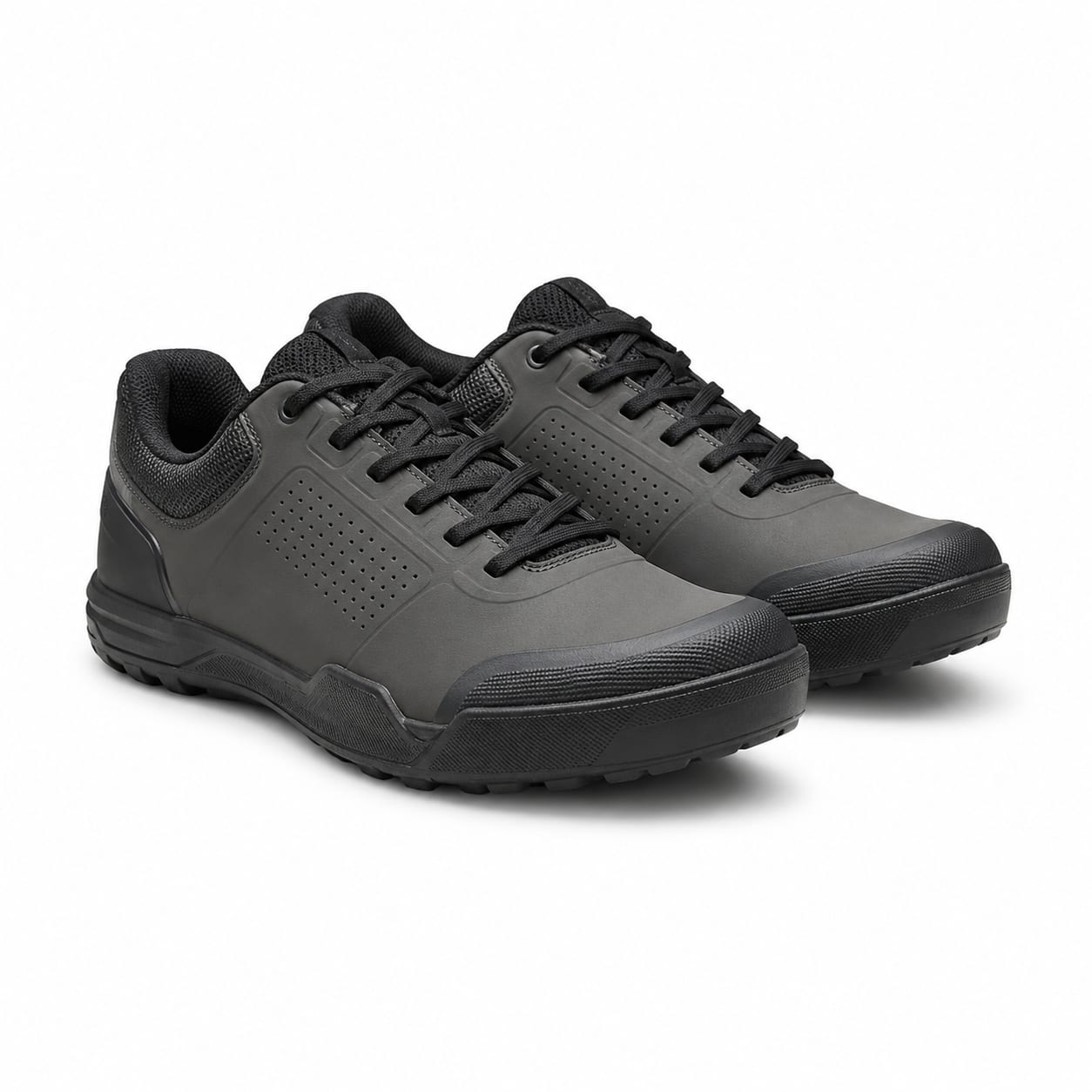
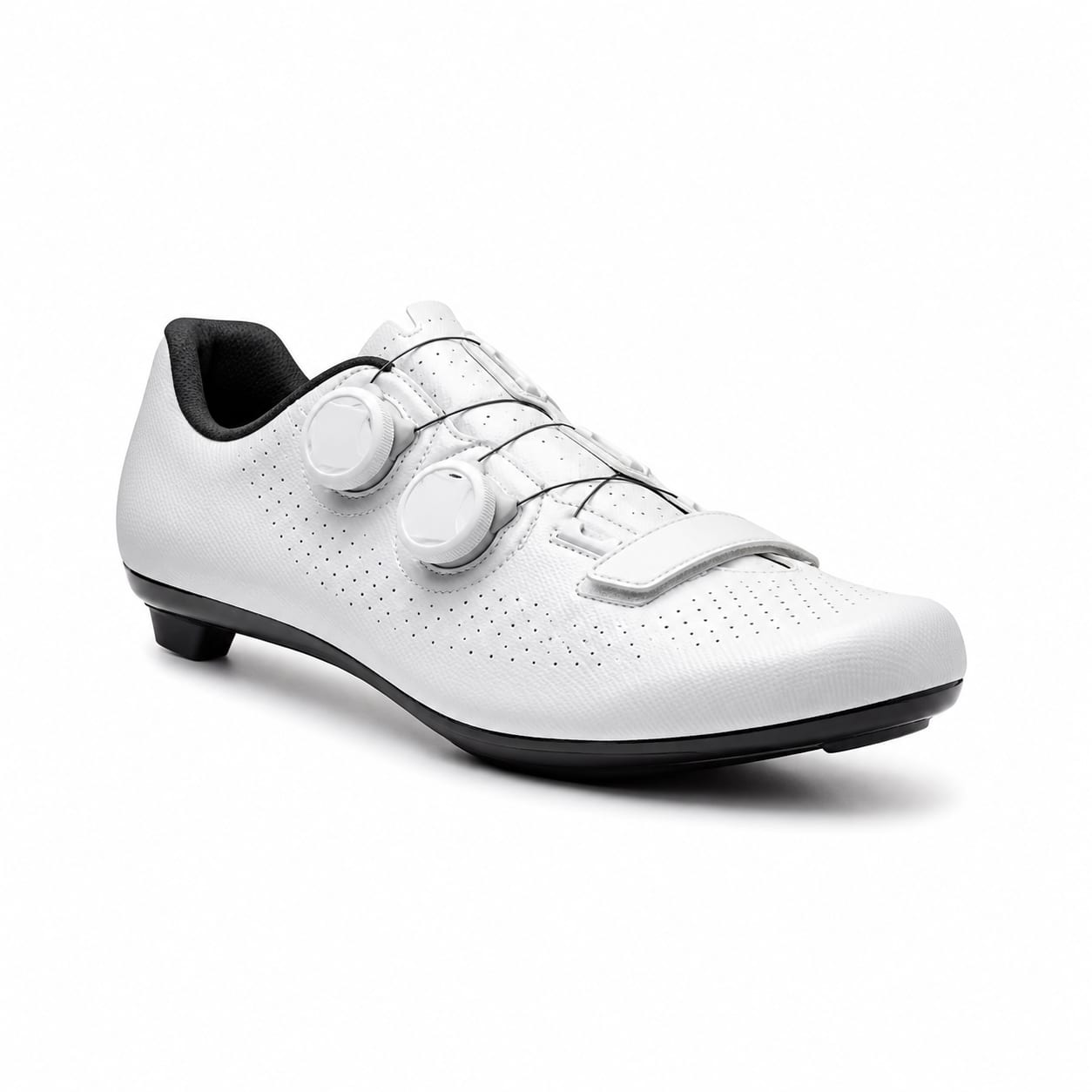
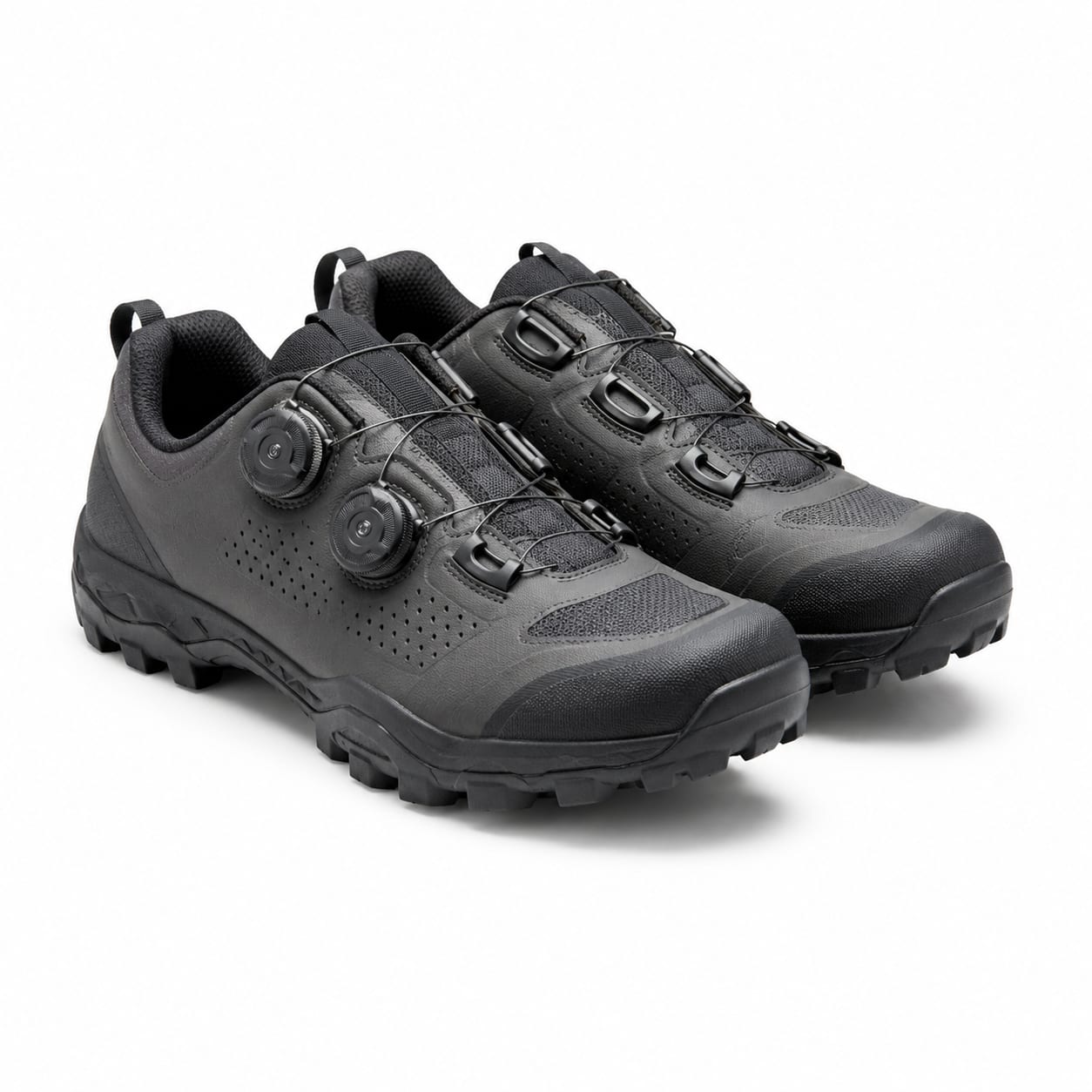
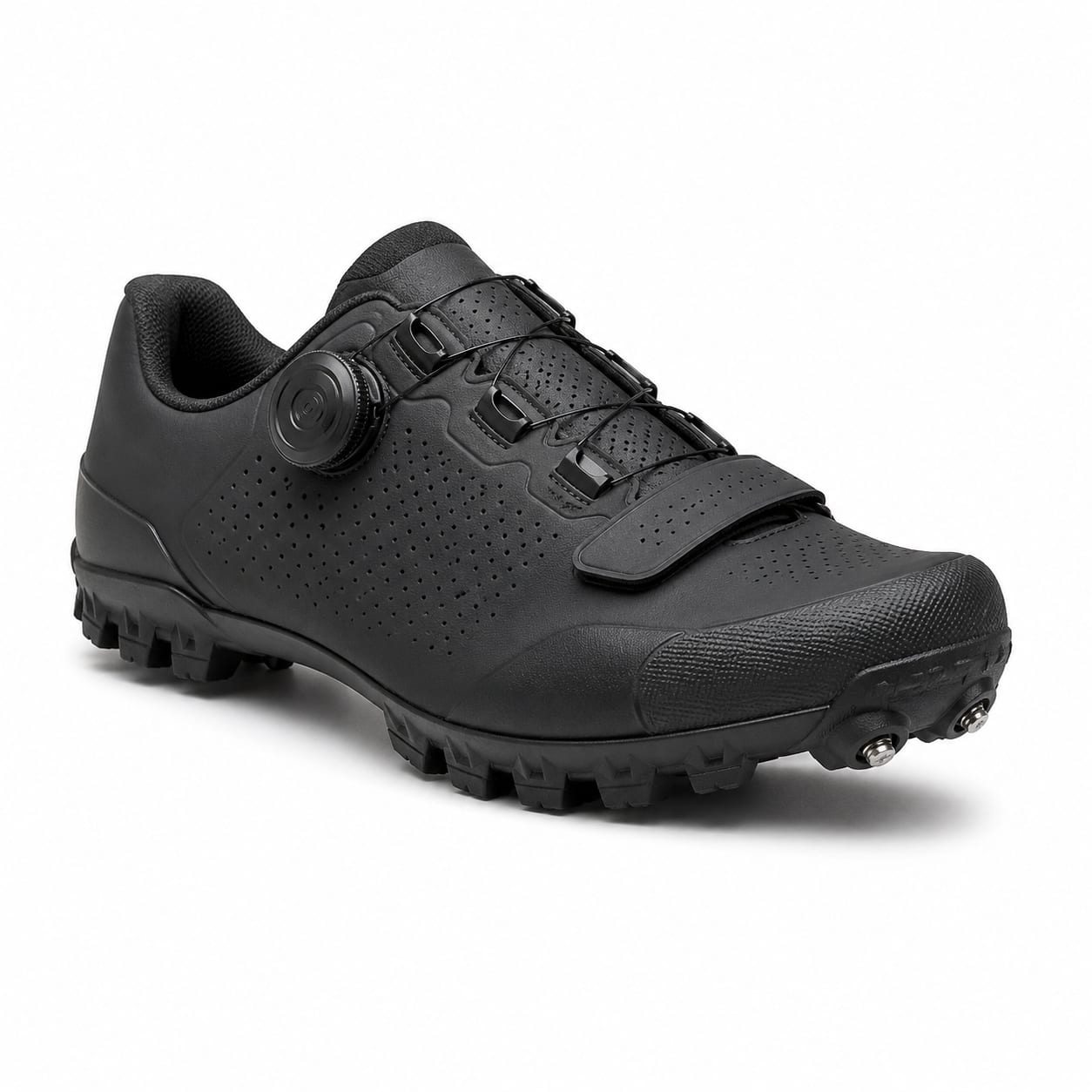
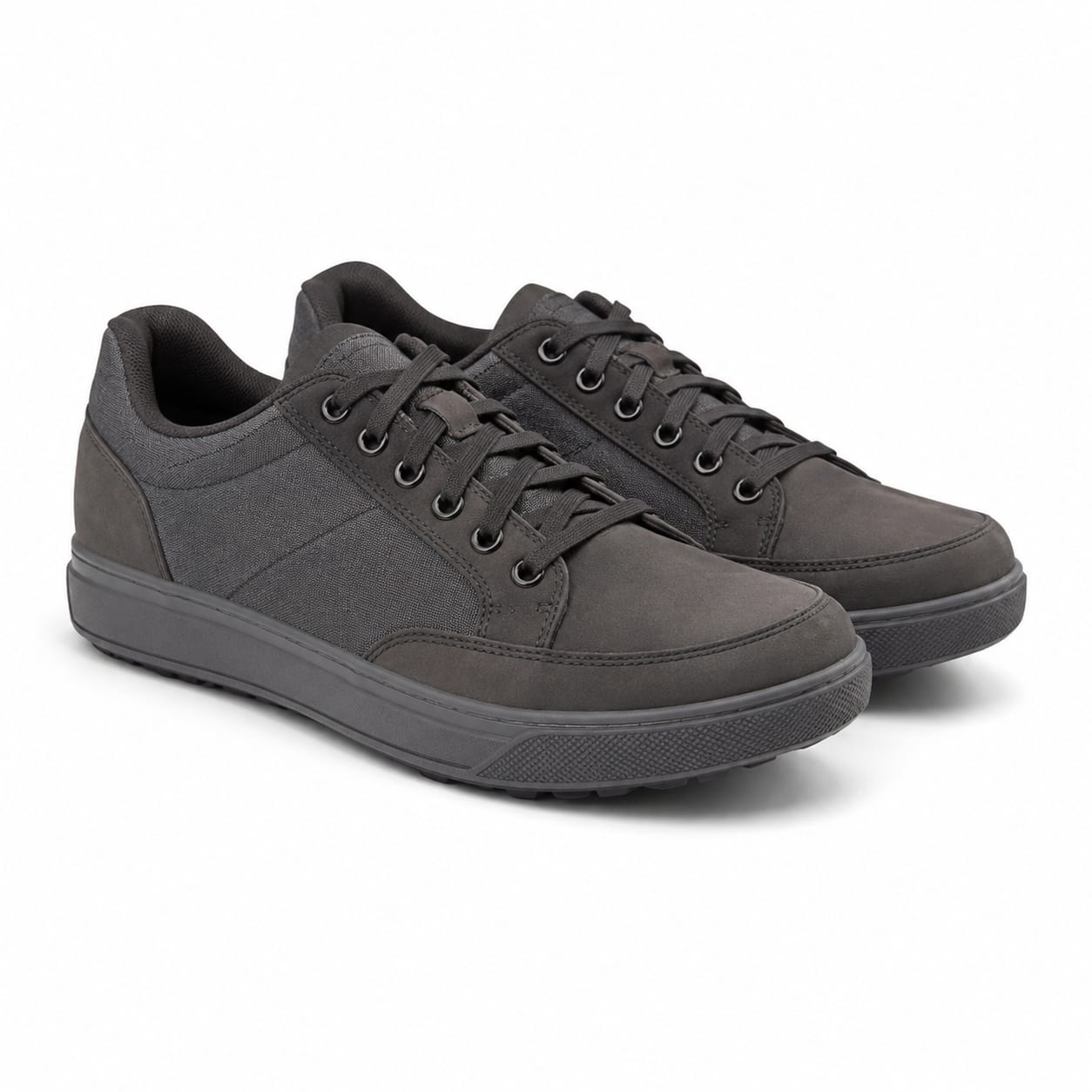
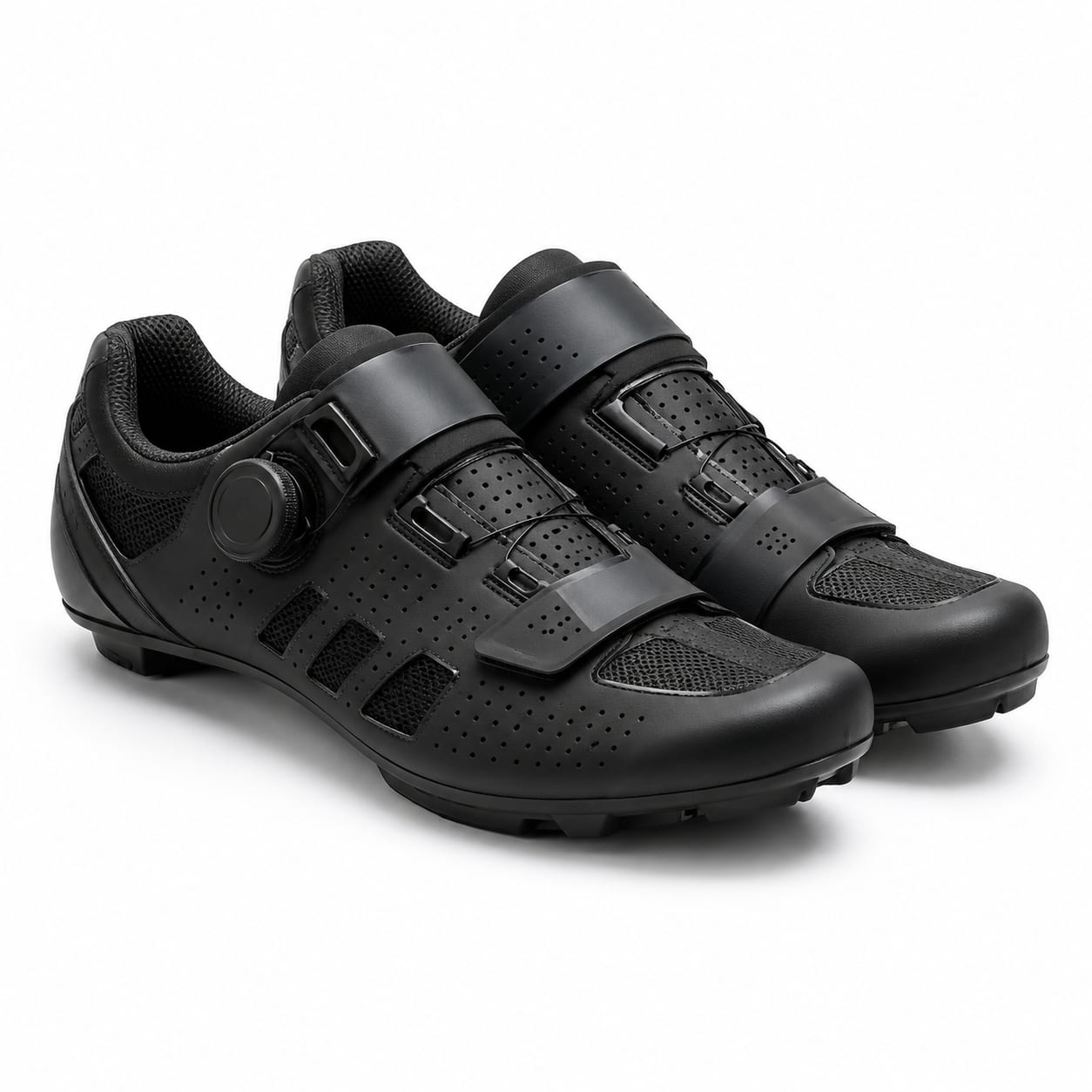
Flat pedal mountain bike shoes are purpose-built footwear for riders who use flat (platform) pedals with metal traction pins rather than clipless pedal systems. Unlike clipless MTB shoes, they have no cleat mounting hardware and instead rely on high-friction rubber compounds—such as Vibram Megagrip, Stealth Rubber (Five Ten/Freerider), or proprietary sticky rubbers—to create a mechanical bond with the pedal pins. The sole is designed with a specific tread pattern that allows the pins to sink into the rubber, creating grip that can rival clipless systems when properly matched with quality flat pedals. These shoes prioritize protection, with reinforced toe boxes, padded ankles, and durable uppers that withstand the abuse of aggressive trail, enduro, and downhill riding. The freedom to instantly dab a foot or bail out makes them the preferred choice for many riders tackling steep, technical, or high-consequence terrain.
Flat pedal mountain bike shoes have undergone a revolution in recent years, evolving from basic skate-style sneakers into highly engineered performance footwear. The cornerstone of any flat pedal shoe is its rubber compound and sole design. Brands invest heavily in proprietary sticky rubbers—Five Ten's Stealth rubber, Ride Concepts' DST and MAX GRIP compounds, and Vibram's Megagrip are among the most respected. These compounds are formulated to balance grip, durability, and sole compliance so the pedal pins can embed into the rubber without the sole wearing out prematurely. The tread pattern is equally critical: too aggressive and the foot floats on the pins; too smooth and there's nothing for the pins to bite into. The ideal pattern features relatively flat, broad contact areas with shallow channels that let the pedal pins sink in.
Upper construction in flat pedal shoes prioritizes protection and durability over lightweight breathability. Most models feature reinforced synthetic leather or textile uppers with welded or stitched armor panels at the toe box, heel, and medial side where pedal strikes and rock impacts are common. Many enduro and downhill-oriented models include internal toe caps or hard-molded toe boxes that protect against rock strikes and casing impacts. Padded collars and tongues improve comfort and help seal out debris. While ventilation has improved in recent models, flat pedal shoes generally run warmer than their clipless counterparts due to the thicker, more protective construction.
The closure systems on flat pedal shoes lean heavily toward traditional laces, often supplemented with a velcro lace-tuck strap to keep laces safely away from the drivetrain. Some models incorporate BOA dials or a single velcro strap, but laces remain dominant because they allow riders to fine-tune tension across different zones of the foot—critical for the frequent foot adjustments that flat pedal riding demands. The fit should be snug but not constricting; a shoe that's too loose allows the foot to shift on the pedal, reducing control and causing fatigue, while one that's too tight can cause numbness on long descents.
Weight is the most significant trade-off with flat pedal shoes. A typical pair weighs 800–1050g, substantially heavier than clipless XC shoes. The thick rubber soles, reinforced uppers, and protective features all add grams. However, for the target riding styles—downhill, enduro, bike park, and aggressive trail—the protection and grip far outweigh the weight penalty. Riders who prioritize climbing efficiency or long cross-country rides will generally be better served by clipless systems. It's also worth noting that flat pedal shoes are inherently less efficient for power transfer than clipless shoes, as the foot can lift off the pedal during the upstroke and the flexible sole absorbs some energy. For most gravity and aggressive trail riders, this trade-off is acceptable given the confidence and control benefits.
When selecting flat pedal shoes, the most important considerations are rubber compound quality, pedal-shoe compatibility, fit, and protection level. Not all flat pedals work equally well with all flat shoes—larger platform pedals with longer pins pair best with softer rubber compounds, while smaller platforms may work better with slightly firmer soles. Riders should also consider the terrain they ride: bike park riders need maximum protection and durability, trail riders may prefer lighter and more breathable options, and dirt jumpers often choose low-profile, skate-inspired models. Sizing can be tricky as some brands use European sizing while others use US sizing, and the fit varies significantly between brands—Five Ten tends to run large, while Ride Concepts fits more true to size.