Kitvore.com

Kitvore.com

Specs that matter. Gear that fits.

Road Bike · Subcategory

Cyclocross Bike

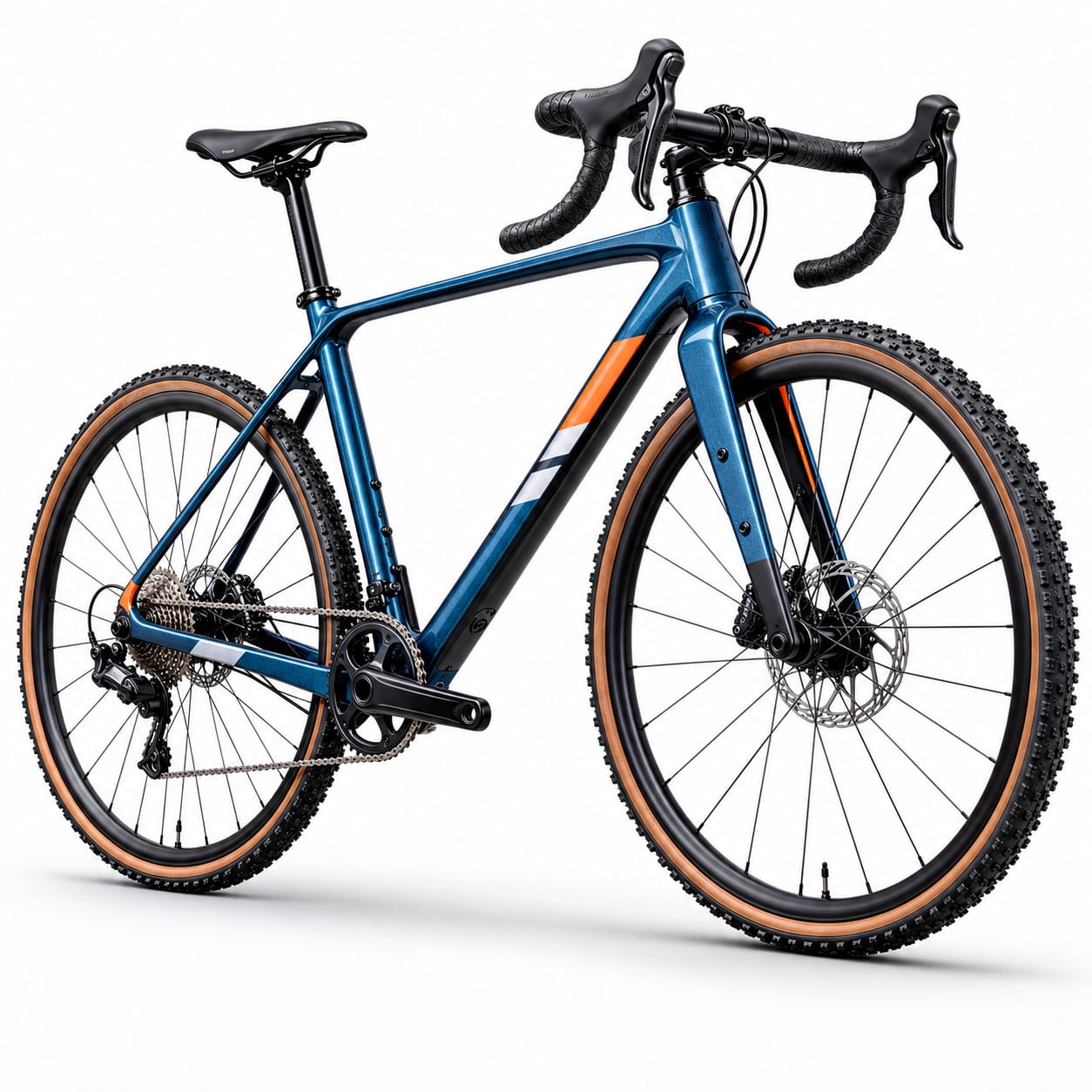
A purpose-built drop-bar bike designed for the demands of cyclocross racing — mud, sand, barriers, and rapid dismounts — with higher bottom brackets, generous tire clearance, and geometry tuned for off-road agility.

Cyclocross bikes occupy a unique niche between road and gravel, engineered specifically for the stop-start, all-terrain chaos of CX racing. They feature higher bottom brackets for obstacle and pedal clearance, tire clearance for 33–40mm knobby tires, and geometry that balances sharp handling with stability on loose surfaces. While born for racing, their ruggedness and versatility make them excellent do-everything bikes for riders who regularly encounter pavement, dirt, mud, and everything in between.

$1000 – $8000mid tierintermediateadvancedexpert

Best known for

Cyclocross racing with mandatory dismounts and remountsHigher bottom bracket for obstacle and pedal clearanceAgile handling on mixed and loose terrainMud-shedding frame design with ample tire clearanceServing as a rugged all-conditions commuter or winter training bike
Cyclocross Bike

Guide

Detailed overview

Cyclocross bikes are specialized drop-bar bicycles designed for the unique demands of cyclocross racing, a discipline that involves laps on short courses mixing pavement, grass, mud, sand, and man-made obstacles that force riders to dismount and carry their bikes. The design philosophy prioritizes maneuverability in tight, technical terrain, mud clearance at every contact point, and the ability to accelerate repeatedly from near-zero speeds. Key differentiators from standard road bikes include a higher bottom bracket (lower BB drop, typically 65–70mm) for pedal strike avoidance on uneven ground, chainstays and fork legs shaped to shed mud, and tire clearance for at least 33mm knobby tires — the UCI maximum for CX racing — with many frames clearing 38–45mm for training versatility. Geometry sits between road race and gravel: slightly longer chainstays than a road race bike for stability, but shorter than most gravel bikes for agility. The riding position is moderately aggressive — more upright than a road race bike for visibility and bike handling on technical terrain, but lower than a gravel bike for carrying speed on flat sections. Modern cyclocross bikes almost universally feature hydraulic disc brakes, and 1x drivetrains have become the dominant configuration, eliminating the front derailleur for simpler operation, better mud clearance, and reduced dropped chains under the jarring forces of off-road racing.

Cyclocross bikes trace their origins to European off-season road training, where riders would race each other across farmers' fields and forest trails to stay fit through winter. What began as informal training evolved into a distinct discipline with its own world championships, and the bikes evolved with it. Early cyclocross bikes were essentially road frames with cantilever brakes and slightly more tire room. Today, they are purpose-engineered machines with every tube shape, cable route, and geometry number optimized for the specific demands of CX racing.

The defining characteristic of a cyclocross bike is its higher bottom bracket relative to road bikes. While a typical road bike has a BB drop of 68–72mm, cyclocross bikes usually range from 65–70mm, with some as low as 60mm. This raises the center of gravity slightly but is essential for clearing obstacles, ruts, and off-camber terrain without pedal strike — a critical safety and performance concern when racing at full effort across uneven ground. The trade-off is slightly less stability at road speeds and reduced cornering railability on smooth pavement, which is why cyclocross bikes feel noticeably different from road bikes when ridden on tarmac at high speeds.

Tire clearance is another critical design parameter. UCI rules limit cyclocross racing tires to 33mm, but frames must accommodate this with substantial mud clearance — meaning most CX frames can fit 38–40mm tires comfortably, and some clear up to 45mm. This makes cyclocross bikes surprisingly versatile for gravel riding, bikepacking on milder terrain, and commuting in all weather conditions. The fork and chainstays are shaped to prevent mud accumulation, with internal cable routing typically routed along the top tube to keep cables clean and accessible during muddy races.

The modern cyclocross drivetrain has converged on 1x configurations, most commonly 1×12 with a 40T chainring and 10-33T or 10-36T cassette. This simplification eliminates the front derailleur — a component prone to mud fouling and chain drops in CX conditions — while providing adequate gear range for the relatively short, punchy courses. For riders who also want to use their CX bike on the road, a 2× setup remains an option, though it sacrifices some of the clean simplicity that makes 1x so appealing in race conditions.

Beyond racing, cyclocross bikes have earned a loyal following as do-everything bikes. Their robust construction, generous tire clearance, and stable-yet-agile handling make them excellent winter training bikes, all-weather commuters, and capable light gravel rigs. Many riders find that a cyclocross bike with road tires mounted is nearly as fast as a dedicated road bike on pavement, while offering far more capability when the pavement ends. This versatility, combined with the growing popularity of cyclocross racing itself, ensures that CX bikes remain a relevant and distinct category even as gravel bikes have absorbed some of their all-road utility.

Quick facts

Primary purpose
Cyclocross racing on mixed terrain with obstacles requiring running and carrying
Popular brands
CanyonSpecializedTrekCannondaleRidleyFocus
Typical terrain
MudGrassSandMixed off-road courses

What makes it different

Flattened top tube for shouldering comfort; Minimal cable routing on top tube; Reinforced fork crown for mud; Higher bottom bracket for obstacle clearance

Recommended ranges

How this type usually specs out

Each spec is explained in plain language, then we show what buyers usually look for on this type.

Bike Type / Category

Road Bike Category

What it means

The intended use-case and design philosophy of the road bike, which determines its geometry, tube shapes, and component selection.

Typical for this type

All Road (Closest Available Category; Cyclocross Is A Distinct Discipline)

In practice

Cyclocross bikes do not map perfectly to standard road bike categories. They are closest to all-road in their versatility and tire clearance, but their geometry and design intent are race-specific for CX discipline rather than general mixed-surface riding.

Compared to other types

Unlike endurance or all-road bikes optimized for comfort over distance, cyclocross bikes prioritize short-course race performance: rapid acceleration, obstacle clearance, and handling precision on loose terrain. They are less comfortable on long road rides than endurance bikes and less stable at high speeds than aero race bikes.

Why it matters: Understanding that a CX bike is a purpose-built race tool — not simply an all-road bike with knobby tires — helps set expectations for its on-road manners, handling character, and ideal use cases.

Frame Material

Frame Material

What it means

The primary material used in frame construction, which determines weight, stiffness, ride quality, durability, and cost.

Typical for this type

Carbon Fiber For Racing; Aluminum For Budget And Training

In practice

Carbon fiber dominates at the race level due to its ability to be tuned for stiffness in the bottom bracket and head tube while maintaining compliance in the seatstays — critical for CX racing's repeated accelerations and rough terrain. Aluminum is common at entry and mid-level, offering excellent durability and value for riders who race in harsh conditions where frame damage is a real risk.

Compared to other types

Carbon is even more dominant in CX than in endurance road because the weight savings and tunable compliance matter more when repeatedly accelerating from low speeds. Aluminum is a more popular choice in CX than in pure road racing due to the harsh conditions and higher crash risk.

Why it matters: CX racing subjects frames to mud, sand, impacts from barriers, and frequent bike carries. Material choice affects not just weight and ride quality but also durability and the cost of inevitable race-day damage.

Frame Size

Frame Size

What it means

The nominal size designation of the frame, typically based on seat tube length or a general sizing system, which determines overall bike fit.

Typical for this type

44–64 cm (same as road; choose based on rider height and inseam)

Most common pick: 54 cm

In practice

Cyclocross bikes use the same nominal sizing system as road bikes. However, some CX racers prefer sizing down slightly for easier shouldering during bike carries and more agile handling in tight course sections.

Compared to other types

While road riders often size up for stability, CX racers frequently size down for agility and easier bike handling during carries. This is a subtle but meaningful difference in sizing philosophy.

Why it matters: Proper fit is essential for CX racing where riders must dismount, shoulder the bike, and remount at speed. A frame that is too large makes shouldering awkward and remounting slower. Stack and reach should be verified rather than relying on nominal size.

Stack

Stack Height

What it means

The vertical distance from the center of the bottom bracket to the top of the head tube. Determines how upright or low the rider sits on the bike.

Typical for this type

520–560 mm depending on size

Most common pick: 535 mm (size 54)

In practice

Cyclocross bikes have a moderately tall stack — taller than road race bikes but shorter than most endurance bikes. This provides enough upright position for visibility and bike handling on technical terrain while maintaining a sufficiently low profile for aerodynamic efficiency on fast course sections.

Compared to other types

CX stack is typically 5–15mm taller than an aero race bike in the same size but 5–10mm shorter than a dedicated endurance bike. This positions CX bikes in a middle ground that favors technical handling over pure aerodynamics or pure comfort.

Why it matters: Stack determines how upright you sit on the bike. In CX, you need enough height to see upcoming terrain features and react quickly, but not so much that you lose the ability to get low and generate power on flat and paved sections.

Reach

Reach

What it means

The horizontal distance from the center of the bottom bracket to the top of the head tube. Determines how stretched out the rider is on the bike.

Typical for this type

365–395 mm depending on size

Most common pick: 375 mm (size 54)

In practice

Cyclocross reach is moderate — slightly shorter than road race bikes to keep the rider more centered over the bike for better weight distribution on loose and off-camber terrain. This aids bike handling without sacrificing too much reach for power generation.

Compared to other types

CX reach is typically 5–10mm shorter than aero race bikes but similar to or slightly longer than endurance bikes. The key difference is that CX geometry pairs this moderate reach with a higher front end, creating a different weight distribution than either road race or endurance configurations.

Why it matters: Reach affects how stretched out you are on the bike. In CX, a slightly shorter reach keeps your weight balanced between the wheels for better traction and control on slippery surfaces, and makes it easier to shift your weight forward or backward as terrain demands.

Stack/Reach Ratio

Stack-to-Reach Ratio

What it means

The ratio of stack height to reach, indicating the overall riding position character independent of frame size. Higher ratios indicate more upright, endurance-oriented geometry.

Typical for this type

1.40–1.50

Most common pick: 1.42–1.48

In practice

Cyclocross bikes typically fall in the 1.40–1.50 range, placing them between race and endurance positioning. This ratio reflects the need for a position that is aerodynamic enough for fast course sections but upright enough for technical terrain handling and frequent dismounts.

Compared to other types

CX ratios are higher than aero race bikes (1.30–1.38) but generally lower than endurance bikes (1.45–1.55). They overlap significantly with all-road bikes, though CX bikes tend toward the lower end of the all-road range for sharper handling.

Why it matters: The stack/reach ratio is the best single metric for understanding a CX bike's position character. A ratio below 1.40 will be too aggressive for most CX courses, while above 1.50 sacrifices too much speed potential on fast sections.

Weight

Complete Bike Weight

What it means

The total weight of the complete bicycle without pedals, bottles, or accessories. Affects climbing speed, acceleration, and handling.

Typical for this type

7.5–9.0 kg

Most common pick: 8.2 kg

In practice

Cyclocross bikes are typically 0.5–1.5 kg heavier than equivalent road race bikes due to wider tires, disc brakes, more robust frames, and the structural requirements of higher bottom brackets and mud clearance. Race-level CX bikes with top components can approach 7.5 kg, while entry-level builds are typically 8.5–9.0 kg.

Compared to other types

CX bikes are heavier than climbing/lightweight road bikes (6.8–7.5 kg) and similar to or slightly lighter than all-road bikes (8.0–9.0 kg). The weight penalty vs. pure road comes from disc brakes, wider tires, and reinforced frame structures.

Why it matters: Weight matters significantly in CX racing because riders must shoulder and carry their bikes over barriers and up steep run-ups. Every 100 grams is felt when running uphill with a bike on your shoulder. However, durability and tire selection should not be sacrificed for minimal weight savings.

Groupset / Drivetrain Level

Groupset Tier

What it means

The tier and brand of the drivetrain component group, which determines shifting performance, weight, durability, and features like electronic shifting.

Typical for this type

Shimano 105, Sram Rival, Or Sram Force For Racing

In practice

SRAM Rival eTap AXS is extremely popular in cyclocross due to its wireless operation (no cables to foul with mud), 1x compatibility, and wide-range cassette options. Shimano GRX is also common though not listed in the standard road groupset tiers. At higher price points, SRAM Force and Shimano Ultegra with 1x configurations are common on race bikes.

Compared to other types

CX bikes more commonly use SRAM groupsets than road race bikes due to the dominance of 1x drivetrains in CX. Shimano GRX (gravel-specific) is also popular. The groupset tier tends to be one step below equivalent road race bikes at the same price point due to the added cost of disc brakes and wider tire compatibility.

Why it matters: Cyclocross racing is uniquely hard on drivetrains — mud, sand, and repeated high-torque accelerations from low speeds create extreme wear. Electronic shifting provides more consistent performance in muddy conditions, and 1x setups eliminate the front derailleur vulnerability entirely.

Speed / Number of Gears

Number of Gears

What it means

The total number of gear combinations available, determined by the number of chainrings multiplied by the number of cassette sprockets.

Typical for this type

1×12 for racing; 2×12 for dual-purpose road/CX use

Most common pick: 1x12

In practice

1×12 has become the standard for cyclocross racing, typically with a 40T chainring and 10-33T or 10-36T cassette. This provides adequate range for CX courses (which rarely exceed 10 minutes per lap) while eliminating the front derailleur — a major source of dropped chains and mud fouling. 2×12 remains an option for riders who use their CX bike extensively on the road.

Compared to other types

CX is the road-adjacent discipline where 1x is most dominant. Road race bikes almost exclusively use 2×12, and gravel bikes are split between 1x and 2x. The CX preference for 1x is driven by reliability concerns unique to the discipline's muddy, jarring conditions.

Why it matters: Gear choice in CX is about reliability and simplicity under extreme conditions. A dropped chain in a CX race can cost 10+ positions. 1x eliminates the front shift entirely, and clutch derailleurs keep chain tension secure over rough terrain. The trade-off is larger jumps between gears, which is acceptable given the short, punchy nature of CX courses.

Brake Type

Brake Type

What it means

The braking system type, which affects stopping power, modulation, tire clearance, weight, and maintenance requirements.

Typical for this type

Hydraulic Disc (Essential For CX)

In practice

Hydraulic disc brakes are now universal on cyclocross bikes. The UCI mandated disc brakes for CX racing, and the benefits are overwhelming: consistent stopping power in wet and muddy conditions, modulation for technical terrain, and tire clearance unconstrained by rim brake caliper arms. 160mm rotors front and rear are common for the additional stopping power needed in off-road conditions.

Compared to other types

CX adopted disc brakes earlier and more completely than road racing. While some road bikes still offer rim brakes, CX bikes have been disc-only for years. The transition happened faster because disc brakes solve real problems (mud performance, tire clearance) that are existential in CX but merely advantageous on road.

Why it matters: Cyclocross racing happens in all weather conditions — mud, rain, snow, and ice are routine. Hydraulic disc brakes provide consistent, reliable stopping power regardless of conditions, which is a safety requirement as much as a performance advantage. Rim brakes are simply not viable for CX.

Max Tire Width

Maximum Tire Clearance

What it means

The widest tire the frame and fork can accommodate, which determines versatility for different road surfaces and conditions.

Typical for this type

33mm minimum (UCI race limit); 38–45mm for training and versatility

Most common pick: 38 mm

In practice

UCI rules limit cyclocross racing tires to 33mm, but frames must accommodate this with substantial mud clearance, meaning most CX frames can fit 38mm tires with room to spare. Many modern CX frames clear 40–45mm, making them viable for gravel riding and all-road use with appropriate tires mounted.

Compared to other types

CX tire clearance (33–45mm) exceeds road race (25–28mm) and endurance (28–32mm) bikes but is typically less than dedicated gravel bikes (40–50mm+). The CX sweet spot prioritizes mud clearance over maximum tire width, whereas gravel bikes prioritize maximum width for comfort on long rough rides.

Why it matters: Tire clearance is arguably the most important frame specification for a CX bike. During races, mud can add several millimeters of effective tire width, and insufficient clearance leads to mud buildup that can literally stop the wheels from turning. For non-racing use, wider tire capability dramatically increases the bike's versatility.

Wheel Size

Wheel Size

What it means

The nominal diameter of the wheels; determines tire availability, ride characteristics, and geometry constraints.

Typical for this type

700c (standard); 650b as a training/alternative option

In practice

700c is the universal standard for cyclocross bikes. The larger diameter rolls better over uneven terrain and provides a larger contact patch for cornering grip. Some riders use 650b wheels with wider tires (40–47mm) for training or non-UCI events, but 700c with 33mm tires remains the racing standard.

Compared to other types

CX bikes use the same 700c standard as road bikes. The key difference is tire selection — CX tires have aggressive tread patterns and supple casings designed for grip on grass, mud, and sand rather than low rolling resistance on pavement.

Why it matters: Wheel size affects tire availability, handling characteristics, and gear ratios. 700c provides the best selection of CX-specific tires and is required for UCI competition. 650b can be an interesting option for riders who want to use their CX bike as a gravel rig with very wide tires.

Head Tube Angle

Head Tube Angle

What it means

The angle of the head tube relative to horizontal; affects steering speed, stability, and front-end feel.

Typical for this type

71.5–73.0°

Most common pick: 72.0°

In practice

Cyclocross head tube angles are slightly slacker than road race bikes, providing more stability on loose and unpredictable surfaces. The typical range of 71.5–73.0° balances quick steering for tight course sections with enough stability for high-speed off-camber descents.

Compared to other types

CX head angles are typically 0.5–1.0° slacker than road race bikes (73–74°) but 0.5° steeper than most gravel bikes (71–72°). This positions CX handling between road precision and gravel stability, favoring agility for race-course maneuvering.

Why it matters: Head tube angle is a primary determinant of steering feel. In CX, you need a bike that responds quickly to direction changes in tight corners but doesn't feel twitchy on loose descents. The slightly slacker angle compared to road race bikes provides this balance.

Chainstay Length

Chainstay Length

What it means

The distance from the bottom bracket center to the rear axle; affects rear-end compliance, traction, and wheelbase.

Typical for this type

420–432 mm

Most common pick: 425 mm

In practice

Cyclocross chainstays are longer than road race bikes (typically 420–432mm vs. 405–415mm for road). This additional length provides mud clearance between the tire and seat tube, improves stability on loose terrain, and creates a longer wheelbase that tracks better through ruts and off-camber sections.

Compared to other types

CX chainstays are 10–20mm longer than road race bikes and 5–10mm shorter than many gravel bikes. This middle-ground length reflects CX's need for both agility (shorter than gravel) and mud clearance/stability (longer than road).

Why it matters: Chainstay length directly affects both mud clearance and handling character. Shorter stays would provide snappier acceleration but would clog with mud and feel sketchy on loose surfaces. The CX-appropriate length ensures the rear tire can shed mud while maintaining stable, predictable handling.

BB Drop

Bottom Bracket Drop

What it means

The vertical distance the bottom bracket sits below the wheel axle line; affects cornering clearance and center of gravity.

Typical for this type

65–70 mm

Most common pick: 68 mm

In practice

Cyclocross bikes have less BB drop (higher bottom bracket) than road bikes, typically 65–70mm versus 68–72mm for road. This raises the pedals higher off the ground, providing crucial clearance for obstacles, ruts, and off-camber terrain where pedal strike would be dangerous and disruptive.

Compared to other types

CX BB drop (65–70mm) is 3–7mm less than typical road bikes (68–75mm), meaning the bottom bracket sits 3–7mm higher. This is the single most distinguishing geometry difference between CX and road bikes and the reason CX bikes feel noticeably different when cornering on pavement.

Why it matters: BB drop is one of the most distinctive and important geometry parameters for CX bikes. The higher BB allows riders to pedal through corners and over obstacles without fear of pedal strike — essential in a discipline where maintaining momentum through technical sections is critical. The trade-off is a slightly higher center of gravity that reduces stability at road speeds.

Aero Optimization

Aerodynamic Features

What it means

The degree and type of aerodynamic optimization in the frame and component design, which affects high-speed efficiency.

Typical for this type

Minimal Aero to Semi Aero

In practice

Cyclocross bikes prioritize functionality over aerodynamics. Round or near-round tube profiles are common because they shed mud better than airfoil shapes, and internal cable routing is designed for accessibility and mud resistance rather than aero optimization. Some modern CX frames incorporate semi-aero features like truncated airfoils and internal routing, but these are secondary to mud clearance and durability.

Compared to other types

CX bikes are the least aero-optimized of all road bike subcategories. Aero race bikes save 15–25W at 40 km/h; CX bikes operate at lower speeds where aero savings are minimal and would come at the cost of mud clearance and practical functionality.

Why it matters: Aerodynamics matter far less in CX than in road racing. CX races are typically 40–60 minutes at lower average speeds (25–30 km/h) where aero drag is a smaller fraction of total resistance. Mud clearance, durability, and ease of bike carries are far more important than saving a few watts of aero drag.

Seatpost Type

Seatpost Type

What it means

The seatpost design and integration level, which affects ride comfort, adjustability, and weight.

Typical for this type

Standard Round (27.2mm Preferred For Compliance)

In practice

Standard round seatposts, typically 27.2mm, are the norm for cyclocross bikes. The smaller diameter provides some compliance to absorb the constant vibration and impacts of off-road racing. Integrated aero posts are rare because they complicate the frequent saddle height adjustments some riders make between road and off-road configurations, and they offer no meaningful aero benefit at CX speeds.

Compared to other types

CX bikes almost universally use standard round posts, unlike aero road bikes which frequently use integrated proprietary posts. This reflects CX's prioritization of function, serviceability, and compliance over aerodynamics and aesthetics.

Why it matters: A standard round post provides maximum adjustability, easy replacement (important when parts get damaged in race crashes), and better compliance for comfort on rough terrain. The 27.2mm diameter offers a measurable comfort improvement over larger diameters.

Evaluation

Strengths and trade-offs

Pros

What this type does best

Exceptional terrain versatility

Critical

Cyclocross bikes handle pavement, gravel, mud, sand, grass, and light singletrack with competence. Few bikes can match their range of surface capability while maintaining drop-bar efficiency on road.

Superior obstacle and pedal clearance

Critical

The higher bottom bracket allows confident pedaling through ruts, over barriers, and across off-camber terrain without pedal strike — a critical safety and performance advantage in off-road conditions.

Rapid acceleration from low speeds

High

CX geometry and stiffness profiles are optimized for repeated sprint efforts from near-standstill, making these bikes exceptionally responsive when accelerating out of corners, off barriers, and up steep inclines.

Mud-shedding frame design

High

Every aspect of CX frame design — chainstay shapes, fork crown clearance, top tube cable routing, and lack of shelf-like surfaces — is optimized to prevent mud accumulation that could otherwise jam wheels and drivetrain.

Excellent all-weather braking

High

Hydraulic disc brakes provide consistent stopping power in mud, rain, snow, and ice — conditions that would render rim brakes nearly useless and that are routine in CX racing and winter training.

Rugged durability

Medium

CX bikes are built to withstand the abuse of off-road racing including crashes, bike throws, barrier impacts, and constant exposure to mud and sand. They tend to be overbuilt compared to road bikes, resulting in excellent long-term durability.

Strong dual-purpose potential

Medium

With a wheel swap or tire change, a CX bike transforms into a capable road bike or gravel rig. This makes it one of the most versatile single-bike options for riders who ride multiple surfaces.

Cons

Trade-offs to be aware of

Compromised road performance

Moderate

The higher bottom bracket and longer chainstays make CX bikes noticeably less stable and planted at high road speeds compared to dedicated road bikes. Cornering feel on pavement is less confident, and the riding position is less aerodynamic.

Heavier than equivalent road bikes

Moderate

The structural requirements of CX racing — disc brakes, wider tires, reinforced frames, and mud clearance — add 0.5–1.5 kg compared to road bikes at the same price point. This weight is felt on road climbs and during bike carries.

Limited tire selection for road use

Minor

While CX frames can fit road tires, the wide rims and frame geometry optimized for 33–38mm tires mean that road tire performance is compromised compared to a dedicated road bike. Narrow road tires on CX-wide rims can feel sluggish.

1x gearing limitations on the road

Moderate

The 1x drivetrains common on CX bikes have larger jumps between gears and may lack the top-end gearing strong riders want for fast road descents. A 40T chainring with 10-33T cassette tops out around 50 km/h at a reasonable cadence.

Niche race focus may be overkill for casual riders

Minor

Riders who never race cyclocross may find the CX-specific features (high BB, aggressive tread tires, 1x gearing) unnecessary for their needs. A gravel or all-road bike may serve them better for general mixed-surface riding.

Less comfortable than endurance bikes on long rides

Minor

The moderately aggressive position and stiffer frame tuning for race performance make CX bikes less comfortable than endurance bikes for long days in the saddle, particularly on paved roads.

Best for

Surfaces & terrain

Grass fieldsMud and wet trailsSandy pathsMixed-surface coursesLight singletrackPaved roads (secondary use)Gravel roads (moderate difficulty)

Riding conditions

Wet and muddy conditionsCold weather ridingVariable and unpredictable surfacesAll-season ridingOff-season road training

Skill level

IntermediateAdvancedExpert/Racer

Riding discipline

Cyclocross racingWinter trainingAll-weather commutingMixed-surface adventure ridingGravel riding (moderate terrain)

Rider profile

Cyclocross racersRoad racers seeking off-season training bikesAll-conditions commutersRiders who regularly encounter mixed terrain on single ridesBudget-conscious riders wanting one bike for road and dirt

Not ideal for

Reasons

Higher bottom bracket reduces high-speed road stability1x gearing lacks the top-end and tight ratios road racers needFrame lacks mounting points for racks and fenders common on touring bikesGeometry prioritizes short-course agility over long-distance comfortKnobby CX tires are slow and noisy on pavement

Surfaces & terrain

Extended road centuriesTechnical mountain bike trailsDeep sand and snow (fat bike territory)Steep, rocky descents

Skill level

Complete beginners (handling demands can be challenging)

Riding discipline

Road racingTime trialingLong-distance touring with heavy loadsBikepacking on rough terrain (better served by gravel bikes)

Compare

How it stacks up

This page

Cyclocross Bike

Lighter, more agile handling, higher BB for obstacle clearance, and purpose-built for racing intensity. CX bikes accelerate faster and handle tighter technical terrain with more precision.

Alternative

Gravel Bike

Gravel bikes offer more tire clearance (45–50mm+), more stable geometry for long distances, more mounting points for accessories, and a more comfortable riding position for multi-hour rides on rough surfaces.

Bottom line

Choose a cyclocross bike if you race CX or prioritize agility and race performance. Choose a gravel bike for long-distance mixed-surface riding, bikepacking, or if you prefer stability and comfort over sharp handling.

This page

Cyclocross Bike

Far more capable off-road with wider tire clearance, higher BB for obstacle clearance, and disc brakes optimized for all conditions. CX bikes handle mud, sand, and loose terrain that would stop an endurance bike.

Alternative

Endurance Road Bike

Endurance road bikes are lighter, faster on pavement, more aerodynamic, and more comfortable for long road rides. They provide a smoother, more stable ride at road speeds and tighter gear ratios for efficient road cadence.

Bottom line

Choose a cyclocross bike if you regularly ride off-road or in恶劣 conditions. Choose an endurance road bike if 90%+ of your riding is on paved roads and you prioritize road speed and comfort over off-road capability.

This page

Cyclocross Bike

CX bikes are lighter, more agile, and better suited for race-pace efforts on mixed terrain. The higher BB provides real obstacle clearance, and the geometry rewards aggressive riding and technical skill.

Alternative

All-Road Bike

All-road bikes typically offer a more comfortable position, similar tire clearance with a smoother ride quality, and better integration of road and gravel features. They are more relaxed and forgiving for recreational mixed-surface riding.

Bottom line

Choose a cyclocross bike for racing or aggressive mixed-surface riding. Choose an all-road bike for comfortable, versatile riding across surfaces without the race-focused intensity.

This page

Cyclocross Bike

CX bikes can go places an aero bike simply cannot — off-road, through mud, over barriers. They offer genuine all-weather, all-surface capability versus the aero bike's fair-weather, smooth-road specialization.

Alternative

Aero Race Bike

Aero race bikes are dramatically faster on flat road courses, significantly lighter, and provide a more aerodynamic position. On smooth pavement above 30 km/h, an aero bike will be measurably and meaningfully faster.

Bottom line

Choose a cyclocross bike for versatility and off-road capability. Choose an aero race bike exclusively for road racing, criteriums, and fast group rides on smooth pavement. These bikes serve fundamentally different purposes.

Shopping

Buying tips

  • 1

    Prioritize tire clearance — look for frames that clear at least 38mm even if you only race with 33mm tires. The extra clearance prevents mud buildup and increases the bike's versatility for non-racing use.

  • 2

    Consider 1x vs 2x based on your primary use: 1x is simpler and more reliable for CX racing; 2x provides better road gearing if you'll ride significant road miles. Some frames allow easy swapping between configurations.

  • 3

    Don't over-invest in groupset tier — the performance difference between SRAM Rival and Force is minimal in muddy CX conditions where drivetrain wear is accelerated. Save money for spare wheels and tires.

  • 4

    Check cable routing carefully — top tube cable routing is preferred for CX as it keeps cables cleaner and more accessible during muddy races. Under-bottom-bracket routing collects mud and is harder to service.

  • 5

    Budget for two wheelsets: one with CX tires for racing and off-road, and one with road tires for training and commuting. This transforms the bike's character dramatically and is cheaper than buying two complete bikes.

  • 6

    Size down if you're between sizes — a slightly smaller CX bike is easier to shoulder, quicker to handle in tight terrain, and easier to remount after dismounts. You can adjust the fit with stem and seatpost changes.

  • 7

    Look for frames with threaded bottom brackets if possible — they're easier to service and more creak-resistant in muddy, wet conditions compared to press-fit systems.

  • 8

    Consider used race bikes — CX bikes are often sold after one or two seasons of racing at significant discounts. The cosmetic wear from mud and transport rarely affects structural integrity.

Care

Maintenance notes

  • Clean and lubricate the drivetrain after every muddy ride — mud and sand accelerate chain, cassette, and chainring wear dramatically. A neglected CX drivetrain can wear out in weeks rather than months.
  • Inspect brake pads frequently — disc brake pads wear quickly in muddy conditions and can be contaminated by mud oils. Replace pads before they reach the backing plate to avoid rotor damage.
  • Check tire pressure before every ride — CX tires are run at low pressures (25–40 psi) where small changes significantly affect grip and rolling resistance. Invest in a digital pressure gauge.
  • Flush headset bearings and bottom bracket periodically — mud and water ingress is inevitable in CX riding. These bearings need more frequent attention than on road bikes.
  • Tighten thru-axles regularly — the vibration and impacts of off-road riding can loosen axle bolts over time. Check before every race or weekly during training.
  • Replace cables and housing annually at minimum — CX bikes are harder on cables than road bikes due to mud, frequent washing, and the repeated lever actuation of technical riding.
  • Sealant-based tubeless setups should be refreshed every 2–3 months — the latex sealant dries out faster in CX tires due to the flex and vibration of low-pressure off-road riding.

Progression

Skill development path

Cyclocross riding and racing involves a unique skill set that progresses from basic bike handling to advanced race techniques. Beginners should start by mastering dismounts and remounts at slow speed on flat ground, then progress to shouldering the bike and running with it over barriers. Intermediate skills include cornering on loose surfaces, riding off-camber terrain, and maintaining momentum through sand and mud. Advanced riders develop the ability to read course conditions lap by lap, choose optimal lines that change as the course deteriorates, and execute running sections at race pace while managing effort across the repeated high-intensity intervals that define CX racing. Mastering bike handling in extreme conditions — ice, deep mud, and frozen ruts — represents the highest skill level. Most riders benefit from dedicated CX skills clinics and practice sessions, as the techniques (particularly dismounts and remounts) are unique to the discipline and not developed through road or gravel riding alone.

FAQ

Common questions

Each question has a dedicated page with a full answer and links to the buying guide.

Can I use a cyclocross bike as my only road bike?

Yes, with caveats. A CX bike with road tires mounted is a perfectly functional road bike, though it will be slightly heavier and less aerodynamic than a dedicated road bike. The higher bottom bracket makes high-speed cornering feel less planted, and 1x gearing may limit your top speed on fast descents. If you ride 70%+ road, consider a 2x drivetrain setup. If you ride mixed surfaces regularly, a CX bike as a do-everything rig is an excellent choice — just invest in a second wheelset with road tires.

What is the difference between a cyclocross bike and a gravel bike?

The key differences are geometry and intent. CX bikes have higher bottom brackets (65–70mm drop vs. 70–75mm for gravel), shorter chainstays for agility, and geometry tuned for 40–60 minute race efforts on tight courses. Gravel bikes have lower BBs for stability, longer wheelbases for comfort, more tire clearance (45–50mm+ vs. 33–40mm), and more mounting points for long-distance riding. CX bikes are race tools; gravel bikes are endurance machines. For casual mixed-surface riding, a gravel bike is usually more comfortable; for racing or aggressive riding, a CX bike is more responsive.

Do I need a cyclocross bike to race cyclocross?

For official UCI races, yes — your bike must meet equipment regulations including 33mm maximum tire width, no forward-facing bar ends, and functional brakes. However, many local and beginner CX races allow mountain bikes and gravel bikes. If you're trying CX for the first time, start with whatever bike you have. If you enjoy it and want to compete seriously, a dedicated CX bike provides meaningful advantages in handling, weight (for shouldering), and mud clearance.

Why do cyclocross bikes use 1x drivetrains?

1x drivetrains dominate CX for three reasons: reliability, simplicity, and mud clearance. Without a front derailleur, there's one fewer component to foul with mud, one fewer mechanism to drop chains under the jarring impacts of off-road racing, and one fewer cable to maintain. Clutch rear derailleurs keep chain tension secure over rough terrain. The gear range of a 1×12 setup (e.g., 40T chainring with 10-33T cassette) is adequate for the short, punchy nature of CX courses. For riders who also ride significant road miles, 2x remains a viable option.