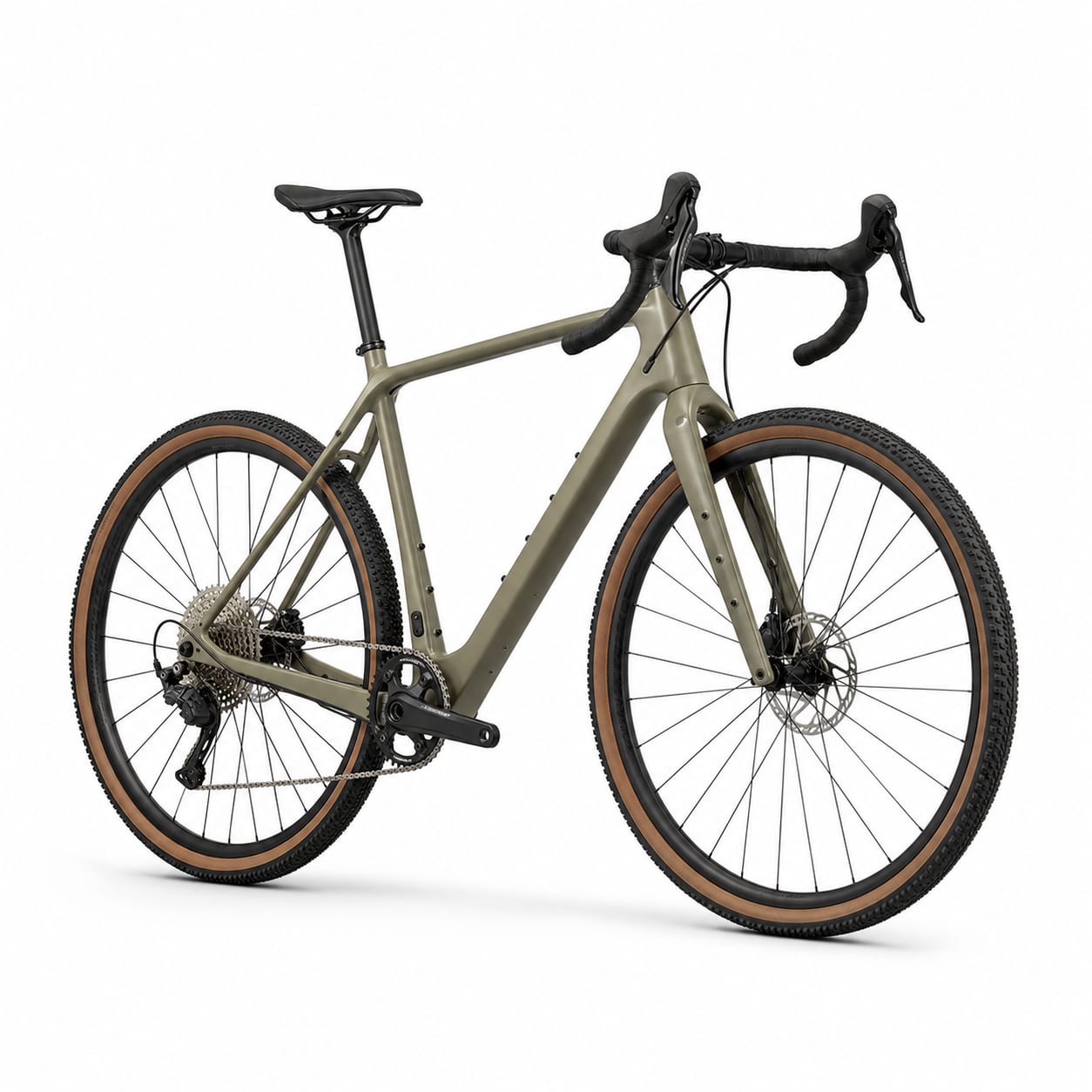
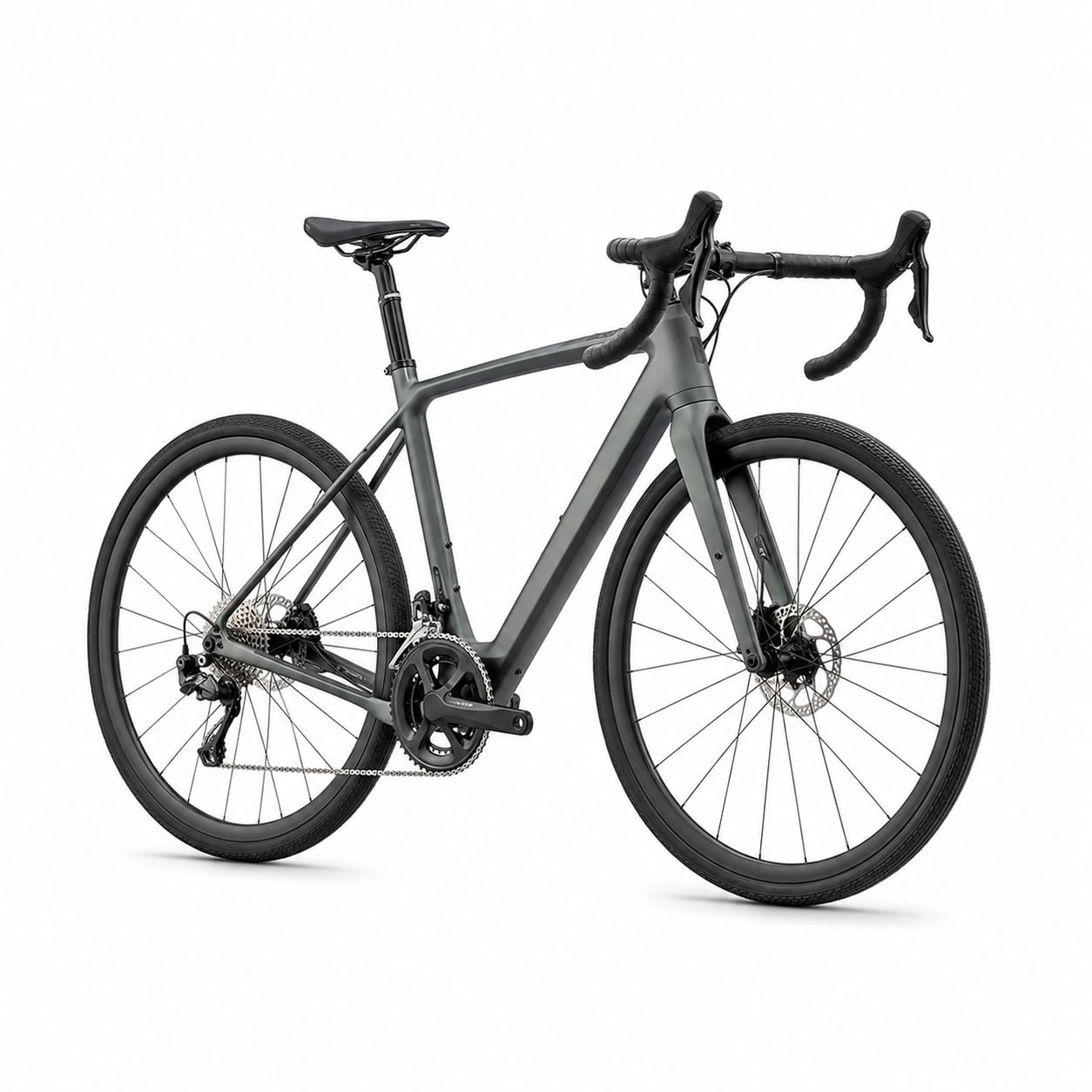
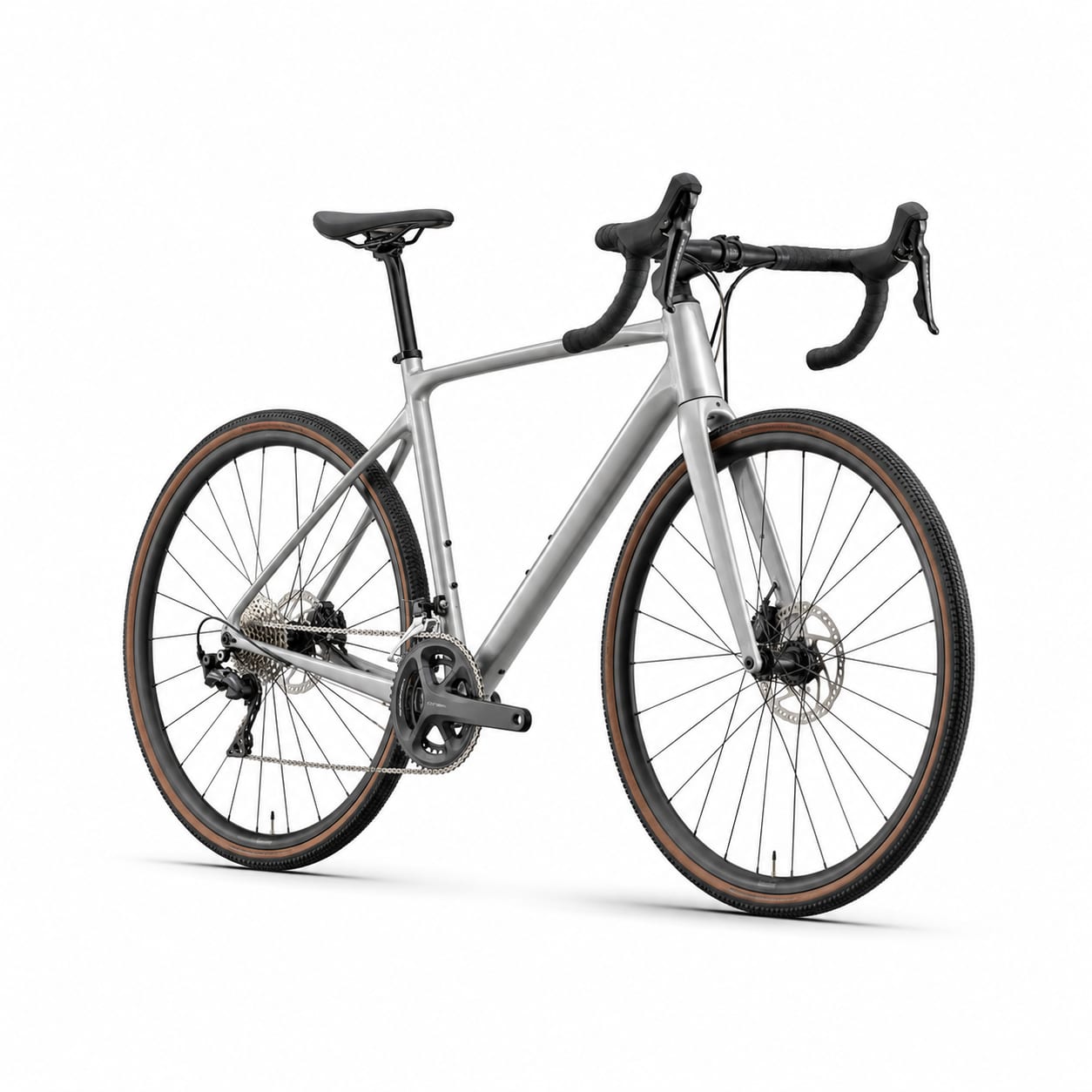
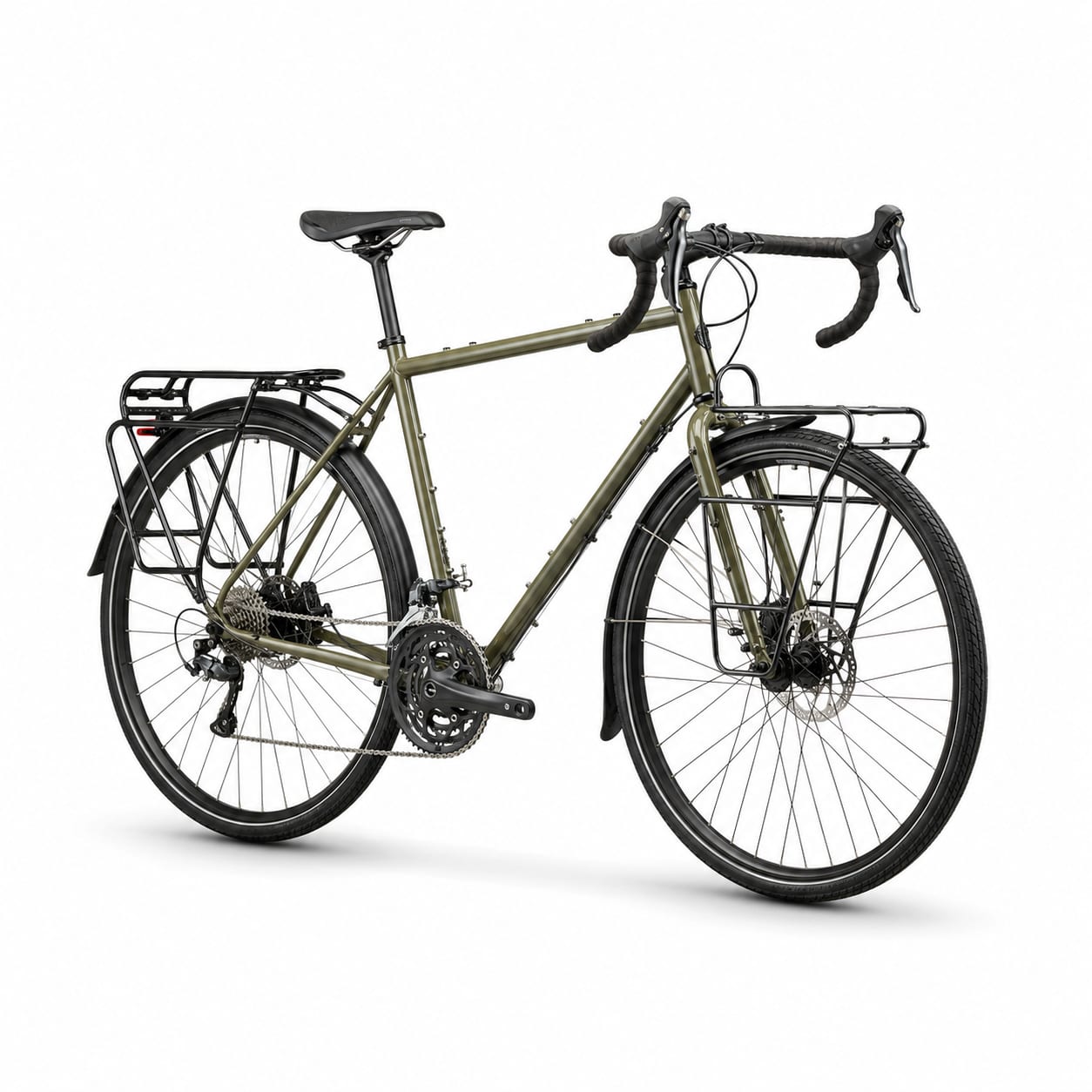
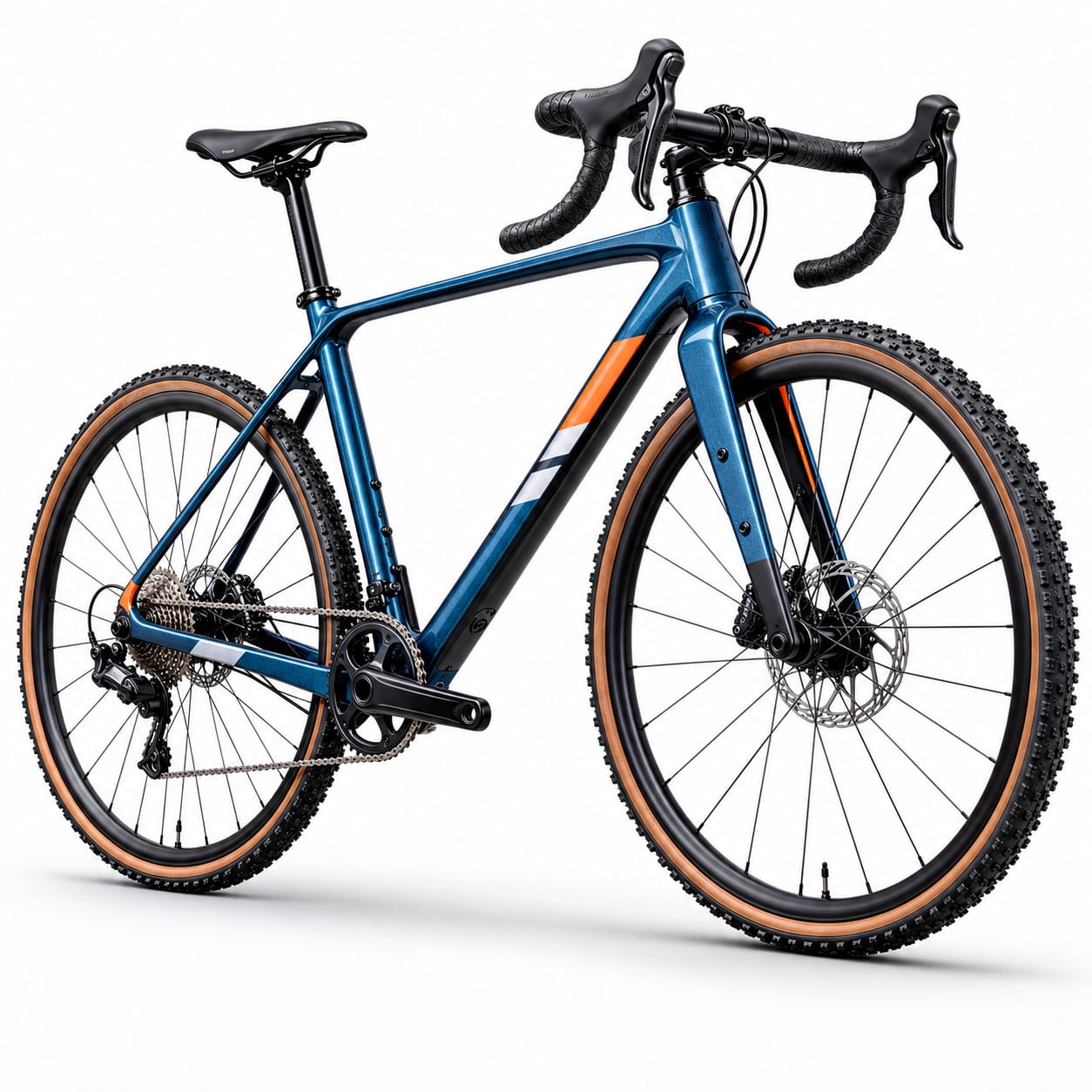
Gravel bikes occupy the space between road and mountain bikes, designed specifically for riders who want to explore beyond paved roads without sacrificing on-road efficiency. They feature relaxed endurance geometry with a higher stack and shorter reach than race-oriented road bikes, providing a comfortable upright position that reduces fatigue on long mixed-surface rides. The defining characteristic is generous tire clearance — typically 35mm to 50mm or more — allowing riders to run wider, lower-pressure tires that absorb vibration, grip loose surfaces, and resist punctures. Frame designs prioritize compliance and stability over aerodynamics, with longer chainstays, slacker head tube angles, and lower bottom brackets that inspire confidence on loose descents. Mount points for racks, fenders, and extra bottles are common, making gravel bikes natural platforms for bikepacking and multi-day adventures. Hydraulic disc brakes are universal, providing consistent stopping power in wet and dirty conditions. Drivetrain options include both 2x setups for tight gear steps on road segments and 1x systems for simplicity and chain security on rough terrain.
Gravel bikes have exploded in popularity over the past decade, and for good reason — they represent the most versatile category in the road bike family. Where a pure road race bike demands smooth tarmac and punishes you for straying off it, a gravel bike invites you to turn down that dirt road, explore that forest track, or link up segments of rough pavement without a second thought. This capability comes from a combination of generous tire clearance, relaxed geometry, and thoughtful features like mounting points and compliance engineering that make long days on mixed surfaces not just survivable but genuinely enjoyable.
The geometry of a gravel bike tells the story of its intent. Stack heights run 10–30mm higher than equivalent race bikes, and stack-to-reach ratios typically fall between 1.45 and 1.55, placing the rider in a comfortable position that reduces strain on the neck, shoulders, and lower back during multi-hour rides. Chainstays are longer — often 420–430mm compared to 405–410mm on race bikes — which stretches the wheelbase for stability at speed on loose surfaces. Head tube angles are slightly slacker, and fork trails are increased, both contributing to steering that feels predictable rather than twitchy when the surface beneath you is anything but predictable.
Tire clearance is the single most important specification that defines a gravel bike. While endurance road bikes max out around 32–35mm, gravel bikes commonly clear 40–45mm, with some models accommodating 50mm or more in 700c and even wider with 650b wheels. This isn't just about comfort — wider tires at lower pressures deform around surface irregularities rather than bouncing over them, which means more grip, less fatigue, and often less rolling resistance on real-world surfaces. The ability to swap between 700c wheels with 38mm tires for fast gravel and 650b wheels with 47mm tires for rougher terrain adds another layer of versatility.
Drivetrain choice on gravel bikes reflects the mixed-surface mission. Shimano GRX and SRAM's gravel-specific groupsets feature clutched rear derailleurs that keep the chain tensioned on rough ground, and many riders opt for 1x setups that eliminate the front derailleur entirely — a source of dropped chains and maintenance headaches in muddy, bumpy conditions. The trade-off is larger jumps between gears and a lower top-end gear, which matters if you spend significant time on fast paved descents. For riders who split their time evenly between road and gravel, a 2x setup with a sub-compact crank (typically 48/31) offers the best of both worlds.
Weight is the area where gravel bikes make their most obvious compromise compared to pure road bikes. A typical complete gravel bike weighs 8.5–9.5kg, compared to 7.0–8.0kg for a comparable road bike. This extra weight comes from wider, heavier tires, more robust frames designed to handle off-road stresses, and the hardware for mounting points. On paved flats, this weight penalty is barely noticeable at recreational speeds; on climbs, it's real but manageable; and off-road, the capability it buys you is worth every gram. The right gravel bike isn't a compromised road bike — it's a purpose-built tool for the kind of riding most people actually do.