Kitvore.com

Kitvore.com

Specs that matter. Gear that fits.

Ski Goggles · Subcategory

Photochromic Ski Goggles

Self-tinting ski goggles that automatically adjust lens darkness based on UV exposure, eliminating the need to swap lenses as conditions change.

Photochromic ski goggles feature adaptive lenses that darken in bright sunlight and lighten in overcast or low-light conditions, providing a single-lens solution for variable mountain weather. They are ideal for skiers and snowboarders who ride all day through changing conditions and want the convenience of never stopping to swap lenses. While they command a premium price and have slight transition lag, their versatility makes them one of the most practical innovations in modern snow eyewear.

$120 – $350premium tierintermediateadvancedexpert

Best known for

Automatic lens tint adjustment based on UV lightEliminating the need to carry and swap spare lensesAll-day versatility across changing weather conditionsConvenience for variable mountain weather
Photochromic Ski Goggles

Guide

Detailed overview

Photochromic ski goggles use light-reactive lens technology that automatically adjusts the visible light transmission (VLT) in response to UV radiation. When exposed to bright sunlight, the lens molecules restructure to darken the tint, reducing glare and eye strain. In overcast, snowy, or low-light conditions, the lens reverts to a lighter state, maximizing visibility and contrast. This adaptive behavior means a single goggle can handle the full spectrum of mountain conditions without manual lens changes. Modern photochromic goggle lenses typically offer a VLT range spanning 20–80%, with some advanced models covering an even wider range. The transition from light to dark generally takes 30–90 seconds, while the reverse transition can be slightly slower, especially in cold temperatures where the chemical reaction slows. Photochromic goggles are available in spherical, cylindrical, and toric lens shapes, and are offered by most premium goggle manufacturers. They are particularly valued by all-mountain skiers, backcountry tourers, and anyone who has experienced the frustration of being caught with the wrong lens as weather shifts mid-day.

Photochromic ski goggles represent one of the most significant advancements in snow sports eyewear, solving the age-old problem of choosing the right lens for the day's conditions. Mountain weather is notoriously unpredictable—a bluebird morning can give way to an afternoon snowstorm, and vice versa. Traditional goggles require riders to either commit to a single lens and hope for the best, or carry spare lenses and swap them on the lift with cold, gloved hands. Photochromic technology eliminates this dilemma by building adaptability directly into the lens itself.

The science behind photochromic lenses involves specialized molecules embedded in or coated onto the lens material. When these molecules absorb UV radiation, they undergo a structural change that alters their light-absorption properties, causing the lens to darken. When UV exposure decreases, the molecules revert to their original state and the lens lightens. In ski goggle applications, this technology has been refined over multiple generations to achieve faster transition speeds, wider VLT ranges, and reliable cold-weather performance. Early photochromic goggles were criticized for slow transitions and insufficient darkening, but current models from leading brands have addressed most of these concerns.

The practical benefit on the mountain is substantial. Imagine starting your day under clear skies with the lens in a darkened state providing comfortable glare reduction, then watching the lens gradually lighten as clouds roll in—without ever removing your goggles or fumbling with lens swaps. This seamless adaptation is especially valuable for backcountry tourers who may experience dramatic elevation and weather changes throughout a single outing, and for resort skiers who simply want to maximize their time on snow without equipment hassles.

However, photochromic goggles are not without trade-offs. The transition is not instantaneous—there is a lag of 30 to 90 seconds depending on the model and temperature, meaning you may experience a brief period of too-bright or too-dark vision during sudden weather shifts. Cold temperatures slow the lightening reaction, which can be noticeable on frigid days. Additionally, the widest VLT ranges still may not match the extremes of dedicated sunny-day or storm-day lenses. A photochromic lens that ranges from 22% to 80% VLT won't be as dark as a dedicated cat-4 sunny lens at 8% VLT, nor as bright as a clear night lens at 90%+ VLT. For most skiers, the convenience far outweighs these limitations, but those who frequently ski in extreme bright or extreme dark conditions may still want a dedicated specialty lens.

Price is another consideration. Photochromic goggles typically cost 20–50% more than comparable non-photochromic models from the same brand. This premium reflects the advanced lens technology and manufacturing complexity. When evaluating cost, consider that a single photochromic goggle may replace the need for two or three goggle setups with different lenses, potentially offering better overall value despite the higher upfront investment.

Quick facts

Primary purpose
Eliminate lens swaps by automatically adapting to changing light conditions
Popular brands
JulboSmithZealOakleyBollé
Typical terrain
variable conditionshigh-altitudecoastal mountainsall terrain

What makes it different

Lens tint changes automatically without user intervention; Replaces the need for multiple lenses or lens swaps

Recommended ranges

How this type usually specs out

Each spec is explained in plain language, then we show what buyers usually look for on this type.

Lens Shape

Lens Shape

What it means

The curvature profile of the goggle lens, affecting optical clarity, distortion, and field of view.

Typical for this type

Spherical Or Toric

In practice

Photochromic goggles are most commonly found with spherical lenses, as the premium positioning of photochromic technology aligns with higher-end goggle construction. Spherical lenses provide the best optical clarity and widest field of view, complementing the adaptive tint with superior visual performance.

Compared to other types

Photochromic goggles skew more toward spherical lenses compared to budget or fixed-lens subcategories, which often use cylindrical lenses. This reflects the premium positioning and the expectation that photochromic users want top-tier optical performance to match the adaptive technology.

Why it matters: Since photochromic goggles are designed for all-day, all-condition use, lens shape significantly impacts the overall experience. Spherical lenses minimize distortion at the periphery, which is especially important when the lens is in a mid-transition state and you need maximum visual clarity.

VLT (%)

Visible Light Transmission

What it means

The percentage of visible light that passes through the lens, determining brightness and suitability for different weather conditions.

Typical for this type

20%–85% VLT range

Most common pick: 22%–80% (adaptive range)

In practice

Photochromic goggles are defined by their variable VLT range. Most current models span from approximately 20-30% VLT in their darkest state to 70-85% VLT in their lightest state. The width of this range determines the goggle's versatility across conditions.

Compared to other types

Fixed-lens goggles have a single static VLT value (e.g., 15% for sunny, 60% for overcast). Photochromic goggles replace multiple fixed-VLT lenses with one adaptive range, but the extremes of the range are less specialized than dedicated lenses.

Why it matters: A wider VLT range means the goggle can handle a broader spectrum of conditions. A range of 22%–80% covers bright partly-sunny days through overcast and moderate storms. However, no photochromic goggle currently achieves the extreme dark of a dedicated sunny lens (8-15% VLT) or the extreme light of a clear night lens (90%+ VLT).

Lens Tint/Color

Lens Tint

What it means

The color tint of the lens, which filters light differently to enhance contrast and definition in specific conditions.

Typical for this type

Photochromic (With Rose/Copper Base Tint Preferred)

In practice

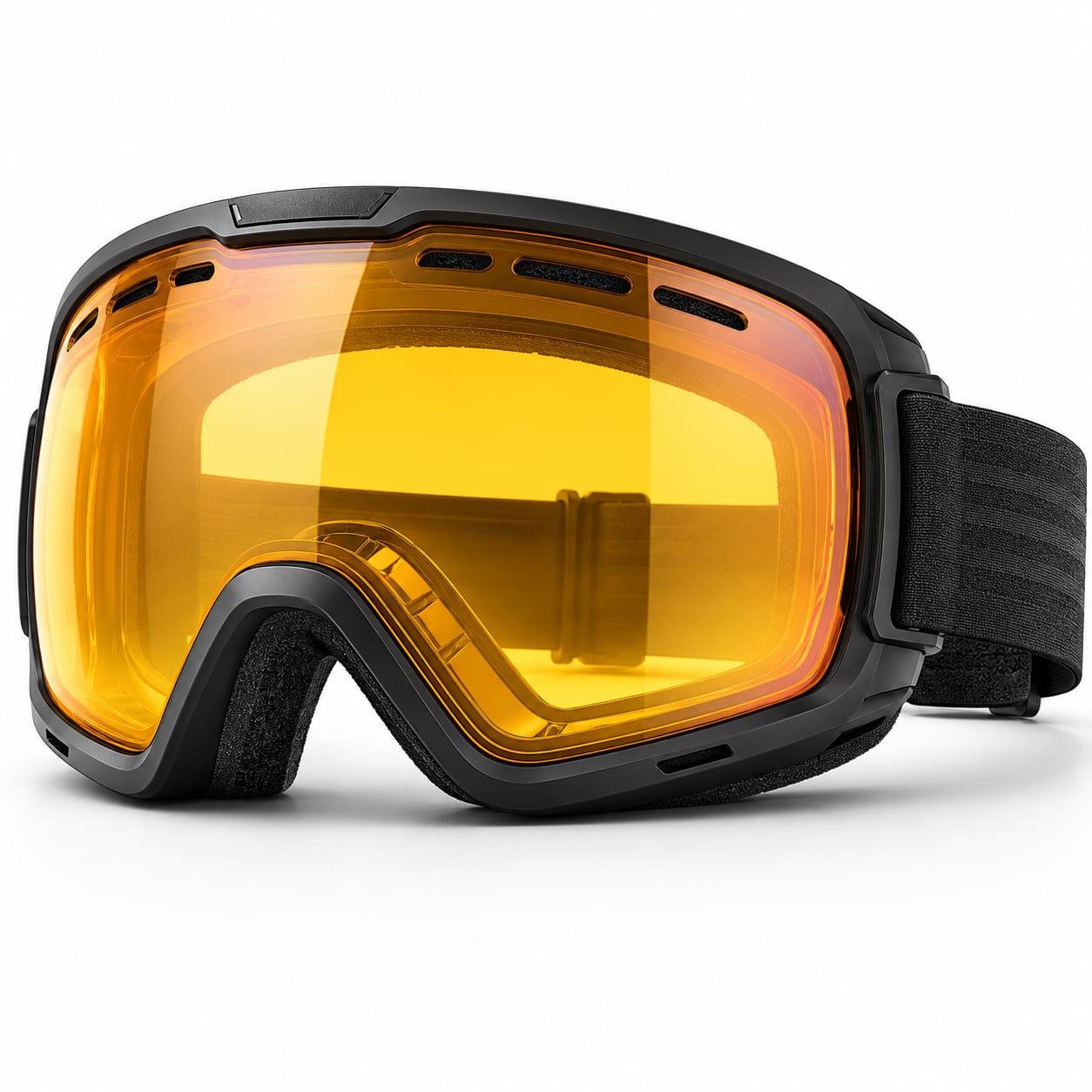
Photochromic goggles use adaptive tint technology that shifts between lighter and darker states. The base tint when fully lightened is typically rose, copper, or amber, which provides inherent contrast enhancement even in the lightest state. As the lens darkens, the tint deepens but maintains its contrast-enhancing character.

Compared to other types

Unlike fixed-tint goggles where you choose a specific color for specific conditions, photochromic goggles must work across conditions. The best photochromic models use a contrast-enhancing base tint (rose/copper) that provides good definition in low light and deepens adequately for bright conditions.

Why it matters: The base tint color matters because even in the lightened state, you want contrast enhancement for flat light and snow definition. A rose/copper base tint ensures the goggle performs well in overcast and stormy conditions when the lens is at its lightest. Photochromic lenses with gray or neutral base tints are less effective in flat light.

Frame Size

Frame Size

What it means

The overall size of the goggle frame and lens, determining field of view and face fit compatibility.

Typical for this type

Medium Or Large

In practice

Photochromic goggles are available in all frame sizes, but medium and large are most common because the photochromic lens technology is typically offered in premium goggle platforms that skew toward adult sizing. Some brands offer photochromic lenses in small/youth frames as well.

Compared to other types

Frame size availability for photochromic goggles is similar to other premium goggle subcategories. Budget and entry-level subcategories may offer more small/youth options, while photochromic models tend to concentrate in medium and large sizes reflecting their adult-oriented, premium positioning.

Why it matters: Proper frame size ensures a good seal against the face, which prevents fogging—a critical concern for photochromic goggles since fogging can block the UV light needed to activate the darkening response. A goggle that fits well also maximizes the benefit of the wide field of view typically paired with photochromic lenses.

Anti-Fog System

Anti-Fog System

What it means

The technology and design features preventing lens fogging, including dual-layer construction, coatings, and ventilation.

Typical for this type

Dual Lens Premium Coating

In practice

Photochromic goggles almost universally feature dual-lens construction with premium anti-fog coating. This is essential because the photochromic reaction requires UV light to reach the lens, and fogging blocks that light, preventing the lens from darkening when it should.

Compared to other types

Photochromic goggles consistently feature higher-tier anti-fog systems compared to budget subcategories that may use standard coatings or dual-lens-only construction. The premium pricing of photochromic models means anti-fog quality is rarely compromised.

Why it matters: Fogging is doubly problematic for photochromic goggles—it not only impairs vision like any goggle, but it also prevents the photochromic reaction from activating properly. A fogged photochromic lens may stay in its light state even in bright sun because the fog layer blocks UV. Premium anti-fog systems are therefore not just a comfort feature but a functional necessity.

Lens Interchangeability

Lens Interchangeability

What it means

The system and ease with which lenses can be swapped to adapt to changing light conditions.

Typical for this type

Magnetic Quick Swap Or Mechanical Quick Swap

In practice

Many photochromic goggles feature quick-swap lens systems, which may seem counterintuitive since the photochromic lens adapts automatically. However, interchangeable systems allow users to swap to a dedicated sunny or night lens for extreme conditions beyond the photochromic range, or to replace a damaged lens.

Compared to other types

Photochromic goggles reduce the frequency of lens swaps compared to fixed-lens subcategories, but many still offer interchangeable systems as a complement. Some photochromic models use fixed lenses since the adaptive technology minimizes the need for swapping, unlike fixed-tint goggles where interchangeability is critical for condition adaptation.

Why it matters: While the photochromic lens handles most conditions, having interchangeability means you can still swap to a dedicated very-low-VLT lens for intense high-altitude sun or a clear lens for night skiing. It also provides a backup if the photochromic lens is scratched or damaged. Magnetic quick-swap systems are the most convenient for on-mountain changes.

UV Protection

UV Protection

What it means

The level of ultraviolet radiation blocking provided by the lens, critical for eye health at altitude.

Typical for this type

Uv400

In practice

All quality photochromic goggles feature UV400 protection, which blocks 100% of UVA and UVB radiation. This is especially relevant because the photochromic reaction itself is triggered by UV light—the lens material must be engineered to allow controlled UV interaction for the tint change while still protecting the eyes.

Compared to other types

Photochromic goggles match other premium subcategories in offering UV400 protection as standard. Budget subcategories may occasionally offer only UV380 or basic UV coating, but photochromic goggles at their price point consistently deliver full UV400 protection.

Why it matters: UV400 protection is non-negotiable for any ski goggle, and photochromic models are no exception. The photochromic molecules react to UV on the lens surface while the lens material itself blocks harmful UV from reaching the eyes. This dual function requires precise manufacturing quality.

Over-the-Glasses (OTG) Compatible

OTG Compatible

What it means

Whether the goggle is designed to accommodate prescription eyeglasses underneath without discomfort or fogging.

Typical for this type

Varies By Model

Most common pick: False

In practice

Photochromic goggles are available in both OTG and non-OTG designs. OTG compatibility is not inherently linked to photochromic technology, but some popular photochromic models do offer OTG versions. Glasses wearers should specifically seek out OTG-designated photochromic models.

Compared to other types

OTG availability in photochromic goggles is similar to other premium subcategories. Some brands offer specific OTG photochromic models, while others do not. Budget subcategories may have fewer OTG options overall.

Why it matters: For glasses wearers, the convenience of photochromic adaptive tint is especially valuable since managing both glasses and lens swaps is particularly cumbersome. An OTG-compatible photochromic goggle eliminates the need to swap lenses while wearing glasses, which is a significant practical benefit.

Field of View

Field of View

What it means

The peripheral vision range provided by the goggle, measured in degrees of horizontal and vertical visibility.

Typical for this type

170–200 degrees horizontal

Most common pick: 170–190 degrees horizontal

In practice

Photochromic goggles typically offer wide fields of view, as they are most commonly built on premium goggle platforms with spherical or toric lenses and oversized frames. A typical horizontal field of view ranges from 170 to 190 degrees.

Compared to other types

Photochromic goggles tend to offer wider fields of view than budget or entry-level subcategories, comparable to other premium goggle types. The combination of adaptive tint and wide peripheral vision makes them particularly well-suited for all-mountain and freeride applications.

Why it matters: A wide field of view enhances peripheral awareness, which is important for safety and performance. Since photochromic goggles are designed for all-day, all-mountain use, maximizing field of view ensures riders can see other skiers, terrain features, and obstacles regardless of the lens tint state.

Polarized

Polarized Lens

What it means

Whether the lens includes polarization to reduce glare from reflective snow surfaces.

Typical for this type

Not Polarized (Preferred For Photochromic)

Most common pick: False

In practice

Most photochromic ski goggles are not polarized. Polarization is generally not combined with photochromic technology in ski goggles because it can interfere with the photochromic reaction and adds complexity and cost. Additionally, polarization can make it harder to distinguish ice from snow, which is a concern when the lens is already adapting its tint.

Compared to other types

Fixed-lens sunny-day subcategories more commonly offer polarized options. Photochromic goggles prioritize adaptive tint over polarization, as the two technologies serve overlapping purposes (glare reduction) and combining them adds cost with diminishing returns.

Why it matters: Non-polarized photochromic lenses allow the full photochromic reaction to function optimally and maintain the ability to detect ice patches. If glare reduction is a priority, the photochromic darkening in bright conditions provides significant glare reduction without the drawbacks of polarization on snow.

Mirror Coating

Mirror Coating

What it means

Reflective coating on the outer lens surface that bounces additional light away, reducing glare and VLT.

Typical for this type

Partial Mirror Or No Mirror

In practice

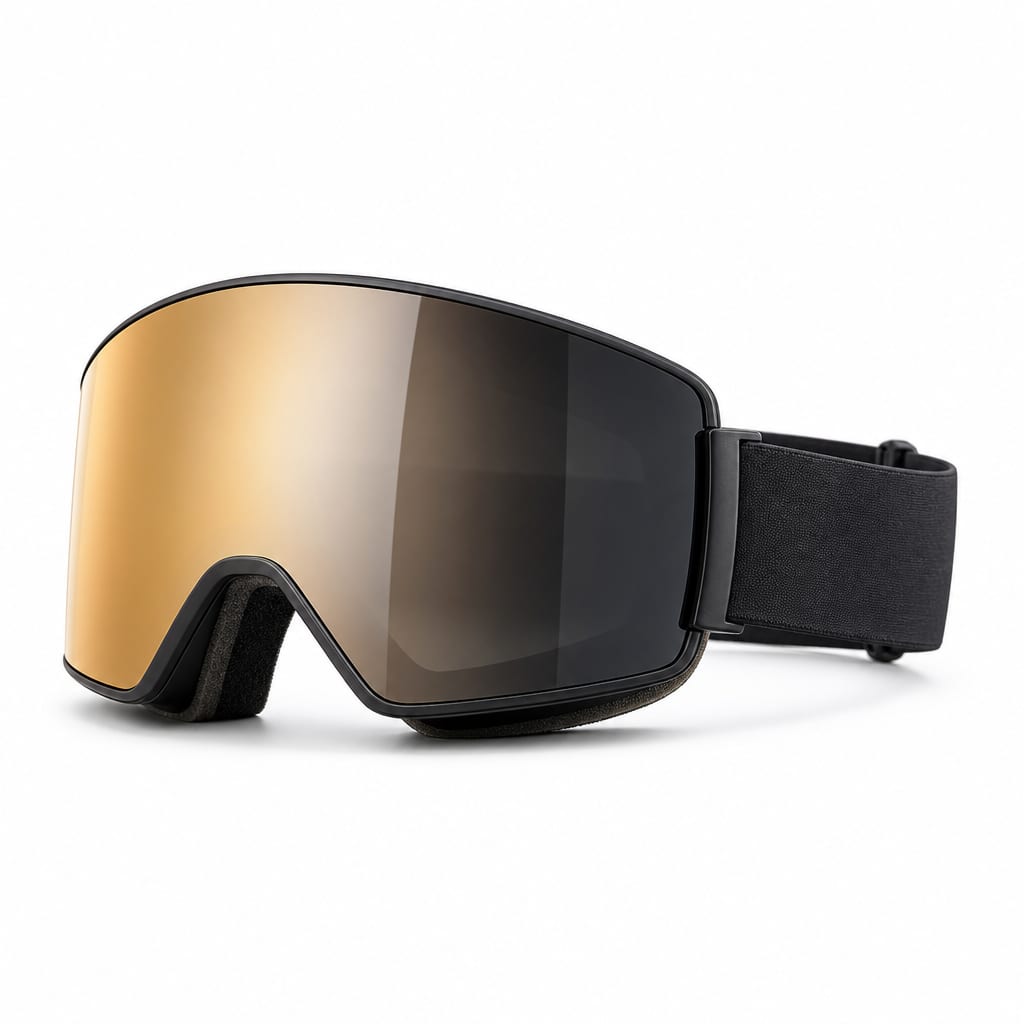
Photochromic goggles most commonly feature partial/flash mirror coatings or no mirror coating. Full mirror coatings are less common because they add a fixed light-reduction layer that can interfere with the photochromic range—specifically limiting how light the lens can get in low-light conditions.

Compared to other types

Sunny-day fixed-lens subcategories frequently use full mirror coatings for maximum glare reduction. Photochromic goggles favor partial or no mirror to preserve the adaptive VLT range, which is the core value proposition of the subcategory.

Why it matters: A mirror coating reduces VLT by a fixed amount regardless of conditions, which narrows the effective photochromic range. A partial mirror provides some additional glare reduction in bright conditions without significantly limiting the lightened state. No mirror allows the widest possible VLT range but offers less glare reduction at the dark end.

Ventilation Design

Ventilation Design

What it means

The airflow system built into the goggle frame to manage moisture and prevent fogging during activity.

Typical for this type

Enhanced Passive

In practice

Photochromic goggles typically feature enhanced passive ventilation systems. Good airflow is critical for photochromic models because fogging blocks UV light from reaching the lens, preventing the darkening reaction. Enhanced passive ventilation provides the best balance of fog prevention and weather protection.

Compared to other types

Photochromic goggles require at least enhanced passive ventilation for optimal function, whereas some budget subcategories may use standard or minimal ventilation. Active (powered) ventilation is rare in photochromic models but available for chronic fog sufferers.

Why it matters: Ventilation directly impacts photochromic performance. If the lens fogs, UV light cannot reach the photochromic molecules, and the lens stays in its light state even in bright sun. Enhanced passive ventilation keeps air flowing across the lens to prevent fog while not allowing excessive wind or snow intrusion.

Face Foam

Face Foam

What it means

The multi-layer foam padding that creates a seal against the face, affecting comfort, fit, and moisture management.

Typical for this type

Triple Layer Standard Or Triple Layer Moisture Wicking

In practice

Photochromic goggles typically feature triple-layer foam construction, reflecting their premium positioning. Some high-end models include moisture-wicking top layers for enhanced sweat management during long days of all-condition skiing.

Compared to other types

Photochromic goggles consistently feature triple-layer foam, matching other premium subcategories. Budget subcategories may use dual-layer or single-layer foam, which provides less reliable sealing and comfort for all-day use.

Why it matters: Quality face foam ensures a consistent seal against the face, which prevents the warm moist air from breath and sweat from reaching the lens and causing fog. Since fogging impairs photochromic function, good foam seal is indirectly but importantly linked to photochromic performance.

Helmet Compatibility

Helmet Compatibility

What it means

How well the goggle integrates with ski helmets in terms of fit, strap grip, and gap-free interface.

Typical for this type

Universal Compatible Or Seamless Integration

In practice

Most photochromic goggles are designed for universal helmet compatibility, with adjustable straps and silicone grips to fit a wide range of helmet brands. Some brands offer seamless integration when paired with matching helmets from the same brand.

Compared to other types

Photochromic goggles match other premium subcategories in offering universal or brand-matched helmet compatibility. Budget subcategories may have less refined strap systems or frame shapes that create gaps with certain helmets.

Why it matters: A gap-free goggle-to-helmet interface prevents cold air from reaching the forehead and warm air from escaping into the goggle, both of which can cause fogging. Since fogging impairs photochromic function, proper helmet compatibility is more important for photochromic goggles than it might first appear.

Frame Material

Frame Material

What it means

The primary material used in the goggle frame, affecting flexibility, cold-weather performance, and durability.

Typical for this type

Tpu Flexible

In practice

Photochromic goggles universally use TPU (thermoplastic polyurethane) frames, which remain flexible in extreme cold and provide the frame flex needed for lens interchangeability systems commonly paired with photochromic lenses.

Compared to other types

Photochromic goggles match all premium subcategories in using TPU frames. Only the lowest-budget subcategories use rigid plastic frames, which are never found in photochromic models due to their premium positioning.

Why it matters: TPU flexibility is important for photochromic goggles because many feature interchangeable lens systems that require frame flex for lens swaps. Rigid frames would make lens changes difficult and would become brittle in the cold temperatures where photochromic goggles are used.

Prescription Lens Compatible

Prescription Ready

What it means

Whether the goggle supports prescription vision correction through inserts or Rx-able lens options.

Typical for this type

Rx Insert Compatible Or Rx Insert Included

In practice

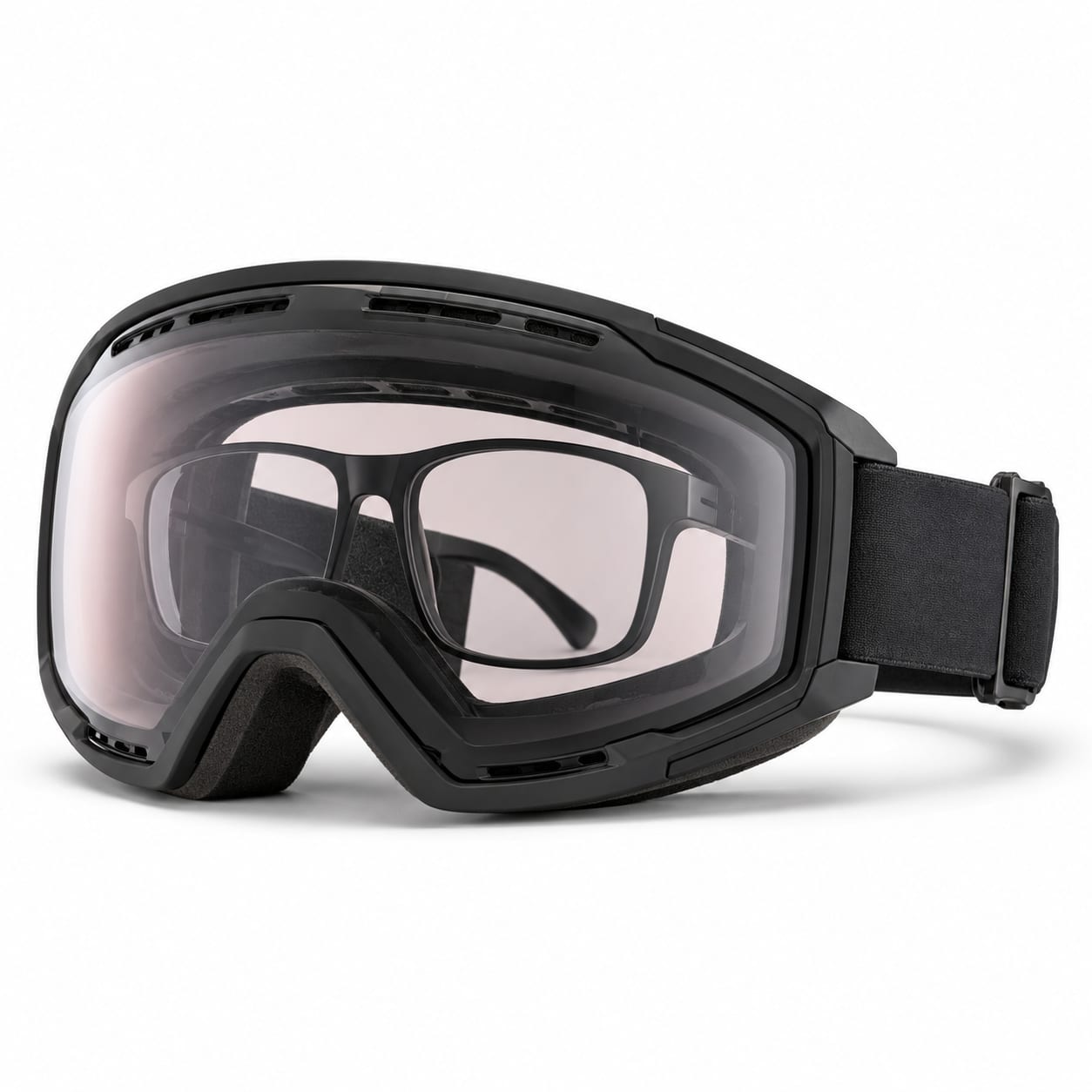
Many photochromic goggles are compatible with prescription inserts, and some models include them. The adaptive nature of photochromic lenses makes them especially appealing for glasses wearers who want to avoid the hassle of both managing prescription eyewear and swapping lenses for conditions.

Compared to other types

Photochromic goggles are more likely to offer Rx insert compatibility than budget subcategories, reflecting their premium positioning. Direct Rx lens options are less common in photochromic models due to the complexity of manufacturing prescription photochromic lenses.

Why it matters: For glasses wearers, a photochromic goggle with an Rx insert is arguably the ideal setup—clear vision correction, no glasses fogging under the goggle, and automatic tint adaptation without lens swaps. This combination eliminates two major pain points simultaneously.

Evaluation

Strengths and trade-offs

Pros

What this type does best

Automatic Condition Adaptation

Critical

The lens tint adjusts automatically based on UV exposure, darkening in bright sun and lightening in overcast or flat light. This means you never have to stop and swap lenses as weather changes throughout the day.

No Spare Lens Required

High

A single photochromic goggle replaces the need to carry spare lenses and the associated case, reducing pack weight and complexity. You also avoid the risk of damaging lenses during on-mountain swaps.

Seamless All-Day Riding

High

Without the interruption of lens changes, you can ride continuously through changing conditions. The transition happens gradually and naturally, often without you consciously noticing the shift.

Ideal for Variable Mountain Weather

High

Mountain conditions change rapidly and unpredictably. Photochromic goggles are specifically designed for this reality, adapting in real time rather than requiring you to predict the day's weather each morning.

Excellent for Backcountry Touring

Medium

Backcountry riders experience dramatic elevation and weather changes throughout a single tour. Photochromic goggles adapt to these shifts automatically, which is especially valuable when you're far from a lodge and carrying minimal gear.

Reduced Fogging from Lens Swaps

Medium

Every time you remove a goggle lens, you introduce warm moist air and risk fogging. Photochromic goggles eliminate this fog risk by keeping the lens sealed and in place all day.

Cost-Effective Over Time

Medium

While the upfront cost is higher, a single photochromic goggle can replace the need for two or three goggle setups with different fixed lenses, potentially offering better value for riders who ski in varied conditions.

Cons

Trade-offs to be aware of

Transition Lag

Moderate

Photochromic lenses take 30–90 seconds to transition between states, with the lightening reaction being slower than the darkening. During sudden weather changes, you may experience a brief period of too-bright or too-dark vision before the lens catches up.

Cold Temperature Slowdown

Moderate

The photochromic chemical reaction slows in cold temperatures, particularly the lightening (clearing) reaction. On very frigid days below -10°C (14°F), the lens may take noticeably longer to lighten when clouds roll in or you enter shaded terrain.

Limited Extreme VLT Range

Moderate

No photochromic goggle achieves the very low VLT of a dedicated sunny lens (8-15%) or the very high VLT of a clear night lens (90%+). In extreme bright or extreme dark conditions, a photochromic lens is a compromise compared to a dedicated specialty lens.

Premium Price Point

Minor

Photochromic goggles typically cost 20–50% more than comparable non-photochromic models from the same brand. The advanced lens technology and manufacturing complexity command a significant price premium.

UV-Dependent Activation

Minor

Photochromic lenses respond to UV light, not visible brightness. This means they may not darken fully behind a UV-blocking car windshield, and they may darken somewhat on bright overcast days even when you want maximum light transmission. UV at altitude can also cause unexpected darkening.

Lens Longevity Concerns

Minor

The photochromic reaction can degrade over years of heavy use, with the lens eventually responding more slowly or not reaching its full dark or light extremes. Most riders will replace goggles before this becomes significant, but it is a consideration for very long-term use.

Best for

Terrain

All-mountainFreerideBackcountryGlacierTree runs

Snow conditions

Variable weatherPartly cloudyChanging conditionsMixed sun and cloudsSpring skiing

Skill level

IntermediateAdvancedExpert

Riding style

All-mountain cruisingFreeride explorationBackcountry touringLong resort days

Rider profile

All-day skiers who ride through weather changesBackcountry tourers experiencing elevation shiftsTraveling skiers who can't bring multiple goggle setupsSkiers who dislike stopping to swap lensesRiders in regions with famously variable weather

Not ideal for

Reasons

Night skiing requires clear lenses with 90%+ VLT that photochromic goggles cannot achieveBudget-conscious beginners may not justify the premium price for occasional useRacers in consistent bright conditions benefit more from a dedicated low-VLT sunny lensIndoor snow domes lack UV light needed to activate the photochromic reaction

Terrain

Night skiing onlyIndoor snow domes

Skill level

Beginners on a tight budget

Riding style

Dedicated park riding in consistent conditionsRacing in controlled bright conditions

Compare

How it stacks up

This page

Photochromic Ski Goggles

Photochromic goggles adapt to changing conditions automatically, while a fixed sunny lens becomes dangerously dark in overcast or stormy weather. You never get caught with the wrong lens.

Alternative

Fixed-Lens Sunny Goggles

A dedicated sunny lens achieves lower VLT (8-15%) for superior glare reduction in extreme bright conditions, and costs significantly less. Optical clarity may be marginally better with a simpler fixed lens construction.

Bottom line

Choose photochromic if you ski in variable conditions or all-day through weather changes. Choose a fixed sunny lens if you primarily ski bright, high-altitude days and want maximum glare reduction at lower cost.

This page

Photochromic Ski Goggles

Photochromic goggles eliminate the need to stop and swap lenses, which is cumbersome with cold hands and gloves. The adaptation is seamless and automatic, with no risk of dropping or damaging a spare lens on the mountain.

Alternative

Interchangeable-Lens Goggles

Interchangeable-lens systems allow you to select the absolute optimal lens for any condition, including extreme sunny or night lenses that exceed the photochromic VLT range. They also cost less upfront for the goggle itself.

Bottom line

Choose photochromic for convenience and seamless adaptation in variable conditions. Choose interchangeable-lens goggles if you need the absolute best lens for extreme conditions (very bright sun or night skiing) and don't mind carrying and swapping lenses.

This page

Photochromic Ski Goggles

Photochromic goggles handle bright conditions that would overwhelm a dedicated low-light lens, which becomes painfully bright in sudden sunshine. You get the best of both worlds without owning two goggles.

Alternative

Fixed-Lens Low-Light/Storm Goggles

A dedicated storm lens with high VLT (60-80%) and contrast-enhancing tint provides superior flat-light definition and brightness compared to a photochromic lens in its lightened state. Storm lenses are also much less expensive.

Bottom line

Choose photochromic if your days include both stormy and sunny periods. Choose a dedicated storm goggle if you primarily ski in overcast, snowy, or flat-light conditions and rarely encounter bright sun.

This page

Photochromic Ski Goggles

Photochromic goggles adapt their tint to conditions, providing appropriate light transmission across a wide range. They also maintain the ability to distinguish ice from snow, which polarization can obscure.

Alternative

Polarized Ski Goggles

Polarized goggles provide superior glare reduction from reflective snow surfaces on bright days, reducing eye fatigue more effectively than non-polarized lenses at the same VLT. They are less expensive than photochromic models.

Bottom line

Choose photochromic for versatility across changing conditions. Choose polarized if you primarily ski bright days with intense snow glare and ice detection is not a major concern for your terrain.

Shopping

Buying tips

  • 1

    Check the VLT range specification carefully. A wider range (e.g., 20%–80%) provides more versatility than a narrow range (e.g., 30%–60%). The wider the range, the more conditions a single lens can handle.

  • 2

    Look for photochromic goggles with a rose, copper, or amber base tint rather than gray. Contrast-enhancing base tints provide better flat-light definition when the lens is in its lightened state, which is when you need contrast the most.

  • 3

    Consider the transition speed specification if available. Faster transitions (30–45 seconds) are noticeably better than slower ones (60–90+ seconds) for handling rapid weather changes on the mountain.

  • 4

    Test the cold-weather performance if possible. Some photochromic technologies perform better in cold temperatures than others. Read reviews specifically mentioning cold-weather transition speed.

  • 5

    Don't assume you'll never need a spare lens. Even with photochromic goggles, consider keeping a clear lens for night skiing or a very dark lens for extreme high-altitude sun if you encounter those conditions regularly.

  • 6

    Prioritize anti-fog quality above all else. Since fogging blocks UV and prevents the photochromic reaction from working, the best photochromic goggle is one that never fogs. Look for dual-lens construction with premium anti-fog coating and enhanced ventilation.

  • 7

    Factor in the total cost of ownership. A $250 photochromic goggle may be better value than a $150 interchangeable-lens goggle plus $80 spare lenses, especially when you account for the convenience and reduced risk of lens damage during swaps.

  • 8

    If you wear prescription glasses, look for photochromic goggles with Rx insert compatibility. The combination of adaptive tint and integrated vision correction is the ultimate convenience setup for glasses wearers.

Care

Maintenance notes

  • Never touch or wipe the inner lens surface. The anti-fog coating on the inner lens is critical for photochromic function, as fogging blocks UV light and prevents the lens from darkening. Damaging this coating significantly impairs goggle performance.
  • Store goggles in a breathable microfiber bag rather than a sealed case when damp. Trapped moisture promotes fog issues and can degrade the anti-fog coating and photochromic molecules over time.
  • Avoid leaving goggles on the dashboard or in a hot car. Extreme heat can degrade the photochromic molecules and reduce the lens's ability to transition effectively over time.
  • Clean the outer lens with a microfiber cloth and gentle lens cleaner. Mirror coatings on photochromic goggles are scratch-prone and require careful cleaning. Never use paper products, abrasive cloths, or dry wiping.
  • Allow the goggle to dry completely after each use before storing. Remove any snow or ice from the frame vents to maintain proper airflow for the next use.
  • The photochromic reaction may slow slightly over several seasons of heavy use. If you notice significantly reduced transition speed or range after 3-5 seasons, it may be time to replace the goggle.
  • Do not apply aftermarket anti-fog treatments to the inner lens unless specifically recommended by the manufacturer. Some treatments can interfere with the anti-fog factory coating and the photochromic function.

Progression

Skill development path

Photochromic goggles are well-suited for intermediate to expert skiers and snowboarders who have enough experience to appreciate the difference that proper lens tint makes in varying conditions. Beginners may not yet notice the subtleties of tint adaptation and may find the premium price difficult to justify. As riders progress and spend more full days on the mountain, experiencing the frustration of being caught with the wrong lens in changing weather, the value of photochromic technology becomes increasingly apparent. Advanced and expert riders who ski in variable conditions, backcountry terrain, or regions with unpredictable weather will derive the most benefit from photochromic goggles and are best positioned to justify the investment.

FAQ

Common questions

Each question has a dedicated page with a full answer and links to the buying guide.

How long does it take for photochromic ski goggles to transition?

Most modern photochromic ski goggles transition from light to dark in approximately 30–60 seconds and from dark to light in 45–90 seconds. The darkening reaction is typically faster than the lightening reaction. Cold temperatures below -10°C (14°F) can slow the lightening reaction noticeably. While not instantaneous, the transition is fast enough for most on-mountain weather changes, which tend to be gradual rather than sudden.

Do photochromic goggles work for night skiing?

Photochromic goggles are not ideal for night skiing. Even in their lightest state, most photochromic lenses have a VLT of 70-85%, which is lower than a dedicated clear night lens at 90%+ VLT. Additionally, there is no UV light at night to activate the photochromic reaction, so the lens stays in its base lightened state. If you night ski regularly, carry a clear lens for your interchangeable photochromic goggle or own a separate night-skiing goggle.

Are photochromic goggles worth the extra cost?

For skiers who regularly encounter variable conditions, photochromic goggles are absolutely worth the premium. They eliminate the need for spare lenses, reduce the risk of lens damage during swaps, and provide seamless adaptation through changing weather. If you ski primarily in consistent conditions (always sunny or always overcast), a fixed-lens goggle matched to those conditions may be more cost-effective. Consider that a single photochromic goggle at $200–$300 can replace two or three fixed-lens setups that would cost $300–$500 total.

Do photochromic goggles work in cold weather?

Yes, but with a caveat. The photochromic chemical reaction slows in cold temperatures, particularly the lightening (clearing) reaction. In temperatures below -10°C (14°F), you may notice the lens takes longer to lighten when moving from sun to shade or when clouds roll in. The darkening reaction is less affected by cold. Modern photochromic goggle technologies have improved cold-weather performance significantly compared to earlier generations, but some slowdown in extreme cold is still expected.