What it means
The curvature profile of the goggle lens, affecting optical clarity, distortion, and field of view.
Typical for this type
Spherical (This Is The Defining Characteristic Of The Subcategory)
In practice
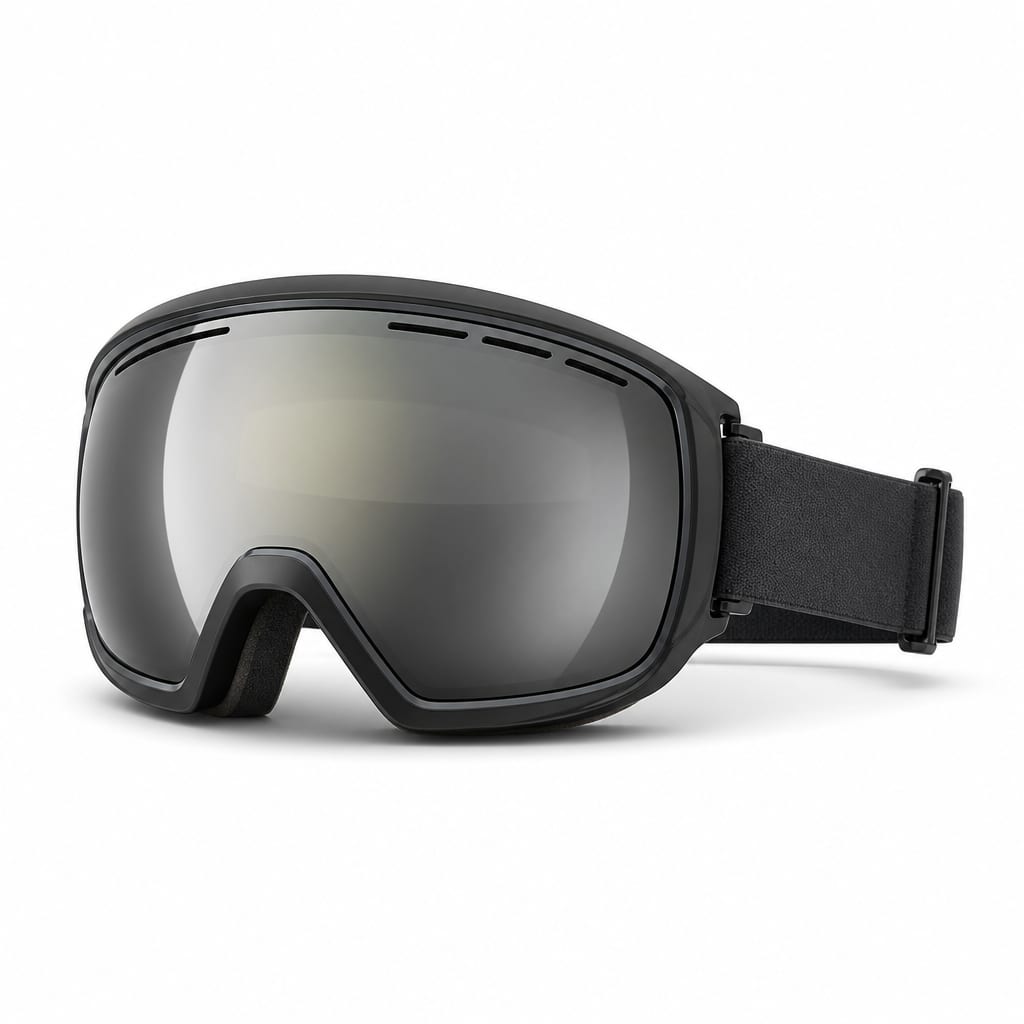
Spherical lenses curve both horizontally and vertically, creating a dome shape that mimics the eye's natural curvature. This is the defining feature of this subcategory.
Compared to other types
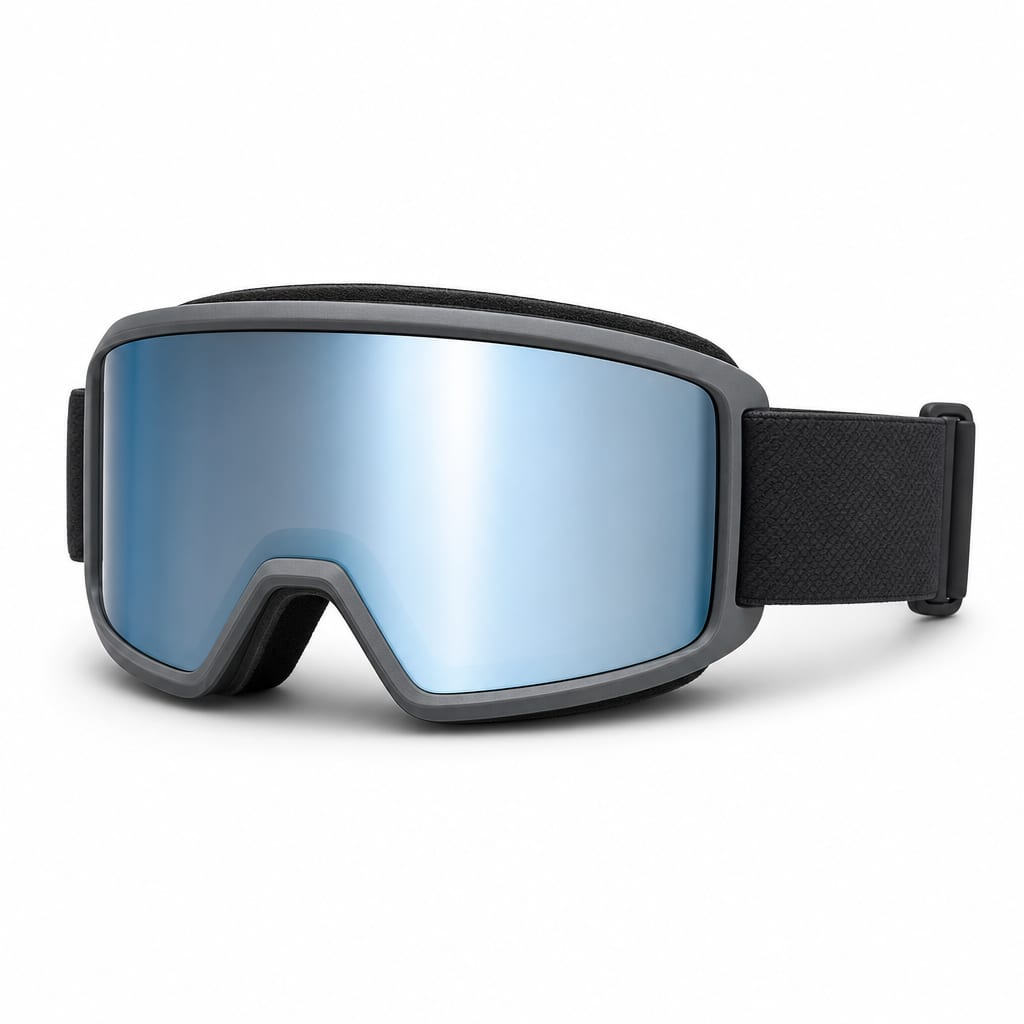
Cylindrical lenses curve only horizontally and are flat vertically, causing edge distortion and narrower field of view. Toric lenses offer a hybrid shape with wider horizontal view but less vertical curvature than spherical. Spherical provides the most optically correct vision of all lens shapes.
Why it matters: The dual-axis curvature eliminates peripheral distortion and provides the widest, most accurate field of view available in ski goggles. Light reaches the eye at consistent angles across the entire lens surface.
VLT (%)
Visible Light Transmission
What it means
The percentage of visible light that passes through the lens, determining brightness and suitability for different weather conditions.
Typical for this type
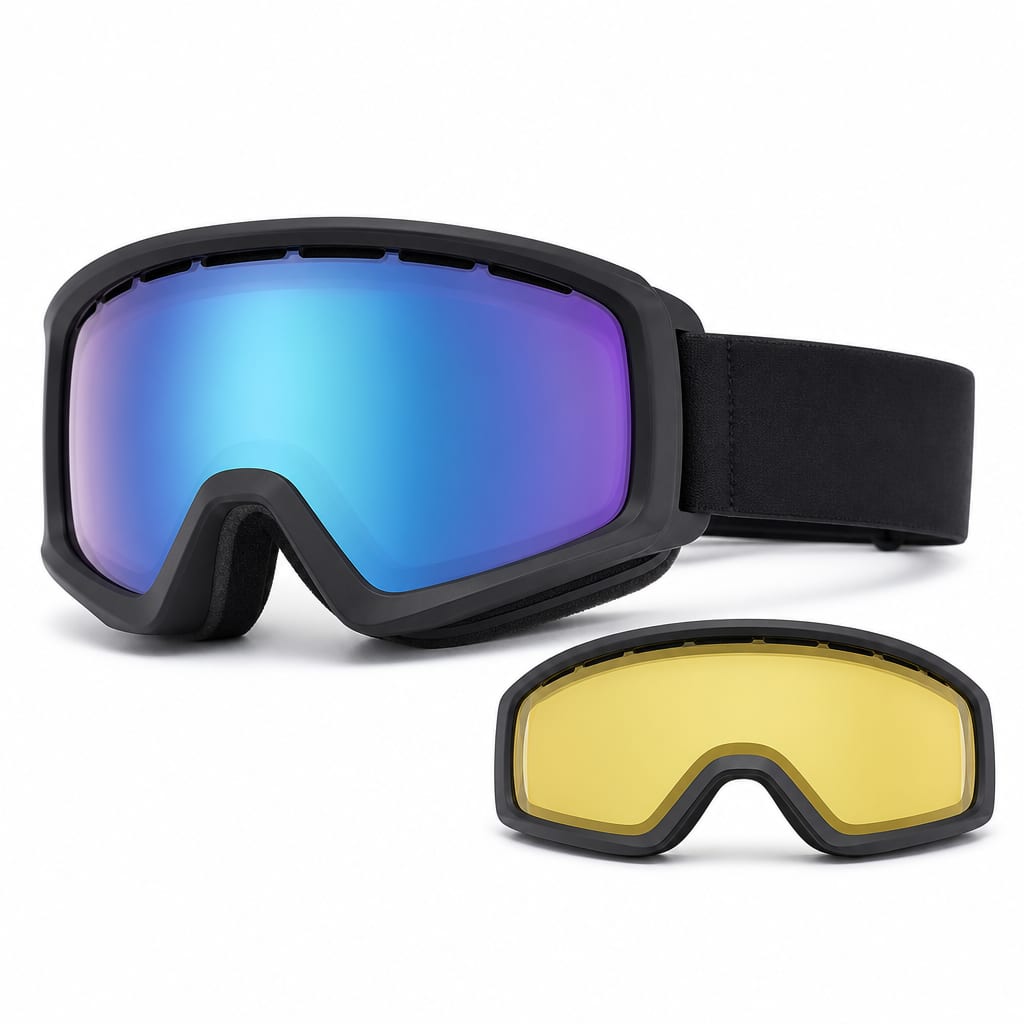
15-25% for primary all-condition lens; own a second lens at 60-80% for storm days
Most common pick: 18-25%
In practice
Spherical goggles typically ship with a mid-VLT lens suitable for partly cloudy to sunny conditions, as this covers the broadest range of typical skiing days. The premium price point of spherical goggles means most buyers also invest in a spare low-light lens.
Compared to other types
VLT range is identical across lens shapes—the difference is that spherical goggles more often come with interchangeable lens systems, making it practical to own multiple VLT options for one goggle frame.
Why it matters: VLT is the single most important spec for matching your goggle to conditions. Even the best spherical optics are useless if you can't see through the lens because it's too dark or too bright for current light.
What it means
The color tint of the lens, which filters light differently to enhance contrast and definition in specific conditions.
Typical for this type
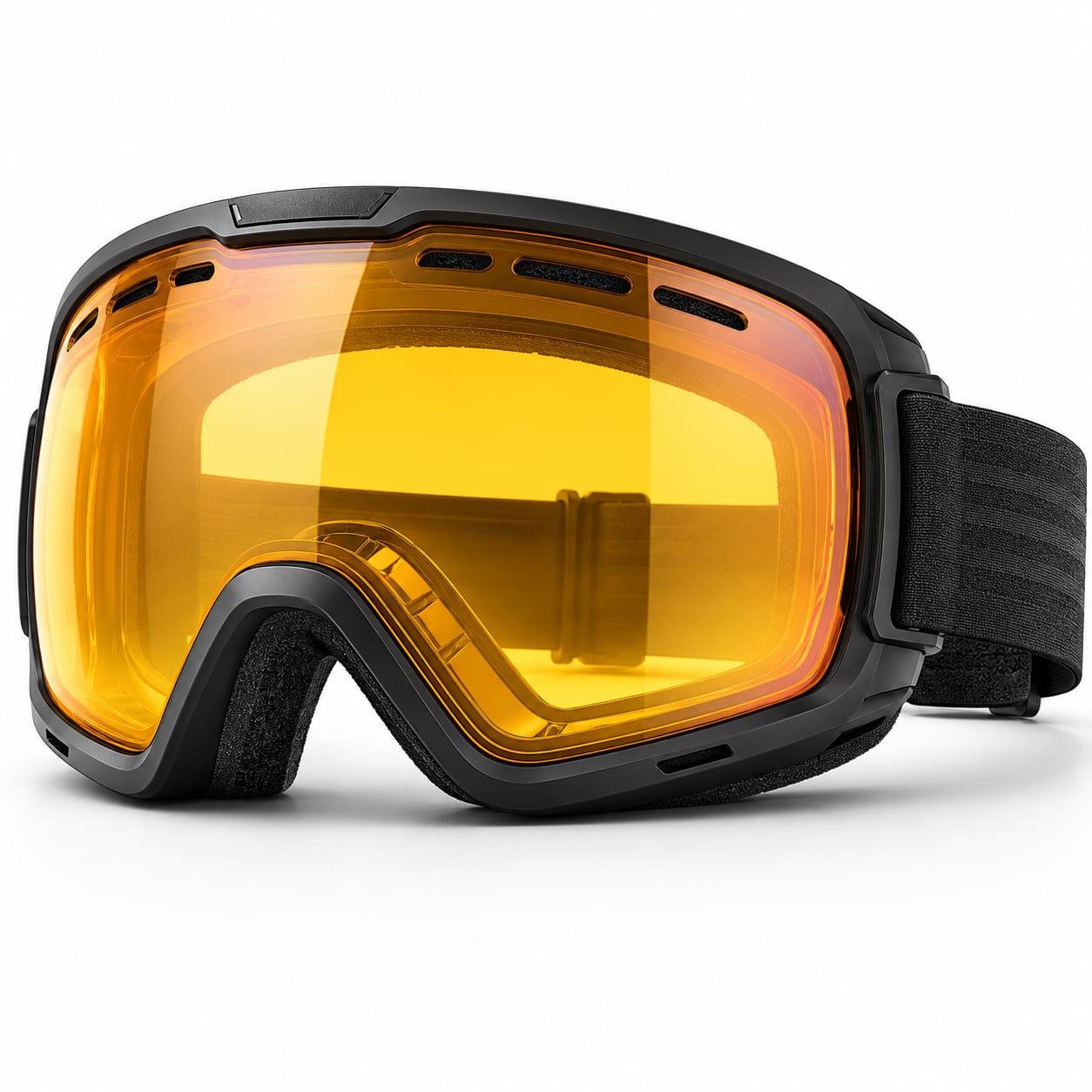
Rose/Copper/Amber As Primary Tint For Versatility; Gray/Black With Mirror For Bright Sun; Yellow/Gold Or Clear For Night/Low Light Spare
Most common pick: Rose Copper
In practice
Rose and copper tints dominate spherical goggle offerings because they enhance contrast in the variable conditions where optical clarity matters most. These warm tints reveal terrain texture in flat light that neutral tints cannot.
Compared to other types
Spherical goggles are more likely to offer photochromic tint options at premium price points, leveraging the lens quality to deliver adaptive performance. Cylindrical goggles skew toward simpler tint offerings at lower price points.
Why it matters: Contrast-enhancing tints complement the distortion-free optics of spherical lenses, maximizing terrain definition and depth perception. The combination of spherical clarity and rose/copper contrast is the gold standard for all-mountain visibility.
What it means
The overall size of the goggle frame and lens, determining field of view and face fit compatibility.
Typical for this type
Medium For Most Adults; Large For Maximum Field Of View; Small For Youth And Small Faces; Asian Fit If You Experience Nose Bridge Gaps
Most common pick: Medium
In practice
Spherical lenses are available in all frame sizes, but the medium and large sizes are most common because they best showcase the wide field of view that spherical optics enable. The oversized trend in goggle design has particularly benefited spherical lenses.
Compared to other types
Spherical goggles are more commonly offered in large/oversized frame sizes than cylindrical models, as riders seeking maximum field of view naturally gravitate toward the spherical lens shape that delivers the widest peripheral vision.
Why it matters: Proper frame size ensures the spherical lens seals correctly against your face, maintaining the thermal barrier essential for fog prevention. An ill-fitting spherical goggle can fog worse than a well-fitting cylindrical one.
Anti-Fog System
Anti-Fog System
What it means
The technology and design features preventing lens fogging, including dual-layer construction, coatings, and ventilation.
Typical for this type
Dual Lens + Premium Anti-Fog Coating (Standard On Quality Spherical Goggles)
Most common pick: Dual Lens Premium Coating
In practice
The spherical lens shape creates a larger internal volume between dual lenses, providing a thicker thermal barrier that naturally resists fogging. Most spherical goggles at mid-to-premium price points include premium anti-fog coatings as standard.
Compared to other types
Spherical goggles inherently resist fogging better than cylindrical designs due to greater internal lens volume creating a stronger thermal barrier. This physical advantage supplements whatever anti-fog coating is applied.
Why it matters: Spherical goggles represent a significant investment, and premium anti-fog systems protect that investment while ensuring the optical clarity you paid for isn't obscured by condensation. The larger air volume inside spherical dual-lens constructions is an inherent fog-fighting advantage.
Lens Interchangeability
Lens Interchangeability
What it means
The system and ease with which lenses can be swapped to adapt to changing light conditions.
Typical for this type
Magnetic Quick-Swap For Maximum Adaptability; Mechanical Quick-Swap For Good Balance Of Price And Convenience
Most common pick: Magnetic Quick Swap
In practice
Spherical goggles are at the forefront of lens interchangeability technology. Magnetic quick-swap systems debuted on premium spherical models and remain most refined in this category. The rigidity of spherical lenses actually makes them easier to handle during swaps than flexible cylindrical lenses.
Compared to other types
Spherical goggles are more likely to feature magnetic and mechanical quick-swap systems than cylindrical models, which still commonly use traditional frame-swap methods. This reflects the premium positioning and the fact that spherical lens buyers tend to be more condition-conscious riders.
Why it matters: The ability to quickly swap lenses maximizes the value of your spherical goggle investment across all conditions. A $250 spherical goggle with a quick-swap system and two lenses outperforms owning two $150 non-swappable goggles.
UV Protection
UV Protection
What it means
The level of ultraviolet radiation blocking provided by the lens, critical for eye health at altitude.
Typical for this type
UV400 (100% UVA/UVB) — Non-Negotiable For Any Quality Goggle
Most common pick: Uv400
In practice
All reputable spherical goggles from established brands provide UV400 protection as standard. The polycarbonate and Trivex materials used for spherical lenses inherently block UV radiation, and premium brands apply additional UV-blocking treatments.
Compared to other types
UV protection is independent of lens shape—quality goggles of all types should provide UV400. However, budget cylindrical goggles are more likely to cut corners on UV protection than spherical models, which occupy premium price tiers.
Why it matters: UV protection is essential at altitude where UV radiation is 30-40% stronger than at sea level, and snow reflects up to 80% of UV back upward. Spherical goggles' premium positioning means UV400 should always be included, but always verify.
Over-the-Glasses (OTG) Compatible
Over-the-Glasses (OTG) Compatible
What it means
Whether the goggle is designed to accommodate prescription eyeglasses underneath without discomfort or fogging.
Typical for this type
OTG Compatible If You Wear Glasses; Consider Rx Insert As Superior Alternative
Most common pick: False
In practice
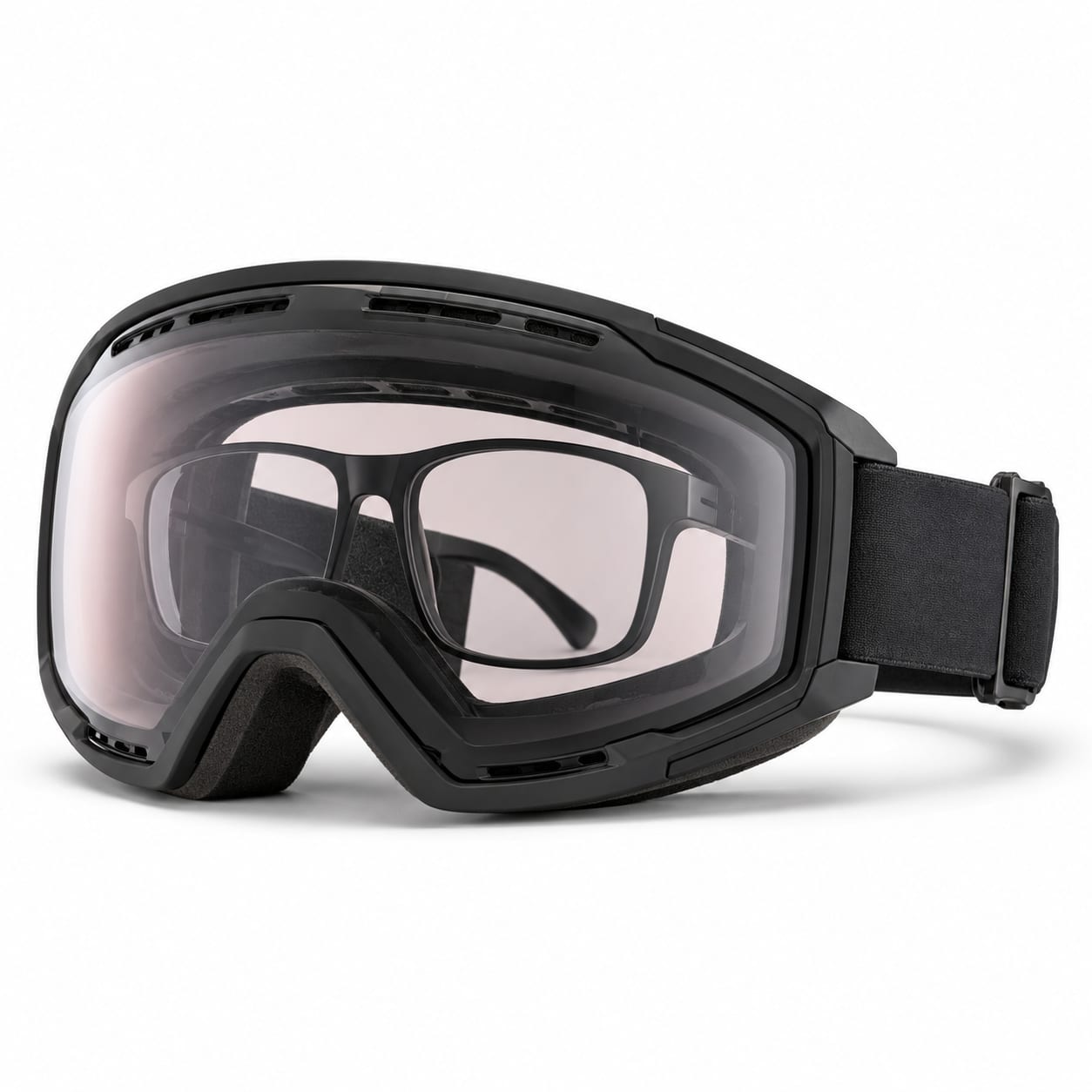
Most spherical goggles are not specifically designed as OTG models. The close facial fit that maximizes the optical benefits of spherical lenses often leaves insufficient room for glasses frames. However, some larger spherical models do offer OTG compatibility.
Compared to other types
Cylindrical goggles are more commonly offered in OTG-specific designs, partly because their simpler frame construction accommodates glasses more easily. Spherical goggles favor Rx inserts over OTG design for vision correction.
Why it matters: Glasses wearers need to specifically verify OTG compatibility when shopping spherical goggles. The good news is that many spherical goggles with quick-swap systems also offer Rx insert compatibility, which is a better solution than OTG for most wearers.
Field of View
Field of View
What it means
The peripheral vision range provided by the goggle, measured in degrees of horizontal and vertical visibility.
Typical for this type
170-200 degrees horizontal (spherical lenses deliver the widest FOV available)
Most common pick: 175-190 degrees horizontal
In practice
Spherical lenses deliver the widest field of view of any goggle type. Standard spherical goggles provide approximately 170-180 degrees horizontal FOV, while oversized spherical designs can reach 190-200 degrees. The vertical FOV advantage is also significant at 100-110 degrees.
Compared to other types
Spherical lenses provide 10-25 degrees wider horizontal field of view than comparable cylindrical lenses and 5-15 degrees more than toric lenses. The vertical FOV advantage over cylindrical lenses is even more pronounced due to the vertical curvature that cylindrical designs lack entirely.
Why it matters: The wide field of view is one of the primary reasons riders choose spherical lenses. Peripheral awareness of other skiers, terrain features, and obstacles directly impacts safety and performance, especially at speed and in congested areas.
What it means
Whether the lens includes polarization to reduce glare from reflective snow surfaces.
Typical for this type
Non-Polarized With Contrast-Enhancing Tint For Most Conditions; Polarized Option Available For Extremely Bright Glacier/High-Altitude Use
Most common pick: False
In practice
Most spherical goggles are non-polarized by default. Polarization reduces glare but can make it harder to distinguish ice from snow—a significant safety concern. Many spherical goggle buyers prioritize contrast-enhancing tints over polarization for this reason.
Compared to other types
Polarization availability is similar across lens shapes, but spherical goggles are more likely to offer polarized options as part of a lens quiver within an interchangeable system, allowing riders to choose polarization for specific conditions rather than being locked into one option.
Why it matters: The ice-detection trade-off is particularly relevant for spherical goggle users, who tend to be more performance-oriented riders in challenging terrain where identifying ice patches is critical. Polarization can also affect depth perception on varied snow surfaces.
Mirror Coating
Mirror Coating
What it means
Reflective coating on the outer lens surface that bounces additional light away, reducing glare and VLT.
Typical for this type
Full Mirror For Sunny Primary Lens; No Mirror Or Partial Mirror For Low-Light Spare Lens
Most common pick: Full Mirror
In practice
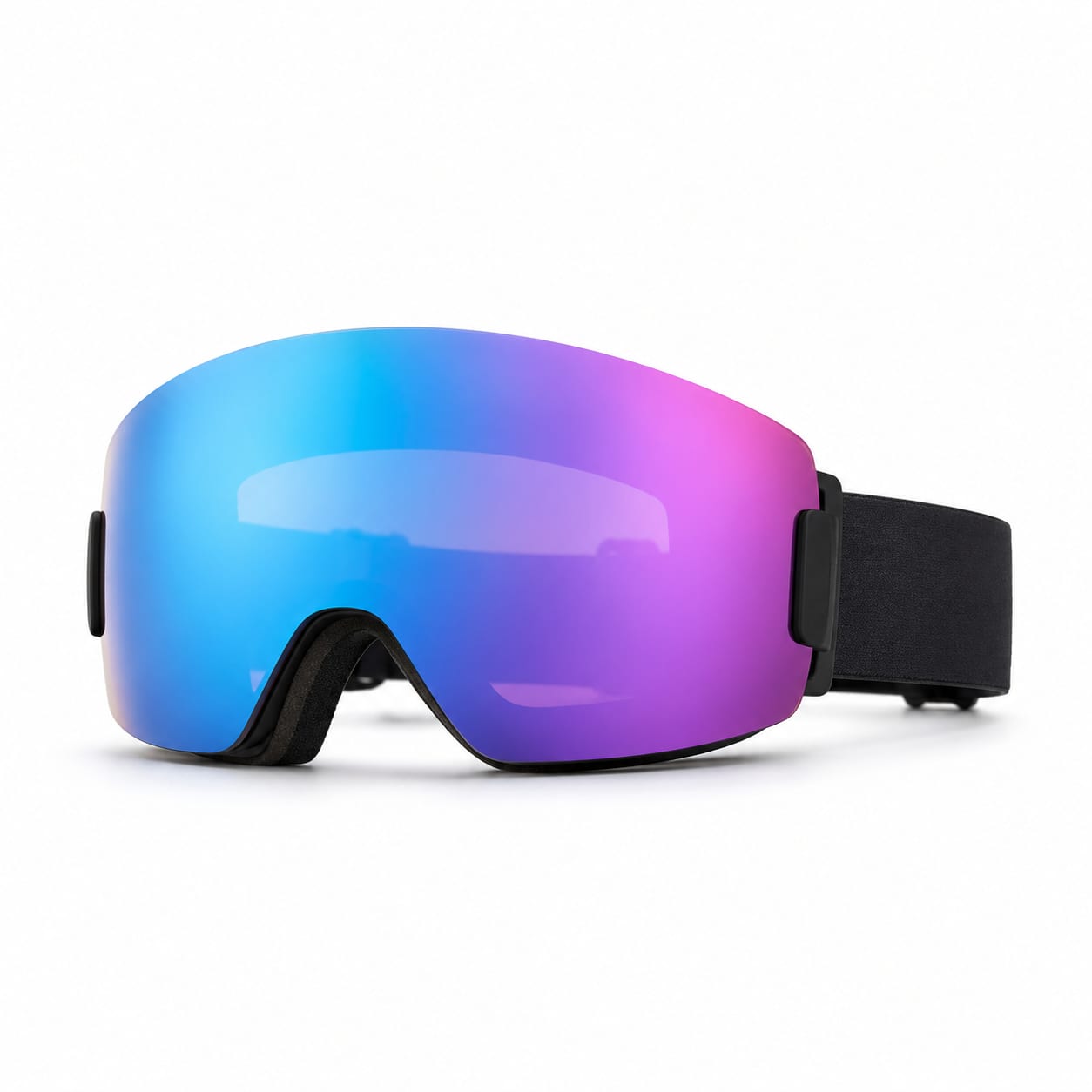
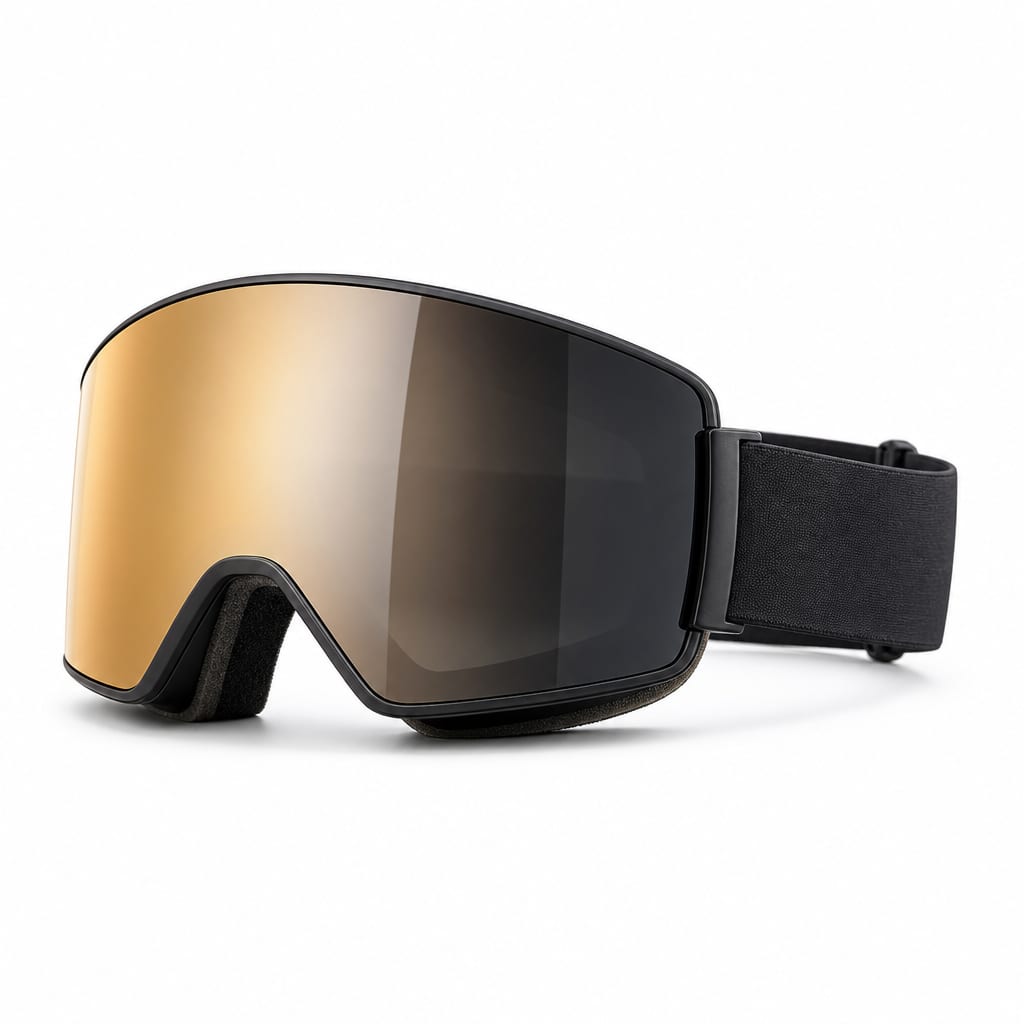
Spherical goggles frequently feature full mirror coatings on their primary lenses. The spherical shape allows mirror coatings to reflect light more uniformly than on cylindrical lenses, where the flat vertical section can create uneven reflection patterns.
Compared to other types
Mirror coatings perform more uniformly on spherical lenses than on cylindrical lenses due to the consistent curvature. On cylindrical lenses, the transition from curved horizontal to flat vertical can create visible variation in mirror intensity. Spherical lenses display mirror coatings more evenly across their entire surface.
Why it matters: Mirror coatings on spherical lenses serve both functional and aesthetic purposes. Functionally, they reduce VLT by an additional 5-15% and cut glare. Aesthetically, the uniform dome shape creates a distinctive, premium look that many riders prefer.
Ventilation Design
Ventilation Design
What it means
The airflow system built into the goggle frame to manage moisture and prevent fogging during activity.
Typical for this type
Enhanced Passive Ventilation For Most Riders; Active Ventilation For Chronic Fog Sufferers Or Glasses Wearers
Most common pick: Enhanced Passive
In practice
Spherical goggles typically feature enhanced passive ventilation systems with larger, strategically placed frame vents. The spherical lens shape naturally promotes airflow across the lens surface, and the larger internal volume provides more space for moisture to dissipate before condensing.
Compared to other types
Spherical goggles benefit from natural airflow advantages due to their dome shape, which creates a slight venturi effect that draws moist air out through the top vents. This physical advantage supplements the enhanced passive ventilation systems most quality spherical goggles employ.
Why it matters: Even with the inherent fog-fighting advantages of spherical lenses, proper ventilation is essential for maintaining clear vision during high-exertion activities like hiking to lines, skiing moguls, or touring. Blocked or inadequate vents negate the thermal advantages of dual-lens construction.
What it means
The multi-layer foam padding that creates a seal against the face, affecting comfort, fit, and moisture management.
Typical for this type
Triple Layer Standard Minimum; Triple Layer + Moisture Wicking For All-Day Comfort And High-Exertion Use
Most common pick: Triple Layer Standard
In practice
Spherical goggles at mid-to-premium price points typically feature triple-layer foam as standard. The precise facial seal required to maximize the optical benefits of spherical lenses makes quality foam particularly important in this subcategory.
Compared to other types
Spherical goggles are more likely to feature triple-layer and moisture-wicking foam than cylindrical models, reflecting their premium positioning. The foam quality difference is one of several factors contributing to the price gap between spherical and cylindrical goggles from the same brand.
Why it matters: Quality face foam ensures the goggle seals properly against your face, maintaining the thermal barrier essential for fog prevention and preventing cold air leaks that cause discomfort. The premium positioning of spherical goggles means foam quality should match the lens quality.
Helmet Compatibility
Helmet Compatibility
What it means
How well the goggle integrates with ski helmets in terms of fit, strap grip, and gap-free interface.
Typical for this type
Universal Compatible Minimum; Seamless Integration If Buying Helmet And Goggle Together From Same Brand
Most common pick: Universal Compatible
In practice
Most spherical goggles are designed for universal helmet compatibility, with adjustable silicone-backed straps that grip helmet surfaces effectively. The larger frame size of many spherical goggles requires careful attention to gaper gap when pairing with helmets.
Compared to other types
Spherical goggles, particularly oversized models, may present more gaper gap challenges with certain helmets than lower-profile cylindrical designs. Always test the goggle-helmet interface before purchasing, paying special attention to the forehead gap with larger spherical frames.
Why it matters: Gaper gap between goggle and helmet causes cold foreheads and can channel cold air behind the goggle lens, promoting fogging. The oversized frames popular in spherical goggles can exacerbate gaper gap with certain helmet shapes if not properly matched.
Frame Material
Frame Material
What it means
The primary material used in the goggle frame, affecting flexibility, cold-weather performance, and durability.
Typical for this type
TPU (Thermoplastic Polyurethane) — Standard On Quality Spherical Goggles
Most common pick: Tpu Flexible
In practice
TPU frames are standard on virtually all spherical goggles from reputable brands. The flexibility of TPU is particularly important for spherical goggles with interchangeable lens systems, as the frame must flex to accommodate lens swaps without losing its shape.
Compared to other types
TPU frames are universal across quality goggles regardless of lens shape. However, spherical goggles with interchangeable lens systems depend more heavily on frame flexibility, making TPU material functionally more critical in this subcategory than in fixed-lens cylindrical models.
Why it matters: TPU frames remain flexible in extreme cold, conform to facial contours for a proper seal, and provide the durability expected at spherical goggle price points. Frame flexibility is essential for lens interchangeability systems that require frame manipulation.
Prescription Lens Compatible
Prescription Lens Compatible
What it means
Whether the goggle supports prescription vision correction through inserts or Rx-able lens options.
Typical for this type
Rx Insert Compatible Or Rx Insert Included For Glasses Wearers; Direct Rx Lens Available For Premium Vision Correction
Most common pick: Rx Insert Compatible
In practice
Many spherical goggles, especially those with quick-swap lens systems, are compatible with Rx inserts. The larger internal volume of spherical goggles can accommodate inserts more easily than some low-profile cylindrical designs. Direct Rx spherical lenses are available from select brands.
Compared to other types
Spherical goggles are more likely to offer Rx insert compatibility and direct Rx lens options than cylindrical models, reflecting their premium positioning and the larger internal volume that accommodates inserts more comfortably.
Why it matters: Glasses wearers investing in spherical goggles should verify Rx compatibility before purchase. Rx inserts solve both vision correction and fog management simultaneously, which is especially valuable given the fog-fighting advantages of spherical lens construction.