Kitvore.com

Kitvore.com

Specs that matter. Gear that fits.

Ski Hip Protectors · Subcategory

Hard Shell Hip Protectors

Maximum-protection hip guards using rigid plastic shells over foam for superior impact force distribution and penetration resistance.

Hard shell hip protectors are the gold standard for impact protection in skiing, combining rigid PE or PP plastic shells with underlying foam padding to distribute force across a wider area and resist penetration. Designed for racers, freestyle skiers, and those with elevated fracture risk, they deliver the highest certified protection levels—often achieving CE Level 2 ratings transmitting under 9 kN of force. The trade-off is reduced flexibility, increased bulk, and visibility under clothing, but for skiers who prioritize safety above all else, hard shell protectors offer unmatched peace of mind.

$50 – $200premium tieradvancedexpert

Best known for

Superior impact force distribution via rigid shellsHighest certified protection levels (CE Level 2)Penetration resistance from sharp objects like ski edgesDurability spanning multiple seasonsUse in racing and high-speed disciplines
Hard Shell Hip Protectors

Guide

Detailed overview

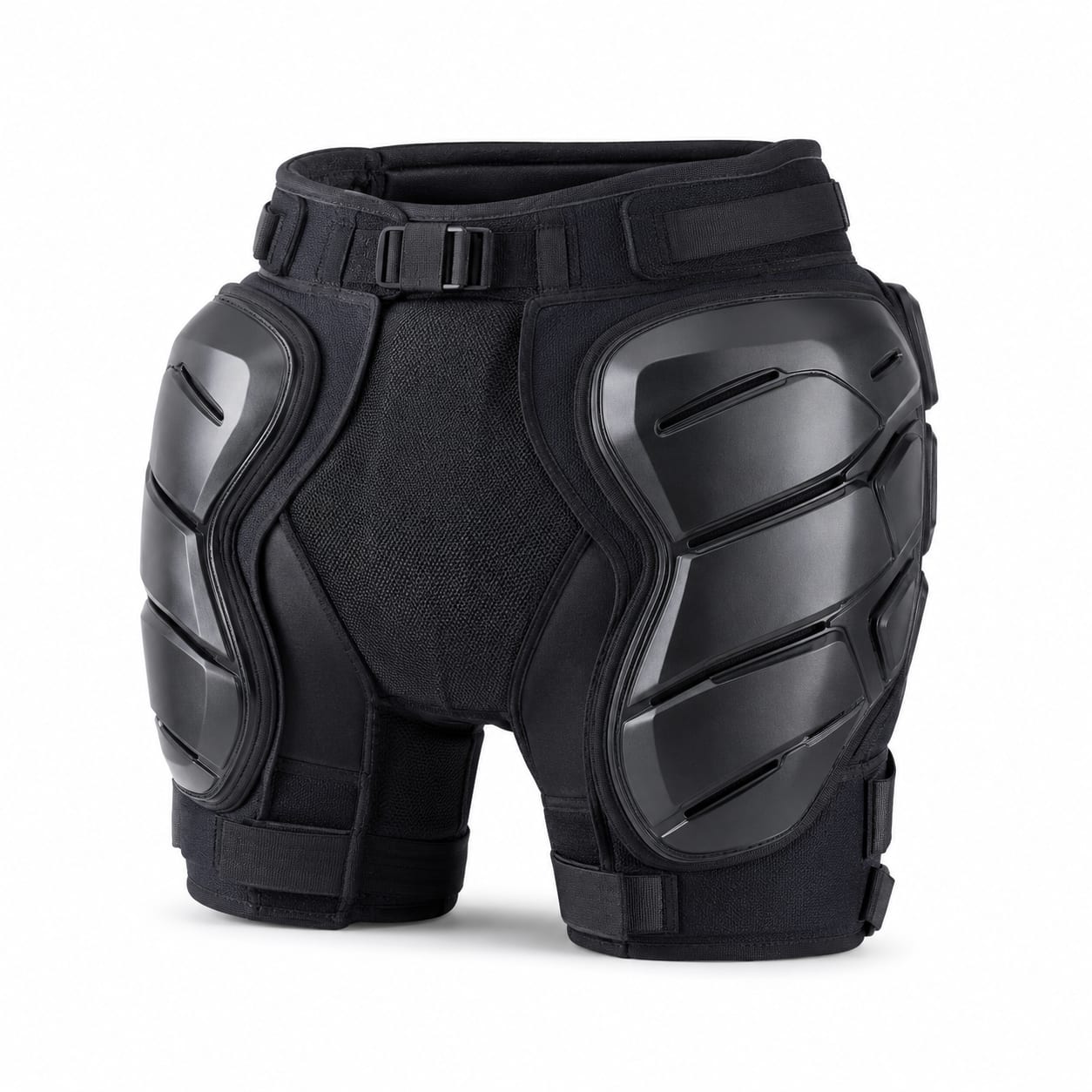
Hard shell hip protectors represent the most protective class of ski hip protection, utilizing rigid plastic shells—typically made from polyethylene (PE) or polypropylene (PP)—mounted over impact-absorbing foam padding. The hard shell serves two critical functions: it distributes concentrated impact force across a wider surface area, reducing peak pressure on any single point of the hip, and it provides penetration resistance against sharp objects such as ski edges, rocks, or ice chunks. This dual-action design makes hard shell protectors particularly effective against the high-energy, localized impacts common in racing, freestyle, and off-piste skiing. Underneath the shell, foam layers (often EVA or SAS-TEC) provide secondary energy absorption, working in concert with the shell to minimize force transmission to the greater trochanter and surrounding structures. Most hard shell hip protectors achieve CE Level 2 certification under EN 1621-1, transmitting no more than 9 kN of force—roughly half the threshold of CE Level 1 protectors. This level of protection is especially important for skiers with osteoporosis, those recovering from hip injuries, or anyone engaging in disciplines where high-speed falls are common. The rigid construction does come with trade-offs: hard shell protectors are noticeably bulkier under clothing, restrict hip mobility more than soft foam alternatives, and can be uncomfortable during prolonged use or when sitting on chairlifts. However, for skiers who prioritize maximum protection, these compromises are acceptable and often necessary.

Hard shell hip protectors occupy a distinct niche in ski protective equipment, offering uncompromising impact protection that soft foam alternatives simply cannot match. The rigid PE or PP shells are engineered to shunt impact energy outward from the point of contact, dramatically reducing the peak force that reaches the vulnerable greater trochanter—the bony prominence on the upper femur where hip fractures most commonly originate. When a skier falls at speed onto a hard-packed slope, the impact is both sudden and concentrated; a hard shell spreads that energy across its entire surface area before the underlying foam absorbs what remains. This two-stage protection system consistently achieves the lowest force transmission values in standardized testing, often registering between 5 and 9 kN—well within CE Level 2 requirements and significantly below the fracture threshold for most individuals.

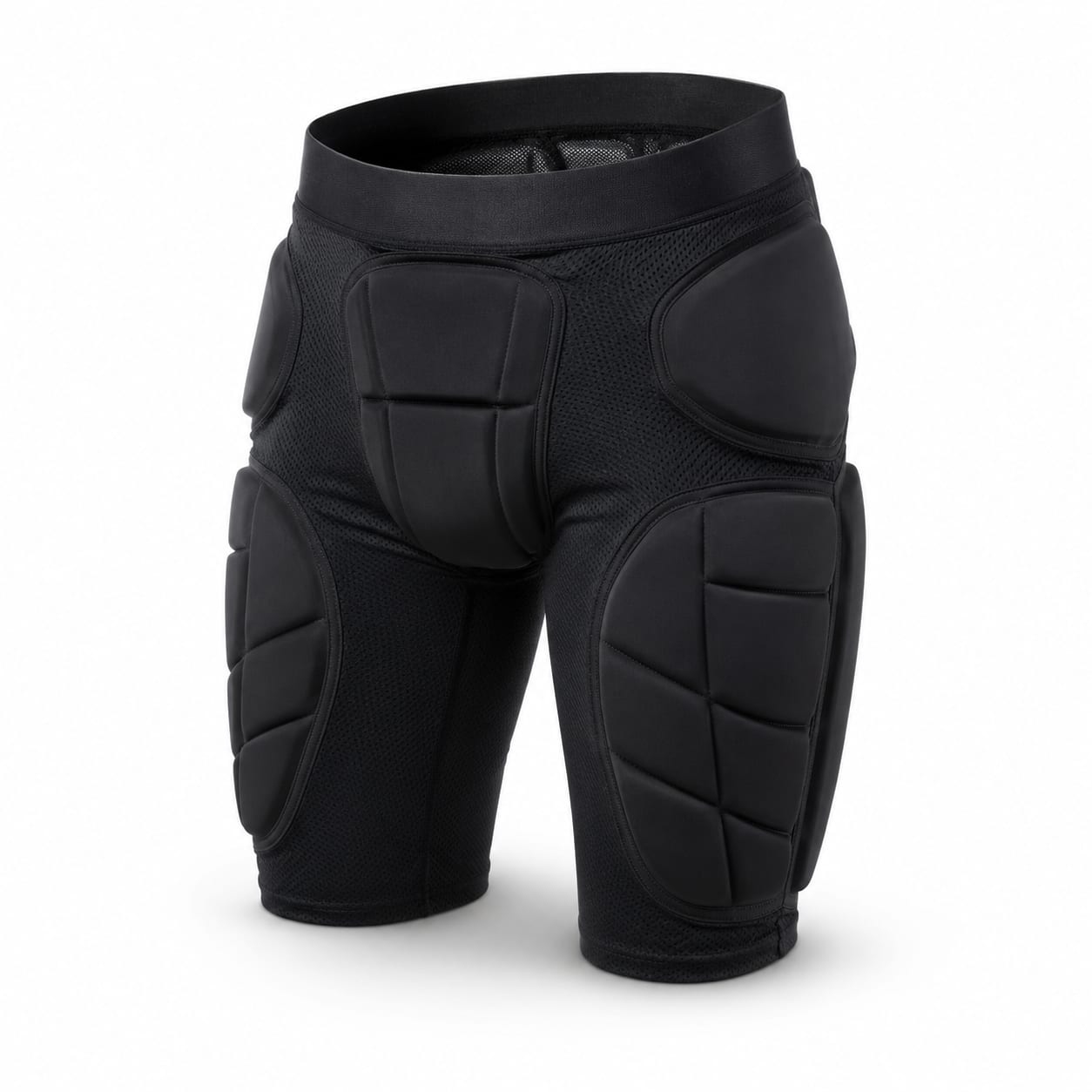
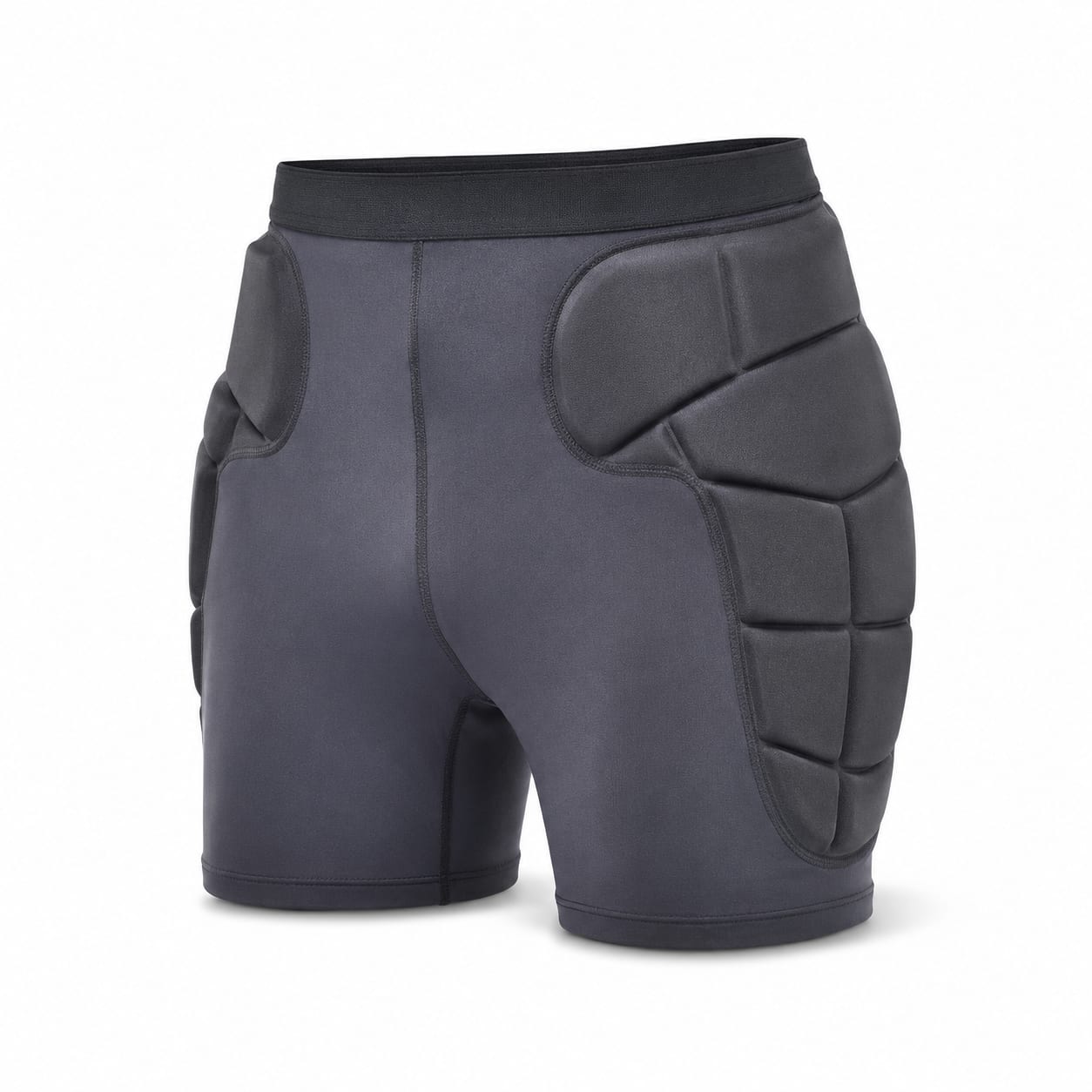
The typical hard shell hip protector features articulated shell segments that contour to the hip's natural shape while maintaining structural rigidity. These segments are connected by flexible bridges or hinges that allow some degree of movement while preserving the shell's protective geometry. Beneath the shells, a layer of viscoelastic or EVA foam provides secondary cushioning and helps the shell conform to the body. The entire assembly is housed in a compression short or wrap-belt carrier that positions the shells precisely over the greater trochanter and, in many models, extends coverage to the iliac crest, outer thigh, and tailbone. This comprehensive coverage makes hard shell protectors particularly popular among ski racers, who face both high-speed falls and the risk of gate impacts, as well as freestyle skiers hitting large features in the terrain park.

Comfort and mobility remain the primary challenges for hard shell designs. The rigid shells cannot flex and conform to the body the way D3O or SAS-TEC foam does, resulting in moderately restricted hip movement—particularly noticeable during deep flexion, wide stances, or aggressive carving. Sitting on chairlifts can also be uncomfortable, as the shells create pressure points against hard surfaces. Modern designs have made significant strides in addressing these issues through segmented shells, anatomical shaping, and improved carrier systems, but hard shell protectors will always be less comfortable than their soft foam counterparts. Skiers who choose hard shell protection should expect an adaptation period of several days on snow before the feel becomes natural.

Despite the bulk and reduced mobility, hard shell protectors excel in scenarios where protection is non-negotiable. Skiers with osteoporosis or low bone density benefit enormously from the superior force reduction, as hip fractures in this population can be catastrophic. Similarly, skiers recovering from hip surgery or those with previous hip injuries need the maximum protection available. The durability of hard shell protectors is another significant advantage—the plastic shells do not degrade, compress, or lose their protective properties over time the way foam can. A well-maintained hard shell protector can deliver consistent protection across three or more seasons, making the initial investment more economical over the long term. For racers, freestyle athletes, and medically vulnerable skiers, hard shell hip protectors remain the definitive choice for on-mountain safety.

Quick facts

Primary purpose
Maximum impact protection for high-speed and high-consequence skiing
Popular brands
DainesePOCSlytechAlpina
Typical terrain
Race coursesSteep terrainTerrain parkIce

What makes it different

Rigid shell construction provides superior energy distribution compared to soft-only protectors

Recommended ranges

How this type usually specs out

Each spec is explained in plain language, then we show what buyers usually look for on this type.

Protection Level / Certification

Protection Level / Certification

What it means

The certified level of impact protection, typically based on EN 1621-1 or similar standards, indicating how much force is transmitted through the protector.

Typical for this type

CE Level 2

In practice

Hard shell hip protectors almost universally achieve CE Level 2 certification under EN 1621-1, transmitting no more than 9 kN of force. The rigid shell construction is inherently well-suited to meeting and exceeding this standard.

Compared to other types

Hard shell protectors consistently achieve CE Level 2, whereas soft foam protectors (D3O, SAS-TEC) are available in both Level 1 and Level 2. EVA foam protectors rarely achieve Level 2 certification. Hard shell designs offer the most reliable path to maximum certified protection.

Why it matters: CE Level 2 provides roughly double the protection of CE Level 1, transmitting no more than 9 kN versus 18 kN. For skiers with elevated fracture risk or those in high-speed disciplines, this difference can be the margin between a bruise and a fracture.

Padding Material

Padding Material

What it means

The type of impact-absorbing foam or material used in the protector, which determines flexibility, weight, and impact response behavior.

Typical for this type

PE Or PP Shell With SAS-TEC Or EVA Foam Underlayer

Most common pick: Hard Shell (PE/PP) Over Foam

In practice

The defining characteristic of this subcategory is the rigid plastic shell—typically polyethylene (PE) or polypropylene (PP)—which sits over a layer of impact-absorbing foam. The shell handles force distribution and penetration resistance while the foam provides secondary energy absorption.

Compared to other types

Unlike D3O or SAS-TEC-only protectors that rely solely on viscoelastic response, hard shell protectors use a two-stage system. The shell distributes force broadly before the foam absorbs residual energy. This makes them more effective against sharp, penetrating impacts but less flexible than pure smart foam designs.

Why it matters: The hard shell material is what enables superior force distribution and penetration resistance. PE offers slightly better impact distribution; PP is lighter and more crack-resistant. The foam underlayer choice affects comfort and secondary absorption quality.

Construction Type

Construction Type

What it means

The overall design and form factor of the hip protector, affecting how it is worn and what areas it covers.

Typical for this type

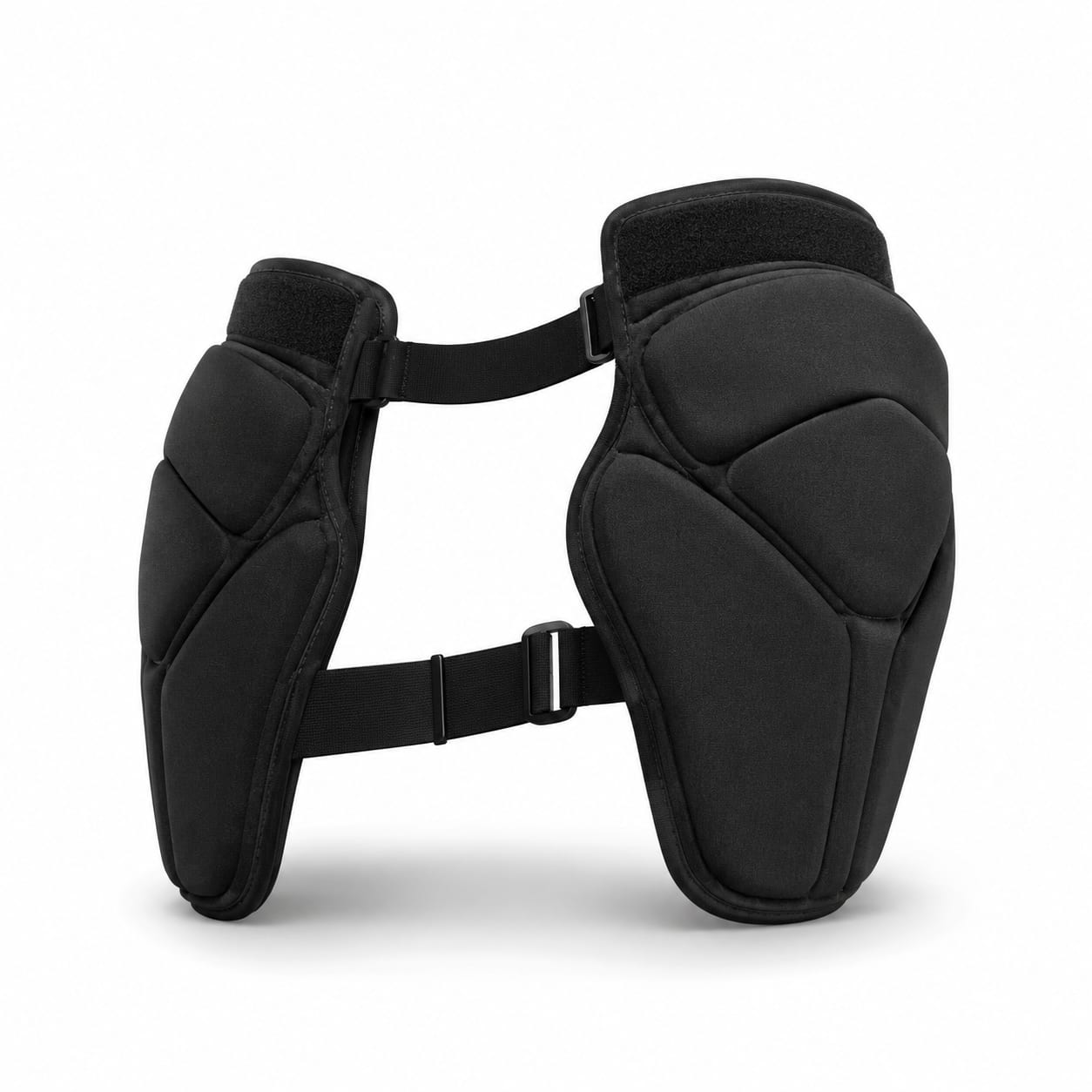
Impact Shorts For Recreational And Freestyle; Wrap/Belt For Racing-Specific Applications

Most common pick: Impact Shorts (Full Short)

In practice

Most hard shell hip protectors use the impact shorts construction, which integrates the rigid shells into a full compression short covering hips, tailbone, and often thighs. Some racing-oriented models use a wrap/belt style for quick on/off over race suits.

Compared to other types

Hard shell protectors are more dependent on the impact shorts construction than soft foam alternatives because rigid shells shift more noticeably if not well-secured. Soft foam protectors can work well in wrap/belt or pad insert configurations, but hard shells perform best in full shorts.

Why it matters: Impact shorts keep the rigid shells securely positioned over the hip joints during active skiing. Given that hard shells are bulkier and more prone to shifting than flexible pads, the full short construction is critical for maintaining proper alignment.

Size

Size

What it means

The size of the hip protector, typically based on waist or hip circumference, which determines fit and pad positioning.

Typical for this type

Exact Fit Based On Waist/Hip Measurement; No Sizing Up Recommended

Most common pick: S to XL (Most Common)

In practice

Hard shell protectors require precise sizing because the rigid shells must align exactly over the greater trochanter. Unlike soft foam that can flex to accommodate slight misalignment, hard shells that sit too high or too low leave the hip joint exposed.

Compared to other types

Sizing precision matters more for hard shell protectors than for soft foam alternatives. Soft foam pads can partially conform even if slightly mispositioned; hard shells cannot. This makes trying on hard shell protectors before purchase especially important.

Why it matters: Incorrect sizing with hard shell protectors is more dangerous than with soft foam—an off-position rigid shell offers no protection to the uncovered hip joint and can even create pressure points. Measure carefully and consult brand-specific size charts.

Padding Thickness

Padding Thickness

What it means

The thickness of the protective padding at the hip, which affects both the level of protection and the bulk under clothing.

Typical for this type

15-25 mm total thickness

Most common pick: 18-25 mm (shell + foam combined)

In practice

Hard shell protectors are the thickest category, with the rigid shell (typically 3-5 mm) plus underlying foam (10-20 mm) combining for total thickness of 18-25 mm at the hip. This thickness is necessary to accommodate both the shell structure and adequate foam underlayer.

Compared to other types

Hard shell protectors are significantly thicker than D3O or Poron XRD protectors (typically 8-15 mm) and moderately thicker than EVA foam protectors (12-20 mm). The thickness is a direct result of the two-layer shell-plus-foam construction and cannot be reduced without compromising protection.

Why it matters: The greater thickness directly contributes to the superior impact performance but also makes hard shell protectors the most visible under clothing. Skiers need to ensure their ski pants have sufficient room to accommodate this bulk comfortably.

Coverage Area

Coverage Area

What it means

The body areas protected by the hip protector beyond the basic hip joint.

Typical for this type

At Minimum: Hip Joint And Side Hip; Ideally Add Tailbone And Outer Thigh

Most common pick: Hip Joint, Side Hip, Tailbone, Outer Thigh

In practice

Hard shell protectors typically offer the most comprehensive coverage of any hip protector subcategory. Most models include rigid shells over the hip joint and side hip (iliac crest), with additional padding for the tailbone and outer thigh. This extensive coverage aligns with the maximum-protection philosophy of hard shell design.

Compared to other types

Hard shell protectors generally offer broader coverage than soft foam alternatives, which often focus primarily on the greater trochanter. The rigid shell construction makes it practical to extend protection to the iliac crest and outer thigh without the comfort penalties that equivalent soft foam thickness would create.

Why it matters: Comprehensive coverage is one of the key advantages of hard shell protectors. The rigid shells over the iliac crest protect the upper hip bone, which is a common injury site in high-speed falls. Tailbone protection is particularly important for the backward falls common in racing and freestyle.

Weight

Weight

What it means

The total weight of the hip protector, affecting comfort and fatigue during a full day of skiing.

Typical for this type

350-600 g depending on coverage

Most common pick: 400-550 g

In practice

Hard shell protectors are the heaviest category due to the rigid plastic shells and comprehensive coverage. Typical weights range from 400-550 g for full impact shorts with hip, tailbone, and thigh coverage. Minimalist wrap-style hard shell protectors can weigh as little as 350 g.

Compared to other types

Hard shell protectors are 50-200 g heavier than equivalent soft foam protectors. D3O impact shorts typically weigh 250-350 g, while EVA foam models range from 300-450 g. The weight difference is the trade-off for superior protection and durability.

Why it matters: The additional weight is noticeable compared to soft foam alternatives but is generally well-tolerated during skiing because it is distributed around the hips. Weight becomes more of a factor during long days or for skiers with lower fitness levels.

Breathability

Breathability

What it means

The ability of the protector to allow moisture vapor and heat to escape, preventing overheating and sweat accumulation.

Typical for this type

Low to Moderate

In practice

Hard shell protectors have inherently low breathability because the rigid plastic shells block moisture vapor transmission. The underlying foam and carrier shorts may incorporate mesh panels and wicking fabrics, but the shell areas themselves cannot breathe. This makes hard shell protectors the warmest and least ventilated option.

Compared to other types

Soft foam protectors—particularly those using D3O or Poron XRD—offer significantly better breathability because the foam allows some vapor transmission. Hard shell protectors are the least breathable option, which is a key consideration for skiers in variable or warm conditions.

Why it matters: Low breathability can lead to significant sweat accumulation during warm spring skiing or high-exertion periods. Skiers who run hot or ski primarily in mild conditions may find hard shell protectors uncomfortably warm, especially under insulated ski pants.

Mobility / Range of Motion

Mobility / Range of Motion

What it means

How freely the wearer can move while wearing the protector, affecting skiing technique and comfort.

Typical for this type

Moderately Restricted (Inherent to The Design)

In practice

Hard shell protectors impose the greatest mobility restriction of any hip protector subcategory. The rigid shells cannot flex with the body, creating noticeable resistance during deep hip flexion, wide stances, and aggressive carving. Modern segmented designs have improved mobility compared to older one-piece shells, but the restriction remains significant.

Compared to other types

D3O and SAS-TEC protectors offer unrestricted to slightly restricted mobility—dramatically better than hard shell designs. Even thick EVA foam restricts movement less than hard shells. This is the most significant trade-off of hard shell protection and the primary reason some skiers choose alternatives.

Why it matters: Reduced mobility can affect skiing technique, particularly for advanced and expert skiers who rely on full range of motion for dynamic turns. An adaptation period of several days is typical as skiers adjust to the feel of rigid shells at the hips.

Layer Compatibility

Layer Compatibility

What it means

How the hip protector is designed to be worn in relation to other layers—under or over base layers and ski pants.

Typical for this type

Mid Layer For Most Users; Over Pants For Racing Applications

Most common pick: Mid Layer (Over Base, Under Pants)

In practice

Most hard shell hip protectors are designed to be worn over a thin base layer and under ski pants. The bulk of the rigid shells makes next-to-skin wear uncomfortable, and the shells can cause chafing without a base layer underneath. Some racing-specific models are designed to be worn over race suits or ski pants for quick on/off between runs.

Compared to other types

Soft foam protectors are more commonly worn as base layers (next to skin) because the flexible foam is comfortable against the body. Hard shell protectors almost always require at least a thin base layer underneath. This makes hard shell protectors slightly warmer in the layering system.

Why it matters: Layer compatibility affects both comfort and pad positioning. Wearing a thin base layer under the hard shell protector wicks moisture and prevents shell-to-skin chafing. Ensure ski pants are loose enough to accommodate the protector without excessive compression that could shift shell positioning.

Closure System

Closure System

What it means

How the hip protector secures to the body, affecting ease of use, adjustability, and stability during activity.

Typical for this type

Pull-On For Recreational Skiing; Snap/Buckle For Racing Over-Pants Designs

Most common pick: Pull-On (Compression Short)

In practice

The majority of hard shell hip protectors use a pull-on compression short design, which provides the most secure fit for the rigid shells. Some racing-oriented over-pants models use snap or buckle closures for quick on/off between race runs. Velcro and zip closures are less common in this subcategory.

Compared to other types

Hard shell protectors benefit more from pull-on closure systems than soft foam alternatives because rigid shells are more disruptive when mispositioned. Soft foam pads that shift slightly may still provide partial protection; shifted hard shells offer none at the uncovered area and can create pressure points.

Why it matters: Secure closure is especially important for hard shell protectors because rigid shells that shift out of position are both ineffective and uncomfortable. Pull-on compression shorts keep shells locked in place during active skiing. Over-pants designs with buckles are convenient for racing but less stable for all-day recreational skiing.

Washability

Washability

What it means

How the hip protector can be cleaned, important for hygiene during multi-day ski trips.

Typical for this type

Machine Washable With Removable Shells For Best Hygiene

Most common pick: Machine Washable (Pads Removed)

In practice

Most hard shell protectors feature removable shells that can be taken out of the carrier short for washing. The shorts are typically machine washable, while the shells simply need to be wiped clean. This is a practical advantage over permanently integrated designs. Some over-pants racing models are wipe-clean only.

Compared to other types

Hard shell protectors with removable shells are easier to maintain than soft foam protectors with permanently integrated pads. The rigid shells do not degrade in washing machines (since they are removed before washing), whereas integrated soft foam pads can degrade if machine-washed incorrectly.

Why it matters: Removable shells make hygiene management much easier on multi-day ski trips. The carrier short can be washed and dried overnight, while the shells themselves do not absorb sweat and only need occasional wiping. This is particularly important given the low breathability of hard shell designs.

Gender-Specific Fit

Gender-Specific Fit

What it means

Whether the protector is designed for specific body proportions, as hip shape and pad placement differ between men and women.

Typical for this type

Gender-Specific Fit Strongly Recommended; Unisex Acceptable Only If Pad Alignment Is Verified

Most common pick: Available In Men'S And Women'S Specific Fits

In practice

Quality hard shell protectors are available in both men's and women's specific fits. Women's models feature wider hip accommodation and repositioned shell placement to align with the female greater trochanter, which sits differently due to the wider female pelvis. This is especially critical for hard shell designs because the rigid shells cannot flex to compensate for misalignment.

Compared to other types

Gender-specific fit matters more for hard shell protectors than for any other subcategory because rigid shells cannot self-adjust to anatomy. Soft foam pads can partially conform even if slightly mispositioned; hard shells cannot. This makes women's-specific hard shell protectors essential rather than optional.

Why it matters: Incorrect shell positioning in hard shell protectors is more problematic than with soft foam—a rigid shell that doesn't cover the greater trochanter provides zero protection at the most critical point. Women should always choose women's-specific models to ensure proper shell alignment.

Low Profile / Discretion

Low Profile / Discretion

What it means

How visible the protector is under ski clothing, affecting aesthetic preference and willingness to wear.

Typical for this type

High Profile (Inherent to The Design); Accept Visibility As The Trade-Off For Maximum Protection

In practice

Hard shell hip protectors are the most visible and bulky under clothing of any hip protector subcategory. The rigid shells create obvious contours under ski pants, and the combined thickness of shell plus foam is clearly noticeable. This is an inherent characteristic of the design that cannot be engineered away without compromising the protective function.

Compared to other types

Hard shell protectors are significantly more visible than D3O (ultra low to low profile), SAS-TEC (low to standard profile), or EVA foam (standard profile) alternatives. This is the most noticeable trade-off of the hard shell design. Some skiers wear looser ski pants specifically to accommodate hard shell protectors more discreetly.

Why it matters: The high profile of hard shell protectors is the primary reason some skiers choose alternatives. If visibility under clothing will discourage you from wearing the protector consistently, a lower-profile soft foam option that you actually wear is better than a hard shell protector left at home.

Impact Absorption Rating

Impact Absorption Rating

What it means

The measured force transmission through the protector during standardized impact testing, indicating real protective performance.

Typical for this type

5-9 kN (CE Level 2 range)

Most common pick: 6-9 kN

In practice

Hard shell protectors consistently achieve the best impact absorption ratings, typically transmitting between 5 and 9 kN of force in standardized testing. The rigid shell distributes impact energy broadly, while the foam underlayer absorbs residual force. Top-performing models can achieve values as low as 5-6 kN, approaching the theoretical limits of current hip protection technology.

Compared to other types

Hard shell protectors consistently achieve lower (better) kN values than soft foam alternatives. D3O and SAS-TEC CE Level 2 protectors typically transmit 7-12 kN, while EVA foam models range from 12-18 kN. The hard shell's force distribution advantage is most pronounced against sharp, localized impacts.

Why it matters: Lower kN values mean less force reaches the hip bone. Since hip fractures can occur at approximately 3-10 kN depending on bone density, the 5-9 kN range achieved by hard shell protectors provides meaningful fracture risk reduction, especially for skiers with normal to low bone density.

Antimicrobial Treatment

Antimicrobial Treatment

What it means

Whether the protector has antimicrobial or odor-control treatment to prevent bacterial growth during multi-day use.

Typical for this type

Antimicrobial Treatment Recommended For Multi-Day Use

Most common pick: True (On Carrier Short)

In practice

Most quality hard shell protectors feature antimicrobial treatment on the carrier short fabric. The rigid shells themselves do not require antimicrobial treatment as they do not absorb moisture. The treatment is applied to the fabric that contacts the skin, helping control odor and bacterial growth during multi-day ski trips.

Compared to other types

Antimicrobial treatment is more important for hard shell protectors than for more breathable alternatives because the reduced airflow leads to greater sweat accumulation. Skiers who choose hard shell protectors should prioritize this feature more than those using breathable D3O or Poron XRD models.

Why it matters: Given the low breathability of hard shell protectors, antimicrobial treatment is a valuable feature that helps manage the increased sweat accumulation. It extends the wearable period between washes, which is practical for ski trips where daily washing may not be feasible.

Durability / Lifespan

Durability / Lifespan

What it means

How long the protector maintains its protective qualities under regular use, as impact foams can degrade over time.

Typical for this type

High Durability Expected; Inspect Carrier Short Annually

Most common pick: High Durability (3+ Seasons)

In practice

Hard shell protectors are the most durable category of hip protection. The rigid PE or PP shells do not compress, degrade, or lose their protective properties over time. The foam underlayer is protected by the shell from direct impacts, extending its lifespan. The primary wear points are the carrier short fabric and elastic components, which typically last 3-5 seasons with regular use.

Compared to other types

Hard shell protectors significantly outlast soft foam alternatives. D3O and SAS-TEC protectors typically last 2-3 seasons before foam degradation, while EVA foam models may need replacement after 1-2 seasons. The rigid shells in hard shell protectors are essentially immune to the compression set and material fatigue that affects foam-only designs.

Why it matters: High durability means hard shell protectors offer better long-term value despite typically higher upfront costs. A single hard shell protector that lasts 4 seasons may cost less per season than replacing a soft foam protector every 2 seasons. The shells also maintain consistent protection levels throughout their lifespan.

Evaluation

Strengths and trade-offs

Pros

What this type does best

Superior Impact Force Distribution

Critical

The rigid shell spreads concentrated impact energy across a wide surface area, dramatically reducing peak pressure on the hip joint. This is the most effective mechanism for preventing hip fractures from high-energy falls.

Penetration Resistance

High

Hard shells provide a physical barrier against sharp objects like ski edges, rocks, and ice chunks that could penetrate soft foam padding. This is a unique advantage not available with any soft foam technology.

Consistent CE Level 2 Protection

Critical

Hard shell protectors reliably achieve CE Level 2 certification (≤9 kN force transmission), with top models reaching 5-6 kN. This provides the highest certified protection level available for hip protectors.

Exceptional Durability

High

Rigid shells do not compress, degrade, or lose protective properties over time. Hard shell protectors routinely last 3+ seasons, offering better long-term value and consistent protection year after year.

Comprehensive Coverage Options

High

Hard shell protectors typically offer the broadest coverage area, including hip joint, iliac crest, outer thigh, and tailbone. The shell construction makes extended coverage practical without the comfort penalties of equivalent soft foam thickness.

Protection Does Not Degrade After Impacts

Medium

Unlike some smart foams that may compress after severe impacts, hard shells return to their original shape immediately. The protective performance is consistent regardless of impact history, as long as the shell is not cracked.

Effective Against Sharp, Localized Impacts

High

Hard shells excel against the types of impacts most dangerous in skiing—ski edges, ice chunks, and gate poles—which can cut through or bypass soft foam. The rigid surface deflects and distributes these concentrated forces.

Cons

Trade-offs to be aware of

Restricted Mobility

Significant

Rigid shells cannot flex with the body, creating noticeable resistance during deep hip flexion, wide stances, and aggressive carving. This is the most significant drawback for performance-oriented skiers who require full range of motion.

High Profile and Visibility Under Clothing

Moderate

Hard shell protectors are clearly visible under ski pants due to their bulk and rigid contours. This can be aesthetically unappealing and may discourage consistent use, particularly among style-conscious skiers.

Low Breathability and Heat Retention

Moderate

The rigid plastic shells block moisture vapor transmission, creating hot spots and sweat accumulation during active skiing or warm conditions. This is exacerbated when worn under insulated ski pants.

Chairlift Discomfort

Moderate

The rigid shells create pressure points when sitting on hard chairlift seats, particularly for models with tailbone coverage. This can make long lift rides uncomfortable and may require shifting position frequently.

Higher Weight

Minor

Hard shell protectors are the heaviest hip protection option, typically weighing 400-550 g compared to 250-350 g for soft foam alternatives. The weight is noticeable during long days but generally well-tolerated.

Precise Sizing Required

Moderate

Unlike soft foam that can partially conform to slight misalignment, rigid shells that don't sit correctly over the greater trochanter provide no protection at the uncovered area. This makes proper sizing and fit more critical and less forgiving.

Best for

Terrain

Groomed runs at high speedRace coursesTerrain parksIce and hardpackOff-piste with rock hazards

Snow conditions

Hardpack and iceRacing conditionsMixed conditions with debrisCold conditions where breathability matters less

Skill level

IntermediateAdvancedExpert

Riding style

Alpine racingGiant slalomFreestyle and parkAggressive all-mountainSpeed skiing

Rider profile

Ski racers at any levelFreestyle skiers hitting large featuresSkiers with osteoporosis or low bone densitySkiers recovering from hip injuriesOlder skiers with elevated fracture riskSkiers who prioritize maximum protection over comfort

Not ideal for

Reasons

Restricted mobility interferes with dynamic skiing techniquesLow breathability causes overheating during high-exertion touringHigh profile is unnecessary for low-risk skiing scenariosWeight penalty is not justified for casual or low-speed skiingBeginners may find the bulk and restriction discourages consistent use

Terrain

Deep powder (falls are softer and less dangerous)Mellow green and blue cruisers at low speed

Skill level

Beginners who fall frequently but at low speed (comfort matters more)Skiers who cannot adapt to restricted mobility

Riding style

Casual cruisingNordic and cross-country skiingBackcountry touring (weight and breathability concerns)Mogul skiing (restricted hip mobility is problematic)

Compare

How it stacks up

This page

Hard Shell Hip Protectors

Superior impact force distribution, penetration resistance, and consistently lower kN transmission values. Hard shells are more effective against sharp, localized impacts like ski edges and gate poles.

Alternative

D3O Smart Foam Hip Protectors

D3O protectors offer unrestricted to slightly restricted mobility, ultra-low to low profile under clothing, better breathability, and significantly lighter weight. They are more comfortable for all-day wear and less likely to be abandoned due to discomfort.

Bottom line

Choose hard shell if you race, hit large park features, have osteoporosis, or prioritize maximum protection above all else. Choose D3O if you value comfort, discretion, and mobility but still want CE Level 2 protection. D3O is the better choice for 80% of recreational skiers.

This page

Hard Shell Hip Protectors

Better force distribution through rigid shell design, penetration resistance, and more consistent CE Level 2 performance. Hard shells maintain protection levels indefinitely without foam compression concerns.

Alternative

SAS-TEC Foam Hip Protectors

SAS-TEC offers slightly restricted mobility (much better than hard shell), lower profile, better breathability, and lighter weight. SAS-TEC foam achieves CE Level 2 in thinner packages and is more comfortable for extended wear.

Bottom line

Choose hard shell for racing, medical necessity, or scenarios with sharp impact risks. Choose SAS-TEC for high-performance skiing where CE Level 2 protection is needed but mobility and comfort are also important. SAS-TEC is an excellent middle ground.

This page

Hard Shell Hip Protectors

Dramatically better impact absorption (5-9 kN vs 12-18 kN), penetration resistance, superior durability, and consistent protection over time. Hard shells do not suffer from the compression set that degrades EVA foam performance.

Alternative

EVA Foam Hip Protectors

EVA foam protectors are significantly less expensive, widely available, and offer moderate mobility restriction. They are adequate for low-speed recreational falls and casual skiing where certified protection is desired at minimum cost.

Bottom line

Choose hard shell if protection quality matters—EVA foam cannot match the impact performance of hard shell designs. Choose EVA foam only for budget-conscious casual skiing where falls are infrequent and low-speed. The protection gap between these categories is substantial.

This page

Hard Shell Hip Protectors

Better force distribution, penetration resistance, and more consistent long-term durability. Hard shells do not have the potential long-term degradation concerns associated with microcellular urethane foam.

Alternative

Poron XRD Hip Protectors

Poron XRD offers ultra-thin profiles with good impact absorption, unrestricted mobility, and excellent breathability. It is the best choice for skiers who need protection that is virtually invisible under fitted ski pants.

Bottom line

Choose hard shell when protection is the absolute priority and visibility under clothing is acceptable. Choose Poron XRD when you need CE Level 1 or Level 2 protection with minimal bulk and maximum discretion. Poron XRD is ideal for skiers who would otherwise not wear protection due to aesthetic concerns.

Shopping

Buying tips

  • 1

    Verify CE Level 2 certification (EN 1621-1) before purchasing—this is the primary reason to choose hard shell protectors, and not all models achieve it.

  • 2

    Try on hard shell protectors in your skiing stance before buying. Bend your knees, lean forward, and rotate your hips to assess mobility restriction. If the shells severely limit your natural skiing position, consider a segmented shell design or a high-quality soft foam alternative.

  • 3

    Ensure your ski pants have enough room to accommodate the protector comfortably underneath. Tight pants will compress the carrier short and may shift shell positioning. Consider sizing up in ski pants if necessary.

  • 4

    Look for segmented or articulated shell designs rather than single-piece shells. Segmented shells offer significantly better mobility while maintaining equivalent protection, as the segments can move independently with your body.

  • 5

    Choose a model with removable shells for easier washing and longer carrier short lifespan. Removable shells also allow you to replace individual damaged segments without buying an entirely new protector.

  • 6

    If you have osteoporosis or are recovering from a hip injury, consult your doctor about the specific kN transmission values you need. Some hard shell models transmit as low as 5-6 kN, which may be important for your specific fracture risk profile.

  • 7

    Women should always choose women's-specific models. The wider female pelvis requires different shell positioning, and rigid shells that don't align with the greater trochanter provide no protection at the most critical point.

  • 8

    Consider buying a model with antimicrobial treatment on the carrier short, as the low breathability of hard shell protectors leads to more sweat accumulation than soft foam alternatives.

Care

Maintenance notes

  • Remove rigid shells before washing the carrier short. Machine wash the short on a gentle cycle with cold water and air dry. Never put the carrier short in a dryer, as heat degrades elastic components.
  • Wipe shells clean with a damp cloth and mild soap. Inspect shells for cracks, splits, or deformation after any significant impact. A cracked shell must be replaced immediately as it compromises force distribution.
  • Check foam underlayers annually for compression set, crumbling, or loss of flexibility. Foam that has permanently compressed or feels stiff should be replaced, as it no longer provides adequate secondary absorption.
  • Inspect carrier short elastic and stitching before each season. Loose elastic allows shells to shift out of position, which is particularly dangerous for hard shell protectors. Replace the carrier short if elastic is stretched out.
  • Store hard shell protectors flat or loosely rolled—never fold the shells, as this can create stress fractures over time. Store in a cool, dry place away from direct sunlight, which can degrade both the plastic shells and foam underlayers.
  • After a major impact event, inspect all components thoroughly even if no damage is visible. Hard shells can develop hairline cracks that are difficult to see but compromise protective performance. When in doubt, replace the affected shell segment.

Progression

Skill development path

Hard shell hip protectors are most commonly adopted by intermediate-to-advanced skiers who have progressed to speeds and terrain where fall consequences are significant. Beginners typically start with softer, more comfortable protection and upgrade to hard shells as they advance into racing, freestyle, or high-speed all-mountain skiing. The adaptation period for hard shell protectors is typically 3-5 full days on snow, during which skiers adjust to the restricted mobility and bulk. Many racers begin using hard shell protection in their teens when entering competitive programs. Older skiers with medical risk factors often adopt hard shell protectors regardless of skill level, prioritizing fracture prevention over comfort. The key progression milestone is when a skier recognizes that the consequences of a high-speed fall justify the comfort trade-offs of maximum protection.

FAQ

Common questions

Each question has a dedicated page with a full answer and links to the buying guide.

Are hard shell hip protectors worth the reduced mobility?

It depends on your risk profile and skiing style. For racers, freestyle skiers hitting large features, and anyone with osteoporosis or previous hip injuries, the superior protection of hard shells is absolutely worth the mobility trade-off. For casual recreational skiers on groomed runs at moderate speeds, the mobility restriction may not be justified. Modern segmented shell designs have significantly reduced the mobility penalty compared to older one-piece shells. Try on a segmented design before deciding—you may find the restriction more manageable than expected.

Can I wear hard shell hip protectors under normal ski pants?

Yes, most hard shell protectors are designed to be worn under ski pants, but you need to ensure adequate room. Standard or relaxed-fit ski pants accommodate hard shell protectors well; slim or fitted pants may be too tight. The protector will be visible under clothing as a high-profile design. If discretion is important, consider wearing slightly looser ski pants or choosing a low-profile soft foam alternative instead.

How do I know if the shells are positioned correctly over my hip joints?

The rigid shells should sit directly over the greater trochanter—the bony prominence on the outside of your upper thigh, roughly at the level of your hip crease. To check, put on the protector and stand with feet shoulder-width apart. Place your hands on your hips—the shells should be centered on the most prominent bony point on each side. If the shells sit too high (on the iliac crest) or too low (on the thigh), the sizing is wrong. This is why trying on hard shell protectors before purchase is essential.

Do hard shell hip protectors work for snowboarding too?

Yes, hard shell hip protectors work well for snowboarding, and many snowboarders prefer them because they frequently fall on their sides and hips. The penetration resistance is valuable against rail and box edges in the terrain park. However, snowboarders should note that the sitting position on chairlifts (facing sideways) can create different pressure points than for skiers. Look for models with segmented shells that flex slightly in the seated position.