What it means
The total length of the ski pole from tip to top of the grip, measured in centimeters. The most critical dimension for proper fit and performance.
Typical for this type
60–100 cm
Most common pick: 75 cm
In practice
Kids' ski poles range from approximately 60 cm for the youngest skiers (around age 3–4) up to 100 cm for early teens or tall juniors. Length should place the child's elbow at roughly 90 degrees when standing in ski boots on a flat surface.
Compared to other types
Significantly shorter than adult poles (which typically range 100–135 cm). Kids' poles are sized in smaller increments and must be reassessed frequently due to growth, unlike adult poles which may remain appropriate for many years.
Why it matters: Proper length is critical for kids because incorrect sizing directly harms technique development. Poles that are too long raise the shoulders and disrupt balance; poles that are too short fail to provide the rhythm and timing cues that pole planting teaches.
What it means
The primary material used in the pole shaft, which determines weight, durability, stiffness, vibration dampening, and price.
Typical for this type
Aluminum (Strongly Recommended); Composite (Occasionally)
In practice
Aluminum is the dominant material for kids' ski poles because it is affordable, durable, and bends rather than shatters under impact. The 6000-series aluminum used in most junior poles provides an excellent balance of weight and toughness for young skiers.
Compared to other types
Unlike adult poles where carbon fiber and composite options are common and worthwhile for performance, kids' poles almost exclusively use aluminum. The weight savings of carbon are negligible for children's short ski days, and the fragility and cost are significant drawbacks.
Why it matters: Kids are hard on poles—frequent falls, dragging tips, and general rough handling are the norm. Aluminum survives this treatment far better than carbon fiber, which can snap under sharp impacts. The lower cost also makes replacement less painful when a growth spurt renders poles too short.
Weight (Pair)
Weight Per Pair
What it means
The total weight of a pair of ski poles measured in grams. Lighter poles reduce arm fatigue and improve swing dynamics.
Typical for this type
200–380 g
Most common pick: 280 g
In practice
Kids' poles are lighter than adult poles due to their shorter length and thinner shafts. Most aluminum junior pole pairs weigh between 200 and 380 grams, with the lightest options approaching 200 g for very short poles.
Compared to other types
Lighter than adult aluminum poles (typically 400–550 g per pair) primarily due to shorter length and smaller diameter shafts. The weight difference is proportionally appropriate for a child's smaller frame and lesser strength.
Why it matters: Excessive weight makes it difficult for children to swing and plant poles properly, leading to poor technique or avoidance of pole use altogether. Lightweight poles help kids develop natural, rhythmic pole planting without fatigue.
What it means
The disc or cone near the pole tip that prevents the pole from sinking into soft snow. Basket size and shape affect performance in different snow conditions.
Typical for this type
Standard/Small (40–50 mm diameter)
In practice
Kids' poles almost universally feature standard small baskets (40–50 mm diameter). Children primarily ski groomed runs at resorts where powder baskets are unnecessary, and smaller baskets reduce the chance of baskets catching on each other or on obstacles.
Compared to other types
Similar to adult all-mountain poles, but powder basket options are extremely rare in kids' sizes. Unlike adult backcountry or freeride poles where basket choice is a meaningful decision, kids' poles are almost exclusively standard basket.
Why it matters: Standard baskets keep the poles lightweight and maneuverable for young skiers. Large powder baskets add weight and bulk that can make poles harder for kids to control, and they are rarely needed since children typically ski packed resort terrain.
What it means
The design and shape of the pole grip which affects comfort, security, and technique. Grip ergonomics are crucial for all-day skiing comfort.
Typical for this type
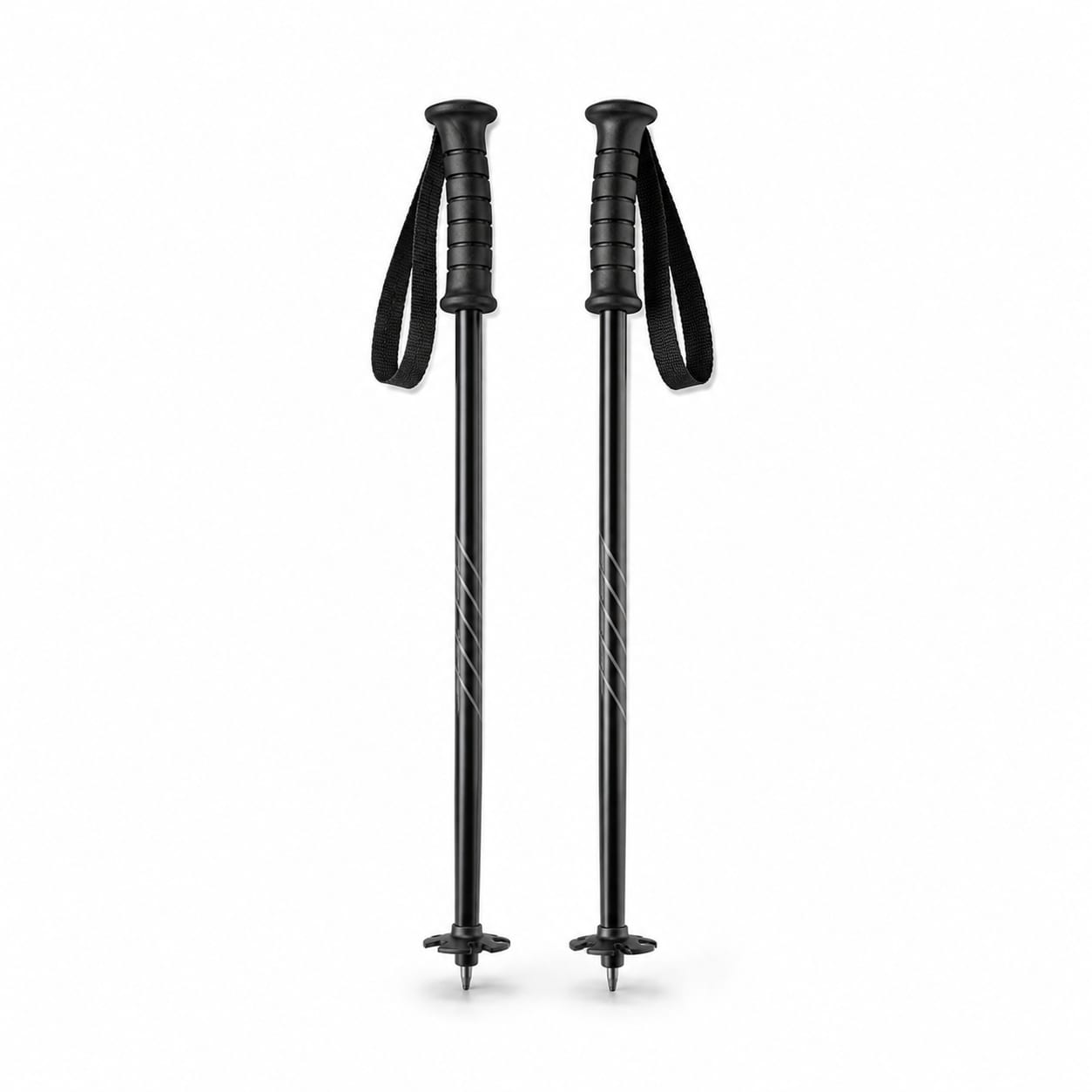
Standard/Cylindrical (With Junior Sizing)
In practice
Kids' poles feature standard cylindrical grips with reduced diameter and shorter length to fit smaller hands. The simpler shape is easier for children to grip and release during pole planting, which is especially important during the learning phase.
Compared to other types
Unlike adult poles where ergonomic, pistol grip, and freeride grip options exist, kids' poles almost exclusively use standard cylindrical grips. The priority is simplicity and appropriate sizing rather than specialized ergonomics.
Why it matters: Grips that are too large force children to spread their fingers uncomfortably, reducing grip security and increasing fatigue. Properly sized junior grips allow natural hand positioning and help develop correct technique from the start.
Grip Material
Grip Material
What it means
The material covering the grip area, affecting comfort, insulation, grip security, and moisture management.
Typical for this type
Rubber (Preferred); Plastic (Budget Options)
In practice
Rubber is the most common grip material for kids' poles because it provides good traction even with wet or gloved hands, offers decent insulation from cold, and absorbs some shock. Plastic grips appear on the most budget-oriented options but feel cold and slippery.
Compared to other types
Cork and foam grips, popular in adult touring and freeride poles, are essentially nonexistent in kids' poles. The priority for children is durability and warmth, making rubber the clear choice. Plastic grips should be avoided if possible.
Why it matters: Children are more sensitive to cold and discomfort than adults. Rubber grips provide better insulation and grip security, which keeps small hands warmer and more comfortable throughout the day. This seemingly minor detail can significantly affect a child's enjoyment.
What it means
The design of the strap or loop that secures the pole to the skier's wrist, affecting security, comfort, and release characteristics.
Typical for this type
Standard Strap (Junior Width)
In practice
Kids' poles use standard nylon webbing straps that are narrower and shorter than adult versions, making them easier for small hands to thread through and adjust. The simpler design is more reliable and easier for children to manage independently.
Compared to other types
Proprietary systems like Leki Trigger S and Trigger 3D are not typically available in kids' sizes and would add unnecessary cost and complexity. The simplicity of standard straps is an advantage for young skiers learning the basics.
Why it matters: Properly sized straps ensure kids can put on and take off their poles without constant adult assistance, building independence. Narrower straps fit small wrists without excess material that could catch or cause discomfort.
Construction
Construction Type
What it means
Whether the pole is a fixed single shaft, telescoping adjustable, or folding design. Affects packability, versatility, and weight.
Typical for this type
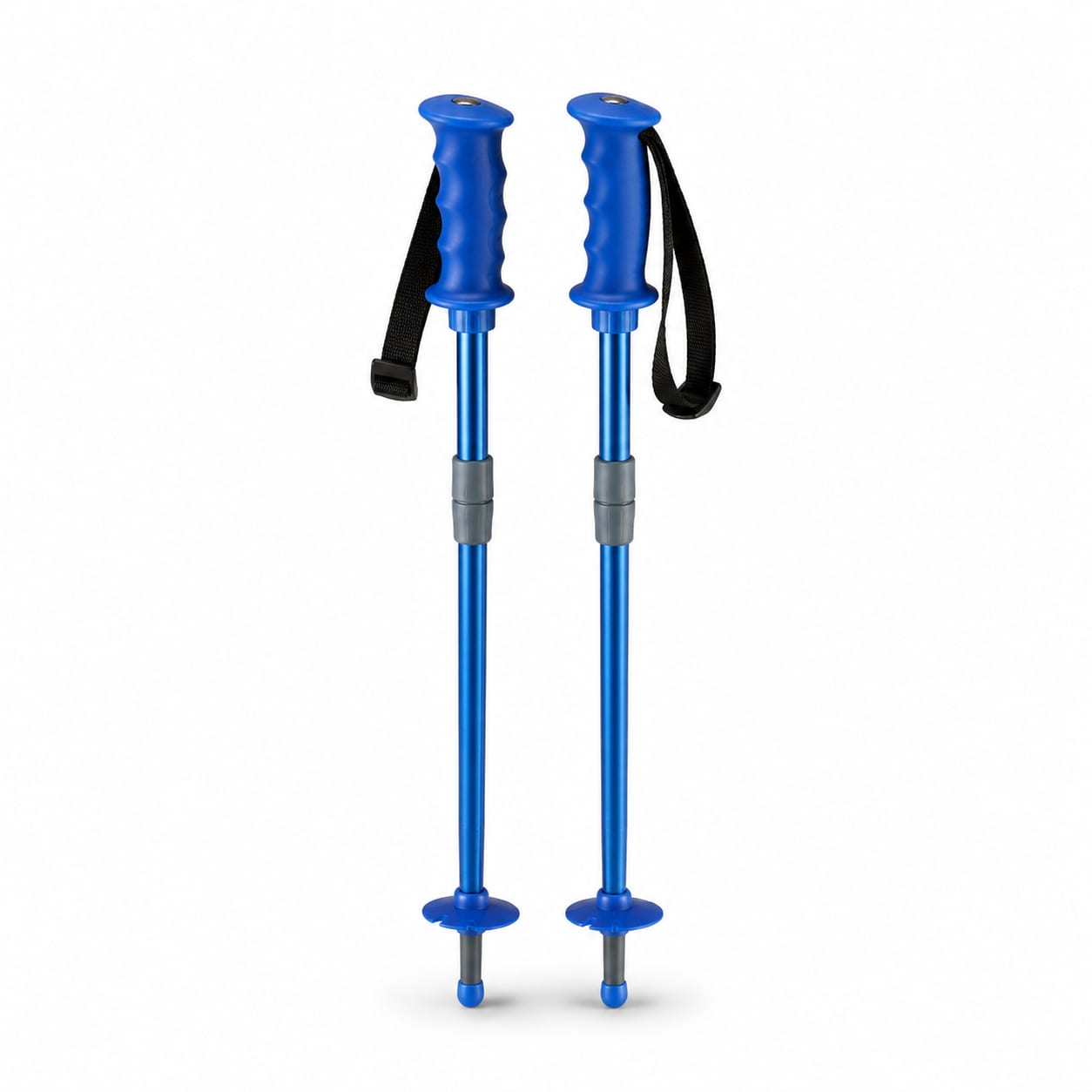
Fixed Length (Recommended); Telescopic (For Growth Accommodation)
In practice
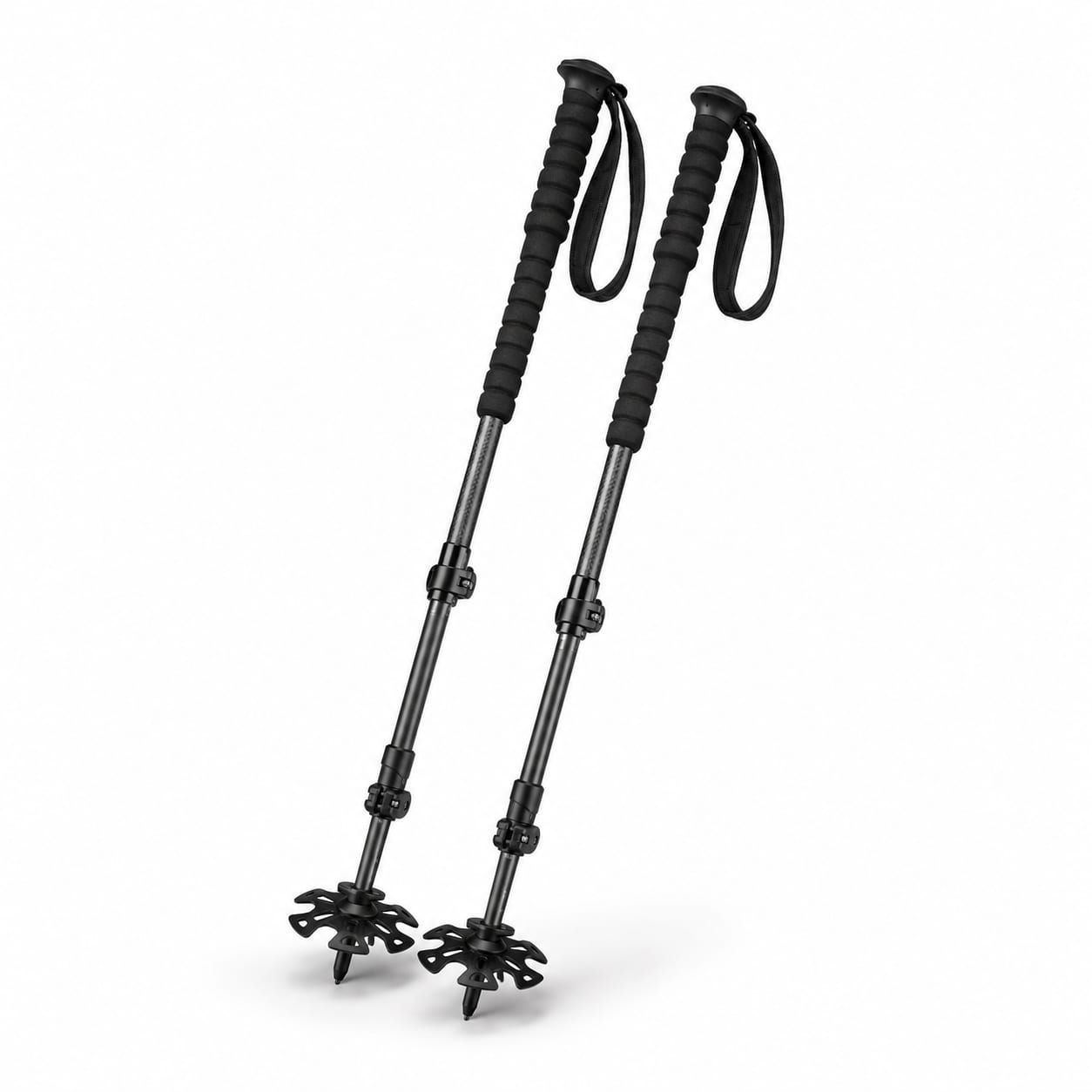
The vast majority of kids' ski poles are fixed length for simplicity, light weight, and durability. A small number of telescopic options exist for parents who want to extend the usable life across growth spurts, but they add weight and complexity.
Compared to other types
While adjustable poles are common and valuable for adult backcountry skiing, they are less relevant for kids who primarily ski resorts. The adjustment range in kids' telescopic poles is typically 20–30 cm, which can cover 2–3 seasons of growth.
Why it matters: Fixed poles are lighter, more durable, and have no moving parts to malfunction—important qualities for equipment that will be dropped, crashed on, and generally mistreated. Telescopic poles can make sense economically but sacrifice some of this robustness.
What it means
The material of the pole tip (point), which affects durability, grip on hard snow and ice, and longevity.
Typical for this type
Steel (Common On Budget); Carbide (Preferred For Durability)
In practice
Steel tips are common on entry-level kids' poles due to lower cost, while carbide tips appear on mid-range and better options. Carbide lasts significantly longer and grips better on icy surfaces, which is valuable even for young skiers.
Compared to other types
Carbide is standard on quality adult poles but less consistent in the kids' market, where cost-cutting often means steel tips. Seeking out carbide-tipped kids' poles is worthwhile for the durability advantage.
Why it matters: Kids often drag their pole tips, accelerating wear. Carbide tips resist this wear far better than steel, meaning the poles will last through the child's growth cycle rather than needing tip replacement. Better tip grip also helps on icy learning slopes.
Shaft Diameter
Shaft Diameter
What it means
The diameter of the pole shaft, typically tapering from grip to tip. Affects swing weight, stiffness, and aerodynamics.
Typical for this type
12–16 mm (grip end), tapering to 10–12 mm at tip
Most common pick: 14 mm (grip end)
In practice
Kids' poles use slightly thinner shafts than adult poles, typically 14 mm at the grip end tapering to 10–12 mm at the tip. This reduces swing weight and makes the poles easier for small hands to control.
Compared to other types
Slightly thinner than adult poles (which typically run 16–18 mm at the grip end). The difference is modest but contributes to the overall weight savings and proportional feel of junior equipment.
Why it matters: Thinner shafts keep swing weight low, which is important for children with less upper body strength. The reduced diameter also contributes to a more proportional feel that doesn't overwhelm a small skier.
Vibration Dampening
Vibration Dampening
What it means
The pole's ability to absorb and reduce vibrations transmitted from the tip through the shaft to the grip. Affects comfort and feel on hard, choppy snow.
Typical for this type
Moderate
In practice
Aluminum construction provides moderate vibration dampening typical of the material. Kids generally do not ski fast enough or long enough for vibration to become a significant comfort issue, so this dimension is less critical for junior poles.
Compared to other types
Similar to adult aluminum all-mountain poles. The specialized high-dampening carbon options and low-dampening race poles found in adult categories are not relevant for kids' recreational skiing.
Why it matters: While vibration dampening matters for adult comfort on long days, most children ski shorter sessions and at lower speeds where vibration is minimal. The aluminum shaft's inherent dampening is sufficient for the vast majority of young skiers.
Discipline
Intended Discipline
What it means
The primary skiing discipline the pole is designed for, which influences all other design choices from length to basket to material.
Typical for this type
Alpine/All-Mountain (Primary); Racing (For Junior Race Programs)
In practice
Most kids' poles are designed for general alpine/all-mountain resort skiing. Junior racing poles exist for children in race programs, featuring slightly stiffer construction and sometimes cone baskets, but they represent a small segment of the market.
Compared to other types
Less discipline diversity than the adult market. Freestyle, backcountry/touring, and freeride-specific kids' poles are extremely rare or nonexistent. Most junior skiers are well-served by general all-mountain poles.
Why it matters: Matching the pole to the child's actual skiing activity ensures appropriate features without unnecessary cost. Most kids need simple all-mountain poles, while those in race programs benefit from discipline-specific equipment.
What it means
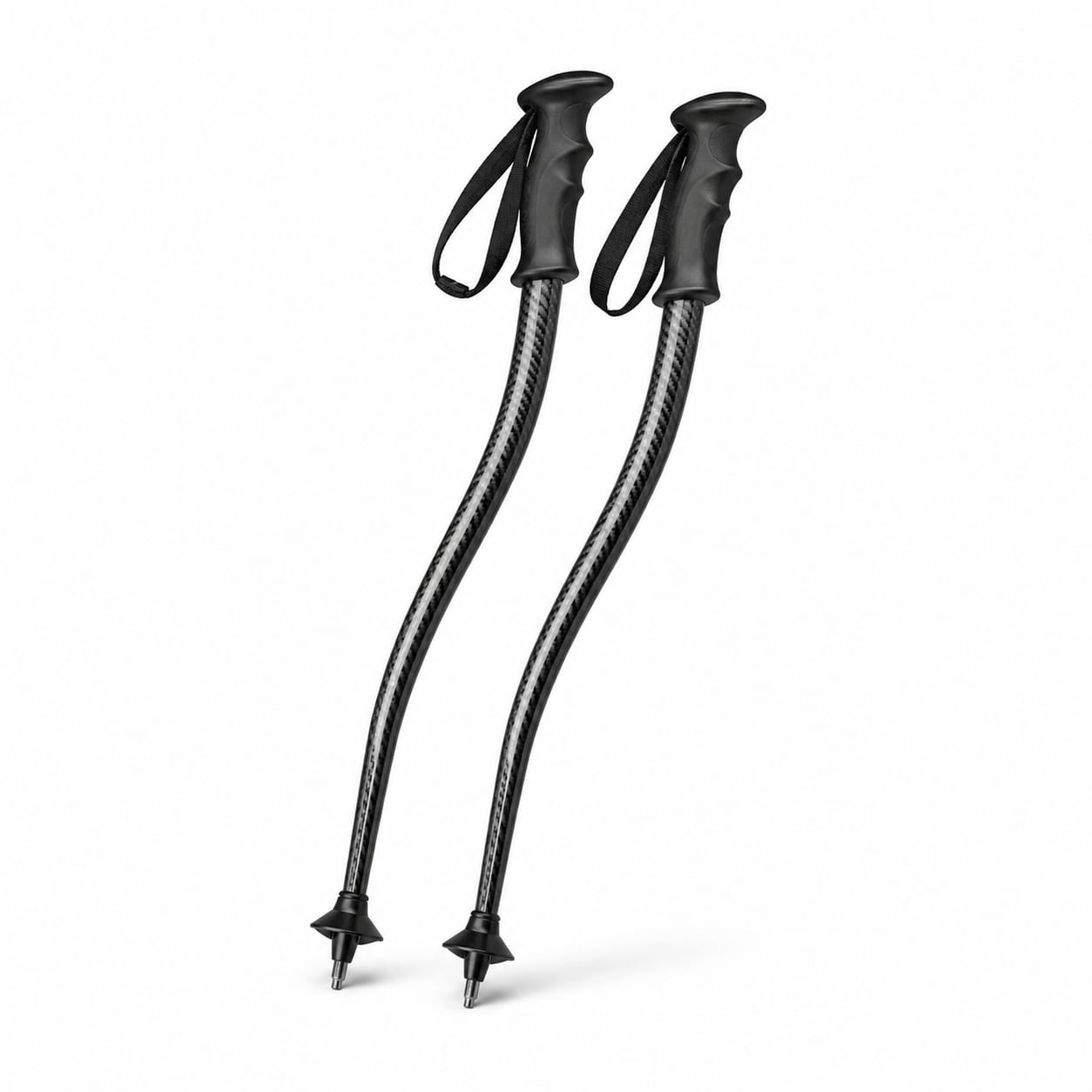
Whether the pole shaft is straight or features a bend/curve, typically designed for aerodynamic tuck positions in racing.
Typical for this type
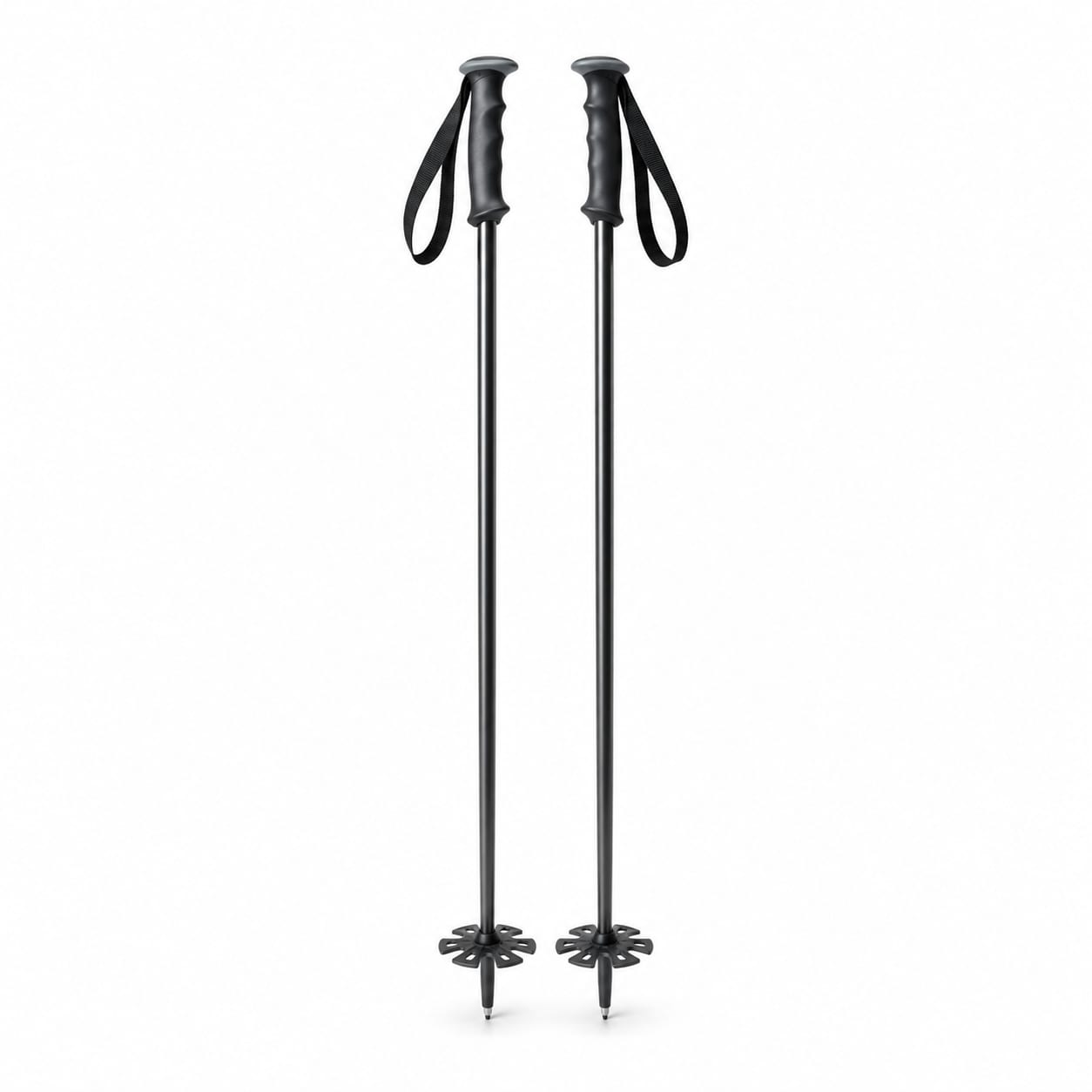
Straight (Exclusively)
In practice
All kids' ski poles feature straight shafts. Curved shafts are exclusively for speed discipline racing at the adult level and provide no benefit for junior skiers.
Compared to other types
Identical to the vast majority of adult poles. Curved shafts are a niche feature even in the adult market, restricted to GS and speed discipline racing.
Why it matters: Curved shafts add cost and complexity with zero benefit for children. Straight poles are easier to plant, maneuver, and learn with, which is exactly what young skiers need.
Adjustment Range
Adjustment Range
What it means
The range of lengths an adjustable pole can be set to, relevant only for telescopic and folding poles.
Typical for this type
65–100 cm (for adjustable kids' poles)
Most common pick: N/A (Fixed Length)
In practice
Most kids' poles are fixed length and have no adjustment range. The few adjustable options available typically cover a range of 65–100 cm or 75–110 cm to accommodate growth across multiple seasons.
Compared to other types
Much shorter adjustment ranges than adult backcountry poles (which typically adjust 100–140 cm). The focus is on accommodating growth rather than terrain adaptation.
Why it matters: For families considering adjustable kids' poles, the range should span at least 20 cm to meaningfully extend usable life across growth periods. Ensure the child's current ideal length falls within the range with room to grow.
Lock Mechanism
Locking Mechanism
What it means
The type of mechanism used to secure adjustable poles at the desired length. Affects reliability, ease of use, and durability.
Typical for this type
External Clamp (If Adjustable)
Most common pick: N/A (Fixed Length)
In practice
Most kids' poles are fixed length with no locking mechanism. For the adjustable minority, external clamp mechanisms are preferred because they are easy for parents to operate and visually confirm as secure.
Compared to other types
Less relevant than in adult backcountry poles where locking mechanism choice is a primary buying consideration. For kids' adjustable poles, simplicity and reliability are the priorities.
Why it matters: If choosing adjustable poles for a child, the locking mechanism must be reliable and easy to verify. External clamps allow parents to quickly see that the pole is locked, reducing the risk of collapse during use.
Packed Length
Packed Length
What it means
The length of the pole when collapsed or folded to its minimum size. Relevant for travel and backcountry applications where poles need to fit in or on a pack.
Typical for this type
35–55 cm (for folding/collapsible kids' poles)
Most common pick: N/A (Fixed Length)
In practice
Fixed kids' poles cannot be shortened for packing. The rare adjustable or folding kids' poles collapse to approximately 35–55 cm, which can be convenient for travel and storage.
Compared to other types
Shorter packed lengths than adult poles when collapsed, simply due to the shorter overall length. This dimension is less commonly a factor in kids' pole purchasing decisions.
Why it matters: Packed length is rarely a primary concern for kids' poles since most families drive to ski areas. If air travel is frequent, adjustable or folding options may be worth considering for suitcase compatibility.