What it means
The height of the sock measured from the heel to the top of the cuff. Critical for preventing skin contact with the top of the ski boot shell.
Typical for this type
Over The Calf
In practice
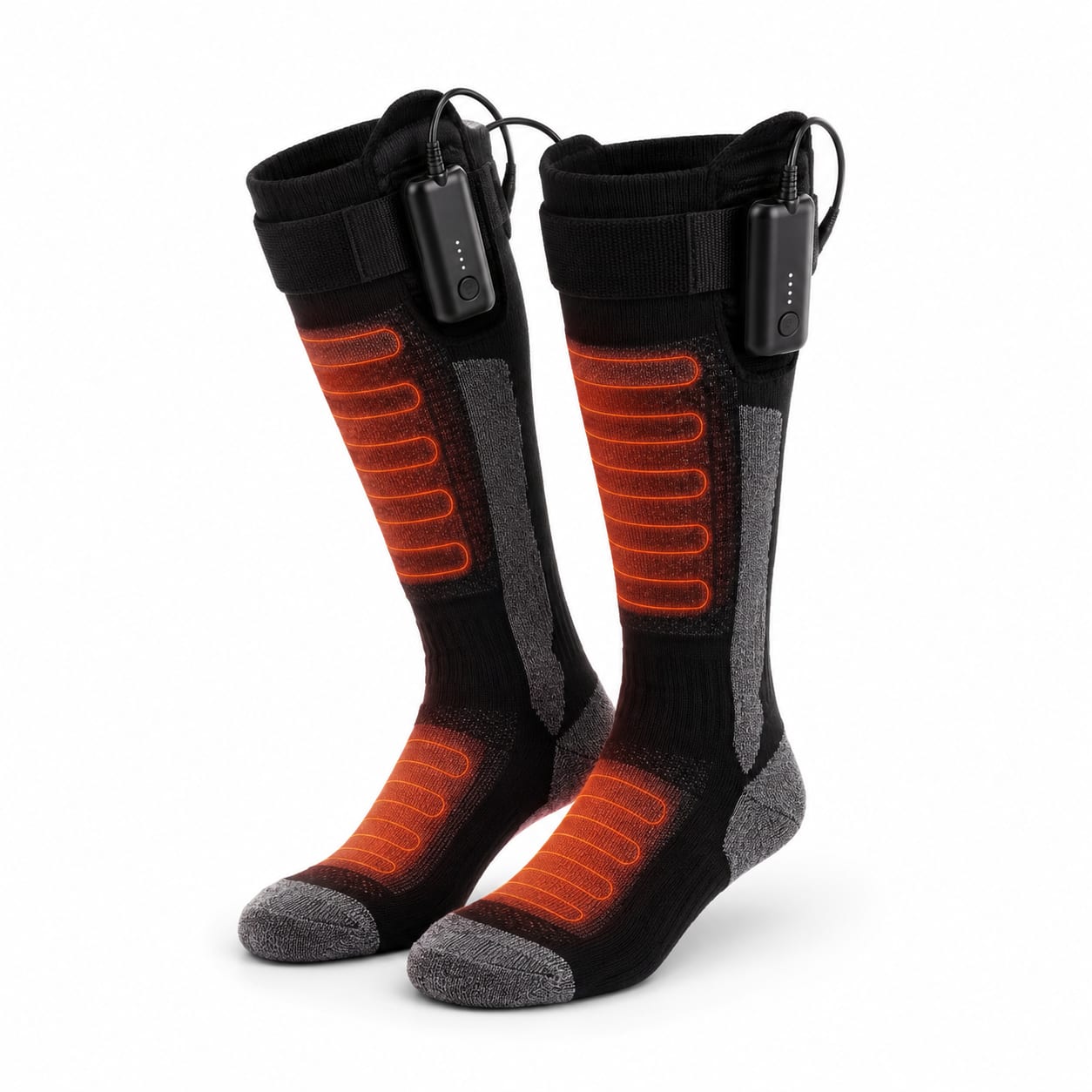
Nearly all heated ski socks are over-the-calf height. This provides the necessary length to route wiring from the battery (positioned near the cuff top) down to the heating elements in the toe area, while also ensuring no skin contacts the boot shell.
Compared to other types
Same as most quality ski socks—over-the-calf is standard. Heated socks rarely offer knee-high options since the battery and wiring system is designed for OTC height.
Why it matters: The over-the-calf height is essential for heated socks not just for standard boot compatibility, but because the wiring harness needs sufficient length to run from battery to toe without tension or bunching. Shorter heights would make wire routing impractical.
Cushioning
Cushioning Level
What it means
The overall amount and density of padding built into the sock, affecting warmth, comfort, and boot fit. More cushioning means more warmth but less room in the boot.
Typical for this type
Light to Medium
In practice
Heated ski socks typically feature medium cushioning to protect the heating elements and provide comfort, though some performance-oriented models use light cushioning. The cushioning must be sufficient to pad the wiring without creating pressure points.
Compared to other types
Heated socks tend toward medium cushioning more than non-heated performance socks, which often favor light cushioning. The electronics necessitate some padding around the components.
Why it matters: The heating elements and wiring add a small amount of bulk, so the surrounding cushioning needs to integrate smoothly. Too much cushioning combined with the heating infrastructure can make boots feel tight; too little may expose wires to pressure.
Material
Primary Fiber Material
What it means
The dominant fiber type used in the sock construction, which determines moisture management, warmth, odor resistance, and durability.
Typical for this type
Merino Synthetic Blend Or Synthetic Blend
In practice
Most heated ski socks use a merino-synthetic blend (typically 30-50% merino) or a primarily synthetic construction. The synthetic content provides the durability and structural integrity needed around the heating elements and wiring channels.
Compared to other types
Heated socks typically have lower merino content (30-50%) than premium non-heated socks (50-70%) because the synthetic component is needed for durability around the electronics and wire routing channels.
Why it matters: The blend must balance merino's moisture management and odor resistance with the synthetic durability required where wires enter the fabric and where battery clips attach. Higher synthetic content helps the sock maintain its structure around the electronic components over time.
Merino %
Merino Wool Content
What it means
The percentage of merino wool in the sock's fiber composition. Higher percentages provide more natural performance benefits but may reduce durability.
Typical for this type
25-50%
Most common pick: 35%
In practice
Heated ski socks typically contain 25-50% merino wool, lower than premium non-heated options. The reduced merino content accommodates the synthetic structural zones needed around heating elements, wire channels, and battery attachment points.
Compared to other types
Lower merino percentage than typical premium ski socks (which range 40-70%) due to the structural requirements of integrating heating elements and wiring.
Why it matters: While merino provides superior moisture management and odor resistance, the sock needs sufficient synthetic content to maintain structural integrity around the electronic components. The heating function partially compensates for lower merino content by actively warming the foot.
Compression
Compression Level
What it means
The degree of graduated compression built into the sock, measured in mmHg. Compression improves blood flow, reduces fatigue, and enhances proprioception.
Typical for this type
Light to Moderate
In practice
Most heated ski socks feature light compression (8-15 mmHg). The wiring harness and battery system make higher compression levels potentially uncomfortable, and the heating function reduces the need for compression-based circulation support.
Compared to other types
Heated socks tend to have lighter compression than performance non-heated socks, which commonly feature moderate (15-20 mmHg) compression. The electronics make firm compression impractical.
Why it matters: The wiring that runs from battery to toe needs to lie flat and comfortable against the leg. Higher compression could press wires into the skin or create pressure points. Since the active heating improves comfort independently of circulation, moderate-to-firm compression is less critical.
Thickness
Thickness Category
What it means
The overall thickness of the sock construction, which directly affects boot fit, warmth, and feel. Related to but distinct from cushioning level.
Typical for this type
Lightweight to Midweight
In practice
Heated ski socks are most commonly midweight to accommodate the heating elements and wiring while maintaining a reasonable boot fit. Some newer models achieve lightweight construction with ultra-thin heating traces.
Compared to other types
Heated socks run slightly thicker than equivalent non-heated models due to the integrated electronics. A midweight heated sock may feel similar to a heavyweight non-heated sock in terms of volume inside the boot.
Why it matters: The heating elements and wiring add inherent bulk, so even a 'lightweight' heated sock will feel closer to midweight. The thickness must be sufficient to encase the electronics smoothly without creating pressure points against the foot or inside the boot.
Left/Right Specific
Anatomical Fit Construction
What it means
Whether the sock is constructed with specific left and right foot shaping for improved fit and reduced bunching inside the boot.
Typical for this type
Universal Or Anatomical Lr
In practice
Most heated ski socks use universal fit construction, though some premium models offer left/right anatomical shaping. The wiring harness is typically symmetric, making universal construction more practical for manufacturing.
Compared to other types
Heated socks are less likely to offer anatomical left/right construction than premium non-heated socks, as the electronics integration complicates foot-specific manufacturing.
Why it matters: Anatomical fit can improve comfort by reducing bunching, but the heating elements and wiring are usually designed symmetrically. Some high-end models are starting to offer anatomical construction with properly routed wiring for each foot.
Shin Padding
Shin Cushioning
What it means
Dedicated cushioning zone on the front of the sock that protects the shin from ski boot pressure and impact. One of the most important zone-specific features.
Typical for this type
Light to Medium
In practice
Heated ski socks typically feature medium shin cushioning. Since the heating focus is on the toe area, the shin zone follows standard ski sock construction with moderate padding for boot comfort.
Compared to other types
Similar to standard all-mountain ski socks. The shin area is unaffected by the heating technology, which is concentrated in the toe box.
Why it matters: Shin cushioning in heated socks serves the same purpose as in non-heated models—protecting against boot pressure and shin bang. The heating elements don't typically extend to the shin area, so cushioning here is independent of the electronics.
Toe Seam Type
Toe Construction
What it means
How the toe area of the sock is constructed and seamed. Affects comfort and blister risk in the tight toe box of a ski boot.
Typical for this type
Seamless
In practice
Seamless toe construction is particularly important in heated ski socks because the heating element is concentrated in the toe area. A raised seam combined with a heating element could create significant discomfort inside a ski boot.
Compared to other types
Even more important than in non-heated socks due to the additional bulk of the heating element in the toe area. Seamless construction is essentially mandatory for heated socks.
Why it matters: The toe area already contains the heating element, adding slight bulk. A seamless construction prevents any additional friction or pressure points in this sensitive, crowded area. This is more critical in heated socks than in standard models.
What it means
Built-in compression or elastic support in the arch/instep area of the sock. Provides a more secure fit and can reduce foot fatigue.
Typical for this type
Light to Moderate
In practice
Heated ski socks typically feature light arch support. The wiring channel sometimes runs through the arch area, so moderate-to-firm compression here could press the wire against the foot.
Compared to other types
Heated socks tend toward lighter arch support than performance non-heated socks, which may feature moderate or firm arch compression, due to the wiring that may run through this zone.
Why it matters: Arch support must be balanced against the presence of wiring that may pass through the midfoot area. Light support keeps the sock in place without creating pressure on the wire channel.
Ventilation
Ventilation Zones
What it means
Mesh or thinner-knit zones designed to increase breathability and moisture escape in high-heat areas like the top of the foot and between toes.
Typical for this type
None to Targeted
In practice
Heated ski socks typically feature targeted ventilation zones on the top of the foot, balancing breathability with heat retention. Since the active heating handles warmth, ventilation is still important for moisture management during high-output skiing.
Compared to other types
Similar to standard ski socks, though some heated models lean toward less ventilation to maximize heat retention. The active heating means ventilation is more about moisture management than temperature regulation.
Why it matters: Even with active heating, moisture management remains critical. Sweaty feet get cold when the heating cycles off or batteries run low. Targeted ventilation helps manage moisture without creating cold spots in the heated zones.
Odor Control
Antimicrobial Treatment
What it means
Whether the sock has an applied antimicrobial treatment (e.g., silver ions, Polygiene) to reduce odor-causing bacteria. Merino wool has natural antimicrobial properties.
Typical for this type
True Preferred
In practice
Most heated ski socks include antimicrobial treatment. Given their premium price point and the fact that they may be worn for long days in extreme cold, odor control is a valued feature that most manufacturers include.
Compared to other types
More commonly included than in non-heated socks, partly because the premium price point justifies the feature, and partly because the lower merino content means less natural odor resistance.
Why it matters: Heated socks are a significant investment, and antimicrobial treatment helps extend usable wear between washes—particularly valuable on multi-day ski trips. The lower merino content in many heated socks makes this treatment more important than in high-merino non-heated models.
Gender Fit
Gender-Specific Fit
What it means
Whether the sock is designed with gender-specific proportions. Women's-specific socks account for typically narrower heels, higher arches, and different calf proportions.
Typical for this type
Gender Specific Preferred For Best Fit
Most common pick: Unisex
In practice
Many heated ski socks are offered in unisex sizing, though an increasing number of brands are providing women's-specific models with narrower heels and smaller calf proportions. Men's-specific models are also common.
Compared to other types
Heated socks are more likely to be unisex than non-heated premium socks, though this is changing as the category matures. Women should seek out gender-specific models when available for better heating element positioning.
Why it matters: Proper fit is especially important in heated socks because a loose sock allows the heating element to shift away from the toes, reducing effectiveness. Women's-specific fits keep the heating element properly positioned against the foot.
Reinforced Areas
Reinforced Zones
What it means
Specific areas of the sock with extra-durable construction to resist wear from ski boot friction and extend sock life.
Typical for this type
Heel And Toe Minimum
Most common pick: Heel, Toe
In practice
Heated ski socks reinforce the heel and toe areas for durability. Toe reinforcement is particularly important since the heating element is located here and the area experiences significant friction from the boot liner.
Compared to other types
Similar reinforcement patterns to standard ski socks, but toe reinforcement is even more critical in heated models to protect the heating element investment.
Why it matters: The toe area houses the heating element, making it the most critical zone for durability. If the fabric wears through at the toe, the heating element can be damaged or exposed. Heel reinforcement addresses the standard wear point from boot friction.
Warmth Level
Warmth Rating
What it means
The overall warmth category of the sock, determined by thickness, material, and construction. Indicates the temperature range the sock is designed for.
Typical for this type
All Season to Heavyweight Warmth
In practice
Heated ski socks are categorized as heavyweight warmth when the heating is active, though the base sock construction is typically midweight. On low or medium settings, they function as all-season warmth; on high, they exceed any non-heated sock's warming capability.
Compared to other types
Unmatched by any non-heated sock. Even the warmest traditional sock can only insulate—preserving body heat. Heated socks actively add warmth, making them in a different category entirely for cold-weather performance.
Why it matters: The warmth rating is unique for heated socks because it's variable—the user controls the effective warmth level. This makes heated socks the most versatile option, capable of functioning from spring conditions to extreme cold by adjusting the heat setting.
What it means
The sock size, which must correspond to the skier's shoe size for proper fit. Ill-fitting socks cause bunching, wrinkles, and discomfort in ski boots.
Typical for this type
Match Shoe Size Exactly Per Brand Chart
Most common pick: 5-14 US
In practice
Heated ski socks are available in a range of sizes, though the range may be more limited than non-heated socks due to manufacturing complexity. Proper sizing is critical because the heating element must align with the toes to be effective.
Compared to other types
Sizing is more critical and ranges may be more limited than non-heated socks. The heating element must align precisely with the toe area for the product to function as designed.
Why it matters: If the sock is too large, the heating element will sit beyond the toes and fail to warm the intended area. If too small, the element may be pulled away from the toes or create uncomfortable pressure. Precise sizing is more important in heated socks than in any other subcategory.