Kitvore.com

Kitvore.com

Specs that matter. Gear that fits.

Snow Jacket · Subcategory

Kids / Youth Snow Jacket

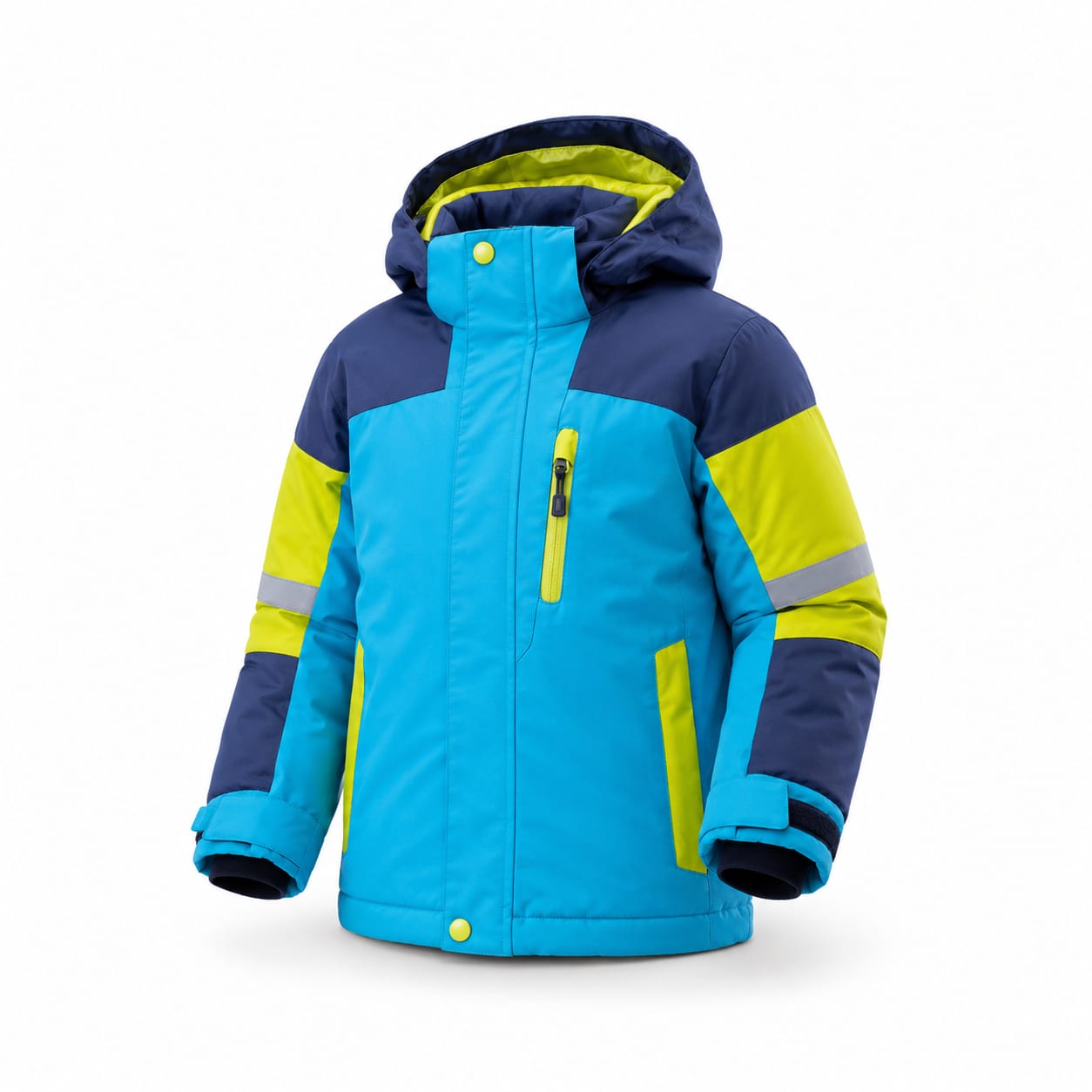
Purpose-built snow jackets sized and featured for children and teens, balancing weather protection, durability, and room-to-grow adjustability.

Kids and youth snow jackets are engineered for young riders who need reliable weather protection with the durability to withstand rough play, the warmth to keep small bodies comfortable on cold lifts, and smart features like extendable sleeves and hems that accommodate rapid growth. They prioritize synthetic insulation for wet-snow reliability, bright colors for on-mountain visibility, and simplified closures that small hands can manage independently.

$60 – $300budget tierbeginnerintermediate

Best known for

Room-to-grow adjustable sleeve and hem systemsBright, high-visibility color options for on-mountain safetyDurable synthetic insulation that stays warm when wetSimplified closures and features sized for small handsBudget-friendly pricing that accounts for rapid growth outpacing wear
Kids / Youth Snow Jacket

Guide

Detailed overview

Kids and youth snow jackets are a distinct subcategory designed around the realities of young skiers and snowboarders: they grow fast, they play hard, and they need gear that works without constant adult intervention. Unlike adult jackets scaled down, the best youth models incorporate growth-specific features like extendable sleeves with hidden elastic that can add 2–3 cm of length mid-season, and hem extensions that add months of wear. The insulation strategy leans heavily toward synthetic fills because kids are far more likely to get soaked from falls, snowball fights, and sitting in slush. Synthetic insulation retains warmth when damp and dries quickly—critical when a cold, wet child means a shortened ski day for the whole family. Waterproof ratings in this category typically range from 5,000mm to 10,000mm, which is adequate for most resort conditions kids encounter. Premium youth models may reach 15,000mm for families who ski in wet coastal climates or take multi-week trips. Breathability is often lower than adult technical jackets, but kids' lower body mass and higher surface-area-to-volume ratio means they can overheat quickly during active play, making pit zips a surprisingly important feature. Durability is a major consideration. Kids drag sleeves through parking lots, scrape against ice, and tumble repeatedly. Youth jackets often use 50–80 denier face fabrics with reinforced panels at high-wear areas. Seam sealing is typically critical rather than full, balancing cost against the reality that the jacket may only fit for one or two seasons. Safety features include helmet-compatible hoods sized for youth helmets, reflective details for low-light visibility, and bright colorways that make it easy to spot children on crowded slopes. RECCO reflectors are rare in this category but appear on some premium models aimed at families who venture into sidecountry terrain.

Choosing a snow jacket for a child or teenager involves a fundamentally different calculus than buying for an adult. The most obvious difference is growth: a jacket that fits perfectly in December may be too short by March, and a child between sizes presents a dilemma between current comfort and future usability. The best youth jackets solve this with integrated growth systems—typically internal cuffs that unfold to add sleeve length, and hem extensions secured by hidden snaps or buttons that add 3–5 cm of body length. These features can extend a jacket's useful life by an entire season, significantly improving the cost-per-wear ratio that makes youth gear purchases feel less painful.

Warmth management for young riders is more nuanced than simply adding insulation. Children have a higher surface-area-to-body-mass ratio than adults, meaning they lose heat faster when stationary on cold chairlifts, but they also generate significant heat during active play and can overheat quickly. The ideal youth jacket provides enough synthetic insulation (typically 80–120g in the body) to keep a child warm during stationary moments, combined with pit zips or mesh-lined vents that can be opened during high-activity periods. Parents should resist the urge to over-insulate; a child who is sweating inside an overly warm jacket will become cold rapidly when that sweat freezes during a rest stop.

Durability expectations should be calibrated to how children actually use their gear. Youth jackets face more abuse in a single season than most adult jackets see in three years—parking lot pavement, tree branches, repeated falls on ice, and the general roughhousing that defines kids' ski days. Look for jackets with denier ratings of 50 or higher in the main body fabric, reinforced panels at the hem and cuffs, and quality zippers that small hands can operate with gloves on. Critically seam-sealed construction is the standard in this category and is generally sufficient for resort use; fully seam-sealed youth jackets exist but command a premium that may be hard to justify for a single-season garment.

The feature set on youth jackets is deliberately simplified compared to adult models, but certain features are non-negotiable. A helmet-compatible hood is essential—most ski schools require helmets, and the hood must fit over one. A powder skirt or at minimum a waist-level snow gaiter prevents the dreaded snow-up-the-back scenario that ends ski days early. Wrist seals with velcro adjustment accommodate the wide range of youth glove styles and sizes. A lift pass pocket on the sleeve is increasingly important as more resorts use RFID systems, and it's a feature kids can manage independently. Internal mesh pockets for stashing goggles at lunch are a nice touch that keeps expensive accessories from being lost.

Perhaps the most practical consideration is the cost-to-lifespan ratio. A quality youth snow jacket typically costs $80–$200, and most children will outgrow it within one to two seasons regardless of how well it's constructed. This reality shapes every design decision in the category: manufacturers prioritize features that matter during the jacket's useful life (warmth, waterproofing, visibility) over features that extend the jacket's absolute lifespan (premium membranes, extreme denier ratings). Families with multiple children should consider neutral-enough colors and timeless designs that enable hand-me-down use, and should invest in the best growth-adjustment features available to maximize each jacket's service window across siblings.

Quick facts

Primary purpose
Provide weather protection and safety features for children learning and progressing in snow sports
Popular brands
The North FaceColumbiaHelly HansenPatagoniaBurtonRoxy
Typical terrain
ResortSki school areasBunny hillsFamily-friendly terrain

What makes it different

Growth-accommodation features; child-specific ergonomics; enhanced visibility; simplified closures; smaller price point

Recommended ranges

How this type usually specs out

Each spec is explained in plain language, then we show what buyers usually look for on this type.

Waterproof Rating

Waterproof Rating

What it means

The hydrostatic head rating measuring how much water pressure the fabric can resist before leaking, expressed in millimeters. Higher numbers indicate better waterproofing.

Typical for this type

5, 000–15, 000mm

Most common pick: 8, 000mm

In practice

Most kids/youth jackets fall in the 5,000–10,000mm range, which handles typical resort snowfall. Premium youth models reach 15,000mm for wet climates and extended trips.

Compared to other types

Lower than adult technical shells (15,000–20,000mm+) due to cost considerations and the reality that kids outgrow jackets before membrane degradation becomes an issue.

Why it matters: Kids spend more time in contact with snow—sitting, falling, and playing—making adequate waterproofing essential to prevent the cold, wet conditions that cut ski days short.

Breathability Rating

Breathability Rating

What it means

Measures how much water vapor (sweat) can pass through the fabric over 24 hours, expressed in g/m². Higher numbers mean better moisture management and less clamminess during exertion.

Typical for this type

5, 000–10, 000 g/m²/24hr

Most common pick: 6, 000 g/m²/24hr

In practice

Youth jackets typically offer 5,000–8,000 g/m² breathability. Some premium models reach 10,000 g/m², but most kids don't generate the sustained high-output heat of adult touring.

Compared to other types

Lower than adult backcountry/touring jackets (15,000–20,000+ g/m²) but comparable to entry-level adult resort jackets. Kids benefit more from venting features than high breathability ratings.

Why it matters: Kids alternate between high-exertion play and stationary chairlift rides, creating rapid temperature swings. Adequate breathability prevents the sweat-freeze cycle that makes children miserable.

Insulation Type

Insulation Type

What it means

The primary insulation material used in the jacket, which determines warmth-to-weight ratio, packability, and performance when wet.

Typical for this type

Synthetic (Strongly Recommended); Shell (For Layering Flexibility With Experienced Young Riders)

In practice

Synthetic insulation dominates the kids/youth category because it retains warmth when wet, dries quickly, and costs less—critical advantages for children who routinely get soaked from falls and snow play.

Compared to other types

Unlike adult categories where shell jackets are popular for layering versatility, kids/youth jackets overwhelmingly favor synthetic insulation. Down is rare due to cost and poor wet performance. Hybrid insulation appears in some premium models.

Why it matters: A wet child is a cold child, and a cold child wants to go home. Synthetic insulation ensures the jacket still provides warmth even after the inevitable snow-down-the-neck or sit-in-a-puddle incidents.

Insulation Weight

Insulation Weight

What it means

The amount of insulation in the jacket, measured in grams. Higher numbers indicate more warmth but also more bulk. Often given as body/sleeve (e.g., 80g/60g).

Typical for this type

60–120g body; 40–80g sleeves

Most common pick: 80g body / 60g sleeves

In practice

Most youth jackets use 60–100g synthetic insulation in the body with 40–60g in the sleeves. Heavier weights (100–120g) are available for very cold climates or younger children who are less active.

Compared to other types

Comparable to adult mid-weight insulated jackets. Youth jackets rarely offer the lightweight 40–60g options popular with active adult riders, because children need more baseline warmth for stationary moments.

Why it matters: Children lose heat faster than adults due to their higher surface-area-to-volume ratio, but they also overheat quickly during active play. Body-mapped insulation (more in core, less in sleeves) balances these competing needs.

Jacket Fit

Jacket Fit

What it means

The overall cut and silhouette of the jacket, affecting layering capacity, mobility, and style.

Typical for this type

Regular (Standard); Relaxed (For Snowboard-Focused Youth)

In practice

Regular fit is the most common in youth jackets, providing room for a mid-layer without excess fabric that catches on chairlifts or allows snow entry. Relaxed fits appear in snowboard-oriented youth models.

Compared to other types

Youth jackets rarely offer slim or oversized fits. The regular fit dominates because it balances layering room, mobility, and the slightly oversized initial fit that parents often buy for growth accommodation.

Why it matters: A jacket that's too loose lets in cold air and snow; too tight restricts layering and movement. Kids' fit is complicated by the need to accommodate growth—slightly loose at purchase is often intentional.

Seam Sealing

Seam Sealing

What it means

The method used to seal stitched seams, which are the weakest points for water entry. Critical for actual waterproof performance beyond the fabric rating.

Typical for this type

Critically Seam-Sealed (Standard); Fully Seam-Sealed (For Wet Climates And Premium Models)

In practice

Critically seam-sealed construction is the norm for youth jackets, taping shoulders, hood, and chest seams while leaving lower-stress seams untaped. This balances waterproofing with the cost constraints of a garment that may only fit for one season.

Compared to other types

Less likely to feature fully seam-sealed construction than adult premium or backcountry jackets. Welded seams are extremely rare in the youth category due to cost.

Why it matters: Kids encounter more water ingress situations than adults—sitting in slush, rolling in snow, and prolonged exposure during lessons. Critical seam sealing protects the most vulnerable areas without the cost premium of full taping.

Hood Type

Hood Type

What it means

The style and functionality of the jacket's hood, including whether it accommodates a helmet and how it adjusts.

Typical for this type

Helmet-Compatible Fixed Hood (Strongly Recommended)

In practice

Nearly all quality youth jackets feature a fixed, helmet-compatible hood sized for youth ski and snowboard helmets. The hood must adjust to fit snugly with or without a helmet underneath.

Compared to other types

Similar to adult resort jackets. Detachable hoods are less common in youth models because they add a zipper that small hands may struggle with and create a potential failure point.

Why it matters: Most ski schools and resorts require children to wear helmets. A hood that doesn't fit over a helmet is essentially useless for its primary weather-protection function during the conditions kids ride in most.

Ventilation

Ventilation

What it means

The type and location of zippered vents that allow rapid heat and moisture release during high-exertion activities without fully unzipping the jacket.

Typical for this type

Pit Zips (Essential); Mesh-Lined Vents Preferred For Snow Play

Most common pick: Pit Zips (Mesh-Lined)

In practice

Pit zips are the standard venting feature on youth jackets, and mesh-lined versions are preferred because kids frequently have vents open while playing in snow. Some budget youth models omit vents entirely.

Compared to other types

Simpler venting than adult technical jackets. Chest vents and back vents are rare in youth models. The focus is on easy-to-operate pit zips that kids can manage independently with gloves on.

Why it matters: Children's temperature regulation is less efficient than adults'. They overheat quickly during active play but cool rapidly when stationary. Pit zips allow quick adjustment without removing layers—a task kids resist on-mountain.

Powder Skirt

Powder Skirt

What it means

An elasticized or snap-closure band around the inside hem of the jacket that seals against the waist to prevent snow from entering from below, especially during falls in deep snow.

Typical for this type

Fixed Powder Skirt (Recommended For Most); Detachable (For Versatile Use With Older Youth)

In practice

Fixed powder skirts are most common on youth jackets because they're always ready when needed—no forgetting to attach it—and kids fall in snow far more often than adults. Some models for older youth offer detachable skirts.

Compared to other types

More consistently included than on adult casual or spring jackets. The 'no powder skirt' option is rare in youth jackets and should generally be avoided unless the jacket is specifically for spring or indoor slope use.

Why it matters: A powder skirt is arguably more important for kids than adults because children spend far more time in contact with the snow surface. Every fall without a powder skirt means snow against the skin, which rapidly leads to discomfort and a shortened day.

Wrist Seals / Cuffs

Wrist Seals / Cuffs

What it means

The closure system at the jacket cuffs that seals around the wrists to prevent cold air, snow, and water from entering the sleeves.

Typical for this type

Velcro Cuff With Inner Gaiter (Preferred); Velcro Cuff Only (Acceptable)

In practice

The best youth jackets combine a velcro-adjustable outer cuff with an inner stretch gaiter, often with a thumbhole. This double seal system keeps snow out during the frequent falls and snow play that define kids' mountain days.

Compared to other types

Inner gaiters with thumbholes are especially valuable in youth jackets because they compensate for the slightly oversized fit that parents often buy. Elastic-only cuffs, common on budget youth models, are a significant compromise.

Why it matters: Snow up the sleeves is one of the fastest ways to make a child cold and miserable. Inner gaiters with thumbholes also prevent sleeves from riding up during falls—a constant issue with kids' jackets that are often slightly oversized for growth.

Membrane Technology

Membrane Technology

What it means

The specific waterproof-breathable membrane or coating technology used in the jacket's construction. This is the core technology that determines real-world performance.

Typical for this type

Proprietary Membrane (Standard); DWR Coating Only (Budget/Spring Only); GORE-TEX (Premium)

In practice

Most youth jackets use brand-proprietary membranes that balance waterproofing and breathability at a price point appropriate for a garment with a 1–2 season lifespan. GORE-TEX appears in premium youth models but adds significant cost.

Compared to other types

Less likely to feature GORE-TEX or GORE-TEX Pro than adult technical jackets. DWR-only coatings appear on budget youth models but are inadequate for anything beyond light snow or spring conditions.

Why it matters: The membrane determines real-world waterproof performance. For kids, a reliable proprietary membrane from a reputable brand is usually sufficient—investing in GORE-TEX for a jacket that will be outgrown is hard to justify unless hand-me-down use is planned.

Pocket Configuration

Pocket Configuration

What it means

The types, positions, and features of pockets on the jacket. Affects storage, convenience, and access to essentials while riding.

Typical for this type

Hand Warmer Pockets (Essential); Lift Pass Pocket (Highly Recommended); Internal Mesh Dump Pocket (Nice to Have)

Most common pick: Hand Warmer Pockets + Lift Pass Pocket

In practice

Youth jackets prioritize simple, essential pocket configurations: fleece-lined hand warmer pockets and a sleeve-mounted lift pass pocket. Internal mesh pockets for goggle storage are a valuable addition on mid-range and premium models.

Compared to other types

Simpler than adult jackets. Chest pockets and internal media pockets are less common—kids are less likely to carry phones on the mountain, and headphone ports are irrelevant for most young riders. The focus is on simplicity and independence.

Why it matters: Kids need to manage their own gear on the mountain. A lift pass pocket on the sleeve lets them scan onto lifts independently. Hand warmer pockets are essential for cold chairlift rides. Too many pockets create confusion and lost items.

Jacket Length

Jacket Length

What it means

The overall length of the jacket, affecting coverage, snow protection, and style. Measured from center back collar to hem.

Typical for this type

Regular (Standard); Long (For Snowboarding Or Cold Climates)

In practice

Regular length is the default for youth jackets, providing adequate coverage without restricting movement. Long/extended lengths appear in snowboard-oriented youth models and are beneficial for added warmth on cold chairlifts.

Compared to other types

Cropped lengths are extremely rare in youth jackets—there's no practical use case for a cropped kids' snow jacket. Long lengths are more common than in adult ski-specific models, reflecting the priority of coverage and warmth for young riders.

Why it matters: Proper length ensures the jacket covers the waist and lower back when sitting on chairlifts and prevents snow from entering between jacket and pants. Too short exposes skin; too long restricts movement and can be a tripping hazard for younger children.

RECCO Reflector

RECCO Reflector

What it means

A passive rescue reflector embedded in the jacket that can be detected by RECCO detector equipment used by ski patrol and search and rescue teams.

Typical for this type

Not Expected (Standard); Nice to Have On Premium Models For Families Who Venture Off-Piste

Most common pick: False

In practice

RECCO reflectors are uncommon on youth jackets, appearing only on some premium models. Most children ride exclusively in-bounds under supervision, making this feature a lower priority than warmth, waterproofing, and visibility.

Compared to other types

Significantly less common than on adult all-mountain and backcountry jackets. Parents who venture off-piste with older children should consider it, but it's not a standard expectation in the youth category.

Why it matters: For families who ski sidecountry or backcountry with older children, a RECCO reflector adds a passive safety layer. For typical in-bounds resort use, it's not a priority feature and shouldn't drive purchasing decisions.

Primary Activity / Use Case

Primary Activity / Use Case

What it means

The intended riding activity or environment the jacket is optimized for. Jackets designed for different activities prioritize different features and performance characteristics.

Typical for this type

Resort Skiing, Resort Snowboarding, All-Mountain (Most Common); Freestyle/Park (For Older Youth)

Most common pick: Resort Skiing + Resort Snowboarding

In practice

The vast majority of youth jackets are designed for resort use—both skiing and snowboarding. All-mountain versatility is the norm, with some models targeted specifically at freestyle/park for older youth and teens.

Compared to other types

Narrower activity range than adult jackets. Backcountry/touring-specific youth jackets essentially don't exist as a distinct category. The focus is on resort versatility with enough weather protection for the full range of in-bounds conditions.

Why it matters: Kids typically ride whatever terrain the family or ski school accesses, making versatile resort-focused jackets the most practical choice. Specialized backcountry/touring youth jackets are extremely rare and unnecessary for most young riders.

Fabric Denier / Durability

Fabric Denier / Durability

What it means

The thickness and durability of the outer face fabric, measured in denier. Higher denier fabrics are more abrasion-resistant and durable but heavier and less packable.

Typical for this type

50–80 denier (main body); 100+ denier (reinforced panels at hem and cuffs)

Most common pick: 60 denier

In practice

Youth jackets typically use 50–80 denier face fabrics, which is actually more durable relative to body weight than many adult jackets. Reinforced panels at the hem and cuffs push effective durability higher in high-wear zones.

Compared to other types

Youth jackets often use higher denier fabrics than equivalently priced adult jackets because durability is prioritized over weight and packability. A 60-denier youth jacket is common where a 40-denier adult jacket at the same price point might be the norm.

Why it matters: Kids are extraordinarily hard on their gear. They fall more often, drag sleeves on the ground, scrape against ice, and subject jackets to abuse that would destroy lightweight adult shells in a single day. Higher denier fabrics are essential for survival.

Evaluation

Strengths and trade-offs

Pros

What this type does best

Growth adjustment features extend usable life

Critical

The best youth jackets include extendable sleeves and hem systems that can add 2–5 cm of length, effectively adding an entire season of wear and significantly improving the cost-per-wear ratio.

Synthetic insulation stays warm when wet

Critical

Kids will get wet—it's inevitable. Synthetic insulation retains its warming properties even when damp from falls, snow play, or perspiration, ensuring comfort throughout the day.

High-visibility colors for on-mountain safety

High

Youth jackets are available in the brightest colorways in the snow jacket market, making it easy to spot children on crowded slopes and in low-light conditions.

Simplified features for independent operation

High

Youth jackets are designed with closures, zippers, and features that small gloved hands can manage independently, fostering self-sufficiency and reducing parent intervention.

Durable construction withstands rough treatment

High

Higher denier fabrics and reinforced panels at wear points help youth jackets survive the falls, dragging, and general abuse that define kids' mountain days.

Lower cost than adult technical jackets

Medium

Youth jackets typically cost 40–60% less than equivalent adult models, reflecting both smaller material quantities and the market reality that parents won't pay premium prices for single-season gear.

Helmet-compatible hoods sized for youth helmets

Medium

Unlike some budget adult jackets, virtually all quality youth jackets include hoods specifically designed to fit over youth ski and snowboard helmets, matching the near-universal helmet requirement for young riders.

Cons

Trade-offs to be aware of

Short lifespan due to rapid growth

Significant

Even with growth-adjustment features, most youth jackets fit for only 1–2 seasons before being outgrown, regardless of condition. This makes the per-season cost higher than it appears at purchase.

Lower waterproof and breathability ratings than adult jackets

Moderate

Most youth jackets max out at 10,000mm waterproofing and 8,000 g/m² breathability, which is adequate for resort use but may feel insufficient in heavy precipitation or for very active older youth.

Limited style options compared to adult lines

Moderate

Youth jacket lines typically offer fewer colorways and style variations than adult models. Older teens may find youth sizing fits but youth styling doesn't match their preferences.

Fewer technical features and premium membrane options

Minor

GORE-TEX, fully seam-sealed construction, and advanced features like welded seams are rare in youth jackets. Families who want premium technical performance for their children have very limited options.

Sizing inconsistencies across brands

Moderate

Youth sizing is notoriously inconsistent—one brand's size 10 may fit like another's size 8. Age-based sizing is unreliable, and trying on with mid-layers is essential but often impractical for online purchases.

Best for

Terrain

Groomed resort runsBunny hills and learning areasTerrain parks (older youth models)Mogul fields and mixed resort terrain

Snow conditions

Typical resort winter conditionsLight to moderate snowfallCold, dry winter daysMixed conditions with occasional wet snow

Skill level

First-time beginnersDeveloping intermediatesAdvanced youth ridersSki school participants

Riding style

Resort skiingResort snowboardingAll-mountain ridingFreestyle/park (older youth)

Rider profile

Children in ski schoolFamily resort vacationersYoung freeskiers progressing to all-mountainYouth snowboarders in lessons or recreational ridingKids who play hard and fall often

Not ideal for

Reasons

Insufficient waterproofing and breathability for sustained backcountry useNo touring-specific features like skin pockets or helmet-light clipsInsulation is too warm for high-exertion uphill travelMost youth jackets lack the technical features needed for serious off-piste riding

Terrain

Backcountry touring routesGlacier travelExtreme big mountain lines

Skill level

Expert adults (wrong sizing)Professional-level youth competitors needing FIS-compliant gear

Riding style

Backcountry touringSplitboardingSkimo racing

Compare

How it stacks up

This page

Kids / Youth Snow Jacket

Growth-adjustment features, lower cost, brighter visibility colors, and simplified features sized for small hands. Durability is often better relative to body weight.

Alternative

Adult Resort Snow Jacket

Higher waterproof and breathability ratings, more technical features, wider style selection, and better membrane technology. May fit older teens better than youth sizing.

Bottom line

Choose youth jackets for children under 13–14. For older teens who fit adult sizing and ride frequently, an adult resort jacket may offer better long-term value and performance.

This page

Kids / Youth Snow Jacket

Built-in insulation eliminates the complexity of layering systems that children struggle to manage independently. Lower cost and simpler operation.

Alternative

Adult Shell Snow Jacket

Maximum layering versatility, superior breathability, lighter weight, and better moisture management for high-exertion riding. Can be worn across multiple seasons with different layering combinations.

Bottom line

Shell jackets are rarely the right choice for kids unless the child is an experienced, high-output rider who understands layering. The simplicity of insulated youth jackets is a significant practical advantage.

This page

Kids / Youth Snow Jacket

Separate jacket allows bathroom breaks without full undressing, better fit adjustment as children grow, and the ability to mix and match with different pants. More style options.

Alternative

Toddler Snow Suit / One-Piece

Zero gap between jacket and pants means absolute snow protection. Easier to get on squirmy toddlers. Simpler for very young children who can't manage multiple closures.

Bottom line

For children under 4–5, a one-piece suit may be more practical. For children 5 and older, a separate jacket and pants system offers better adjustability, independence, and longevity.

This page

Kids / Youth Snow Jacket

Youth-specific sizing, growth features, and age-appropriate styling at a lower price point. Features are designed for children's needs and capabilities.

Alternative

Insulated Snow Jacket

Broader range of insulation weights, premium membrane options, fully seam-sealed construction, and more sophisticated feature sets. Better for older teens who fit adult sizes.

Bottom line

For children who fit youth sizing, a youth-specific jacket is almost always the better choice. For teens on the border of adult sizing, try both—adult XS or S may offer better features if the fit works.

Shopping

Buying tips

  • 1

    Size up one size and rely on growth-adjustment features—most youth jackets are designed to accommodate this. A slightly large jacket at purchase will fit properly by mid-season and may last into a second year.

  • 2

    Prioritize synthetic insulation over down for kids. The cost savings and wet-performance advantage are significant, and the warmth-to-weight penalty is minimal for resort use.

  • 3

    Check that the hood fits over the child's specific helmet model. Youth helmet sizes vary widely, and not all helmet-compatible hoods accommodate all youth helmets—especially larger junior models.

  • 4

    Test all zippers and closures with the gloves the child will actually wear. Small hands in bulky gloves struggle with stiff zippers and small pulls. Look for oversized zipper pulls that are easy to grip.

  • 5

    Verify the lift pass pocket works with your resort's RFID system. Most youth sleeve pockets work fine, but some very small sleeves position the pocket awkwardly for scanner readability.

  • 6

    Choose the brightest color available. Visibility on the mountain is a safety feature, and bright jackets make it dramatically easier to spot children from the lift or across a crowded run.

  • 7

    If buying for multiple children, consider gender-neutral colors and timeless designs that enable hand-me-down use. A bright teal jacket works across siblings; a pink princess print does not.

  • 8

    Don't overspend on premium membranes for a jacket that will be outgrown in one season. A reliable proprietary membrane from a reputable brand is sufficient for resort use and saves $50–$100.

Care

Maintenance notes

  • Wash youth jackets 2–3 times per season with a technical wash (Nikwax Tech Wash or similar) to maintain DWR coating and breathability. Kids' jackets get dirtier faster than adult gear.
  • Never use fabric softener—it clogs the membrane and destroys breathability. Use a second rinse cycle to ensure all detergent is removed.
  • Tumble dry on low heat after washing to reactivate the DWR coating. If the jacket no longer beads water, apply a spray-on or wash-in DWR treatment.
  • Check and clean velcro closures regularly—kids' velcro collects lint, hair, and debris that reduces its grip and allows cuffs and hoods to come loose.
  • Inspect seam tape at the beginning and end of each season. Kids' jackets experience more stress, and peeling seam tape should be repaired with seam sealant to maintain waterproofing.
  • Store jackets fully zipped and hung up over the off-season. Avoid compressing insulation in tight storage bags, which can permanently reduce loft and warmth.
  • Treat stains promptly—hot cocoa, ketchup, and mud are the enemies of youth jacket aesthetics and can degrade DWR coatings if left in the fabric.

Progression

Skill development path

Youth snow jackets are designed to support the entire progression from first-time beginner to advanced young rider. At the earliest stages, the priority is warmth, simplicity, and snow protection—a child who is cold or wet won't enjoy learning. As skills develop, features like pit zips become more important for temperature regulation during higher-output riding. Advanced youth riders who venture into the park or off-piste benefit from the durability and coverage that quality youth jackets provide. The key insight is that the jacket should grow with the child both physically (through adjustment features) and functionally (by having features the child grows into using). A jacket with pit zips that a 6-year-old never opens may become essential for a 9-year-old charging hard all day. This progression is why buying quality features that seem advanced for a child's current ability is a sound investment—the child will grow into them before they grow out of the jacket.

FAQ

Common questions

Each question has a dedicated page with a full answer and links to the buying guide.

How much bigger should I buy a youth snow jacket to allow for growth?

Buy one size up from the child's current measurement and rely on the jacket's growth-adjustment features (extendable sleeves, hem extensions) to manage the initial excess. Going more than one size up creates safety issues—excess fabric catches on chairlifts, allows snow entry, and restricts movement. The jacket should fit reasonably well at purchase with room for a mid-layer, not swim on the child.

Is a 5,000mm waterproof rating sufficient for a kids' snow jacket?

5,000mm is adequate for light snow and fair-weather resort days, which covers many families' typical use. However, if you ski in wet climates (Pacific Northwest, Northeast ice coast), take multi-day trips, or have a child in full-day ski school that runs regardless of conditions, aim for 8,000–10,000mm. The upgrade cost is usually $20–$40 and significantly improves comfort in heavier precipitation.

Should I buy a shell or insulated jacket for my child?

For the vast majority of young riders, an insulated jacket is the better choice. Children lack the experience and discipline to manage a layering system effectively—they'll overheat and unzip, then freeze when they stop. Synthetic insulation (80–100g) provides reliable warmth without the complexity. Shell jackets are only appropriate for older, experienced youth who understand layering and ride hard enough to generate significant body heat.

At what age should a child switch from a one-piece snow suit to a separate jacket and pants?

Most children transition between ages 4 and 6. The key factors are bathroom independence (one-pieces are difficult for young children to manage alone) and the child's ability to operate zippers and closures. A separate jacket and pants system allows more independent dressing and bathroom use, better growth accommodation, and the flexibility to replace just the jacket or pants as the child grows unevenly.