Waterproof Rating
Waterproof Rating
What it means
The hydrostatic head rating measuring how much water pressure the fabric can resist before leaking, expressed in millimeters. Higher numbers indicate better waterproofing.
Typical for this type
10000–20000 mm
Most common pick: 10000–15000 mm
In practice
Most insulated snow jackets fall in the 10,000–15,000mm range, which handles moderate to heavy snowfall. Premium models reach 20,000mm for wet coastal climates and storm days.
Compared to other types
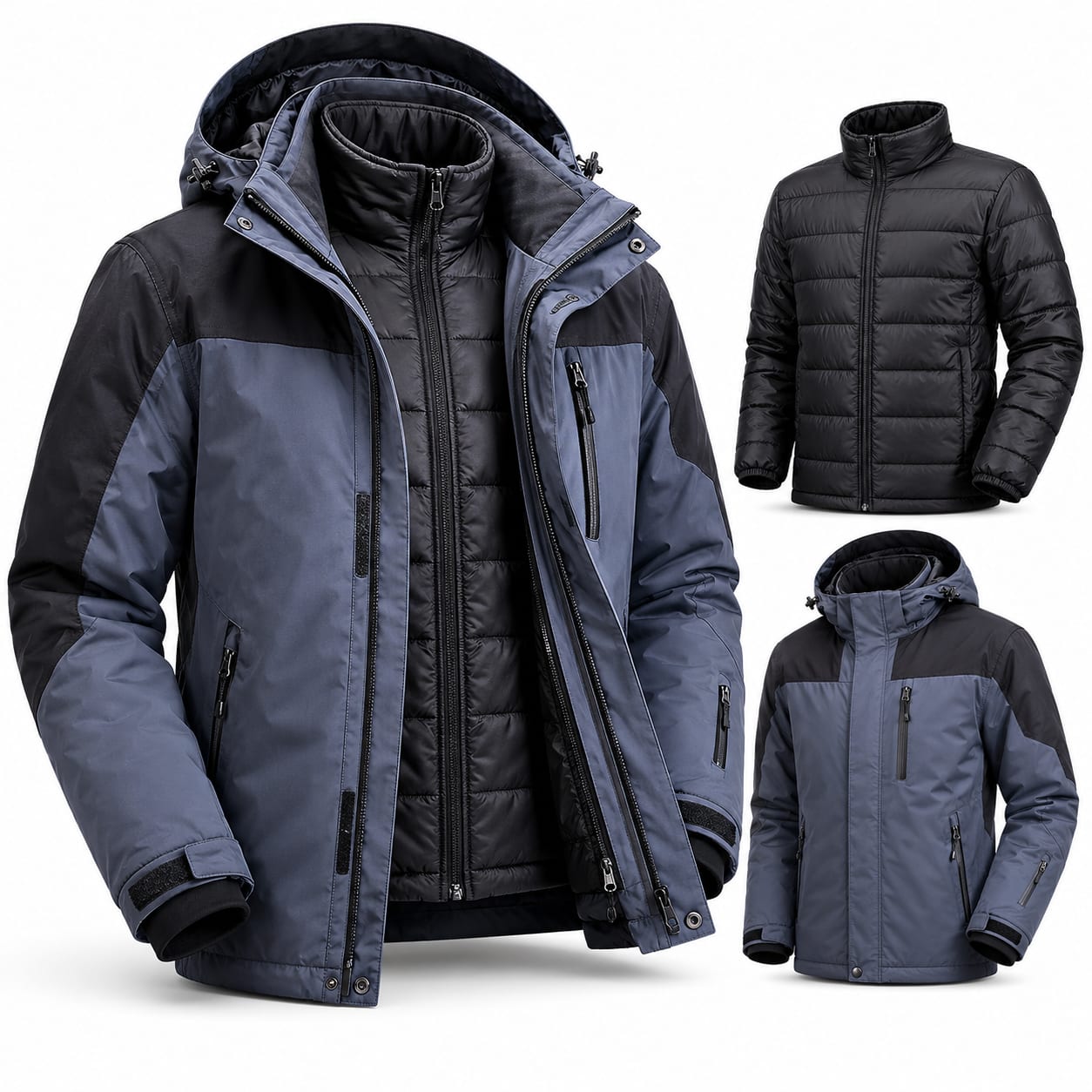
Insulated jackets typically match or slightly exceed shell jacket waterproof ratings at similar price points, as they're designed for harsh conditions. 3-in-1 jackets sometimes use lower-rated outer shells since the inner layer provides a backup.
Why it matters: Insulated jackets are often chosen for cold, snowy conditions where precipitation is expected. Adequate waterproofing ensures the insulation stays dry and effective—wet insulation loses warmth rapidly, especially down.
Breathability Rating
Breathability Rating
What it means
Measures how much water vapor (sweat) can pass through the fabric over 24 hours, expressed in g/m². Higher numbers mean better moisture management and less clamminess during exertion.
Typical for this type
10000–15000 g/m²/24hr
Most common pick: 8000–12000 g/m²/24hr
In practice
Insulated jackets generally have lower breathability than shells because the insulation layer adds resistance to moisture vapor transmission. Most fall in the 8,000–12,000 g/m² range.
Compared to other types
Shell jackets typically offer 15,000–25,000+ g/m² breathability since there's no insulation layer to impede moisture transfer. 3-in-1 jackets vary depending on whether the liner is worn. Insulated jackets require more reliance on mechanical venting (pit zips) to compensate.
Why it matters: Lower breathability means insulated jackets can feel clammy during high-exertion moments. Adequate breathability plus good venting is essential to manage sweat, which can freeze and make you cold when you stop moving.
Insulation Type
Insulation Type
What it means
The primary insulation material used in the jacket, which determines warmth-to-weight ratio, packability, and performance when wet.
Typical for this type
Synthetic For Wet Climates; Down For Cold/Dry; Hybrid For Best Balance
In practice
Synthetic insulation (PrimaLoft, Thinsulate, Coreloft) dominates the insulated jacket market due to its reliable warmth-when-wet performance and affordability. Down is available in premium models for maximum warmth-to-weight. Hybrid body-mapped designs are increasingly popular in high-end models.
Compared to other types
This is the core distinction—shell jackets have no insulation, and 3-in-1 jackets have a removable insulating liner. Insulated snow jackets have fixed insulation, which means consistent warmth but less versatility than a 3-in-1 system.
Why it matters: Insulation type determines how warm the jacket is for its weight, how it performs when damp, and how packable it is. This is the defining characteristic of the subcategory and the biggest differentiator between models.
Insulation Weight
Insulation Weight
What it means
The amount of insulation in the jacket, measured in grams. Higher numbers indicate more warmth but also more bulk. Often given as body/sleeve (e.g., 80g/60g).
Typical for this type
60–80g for versatile resort use; 100–150g for extreme cold
Most common pick: 60–100g (body) / 40–60g (sleeves)
In practice
Most all-mountain insulated jackets use 60–100g in the body and 40–60g in the sleeves, providing warmth for typical winter resort conditions without excessive bulk. Body-mapped designs concentrate insulation in the core and reduce it in high-mobility zones.
Compared to other types
Shell jackets have 0g insulation. 3-in-1 jackets vary based on the liner but often use 100–150g equivalent when combined. Insulated jackets offer fixed, predictable warmth—what you see is what you get.
Why it matters: Insulation weight directly determines warmth. Too little and you'll be cold on chairlifts; too much and you'll overheat while riding. Body-mapped weights (e.g., 80g/60g) offer the best balance for active resort use.
What it means
The overall cut and silhouette of the jacket, affecting layering capacity, mobility, and style.
Typical for this type
Regular For Most Skiers; Relaxed For Snowboarders Or Layerers
In practice
Regular fit is the most common for insulated ski jackets, allowing room for a thin mid-layer without excess bulk. Relaxed fit is popular in snowboard-oriented insulated jackets for mobility and style. Slim fits are rare because the insulation itself adds volume.
Compared to other types
Shell jackets can work in slim fits since there's no insulation to compress. Insulated jackets almost always need at least a regular fit to perform well. 3-in-1 jackets need regular or relaxed fits to accommodate the liner layer.
Why it matters: Fit affects both comfort and performance. Too tight and the insulation compresses, reducing its effectiveness. Too loose and you get cold air pockets and a sloppy feel. Insulated jackets need slightly more room than shells to allow the insulation to loft properly.
What it means
The method used to seal stitched seams, which are the weakest points for water entry. Critical for actual waterproof performance beyond the fabric rating.
Typical for this type
Critically Taped For Resort Use; Fully Seam-Sealed For Wet Climates And Deep Powder
Most common pick: Critically Seam-Sealed
In practice
Most mid-range insulated jackets use critical seam sealing, taping shoulders, hood, and chest seams. Premium models offer fully seam-sealed construction for maximum protection. The insulation provides a small backup if minor seepage occurs, unlike shell jackets where any leak is immediately felt.
Compared to other types
Shell jackets at the same price point may offer fully seam-sealed construction since they don't have insulation costs. Insulated jackets sometimes cut corners on seam sealing to stay price-competitive. 3-in-1 jackets vary widely.
Why it matters: Seam sealing is the difference between a jacket's waterproof rating on paper and real-world performance. Even a 20,000mm jacket will leak through untaped seams in sustained precipitation. For insulated jackets, keeping the insulation dry is critical to maintaining warmth.
What it means
The style and functionality of the jacket's hood, including whether it accommodates a helmet and how it adjusts.
Typical for this type
Helmet-Compatible Fixed Hood For Most Riders
In practice
The vast majority of insulated snow jackets feature a fixed, helmet-compatible hood with adjustment systems (drawcords, velcro tabs) to customize the fit with or without a helmet. This is the most practical and protective option for resort riding.
Compared to other types
Shell and 3-in-1 jackets offer similar hood options. Insulated hoods are often slightly roomier and warmer due to insulation in the hood itself, which is a real advantage in bitter cold. Some insulated jackets have insulated hoods that feel noticeably cozier than shell hoods.
Why it matters: A helmet-compatible hood provides full weather protection in storms and wind. Fixed hoods offer the best seal and can't be lost. The adjustment range determines whether the hood works well both over a helmet and on a bare head.
What it means
The type and location of zippered vents that allow rapid heat and moisture release during high-exertion activities without fully unzipping the jacket.
Typical for this type
Pit Zips (Essential); Mesh-Lined Vents Preferred For Powder
Most common pick: Pit Zips With Mesh Lining
In practice
Pit zips are the standard and most important venting feature on insulated jackets. Because the insulation reduces breathability, mechanical venting is more critical than on shell jackets. Mesh-lined pit zips are common to prevent snow ingress when open.
Compared to other types
Venting is more critical on insulated jackets than on shells because the insulation always retains heat. Shell jackets can rely more on fabric breathability. 3-in-1 jackets have the option of removing the liner for additional venting. Insulated jackets must have generous pit zips to compensate.
Why it matters: Insulated jackets trap heat by design, which means overheating is a real risk during exertion. Without effective pit zips, you'll end up unzipping the front of the jacket, which compromises weather protection. Full-length pit zips that extend from mid-torso to mid-bicep provide the most effective heat dump.
What it means
An elasticized or snap-closure band around the inside hem of the jacket that seals against the waist to prevent snow from entering from below, especially during falls in deep snow.
Typical for this type
Detachable For Versatility; Fixed For Dedicated Powder Riders
Most common pick: Fixed Or Detachable Powder Skirt
In practice
Most insulated snow jackets include either a fixed or detachable powder skirt. Detachable is increasingly common, offering the flexibility to remove it for spring conditions or groomer days. Fixed skirts are simpler and have one fewer potential leak point.
Compared to other types
Shell jackets sometimes skip powder skirts on minimalist touring models. Insulated jackets almost always include one because the target user is riding in deeper snow and colder conditions where snow ingress is both more likely and more consequential. 3-in-1 jackets typically have powder skirts that work with the liner.
Why it matters: A powder skirt prevents snow from entering at the waist during falls or deep snow, which is especially important for insulated jackets because wet insulation loses effectiveness. The skirt also helps trap warm air inside the jacket, enhancing the insulation's performance.
Wrist Seals / Cuffs
Wrist Seals / Cuffs
What it means
The closure system at the jacket cuffs that seals around the wrists to prevent cold air, snow, and water from entering the sleeves.
Typical for this type
Velcro Cuff With Inner Gaiter And Thumbhole For Best Seal
In practice
The best insulated jackets feature velcro-adjustable outer cuffs with inner stretch gaiters, often with thumbholes. This dual-seal system keeps cold air and snow out while preventing sleeves from riding up during falls or active movement.
Compared to other types
Shell and 3-in-1 jackets offer the same wrist seal options. Insulated jackets benefit slightly more from inner gaiters because the insulation in the sleeves can shift if the sleeve rides up, creating cold spots. The thumbhole gaiter keeps everything in place.
Why it matters: Wrist seals are a first line of defense against cold and snow entry. On insulated jackets, keeping the insulation dry and wind out is essential for maintaining warmth. Inner gaiters with thumbholes are especially valuable because they keep the sleeve anchored and prevent exposed skin at the wrist.
Membrane Technology
Membrane Technology
What it means
The specific waterproof-breathable membrane or coating technology used in the jacket's construction. This is the core technology that determines real-world performance.
Typical for this type
Proprietary Membrane For Good Value; GORE-TEX For Guaranteed Performance
In practice
Most insulated snow jackets in the mid-range use proprietary membranes (e.g., The North Face DryVent, Patagonia H2No, Columbia Omni-Tech). Premium models use GORE-TEX for guaranteed waterproof-breathable performance. The membrane works in conjunction with the insulation to keep you warm and dry.
Compared to other types
Shell jackets at the same price point are more likely to feature GORE-TEX because they don't have insulation costs. Insulated jackets often use proprietary membranes to maintain competitive pricing. GORE-TEX insulated jackets exist but command premium prices.
Why it matters: The membrane determines real-world waterproof and breathability performance beyond the rating numbers. A quality membrane keeps the insulation dry from external moisture while allowing sweat vapor to escape. If the membrane fails, the insulation gets wet from either direction and loses effectiveness.
Pocket Configuration
Pocket Configuration
What it means
The types, positions, and features of pockets on the jacket. Affects storage, convenience, and access to essentials while riding.
Typical for this type
Hand Warmer + Lift Pass Pocket Minimum; Add Internal Mesh Dump Pocket For Convenience
Most common pick: Hand Warmer, Lift Pass, Chest Pocket, Internal Media
In practice
Insulated jackets typically offer a full pocket suite: fleece-lined hand warmer pockets, a sleeve lift pass pocket, one or two chest pockets, and an internal media pocket. Internal mesh dump pockets for goggles are common on higher-end models. The insulation makes hand warmer pockets especially effective at keeping hands cozy.
Compared to other types
Insulated jackets tend to have more pockets than minimalist touring shells, which often strip features for weight savings. The insulated hand warmer pockets are a unique advantage—shell pockets don't have the same warming effect. 3-in-1 jackets may have pocket access issues when the liner is removed.
Why it matters: Pocket configuration affects daily convenience on the mountain. Fleece-lined hand warmer pockets are a standout feature on insulated jackets because the insulation amplifies the warming effect. A lift pass pocket is nearly essential for modern resort riding. Internal pockets keep electronics warm and protected from cold, which preserves battery life.
Jacket Length
Jacket Length
What it means
The overall length of the jacket, affecting coverage, snow protection, and style. Measured from center back collar to hem.
Typical for this type
Regular For Skiing; Long For Snowboarding And Deep Powder
In practice
Regular length ending at the hip is the most common for insulated ski jackets, providing good coverage without restricting movement. Long/extended lengths are popular in insulated snowboard jackets for extra coverage and style. Cropped lengths are rare in insulated models because they undermine the warmth purpose.
Compared to other types
Shell jackets for touring are often shorter for mobility. Insulated jackets lean toward regular or long because the target user prioritizes warmth and coverage. 3-in-1 jackets vary but tend toward regular length. The insulated long jacket is a classic snowboard silhouette.
Why it matters: Jacket length affects both coverage and mobility. Longer jackets provide more snow protection and keep your lower back and seat warm on cold chairlifts—a significant comfort advantage for insulated models. However, excessively long jackets can restrict leg movement during touring or hiking.
RECCO Reflector
RECCO Reflector
What it means
A passive rescue reflector embedded in the jacket that can be detected by RECCO detector equipment used by ski patrol and search and rescue teams.
Typical for this type
True Recommended For Any Rider Venturing Off-Piste
Most common pick: True (Increasingly Common)
In practice
RECCO reflectors are increasingly standard on mid-range and premium insulated snow jackets. They add no weight, require no maintenance, and provide an additional safety margin for rescue teams. Most riders don't choose a jacket based on RECCO, but it's a valuable included feature.
Compared to other types
RECCO availability is similar across shell, insulated, and 3-in-1 jackets at similar price points. Budget models across all subcategories are less likely to include it. Touring shells almost always have RECCO since backcountry riders are the primary audience for the technology.
Why it matters: A RECCO reflector is a passive safety feature that can help rescue teams locate you in avalanche terrain. While not a replacement for an avalanche beacon, it's a no-downside feature that's worth having on any jacket used near off-piste terrain.
Primary Activity / Use Case
Primary Activity / Use Case
What it means
The intended riding activity or environment the jacket is optimized for. Jackets designed for different activities prioritize different features and performance characteristics.
Typical for this type
Resort And All-Mountain Use Primary; Not Ideal For Backcountry Touring
Most common pick: Resort Skiing, Resort Snowboarding, All-Mountain
In practice
Insulated snow jackets are optimized for lift-served resort riding and all-mountain use where the convenience of built-in warmth outweighs the need for maximum breathability and layering flexibility. They excel in cold conditions where staying warm on chairlifts and in lift lines is a priority.
Compared to other types
Shell jackets are preferred for backcountry touring due to superior breathability and layering flexibility. 3-in-1 jackets offer more versatility for variable conditions. Insulated jackets are the least versatile but most convenient for consistent cold-weather resort riding.
Why it matters: Matching the jacket to your primary activity ensures you get the right balance of warmth, breathability, and features. An insulated jacket is the wrong choice for backcountry touring where high exertion and sweat management are critical, but it's the right choice for most resort riders who want simple, reliable warmth.
Fabric Denier / Durability
Fabric Denier / Durability
What it means
The thickness and durability of the outer face fabric, measured in denier. Higher denier fabrics are more abrasion-resistant and durable but heavier and less packable.
Typical for this type
40–70 denier for resort use; 80+ for freeride and tree skiing
In practice
Most insulated snow jackets use 40–70 denier face fabrics, providing a good balance of durability and weight for resort use. Higher denier fabrics (80–150D) are used on freeride-oriented models that encounter tree branches and rough terrain. Some jackets use mixed deniers with reinforcement in high-wear areas.
Compared to other types
Shell jackets for touring use lighter 10–40 denier fabrics for packability. Insulated jackets tend to use mid-range deniers since they're designed for resort use where durability matters more than weight. 3-in-1 jackets vary but often use moderate deniers. Freeride-specific insulated jackets may use 80–150D for maximum toughness.
Why it matters: Durability matters for the jacket's lifespan, especially if you ski in trees, ride aggressively, or carry your skis on your shoulder. Higher denier fabrics resist abrasion and tearing better but add weight. Since insulated jackets are often a significant investment, adequate durability protects that investment.