Insulation Type
Insulation Type
What it means
The type of insulation used in the pants, determining warmth, packability, and moisture management.
Typical for this type
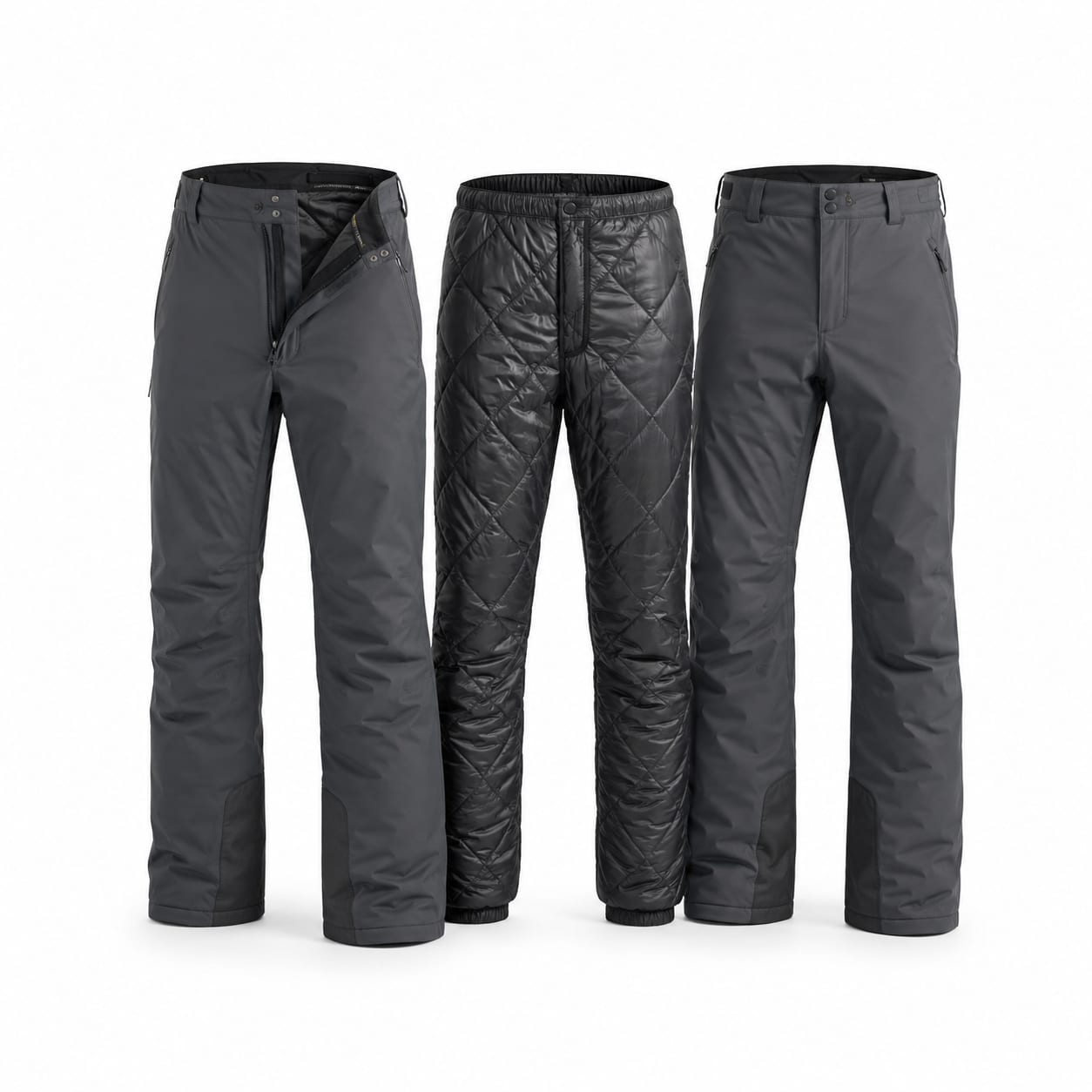
Shell No Insulation (Preferred); Hybrid Insulation For Cold-Weather Touring
In practice
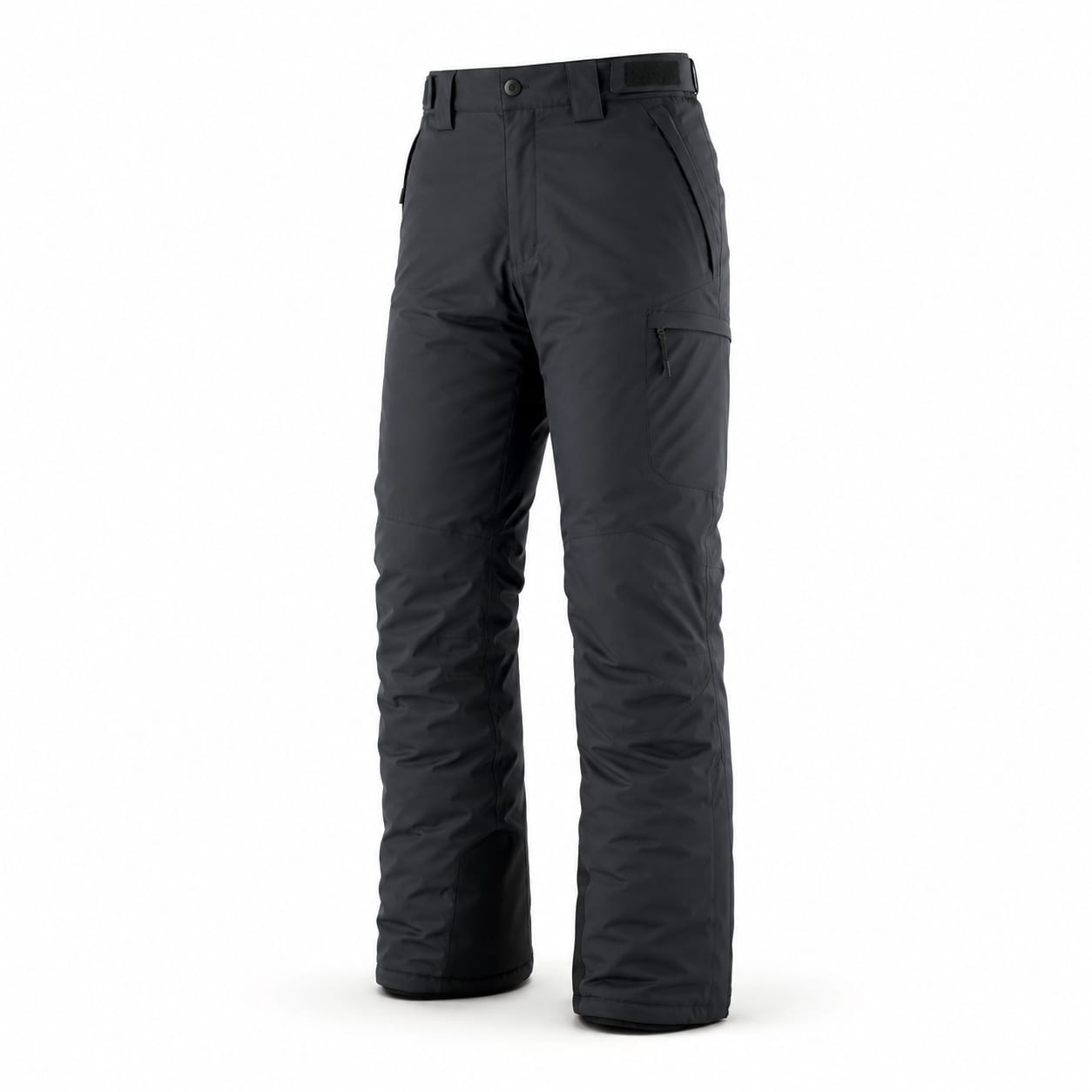
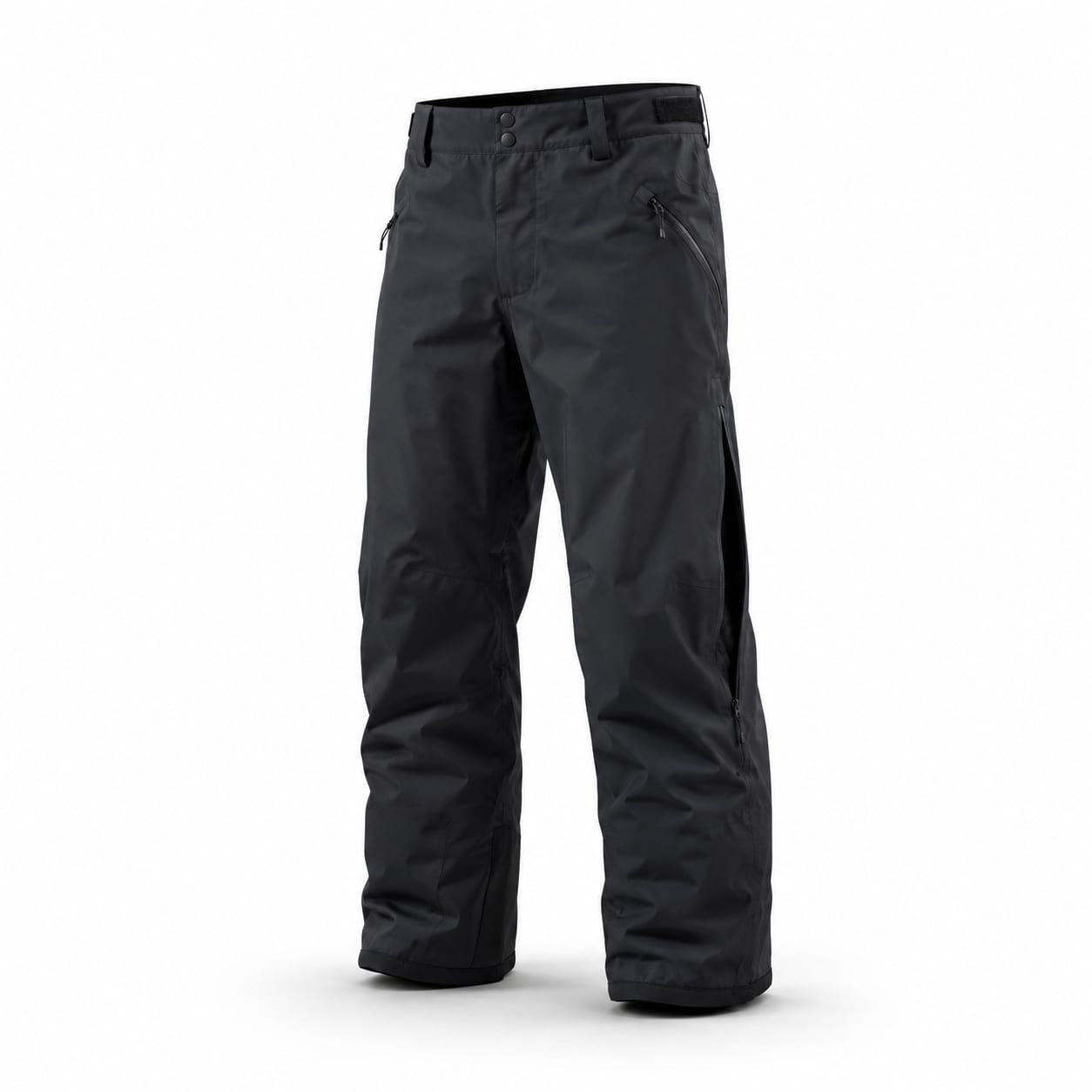
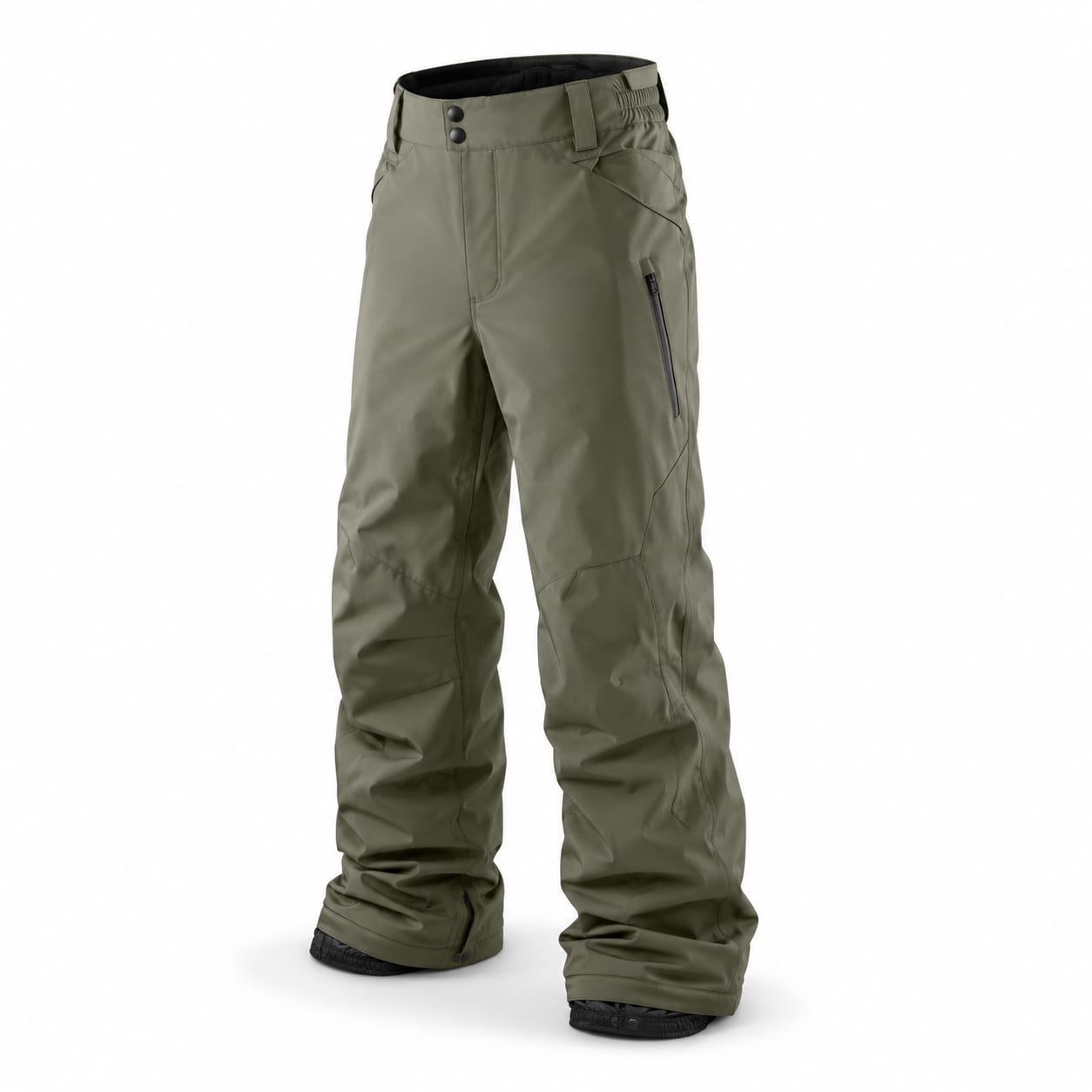
Backcountry touring pants are overwhelmingly shell construction with no built-in insulation. This allows riders to manage warmth through adjustable layering underneath, which is essential given the dramatic output fluctuations between ascending and descending.
Compared to other types
Unlike resort pants where synthetic insulation (40-60g) is common, or freestyle pants where fleece linings add comfort, touring pants almost universally use shell construction. This is the single biggest differentiator from other subcategories.
Why it matters: Insulated pants become sweat-soaked during high-output uphill travel, leading to rapid cooling and potential hypothermia during stops or descents. Shell construction lets you add or remove mid-layers at transitions to match your exertion level.
Waterproof Rating
Waterproof Rating
What it means
The water column rating (mm) indicating how much water pressure the fabric can withstand before leaking. Higher numbers mean better waterproofing.
Typical for this type
15000–30000 mm
Most common pick: 20000 mm
In practice
Backcountry environments expose riders to sustained wet conditions—from deep powder to rain-soaked spring corn to sitting on wet snow during transitions. A minimum of 15,000mm is recommended, with 20,000mm+ being the sweet spot for versatile four-season touring.
Compared to other types
Touring pants typically feature higher waterproof ratings than resort or freestyle pants (which often range 10,000-15,000mm) because backcountry riders face more sustained exposure and have no shelter options.
Why it matters: In the backcountry, you can't simply duck into a lodge when weather turns. Your pants must handle hours of sustained precipitation, wet brush contact, and sitting on saturated snow without leaking. Higher waterproof ratings provide a critical safety margin.
Breathability Rating
Breathability Rating
What it means
The moisture vapor transmission rate (g/m²/24hr) measuring how much sweat vapor can escape through the fabric. Higher numbers mean better breathability.
Typical for this type
15000–40000 g/m²/24hr
Most common pick: 25000 g/m²/24hr
In practice
Breathability is arguably the most critical specification for touring pants. During sustained uphill travel at moderate-to-high intensity, the body generates substantial moisture vapor. Ratings of 20,000+ g/m²/24hr are strongly recommended, with premium membranes reaching 30,000-40,000.
Compared to other types
Touring pants demand significantly higher breathability than resort pants (typically 10,000-15,000 g/m²/24hr) or freestyle pants (5,000-10,000 g/m²/24hr) because uphill travel generates far more perspiration than lift-served riding.
Why it matters: Sweat that cannot escape through the fabric condenses on inner layers, soaking your base and mid-layers. This moisture then freezes or chills you during stops and descents, creating a dangerous cycle of overheating and rapid cooling that shell breathability alone cannot fully mitigate without supplemental venting.
What it means
The overall cut and silhouette of the pants, affecting style, mobility, layering capacity, and snow protection.
Typical for this type
Regular (Preferred); Relaxed For Cold-Weather Layering
In practice
Regular fit is the standard for touring pants, providing enough room for a base layer and lightweight mid-layer underneath without excess fabric that catches wind or snags on equipment. Relaxed fits are used by riders who prioritize maximum layering capacity for extremely cold tours.
Compared to other types
Touring pants avoid the slim fits popular in resort fashion and the baggy/relaxed fits common in freestyle. The fit is function-driven, prioritizing mobility and layering over aesthetics.
Why it matters: Too slim restricts layering and mobility on steep skintracks; too baggy creates wind drag on exposed ridges and can catch on ski edges during kick-turns or steep traverses. Regular fit strikes the balance between layering capacity and streamlined performance.
What it means
Whether the pants are standard waist-height or bib-style with shoulder straps and extended coverage.
Typical for this type
Bib (Preferred For Deep Powder And Cold); Convertible For Versatility; Pants For Warm Spring Tours
In practice
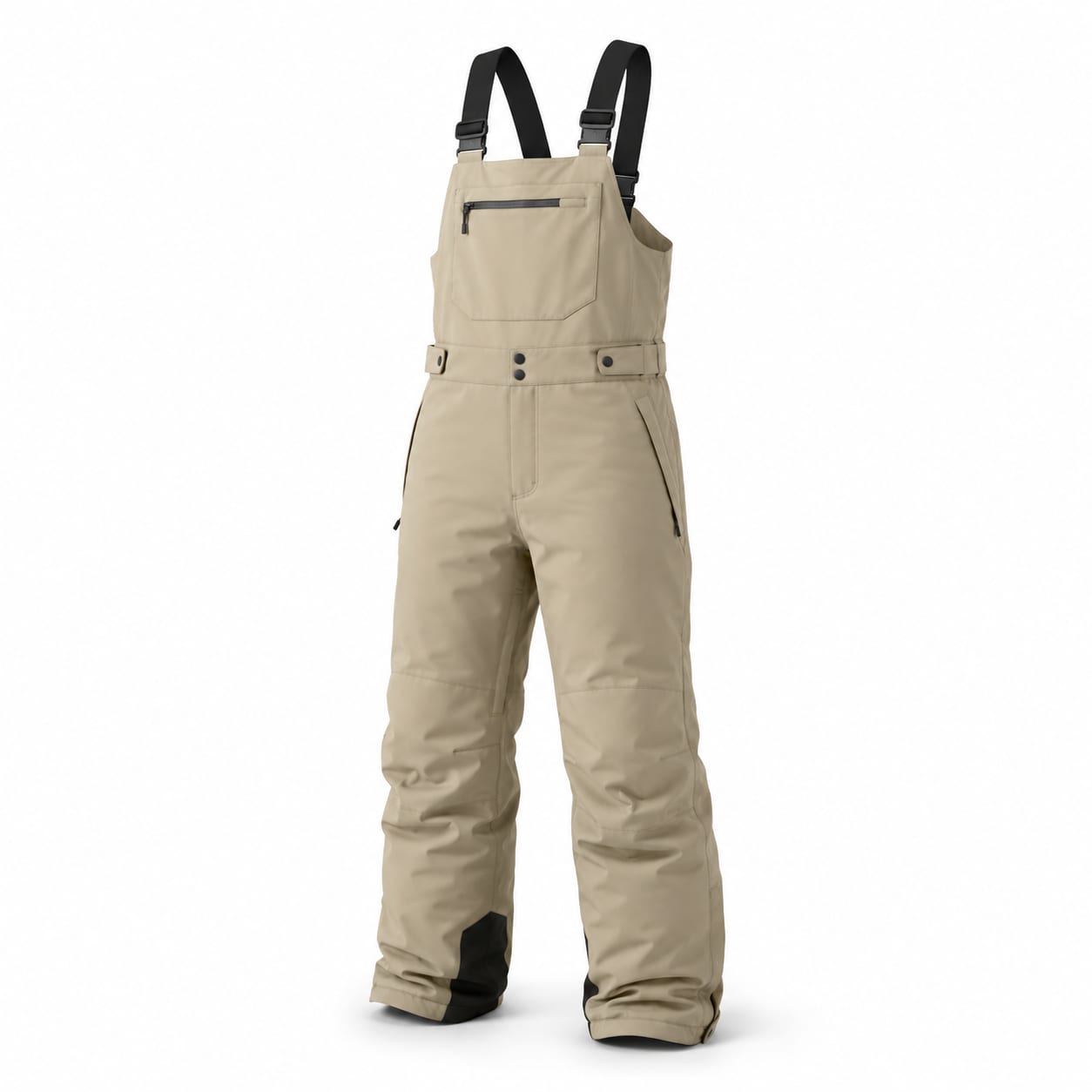
Bib-style touring pants have become the dominant choice for backcountry riders. The extended chest coverage eliminates the jacket-pants gap where snow enters during falls or deep post-holing, provides core warmth, and offers secure chest pockets for avalanche beacons and electronics.
Compared to other types
Bibs are popular across subcategories but especially valued in touring where deep powder and extended exposure make snow infiltration more consequential. Convertible styles with removable suspenders are gaining traction for riders who want versatility.
Why it matters: In deep powder and during transitions, snow infiltration at the waist is a real problem. Bibs solve this completely while adding useful storage and core insulation. The bathroom inconvenience is real but manageable with drop-seat designs common on touring bibs.
Insulation Weight
Insulation Weight
What it means
The amount of insulation in grams, directly correlating to warmth level. Higher grams mean more warmth but more bulk.
Typical for this type
0 g (shell, Preferred); 20-40 G For Cold-Weather Touring Hybrids
In practice
True touring pants are uninsulated shells (0g), relying entirely on layering for warmth. A small but growing segment features 20-40g of lightweight synthetic insulation in hybrid designs for riders who prioritize warmth on cold descents and are willing to accept slightly reduced breathability on the up.
Compared to other types
Resort pants typically range 40-60g, freestyle pants 0-40g (often fleece-lined), and alpine/race pants 40-80g. Touring pants are the only subcategory where 0g is the dominant and recommended choice.
Why it matters: Zero insulation maximizes breathability and layering flexibility. Even 20g of insulation adds warmth you cannot remove on the ascent, potentially leading to overheating. The layering system approach—base layer plus optional mid-layer—gives you complete control.
Ventilation System
Ventilation System
What it means
The type and placement of zippered vents that allow rapid temperature regulation during high-output activities.
Typical for this type
Full Side Zip (Essential); Mesh Lined Vents As Supplement
In practice
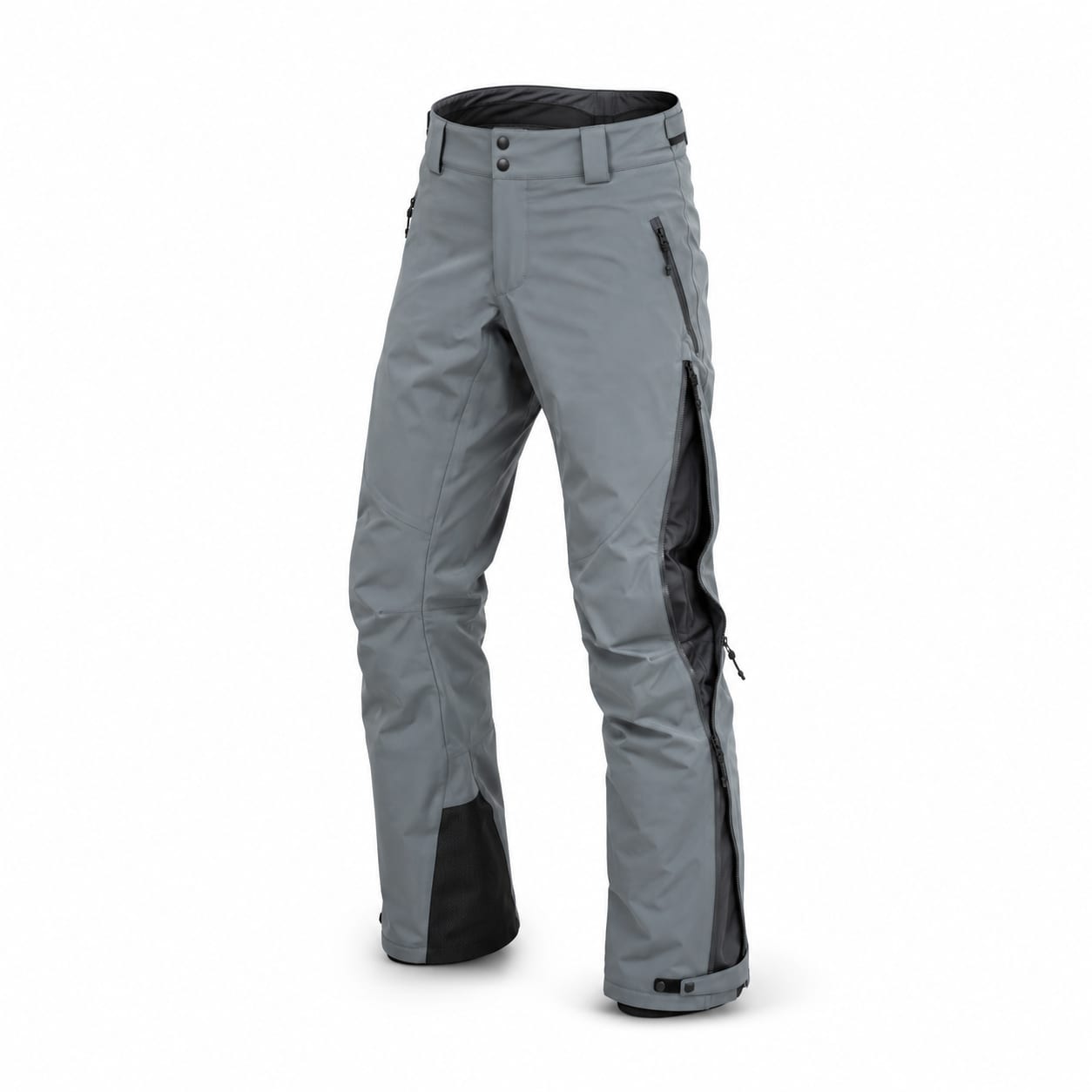
Full-length side zippers are the defining ventilation feature of touring pants. They allow maximum heat dumping, enable putting on or removing pants without removing boots or skis, and provide emergency access for layering adjustments during transitions.
Compared to other types
Resort pants typically use inner thigh vents; freestyle pants may use outer thigh vents. Full side zips are rare outside touring because they add cost and weight, but they are considered essential for serious backcountry use.
Why it matters: On a steep skintrack, you can go from comfortable to dangerously overheated in minutes. Full side zips allow instant, massive ventilation without stopping. They also let you don or shed pants at transition points without the hassle of removing boots—a significant advantage in deep snow or harsh weather.
What it means
The method and extent of seam sealing, which is critical for preventing water entry at stitched seams.
Typical for this type
Fully Taped (Standard); Welded Seams For Premium Ultralight Options
In practice
Fully taped seams are the baseline expectation for touring pants. Every seam is sealed with waterproof tape, ensuring no water ingress through stitch holes during sustained exposure to wet conditions. Welded seams appear on premium ultralight options, reducing bulk and weight while maintaining complete waterproofing.
Compared to other types
Resort and freestyle pants may use critically taped seams to save cost, which is acceptable for shorter exposure periods. Touring pants demand fully taped or welded seams due to prolonged wet exposure and the safety implications of failure.
Why it matters: In the backcountry, a leaky seam isn't an inconvenience—it's a safety issue. Wet layers lose insulation value and can contribute to hypothermia. Fully taped seams are non-negotiable for any serious touring pant, as critically taped seams can fail during extended wet exposure.
What it means
Built-in elastic or adjustable cuffs at the pant leg bottom that seal around boots to prevent snow entry.
Typical for this type
Adjustable Gaiter (Preferred); Elastic Gaiter Acceptable
In practice
Adjustable gaiters with snap or hook closures provide a secure, customizable seal around touring boots that accommodates different boot volumes and maintains effectiveness over time. The adjustability is valuable because touring boots vary widely in size and shape compared to resort boots.
Compared to other types
Adjustable gaiters are preferred across most subcategories but are especially important for touring where deep, untracked snow is the norm rather than the exception. The reliability of the seal matters more when you're hours from a warm building.
Why it matters: Deep powder and post-holing are routine in the backcountry. A secure gaiter seal prevents snow from entering boots, which can lead to cold, wet feet and potentially frostbite. Adjustable gaiters maintain their seal better than elastic versions as materials age and stretch.
Reinforcement Panels
Reinforcement Panels
What it means
Extra-durable fabric panels at high-wear areas like cuffs, hems, and inner legs to prevent damage from edges, boots, and abrasion.
Typical for this type
Cuff Reinforcement (Minimum); Full Scuff Guard For Aggressive Use
In practice
Cuff reinforcement protects the pant hem from ski edge cuts and boot abrasion. Full scuff guards extending up the inner leg are recommended for riders who use crampons frequently or encounter abrasive conditions on rocky approaches.
Compared to other types
Touring pants tend to have lighter reinforcement than resort or race pants to save weight, but cuff reinforcement is still considered essential. Some ultralight touring pants sacrifice reinforcement for grams, which is a tradeoff that aggressive riders should avoid.
Why it matters: Touring pants are an investment, and the cuff/inner leg area takes abuse from sharp ski edges during kick-turns, crampon points, and boot friction. Reinforcement panels significantly extend garment life. However, heavy reinforcement adds weight, so there's a balance for ultralight touring.
Waist Adjustment
Waist Adjustment
What it means
The mechanism for adjusting waist fit without a belt, ensuring secure fit and snow seal at the waist.
Typical for this type
Buckle Side Tabs (Preferred); Velcro Side Tabs Acceptable
In practice
Buckle side tabs provide precise, durable waist adjustment that maintains its setting throughout a long tour. Unlike Velcro, which can collect ice and lose grip in wet conditions, buckle systems remain reliable in the variable conditions encountered in the backcountry.
Compared to other types
Velcro side tabs dominate resort and freestyle pants due to lower cost and adequate performance in less demanding conditions. Touring pants increasingly favor buckle systems for their reliability in wet, cold, and icy conditions.
Why it matters: Waist adjustment is critical for maintaining the snow seal between jacket and pants, especially during transitions when you may add or remove mid-layers. Buckle systems won't freeze or clog with ice like Velcro can, making them more reliable in backcountry conditions.
Pocket Configuration
Pocket Configuration
What it means
The number, type, and placement of pockets for storing essentials like pass, phone, snacks, and tools.
Typical for this type
Hand Warmer + Cargo Pockets + Bib Chest Pocket (For Bibs); Hand Warmer + Cargo Pockets + Pass Pocket (For Pants)
Most common pick: Hand Warmer, Cargo Pockets, Bib Chest Pocket
In practice
Touring pants prioritize functional storage for backcountry essentials. Cargo pockets hold skins, snacks, and tools. Bib chest pockets provide secure, body-warm storage for avalanche beacons and electronics. Hand warmer pockets offer comfort during stops. An RFID pass pocket is useful for resort-accessed backcountry gates.
Compared to other types
Touring pants emphasize cargo and chest pockets over the pass pockets prioritized in resort pants. The beacon pocket is unique to touring-oriented designs and reflects the safety equipment requirements of backcountry travel.
Why it matters: In the backcountry, what you carry matters. A dedicated beacon pocket in the chest area keeps your transceiver accessible and secure. Cargo pockets hold climbing skins during transitions. Hand warmers provide comfort during cold transition stops. Pocket design directly impacts efficiency and safety.
Shell Material
Shell Material
What it means
The primary outer fabric type, affecting durability, weight, stretch, noise, and overall feel.
Typical for this type
Gore Tex (Preferred); Stretch Fabric For Mobility-Focused Designs; Nylon For Budget Options
In practice
Gore-Tex laminates—particularly Active and Pro variants—dominate the touring pant market for their proven waterproof-breathable performance. Stretch fabrics are gaining popularity for softshell touring pants that prioritize mobility over maximum weather protection. Nylon shells with proprietary membranes offer good value.
Compared to other types
Touring pants use higher-performance shell materials than resort pants (often polyester or basic nylon) because the breathability demands are much greater. Gore-Tex adoption is highest in this subcategory, reflecting the premium performance requirements.
Why it matters: The shell material is the foundation of a touring pant's performance. Gore-Tex Active maximizes breathability for high-output use; Gore-Tex Pro prioritizes durability for aggressive terrain. Stretch fabrics offer unmatched mobility but may sacrifice some weather protection. The right choice depends on your touring style and typical conditions.
What it means
Pre-shaped or articulated knees and hips designed to match the natural riding position, reducing fabric bunching and improving mobility.
Typical for this type
Fully Articulated (Preferred); Articulated Knees Minimum
In practice
Fully articulated construction with pre-shaped knees, gusseted crotch, and shaped hips is standard on quality touring pants. This design matches the natural biomechanics of uphill travel—high stepping on steep skintracks, deep lunges for kick-turns, and the athletic stance of descending.
Compared to other types
Touring pants are more likely to feature full articulation than resort or freestyle pants because the movement demands are greater and more varied. Non-articulated pants are essentially unusable for serious touring.
Why it matters: Touring involves far more varied and extreme range of motion than resort riding. Steep skintracks require high knee lifts; kick-turns demand deep hip flexion; descending untracked powder requires an athletic, bent-knee stance. Articulation prevents fabric restriction and bunching that causes discomfort and restricts movement.
What it means
Durable Water Repellent treatment on the outer fabric that causes water to bead up and roll off rather than soaking into the face fabric.
Typical for this type
True (Essential)
In practice
DWR (Durable Water Repellent) coating is standard and essential on touring pants. It causes water to bead and roll off the face fabric rather than soaking in, which maintains breathability by preventing the outer fabric from wetting out and blocking moisture vapor transmission.
Compared to other types
DWR is standard across all quality snow pants, but its importance is amplified in touring because the consequences of wetted-out fabric are more severe when you're hours from shelter. Touring pants require more frequent DWR reapplication due to heavier use and exposure.
Why it matters: When the face fabric wets out, it creates a barrier that blocks the breathable membrane from doing its job—effectively turning your premium waterproof-breathable pants into a vapor barrier. In the backcountry, a wetted-out shell means sweat cannot escape, leading to soaked inner layers and dangerous chilling. DWR maintenance is a safety practice, not just a performance concern.
Inseam Length
Inseam Length
What it means
The measurement from the crotch seam to the bottom of the pant leg, determining proper length and coverage.
Typical for this type
30–34 inches
Most common pick: 32 inches
In practice
Touring pants should have a slightly longer inseam than casual pants to ensure coverage during high-step movements on steep skintracks and while seated during transitions. The pant should reach mid-boot when standing, with gaiters properly positioned over the boot cuff.
Compared to other types
Inseam requirements are similar across subcategories, but touring pants benefit from slightly more length to accommodate the extreme range of motion in uphill travel. Many touring-specific brands offer more precise inseam sizing than resort brands.
Why it matters: Too short and your calves or socks are exposed during high steps or when pants ride up in a flexed position—inviting snow entry and cold spots. Too long and fabric drags in the snow, gets caught on equipment, and creates tripping hazards. Proper inseam length is a safety and comfort issue in the backcountry.