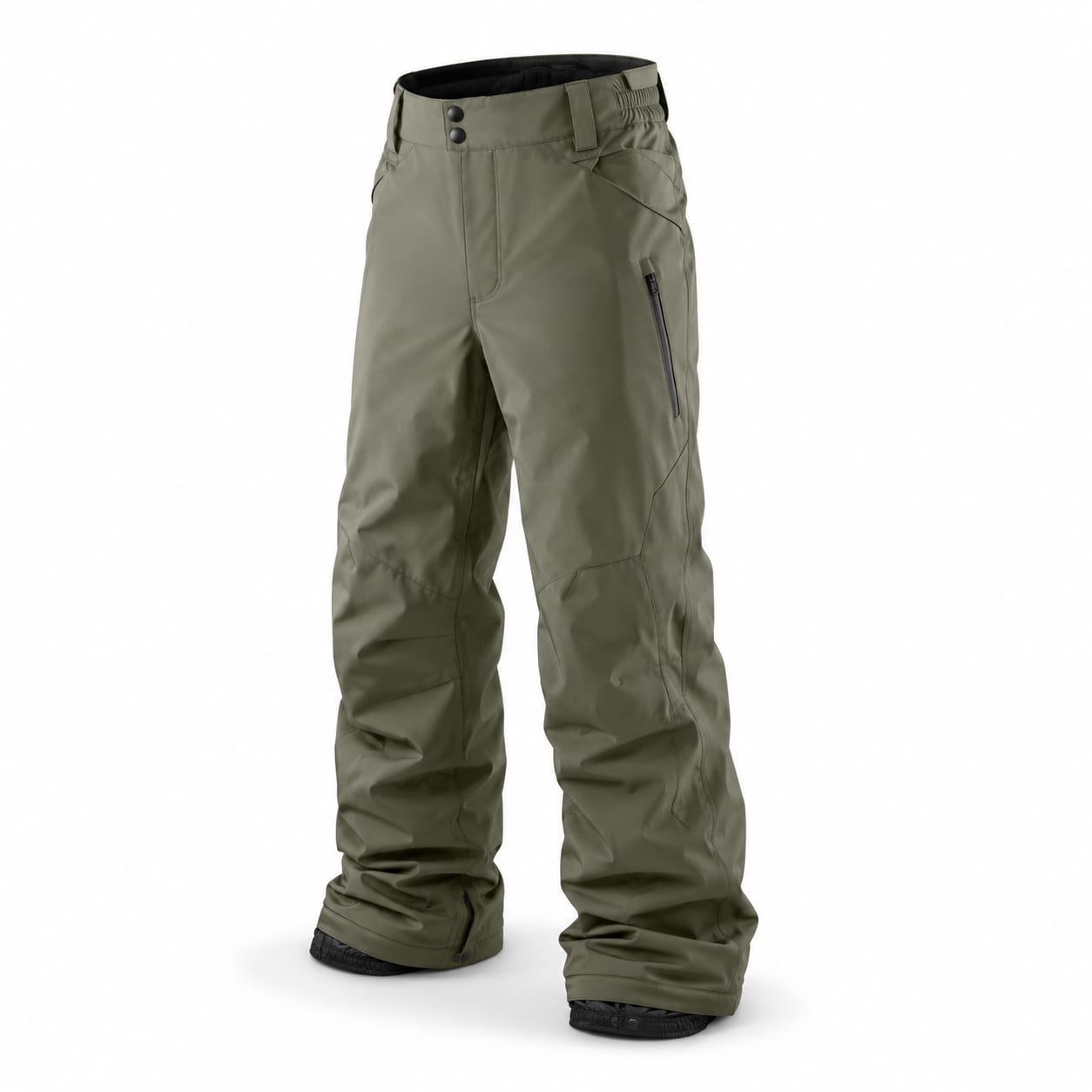
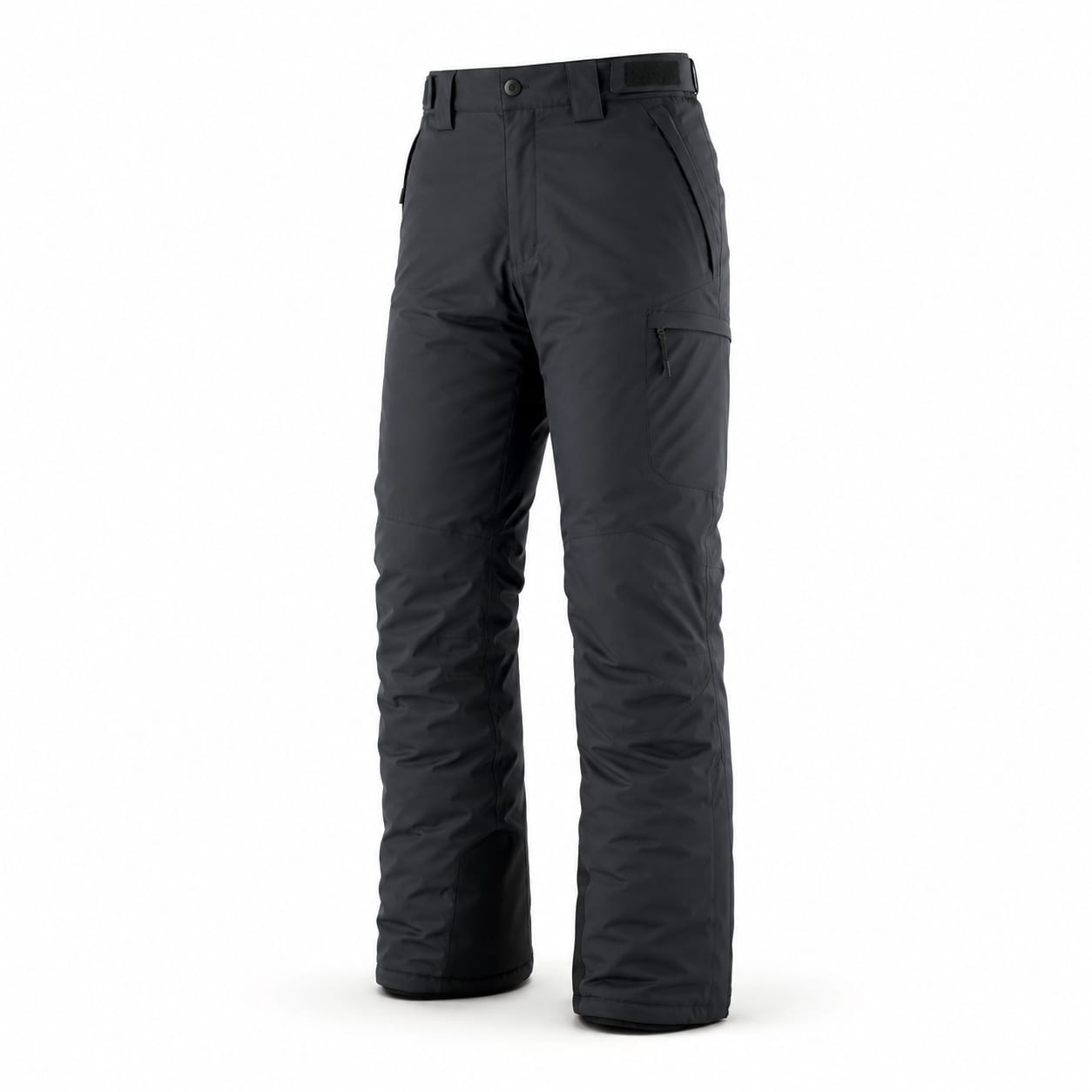
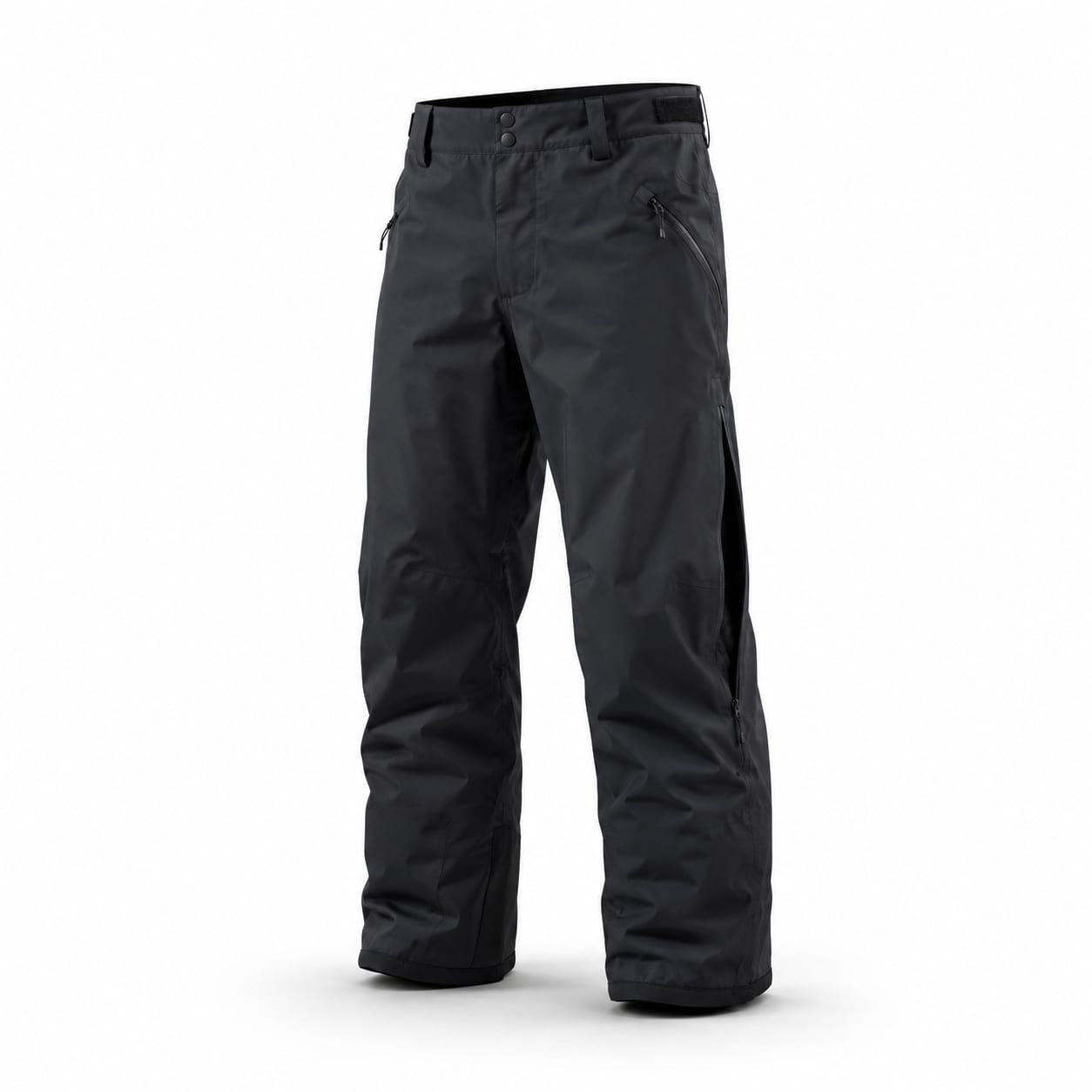
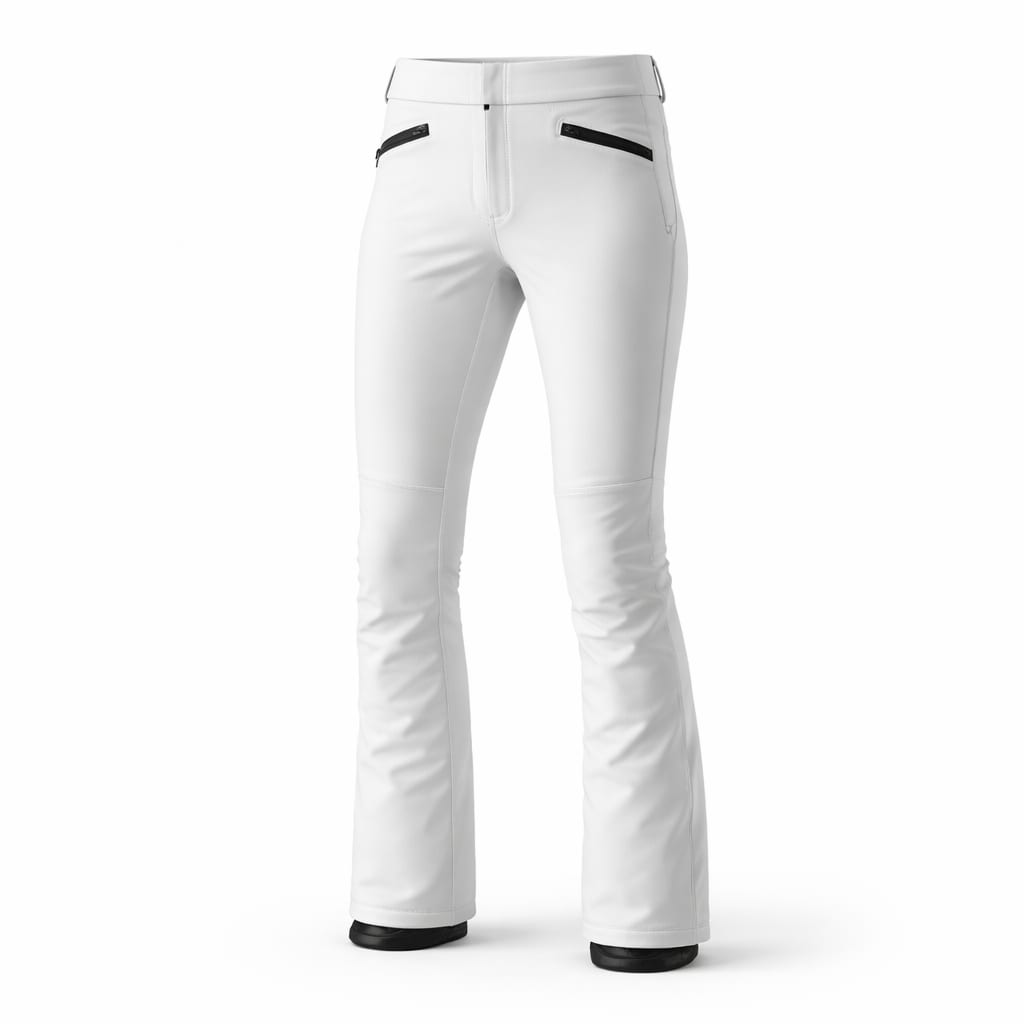
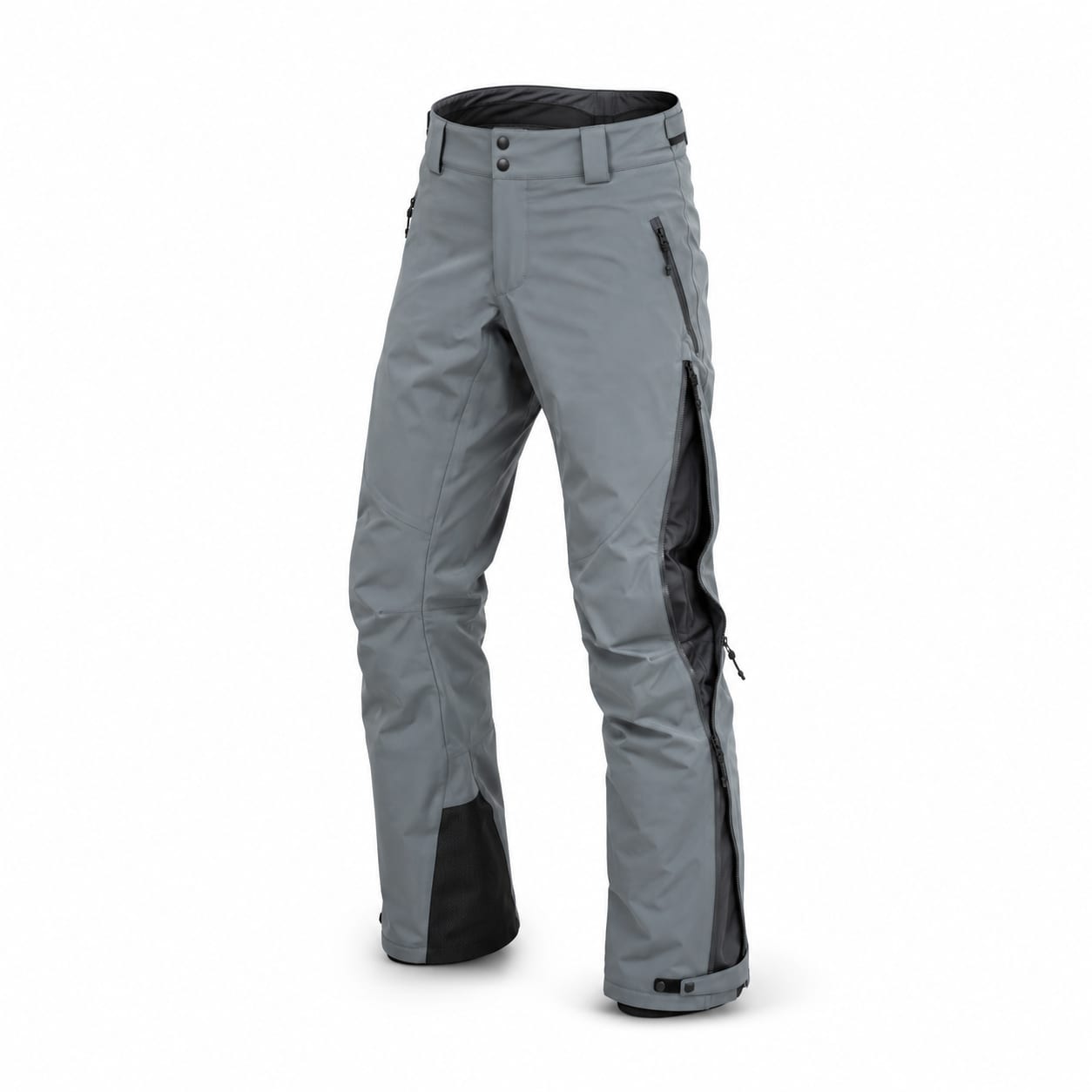
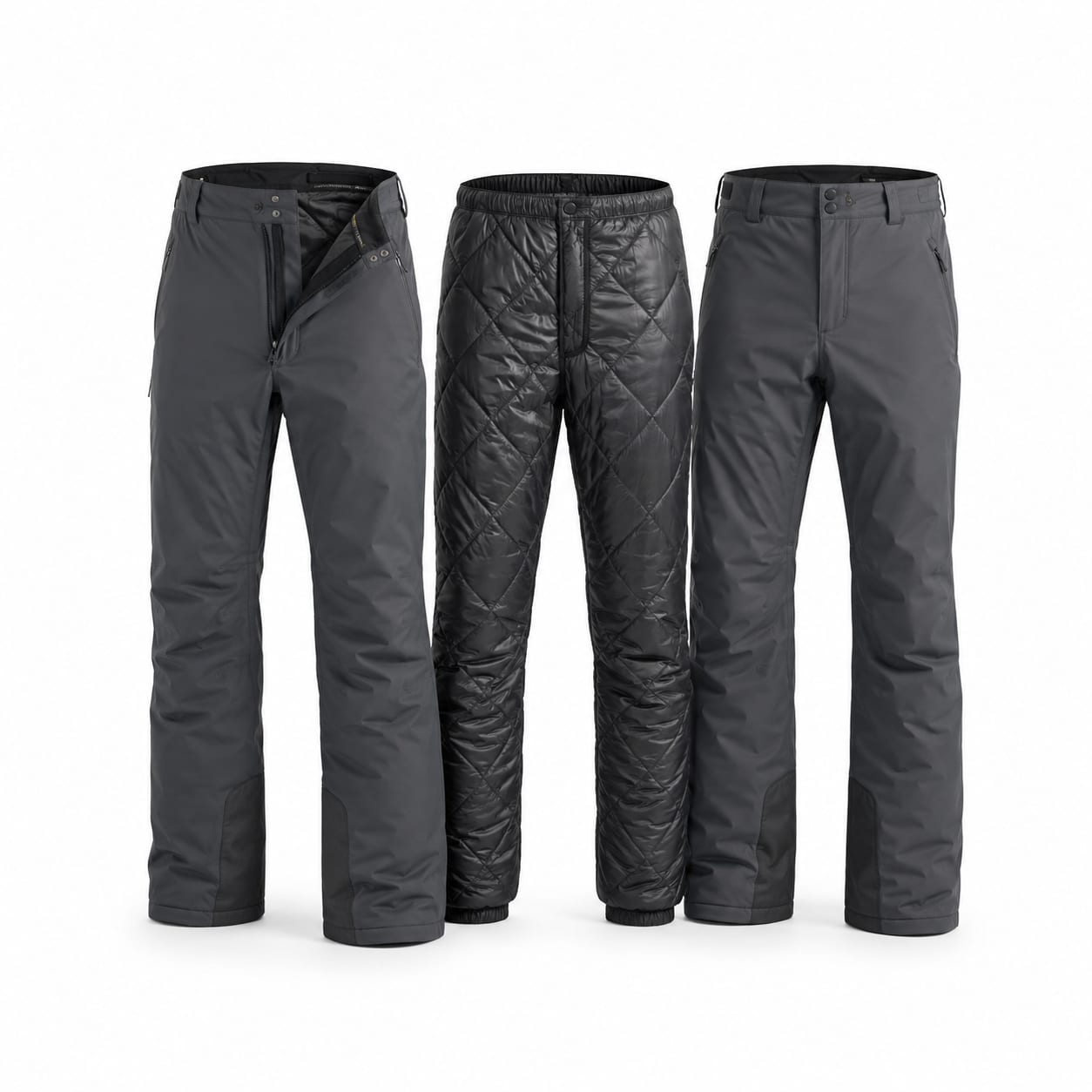
Snowboard pants are a distinct subcategory of winter riding bottoms designed around the biomechanics and culture of snowboarding. Where ski pants tend toward slimmer, more tailored fits, snowboard pants prioritize freedom of movement with relaxed through the hip and thigh, longer inseams, and articulated knees that accommodate the wider, lower stance inherent to snowboarding. The fit isn't just cultural—it's functional. A looser cut prevents fabric from restricting the deep knee bends, twists, and lateral movements that snowboarders perform constantly, from carving turns to setting up for park features. Snowboard pants also address the reality that snowboarders spend significant time sitting in snow—strapping in, resting, or waiting for features—which demands reinforced seat panels and superior waterproofing in high-contact areas. The cuffed hem and gaiter system must interface seamlessly with snowboard boots, which are different in shape and closure from ski boots. Cargo pockets have become a signature feature, offering accessible storage for tools, wax, snacks, and a phone while riding. Ventilation is critical because snowboarders frequently transition between high-output hiking and stationary waiting, making inner thigh vents with mesh lining a near-essential feature. Modern snowboard pants range from technical shell systems for backcountry splitboarding to insulated resort pants with fleece linings, but all share the common thread of prioritizing mobility, durability, and the distinctive aesthetic that sets snowboarding apart on the mountain.
Snowboard pants have evolved significantly from the early days of the sport, when riders adapted whatever winter gear they could find. Today's snowboard pants are sophisticated pieces of technical equipment that reflect decades of design iteration driven by the specific needs of snowboarders. The most immediately noticeable difference between snowboard pants and ski pants is the fit. Snowboard pants typically feature a relaxed or baggy silhouette that provides ample room for the deep knee bends, wide stances, and rotational movements that define snowboarding. This isn't merely a fashion statement—although style has always been central to snowboard culture—the looser fit serves a genuine functional purpose by preventing fabric restriction during aggressive riding.
The construction of snowboard pants reflects the unique ways that snowboarders interact with the mountain environment. Snowboarders spend considerably more time sitting in snow than skiers—whether strapping into bindings, adjusting gear, or waiting at the top of a feature. This means the seat and back of the thighs receive far more moisture exposure, making waterproofing and seam sealing in these areas particularly important. Many snowboard-specific pants feature reinforced seat panels that add durability and an extra barrier against moisture penetration. Similarly, the inner leg and cuff areas face abuse from edge contact during rail slides and general board handling, making scuff guards and cuff reinforcement more critical for snowboarders than for most skiers.
Ventilation is another area where snowboard pants diverge from ski-oriented designs. Snowboarders frequently alternate between high-output activities like hiking to backcountry lines or traversing flat catwalks and periods of relative inactivity while waiting or riding lifts. Inner thigh vents with mesh lining have become the standard for snowboard pants because they allow rapid heat dumping during strenuous sections while preventing snow ingress when open in deep powder. The mesh lining is particularly important for snowboarders, who are more likely to have vents open while actually riding through snow, unlike skiers who typically open vents only while stationary or on chairlifts.
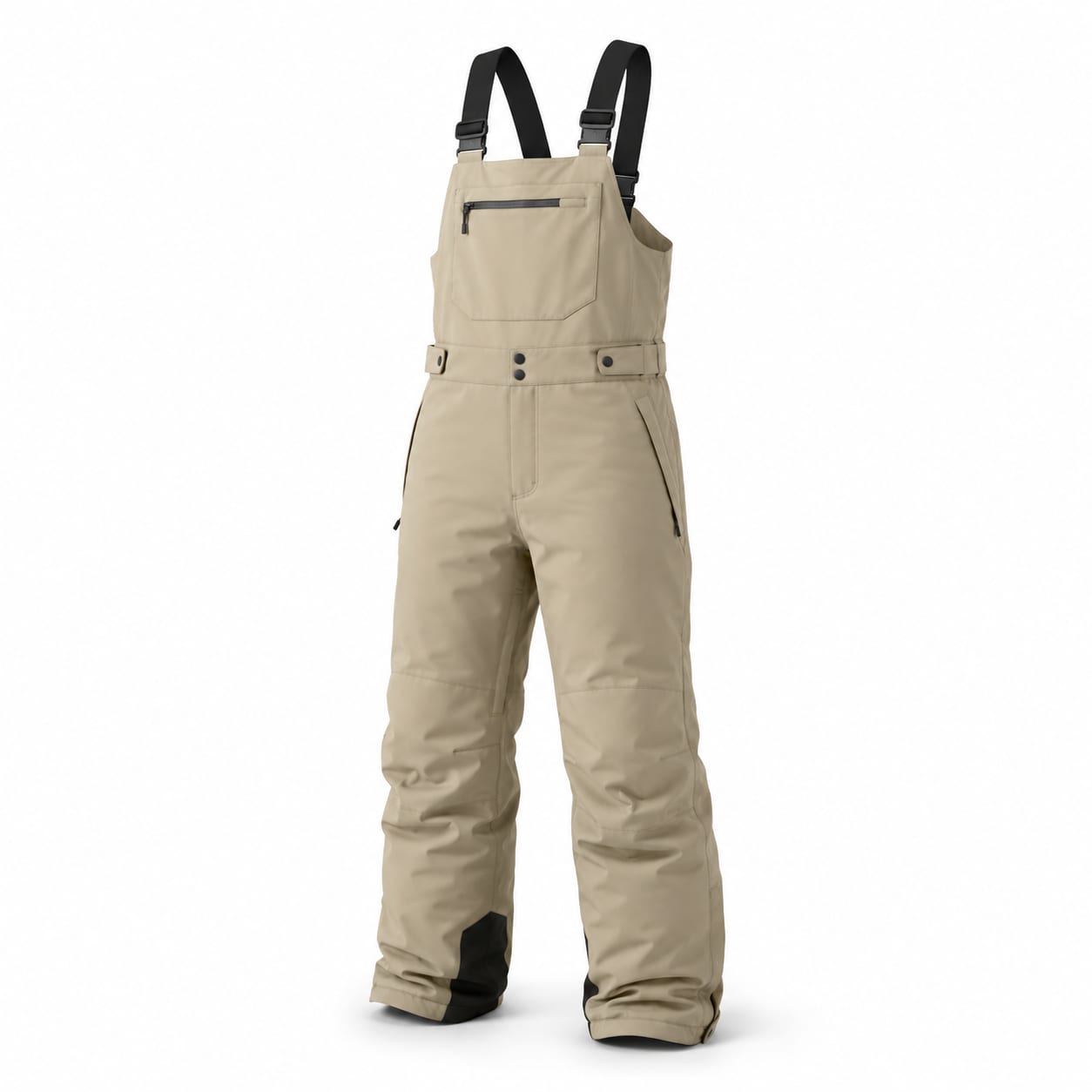
The pocket configuration on snowboard pants also reflects the sport's unique demands. Cargo pockets positioned on the thighs are a hallmark of snowboard pant design, offering accessible storage for the tools, hardware, and accessories that snowboarders frequently carry. The positioning allows access while wearing gloves and while seated on the snow—something that hip-level hand warmer pockets don't accommodate as well. Many modern snowboard pants also include dedicated RFID pass pockets on the lower left leg, aligned with resort scanning gates, and internal pockets for media players or phones with headphone routing. The trend toward bib-style snowboard pants has accelerated in recent years, as riders discover the superior snow protection and core warmth that bibs provide, particularly in deep powder where snow ingestion at the waist is a common problem for standard pants.
When selecting snowboard pants, riders should consider their primary riding style and typical conditions. Park and street riders benefit from relaxed or baggy fits with maximum mobility and reinforced cuffs, but may not need the highest waterproof ratings if they primarily ride in drier climates. Freeride and backcountry snowboarders should prioritize technical shell pants with high waterproof and breathability ratings, fully taped seams, and full side zip vents for touring efficiency. All-mountain resort riders can find an excellent balance with 10,000-15,000mm waterproof ratings, synthetic insulation in the 40-60g range, and inner thigh mesh-lined vents. Regardless of riding style, every snowboarder should ensure their pants feature functional snow gaiters, cuff reinforcement, and adequate venting—these are non-negotiable features that significantly impact comfort and longevity on the mountain.