Kitvore.com

Kitvore.com

Specs that matter. Gear that fits.

Cycling Helmet · Subcategory

Kids / Youth Helmet

Helmets specifically designed and sized for children and young teenagers, prioritizing safety, comfort, and kid-friendly aesthetics.

Kids and youth helmets are engineered for developing heads with smaller circumference ranges, lighter weights, and enhanced coverage. They feature pinch-proof buckles, fun designs that encourage wearing, and safety certifications parents can trust. The right helmet makes the difference between a child who refuses to wear one and one who puts it on without being asked.

$25 – $100budget tierbeginnerintermediate

Best known for

Smaller head circumference sizing for children and young teensPinch-proof chin buckles to prevent skin catchesBright colors and character-themed designs that kids want to wearExtended rear coverage for additional protection during fallsLighter weights appropriate for developing neck muscles
Kids / Youth Helmet

Guide

Detailed overview

Kids and youth helmets are a specialized category of cycling helmets designed to fit head circumferences typically ranging from 48cm to 58cm, accommodating children from approximately 3 years old through early teens. Unlike adult helmets simply scaled down, these helmets address the unique anatomical and behavioral needs of young riders. Children's heads are proportionally larger relative to their body size compared to adults, and their neck muscles are still developing, making weight a critical factor. The helmets typically feature extended coverage at the rear and temples, providing additional protection for the common fall patterns seen in young riders who are still developing balance and coordination. Safety certification is mandatory—CPSC in the US and EN 1078 in Europe—and many models now incorporate MIPS or similar rotational protection systems. Kid-specific features include pinch-proof buckles that prevent the skin-catching that discourages children from putting on their helmets, removable and washable padding to handle the sweat and grime of active play, and adjustable retention systems that accommodate growth over multiple seasons. The aesthetic design is arguably as important as the technical features: a helmet a child finds cool or fun is one they will wear voluntarily, making character licenses, bright colors, and playful shapes genuine safety features rather than mere marketing.

Choosing the right helmet for a child or young teenager involves considerations that go well beyond simply finding a smaller version of an adult helmet. Children's head proportions differ from adults—their craniums are relatively larger compared to their body size, and their neck muscles are still developing, which means a heavy helmet can cause fatigue, discomfort, and even affect balance. Quality kids' helmets typically weigh between 200-300g, with the lightest models under 250g being ideal for the youngest riders. The head circumference range is the most critical measurement: toddler helmets typically cover 48-52cm, kids helmets 50-55cm, and youth helmets 52-58cm. Measuring the child's head with a soft tape around the widest point above the eyebrows before purchasing is essential, as children's sizes do not correlate reliably with age or clothing size.

Safety features in kids' helmets have advanced significantly. MIPS rotational protection, once reserved for premium adult helmets, is now available in many mid-range kids' models and is worth seeking out given that children's developing brains may be more vulnerable to rotational forces. Extended rear coverage is more common in kids' helmets than in adult road helmets, reflecting the reality that children are more likely to fall backward or to the side while learning to ride. The pinch-proof buckle—often a magnetic Fidlock-style or a specially designed side-release with a guard—solves a real problem: children who have experienced skin pinching when buckling up may resist wearing their helmet. This small feature can be the difference between consistent helmet use and daily battles.

Fit adjustment is particularly important for kids because they grow quickly. A dial-based retention system allows the helmet to expand as the child grows, potentially extending the useful life of the helmet by a year or more. However, parents should resist the temptation to buy a helmet that is too large so the child can grow into it—a helmet that is too big will shift during impact, compromising protection. The helmet should sit level on the head, covering the forehead with about two fingers of space above the eyebrows, and should not wobble front-to-back or side-to-side when the retention system is properly adjusted. Check fit every few months as children grow, and replace the helmet immediately after any significant impact or when the child has outgrown the size range.

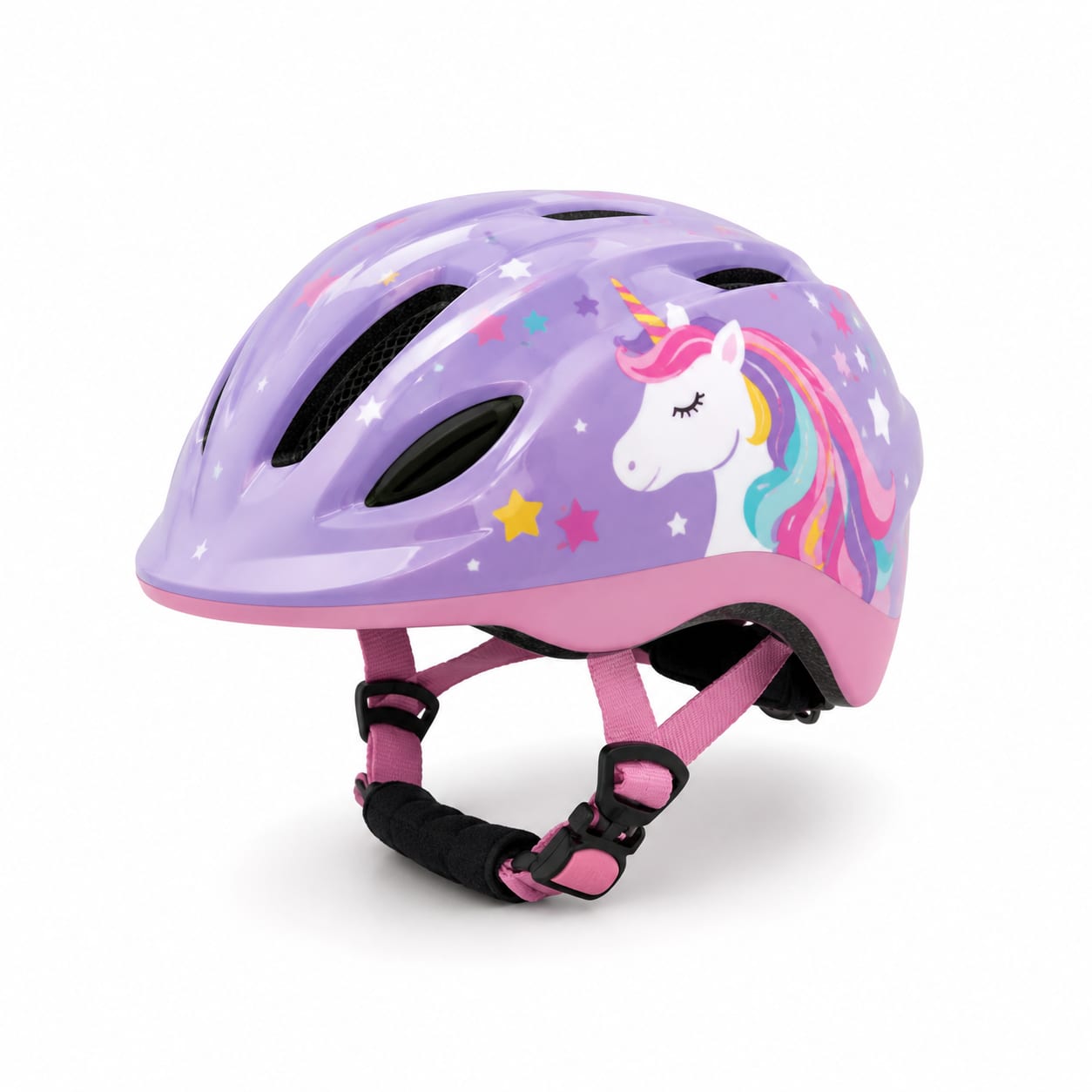
The aesthetic appeal of a kids' helmet is not trivial—it is a functional safety feature. A helmet that a child is excited to wear is one that will actually be worn. Many manufacturers offer helmets with popular character themes, bright colors, and even detachable accessories like Mohawk-style ridges or animal ears. While these may seem gimmicky, they serve the serious purpose of encouraging consistent helmet use. For older kids and young teens, the transition from a childish design to a more mature-looking youth helmet is important for continued compliance. Youth helmets bridge the gap between kids' designs and adult styling, offering smaller sizing with aesthetics that don't feel babyish to a self-conscious tween or teen.

Helmet replacement timing is especially important for kids. Beyond crash replacement, children's helmets should be replaced when the child has outgrown the size range, when the EPS foam shows any cracking or denting, when the straps become frayed or the buckle no longer secures properly, or approximately every 3-5 years due to UV degradation and foam aging. Hand-me-down helmets from older siblings should be carefully inspected and only used if they have never been crashed in and are within the recommended lifespan. The cost of a quality kids' helmet—typically $40-100—is modest compared to the protection it provides, and this is not a category where cost-cutting makes sense.

Quick facts

Primary purpose
Age-appropriate head protection encouraging consistent helmet use by young cyclists
Popular brands
GiroBellNutcaseMelonLazerPOC
Typical terrain
neighborhood streetsparksbike pathsdriveways

What makes it different

Specifically sized for smaller head circumferences; pinch-guard chin buckles; character licenses and bright graphics; often includes MIPS in premium models

Recommended ranges

How this type usually specs out

Each spec is explained in plain language, then we show what buyers usually look for on this type.

Helmet Type

Helmet Type

What it means

The discipline-specific category of the helmet, which determines its shape, coverage, ventilation pattern, and intended use scenario.

Typical for this type

Commuter Urban, Mountain Bike

Most common pick: Commuter Urban Or Mountain Bike

In practice

Kids and youth helmets most commonly follow commuter/urban or MTB styling with extended coverage and visors. Road and aero types are not made for this age group.

Compared to other types

Unlike adult categories that offer road, aero, and TT options, kids/youth helmets are almost exclusively commuter/urban or MTB-styled, prioritizing maximum protection over aerodynamic performance that is irrelevant for this age group.

Why it matters: The helmet type determines the coverage level and protection philosophy. Kids benefit from the extended coverage of commuter and MTB-style helmets, which protect more of the head during the common fall patterns of learning riders.

Certification Standard

Certification Standard

What it means

Safety certification standards the helmet meets, indicating the impact testing protocols and minimum protection levels verified by independent testing bodies.

Typical for this type

CPSC (US), EN 1078 (EU) — Both Mandatory

Most common pick: CPSC, EN 1078

In practice

All kids' helmets sold in the US must meet CPSC standards; in the EU, EN 1078 is required. These are non-negotiable legal requirements for this age group.

Compared to other types

Certification is mandatory across all categories, but for kids' helmets it is especially critical—uncertified novelty helmets sometimes appear in toy stores and should never be used for cycling.

Why it matters: Children's developing brains require verified protection. Certification ensures the helmet has been tested to minimum impact standards. Never purchase a kids' helmet without proper certification markings.

Rotational Protection System

Rotational Protection System

What it means

Technology designed to reduce rotational forces transmitted to the brain during oblique impacts, which are the most common type of cycling crash impact.

Typical for this type

MIPS Preferred

Most common pick: MIPS Or None

In practice

MIPS is increasingly available in kids' helmets at mid-range price points. Many budget models still lack rotational protection. WaveCel and MIPS Spherical are rare in this category.

Compared to other types

MIPS adoption in kids' helmets lags behind adult road and MTB categories but is catching up. Premium kids' models now commonly include MIPS, while budget models often omit it.

Why it matters: Children's developing brains may be more susceptible to rotational forces during oblique impacts. MIPS provides an additional layer of protection beyond standard EPS foam at a modest weight and cost premium.

Weight

Weight

What it means

The total mass of the helmet including all padding, retention system, and visor (if included), measured in grams.

Typical for this type

200-300g

Most common pick: 250g

In practice

Kids' helmets typically weigh 200-300g, with toddler sizes at the lower end and youth models at the higher end. Weight matters more for children due to their developing neck muscles and proportionally larger heads.

Compared to other types

Kids' helmets are lighter than adult MTB and commuter helmets (280-380g) but similar to or slightly lighter than adult road helmets, reflecting the priority on minimizing neck strain.

Why it matters: A heavy helmet can cause neck fatigue, discomfort, and even affect balance in young riders. Keeping weight under 280g for smaller kids and under 300g for youth is important for comfort and willingness to wear.

Number of Vents

Number of Vents

What it means

The total number of intake and exhaust vents designed to channel airflow through the helmet for cooling.

Typical for this type

10-18 vents

Most common pick: 12

In practice

Kids' helmets typically have 10-18 vents, balancing cooling with structural integrity and coverage. Fewer, larger vents are common on toddler models.

Compared to other types

Vent counts are similar to adult commuter/urban helmets (10-16) but lower than adult road helmets (18-28), reflecting the priority on coverage over maximum airflow.

Why it matters: Children overheat more quickly than adults, making ventilation important. However, too many vents reduce the EPS foam surface area and can compromise protection for the same coverage area.

Head Circumference Range

Head Circumference Range

What it means

The range of head circumferences the helmet is designed to fit, typically adjustable via the retention system within a specific size bracket.

Typical for this type

Toddler: 48-52cm, Kids: 50-55cm, Youth: 52-58cm

Most common pick: 48-58cm across size range

In practice

Kids' helmets span approximately 48-58cm total, typically split into toddler (48-52cm), kids (50-55cm), and youth (52-58cm) size brackets. Some models offer a wider range via adjustable retention.

Compared to other types

Kids' helmets cover smaller circumferences than adult helmets (typically 51-63cm). The lower end of 48cm is specific to this category and not available in adult sizing.

Why it matters: Proper fit is the single most important factor in helmet effectiveness. A helmet that is too large will shift during impact; too small will not cover properly. Children's head sizes change rapidly, requiring regular measurement and fit checks.

Retention System

Retention System

What it means

The adjustable mechanism at the rear of the helmet that secures it to the head and allows on-the-fly adjustment for a stable, comfortable fit.

Typical for this type

Dial/Ratchet Preferred

Most common pick: Dial Ratchet

In practice

Most quality kids' helmets now feature dial/ratchet retention systems, allowing easy adjustment as the child grows. Budget models may use sliding buckle systems.

Compared to other types

Dial systems are standard in kids' helmets just as in adult categories, but the dials are often smaller and positioned for smaller hands to operate. Rear dial with yoke systems are rare in kids' helmets.

Why it matters: A dial system allows parents to adjust fit quickly and precisely, accommodates growth, and enables the child to self-adjust. This extends the helmet's useful life and ensures consistent proper fit.

Shell Construction

Shell Construction

What it means

The manufacturing method used to join the outer polycarbonate shell to the inner EPS foam liner, affecting durability, weight, and safety.

Typical for this type

In-Mold Preferred For Weight; Hardshell Acceptable For Durability

Most common pick: In Mold Or Hardshell

In practice

Both in-mold and hardshell constructions are common in kids' helmets. In-mold is lighter and better for impact energy management; hardshell is more durable against the drops and dings kids subject helmets to.

Compared to other types

Hardshell construction is more common in kids' helmets than in adult road or MTB categories, reflecting the different abuse patterns and the lower priority on weight savings at recreational speeds.

Why it matters: Kids' helmets face more everyday abuse—being dropped, thrown, used as sleds—so hardshell durability has real value. However, in-mold construction provides better crash performance at lower weight. Parents must weigh durability against weight and crash performance.

Coverage Level

Coverage Level

What it means

The extent of head coverage provided by the helmet, particularly at the temples, rear, and base of the skull, beyond the minimum certification requirement.

Typical for this type

Extended Rear Or Full Coverage MTB

Most common pick: Extended Rear

In practice

Most kids' helmets feature extended rear coverage, protecting the occipital bone area. This exceeds the minimum certification requirement and addresses common fall patterns in young riders.

Compared to other types

Kids' helmets typically offer more coverage than adult road helmets (standard_road) and are comparable to adult MTB helmets (extended_rear), reflecting the priority on protection over ventilation or aerodynamics.

Why it matters: Children learning to ride are more likely to fall backward or sideways. Extended rear coverage provides protection where kids need it most, beyond what minimal or standard road coverage offers.

Visor Type

Visor Type

What it means

The type of visor or brim attached to the helmet for sun, rain, and debris protection, and whether it's removable or adjustable.

Typical for this type

Fixed Short Or Removable/Adjustable

Most common pick: Fixed Short

In practice

Many kids' helmets include a fixed short visor for sun and debris protection. Removable visors are found on MTB-styled kids' models. Some toddler helmets have no visor.

Compared to other types

Visors are more common on kids' helmets than on adult road helmets, similar to the MTB category. Integrated shields are extremely rare in kids' helmets.

Why it matters: A visor shields young eyes from sun and trail debris, improving visibility and comfort. Fixed visors are simpler and less likely to be lost; removable visors offer versatility but small parts can be misplaced.

Padding System

Padding System

What it means

The type, material, and configuration of interior padding that contacts the head, affecting comfort, moisture management, and fit customization.

Typical for this type

Removable/Washable Pads Minimum

Most common pick: Removable Washable

In practice

Most mid-range and better kids' helmets feature removable, washable pads. Budget models may use basic foam pads. Anti-microbial treatments are increasingly common.

Compared to other types

Padding systems in kids' helmets are similar to adult mid-range helmets. Premium multi-density pad systems are rare in this category, but removable/washable pads should be considered a minimum requirement.

Why it matters: Kids sweat heavily and helmets get dirty quickly. Removable, washable pads are essential for hygiene and comfort. Anti-microbial treatment helps with odor between washes.

Chin Buckle Type

Chin Buckle Type

What it means

The type of buckle used on the chin strap, affecting ease of use, reliability, and safety.

Typical for this type

Standard Side-Release With Pinch Guard; Magnetic (Fidlock) For Premium Models

Most common pick: Standard Side Release With Pinch Guard

In practice

Most kids' helmets use standard side-release buckles, often with a pinch guard—a small plastic piece that prevents the buckle from pinching skin when fastening. Premium models may use magnetic Fidlock buckles.

Compared to other types

Pinch guards are unique to kids' helmets and not found in adult categories. Magnetic Fidlock buckles are a premium upgrade in both kids' and adult helmets. Double D-rings are not used in kids' helmets.

Why it matters: Pinch-proof buckles solve a real problem: children who have been pinched by a buckle may resist wearing their helmet. This seemingly minor feature can determine whether a helmet is worn consistently.

Reflective Elements

Reflective Elements

What it means

Presence and extent of reflective materials on the helmet for enhanced visibility in low-light conditions.

Typical for this type

Strategic Placement Preferred

Most common pick: Minimal Decal to Strategic Placement

In practice

Kids' helmets range from minimal reflective decals to strategically placed reflective elements. Commuter-styled kids' helmets tend to have better reflective coverage than MTB-styled models.

Compared to other types

Reflective elements in kids' helmets are comparable to adult commuter/urban helmets. Full wrap reflective is rare in kids' helmets but strategic placement is increasingly common.

Why it matters: Children riding in low-light conditions—early morning school commutes, evening neighborhood rides—benefit significantly from reflective elements. This passive safety feature works without batteries or activation.

Integrated Light Mount

Integrated Light Mount

What it means

Built-in mount or attachment point for rear lights, either as a dedicated clip, magnetic mount, or integrated light.

Typical for this type

Clip Mount Is A Nice-To-Have; None Is Typical

In practice

Most kids' helmets do not include integrated light mounts. Some commuter-styled models may have a clip mount. Integrated lights are very rare in this category.

Compared to other types

Kids' helmets are less likely than adult commuter helmets to feature light mounts, similar to adult road and MTB helmets where none is the default.

Why it matters: For kids riding to school or in the evening, a rear light mount adds visibility. However, most kids' riding occurs during daylight, making this a lower priority than other safety features.

Aerodynamic Optimization

Aerodynamic Optimization

What it means

The degree to which the helmet is designed to reduce aerodynamic drag, from no consideration to purpose-built time trial aerodynamics.

Typical for this type

None — Not Applicable For This Age Group

Most common pick: None

In practice

Kids' helmets have no aerodynamic optimization. The riding speeds of children and young teenagers do not warrant aero considerations, and protection and comfort are the sole priorities.

Compared to other types

Unlike adult categories where aero road and TT options exist, kids' helmets universally prioritize protection and comfort over aerodynamic performance.

Why it matters: Aero optimization is irrelevant for kids' riding speeds (typically under 25 km/h) and would compromise the coverage, ventilation, and weight priorities that matter for this age group.

Strap Adjustment System

Strap Adjustment System

What it means

The system used to adjust and lock the chin strap length and position, affecting ease of fitting and strap stability during use.

Typical for this type

Standard Sliding Is Typical; Adjustable Splitters With Locking Preferred

Most common pick: Standard Sliding

In practice

Most kids' helmets use standard sliding strap adjustment. Some premium models feature adjustable splitters with locking to prevent strap creep—a common issue as kids tug on straps.

Compared to other types

Strap adjustment systems in kids' helmets are similar to adult mid-range helmets. Fixed position splitters are less common in kids' helmets because proper strap positioning is more critical and variable with growth.

Why it matters: Straps that slip out of adjustment are a real issue with kids' helmets, as children may tug at straps or wear them loosely. Locking splitters maintain proper strap positioning between adjustments.

Evaluation

Strengths and trade-offs

Pros

What this type does best

Designed for developing heads and necks

Critical

Kids' helmets are proportionally sized and weighted for children, preventing the neck fatigue and poor fit that results from using adult helmets on small heads.

Pinch-proof buckles encourage consistent use

High

Specialized buckles with pinch guards eliminate the skin-catching that makes children reluctant to put on their helmet, removing a common barrier to helmet compliance.

Extended coverage for common fall patterns

High

Most kids' helmets feature extended rear and temple coverage that addresses the backward and sideways falls common in young riders learning balance and coordination.

Fun designs that kids want to wear

High

Character themes, bright colors, and playful accessories transform the helmet from a chore into something children are excited to wear, making it a genuine safety feature.

Adjustable retention accommodates growth

Medium

Dial-based retention systems allow the helmet to expand as the child grows, potentially extending useful life by a year or more compared to non-adjustable designs.

MIPS increasingly available

Medium

Rotational protection technology once reserved for premium adult helmets is now available in mid-range kids' models, providing an additional safety layer for developing brains.

Washable pads handle active use

Medium

Removable, washable padding systems address the reality that kids' helmets see more sweat, dirt, and grime than most adult helmets, maintaining hygiene and comfort.

Cons

Trade-offs to be aware of

Shorter lifespan due to rapid growth

Moderate

Children outgrow helmets quickly, often within 1-2 years, requiring more frequent replacement than adult helmets even without crash damage.

Limited premium features compared to adult helmets

Minor

Advanced features like MIPS Spherical, WaveCel, premium multi-density padding, and integrated lights are rarely available in kids' models, limiting the safety technology ceiling.

Durability challenges with rough handling

Moderate

Kids subject helmets to more drops, throws, and general abuse than adults, which can compromise EPS foam integrity even without crash-level impacts.

Compliance battles with reluctant children

Significant

Even the best helmet is useless if a child refuses to wear it. Some children resist helmets regardless of design, requiring parental persistence and negotiation.

Hand-me-down safety concerns

Moderate

Used helmets may have unknown crash histories, UV degradation, or expired lifespan, making second-hand helmets a safety risk that parents must carefully evaluate.

Best for

Surfaces & terrain

Neighborhood streetsPaved bike pathsPark trails and greenwaysSchool commute routesLight gravel and dirt paths

Riding conditions

Daylight ridingFair weatherLow-light school commutes (with reflective elements)Warm weather (with adequate ventilation)

Skill level

First-time ridersBeginnerDeveloping intermediate

Riding discipline

Learning to rideNeighborhood cruisingSchool commutingFamily recreational ridesBMX and skate park (hardshell models)

Rider profile

Children ages 3-8 (toddler/kids sizes)Tweens and teens ages 9-14 (youth sizes)First-time bike riders of any age in the size rangeKids transitioning from balance bikes to pedal bikesYoung riders in bike-to-school programs

Not ideal for

Reasons

Not rated for high-speed impacts encountered in competitive ridingLacks the discipline-specific features of adult road, aero, or full-face helmetsYouth riders with head circumferences over 58cm need adult helmetsNot a substitute for ASTM F1952-certified full-face helmets for aggressive riding

Surfaces & terrain

Aggressive mountain bike trailsDownhill coursesTechnical singletrack

Skill level

Advanced teen riders needing adult sizingCompetitive junior racers needing discipline-specific helmets

Riding discipline

Road racingCompetitive mountain bikingDownhill or enduro ridingBMX racing at competitive levels

Compare

How it stacks up

This page

Kids / Youth Helmet

Proper sizing for small heads, lighter weight appropriate for developing necks, extended coverage for learning-related falls, pinch-proof buckles, kid-friendly aesthetics that encourage wearing.

Alternative

Adult Road Helmet

Adult road helmets offer superior ventilation, aerodynamic optimization, and premium features like MIPS Spherical or WaveCel that are unavailable in kids' models. Larger size range for teens with bigger heads.

Bottom line

Use kids/youth helmets until the child's head circumference and maturity level are appropriate for adult sizing. A properly fitting kids' helmet with appropriate coverage is safer than a poorly fitting adult helmet.

This page

Kids / Youth Helmet

Correct sizing, lighter weight, kid-specific features like pinch-proof buckles and fun designs. More affordable than adult MTB helmets.

Alternative

Adult Mountain Bike Helmet

Adult MTB helmets offer more aggressive coverage, ASTM F1952 certification options, goggle compatibility, and adjustable visors for serious trail riding. Better for teens doing legitimate mountain biking.

Bottom line

For casual trail riding and bike path use, kids/youth helmets are ideal. For teens doing aggressive trail or enduro riding, transition to an adult MTB helmet with appropriate certification once head size allows.

This page

Kids / Youth Helmet

Proper fit for smaller heads, lighter weight, kid-friendly designs, and pinch-proof buckles. More affordable.

Alternative

Commuter / Urban Helmet

Adult commuter helmets offer integrated lights, better reflective elements, and more sophisticated retention systems. Appropriate for older teens with larger heads who ride urban commutes.

Bottom line

Kids' helmets cover most urban riding needs for children. For teens with head circumferences above 56cm who ride regular commutes, an adult commuter helmet in size S may provide better features and fit.

This page

Kids / Youth Helmet

Lighter weight, better ventilation, cycling-specific certification (CPSC for bicycles), and dial retention systems for growth adjustment. More comfortable for longer rides.

Alternative

Multi-Sport Helmet (Skate-style)

Multi-sport helmets offer dual certification (CPSC for bikes + ASTM F1492 for skateboarding), harder shells for skate park durability, and classic skate aesthetics that some kids prefer.

Bottom line

Choose a cycling-specific kids' helmet for bike riding—it's lighter, cooler, and certified for cycling impacts. If the child primarily skateboards or uses a scooter at skate parks, a dual-certified multi-sport helmet is more appropriate.

Shopping

Buying tips

  • 1

    Measure your child's head circumference with a soft tape measure around the widest point above the eyebrows before shopping—do not guess based on age or clothing size.

  • 2

    Prioritize fit over features: a properly fitting helmet without MIPS is safer than a poorly fitting helmet with MIPS. The helmet should sit level, cover the forehead, and not wobble when the retention system is adjusted.

  • 3

    Let your child choose the color or design from a pre-selected range of quality options. A helmet they find cool is one they will wear without being asked.

  • 4

    Look for pinch-proof buckles—they eliminate a common reason children resist wearing helmets and are worth the small price premium.

  • 5

    If buying a MIPS-equipped model, ensure the MIPS liner fits properly and doesn't create pressure points. Some children find the MIPS liner slightly less comfortable initially.

  • 6

    Check that the helmet sits level on the head with about two fingers of space above the eyebrows. If it tilts back, it's too large or the retention system needs adjustment.

  • 7

    Consider buying from a local bike shop where staff can help with fitting. Proper fit is more important than any single feature, and professional fitting is invaluable.

  • 8

    Replace the helmet immediately after any crash where the head hits the ground, even if damage isn't visible. EPS foam compresses on impact and does not recover.

  • 9

    For kids between sizes, size up and use the thicker padding inserts that come with most helmets. Check fit monthly as children grow quickly.

  • 10

    Avoid used helmets from unknown sources—you cannot verify crash history, age, or UV exposure. A new budget helmet is safer than a used premium helmet of unknown provenance.

Care

Maintenance notes

  • Hand-wash removable pads with mild soap and air dry every 2-4 weeks, or more frequently in hot weather. Never machine wash or machine dry pads.
  • Wipe the helmet shell with a damp cloth and mild soap. Avoid solvents, petroleum-based cleaners, or hot water that can degrade the EPS foam and polycarbonate shell.
  • Store the helmet in a cool, dry place out of direct sunlight when not in use. UV exposure degrades both the shell and EPS foam over time.
  • Inspect the helmet monthly for cracks in the shell, dents in the EPS foam, frayed straps, and proper buckle function. Replace immediately if any damage is found.
  • Check fit every 1-2 months—children grow quickly and a helmet that fit last season may be too small now.
  • Replace the helmet after any significant impact, every 3-5 years due to material degradation, or when the child has outgrown the size range.
  • Do not decorate the helmet with stickers that use aggressive adhesives, as these can degrade the polycarbonate shell. Use only helmet-safe decals if decoration is desired.
  • Do not hang the helmet by the chin strap, as this stretches and weakens the strap over time.

Progression

Skill development path

Children typically progress through three helmet phases: toddler (ages 3-5, 48-52cm, learning to ride with training wheels or balance bikes), kids (ages 5-9, 50-55cm, developing confidence and riding independently), and youth (ages 9-14, 52-58cm, riding to school, on trails, and beginning to ride faster and further). Each phase may require a new helmet due to growth. As children enter their mid-teens and their head circumference approaches 56-58cm, they can transition to adult helmets in size S or XS, which offer more discipline-specific features. The key progression is ensuring consistent helmet use throughout—making it non-negotiable from the very first ride establishes a lifelong habit.

FAQ

Common questions

Each question has a dedicated page with a full answer and links to the buying guide.

How do I know what size helmet my child needs?

Measure your child's head circumference with a soft tape measure wrapped around the widest point above the eyebrows. Match this measurement to the helmet's size range—toddler helmets typically fit 48-52cm, kids helmets 50-55cm, and youth helmets 52-58cm. When between sizes, choose the larger size and use the included thicker padding inserts. Always try the helmet on before riding—it should sit level, cover the forehead, and not wobble when the retention system is properly adjusted.

When should I replace my child's helmet?

Replace the helmet immediately after any crash where the head hits the ground, even if no damage is visible (EPS foam compresses on impact and doesn't recover). Also replace when the child has outgrown the size range, when you see cracks, dents, or frayed straps, or approximately every 3-5 years due to UV degradation and foam aging. Children grow quickly, so check fit every few months.

Is MIPS worth it for a kids' helmet?

Yes, MIPS is worth the modest price premium (typically $15-30 more) for kids' helmets. Children's developing brains may be more vulnerable to rotational forces during oblique impacts, which are the most common type of cycling fall. MIPS provides an additional layer of protection beyond standard EPS foam. If budget is tight, prioritize proper fit first—a well-fitting helmet without MIPS is better than a poorly fitting one with MIPS.

Can my child use a skateboard helmet for biking?

Only if the helmet is dual-certified for both CPSC (bicycle) and ASTM F1492 (skateboard) standards. Many skate-style helmets only meet the skate standard, which has different impact profiles than cycling certification. A CPSC-certified cycling helmet is designed for the specific types of impacts common in cycling. If your child rides both a bike and a skateboard, look for a dual-certified helmet.