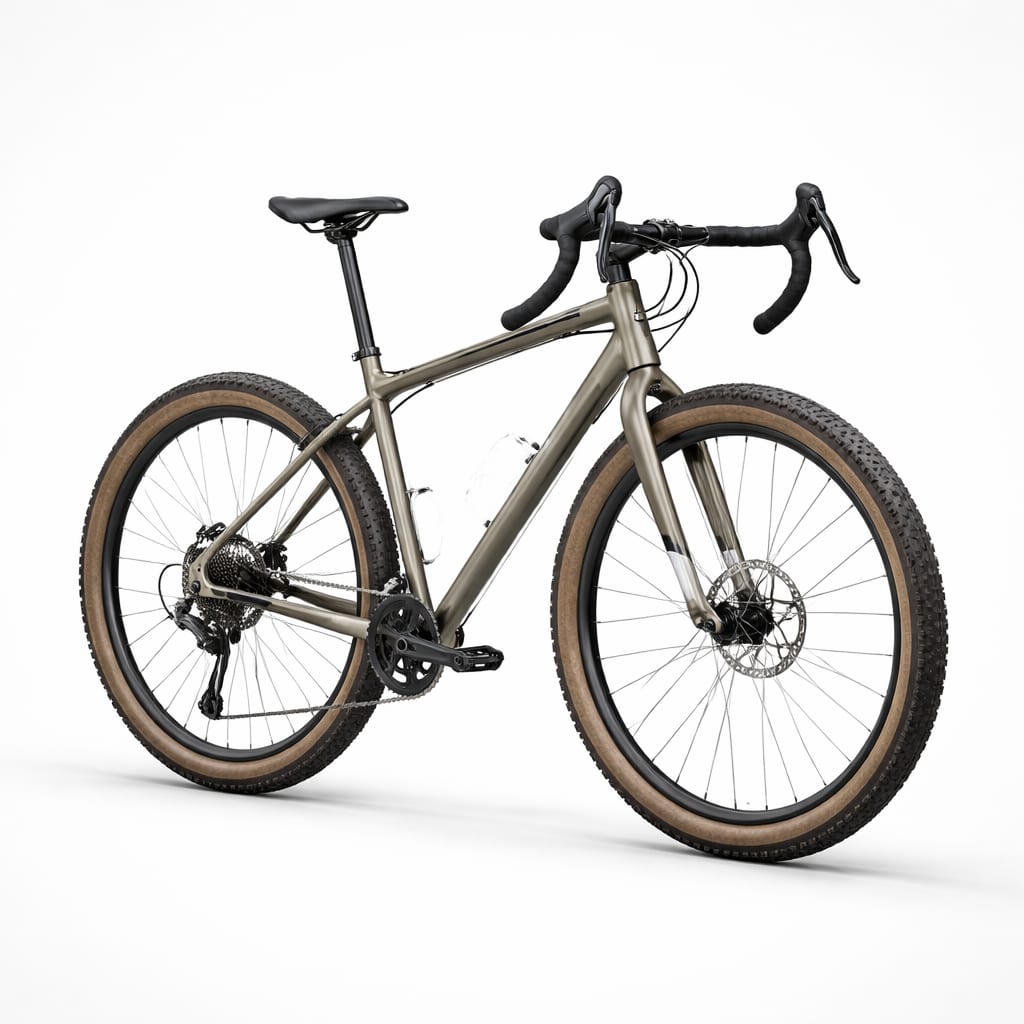
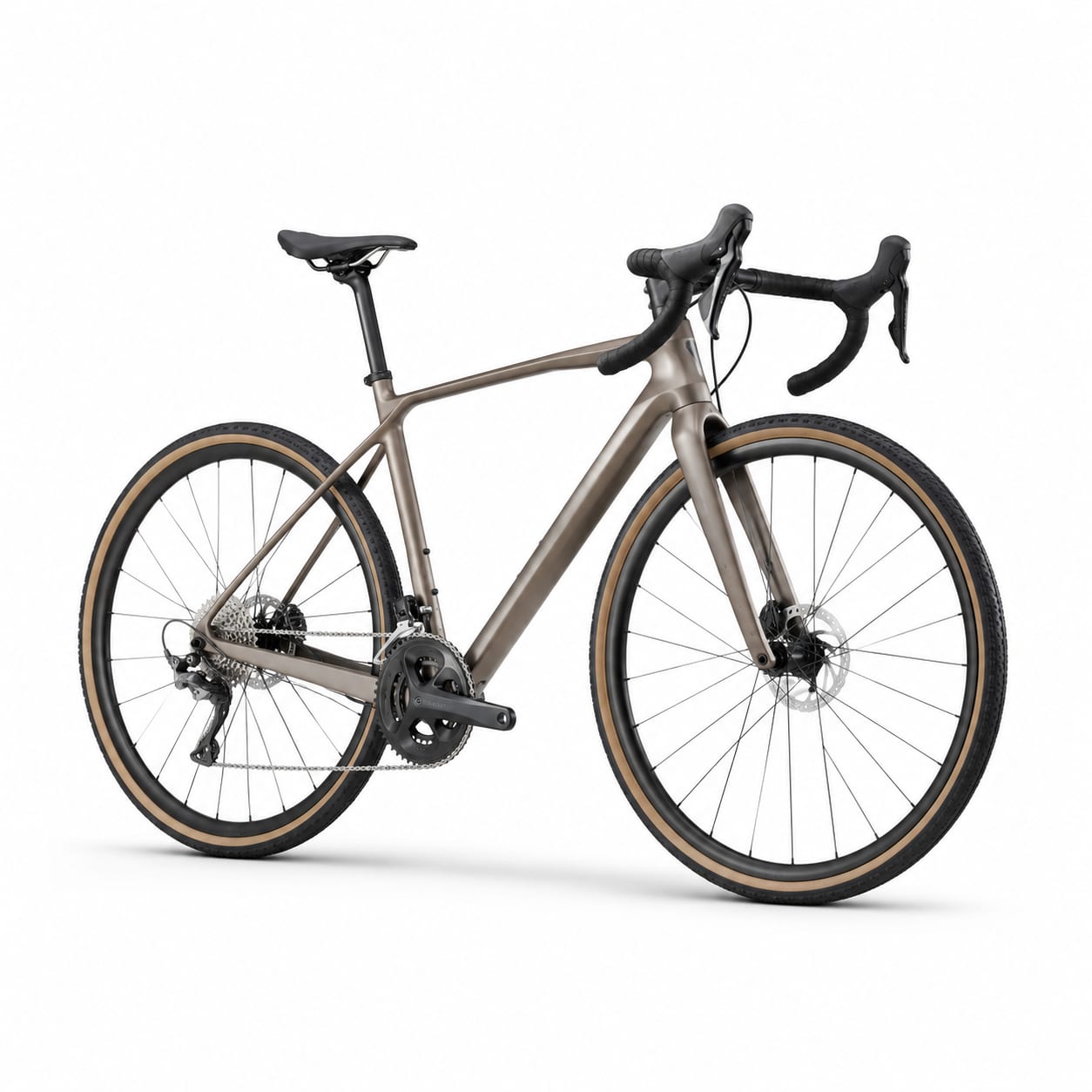
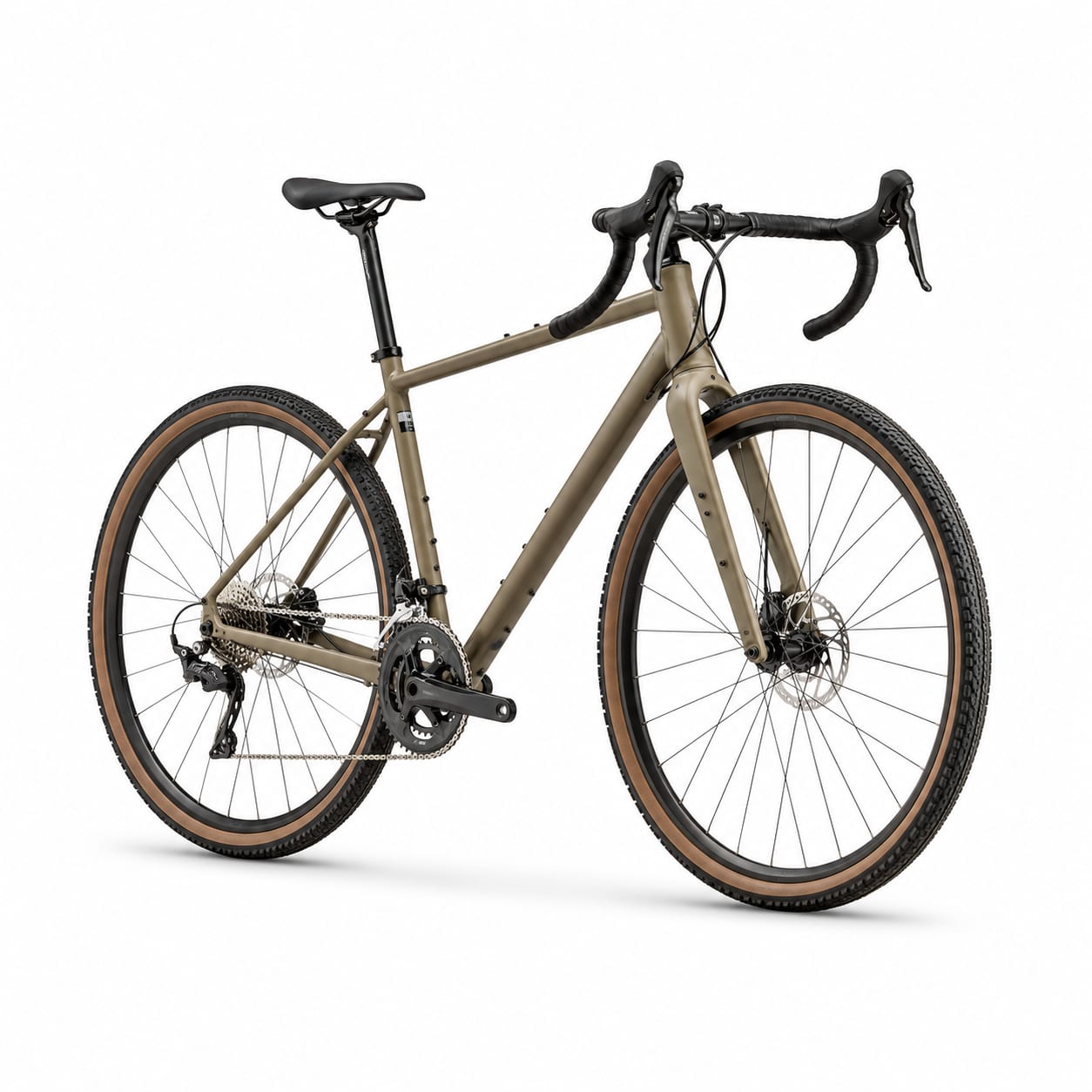
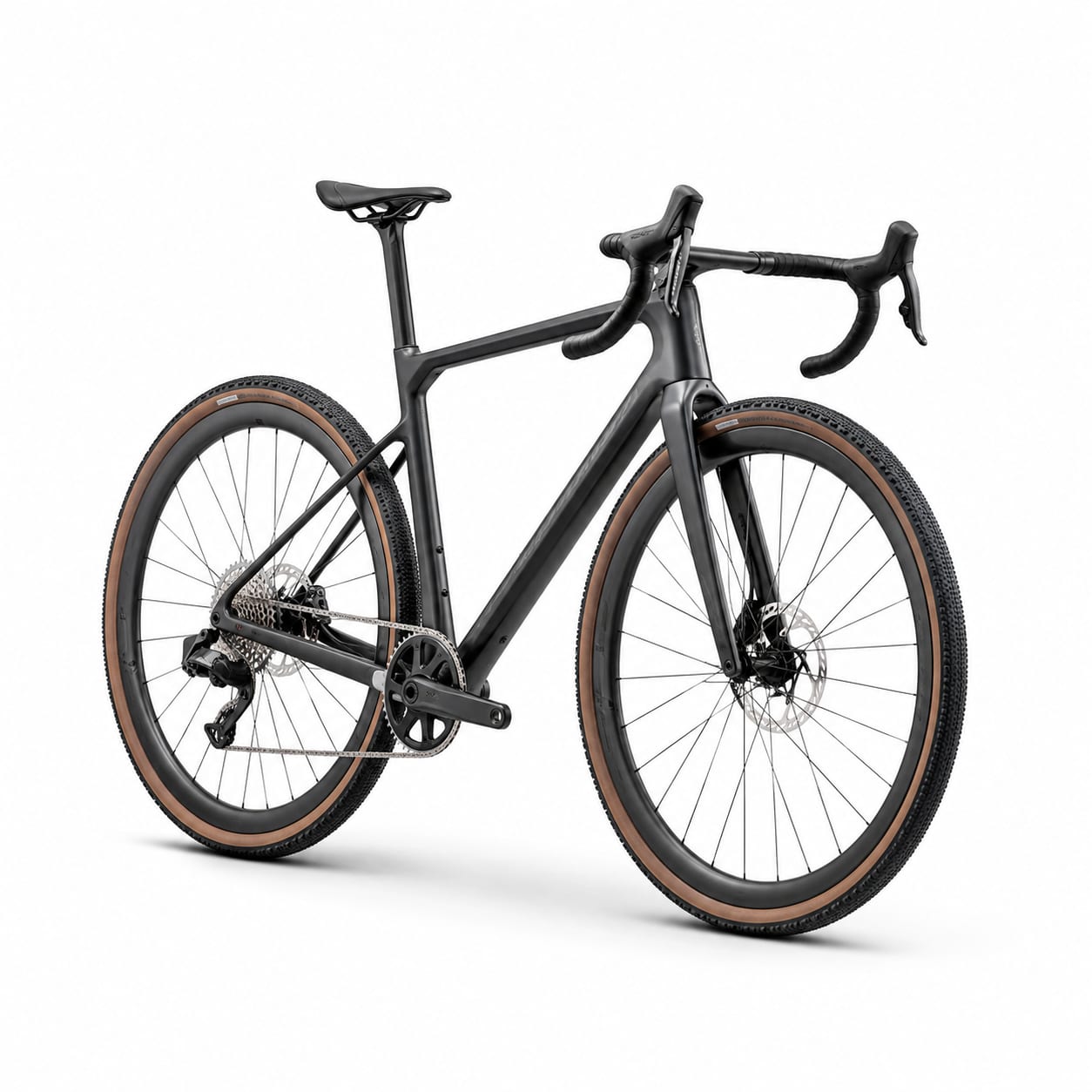
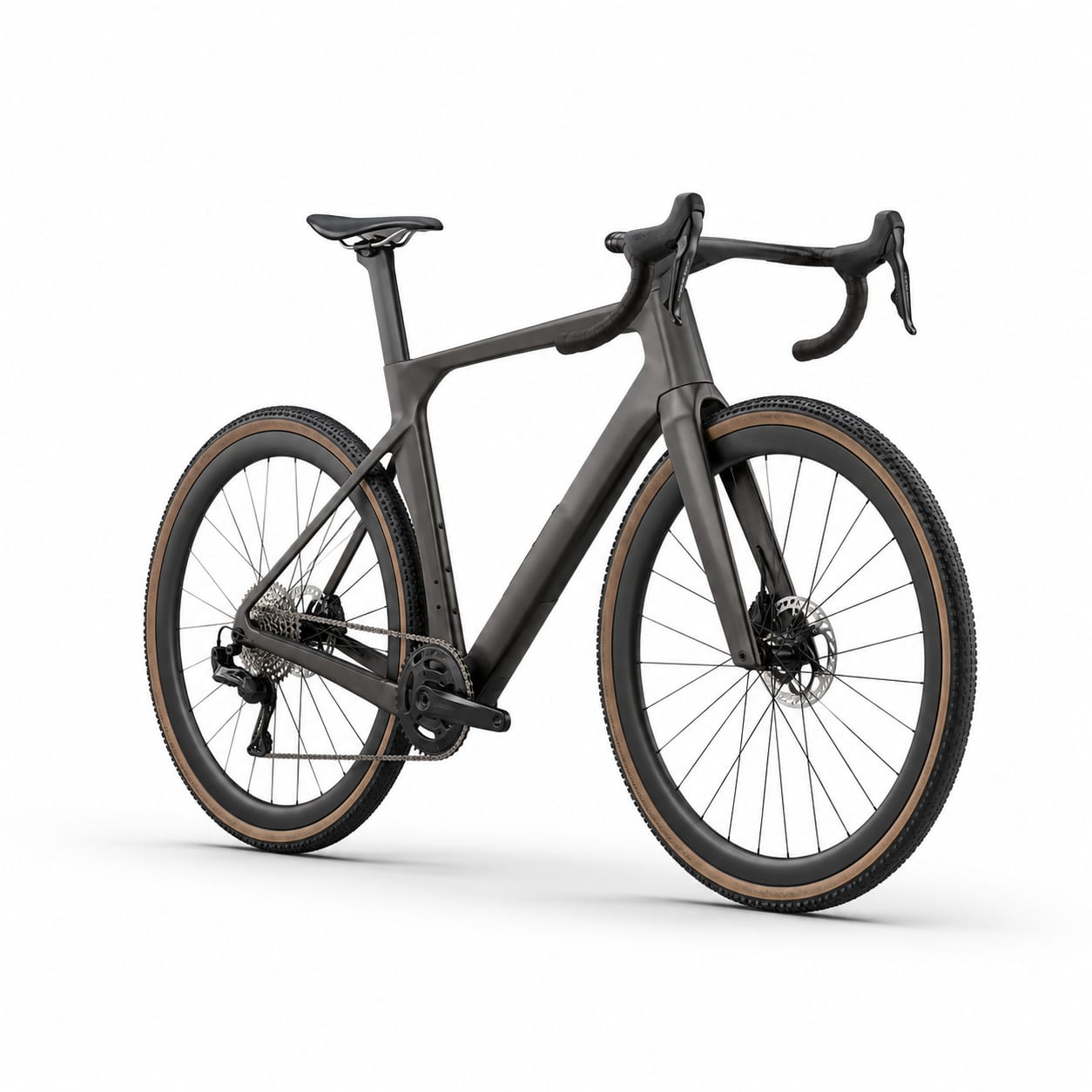
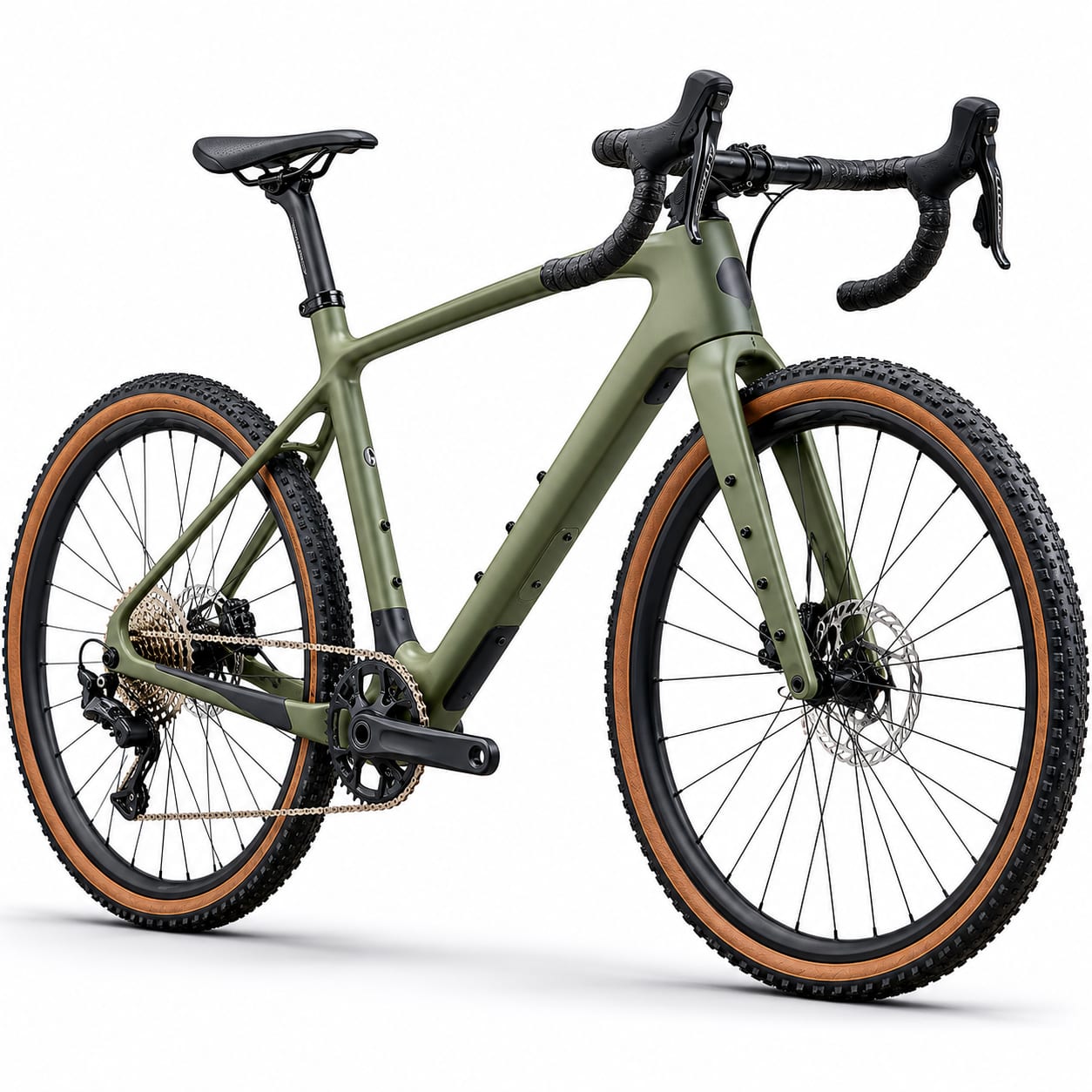
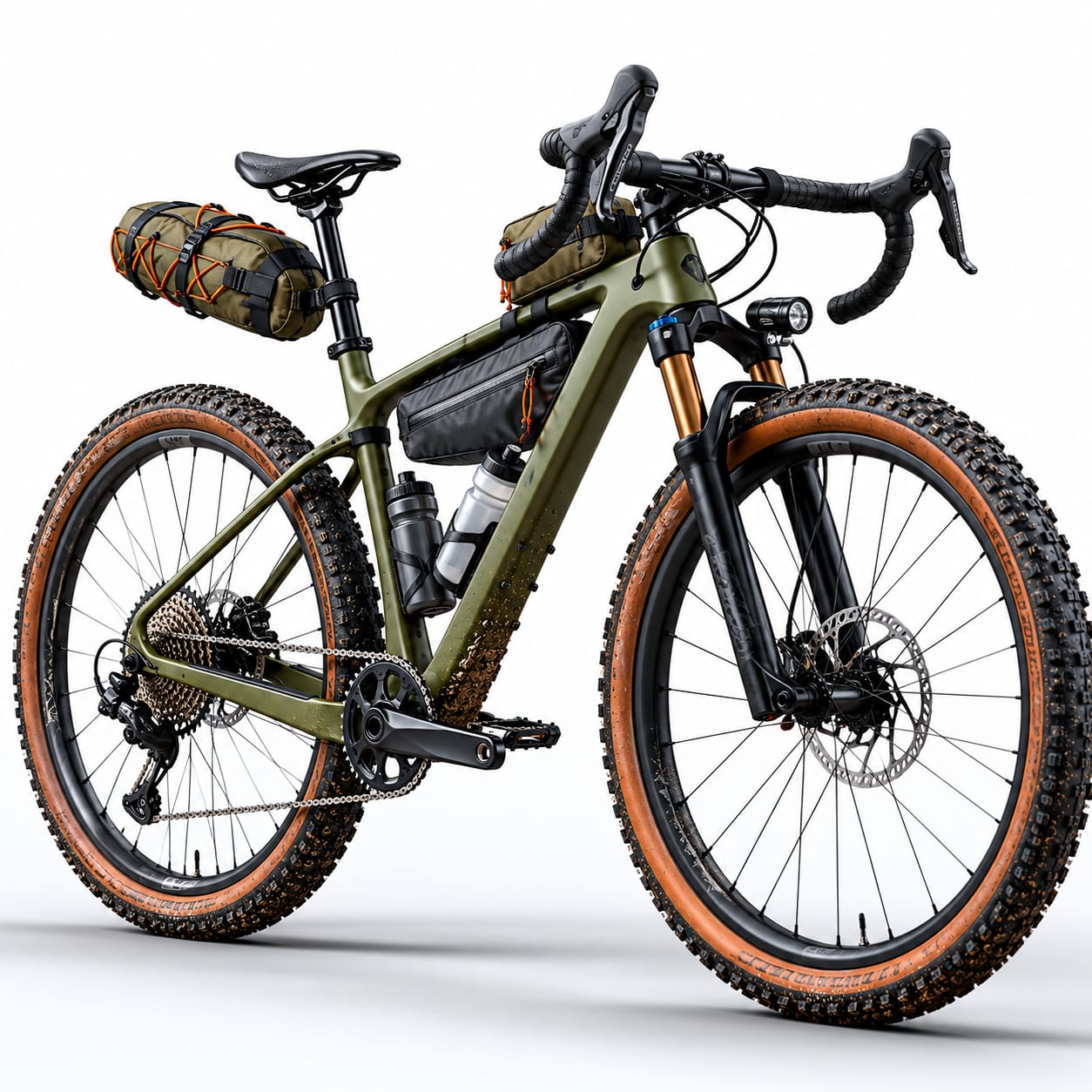
Bikepacking and expedition gravel bikes represent the most capable and utility-focused segment of the gravel market. Where race-oriented gravel bikes prioritize low weight and snappy handling, bikepacking builds emphasize stability, comfort, and the ability to carry everything needed for self-supported multi-day rides across varied terrain. These bikes typically feature longer chainstays for frame bag clearance and loaded stability, slacker head tube angles for confident descending with front bags, and generous stack heights for all-day comfort in the saddle. Tire clearance of 45mm or more is standard, allowing riders to run high-volume rubber that absorbs trail chatter even when the bike is loaded with 15-20kg of gear and water. Mounting points are abundant — often 12 or more — including fork blade bosses for cargo cages, under-downtube bottle mounts, and rack/fender eyelets for traditional touring setups. Drivetrains lean heavily toward 1x configurations for their chain retention on rough terrain and simplified cockpit, paired with wide-range cassettes that provide climbing gears low enough for steep grades under full load. Frame materials skew toward steel and titanium for their compliance, durability, and repairability in the field, though carbon and aluminum options exist for riders with different priorities. These bikes are not just gravel bikes with bags attached — they are purposefully engineered from the ground up for the unique demands of loaded, long-distance, off-road travel.
The bikepacking and expedition gravel category has exploded in recent years as riders have discovered the freedom of traveling self-supported through remote landscapes. Unlike traditional touring bikes that stick to paved roads, bikepacking gravel bikes are designed to handle rough fire roads, washboard gravel, singletrack connectors, and even hike-a-bike sections — all while carrying several days' worth of food, water, shelter, and clothing. This demands a fundamentally different bike than what wins gravel races.
Geometry is the defining characteristic. Bikepacking gravel bikes feature chainstays typically 435mm or longer, creating a longer wheelbase that tracks straight and resists the wandering front end that plagues shorter bikes when loaded with handlebar and fork bags. Head tube angles in the 69-71° range pair with longer fork offsets to produce stable, predictable steering that doesn't become twitchy when you drape a 10-liter dry bag across the handlebar. Stack-to-reach ratios above 1.55 create an upright position that reduces fatigue over 8-12 hour days and makes it easier to see the trail ahead when your bar bag partially obscures your lower field of view.
Tire clearance is another non-negotiable. While 40mm might suffice for unladen day rides, loaded bikepacking demands 45mm minimum and ideally 50mm+ to maintain reasonable tire pressures without pinch-flatting. Many expedition gravel bikes offer dual 700c/650b wheel compatibility, allowing riders to run 700x45mm for fast gravel days or swap to 650x47-57mm for maximum cushion and traction on rougher routes. The extra air volume acts as suspension, protecting both rider and gear from the constant pounding of rough terrain.
Mounting points are the functional backbone of the category. A serious bikepacking frame should offer at minimum three bottle cage mounts inside the main triangle (or two plus a frame bag with integrated hydration), fork blade mounts for cargo cages or bottle cages, under-downtube mounting, and rack/fender eyelets for riders who prefer traditional pannier setups. The ability to carry 3-4 liters of water on the bike is essential for desert routes or areas with long distances between reliable water sources. Fork mounts enable front-loading configurations that balance weight distribution and keep heavy items low and centered.
Drivetrain selection for bikepacking prioritizes low climbing gears above all else. A loaded bike with 15kg of gear on a 10% grade demands gear ratios that would feel absurdly low on an unladen bike. A 1x setup with a 38T or smaller chainring paired with an 11-46T or 10-51T cassette provides the 0.73-0.83 range ratios needed to spin up steep climbs without destroying your knees. The simplicity of 1x also means fewer mechanical issues in remote areas — no front derailleur to misalign, no chain drops between rings, and a cleaner cockpit for handlebar bag mounting. For riders who prefer 2x, a 46/30T sub-compact paired with an 11-34T or 11-36T cassette offers both low climbing gears and reasonable top-end gearing for paved transitions.