Bike Category / Discipline
Mountain Bike Category
What it means
The primary riding discipline the mountain bike is designed for, which dictates frame geometry, suspension travel, and component selection.
Typical for this type
Trail, Cross Country
In practice
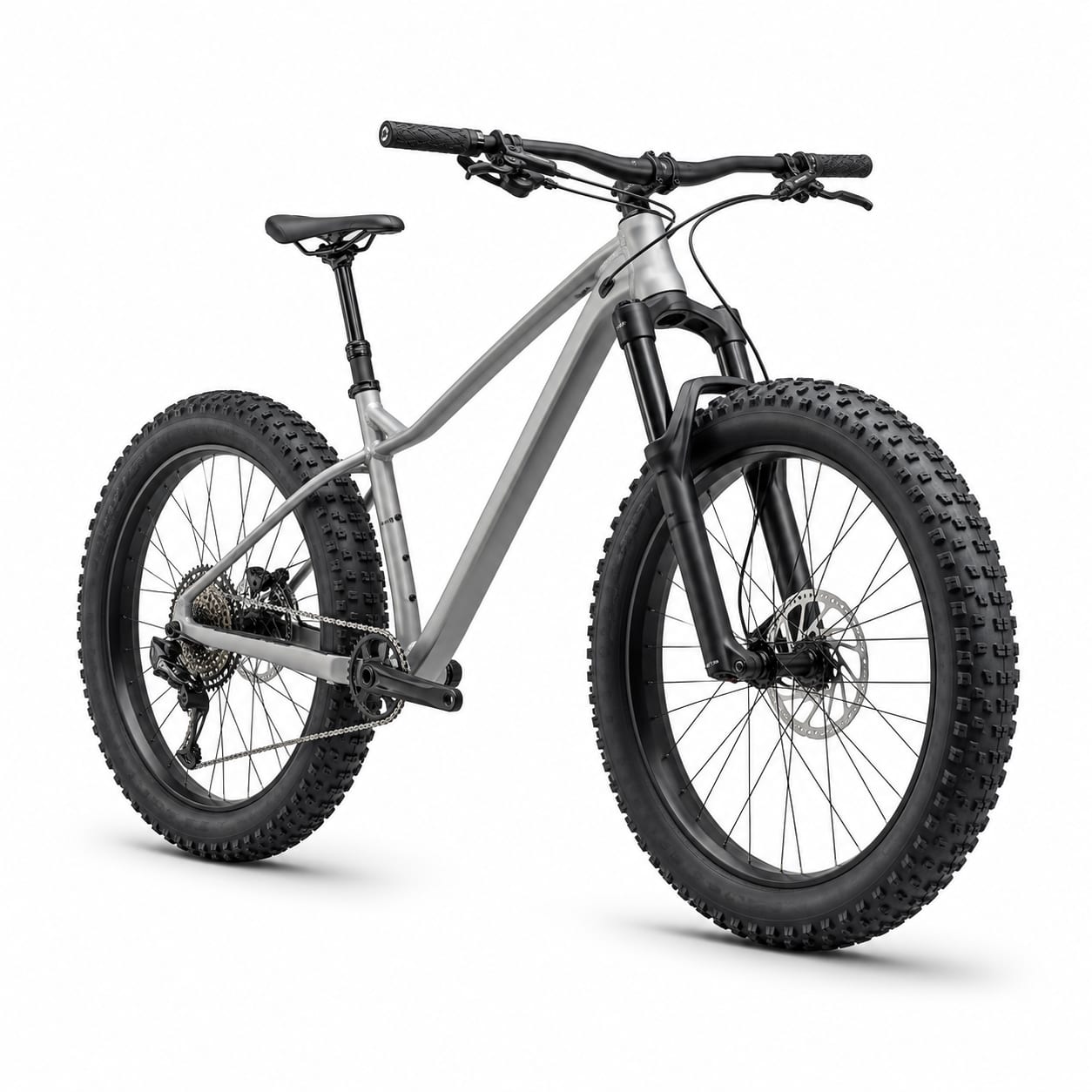
Plus bikes are most commonly built as trail bikes, with geometry and travel suited to all-around riding. Some hardtail plus bikes lean toward XC use, particularly for bikepacking and adventure riding.
Compared to other types
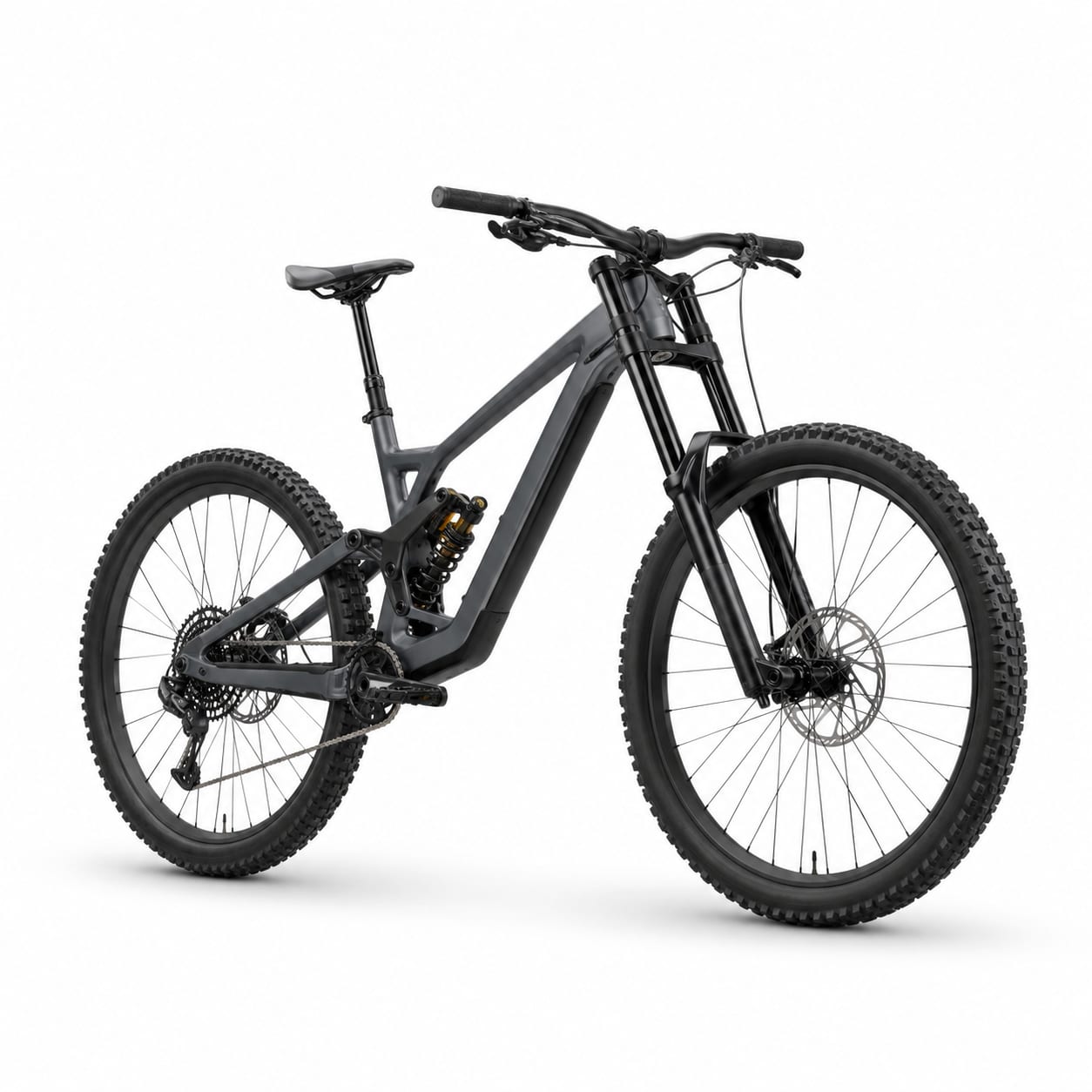
Unlike dedicated XC plus bikes (rare), trail-oriented plus bikes have slacker head angles and more travel to match the grip potential of the wide tires. Enduro plus bikes existed briefly but were discontinued as the weight penalty became too significant for competitive use.
Why it matters: The trail category provides the versatile geometry and suspension that best complements the plus tire format—enough travel and slack enough angles to exploit the traction benefits on descents while remaining climbable.
Suspension Type
Suspension Type
What it means
Whether the bike has front suspension only (hardtail) or both front and rear suspension (full suspension), fundamentally affecting comfort, traction, and efficiency.
Typical for this type
Full Suspension, Hardtail
In practice
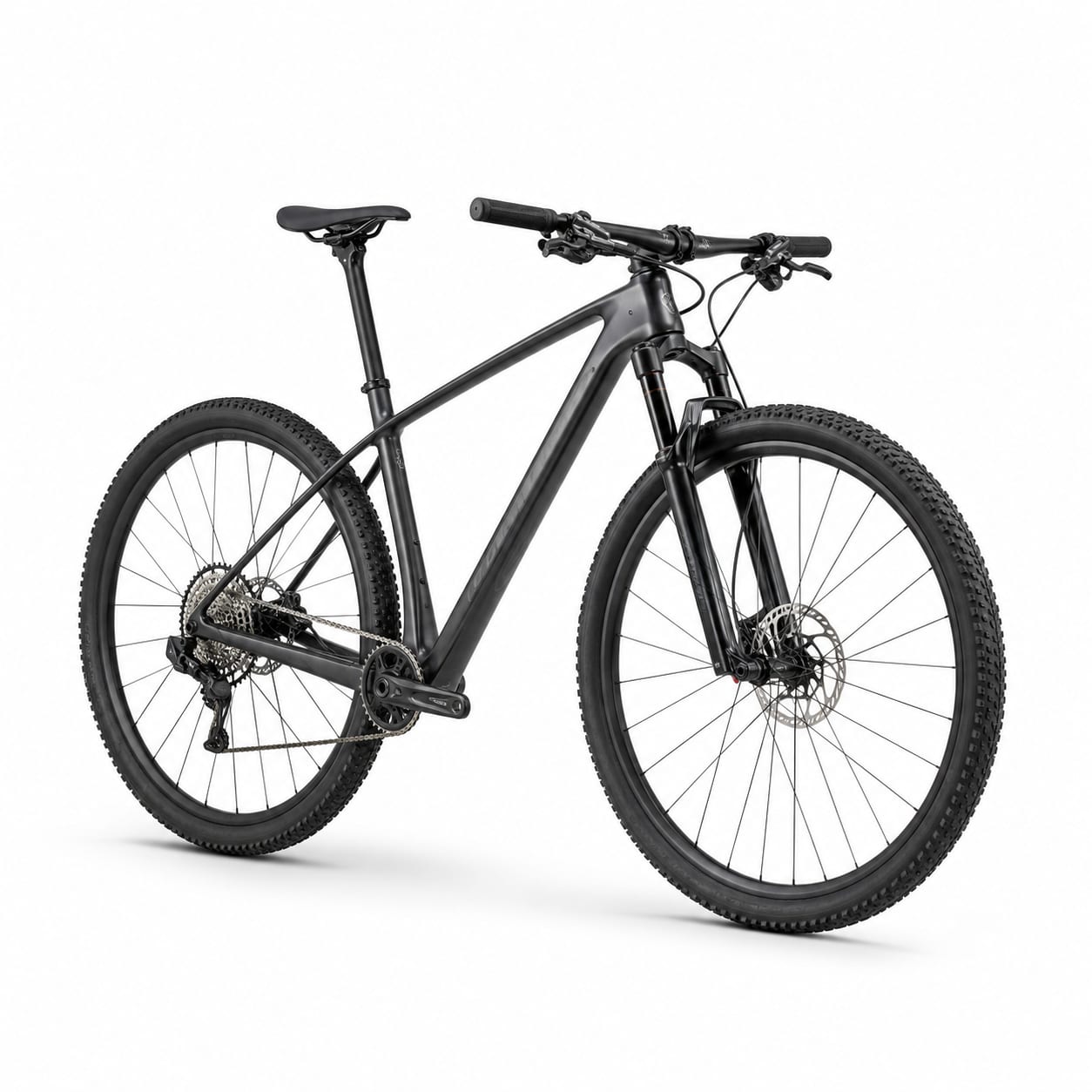
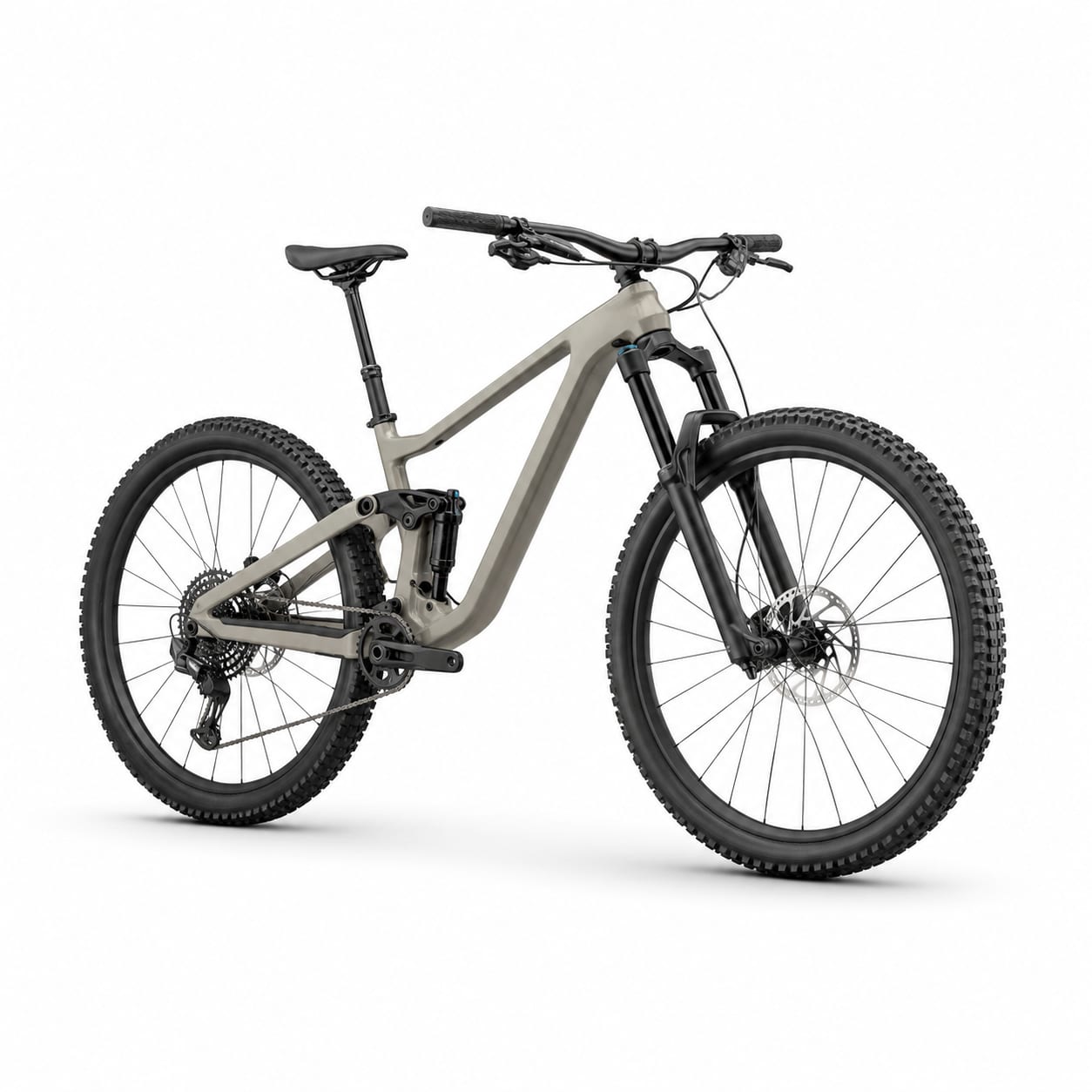
Both hardtail and full suspension plus bikes exist. Hardtails are popular for bikepacking and budget-conscious riders, while full suspension models maximize the terrain capability that plus tires enable.
Compared to other types
Hardtail plus bikes are more common proportionally than hardtails in standard trail categories, as the tire volume partially substitutes for rear suspension. Full suspension plus bikes offer the most capable combination but at higher weight.
Why it matters: Full suspension complements plus tires by adding controlled suspension to the already-cushioned ride feel. Hardtails rely entirely on the tire volume for rear-end compliance, which works well at lower speeds but can feel harsh on repeated square-edge hits.
Front Travel
Front Suspension Travel
What it means
The maximum distance the front suspension fork can compress, measured in millimeters. Determines the size of obstacles the bike can absorb and influences frame geometry.
Typical for this type
120–150mm
Most common pick: 130mm
In practice
Plus bikes typically use 120–150mm front travel, with 130mm being the most common spec. This matches trail-category capability and pairs well with the traction and cushioning of the wide tires.
Compared to other types
Less travel than enduro bikes (150–170mm) but more than XC bikes (100–120mm). The plus tire volume effectively adds perceived travel, so a 130mm fork on a plus bike can feel comparable to 140–150mm on a standard bike for small-bump compliance.
Why it matters: Travel in this range provides enough bump absorption for aggressive trail riding while keeping the bike reasonably light and efficient. The plus tires supplement the fork by absorbing small chatter that would otherwise reach the suspension.
Rear Travel
Rear Suspension Travel
What it means
The maximum distance the rear wheel can move vertically on full suspension bikes, measured in millimeters. Works in conjunction with front travel to absorb impacts.
Typical for this type
110–140mm
Most common pick: 120mm
In practice
Full suspension plus bikes typically feature 110–140mm of rear travel, with 120mm being the most common. The rear travel is usually slightly less than the front, consistent with trail bike design.
Compared to other types
Rear travel is comparable to short-travel trail bikes but less than enduro bikes. The plus tire's contribution to rear-end comfort means the effective ride quality exceeds what the travel number alone suggests.
Why it matters: Moderate rear travel combined with high-volume tires creates a very compliant ride. The tire absorbs the first layer of trail roughness, and the suspension handles larger impacts, creating a two-stage system that feels remarkably smooth.
What it means
The nominal diameter of the wheel/rim, which affects rollover ability, acceleration, handling precision, and tire volume availability.
Typical for this type
27.5, 29
In practice
27.5" is the dominant wheel size for plus bikes (marketed as 27.5+). The wide tire inflates the overall diameter to approximately 29", giving rollover similar to a 29er while maintaining a smaller rim for strength and maneuverability. 29+ exists but is rare.
Compared to other types
Unlike standard trail bikes where 29" dominates, plus bikes favor 27.5" rims because the tire already increases diameter. A 29+ wheel creates an extremely tall overall diameter that requires very specific frame design and feels sluggish to many riders.
Why it matters: The 27.5+ format keeps the overall wheel diameter manageable and allows frame designers to maintain reasonable geometry numbers. The smaller rim also builds a stronger wheel, which matters given the lower pressures and higher loads of plus riding.
Frame Material
Frame Material
What it means
The primary material used in the main triangle and frame construction, affecting weight, ride quality, durability, and cost.
Typical for this type
Aluminum, Carbon Fiber, Steel
In practice
Aluminum is the most common frame material for plus bikes, offering the best value and adequate stiffness for the wider tire loads. Carbon fiber appears on higher-end models, and steel is popular for hardtail plus bikes in the bikepacking segment.
Compared to other types
Steel is more popular in the plus hardtail segment than in standard trail bikes, driven by the bikepacking and adventure riding overlap. Carbon plus bikes exist but are less common because the target audience often values durability over weight.
Why it matters: Frame material choice matters more for plus bikes because the heavier wheels amplify the benefits of a lighter frame. However, the overall bike weight is dominated by the wheel/tire system, so frame material savings have less relative impact than on standard bikes.
Head Tube Angle
Head Tube Angle
What it means
The angle of the head tube relative to the ground, measured in degrees. A primary determinant of steering speed and high-speed stability. Slacker angles (lower numbers) provide more stability at speed.
Typical for this type
65–67.5°
Most common pick: 66°
In practice
Plus bikes typically feature head tube angles in the 65–67.5° range, consistent with modern trail geometry. The 66° average provides stability on descents while remaining manageable on climbs.
Compared to other types
Comparable to standard trail bikes. Some plus bikes run slightly slacker head angles to compensate for the taller tire stack height at the front end, which can raise the handlebars and affect weight distribution.
Why it matters: The head angle needs to balance stability for exploiting the traction benefits on descents with climbing capability. The tall front end created by plus tires can make steep head angles feel overly tall, so slightly slacker angles help maintain a balanced ride position.
What it means
The horizontal distance from the center of the bottom bracket to the top of the head tube, measured in millimeters. The most important sizing metric for modern mountain bikes as it determines the rider's fore-aft position while standing.
Typical for this type
435–480mm (size M–L)
Most common pick: 450mm
In practice
Plus bikes follow modern trail bike reach standards, with medium frames around 440–455mm and large frames around 460–480mm. The reach numbers are consistent with the trail category.
Compared to other types
Reach values are essentially identical to standard trail bikes. The plus format doesn't require different reach numbers, but riders may benefit from sizing up slightly to maintain front-end weight on climbs.
Why it matters: Adequate reach is essential for balanced weight distribution on a bike with tall, heavy wheels. Too short a reach makes the bike feel cramped and exacerbates the front-end wandering tendency that plus tires can create on steep climbs.
What it means
The vertical distance from the center of the bottom bracket to the top of the head tube, measured in millimeters. Determines how tall the front end feels and affects rider position between seated and standing.
Typical for this type
600–640mm
Most common pick: 620mm
In practice
Stack heights on plus bikes tend to run slightly higher than standard trail bikes due to the taller tire creating a higher front axle. Typical values range from 600–640mm depending on size and fork travel.
Compared to other types
Stack is typically 10–20mm higher than comparable standard trail bikes due to the taller tire casing. This is an inherent characteristic of the plus format and should be factored into fit expectations.
Why it matters: The taller front end from plus tires naturally increases stack. Riders need to be aware that the bike will feel taller at the front, which can be beneficial for comfort but may reduce the ability to get weight forward on steep climbs.
Chainstay Length
Chainstay Length
What it means
The distance from the center of the bottom bracket to the center of the rear axle, measured in millimeters. Affects how easily the bike manuals, wheelies, and navigates tight turns.
Typical for this type
435–455mm
Most common pick: 445mm
In practice
Plus bikes require longer chainstays (typically 440–455mm) to accommodate the wide rear tire and maintain heel clearance. Shorter chainstays are possible on some designs but 440mm is typically the minimum.
Compared to other types
Chainstays are 10–20mm longer than standard trail bikes (which typically run 425–440mm). This is a direct result of tire clearance requirements and is the primary reason plus bikes feel less manual-happy and more stable than their standard counterparts.
Why it matters: The wider tire necessitates more chainstay length for clearance around the seat tube and chainring. This is one of the most significant geometric differences between plus bikes and standard trail bikes and contributes to the plus bike's stable but less playful character.
Drivetrain Speed
Drivetrain Speed
What it means
The number of rear sprockets in the cassette, which determines the number of gear ratios available and the size range of the cassette.
Typical for this type
11_speed, 12_speed
In practice
Modern plus bikes use 12-speed drivetrains with wide-range cassettes (10-51T or 10-52T). The extra low gears are valuable because plus bikes are heavier and the larger tire diameter effectively raises gearing slightly.
Compared to other types
Drivetrain expectations are identical to modern trail bikes. However, the effective gear ratio is slightly taller due to the larger overall wheel diameter of 27.5+ wheels, making the lowest available gears even more important.
Why it matters: The 1x12 drivetrain with a wide-range cassette is ideal for plus bikes because the extra weight and rolling resistance make lower climbing gears essential. The simplicity of 1x also pairs well with the wide rear hub spacing required for plus tire clearance.
What it means
The type of braking system, specifically the actuation method and rotor standard, which determines stopping power, modulation, and maintenance requirements.
Typical for this type
Hydraulic Disc 2p, Hydraulic Disc 4p
In practice
Four-piston hydraulic brakes are recommended for plus bikes due to the increased rotating mass of the wheels. The heavier wheels require more stopping power, especially on sustained descents where momentum builds quickly.
Compared to other types
Four-piston brakes are more strongly recommended for plus bikes than for equivalently traveled standard trail bikes because of the wheel weight. Two-piston brakes may feel adequate on flat terrain but can fade on long, steep descents with heavy wheels.
Why it matters: The higher rotational inertia of plus wheels means more braking force is needed to slow down. Four-piston calipers provide the power and heat management necessary to control the bike confidently on descents.
Brake Rotor Size
Rotor Size
What it means
The diameter of the brake rotors in millimeters. Larger rotors provide more stopping power and better heat dissipation, critical for sustained descents.
Typical for this type
180mm front / 160–180mm rear
In practice
180mm front rotors are standard on most plus bikes, with 160mm or 180mm rear depending on the model. Some aggressive plus bikes use 200mm front rotors for maximum stopping power.
Compared to other types
Rotor sizing recommendations skew slightly larger than standard trail bikes of equivalent travel. Upsizing to 200mm front is a worthwhile upgrade for heavier riders or those riding steep, sustained descents on plus bikes.
Why it matters: Larger rotors help manage the higher kinetic energy of the heavier wheel system. The 180mm front rotor provides a good balance of power, weight, and heat management for the plus format.
What it means
The nominal width of the tires mounted on the bike, measured in inches. Affects traction, rolling resistance, bump absorption, and frame clearance requirements.
Typical for this type
2.8–3.0"
Most common pick: 2.8"
In practice
The defining dimension of plus bikes. Tire widths of 2.8" to 3.0" on wide rims (35–50mm internal) create the large air volume and contact patch that characterize the category. 2.8" is the most common and versatile width.
Compared to other types
Plus bike tires (2.8–3.0") are significantly wider than standard trail bikes (2.3–2.5") but much narrower than fat bikes (3.7–5.0"). The 2.8" width is the most popular because it offers the traction benefits without the extreme weight and rolling resistance of 3.0" tires.
Why it matters: This is the single most important dimension for a plus bike. The tire width determines the contact patch size, air volume, floatation capability, and the fundamental ride character. Going below 2.8" moves into standard trail bike territory; above 3.0" approaches fat bike territory.
Dropper Post Travel
Dropper Post Travel
What it means
The maximum distance the dropper seatpost can drop the saddle, measured in millimeters. More travel allows the saddle to get further out of the way for descending.
Typical for this type
125–170mm
Most common pick: 150mm
In practice
Plus bikes use dropper posts consistent with trail bike standards—typically 125–150mm for medium frames and 150–170mm for large frames. The long chainstays make getting the saddle fully out of the way especially important for descending.
Compared to other types
Dropper travel expectations are identical to standard trail bikes. However, some plus hardtails designed for bikepacking may omit droppers or use shorter travel posts to accommodate frame bags, which is a compromise worth considering.
Why it matters: Adequate dropper travel is essential on plus bikes because the stable, long-wheelbase character means you need to move your body weight around actively to change direction. The saddle must be completely clear for aggressive descending.
Weight
Complete Bike Weight
What it means
The total weight of the complete bicycle without pedals, measured in kilograms or pounds. Affects acceleration, climbing speed, and maneuverability.
Typical for this type
13–16kg
Most common pick: 14.5kg
In practice
Plus bikes are typically 1–2kg heavier than equivalent standard trail bikes due to the larger tires, wider rims, and reinforced frame needed for tire clearance. Full suspension plus bikes typically weigh 13.5–16kg; hardtails can be 12.5–14.5kg.
Compared to other types
Plus bikes are 1–2kg heavier than standard trail bikes and 3–5kg lighter than fat bikes. The weight difference is most noticeable on climbs and when accelerating. Carbon frames and high-end wheelsets can reduce but not eliminate the weight penalty.
Why it matters: The weight penalty is the most significant drawback of the plus format and is primarily concentrated in the wheels—the worst place for extra mass since it's rotating weight that must be accelerated repeatedly. This affects climbing speed and acceleration noticeably.
Effective Seat Tube Angle
Effective Seat Tube Angle
What it means
The angle of the seat tube relative to the ground, measured in degrees at saddle height. Affects climbing position and pedaling efficiency. Steeper angles position the rider more directly over the bottom bracket.
Typical for this type
75–77°
Most common pick: 76°
In practice
Plus bikes feature steep seat tube angles (75–77°) consistent with modern trail bike geometry. The steep angle helps keep weight forward on climbs, which is especially important given the plus bike's tendency for the front wheel to wander on steep inclines.
Compared to other types
Seat tube angles are comparable to modern trail bikes. The need for a steep angle is arguably more important on plus bikes than standard bikes because the front-end wandering issue is more pronounced with the heavier rear wheel and longer chainstays.
Why it matters: Steep seat tube angles are critical on plus bikes because the long chainstays and heavy wheels make it harder to keep front-end traction on climbs. A steep angle positions the rider more directly over the bottom bracket and shifts weight forward.