Bike Type / Category
Road Bike Category
What it means
The intended use-case and design philosophy of the road bike, which determines its geometry, tube shapes, and component selection.
Typical for this type
N/A — Track Bikes Are A Dedicated Category Outside Standard Road Classifications
Most common pick: Aero Race (Track-Specific)
In practice
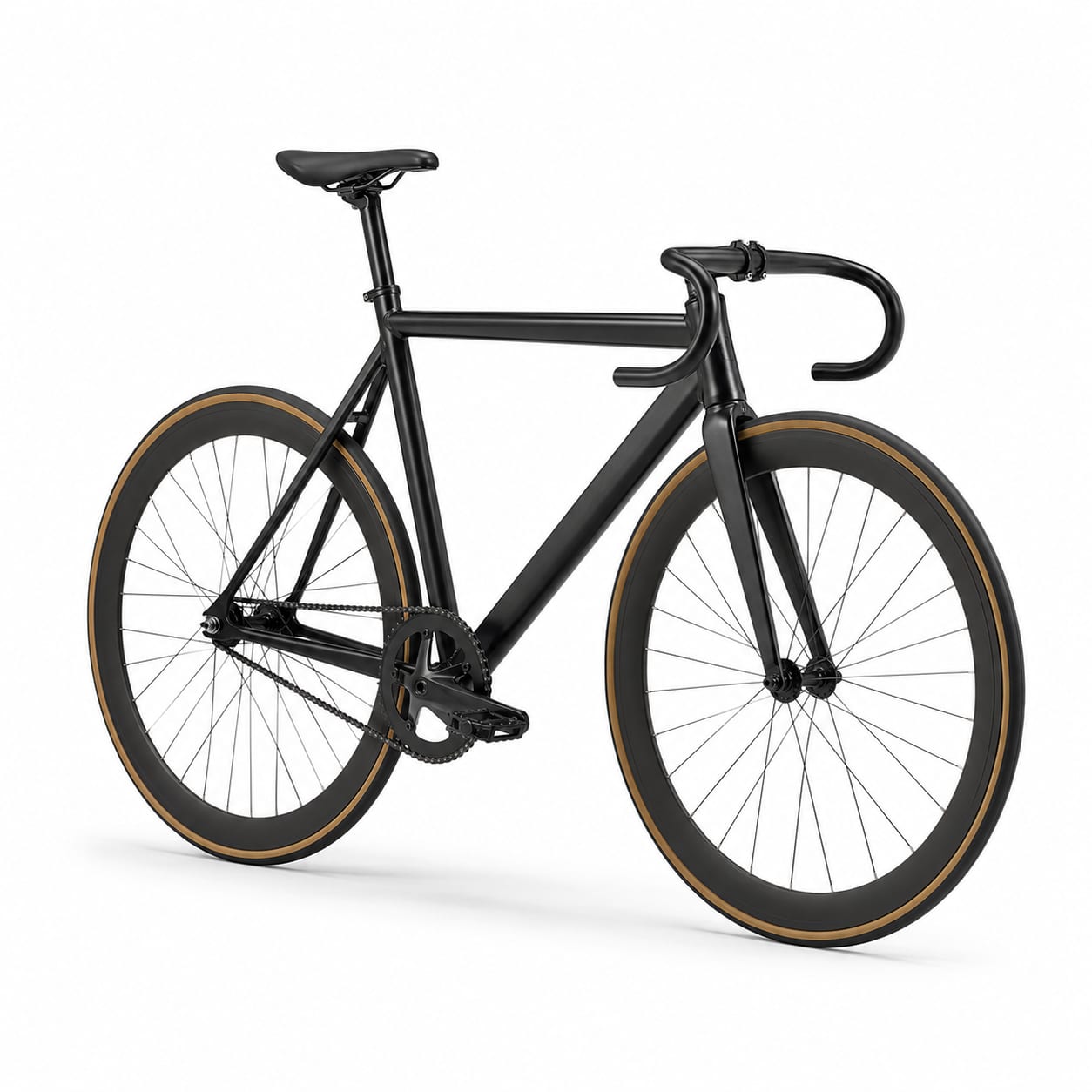
Track bikes are purpose-built for velodrome racing and do not fit within standard road bike categories. They share the aerodynamic optimization and aggressive positioning of aero race bikes but are fundamentally different machines with fixed gears, no brakes, and steeper geometry.
Compared to other types
Unlike aero race bikes which are designed for mass-start road events with brakes and freewheels, track bikes are stripped to the absolute minimum for velodrome use only.
Why it matters: Understanding that a track bike is a completely separate category prevents the dangerous mistake of treating it as a road bike variant. It cannot be converted for safe road use.
Frame Material
Frame Material
What it means
The primary material used in frame construction, which determines weight, stiffness, ride quality, durability, and cost.
Typical for this type
Carbon Fiber For Competition; Aluminum For Training And Entry-Level
Most common pick: Carbon Fiber
In practice
Carbon fiber dominates track racing at all levels due to its unmatched stiffness-to-weight ratio and the ability to tune layups for maximum power transfer. Aluminum is common for training and entry-level track bikes, offering excellent stiffness at lower cost. Steel and titanium are rare in modern track cycling.
Compared to other types
Track bikes prioritize stiffness even more aggressively than aero race bikes. While road bikes balance stiffness with compliance for comfort, track frames are designed to be as rigid as possible with no concern for road vibration damping.
Why it matters: Frame stiffness is arguably more important on the track than any other discipline because sprinters produce enormous peak wattage and any flex is wasted energy. Carbon fiber allows engineers to create frames that are laterally rigid while maintaining structural integrity under extreme loads.
What it means
The nominal size designation of the frame, typically based on seat tube length or a general sizing system, which determines overall bike fit.
Typical for this type
Riders Typically Choose One Size Smaller Than Their Road Bike For A More Compact, Aerodynamic Position
Most common pick: Varies By Rider; Sizing Is Critical And Often Smaller Than Road Bike
In practice
Track bike sizing often differs from road bike sizing because riders seek a lower, more compact position. Many track racers ride a frame 1–2 cm smaller than their road bike to achieve a lower front end and shorter wheelbase for quicker handling. However, this varies by event — sprinters may prefer smaller frames while endurance track riders may choose sizes closer to their road fit.
Compared to other types
Track bikes are often sized down compared to road bikes. Where an endurance rider might choose a 56cm frame, the same rider on the track might ride a 54cm for a more aggressive, aerodynamic position.
Why it matters: Correct sizing on a track bike is safety-critical. An improperly sized track bike can be difficult to control at high speeds on banking, and the inability to coast means the rider must maintain control at all times.
What it means
The vertical distance from the center of the bottom bracket to the top of the head tube. Determines how upright or low the rider sits on the bike.
Typical for this type
470–540mm depending on size; lower is typical for sprint events
Most common pick: 490–530mm (size 54)
In practice
Track bikes feature very low stack heights to position the rider in an extremely aerodynamic tuck. This is among the lowest stack heights in any cycling discipline, reflecting the priority of aerodynamic efficiency at the high speeds achieved on the velodrome.
Compared to other types
Track bike stack is typically 20–40mm lower than endurance road bikes and 10–20mm lower than aero race bikes in the same nominal size, producing the most aggressive riding position in cycling.
Why it matters: The low stack forces an aggressive, aerodynamic position that reduces frontal drag at speeds regularly exceeding 55–65 km/h. However, it requires significant core strength and flexibility to maintain, especially during extended efforts.
What it means
The horizontal distance from the center of the bottom bracket to the top of the head tube. Determines how stretched out the rider is on the bike.
Typical for this type
375–410mm depending on size and event specialization
Most common pick: 380–400mm (size 54)
In practice
Track bikes have relatively long reaches to stretch the rider out aerodynamically. Combined with the low stack, this creates a long, low position that minimizes frontal area. Sprinters may opt for slightly shorter reaches for explosive power generation, while pursuit riders prefer longer reaches for aerodynamic efficiency.
Compared to other types
Track bike reach is comparable to or slightly longer than aero race bikes, and notably longer than endurance road bikes, contributing to the extremely low stack-to-reach ratio.
Why it matters: Reach determines how stretched the rider is on the bike. On the track, a longer reach improves aerodynamics but must be balanced against the rider's ability to produce power in that position, particularly for sprint events.
Stack/Reach Ratio
Stack-to-Reach Ratio
What it means
The ratio of stack height to reach, indicating the overall riding position character independent of frame size. Higher ratios indicate more upright, endurance-oriented geometry.
Typical for this type
1.28–1.38; sprint bikes may be as low as 1.26
Most common pick: 1.28–1.36
In practice
Track bikes have the lowest stack-to-reach ratios of any road cycling subcategory, reflecting their extremely aggressive, aerodynamic positioning. Ratios below 1.35 are common, which would be considered very aggressive even for aero race road bikes.
Compared to other types
Track bikes have lower stack-to-reach ratios than even aero race bikes (1.30–1.38), which themselves are lower than endurance bikes (1.45–1.55). This makes track bikes the most aggressively positioned subcategory by a significant margin.
Why it matters: This ratio quantifies just how aggressive the track bike position is. A ratio of 1.30 means the rider is positioned extremely low and long — efficient for aerodynamics but requiring exceptional flexibility and core strength to maintain.
Weight
Complete Bike Weight
What it means
The total weight of the complete bicycle without pedals, bottles, or accessories. Affects climbing speed, acceleration, and handling.
Typical for this type
6.5–7.8kg; UCI minimum of 6.8kg applies to Sanctioned Events
Most common pick: 6.8–7.5kg
In practice
Track bikes can be very light because they lack brakes, derailleurs, shift levers, cables, and freewheel mechanisms. However, the UCI 6.8kg minimum weight limit applies, and many track bikes are built to be as stiff as possible rather than as light as possible. Sprint bikes may actually be heavier than endurance track bikes due to deeper wheels and stiffer frame construction.
Compared to other types
Track bikes are comparable in weight to climbing/lightweight road bikes despite being optimized for stiffness rather than weight, because the absence of brakes and gears removes significant mass.
Why it matters: Weight matters less on the track than in road racing because the velodrome is flat and aerodynamic drag dominates. Many track racers prioritize stiffness and aerodynamics over weight savings, and some bikes actually add weight to meet the UCI minimum.
Groupset / Drivetrain Level
Groupset Tier
What it means
The tier and brand of the drivetrain component group, which determines shifting performance, weight, durability, and features like electronic shifting.
Typical for this type
N/A — Track Bikes Use Single-Speed Fixed-Gear Drivetrains With Track-Specific Cranksets And Hubs
Most common pick: Track-Specific (Not Applicable — No Groupset)
In practice
Track bikes do not use traditional road groupsets. They have a single chainring, a single rear cog fixed to the hub (no freewheel), and no derailleurs or shift mechanisms. Track cranksets are purpose-built with high stiffness and 144mm BCD for large chainrings (48–54 teeth common). Track hubs have threaded fixings for the cog and lockring. Component brands include Shimano (Dura-Ace Track), SRAM, Campagnolo (Pista), and specialist brands like Miche and Sugino.
Compared to other types
All other road bike subcategories use multi-speed groupsets with freewheels and brakes. Track bikes are the only subcategory with a single fixed gear and no braking system.
Why it matters: The fixed-gear drivetrain is fundamental to track cycling. It provides direct power transfer, precise speed control through pedal pressure, and the ability to slow down without brakes by resisting the crank rotation. Gear ratio selection (chainring/cog combination) is the primary tuning variable and is chosen based on event, rider strength, and track configuration.
Speed / Number of Gears
Number of Gears
What it means
The total number of gear combinations available, determined by the number of chainrings multiplied by the number of cassette sprockets.
Typical for this type
1 gear only — this is mandatory for track racing
Most common pick: 1 (fixed gear)
In practice
Track bikes have exactly one gear ratio, determined by the combination of chainring and rear cog. Common gear ratios range from 48/14 (approximately 92 gear inches) for sprint events to 50/15 or similar for endurance events. The gear cannot be changed during a race. Riders select their gear ratio before the event based on discipline, fitness, and track characteristics.
Compared to other types
All other road bike subcategories have 9–24 gears with derailleurs. Track bikes are unique in having a single fixed gear with no shifting capability whatsoever.
Why it matters: Having only one gear means the rider must produce all speed variation through cadence changes alone. This requires a carefully chosen gear ratio that balances top-end speed potential with the ability to accelerate from low speeds. Gear selection is a critical strategic decision in track racing.
What it means
The braking system type, which affects stopping power, modulation, tire clearance, weight, and maintenance requirements.
Typical for this type
No Brakes — Mandatory For Velodrome Racing Per UCI Regulations
Most common pick: None (Brakeless)
In practice
Track bikes have no brakes of any kind. This is both a tradition and a safety requirement — on a velodrome, sudden braking by one rider could cause a catastrophic pile-up in a tightly packed field. Speed control is achieved entirely through leg pressure against the fixed-gear drivetrain. Riders slow down by resisting the crank rotation and can stop by applying back-pressure to lock the rear wheel briefly.
Compared to other types
Every other road bike subcategory has brakes — typically hydraulic disc or rim brakes. Track bikes are the only subcategory designed to operate without any braking system.
Why it matters: The absence of brakes is fundamental to track cycling and is a critical safety consideration. It means track bikes are illegal for road use in virtually all jurisdictions. Riders must learn to modulate speed entirely through the drivetrain, which is a skill that takes practice to develop.
Max Tire Width
Maximum Tire Clearance
What it means
The widest tire the frame and fork can accommodate, which determines versatility for different road surfaces and conditions.
Typical for this type
23–25mm; some frames accept up to 28mm for training use
In practice
Track bikes have very tight tire clearance because velodrome surfaces are perfectly smooth wooden boards. Narrow tires (23mm or even 19–20mm for some disciplines) at very high pressures (8–10+ bar / 120–160 psi) minimize rolling resistance and contact patch on the smooth surface. Wider tires offer no benefit on the track and would add unnecessary weight and aerodynamic drag.
Compared to other types
Track bikes have the narrowest tire clearance of any road bike subcategory — typically 23–25mm versus 28mm minimum for modern race bikes, 32mm for endurance bikes, and 35mm+ for all-road bikes. This severely limits versatility but is optimal for the velodrome.
Why it matters: Tire selection on the track is about minimizing rolling resistance and aerodynamic drag on a perfectly smooth surface. The narrow clearance reflects the fact that track bikes never encounter rough roads, gravel, or wet conditions that would benefit from wider tires.
What it means
The nominal diameter of the wheels; determines tire availability, ride characteristics, and geometry constraints.
Typical for this type
700c standard; some very small frames may use 650c
In practice
700c is the universal standard for track bikes, consistent with road cycling. Track wheels are typically built with very deep section rims (60–100mm) or disc wheels for maximum aerodynamic efficiency. Front discs or deep wheels are common in pursuit and time trial events, while mass-start events may use slightly shallower rims for better handling in close quarters.
Compared to other types
While the 700c standard is shared with all road bike subcategories, track wheels are typically much deeper (60–100mm vs 30–50mm for road) and disc wheels are common, which is rare outside time trial and triathlon use.
Why it matters: Wheel choice is one of the most impactful equipment decisions in track cycling because aerodynamic drag dominates at the high speeds achieved on the velodrome. Deep-section and disc wheels can save significant wattage compared to shallow rims.
Head Tube Angle
Head Tube Angle
What it means
The angle of the head tube relative to horizontal; affects steering speed, stability, and front-end feel.
Typical for this type
73–74.5°; steeper angles for sprint/mass-start, Slightly Slacker For Endurance Events
Most common pick: 73.5–74.5°
In practice
Track bikes feature the steepest head tube angles in road cycling, producing very quick, responsive steering. This is essential for the tight confines of velodrome racing, where riders navigate close to other competitors at high speeds and must make instant directional adjustments. The steep angle, combined with minimal fork offset, produces a low trail number for nimble handling.
Compared to other types
Track bikes have steeper head tube angles (73.5–74.5°) than aero race bikes (73–73.5°), endurance bikes (72–73°), and all-road bikes (71–72.5°), making them the quickest-handling road cycling subcategory.
Why it matters: The steep head angle gives track bikes their characteristic quick, responsive steering feel. This is critical for safety and performance in mass-start track events where riders are centimeters apart at 50+ km/h. Riders transitioning from road bikes must adapt to the more sensitive steering response.
Chainstay Length
Chainstay Length
What it means
The distance from the bottom bracket center to the rear axle; affects rear-end compliance, traction, and wheelbase.
Typical for this type
405–412mm; shorter stays preferred for sprint events
Most common pick: 405–410mm
In practice
Track bikes have very short chainstays to create a compact rear triangle that delivers snappy acceleration and agile handling. The short stays contribute to a short overall wheelbase that makes the bike responsive and easy to maneuver on the velodrome. Unlike road bikes, track bikes don't need clearance for wide tires or derailleurs, allowing stays to be very short.
Compared to other types
Track bikes have the shortest chainstays (405–410mm) of any road bike subcategory, compared to 405–415mm for aero race bikes, 410–420mm for endurance bikes, and 420–425mm for all-road bikes.
Why it matters: Short chainstays produce the explosive acceleration that track sprinters need. When a sprinter unleashes 2,000 watts, the short, stiff rear triangle transfers that power to the track surface with minimal flex. The resulting acceleration is what separates winning from losing in match sprints decided by centimeters.
BB Drop
Bottom Bracket Drop
What it means
The vertical distance the bottom bracket sits below the wheel axle line; affects cornering clearance and center of gravity.
Typical for this type
55–62mm; higher BB (lower drop) for steeply banked tracks
In practice
Track bikes have notably lower BB drop (higher bottom bracket) than road bikes — typically 55–62mm versus 68–72mm for road bikes. This elevated BB is essential to prevent pedal strike on the steeply banked turns of a velodrome, where the bike leans significantly and pedals can come very close to the track surface. Note: this range falls below the standard road bike range of 65–75mm because track bikes require a higher BB position.
Compared to other types
Track bikes have significantly lower BB drop (55–62mm, meaning higher BB) than all road bike subcategories (65–75mm). This is one of the most distinctive geometric differences between track and road bikes and is immediately noticeable when transitioning between the two.
Why it matters: Pedal strike on a velodrome banking is extremely dangerous — it can instantly crash the rider and potentially others in a mass-start event. The higher bottom bracket provides the necessary clearance for pedaling through banked turns, which can reach 45° or more in steeply banked velodromes.
Aero Optimization
Aerodynamic Features
What it means
The degree and type of aerodynamic optimization in the frame and component design, which affects high-speed efficiency.
Typical for this type
Full Aero For Competition; Semi-Aero Acceptable For Training
Most common pick: Full Aero Integration
In practice
Track bikes employ full aerodynamic integration including deep airfoil tube profiles, internal cable routing (for the single brake cable if present on training bikes), integrated bar/stem systems, and aerodynamic seatpost designs. Many track frames use airfoil shapes that are even more aggressive than road aero bikes because UCI road equipment regulations regarding tube aspect ratios and shapes are less restrictive for track-specific frames in some cases, and the smooth velodrome surface allows for more extreme aero optimization without comfort penalties.
Compared to other types
Track bikes match or exceed the aero integration of aero race bikes and triathlon/TT bikes. Unlike road aero bikes, track bikes don't need to compromise aero shapes for compliance or comfort, allowing for more extreme airfoil profiles.
Why it matters: At the speeds achieved on the velodrome (50–70+ km/h), aerodynamic drag is the dominant resistance force. Every watt saved through aerodynamic optimization translates directly to speed. This is why track bikes often feature the most extreme aero designs in cycling.
Seatpost Type
Seatpost Type
What it means
The seatpost design and integration level, which affects ride comfort, adjustability, and weight.
Typical for this type
Integrated Aero For Competition; Standard Round Acceptable For Training
Most common pick: Integrated / Aero Seatpost
In practice
Competition track bikes typically use integrated aero seatposts that are part of the frame's aerodynamic system. These posts have airfoil cross-sections, hidden clamps, and are designed to minimize drag. Since track bikes don't require frequent saddle height adjustments and rider position is consistent, the limited adjustability of integrated posts is less of a concern than on road bikes.
Compared to other types
Track bikes use integrated aero seatposts more frequently than any road bike subcategory except aero race bikes. Unlike endurance bikes that may use compliance seatposts for comfort, track bikes have no need for vibration damping and prioritize aerodynamics exclusively.
Why it matters: The integrated aero seatpost contributes to the overall aerodynamic efficiency of the track bike. On the velodrome, where races can be won by hundredths of a second, every aerodynamic advantage matters. The trade-off in adjustability is acceptable because track positions are precisely dialed and rarely changed.