Boot Type / Discipline
Boot Type
What it means
The primary intended use category of the ski boot, which determines overall construction, features, and performance characteristics.
Typical for this type
All Mountain For Most Juniors; Frontside For Junior Racers
In practice
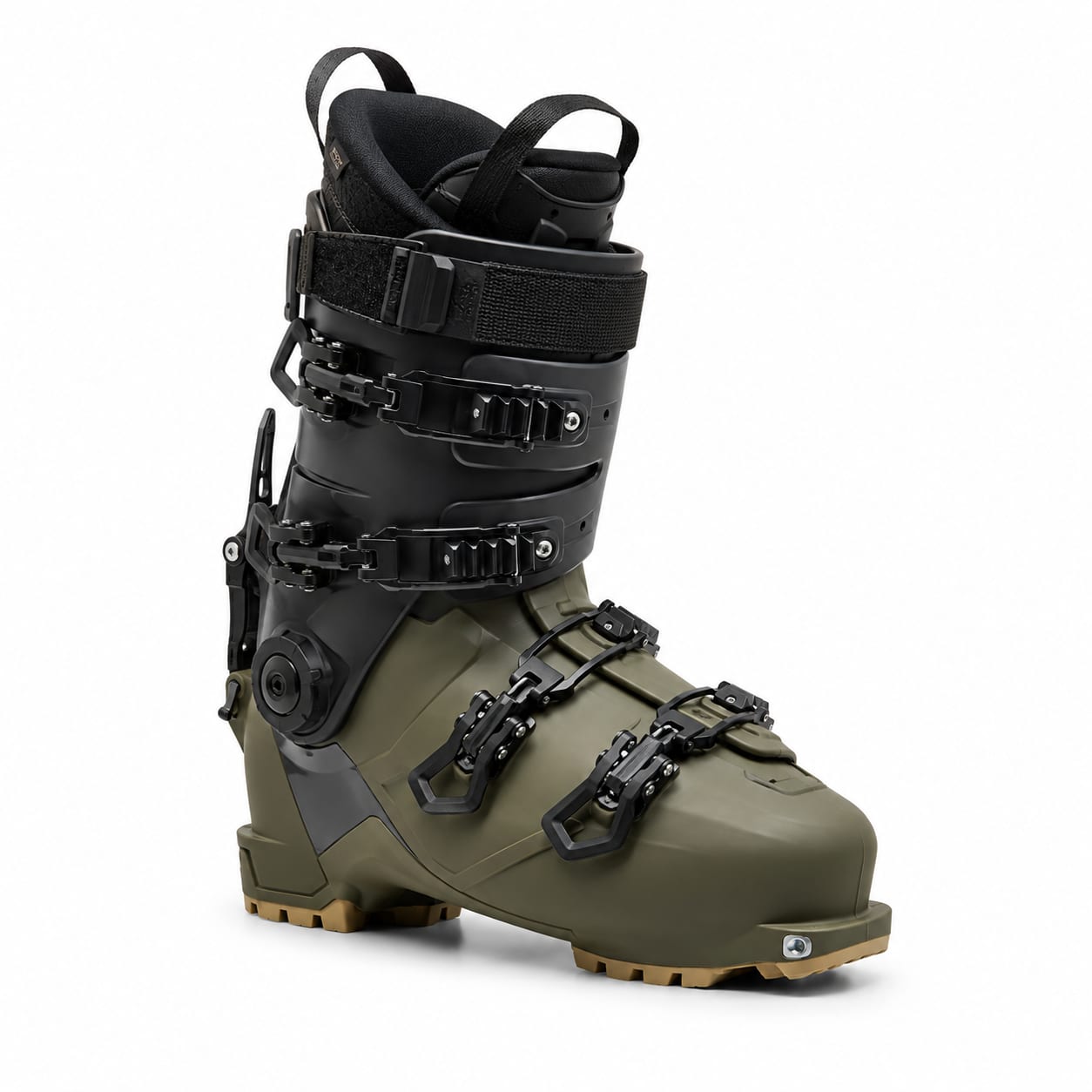
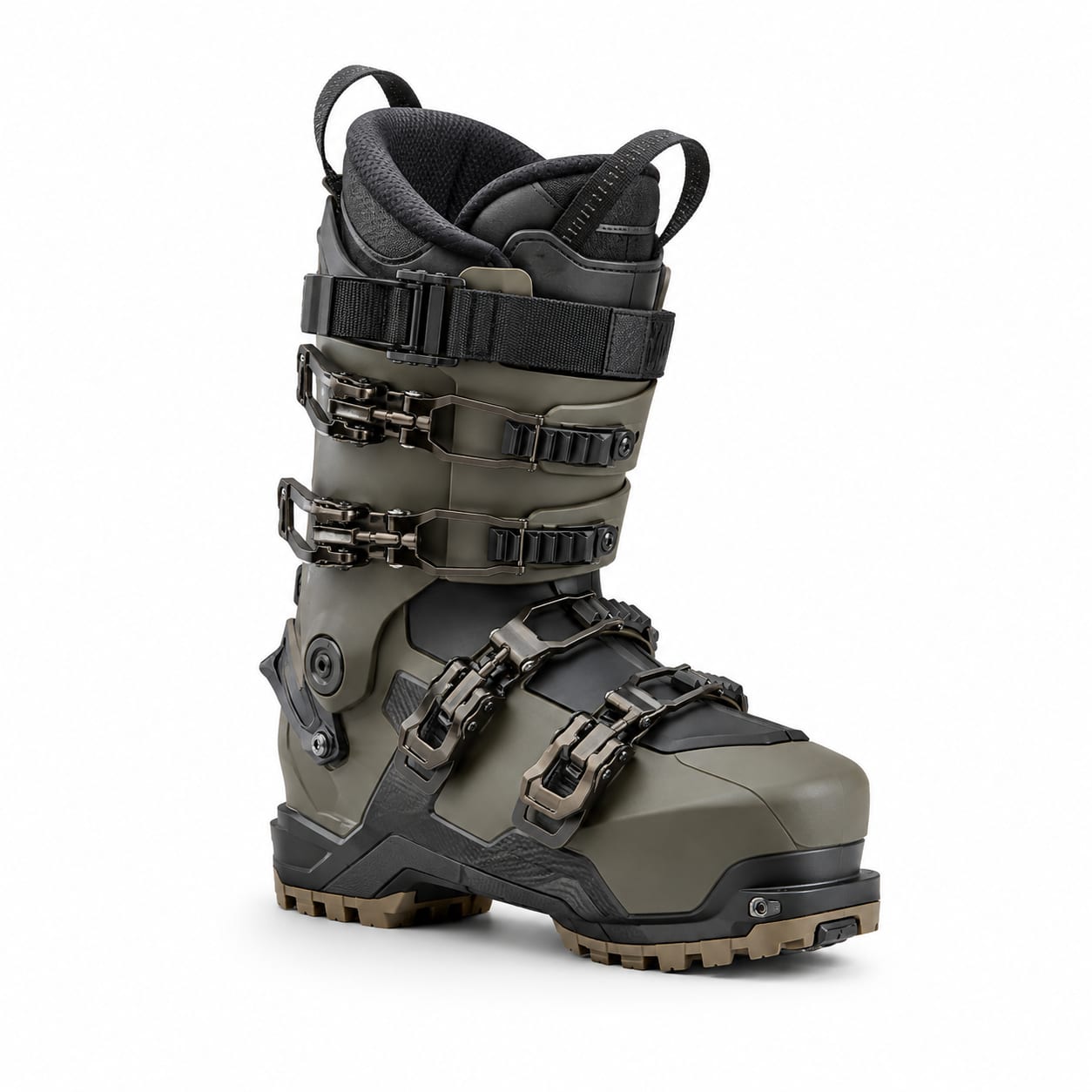
The vast majority of junior ski boots are all-mountain designs, which suit the varied terrain and conditions children encounter as they explore the mountain. Junior race boots exist for children in organized racing programs.
Compared to other types
Unlike adult subcategories where touring, freeride, and freestyle options are common, junior boots are almost exclusively all-mountain or frontside/race. There is no meaningful junior touring or freestyle boot market.
Why it matters: All-mountain junior boots provide the versatility young skiers need while remaining forgiving enough for skill development. Specialized junior race boots are only appropriate for children in structured race programs.
Flex Rating (Stiffness)
Flex Rating
What it means
A numerical index indicating how resistant the boot cuff is to forward bending. Higher numbers mean stiffer boots that resist flex more, providing more precise power transfer but requiring more strength and technique to drive.
Typical for this type
30-40 (ages 4-7, Under 60 Lbs); 40-55 (Ages 7-10, 60-85 lbs); 55-70 (ages 10-13, 85-110 lbs)
In practice
Junior flex ratings are scaled to children's body weight and leg strength. A 50-flex junior boot is significantly softer than a 50-flex adult boot due to different shell geometry and wall thickness. The flex index is not directly comparable between junior and adult boots.
Compared to other types
Junior flex ranges (30-70) are dramatically softer than adult ranges (60-150). A child transitioning from a 60-flex junior boot to an adult boot should not assume a 60-flex adult boot will feel similar—it will be much stiffer.
Why it matters: A flex that is too stiff prevents children from achieving proper forward stance and causes back-seat skiing. A flex that is too soft provides inadequate support for heavier or more aggressive young skiers. Proper flex is critical for technique development.
Last Width (Forefoot Width)
Last Width
What it means
The width of the boot shell at the widest point (forefoot/ball area), measured in millimeters. This is the single most important fit dimension for comfort and control.
Typical for this type
95-98mm for narrow kids' feet; 98-102mm for average to Wide Kids' Feet
Most common pick: 97-100mm (scaled to Size)
In practice
Junior boot last widths are proportionally scaled for children's feet and tend to run slightly wider relative to foot length than adult boots, accommodating the typically chubbier shape of children's feet. Exact last widths vary by brand and are less commonly published for junior models.
Compared to other types
Junior lasts are generally more forgiving and less precisely categorized than adult boots. Few brands offer narrow/wide junior lasts as distinct models, instead using a medium fit that works for most children.
Why it matters: Children's feet that are still developing should not be squeezed into overly narrow boots, which can cause discomfort and potentially affect foot development. However, excessive width leads to poor control and difficulty initiating turns.
Volume / Instep Height
Volume / Instep Height
What it means
The overall internal volume and height of the boot through the instep and midfoot area. Categorized as low, medium, or high volume, this affects both comfort and heel hold.
Typical for this type
Medium Volume For Most Juniors; High Volume For Children With High Insteps Or Thick Feet
Most common pick: Medium Volume
In practice
Most junior boots are designed with medium volume to accommodate the widest range of children's foot shapes. High-volume options exist in some brands for children with particularly high insteps or wide feet.
Compared to other types
Junior boots offer fewer volume options than adult boots. Most are medium volume by default, with limited low- or high-volume alternatives. This simplifies shopping but can make fitting unusual foot shapes more challenging.
Why it matters: A boot that's too tight over the instep causes pain and numbness, making the child reluctant to ski. Too much volume allows heel lift, reducing control. Children are less able to articulate fit problems, so parents should watch for signs of discomfort.
Shell Material
Shell Material
What it means
The primary plastic or composite material used in the boot shell and cuff, which affects weight, stiffness, cold-weather performance, and ease of entry.
Typical for this type
PU For Durability And Consistent Flex; Polyamide For Lighter Weight In Some Models
Most common pick: Polyurethane Pu
In practice
Most junior boots use polyurethane (PU) shells, which provide consistent flex across temperatures and excellent durability for the abuse kids' equipment takes. Some lighter models use polyamide (Grilamid) to reduce weight for smaller children.
Compared to other types
Junior boots almost exclusively use PU or basic polyamide. Premium materials like Pebax and composite constructions found in high-end adult boots are not used in junior models, keeping costs reasonable.
Why it matters: PU is preferred for junior boots because it maintains consistent flex even in cold temperatures and withstands rough handling. Weight savings from polyamide are less critical for resort skiing children than for adult touring applications.
What it means
The type of inner boot/liner that provides insulation, cushioning, and customizable fit around the foot and ankle.
Typical for this type
Non-Moldable For Budget/Entry; Thermo-Formable For Better Fit And Comfort
Most common pick: Non Moldable
In practice
Entry-level and mid-range junior boots typically come with non-moldable standard foam liners. Better junior models include thermo-formable liners that can be heat-molded at a shop for improved comfort and fit. Intuition-style liners are rare in junior boots.
Compared to other types
Junior boots lag behind adult boots in liner technology. Custom foam injection is never found in junior boots, and Intuition liners are extremely rare. The liner quality gap is one of the biggest differences between junior and adult boot categories.
Why it matters: Thermo-formable liners are worth seeking out for children with hard-to-fit feet or those skiing multiple days per season. They provide noticeably better comfort and heel hold after a quick shop molding process.
Number of Buckles
Buckle Count
What it means
The number of closure buckles on each boot. More buckles provide finer adjustment and more even closure pressure, while fewer buckles save weight and simplify entry.
Typical for this type
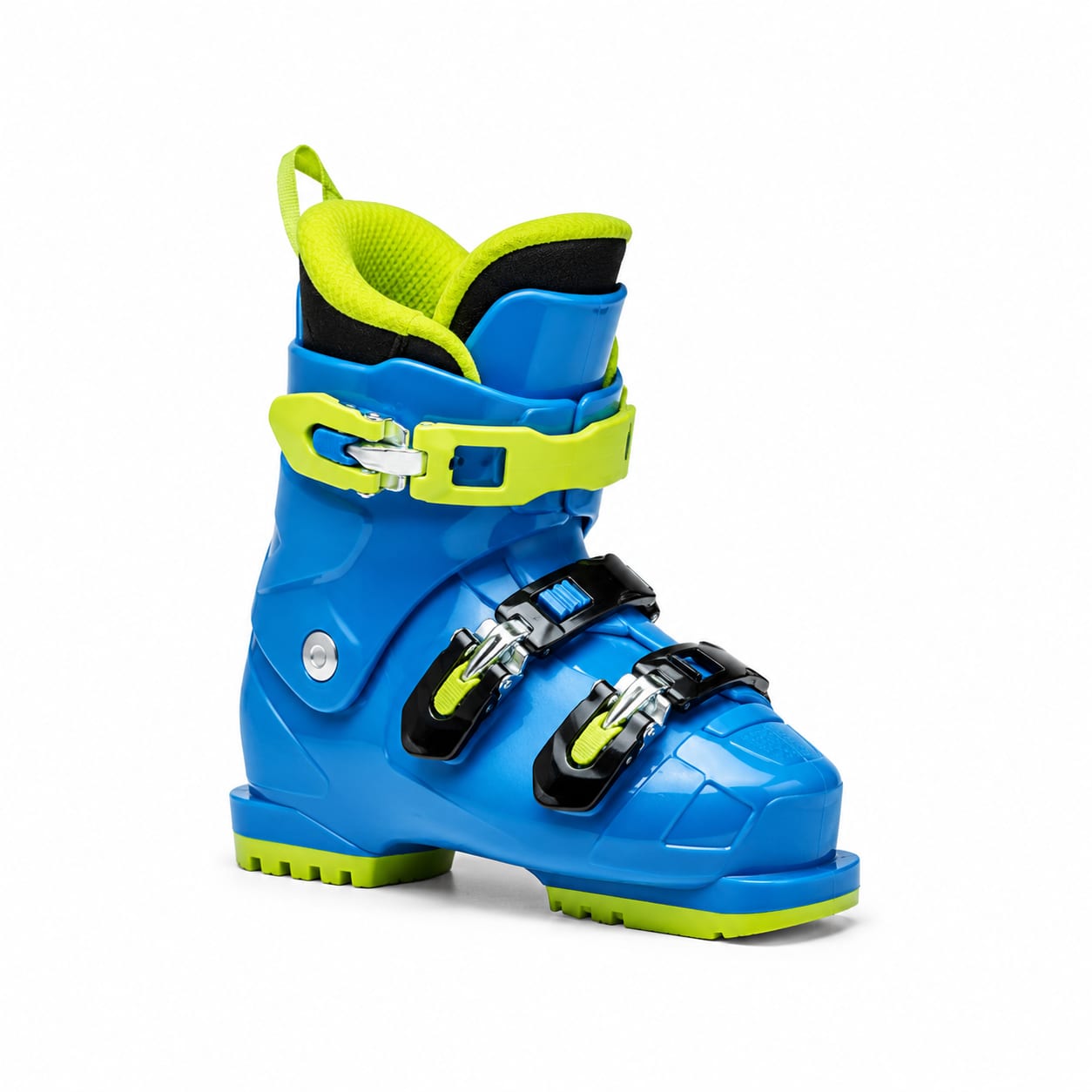
2 buckles for sizes 15.0-18.5 (very small); 3 buckles for sizes 19.0-22.0; 4 buckles for sizes 22.5-23.5
In practice
Smaller junior boots use 2-3 buckles because the shell is too short for four buckles and small children struggle with more closure points. As foot size increases, 3-4 buckles become standard. The transition to 4 buckles typically happens around mondo 22.0-23.0.
Compared to other types
Junior boots commonly have fewer buckles than adult boots of equivalent performance level. A 3-buckle junior boot is standard, whereas a 3-buckle adult boot is typically a touring model. This is driven by shell size constraints, not performance design.
Why it matters: Fewer buckles simplify entry and exit for small hands and reduce weight, but provide less precise closure. For very small children, 2-3 buckles are adequate. Older juniors approaching adult sizes benefit from 4-buckle precision.
Walk Mode / Hike Mechanism
Walk Mode
What it means
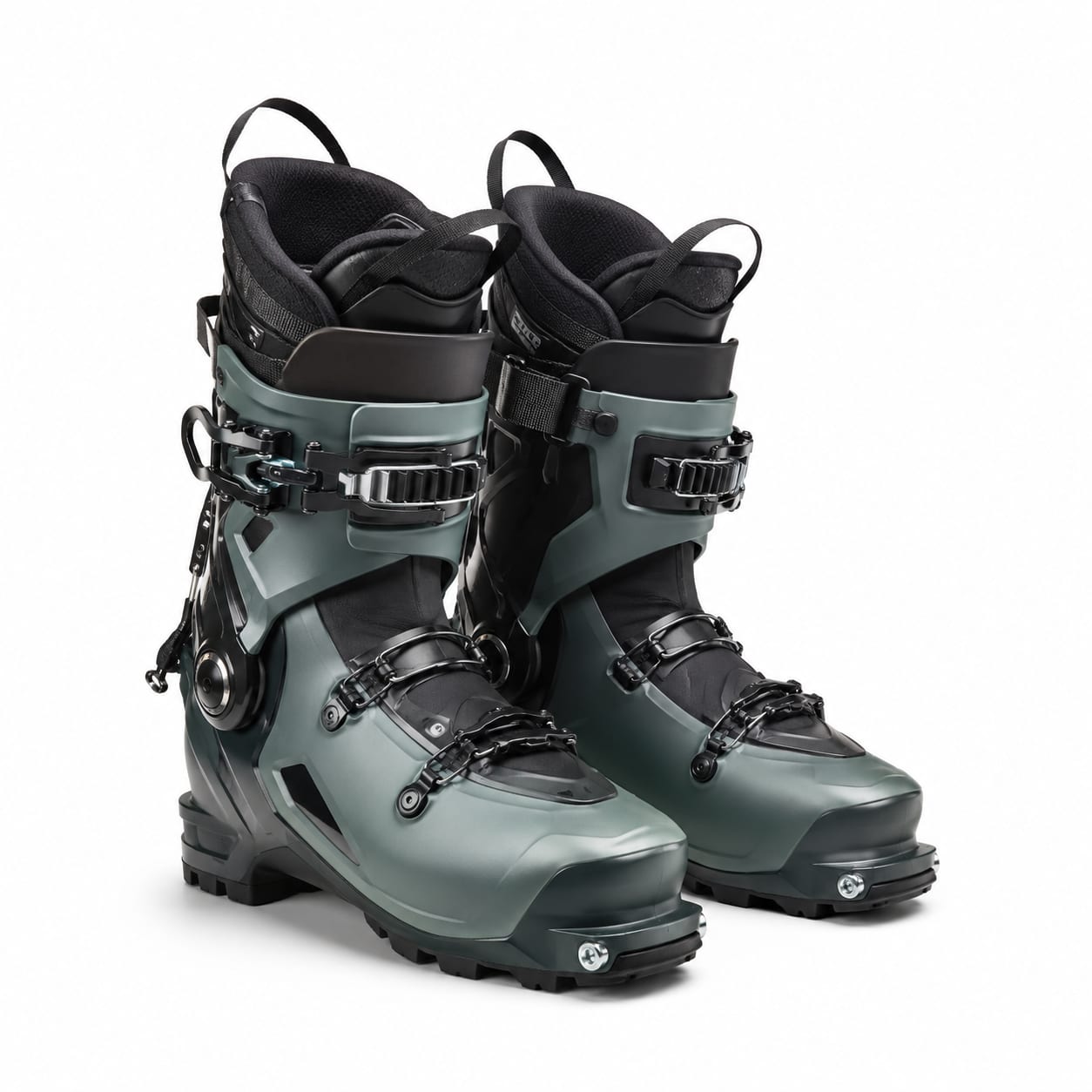
A mechanism that unlocks the cuff from the lower shell, allowing a greater range of forward motion for walking, hiking, or skinning.
Typical for this type
Not Necessary For Most Juniors; Nice-To-Have If Available
Most common pick: False
In practice
Walk mode is uncommon on junior boots, appearing only on some higher-end models and larger sizes. Most children do not need walk mode since they are not touring and the convenience benefit is less critical for lightweight boots that are easier to walk in anyway.
Compared to other types
Walk mode is far less common on junior boots than on adult all-mountain and freeride boots. The feature adds cost and complexity that most junior boot buyers are unwilling to pay for.
Why it matters: Walk mode is a convenience feature for resort skiing, not a necessity for juniors. Children's lighter boots are already easier to walk in than adult boots. If available, it's a nice bonus but should not be a deciding factor.
Walk Range of Motion (Degrees)
Walk Range of Motion
What it means
The total range of forward cuff rotation when in walk mode, measured in degrees. Greater range makes walking, skinning, and hiking easier and more natural.
Typical for this type
15-25 degrees if walk mode is present
Most common pick: N/A (Most Junior Boots Lack Walk Mode)
In practice
For the few junior boots that include walk mode, the range of motion is typically modest at 15-25 degrees. This is sufficient for walking to the lift and around the lodge but not designed for touring.
Compared to other types
Junior boots with walk mode offer significantly less range than adult touring boots (50-70°) or even adult freeride boots (25-40°). The feature is included for convenience, not touring capability.
Why it matters: Walk range is largely irrelevant for junior boots since most lack walk mode entirely. For models that include it, any range of motion is a bonus for walking comfort.
Boot Sole Length (BSL)
Boot Sole Length
What it means
The length of the boot sole in millimeters, critical for binding setup and adjustment. Different from mondo point size; the same size boot can have different BSL across brands.
Typical for this type
Determined By The Child'S Mondo Size; Not A Selectable Dimension
Most common pick: Varies By Size; Approximately 190-280mm Across The Junior Size Range
In practice
Junior boot sole lengths range from roughly 190mm for the smallest sizes (15.0) to approximately 280mm for the largest junior sizes (23.5). BSL is critical for binding setup and must be verified when mounting or adjusting bindings for children's equipment.
Compared to other types
Junior BSLs are significantly shorter than adult ranges (263-340mm). Bindings for junior boots must be compatible with these shorter sole lengths. Some adult bindings cannot adjust down to the smallest junior BSLs.
Why it matters: Children's bindings must be precisely adjusted for the boot sole length. Because children frequently change boot sizes, binding adjustments should be checked every season. Using hand-me-down boots with existing bindings requires BSL verification.
Forward Lean Angle
Forward Lean
What it means
The angle of the cuff relative to vertical, positioning the skier's body forward over the skis. Affects stance, balance, and the ability to drive the ski tips.
Typical for this type
12-15 degrees; not typically adjustable on junior boots
In practice
Junior boots generally have a moderate forward lean of 12-15 degrees, which encourages a natural, slightly forward stance without being overly aggressive. Forward lean is rarely adjustable on junior models.
Compared to other types
Junior boots tend toward the lower end of the forward lean spectrum compared to adult boots (14-17° typical). Adjustable forward lean, common on performance adult boots, is almost never found on junior models.
Why it matters: A moderate forward lean helps children develop proper stance habits without forcing them into an uncomfortable position. Since children are still developing their sense of balance and body position, a comfortable natural lean is preferable to aggressive forward lean.
GripWalk Sole Compatibility
GripWalk Compatible
What it means
Whether the boot features a GripWalk sole profile (rockered, rubberized) that requires GripWalk-compatible bindings for safe use.
Typical for this type
Alpine Standard Is Most Common; GripWalk Increasingly Available On Newer Models
Most common pick: Alpine Standard
In practice
Most junior boots feature traditional alpine standard (DIN) soles for maximum binding compatibility. GripWalk soles are becoming more common on newer junior models, especially from European brands, but alpine standard remains dominant.
Compared to other types
GripWalk adoption is slower in junior boots than in adult boots, partly because of the need for universal binding compatibility with rental fleets and ski school programs. Alpine standard soles remain the safest choice for maximum compatibility.
Why it matters: Binding compatibility is especially important for junior boots because children's bindings and rental bindings must work together safely. If buying GripWalk junior boots, verify that the child's bindings are GripWalk-compatible. Many rental shops and ski school programs use standard alpine bindings.
Weight Per Pair (grams)
Weight Per Pair
What it means
The total weight of both boots in grams. Weight significantly affects touring efficiency and all-day fatigue, with lighter boots being easier on the uphill but sometimes sacrificing downhill performance.
Typical for this type
1500-2200g for smaller sizes (15.0-19.5); 2200-2800g for larger sizes (20.0-23.5)
Most common pick: 1800-2600g
In practice
Junior boots are significantly lighter than adult boots, with weight scaling with size. The smallest junior boots weigh approximately 1500-1800g per pair, while the largest approach 2800g. Lighter weight reduces fatigue for small skiers.
Compared to other types
Junior boots are 30-50% lighter than adult alpine boots (3500-4500g). This weight savings comes from smaller size, thinner shell walls, fewer buckles, and simpler construction rather than premium lightweight materials.
Why it matters: Weight is more significant for children than adults relative to body strength. A heavy boot can fatigue a young skier quickly and make walking difficult. Lighter boots help children maintain energy and enthusiasm throughout the day.
Micro-Adjustable Buckles
Micro-Adjustable Buckles
What it means
Whether the buckles can be fine-tuned with a screw mechanism for precise tension adjustment beyond the standard catch positions.
Typical for this type
Nice to Have But Not Essential For Most Juniors
Most common pick: False
In practice
Micro-adjustable buckles are uncommon on junior boots, appearing only on some higher-end models. Most junior boots use standard catch-position buckles that are simpler and more durable for the price point.
Compared to other types
Micro-adjustable buckles are standard on mid-range and above adult boots but rare on junior boots. This is a cost-saving measure that has minimal practical impact for most young skiers.
Why it matters: Micro-adjustment is less critical for juniors than adults because children's boots are typically sized with slightly more room for growth, making precise buckle tension less impactful. Standard buckles are also easier for children to operate independently.
Power Strap Type
Power Strap
What it means
The velcro or mechanical strap at the top of the cuff that provides additional closure power and fine-tuning of upper cuff tension.
Typical for this type
Standard Velcro Is Adequate; Wide Velcro On Some Larger Junior Models
Most common pick: Standard Velcro
In practice
Most junior boots feature a standard 30-35mm velcro power strap. Some larger junior models approaching adult sizes may include wider straps. Mechanical/buckle straps are not found on junior boots.
Compared to other types
Junior boots exclusively use standard or wide velcro straps. Mechanical/buckle power straps found on race and high-performance adult boots are not used in junior models.
Why it matters: The power strap on junior boots primarily serves to keep the cuff closed and provide basic upper tension. It's not a performance-critical feature for most young skiers. Ensure the strap is fastened during use for proper closure.
Cuff Alignment / Cant Adjustment
Cuff Alignment Adjustment
What it means
The ability to adjust the lateral angle of the cuff relative to the lower shell, accommodating bowlegged or knock-kneed stances for proper edge engagement.
Typical for this type
Rarely Needed For Juniors; Not Typically Available
Most common pick: False
In practice
Cuff alignment adjustment is virtually non-existent on junior boots. Children's stance and alignment issues are typically addressed through proper boot fit and footbeds rather than cuff adjustment. Most junior boots have fixed cuff positioning.
Compared to other types
Cuff alignment is a common feature on performance adult boots but absent from junior models. This reflects both cost considerations and the fact that most alignment issues in children are better addressed through other means.
Why it matters: If a child shows significant alignment issues (severely knock-kneed or bowlegged), consult a bootfitter about custom footbeds rather than looking for cuff alignment features in junior boots. Proper foot support often resolves alignment concerns in young skiers.
Recommended Skill Level
Recommended Skill Level
What it means
The skier ability level the boot is designed and optimized for, which correlates with flex, features, and overall construction philosophy.
Typical for this type
Beginner For Soft-Flex Junior Boots; Intermediate For Stiffer Junior Models And Junior Race Boots
Most common pick: Beginner
In practice
Most junior boots are designed for beginner to intermediate skill levels, with soft flexes and comfort-oriented construction. Junior race boots exist for intermediate to advanced young racers, but these are a small segment of the market.
Compared to other types
Junior boots rarely target advanced or expert skill levels. Even the stiffest junior boots are designed for developing skiers. Children who have truly advanced skills and the physical size to wear adult boots (typically mondo 22.0+) should consider transitioning to adult models.
Why it matters: Matching boot flex and features to the child's actual ability is crucial. A boot that's too stiff for a beginner child creates the same problems as an overly stiff adult boot—back-seat skiing, fatigue, and frustration. Most children are well-served by beginner-oriented junior boots.