What it means
The curvature profile of the goggle lens, affecting optical clarity, distortion, and field of view.
Typical for this type
Cylindrical Or Spherical
In practice
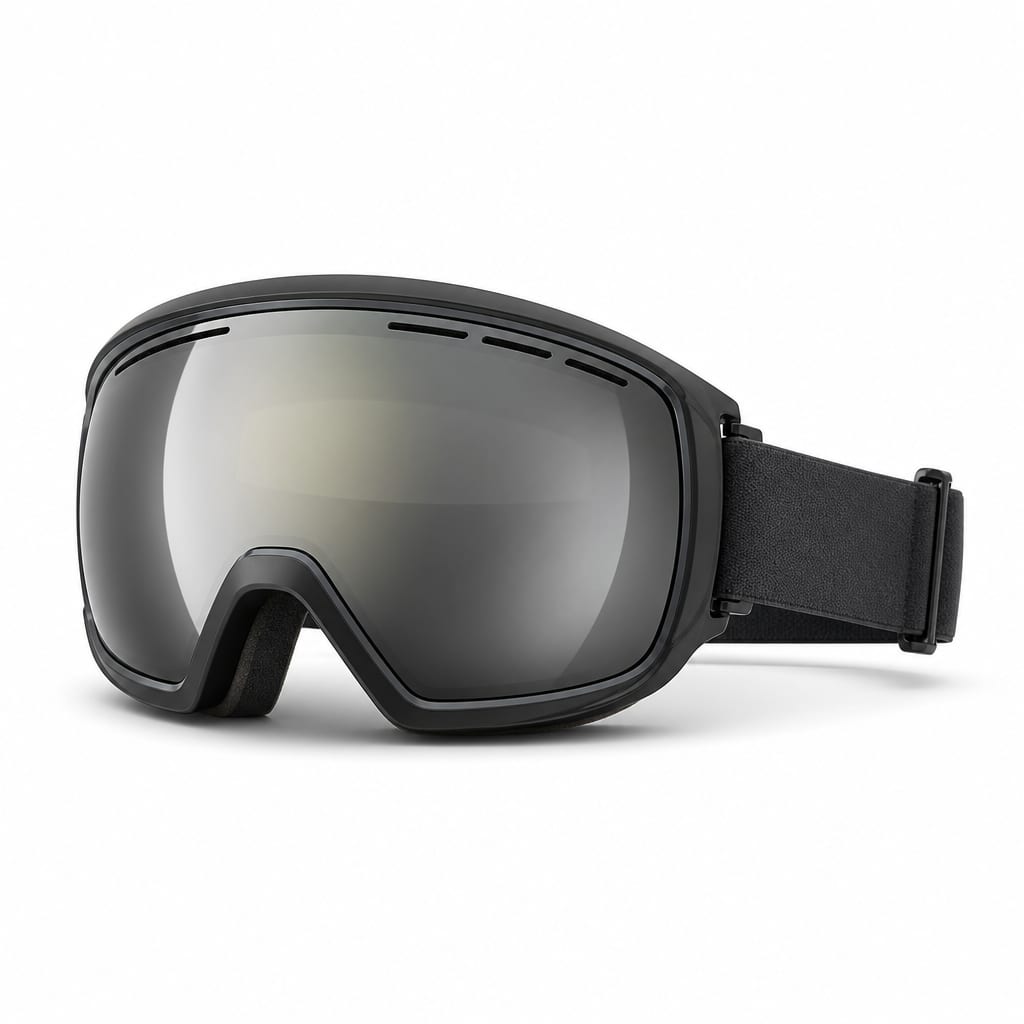
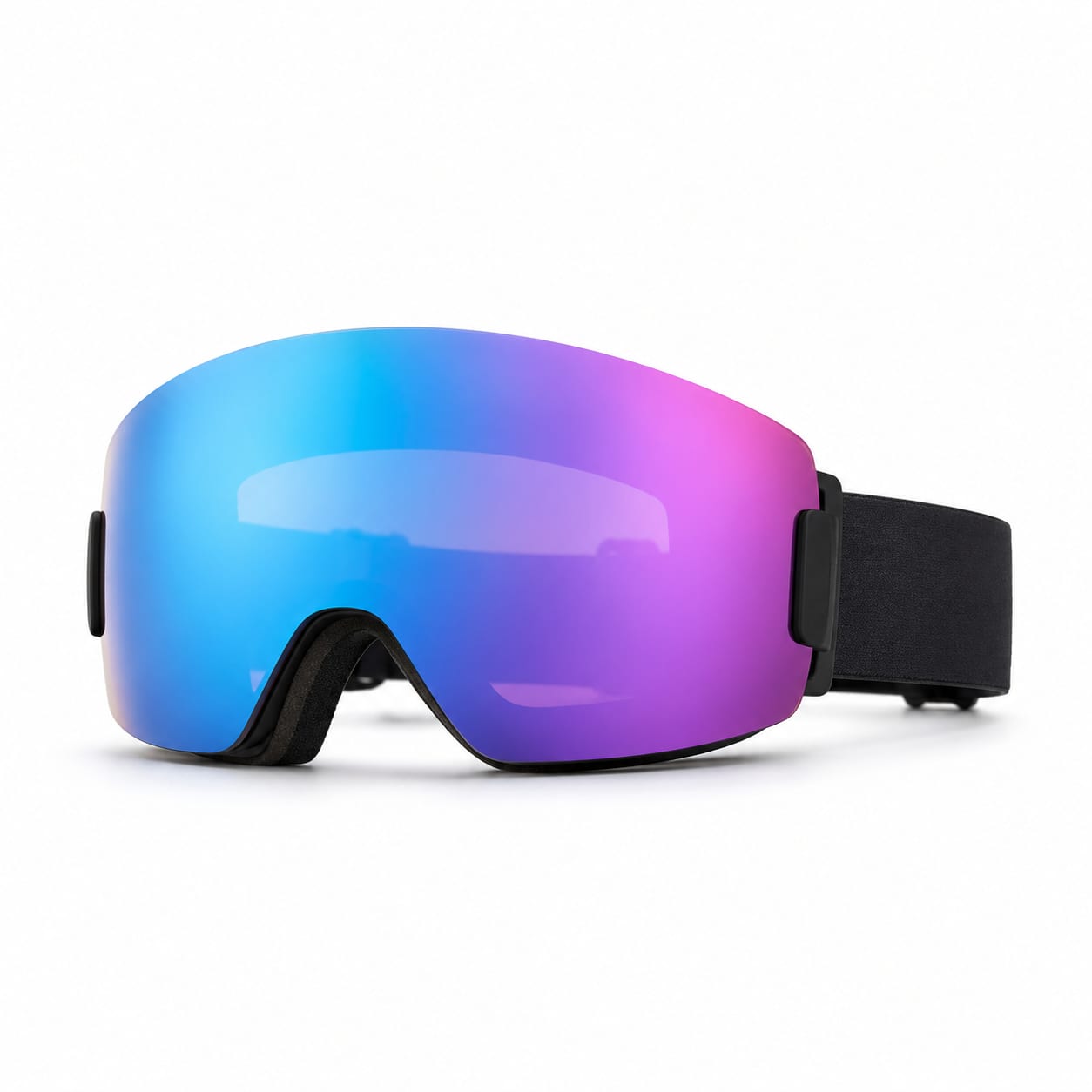
Cylindrical lenses are common in night goggles due to lower cost and adequate performance under floodlights, but spherical lenses provide better peripheral vision and less distortion for detecting terrain features in flat night light.
Compared to other types
Night goggles skew more toward cylindrical lenses than all-mountain or premium daytime goggles, largely because the lower price of cylindrical construction suits a specialized second-pair purchase. However, spherical night lenses are available and offer meaningful advantages.
Why it matters: At night, peripheral awareness of other skiers and terrain changes is critical. Spherical lenses reduce edge distortion and provide a wider field of view, which helps compensate for the reduced visual information available in low light.
VLT (%)
Visible Light Transmission
What it means
The percentage of visible light that passes through the lens, determining brightness and suitability for different weather conditions.
Typical for this type
70–95%
Most common pick: 85%
In practice
Night skiing goggles require very high VLT to transmit maximum available light under floodlights or twilight. Clear lenses typically achieve 85–95% VLT, while yellow/gold contrast lenses range from 70–85% VLT.
Compared to other types
Night goggles have the highest VLT of any ski goggle subcategory—typically 70–95% compared to 19–45% for all-mountain goggles and 3–18% for sunny-day goggles. This extreme VLT makes them unusable in bright daylight but essential after dark.
Why it matters: VLT is the single most critical specification for night goggles. A lens with insufficient VLT will make floodlit slopes appear dim and featureless, severely compromising safety and confidence. Every percentage point of VLT matters in low-light conditions.
What it means
The color tint of the lens, which filters light differently to enhance contrast and definition in specific conditions.
Typical for this type
Clear Or Yellow Gold
In practice
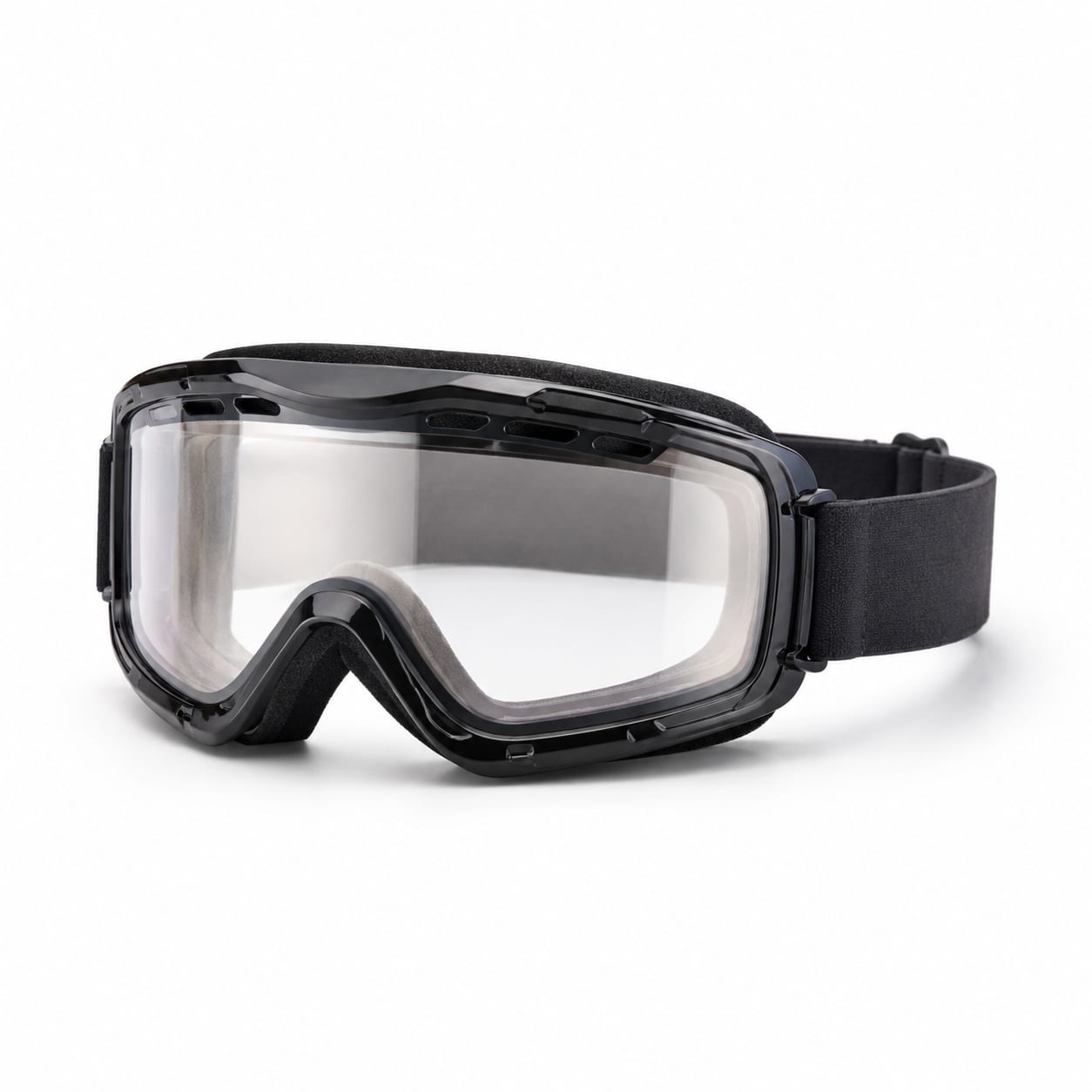
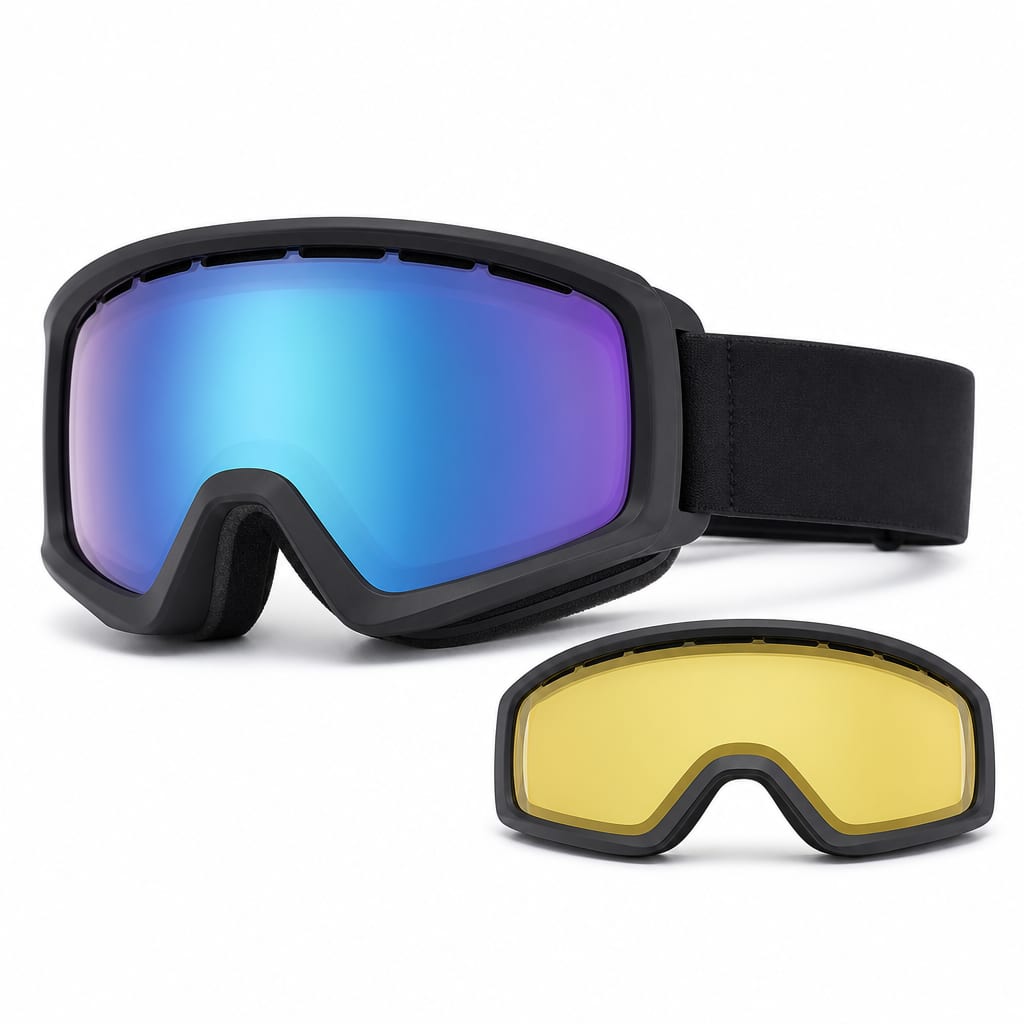
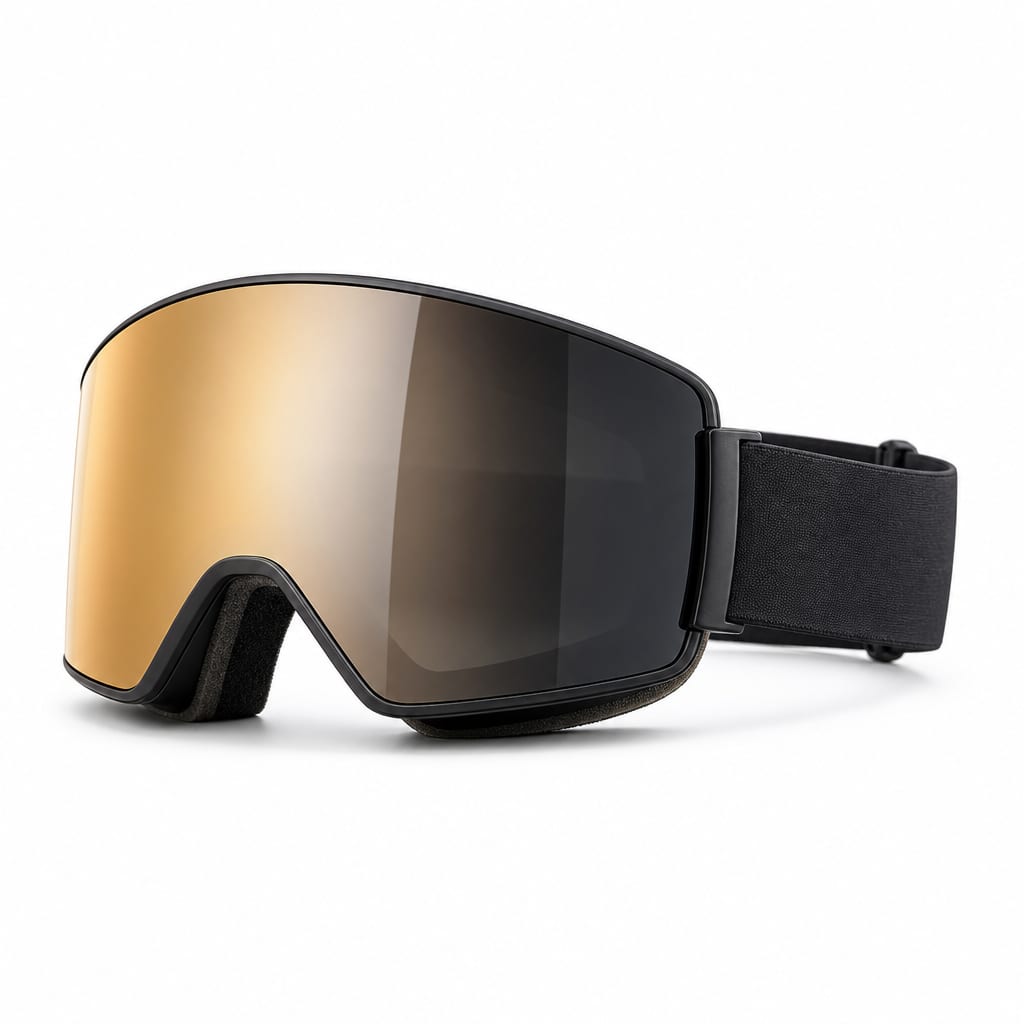
Clear lenses provide maximum unaltered light transmission for well-lit night slopes, while yellow/gold tints add contrast enhancement that helps define terrain features in flat or partially lit conditions.
Compared to other types
Night goggles exclusively use clear or yellow/gold tints, whereas all-mountain goggles favor rose/copper, and sunny-day goggles use gray/black or blue/green with mirror coatings. No other subcategory relies on clear lenses as a primary option.
Why it matters: The right tint can mean the difference between seeing a shadow line on an ice patch and hitting it unexpectedly. Clear is best for well-lit resorts; yellow/gold excels on dimly lit trails or during dusk transitions.
What it means
The overall size of the goggle frame and lens, determining field of view and face fit compatibility.
Typical for this type
Medium Or Large
In practice
Medium frames fit most adults and provide adequate field of view for night skiing. Large frames offer wider peripheral vision, which is valuable for spotting other skiers in low light.
Compared to other types
Frame size distribution is similar across subcategories, but the peripheral vision benefit of large frames is proportionally more valuable in night skiing where visual information is already limited.
Why it matters: Wider field of view from larger frames helps compensate for reduced visual information at night. However, proper face seal is paramount—gaps cause fogging, which is especially problematic in cold night conditions.
Anti-Fog System
Anti-Fog System
What it means
The technology and design features preventing lens fogging, including dual-layer construction, coatings, and ventilation.
Typical for this type
Dual Lens Premium Coating Or Active Vent
In practice
Premium anti-fog coatings on dual-lens construction are essential for night goggles, where cold air temperatures create aggressive fogging conditions. Active ventilation is worth considering for chronic fog sufferers.
Compared to other types
Night goggles demand higher anti-fog performance than most other subcategories due to the extreme temperature differentials encountered after dark. Standard dual-lens coatings that suffice during the day may be inadequate at night.
Why it matters: Cold night air dramatically increases the temperature differential between your face and the lens, making fogging more frequent and severe than in daytime. A fogged lens at night is far more dangerous than during the day because visibility is already limited.
Lens Interchangeability
Lens Interchangeability
What it means
The system and ease with which lenses can be swapped to adapt to changing light conditions.
Typical for this type
Magnetic Quick Swap Or Mechanical Quick Swap
In practice
Quick-swap lens systems are highly recommended for night goggles since most skiers need to switch between day and night lenses. Magnetic systems allow glove-friendly swaps on the lift.
Compared to other types
Lens interchangeability is more important for night goggles than for most other subcategories because the night-specific lens is useless during the day and vice versa. Day-specific goggles can often function with a single versatile lens.
Why it matters: If you ski both day and night sessions, the ability to quickly swap from a low-VLT day lens to a high-VLT night lens without going indoors is a game-changer. Without interchangeability, you need a completely separate goggle for night skiing.
UV Protection
UV Protection
What it means
The level of ultraviolet radiation blocking provided by the lens, critical for eye health at altitude.
Typical for this type
Uv400
In practice
UV400 protection remains essential even for night goggles. UV radiation is present during twilight hours, and night goggles are often used during late-afternoon transitions when UV is still significant.
Compared to other types
UV protection requirements are identical across all subcategories. UV400 should be non-negotiable regardless of light conditions, as UV is invisible and independent of visible light levels.
Why it matters: Many night skiing sessions begin during dusk when UV levels remain substantial. UV400 ensures complete protection regardless of when you start skiing. The clear lens tint of night goggles provides no inherent UV blocking without proper treatment.
Over-the-Glasses (OTG) Compatible
Over-the-Glasses (OTG) Compatible
What it means
Whether the goggle is designed to accommodate prescription eyeglasses underneath without discomfort or fogging.
Typical for this type
OTG Compatible Preferred For Glasses Wearers
Most common pick: True
In practice
OTG compatibility is important for night goggles because many casual skiers who ski occasionally at night wear prescription glasses and may not have contacts or Rx inserts.
Compared to other types
OTG compatibility is proportionally more requested in night goggles because night skiing attracts more casual and occasional skiers who may not have invested in contact lenses or prescription goggle solutions.
Why it matters: Glasses wearers face double fog risk at night—both their prescription lenses and goggle lenses can fog in the cold. OTG goggles with enhanced ventilation help manage this challenge, though Rx inserts are a superior solution.
Field of View
Field of View
What it means
The peripheral vision range provided by the goggle, measured in degrees of horizontal and vertical visibility.
Typical for this type
155–190 degrees horizontal
Most common pick: 165 degrees horizontal
In practice
A wider field of view helps compensate for reduced visual information at night by maximizing peripheral awareness of other skiers, terrain changes, and obstacles under floodlights.
Compared to other types
Field of view is important across all subcategories but carries extra weight for night goggles where the visual environment is already impoverished. The marginal value of each additional degree of peripheral vision is higher in low-light conditions.
Why it matters: At night, your visual information is already reduced by low light. A wider field of view provides more data about your surroundings, helping you detect other skiers and terrain features that might otherwise appear suddenly from the periphery.
What it means
Whether the lens includes polarization to reduce glare from reflective snow surfaces.
Typical for this type
Not Polarized
Most common pick: False
In practice
Polarization is generally not recommended for night skiing goggles. It reduces overall light transmission and can create visual artifacts under artificial lighting, both of which are counterproductive in already low-light conditions.
Compared to other types
Night goggles are the subcategory where polarization is most consistently discouraged. While sunny-day and all-mountain goggles may benefit from polarization for glare reduction, the light reduction trade-off is unacceptable for night use.
Why it matters: Polarized lenses filter out specific light waves, reducing total light reaching the eye by 10–15%. In night conditions where every photon counts, this reduction is detrimental. Additionally, polarization can cause distracting patterns under LED or halogen floodlights.
Mirror Coating
Mirror Coating
What it means
Reflective coating on the outer lens surface that bounces additional light away, reducing glare and VLT.
Typical for this type
No Mirror
In practice
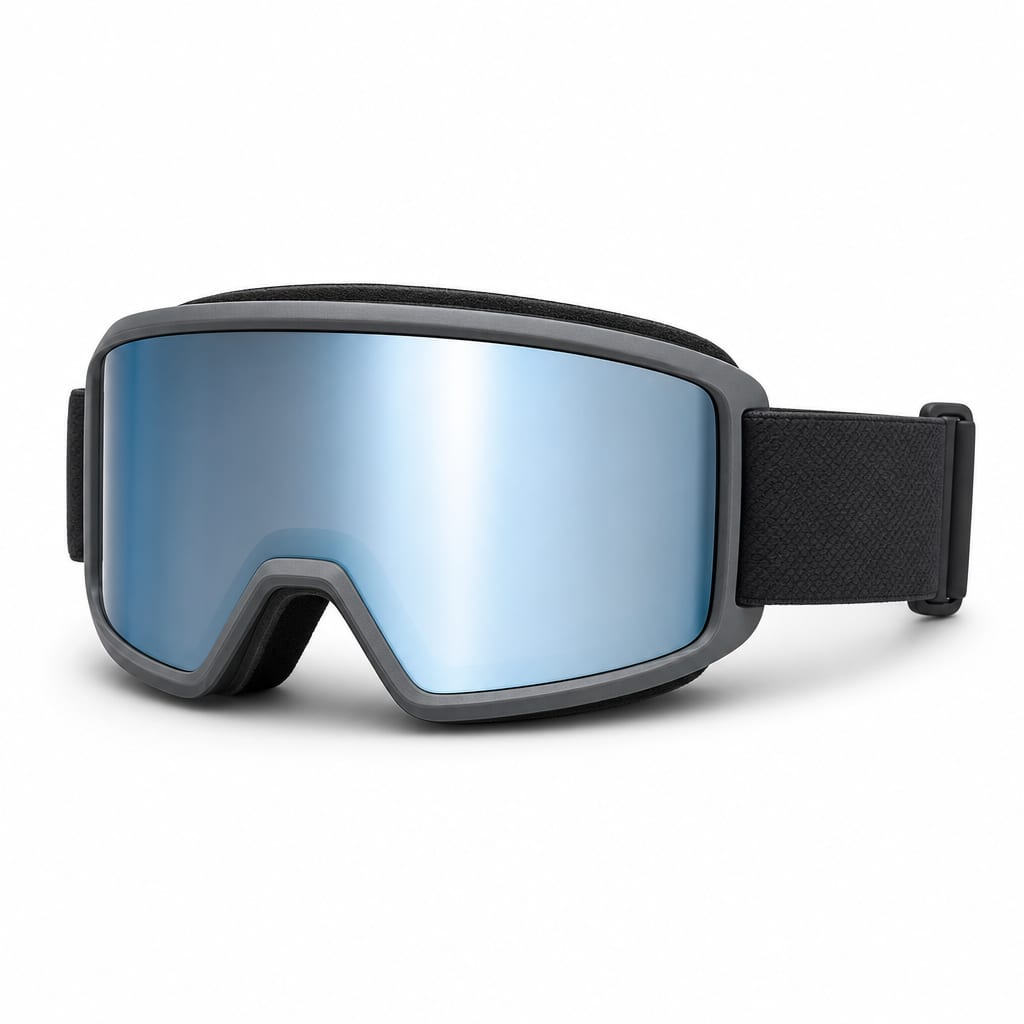
Night goggles should never have mirror coatings. Mirror coatings reflect additional light away from the eye, reducing VLT by 5–15%—the opposite of what is needed for night skiing.
Compared to other types
Night goggles are the only subcategory where mirror coatings are categorically not recommended. All other subcategories may use mirror coatings functionally (sunny days) or aesthetically, but for night skiing, no mirror is the only correct choice.
Why it matters: A mirror coating on a night goggle lens would defeat its primary purpose by blocking precious light. Even a partial/flash mirror reduces VLT enough to noticeably impair visibility under floodlights. Night goggles must prioritize maximum light transmission.
Ventilation Design
Ventilation Design
What it means
The airflow system built into the goggle frame to manage moisture and prevent fogging during activity.
Typical for this type
Enhanced Passive Or Active Vent
In practice
Enhanced passive ventilation is the minimum recommendation for night goggles, with active ventilation being the premium choice. Cold night air creates extreme fogging conditions that demand superior airflow management.
Compared to other types
Night goggles require more robust ventilation than most other subcategories due to the greater temperature differential after dark. Standard passive ventilation that works during the day may be insufficient for night conditions.
Why it matters: The temperature differential between a warm, exercising face and cold night air is more extreme than during daytime skiing. This differential drives aggressive fogging that standard ventilation may not handle. Enhanced or active ventilation is essential for clear vision.
What it means
The multi-layer foam padding that creates a seal against the face, affecting comfort, fit, and moisture management.
Typical for this type
Triple Layer Standard Or Triple Layer Moisture Wicking
In practice
Triple-layer foam provides the consistent seal needed to prevent cold air infiltration and fogging at night. Moisture-wicking top layers help manage perspiration during high-exertion night runs.
Compared to other types
Face foam quality is important across all subcategories but the seal integrity matters more for night goggles where cold air infiltration directly causes the fogging problems that are already exacerbated by temperature differentials.
Why it matters: A proper foam seal is critical at night because any gap allows cold air to reach the inner lens, triggering condensation and fog. Triple-layer foam maintains a consistent seal across a wider range of temperatures and face shapes.
Helmet Compatibility
Helmet Compatibility
What it means
How well the goggle integrates with ski helmets in terms of fit, strap grip, and gap-free interface.
Typical for this type
Universal Compatible Or Seamless Integration
In practice
Universal helmet compatibility ensures the night goggle pairs well with your existing helmet. A gap-free seal between goggle and helmet is especially important at night to prevent cold air from reaching the forehead and lens.
Compared to other types
Helmet compatibility matters for all goggles, but the fogging consequences of gaper gap are more severe for night goggles due to the cold air temperatures encountered after dark.
Why it matters: Gaper gap at night is not just uncomfortable—it allows cold air to flow over the top of the goggle lens, promoting fogging. A seamless goggle-to-helmet interface helps maintain the thermal environment inside the goggle.
Frame Material
Frame Material
What it means
The primary material used in the goggle frame, affecting flexibility, cold-weather performance, and durability.
Typical for this type
TPU Flexible
Most common pick: Tpu Flexible
In practice
TPU frames remain flexible in the extreme cold typical of night skiing, ensuring consistent face seal and comfort. Rigid plastics become brittle and uncomfortable in sub-zero night temperatures.
Compared to other types
TPU flexibility is important for all goggles but is especially critical for night goggles that operate in the coldest conditions. Rigid plastic frames that might survive a sunny spring day can become dangerously brittle during night sessions.
Why it matters: Night skiing often occurs in the coldest hours of the day when temperatures drop significantly. Frame materials that stiffen in cold weather will lose their face-conforming ability, creating gaps that cause fogging and cold spots.
Prescription Lens Compatible
Prescription Lens Compatible
What it means
Whether the goggle supports prescription vision correction through inserts or Rx-able lens options.
Typical for this type
Rx Insert Included Or Rx Insert Compatible
In practice
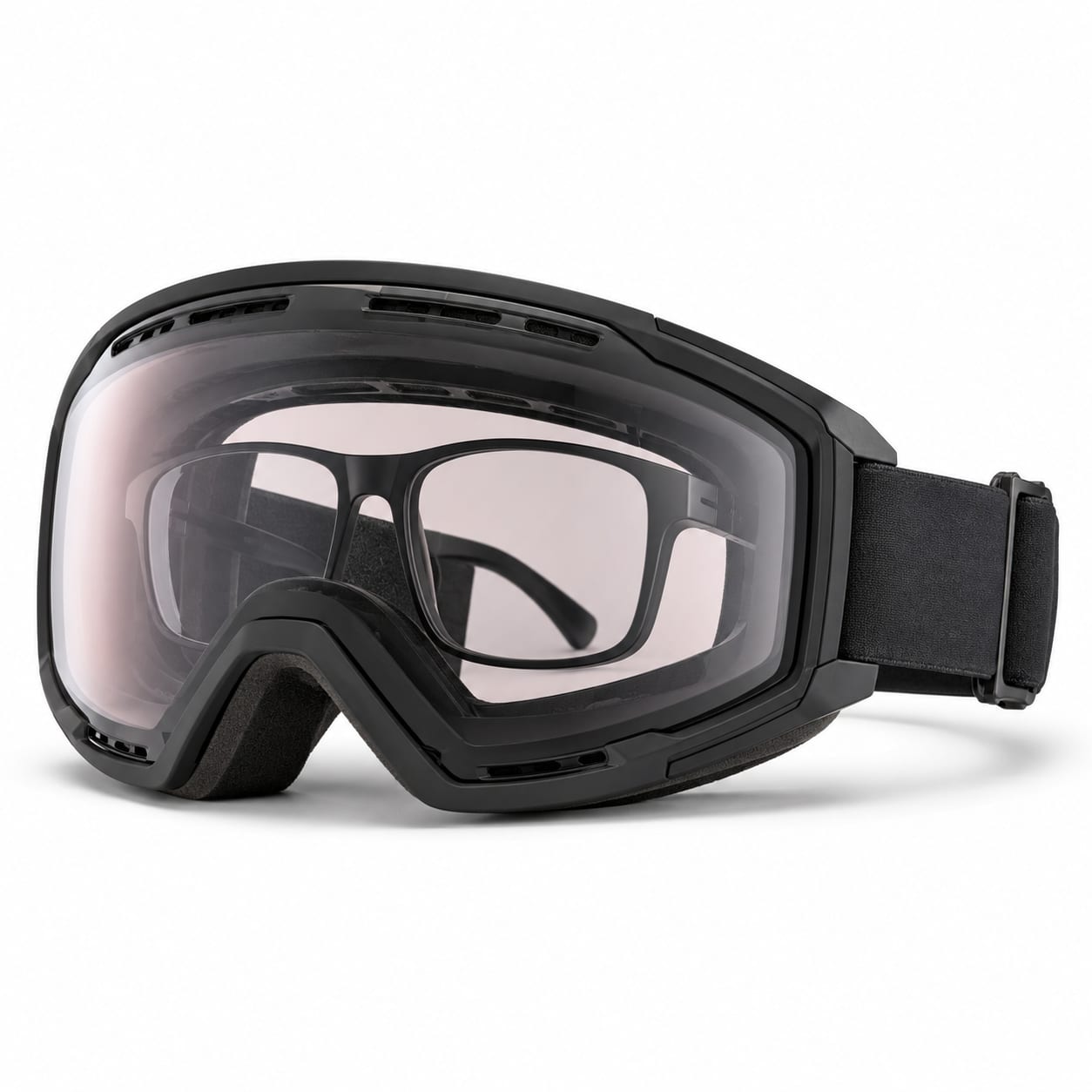
Rx inserts are particularly valuable for night goggles because they eliminate the double-fog risk of wearing glasses under OTG goggles in cold night conditions. The single inner surface of an Rx insert fogs far less than glasses plus goggle.
Compared to other types
Rx inserts offer proportionally greater benefits for night goggles than other subcategories because the fogging problem they solve is amplified by cold night temperatures and the already-limited visibility conditions.
Why it matters: Glasses wearers face extreme fogging challenges at night due to the double lens surface (glasses + goggle) and cold air. Rx inserts solve this by integrating vision correction into a single surface inside the goggle, dramatically reducing fog risk.